
Stages of Neoplastic Transformation Activation l A healthy
- Slides: 21
Stages of Neoplastic Transformation
Activation l. A healthy cell is exposed to a carcinogen
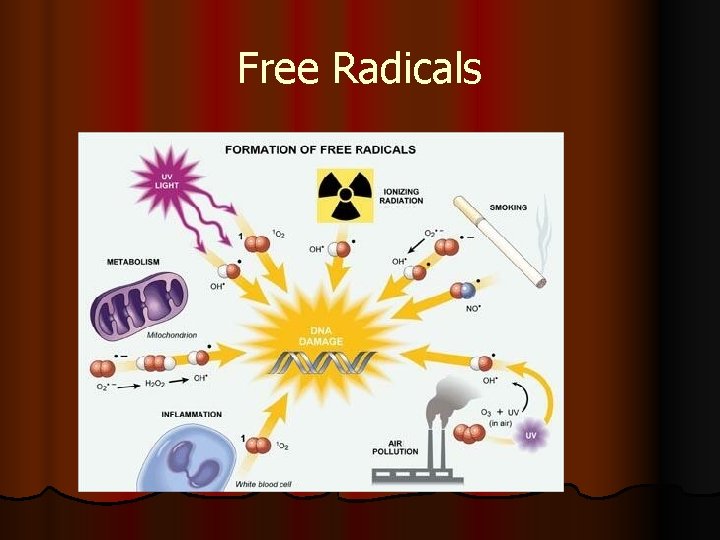
BAD l Carcinogen: contributes to causing cancer; creates free radicals l Free radicals = charged compounds l If a compound located in a cell has a charge on it, it behaves differently l Cellular chaos ensues l If charges build up in the nucleus, it may cause a problem with mitosis
BAD l It would be better if the charge created enough of a problem that it killed the cell l Instead, it causes chemical chaos inside of the nucleus (in genes that control mitosis) l Creates mutated cells
Free Radicals
GOOD l Body’s defense: l Anti-oxidants (released by peroxisomes—organelles) l Over the counter anti-oxidants: l Vitamin E (shows no anti-cancer characteristics) l Beta carotene (form of vitamin A) l Flavonoids (found in red fruits)
l http: //www. youtube. com/watch? v=bm. AMt PEv-0 M
Initiation l Abnormal cells division that produces abnormal
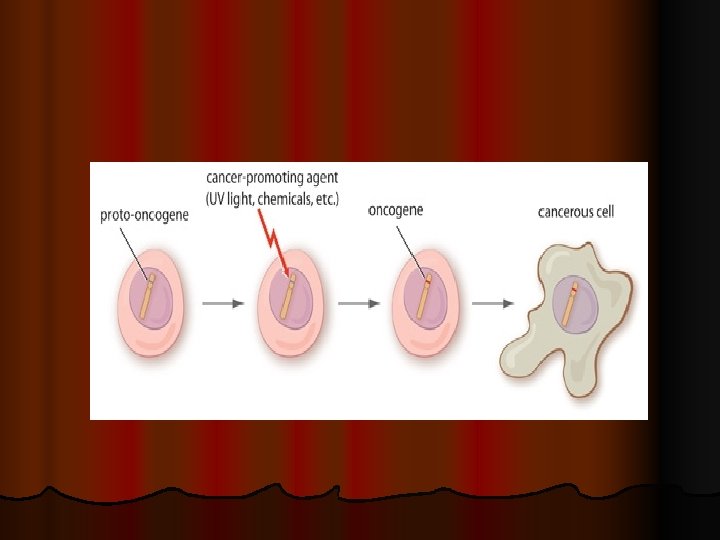
BAD l Carcinogen: l Oncogene: mitosis abnormal gene that controls
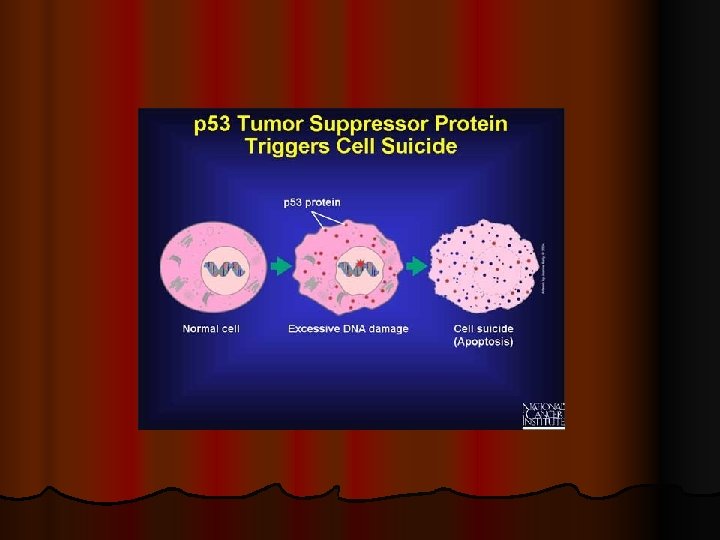
GOOD l Tumor l Stops suppressor gene the oncogene through either promoting apoptosis or repressing the cell cycle and allowing DNA to repair
l P 53 gene: one of many tumor suppressor genes l In over 50% of lung cancer cases, patients have a defective p 53 gene
Promotion l Continuation l Leads of Initiation to a neoplasm l Neoplasm: Abnormal mass of cells/tissue
BAD l Adult body produces approximately 6 or 7 neoplasms a day that your body fights off
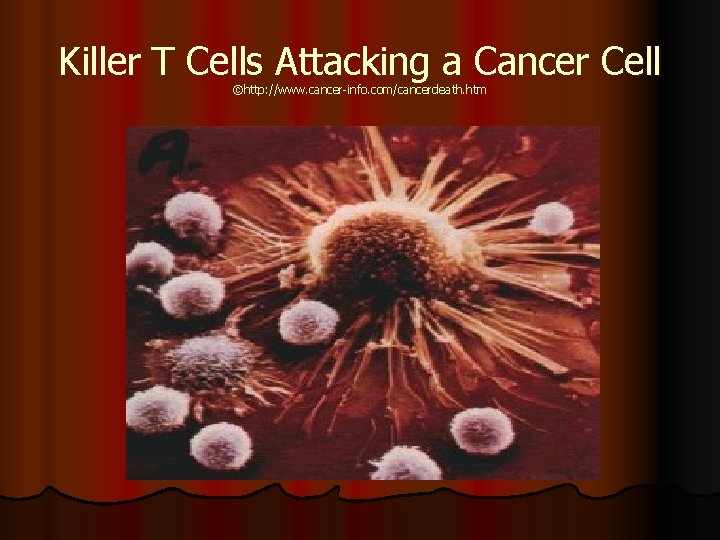
GOOD l Immune response l Killer T-lymphocytes l We make lots (4 billion) of wbc every day (mostly at night) l They “recognize” the different markers on the cancer cells
Killer T Cells Attacking a Cancer Cell ©http: //www. cancer-info. com/cancerdeath. htm
l Problem? l Suppressed immune system
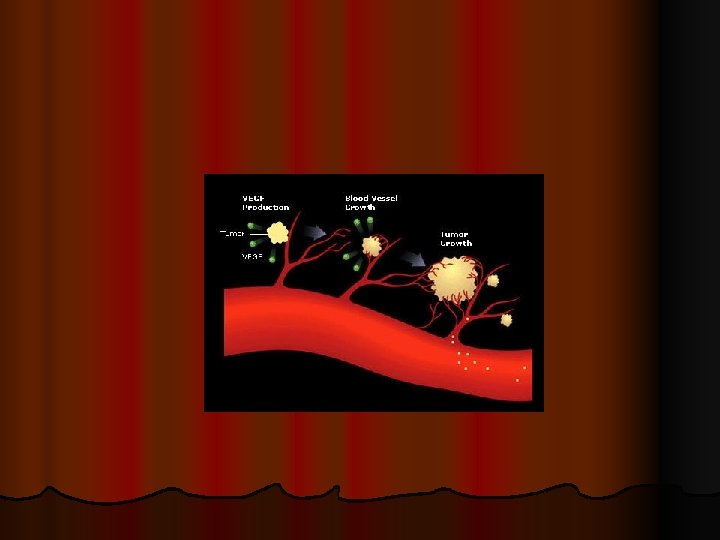
l Cancer is usually not that fast growing l It mitosis at the rate of the normal tissue in which it is found l As neoplasm forms, angiogenesis occurs
l Angiogenesis: vessels l In growth of new blood tumors, it is called TAF l Tumor angiogenesis factor