
Stages of Moral Development By Prof Parul Rishi
Stages of Moral Development By Prof. Parul Rishi, Ph. D, Psychology Faculty of HRM, IIFM, Bhopal (Ministry of Environment Forest and Climate Change, Go. I) 2/22/2021 Ethics in Management 1
Let’s Experience…. MD Scale- An Experiential Exercise for Judges Situation What will you do in this Situation? ? Instructions: Please read the given simulated scenario and try to see yourself in that very situation. Whatever is your first likely response, give number 1 in the box, followed by 2 and 3. You are requested to write number in all the three boxes of each statement.
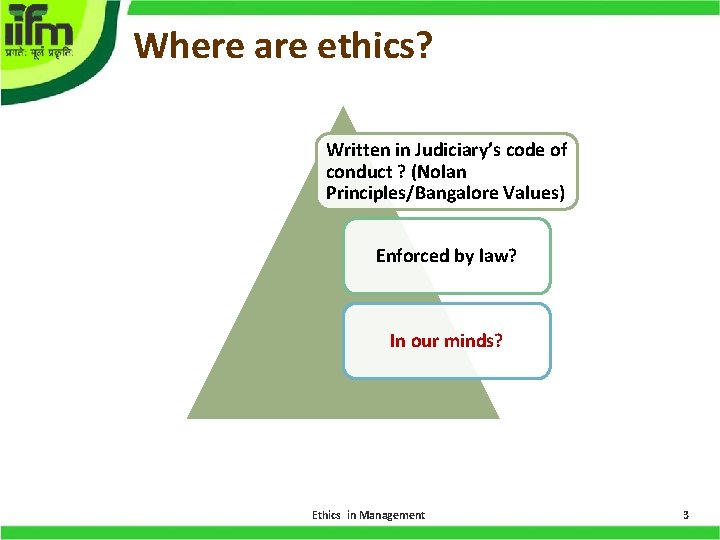
Where are ethics? Written in Judiciary’s code of conduct ? (Nolan Principles/Bangalore Values) Enforced by law? In our minds? 2/22/2021 Ethics in Management 3
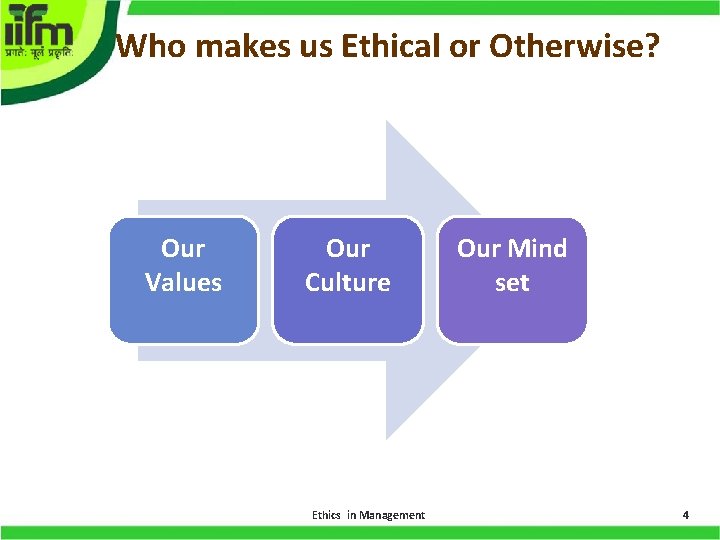
Who makes us Ethical or Otherwise? Our Values 2/22/2021 Our Culture Ethics in Management Our Mind set 4
Individual Characteristics Affecting Ethical Behaviors Values Basic convictions about what is right or wrong on a broad range of issues
Values vs. Morals vs. Ethics The terms "values, " "morals" and "ethics, operate at three normative levels: Values- defined by oneself, Morals- by society Ethics- organization or by subgroups of society. The philosophy behind all the three is to distinguish between right and wrong. 6
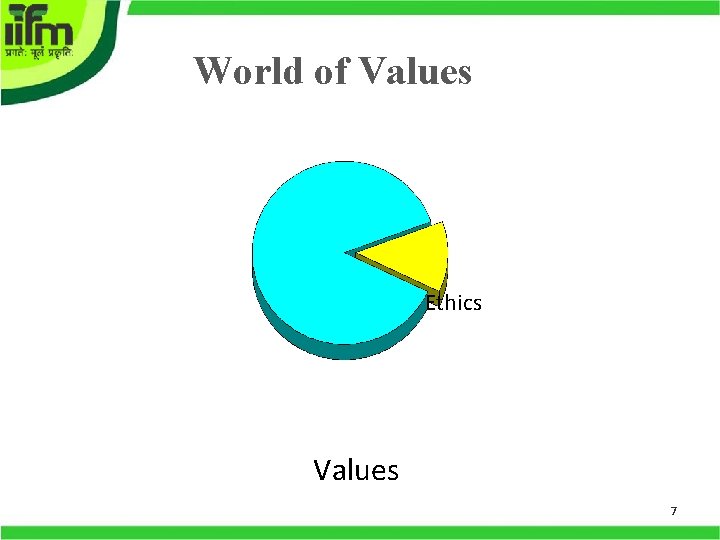
World of Values Ethics Values 7
Values in Conflict? • STATED VALUES: The values stated in written documents like Bangalore principles of Judicial Conduct or Nolan principles • OPERATIONAL VALUES: The values that actually drive judicial decisions. Many times there a disconnect between the two while taking decisions. Why this disconnect? ? ? 8
Many times we do not know that we are doing something unethical Who will tell you that you are doing something unethical? ? The answer is__ 2/22/2021 Ethics in Management 9
Ask your self! If you feel a minutest fear in your mind that will happen if someone knows about it that it is done with some wrong intention? Don’t do it considering it as the voice of your conscience to save you. This is the best check to test whether a behaviour is ethical or not 2/22/2021 Ethics in Management 10
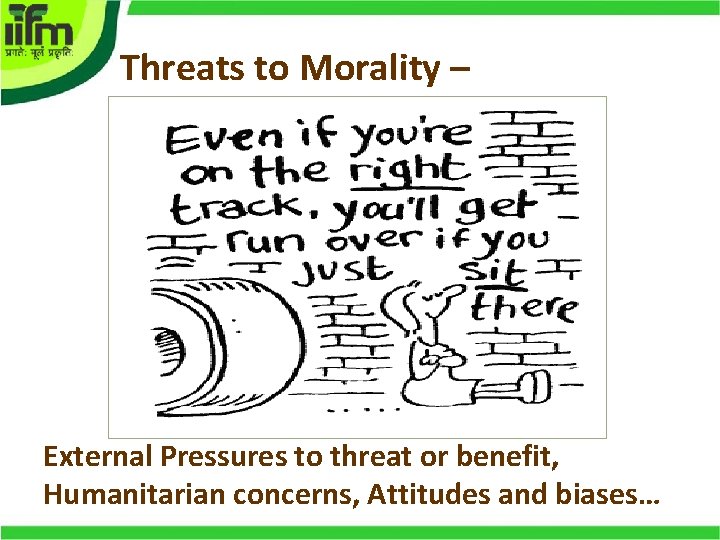
Threats to Morality – External Pressures to threat or benefit, Humanitarian concerns, Attitudes and biases…
Why it is difficult to be ethical? ?
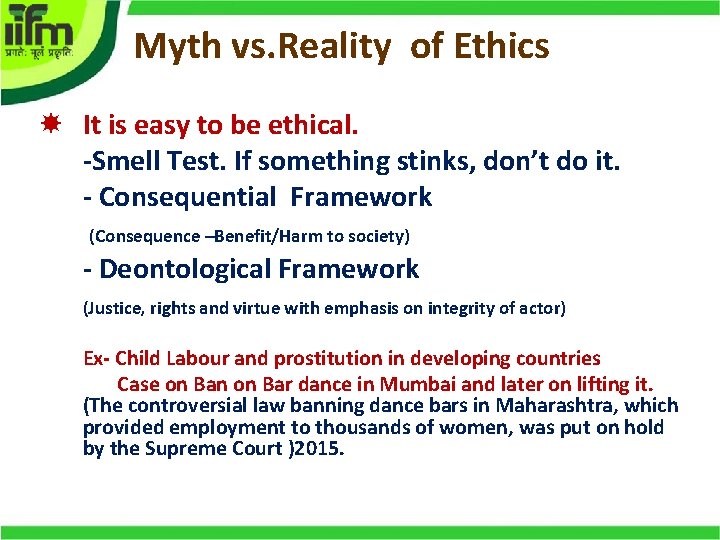
Myth vs. Reality of Ethics It is easy to be ethical. -Smell Test. If something stinks, don’t do it. - Consequential Framework (Consequence –Benefit/Harm to society) - Deontological Framework (Justice, rights and virtue with emphasis on integrity of actor) Ex- Child Labour and prostitution in developing countries Case on Ban on Bar dance in Mumbai and later on lifting it. (The controversial law banning dance bars in Maharashtra, which provided employment to thousands of women, was put on hold by the Supreme Court )2015.
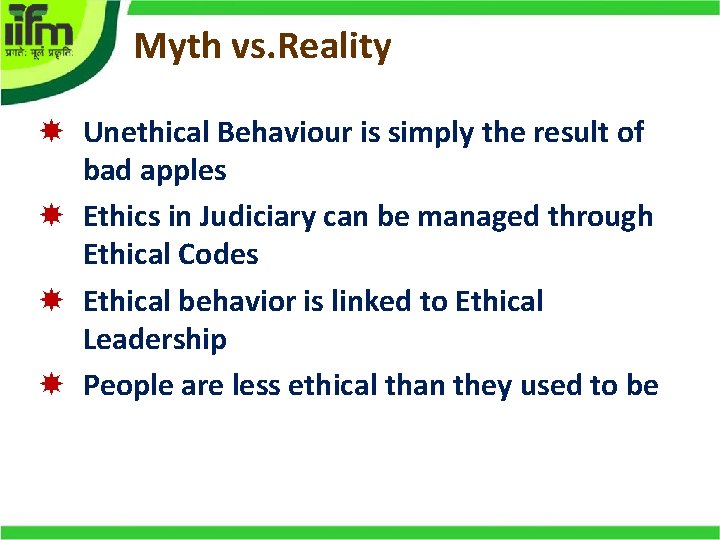
Myth vs. Reality Unethical Behaviour is simply the result of bad apples Ethics in Judiciary can be managed through Ethical Codes Ethical behavior is linked to Ethical Leadership People are less ethical than they used to be
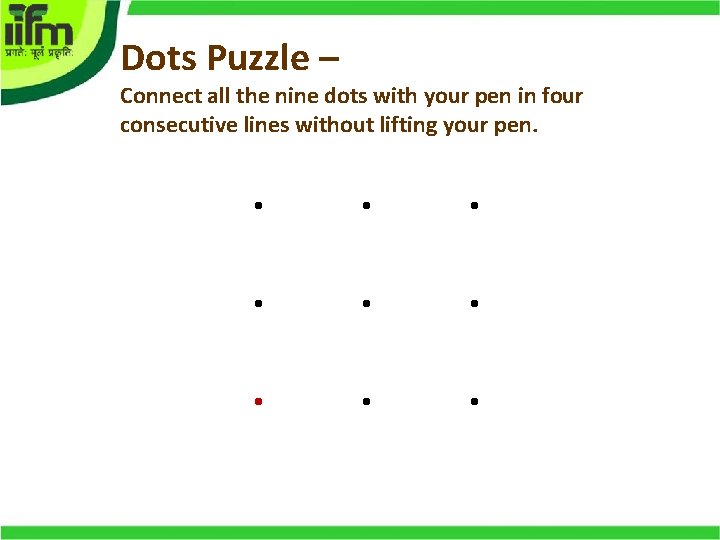
Dots Puzzle – Connect all the nine dots with your pen in four consecutive lines without lifting your pen. .
Instructions Join all the 9 dots With 4 straight lines Without lifting the pen No dot should be left unconnected
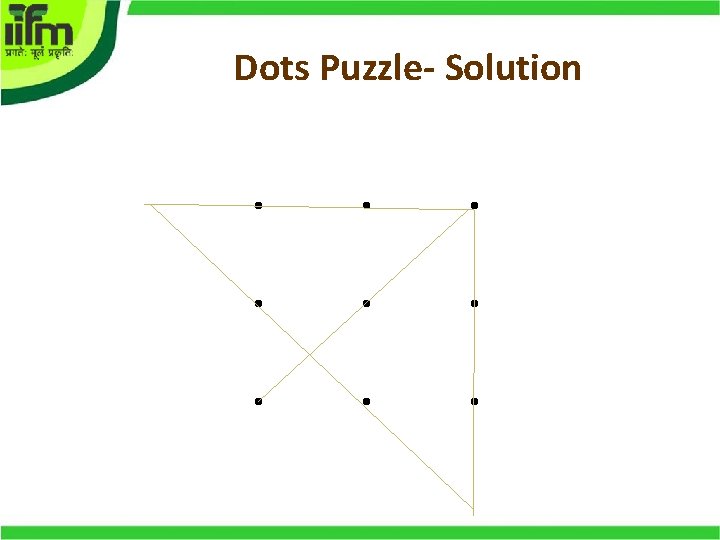
Dots Puzzle- Solution . .
Learning from 9 Dot Puzzle All dots in cases are not so simple to connect. Some cases challenge our mental capacity in order to take right judgment. We have to go beyond logical sequence of events to adopt out of box thinking. See beyond what your eyes can see Listen beyond what your ears can hear Feel beyond what your mind says Move from Logical to lateral thinking THE ROAD NOT TAKEN
Ethical Dilemmas Judges confront real ethical dilemmas Ethical dilemmas are situations in which none of the available alternatives seems ethically acceptable to write a judgment. The ethical obligations of giving any judgment keeping in mind human rights, corruption, environment and societal concerns.
Components of Personality Sigmund Freud ID EGO SUPER EGO
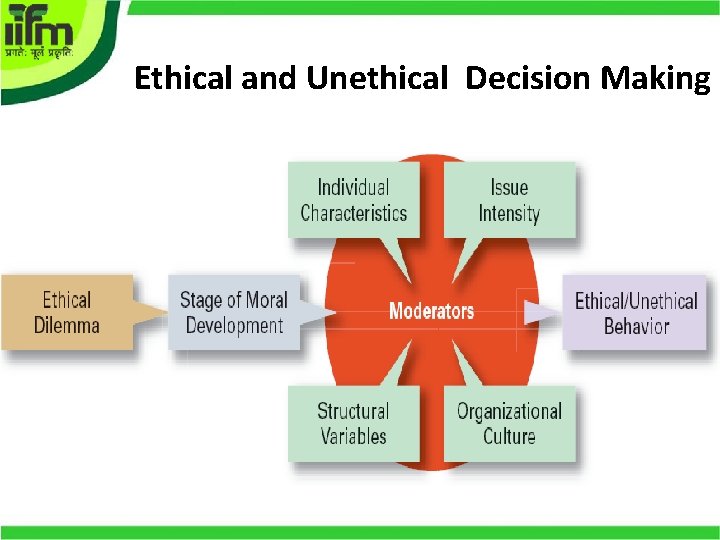
Ethical and Unethical Decision Making
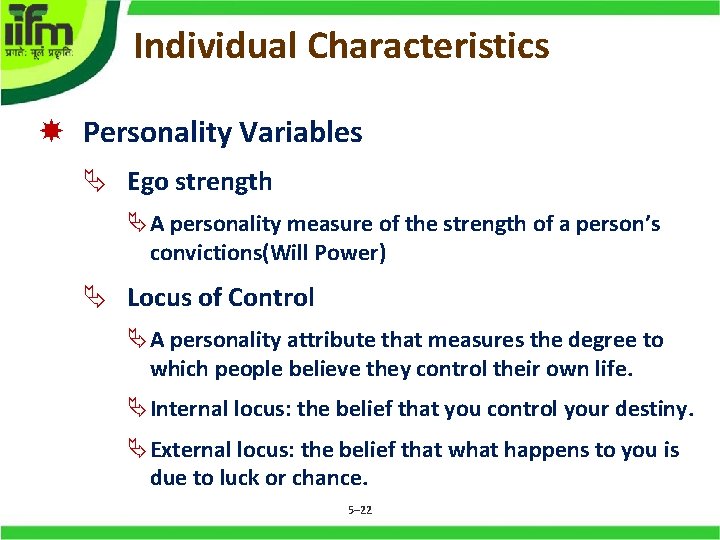
Individual Characteristics Personality Variables Ego strength A personality measure of the strength of a person’s convictions(Will Power) Locus of Control A personality attribute that measures the degree to which people believe they control their own life. Internal locus: the belief that you control your destiny. External locus: the belief that what happens to you is due to luck or chance. 5– 22
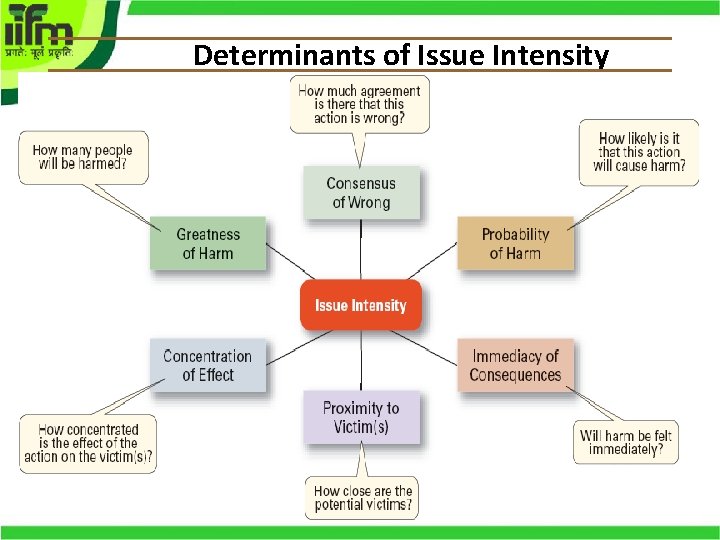
Determinants of Issue Intensity 5– 23
Lawrence Kohlberg: Stages of Moral Development

Moral Development Moral development is the gradual development of an individual’s concept of right or wrong, conscience, religious values, social attitudes and behaviour.
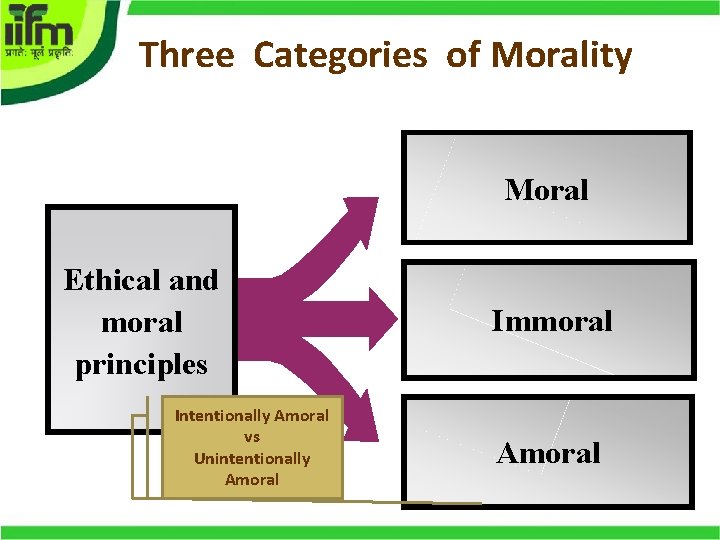
Three Categories of Morality Moral Ethical and moral principles Intentionally Amoral vs Unintentionally Amoral Immoral Amoral
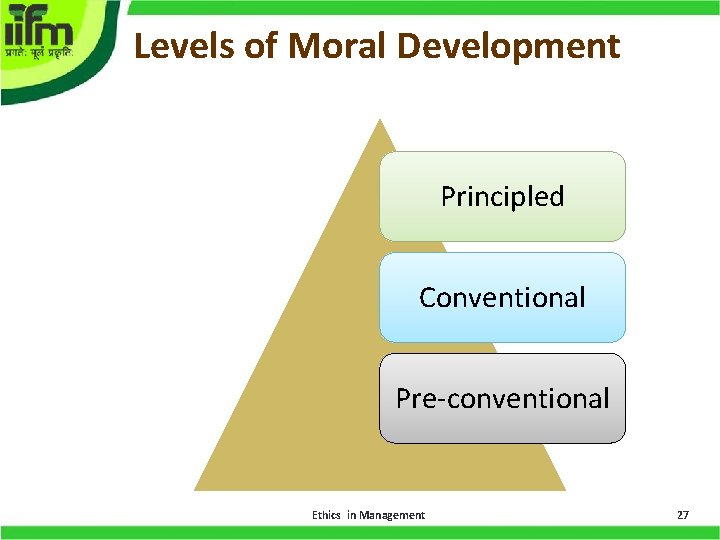
Levels of Moral Development Principled Conventional Pre-conventional 2/22/2021 Ethics in Management 27
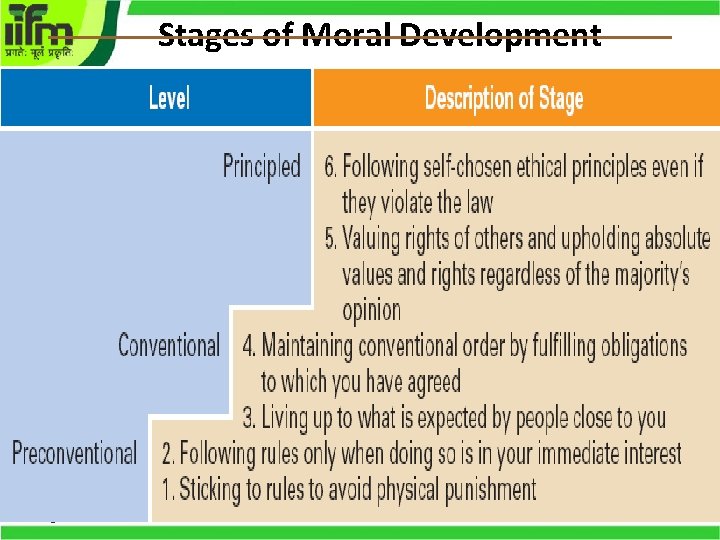
Stages of Moral Development © 2007 Prentice Hall, Inc. All rights reserved. 5– 28
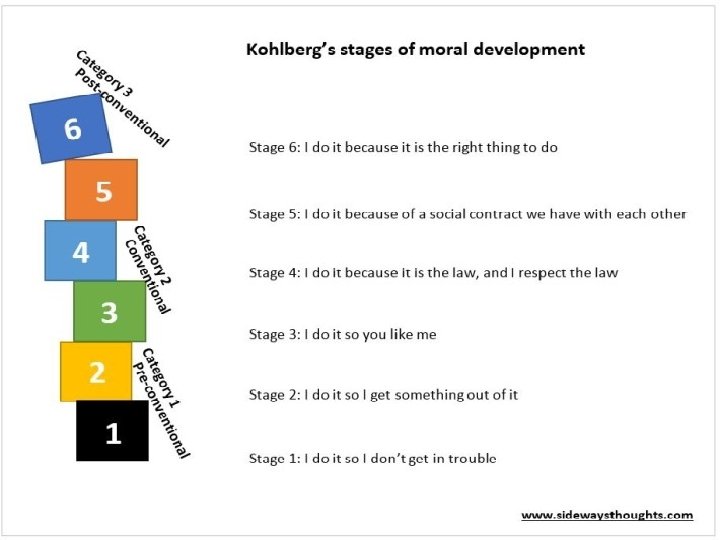

Stages of Moral Development
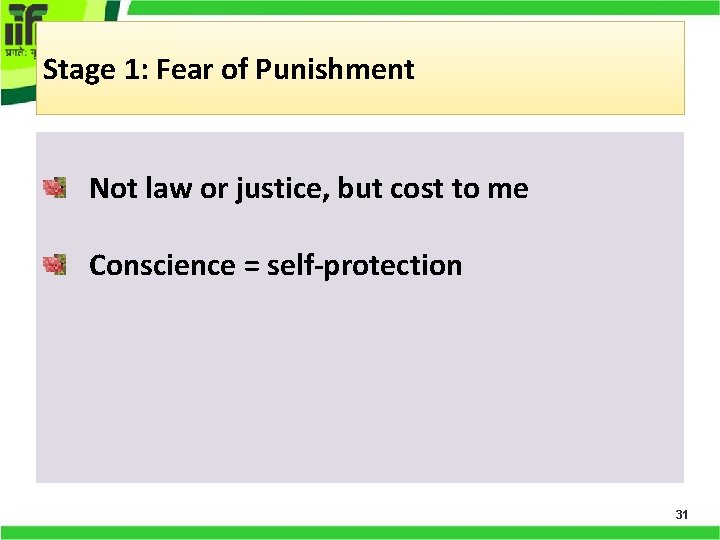
Stage 1: Fear of Punishment Not law or justice, but cost to me Conscience = self-protection 31
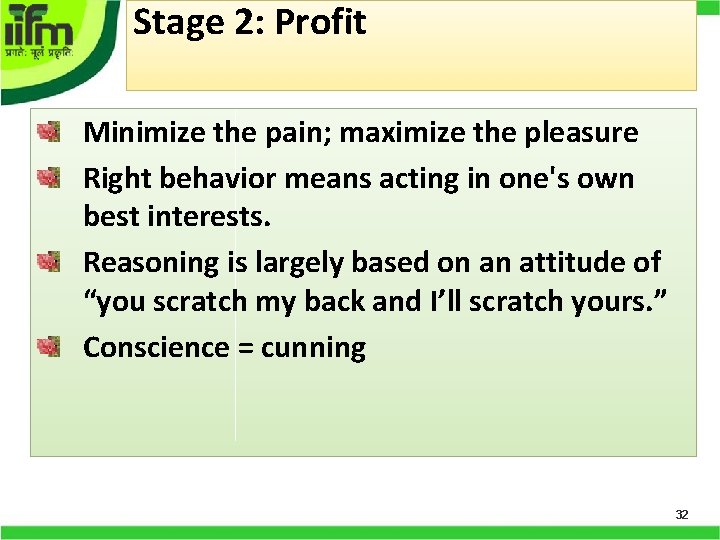
Stage 2: Profit Minimize the pain; maximize the pleasure Right behavior means acting in one's own best interests. Reasoning is largely based on an attitude of “you scratch my back and I’ll scratch yours. ” Conscience = cunning 32
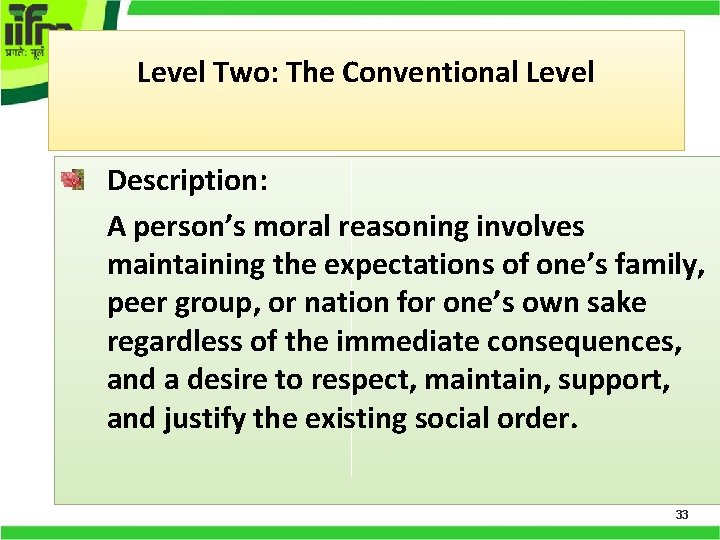
Level Two: The Conventional Level Description: A person’s moral reasoning involves maintaining the expectations of one’s family, peer group, or nation for one’s own sake regardless of the immediate consequences, and a desire to respect, maintain, support, and justify the existing social order. 33
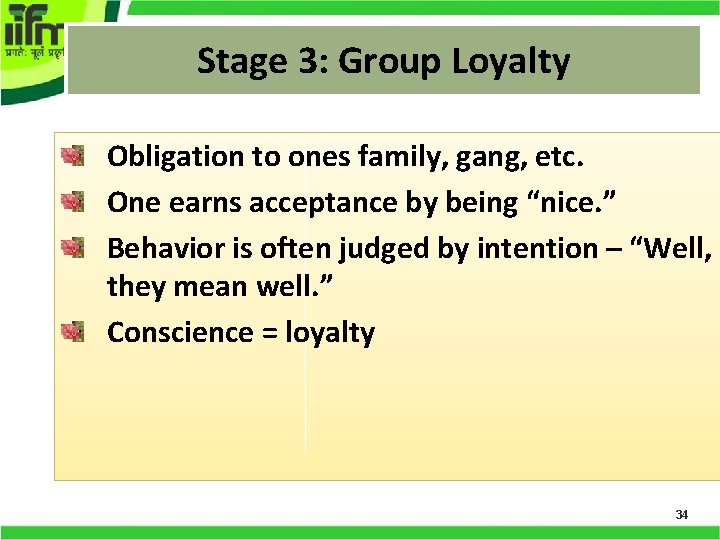
Stage 3: Group Loyalty Obligation to ones family, gang, etc. One earns acceptance by being “nice. ” Behavior is often judged by intention – “Well, they mean well. ” Conscience = loyalty 34

Stage 4: Law and Order Without laws, society would be chaos Right behavior consists of doing one’s duty and respecting authority. Flaws in the system are due to the failure of individuals who do not obey the system. Conscience = good citizenship 35
Level Three: Post Conventional Level. Internalized-Truth-Centered Description: A person reasons according to moral values and principles which are valid and applicable apart from the authority of the groups. Moral reasoning becomes more comprehensive, reflects universal principles, and is based on internalized norms. 36
Moral Development Research Conclusions: People proceed through the stages of moral development sequentially. There is no guarantee of continued moral development. Myth: Most adults are in principled stage (“good corporate citizen”). It is quite possible for a human being to physically mature but not morally mature. 5– 37
Kohlberg believed that only about 25% of persons ever grow to level six, the majority remaining at level four. - The Scriptures speak of principles of modesty, humility, and wise stewardship of money. - If Kohlberg’s observations are true, then level 6 thinkers would be in the minority. In fact, they might even be misunderstood and persecuted by a level 4 majority. 38
Lets know where we are? A- Conventional Stage of Moral Development B-Principled Stage C-Pre Conventional Stage Lowest Score is dominant stage of Moral Development.
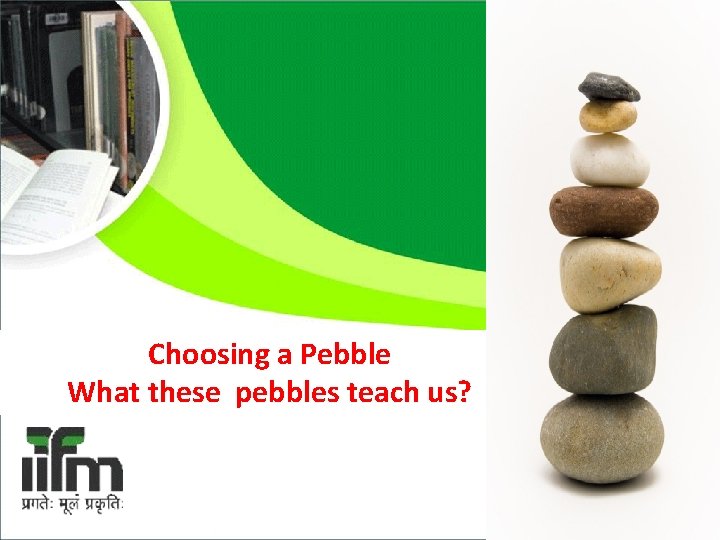
Choosing a Pebble What these pebbles teach us?
Features of Pebbles Different shapes and sizes Different colours Largest at the bottom Smallest at the top All connected All balanced on each other
Lessons from Pebbles Come across cases from diverse sections of society. Caste, Class, religion, age groups Need to balance the interests of all through values for fairness and impartiality overcoming the individual attitudes and biases. Largest stone acting as a base for judiciary Responsibility to keep all the courts down the line connected with judicial values Responsibility to make sure that smallest one on the top is not felling down due to any imbalance. If they stand strong and connected, no one can roll them in their own way.
Morality and Values Percolate from Top to Bottom
Thank You
- Slides: 45