
STAGES OF DECOMPOSITION This ppt contains graphic images
- Slides: 21
STAGES OF DECOMPOSITION This ppt contains graphic images. The pictures are on slides that do not contain information so feel free to avert your eyes. Information is also graphic and can be disturbing
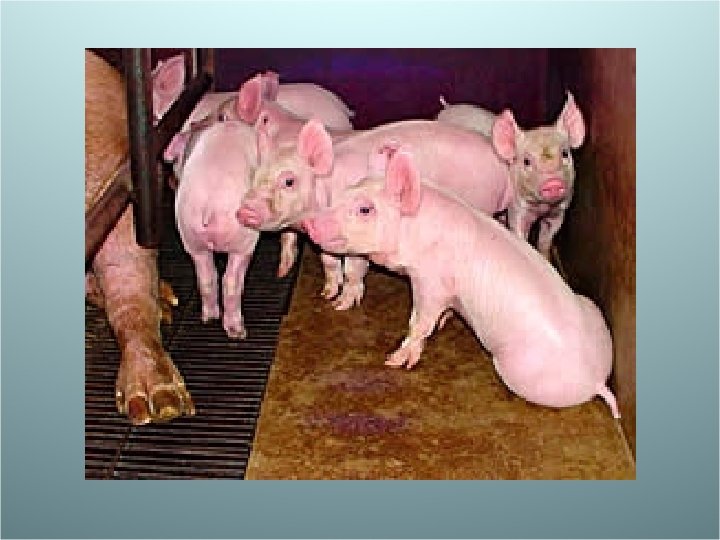
STAGE 1 : THE LIVING PIG • Intestine contains a diversity of bacteria, protozoans and nematodes. • Some of these micro-organisms are ready for a new life, should the pig die and lose its ability to keep them under control.
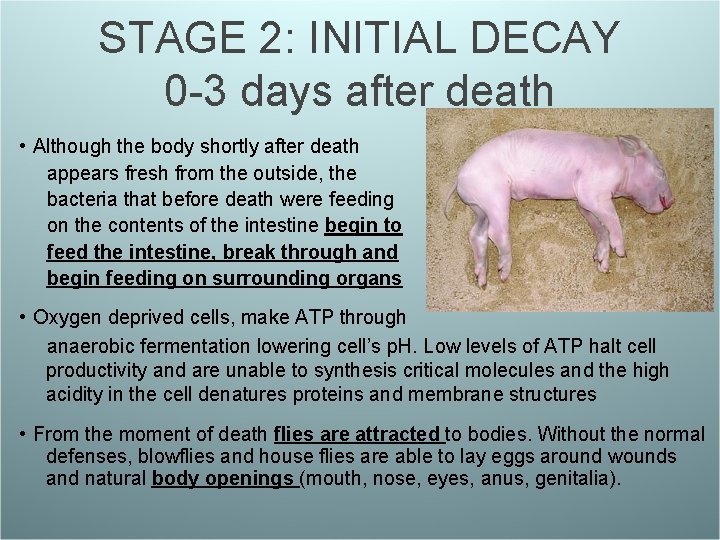
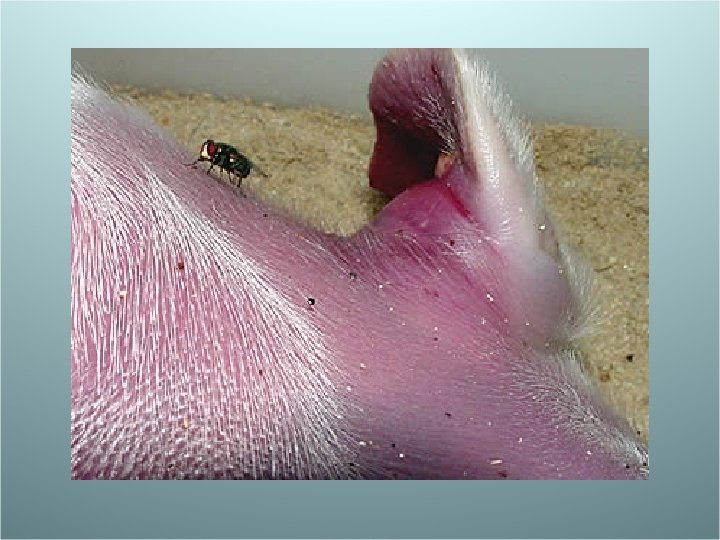
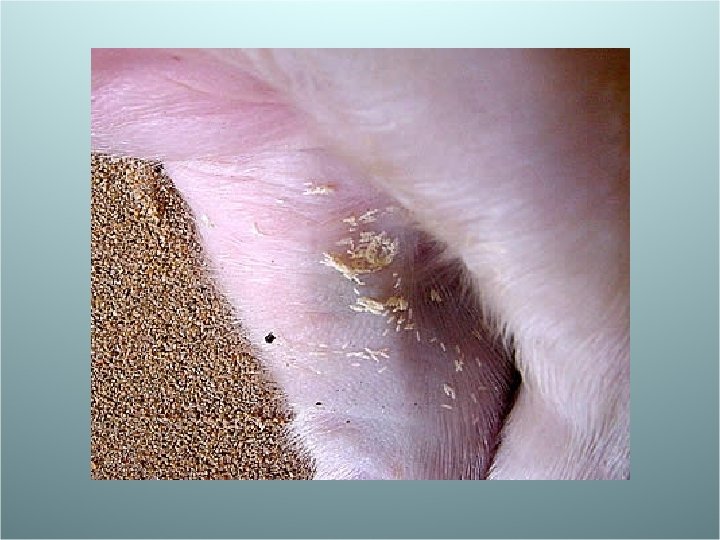
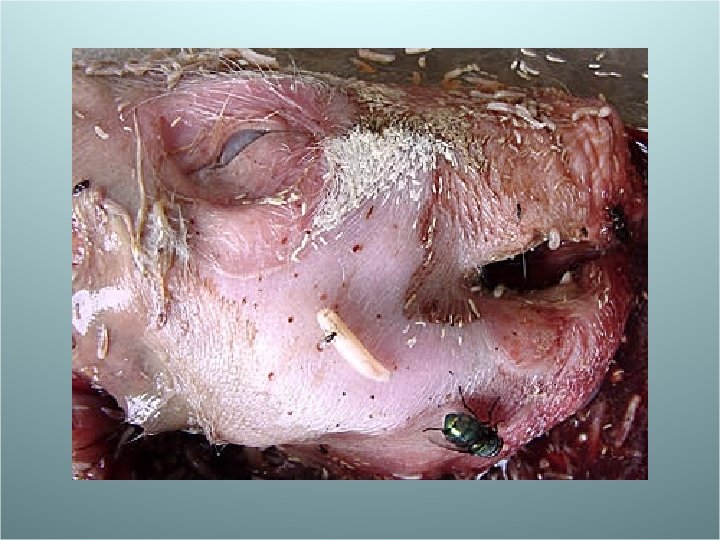
STAGE 2: INITIAL DECAY 0 -3 days after death • Although the body shortly after death appears fresh from the outside, the bacteria that before death were feeding on the contents of the intestine begin to feed the intestine, break through and begin feeding on surrounding organs • Oxygen deprived cells, make ATP through anaerobic fermentation lowering cell’s p. H. Low levels of ATP halt cell productivity and are unable to synthesis critical molecules and the high acidity in the cell denatures proteins and membrane structures • From the moment of death flies are attracted to bodies. Without the normal defenses, blowflies and house flies are able to lay eggs around wounds and natural body openings (mouth, nose, eyes, anus, genitalia).
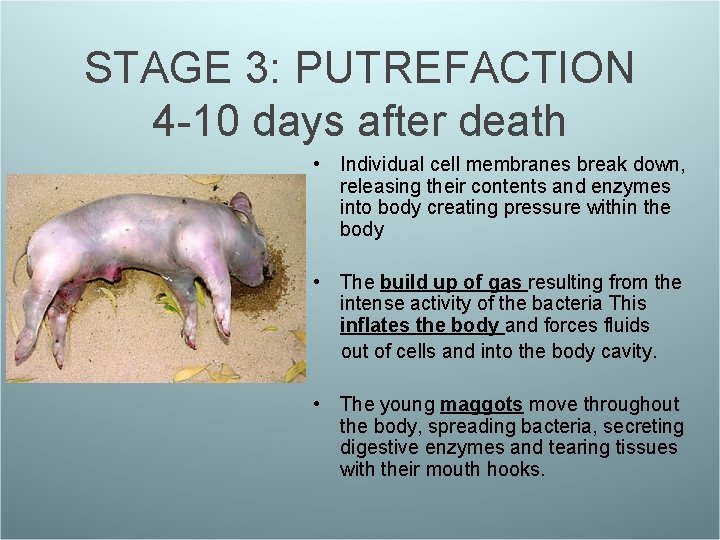
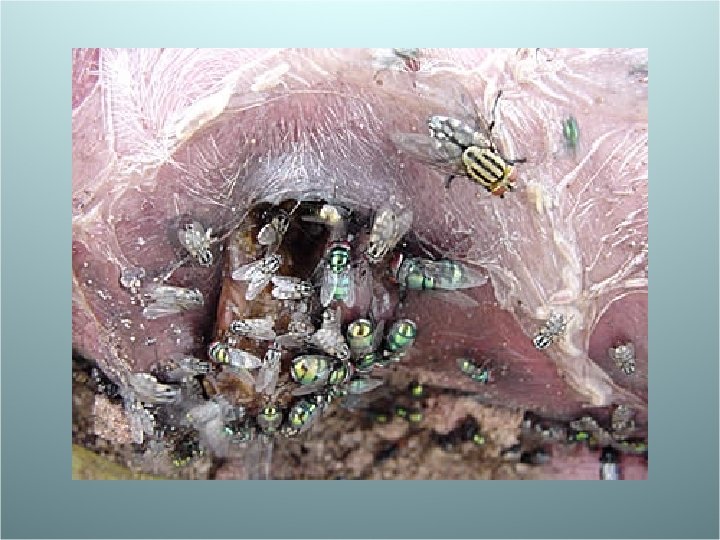
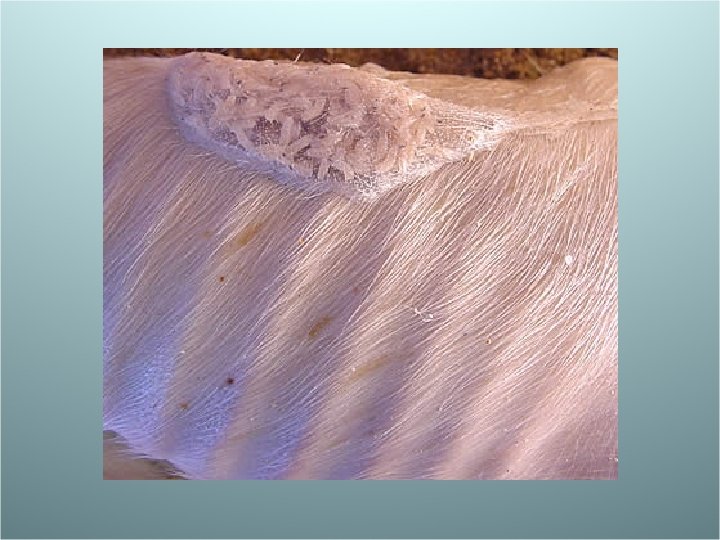
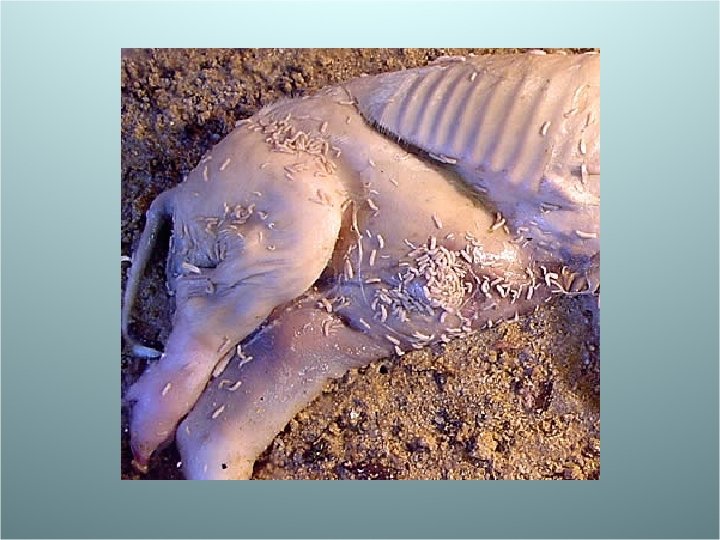
STAGE 3: PUTREFACTION 4 -10 days after death • Individual cell membranes break down, releasing their contents and enzymes into body creating pressure within the body • The build up of gas resulting from the intense activity of the bacteria This inflates the body and forces fluids out of cells and into the body cavity. • The young maggots move throughout the body, spreading bacteria, secreting digestive enzymes and tearing tissues with their mouth hooks.
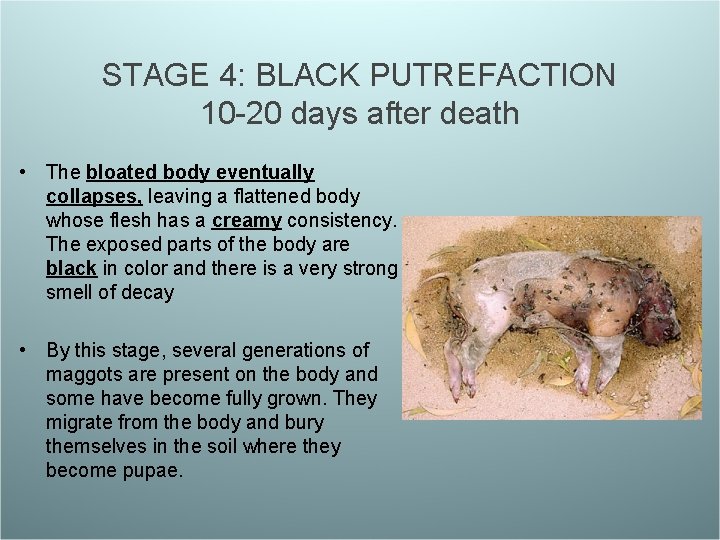
STAGE 4: BLACK PUTREFACTION 10 -20 days after death • The bloated body eventually collapses, leaving a flattened body whose flesh has a creamy consistency. The exposed parts of the body are black in color and there is a very strong smell of decay • By this stage, several generations of maggots are present on the body and some have become fully grown. They migrate from the body and bury themselves in the soil where they become pupae.
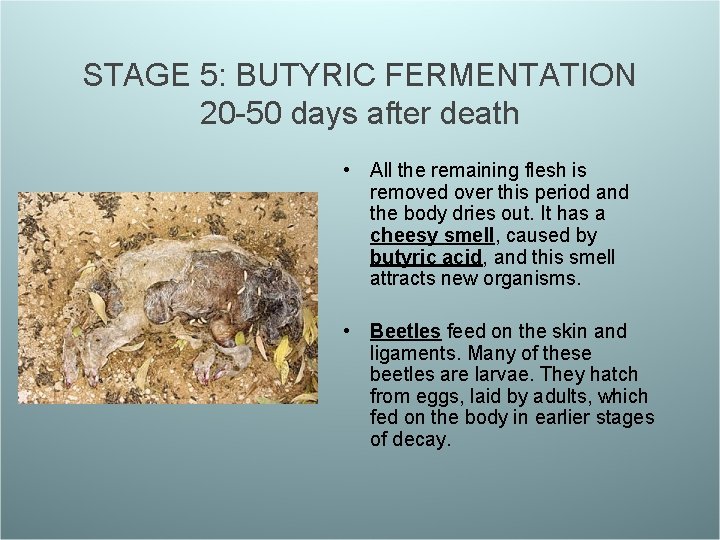
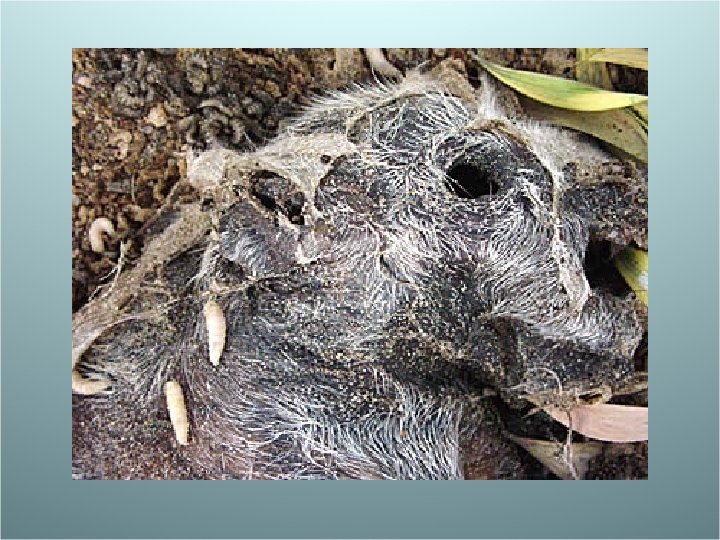
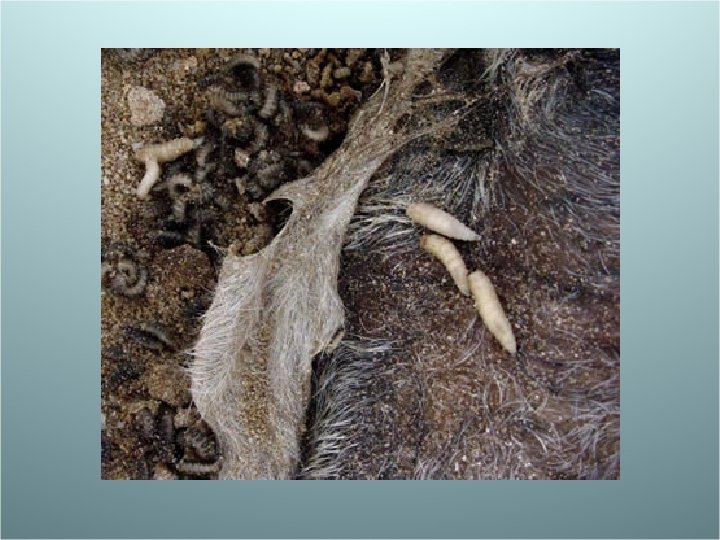
STAGE 5: BUTYRIC FERMENTATION 20 -50 days after death • All the remaining flesh is removed over this period and the body dries out. It has a cheesy smell, caused by butyric acid, and this smell attracts new organisms. • Beetles feed on the skin and ligaments. Many of these beetles are larvae. They hatch from eggs, laid by adults, which fed on the body in earlier stages of decay.
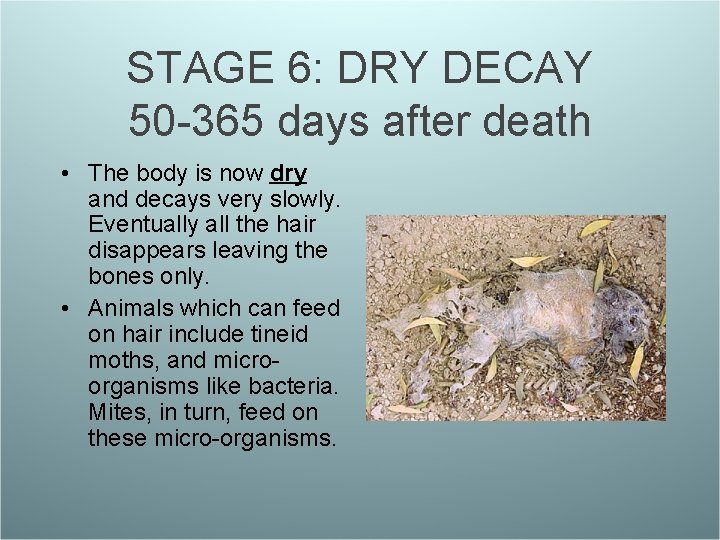
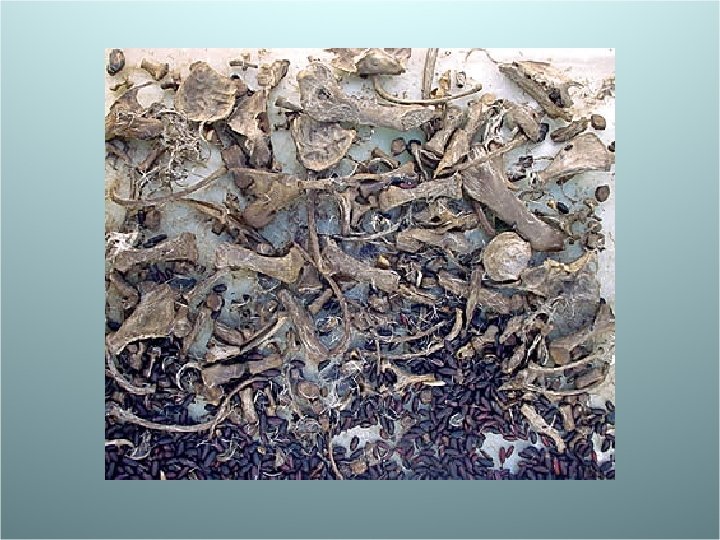
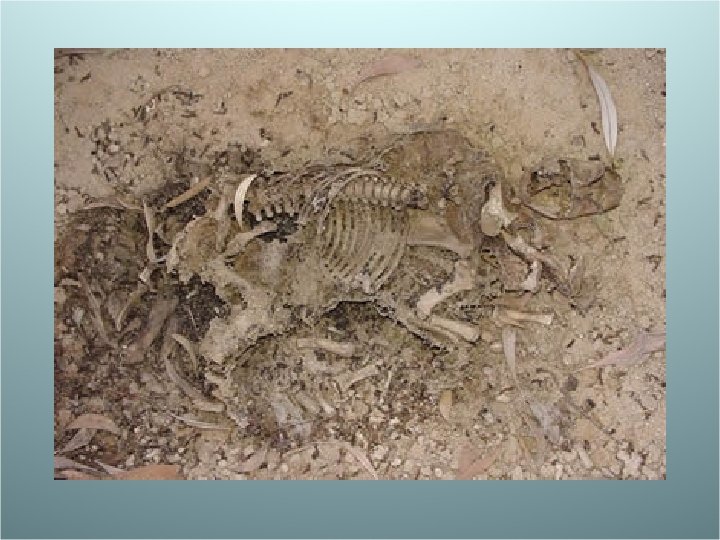
STAGE 6: DRY DECAY 50 -365 days after death • The body is now dry and decays very slowly. Eventually all the hair disappears leaving the bones only. • Animals which can feed on hair include tineid moths, and microorganisms like bacteria. Mites, in turn, feed on these micro-organisms.
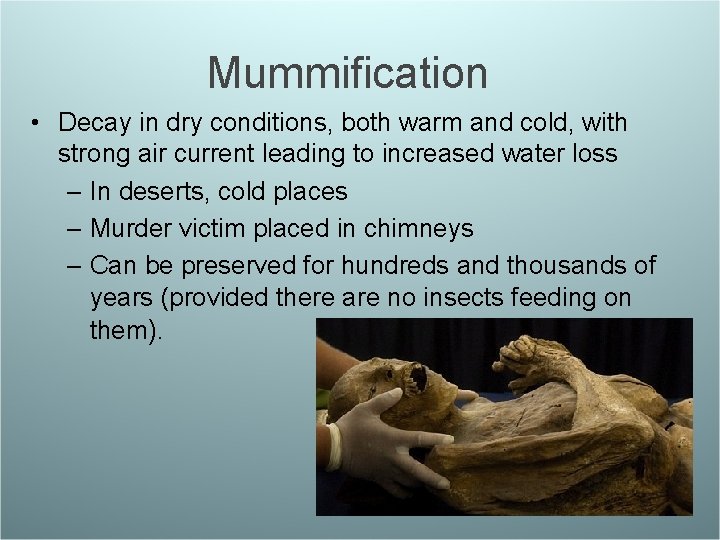
Mummification • Decay in dry conditions, both warm and cold, with strong air current leading to increased water loss – In deserts, cold places – Murder victim placed in chimneys – Can be preserved for hundreds and thousands of years (provided there are no insects feeding on them).
Factors Affecting Speed of Decay • Microbial, insect and vertebrate activity on the dead body can be influenced by: – Geographical location – Time of year – Exposure to sunlight • Combination of sun and humidity will lead to different outcomes – Wrapping and confinement – Burial • Type of soil (clay, p. H, mineral composition) • Burial dept – – – Hanging above ground Burial underwater Wounds Infections Burning Chemical treatment
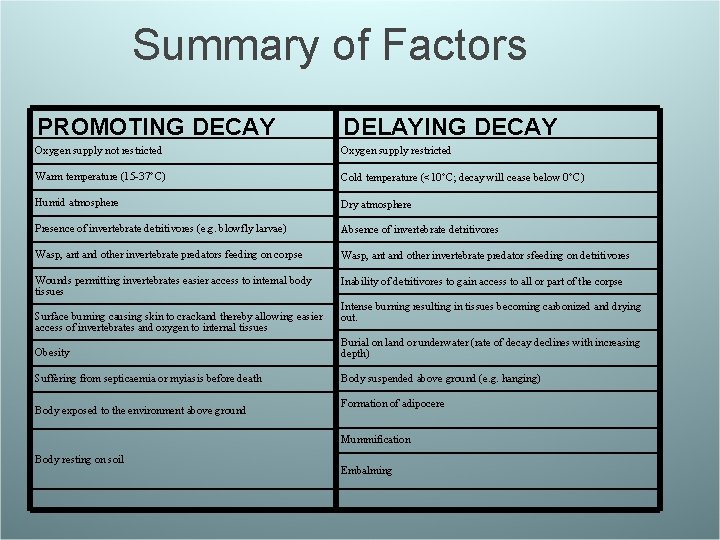
Summary of Factors PROMOTING DECAY DELAYING DECAY Oxygen supply not restricted Oxygen supply restricted Warm temperature (15 -37°C) Cold temperature (<10°C; decay will cease below 0°C) Humid atmosphere Dry atmosphere Presence of invertebrate detritivores (e. g. blowfly larvae) Absence of invertebrate detritivores Wasp, ant and other invertebrate predators feeding on corpse Wasp, ant and other invertebrate predator sfeeding on detritivores Wounds permitting invertebrates easier access to internal body tissues Inability of detritivores to gain access to all or part of the corpse Surface burning causing skin to crackand thereby allowing easier access of invertebrates and oxygen to internal tissues Intense burning resulting in tissues becoming carbonized and drying out. Obesity Burial on land or underwater (rate of decay declines with increasing depth) Suffering from septicaemia or myiasis before death Body suspended above ground (e. g. hanging) Body exposed to the environment above ground Formation of adipocere Mummification Body resting on soil Embalming