
Stages of Change Motivational interviewing Relapse prevention Dr
- Slides: 15
Stages of Change Motivational interviewing & Relapse prevention Dr Kylie Bailey Senior Clinical Psychologist; Service Manager, HPC; and Honorary Clinical Senior Lecturer, Psychology Department, UON
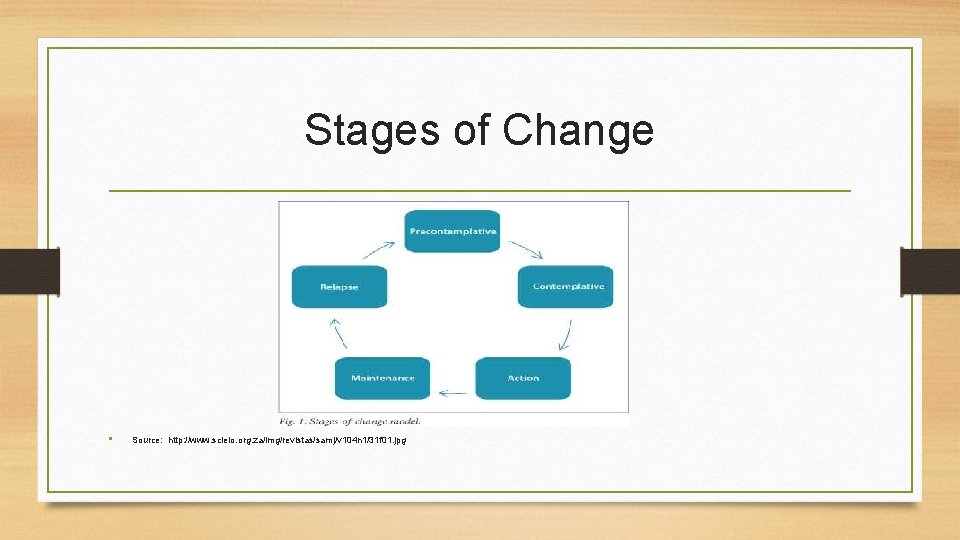
Stages of Change • Source: http: //www. scielo. org. za/img/revistas/samj/v 104 n 1/31 f 01. jpg
Precontemplation • • • Does not want to change, or believe there is any reason to change • Source: https: //upload. wikimedia. org/wikipedia/commons/f/fc/No_admittance_sign. png There are either no/little negatives The positives or benefits of the behavior, outweigh the negatives Listen for yes buts Any pressure at this stage may result in resistance
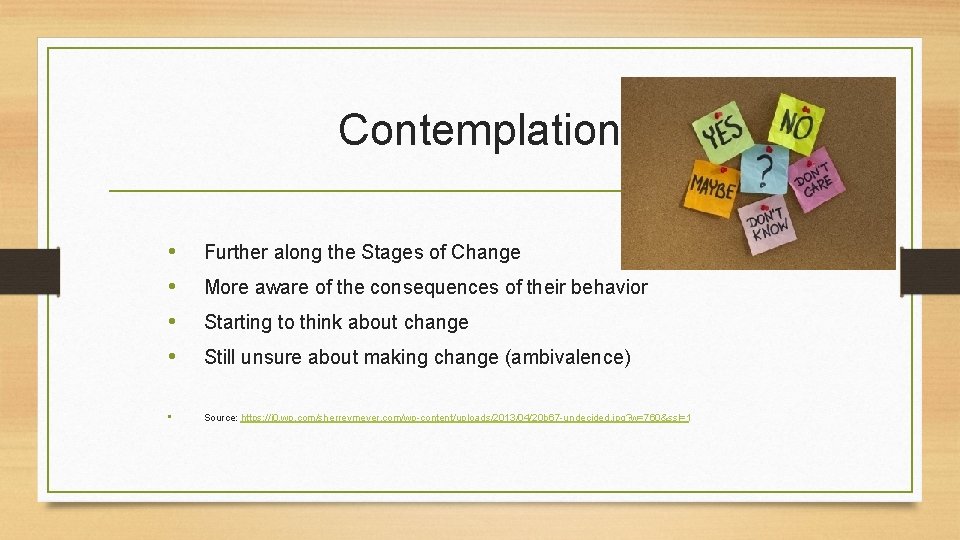
Contemplation • • Further along the Stages of Change • Source: https: //i 0. wp. com/sherreymeyer. com/wp-content/uploads/2013/04/20 b 67 -undecided. jpg? w=760&ssl=1 More aware of the consequences of their behavior Starting to think about change Still unsure about making change (ambivalence)
Preparation • • Also known as the Determination or Decision Making Stage • Source: https: //www. thebluediamondgallery. com/tablet/images/decision-making. jpg Starting to want to make a change Develop a plan for change Window of opportunity to implement a plan to change
Action • • • The plan for change is implemented • Source: http: //www. lifewiththequirkyboys. com/wp-content/uploads/2014/07/Plan-to-Action. jpg Need to teach coping skills (skill power, not will power) Relapse prevention
Maintenance • • New behaviour present for >3 / 6 months • Source: http: //www. pngall. com/wp-content/uploads/5/Construction-Maintenance-Transparent. png Encourage the benefits of behavior change is made Relapse prevention strategies are to be continued Ongoing teaching of new skills to manage new triggers
Motivational Interviewing • Four Principles: • • • Engaging Evoking Focussing Planning Source: http: //www. aliem. com/wp-content/uploads/interview. jpg
Change Talk vs Sustain Talk • Change talk indicates that the person is ready and making changes • DARN: Desire, Ability, Reason and Need • CATS: Commitment, Activation, Taking Steps • Sustain talk indicates no change • Source: https: //upload. wikimedia. org/wikipedia/commons/thumb/9/93/Talk_(Google). svg/1200 px-Talk_(Google). svg. png • Source: Grumpy Cat: https: //i 0. wp. com/cutetropolis. com/wp-content/uploads/29 -grumpy-cat. w 765. h 765. jpg? ssl=1
DARN Talk
Sustain Talk
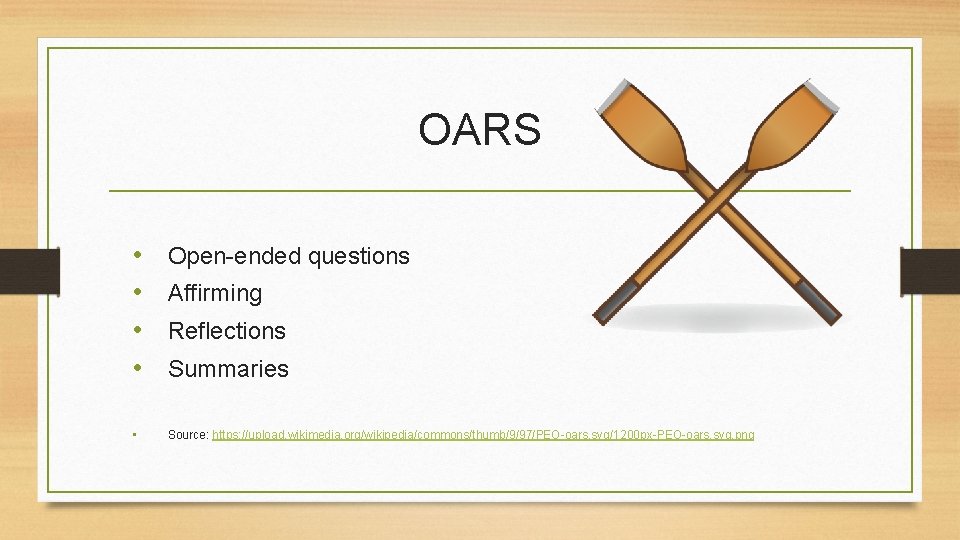
OARS • • Open-ended questions • Source: https: //upload. wikimedia. org/wikipedia/commons/thumb/9/97/PEO-oars. svg/1200 px-PEO-oars. svg. png Affirming Reflections Summaries
Brief Intervention Structure • FRAMES (Feedback, Responsibility, Advice, Menu of options, Empathy and Self-efficiacy) • • Opening structure • Source: https: //www. picpedia. org/highway-signs/images/intervention. jpg OARS Psychoeducation Closing the interview
Vignette • John is your patient and he smokes 20 tobacco cigarettes daily. He comes to see you for a persistent cough. After your assessment, you discuss symptom management and the impact of tobacco smoking on his respiratory health. You ask him if he would consider quitting. John says no, he has tried many times in the past and that he can’t quit. • Treatment Considerations: • What stage of change is John at? • Where is John’s self-efficacy about quitting? Is it high? Moderate? Low? • Is the abstinence violation effect something to consider?
Thank You • Best of luck with using your new skills to engage your patients and helping them to work towards their behaviour change goals.