
Staff Training and Development Unit The Importance of
- Slides: 8
Staff Training and Development Unit The Importance of PDR and making it work
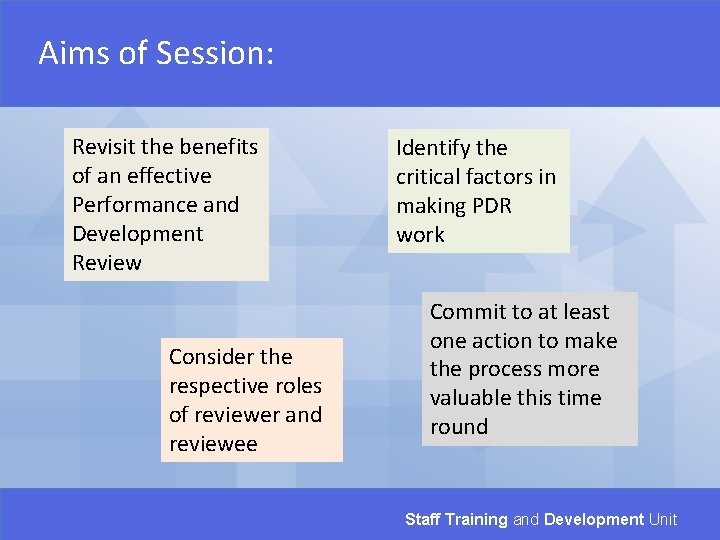
Aims of Session: Revisit the benefits of an effective Performance and Development Review Consider the respective roles of reviewer and reviewee Identify the critical factors in making PDR work Commit to at least one action to make the process more valuable this time round Staff Training and Development Unit
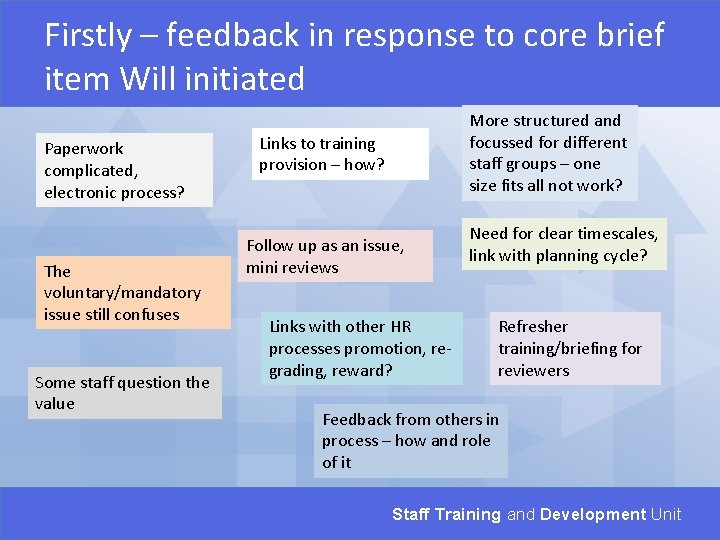
Firstly – feedback in response to core brief item Will initiated Paperwork complicated, electronic process? The voluntary/mandatory issue still confuses Some staff question the value More structured and focussed for different staff groups – one size fits all not work? Links to training provision – how? Follow up as an issue, mini reviews Links with other HR processes promotion, regrading, reward? Need for clear timescales, link with planning cycle? Refresher training/briefing for reviewers Feedback from others in process – how and role of it Staff Training and Development Unit
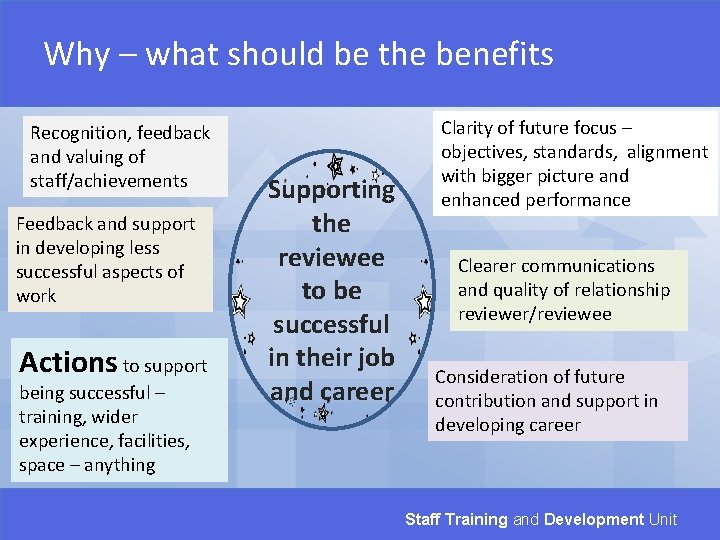
Why – what should be the benefits Recognition, feedback and valuing of staff/achievements Feedback and support in developing less successful aspects of work Actions to support being successful – training, wider experience, facilities, space – anything Supporting the reviewee to be successful in their job and career Clarity of future focus – objectives, standards, alignment with bigger picture and enhanced performance Clearer communications and quality of relationship reviewer/reviewee Consideration of future contribution and support in developing career Staff Training and Development Unit
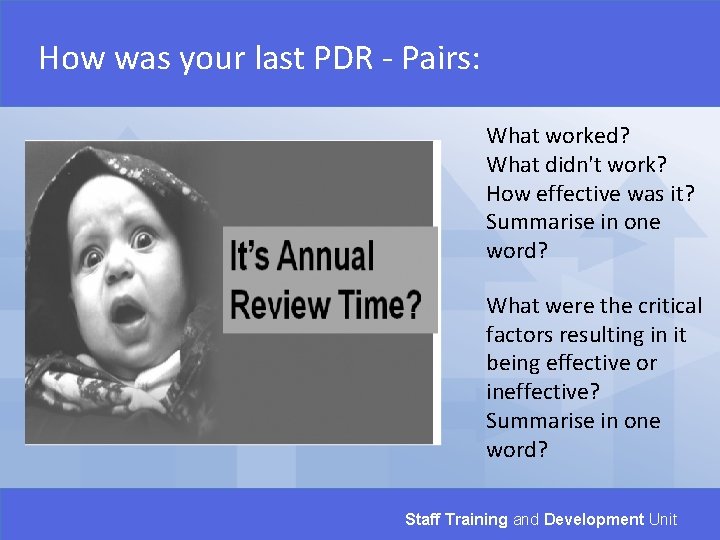
How was your last PDR - Pairs: What worked? What didn't work? How effective was it? Summarise in one word? What were the critical factors resulting in it being effective or ineffective? Summarise in one word? Staff Training and Development Unit
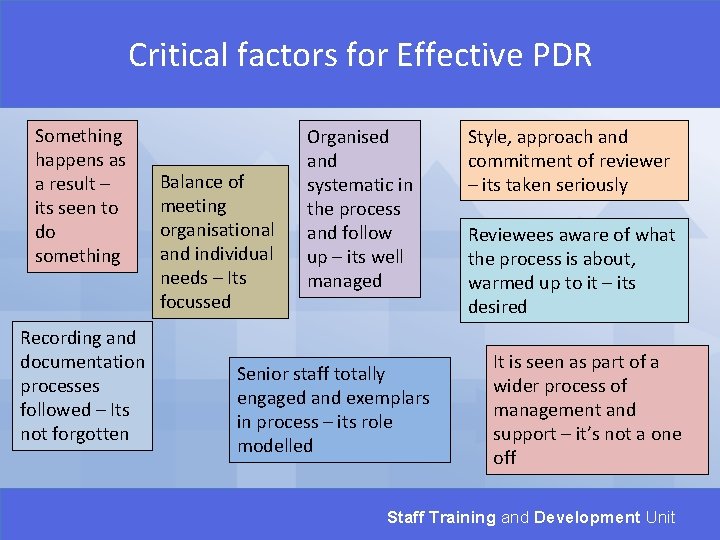
Critical factors for Effective PDR Something happens as a result – its seen to do something Recording and documentation processes followed – Its not forgotten Balance of meeting organisational and individual needs – Its focussed Organised and systematic in the process and follow up – its well managed Senior staff totally engaged and exemplars in process – its role modelled Style, approach and commitment of reviewer – its taken seriously Reviewees aware of what the process is about, warmed up to it – its desired It is seen as part of a wider process of management and support – it’s not a one off Staff Training and Development Unit
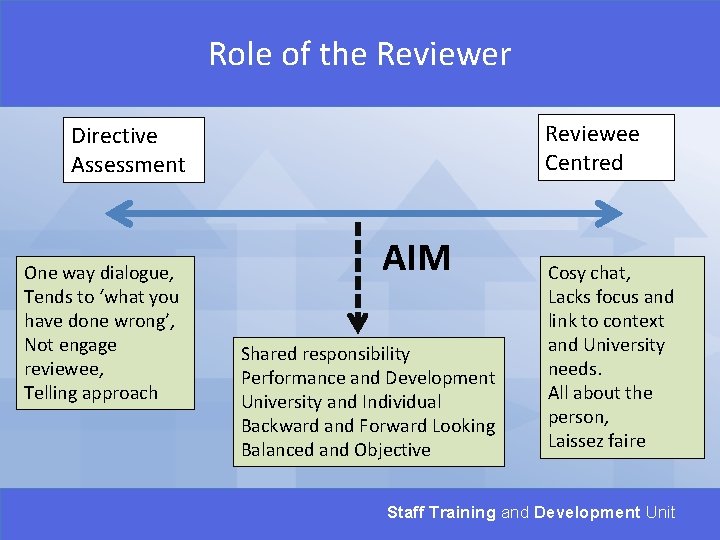
Role of the Reviewer Reviewee Centred Directive Assessment One way dialogue, Tends to ‘what you have done wrong’, Not engage reviewee, Telling approach AIM Shared responsibility Performance and Development University and Individual Backward and Forward Looking Balanced and Objective Cosy chat, Lacks focus and link to context and University needs. All about the person, Laissez faire Staff Training and Development Unit
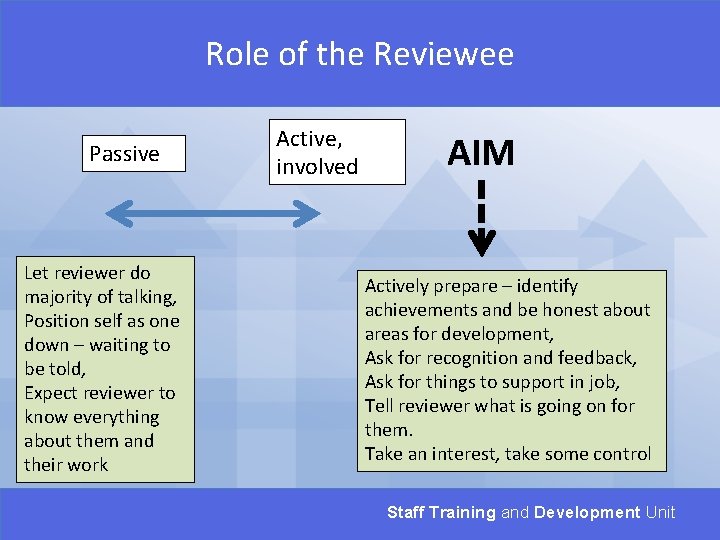
Role of the Reviewee Passive Let reviewer do majority of talking, Position self as one down – waiting to be told, Expect reviewer to know everything about them and their work Active, involved AIM Actively prepare – identify achievements and be honest about areas for development, Ask for recognition and feedback, Ask for things to support in job, Tell reviewer what is going on for them. Take an interest, take some control Staff Training and Development Unit