
Stable Isotopes as a Research Tool in Snow
Stable Isotopes as a Research Tool in Snow Hydrology
Important Concepts • What are Isotopes? – Stable vs Radioactive • Isotopic ratios • Snow Hydrology case study: – Hydrograph Separation in an alpine basin
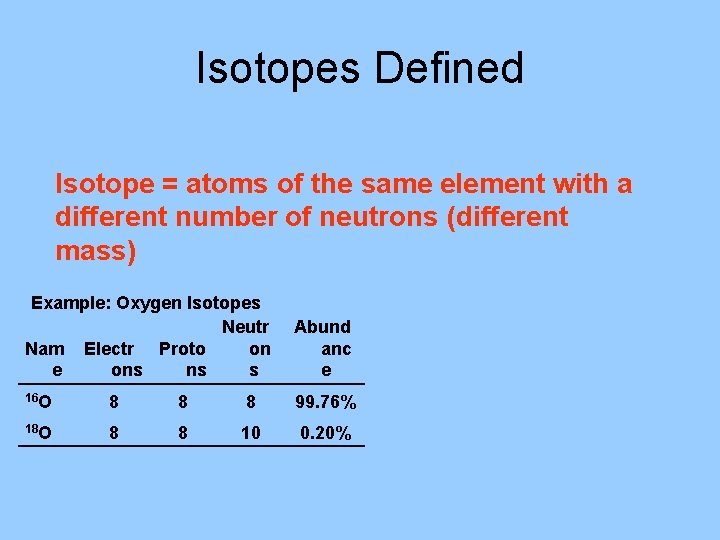
Isotopes Defined Isotope = atoms of the same element with a different number of neutrons (different mass) Example: Oxygen Isotopes Neutr Nam Electr Proto on s e ons ns Abund anc e 16 O 8 8 8 99. 76% 18 O 8 8 10 0. 20%
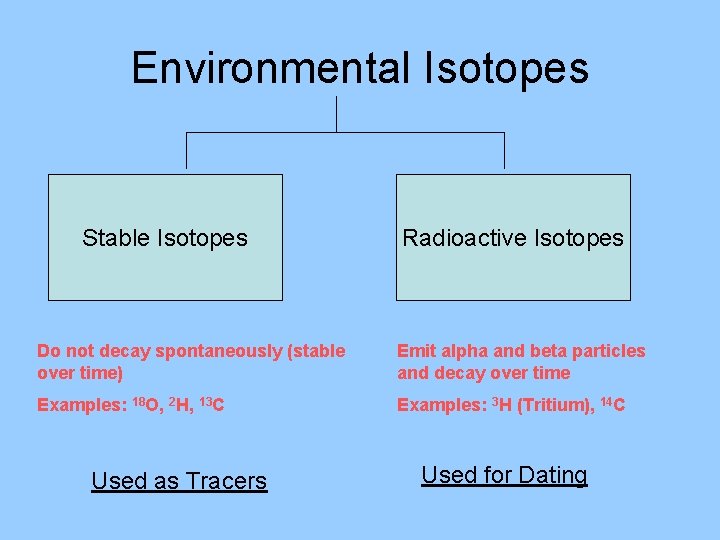
Environmental Isotopes Stable Isotopes Radioactive Isotopes Do not decay spontaneously (stable over time) Emit alpha and beta particles and decay over time Examples: 18 O, 2 H, 13 C Examples: 3 H (Tritium), 14 C Used as Tracers Used for Dating
Isotope Tracer Fundamentals • 18 O is a constituent part of the water molecule – it is the water molecule • Tracer that is applied naturally during precipitation events • Conservative in reactions with matrix materials at ambient temperatures • Only mixing can alter the concentration
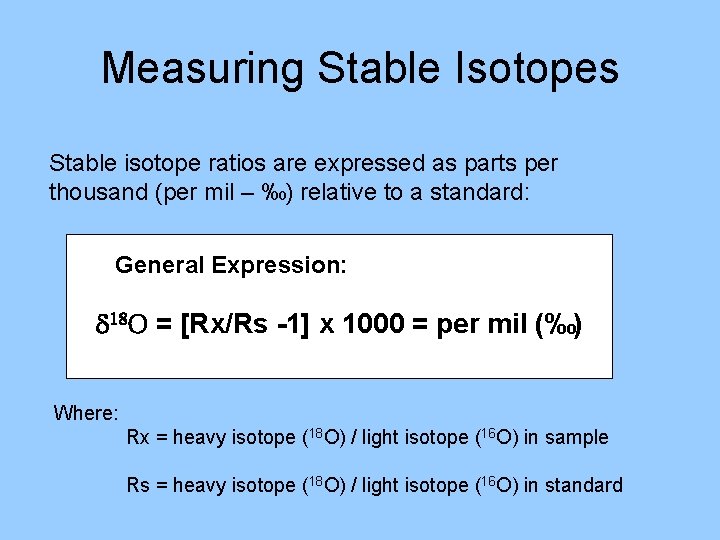
Measuring Stable Isotopes Stable isotope ratios are expressed as parts per thousand (per mil – ‰) relative to a standard: General Expression: d 18 O = [Rx/Rs -1] x 1000 = per mil (‰) Where: Rx = heavy isotope (18 O) / light isotope (16 O) in sample Rs = heavy isotope (18 O) / light isotope (16 O) in standard
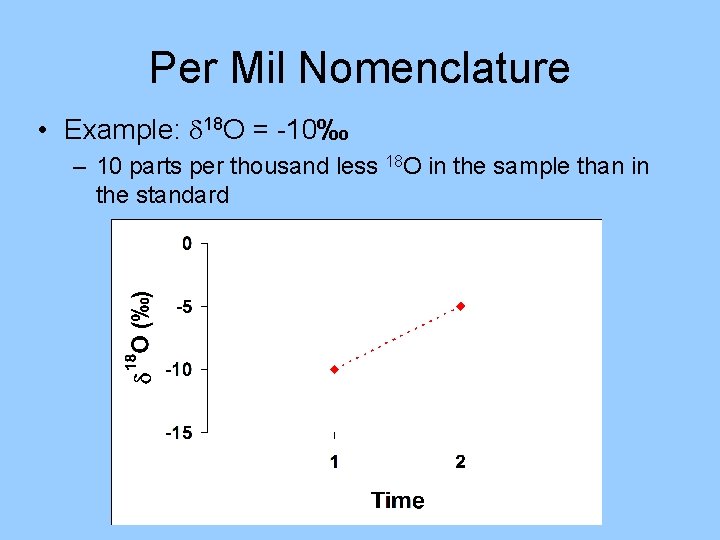
Per Mil Nomenclature • Example: d 18 O = -10‰ – 10 parts per thousand less 18 O in the sample than in the standard
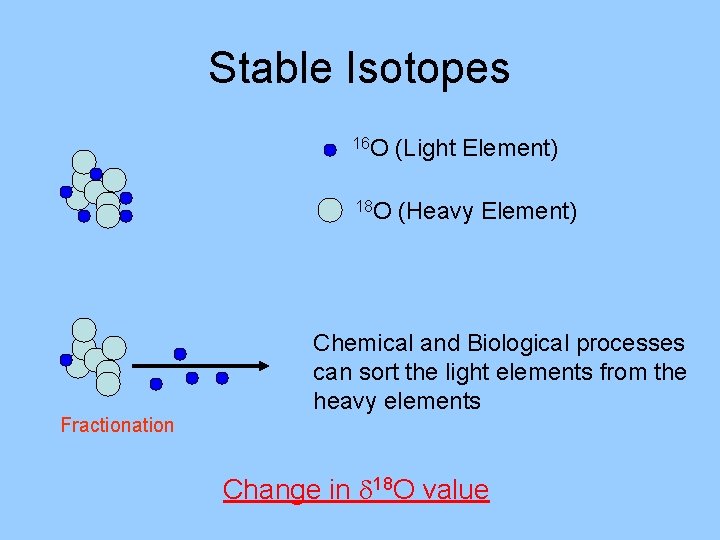
Stable Isotopes 16 O (Light Element) 18 O (Heavy Element) Chemical and Biological processes can sort the light elements from the heavy elements Fractionation Change in d 18 O value
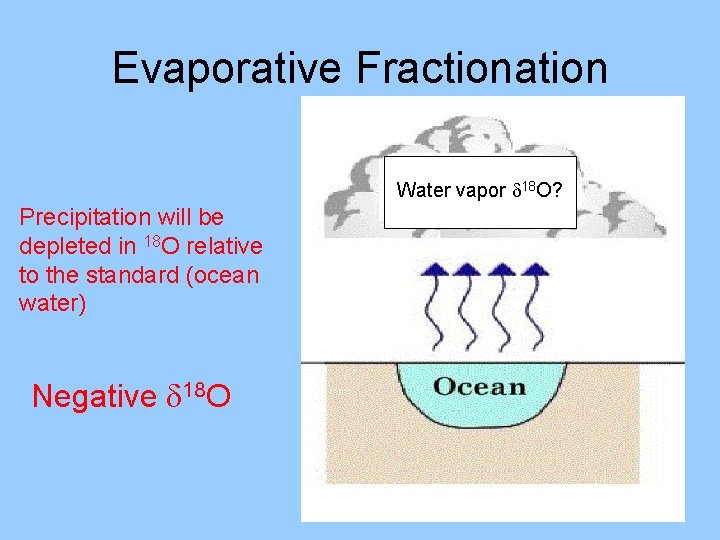
Evaporative Fractionation Water vapor d 18 O? Precipitation will be depleted in 18 O relative to the standard (ocean water) Negative d 18 O
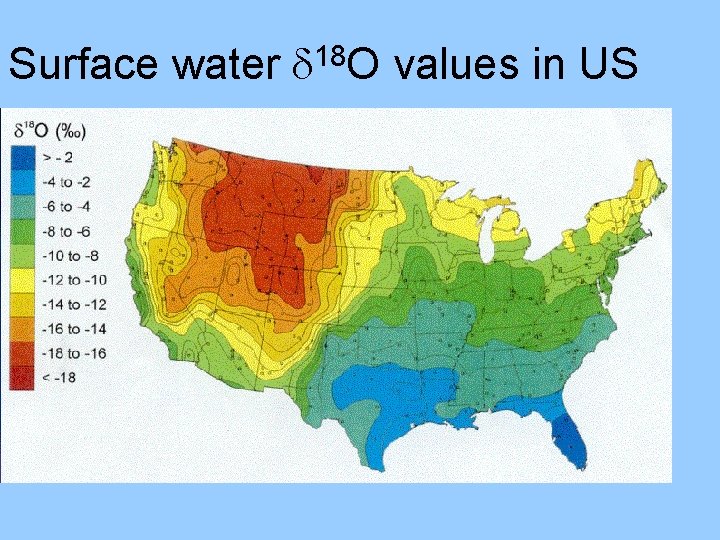
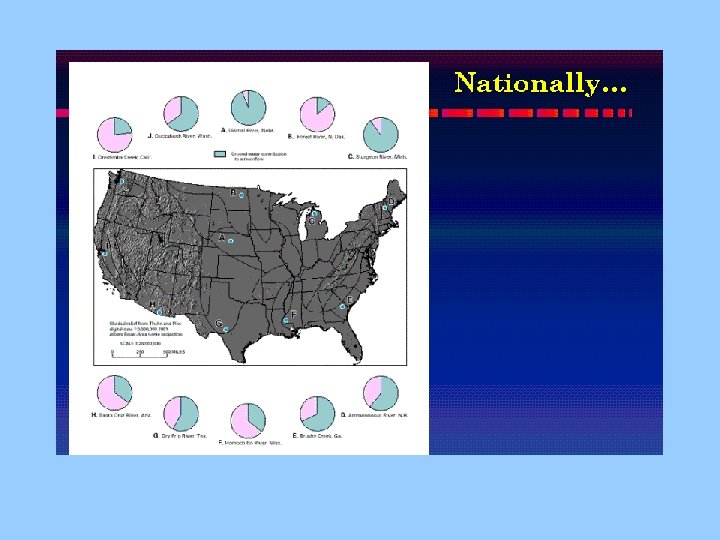
Surface water d 18 O values in US
Case Study: Hydrograph Separation in a seasonally snow-covered catchment
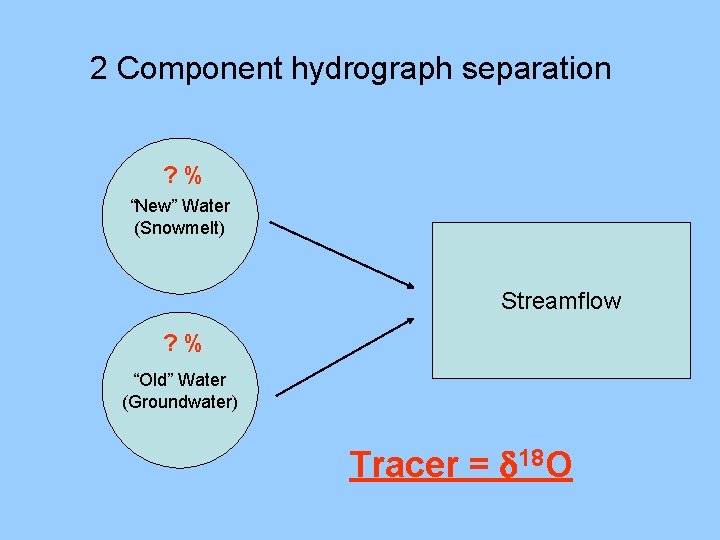
2 Component hydrograph separation ? % “New” Water (Snowmelt) Streamflow ? % “Old” Water (Groundwater) Tracer = d 18 O
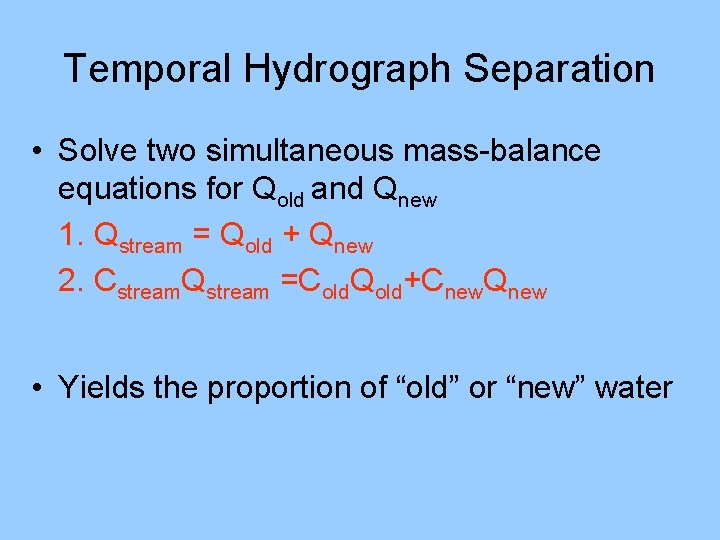
Temporal Hydrograph Separation • Solve two simultaneous mass-balance equations for Qold and Qnew 1. Qstream = Qold + Qnew 2. Cstream. Qstream =Cold. Qold+Cnew. Qnew • Yields the proportion of “old” or “new” water
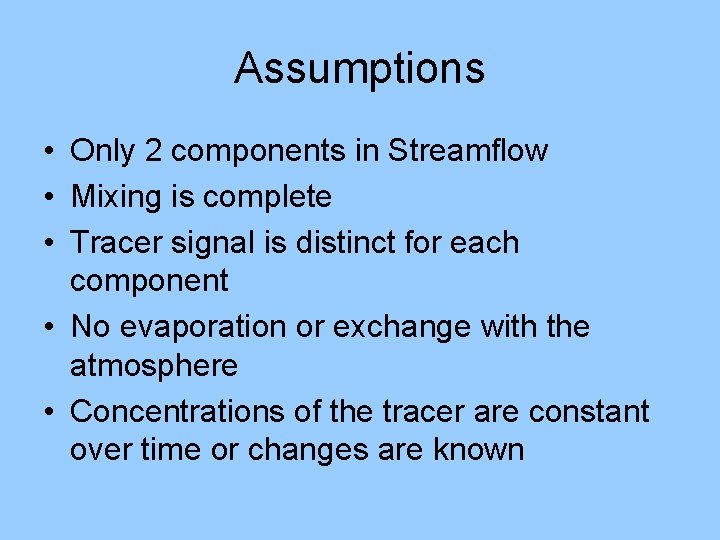
Assumptions • Only 2 components in Streamflow • Mixing is complete • Tracer signal is distinct for each component • No evaporation or exchange with the atmosphere • Concentrations of the tracer are constant over time or changes are known
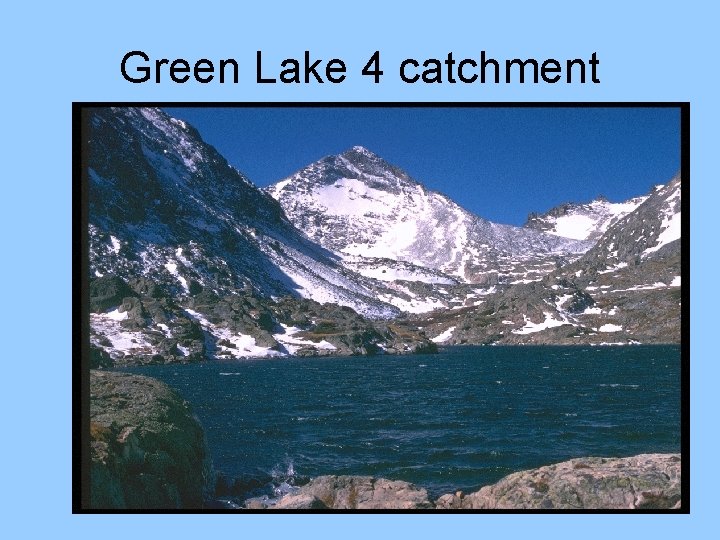
Green Lake 4 catchment
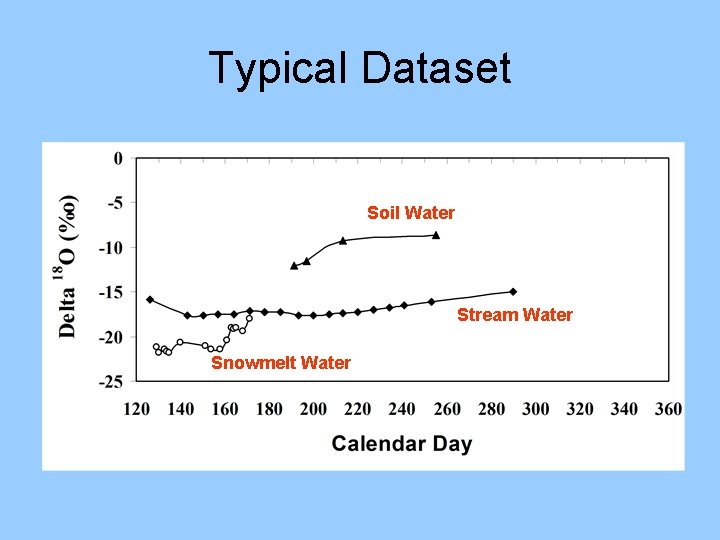
Typical Dataset Soil Water Stream Water Snowmelt Water
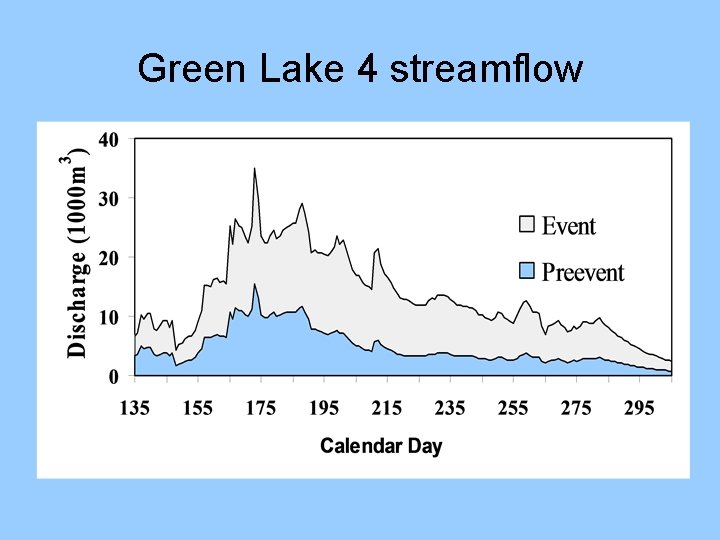
Green Lake 4 streamflow
Why is this important? • How precipitation becomes streamflow • Role of groundwater in streamflow • Understanding water chemistry
Summary/Review • Stable isotopes – definition and measurement • 18 O as a tool for understanding the hydrology of seasonally snow-covered catchments • Assumptions in hydrograph separations Looking ahead: Stable isotopes as a tool for answering biogeochemical ? ’s at the catchment scale
- Slides: 20