
Stabilizing Factors at Synovial Joints Shapes of articular
Stabilizing Factors at Synovial Joints • Shapes of articular surfaces (minor role) • Ligament number and location (limited role) • Muscle tone, which keeps tendons that cross the joint taut • Extremely important in reinforcing shoulder and knee joints and arches of the foot Copyright © 2010 Pearson Education, Inc.
Synovial Joints: Movement • Muscle attachments across a joint: • Origin—attachment to the immovable bone • Insertion—attachment to the movable bone • Muscle contraction causes the insertion to move toward the origin • Movements occur along transverse, frontal, or sagittal planes Copyright © 2010 Pearson Education, Inc.
Synovial Joints: Range of Motion • Nonaxial—slipping movements only • Uniaxial—movement in one plane • Biaxial—movement in two planes • Multiaxial—movement in or around all three planes Copyright © 2010 Pearson Education, Inc.
Summary of Characteristics of Body Joints Consult Table 8. 2 for: • Joint names • Articulating bones • Structural classification • Functional classification • Movements allowed Copyright © 2010 Pearson Education, Inc.
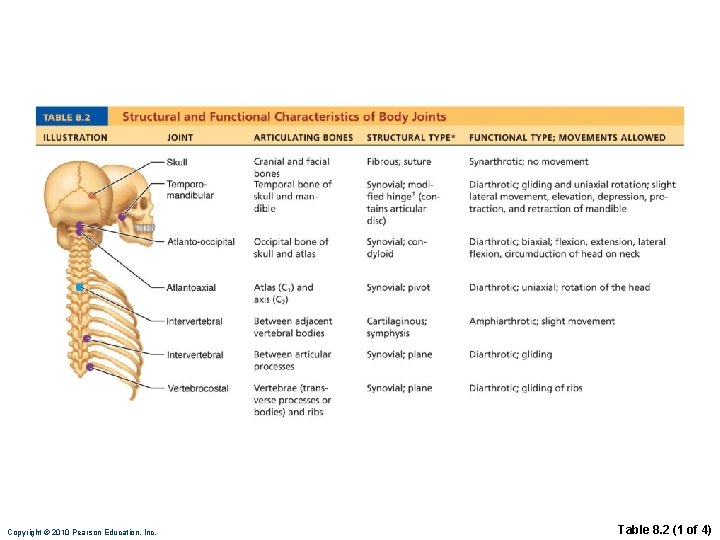
Copyright © 2010 Pearson Education, Inc. Table 8. 2 (1 of 4)
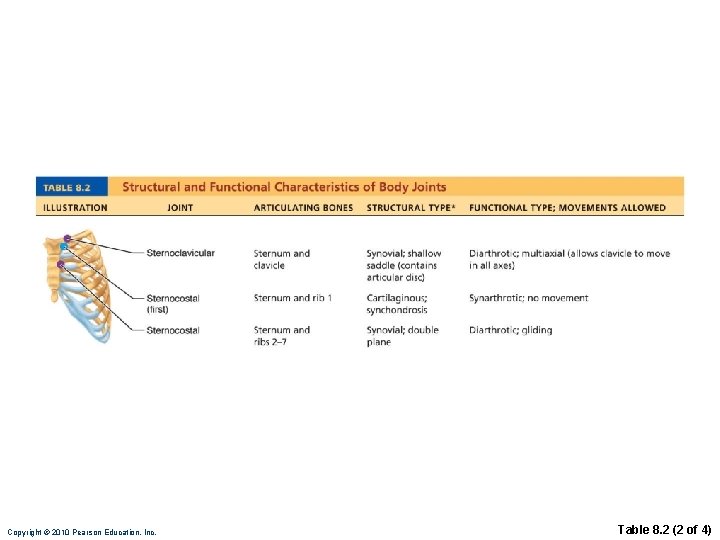
Copyright © 2010 Pearson Education, Inc. Table 8. 2 (2 of 4)
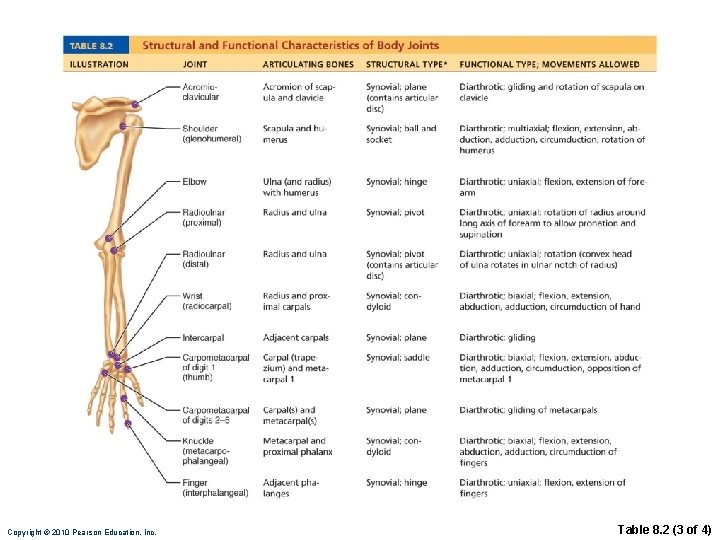
Copyright © 2010 Pearson Education, Inc. Table 8. 2 (3 of 4)
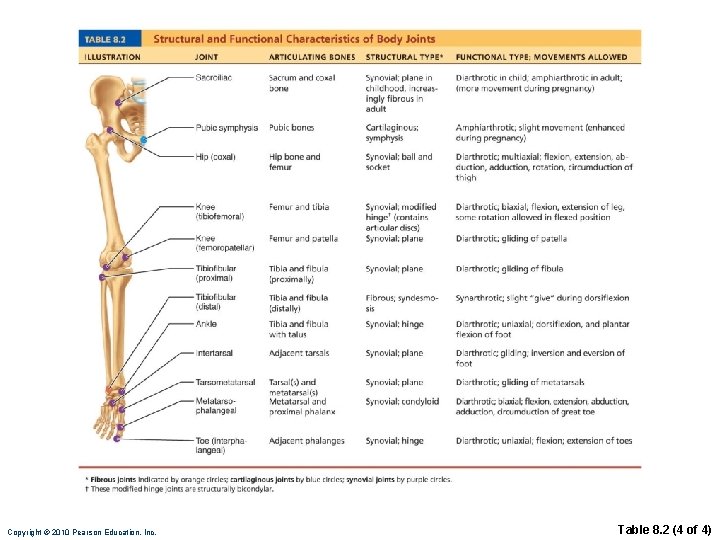
Copyright © 2010 Pearson Education, Inc. Table 8. 2 (4 of 4)
Movements at Synovial Joints 1. Gliding 2. Angular movements: • Flexion, extension, hyperextension • Abduction, adduction • Circumduction 3. Rotation • Medial and lateral rotation Copyright © 2010 Pearson Education, Inc.
Movements at Synovial Joints 4. Special movements • • • Supination, pronation Dorsiflexion, plantar flexion of the foot Inversion, eversion Protraction, retraction Elevation, depression Opposition Copyright © 2010 Pearson Education, Inc.
Gliding Movements • One flat bone surface glides or slips over another similar surface • Examples: • Intercarpal joints • Intertarsal joints • Between articular processes of vertebrae Copyright © 2010 Pearson Education, Inc.
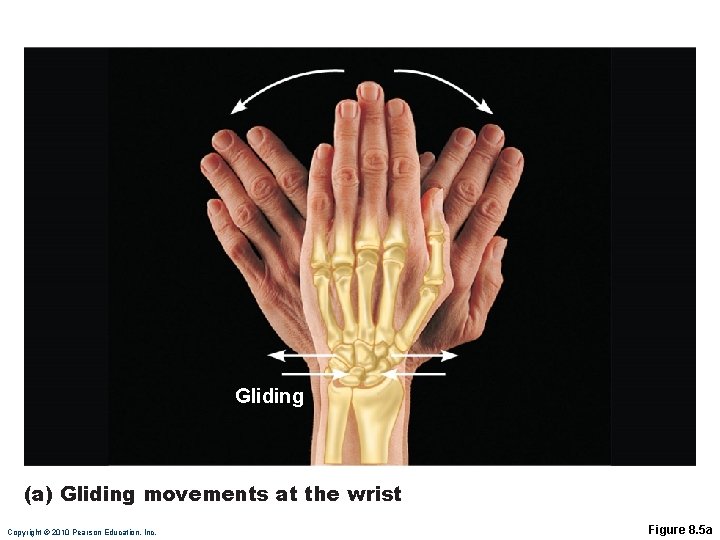
Gliding (a) Gliding movements at the wrist Copyright © 2010 Pearson Education, Inc. Figure 8. 5 a
Angular Movements that occur along the sagittal plane: • Flexion—decreases the angle of the joint • Extension— increases the angle of the joint • Hyperextension—excessive extension beyond normal range of motion Copyright © 2010 Pearson Education, Inc.
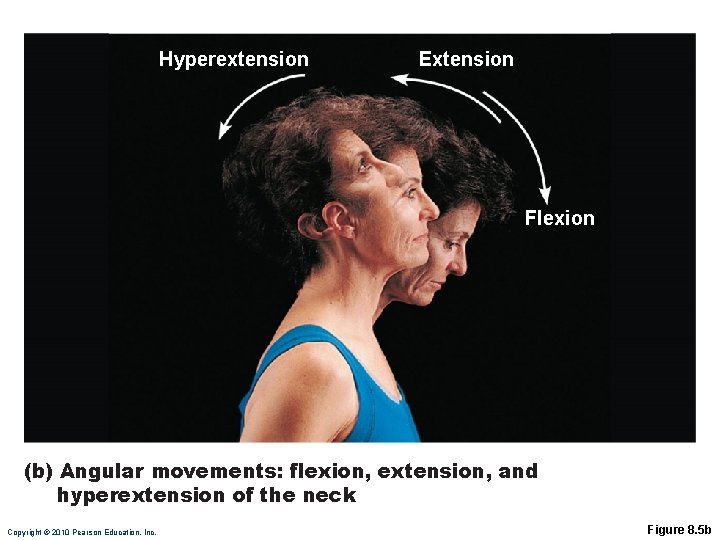
Hyperextension Extension Flexion (b) Angular movements: flexion, extension, and hyperextension of the neck Copyright © 2010 Pearson Education, Inc. Figure 8. 5 b
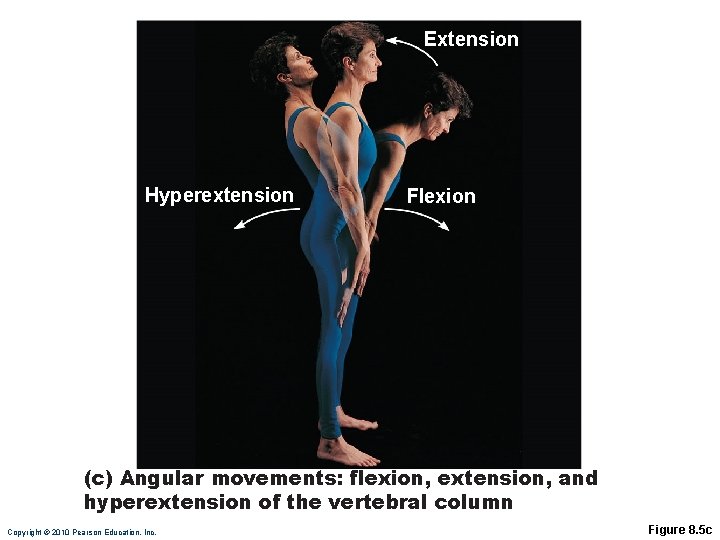
Extension Hyperextension Flexion (c) Angular movements: flexion, extension, and hyperextension of the vertebral column Copyright © 2010 Pearson Education, Inc. Figure 8. 5 c
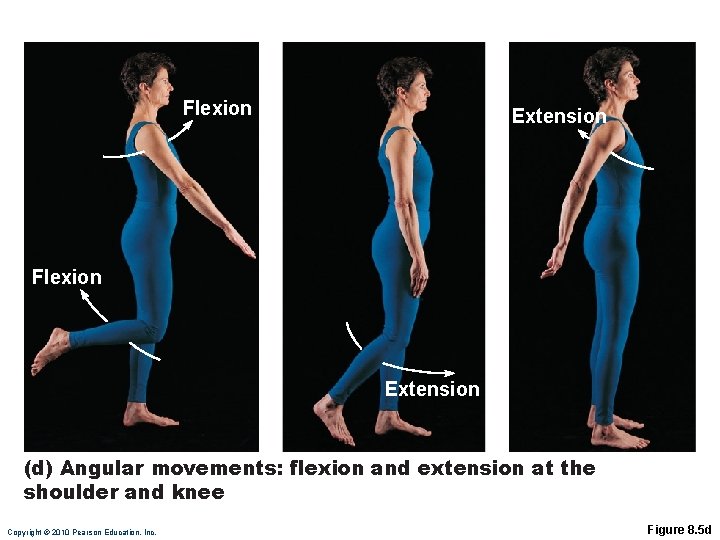
Flexion Extension (d) Angular movements: flexion and extension at the shoulder and knee Copyright © 2010 Pearson Education, Inc. Figure 8. 5 d
Angular Movements that occur along the frontal plane: • Abduction—movement away from the midline • Adduction—movement toward the midline • Circumduction—flexion + abduction + extension + adduction of a limb so as to describe a cone in space Copyright © 2010 Pearson Education, Inc.
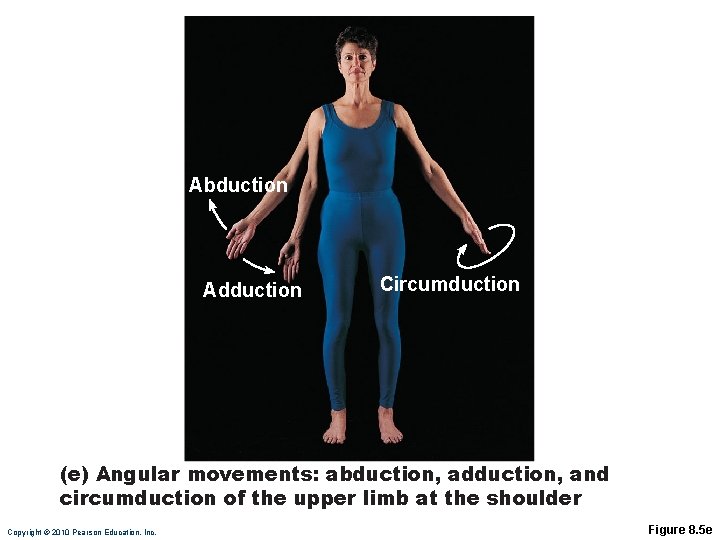
Abduction Adduction Circumduction (e) Angular movements: abduction, adduction, and circumduction of the upper limb at the shoulder Copyright © 2010 Pearson Education, Inc. Figure 8. 5 e
Rotation • The turning of a bone around its own long axis • Examples: • Between C 1 and C 2 vertebrae • Rotation of humerus and femur Copyright © 2010 Pearson Education, Inc.
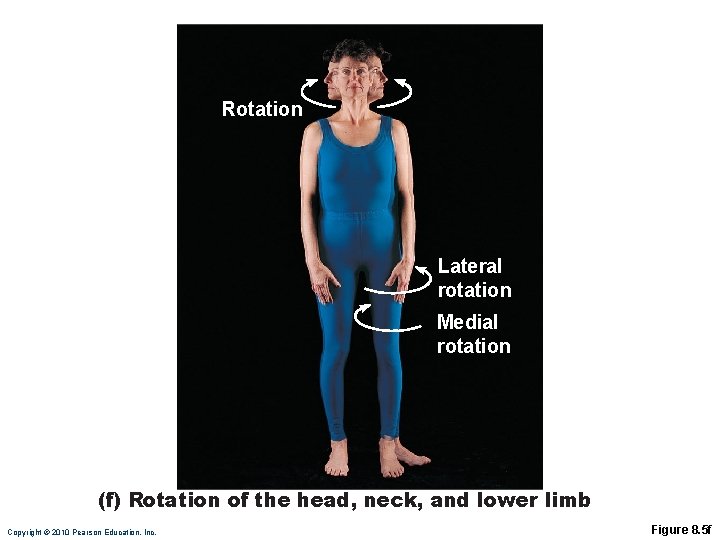
Rotation Lateral rotation Medial rotation (f) Rotation of the head, neck, and lower limb Copyright © 2010 Pearson Education, Inc. Figure 8. 5 f
Special Movements • Movements of radius around ulna: • Supination (turning hand backward) • Pronation (turning hand forward) Copyright © 2010 Pearson Education, Inc.
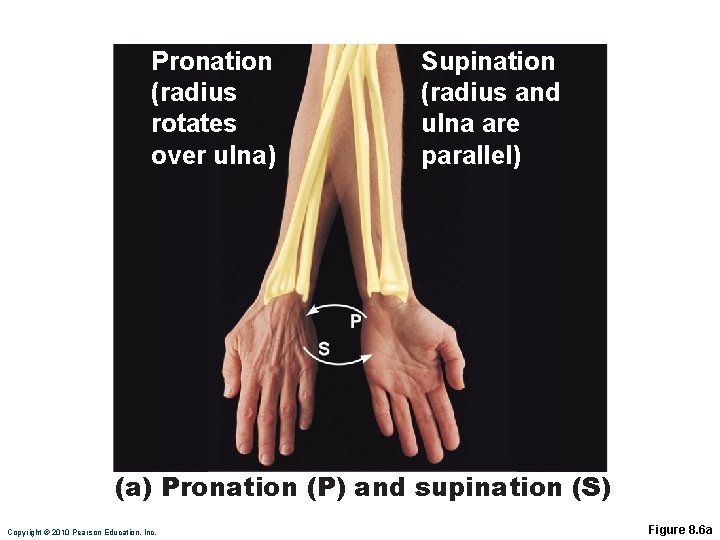
Pronation (radius rotates over ulna) Supination (radius and ulna are parallel) (a) Pronation (P) and supination (S) Copyright © 2010 Pearson Education, Inc. Figure 8. 6 a
Special Movements • Movements of the foot: • Dorsiflexion (upward movement) • Plantar flexion (downward movement) Copyright © 2010 Pearson Education, Inc.
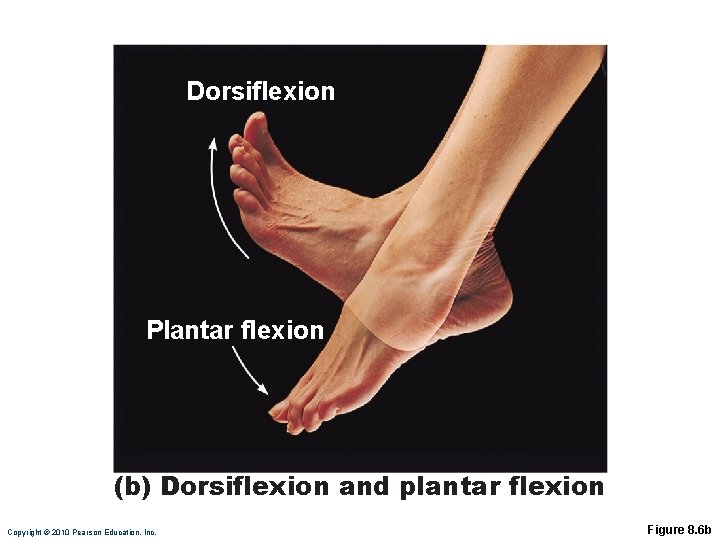
Dorsiflexion Plantar flexion (b) Dorsiflexion and plantar flexion Copyright © 2010 Pearson Education, Inc. Figure 8. 6 b
Special Movements • Movements of the foot: • Inversion (turn sole medially) • Eversion (turn sole laterally) Copyright © 2010 Pearson Education, Inc.
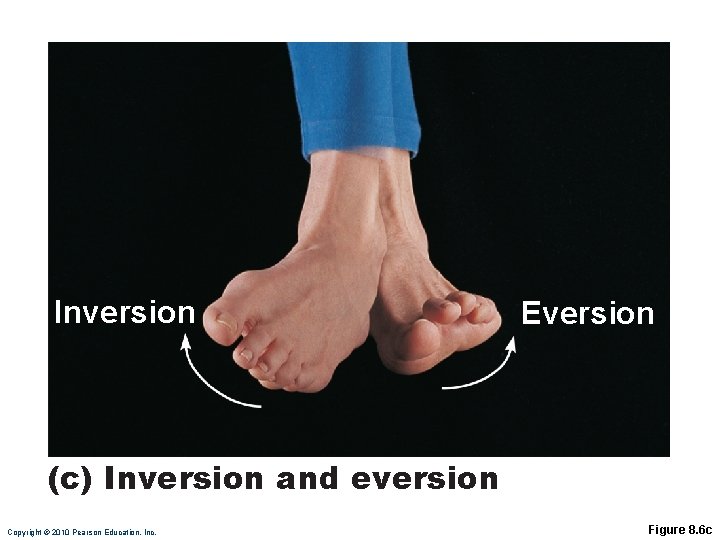
Inversion Eversion (c) Inversion and eversion Copyright © 2010 Pearson Education, Inc. Figure 8. 6 c
Special Movements • Movements in a transverse plane: • Protraction (anterior movement) • Retraction (posterior movement) Copyright © 2010 Pearson Education, Inc.
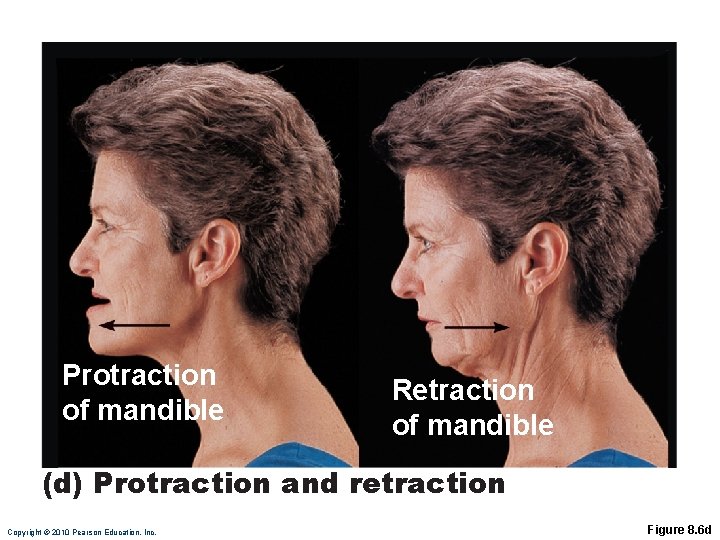
Protraction of mandible Retraction of mandible (d) Protraction and retraction Copyright © 2010 Pearson Education, Inc. Figure 8. 6 d
Special Movements • Elevation (lifting a body part superiorly) • Depression (moving a body part inferiorly) Copyright © 2010 Pearson Education, Inc.
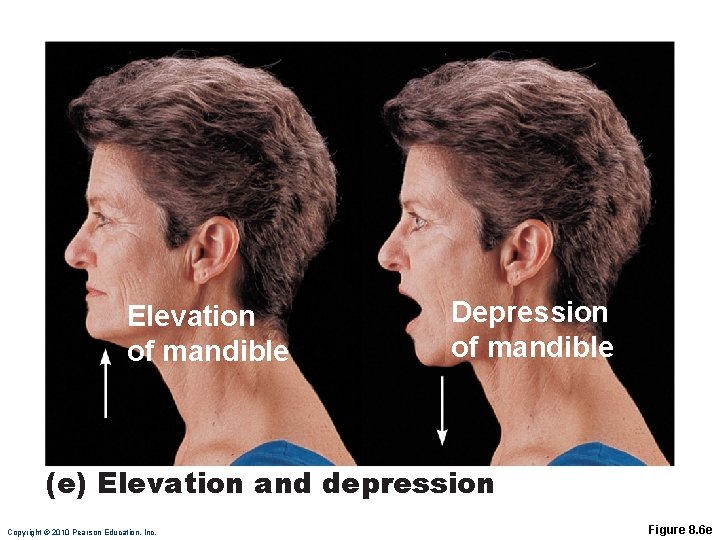
Elevation of mandible Depression of mandible (e) Elevation and depression Copyright © 2010 Pearson Education, Inc. Figure 8. 6 e
Special Movements • Opposition of the thumb • Movement in the saddle joint so that the thumb touches the tips of the other fingers Copyright © 2010 Pearson Education, Inc.
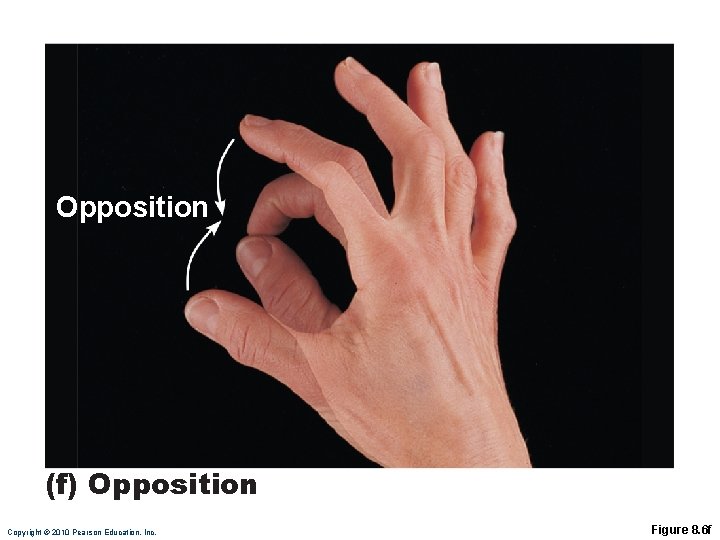
Opposition (f) Opposition Copyright © 2010 Pearson Education, Inc. Figure 8. 6 f
- Slides: 32