
Stability Measuring Instruments 743 Rancimat Uwe Loyall Metrohm

Stability Measuring Instruments 743 Rancimat Uwe Loyall Metrohm Ltd. CH-9100 Herisau Switzerland

Stability Overview Rancidity Principle of Rancimat method Evaluation Influences on the determination Temperature Extrapolation GLP - Validation of the instrument The 743 Rancimat Applications Rancimat

Stability Rancidity hydrolytic rancidity oxidative rancidity
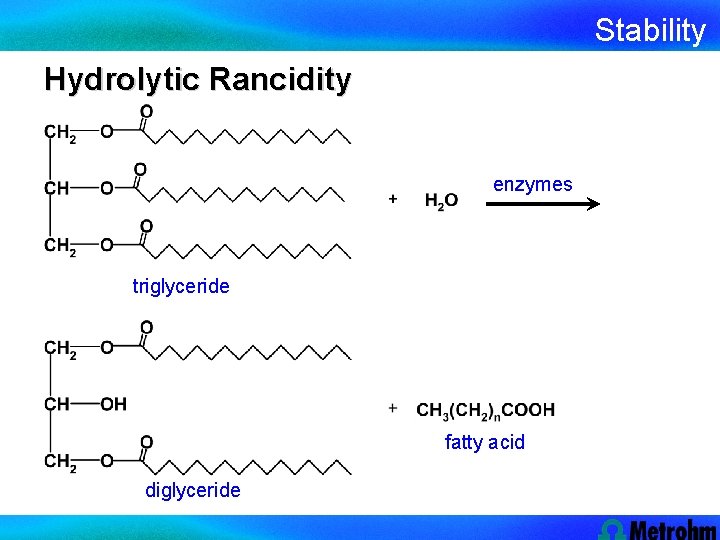
Stability Hydrolytic Rancidity enzymes triglyceride fatty acid diglyceride

Stability Hydrolytic Rancidity use only dry air for Rancimat measurements

Stability Oxidative Rancidity Radical chain reaction: Initiation l RH R. Propagation l R. + O 2 RO 2. l ROO. + RH R-OOH + R. Termination l R. + R. R-R l ROO. + R. R-OO-R

Stability Oxidative Rancidity Primary reaction products: l Peroxides (R-OO-R) l Hydroperoxides (R-OOH) èunstable Secondary reaction products: l Aldehydes l Alcohols l Carbonic acids
Stability Factors Accelerating Oxidation Oxygen Heavy metal ions (e. g. Fe, Cu) l catalyse chain initiation UV light
Stability Antioxidants Chain breaking substances l E. g. phenolic compounds l Examples n natural compounds synthetic antioxidants: BHA, BHT, TBHQ, . . . Tocopherol Complexing agents l citric acid, phosphoric acid, ascorbic acid, . . . UV deactivators l phenyl salicylate, hydroxybenzophenone
Stability Limitations for measurement of antioxidant activity Volatile antioxidants Antioxidants unstable at high temperatures

Stability Principle of Rancimat Method
Stability Quality Assessment of Fats/Oils Rancimat test = accelerated oxidation test l at elevated temperature l under exposure of air faster autoxidation in a few hours instead of weeks/months

Stability Principle of Rancimat Method organic acids stripped out of the oil by air flow molecular organic acids are formed fatty acids are oxidised by oxygen from air
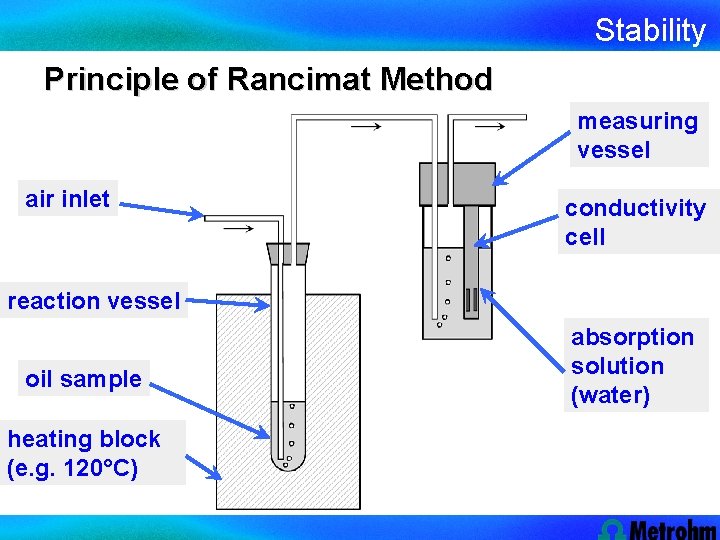
Stability Principle of Rancimat Method measuring vessel air inlet conductivity cell reaction vessel oil sample heating block (e. g. 120°C) absorption solution (water)
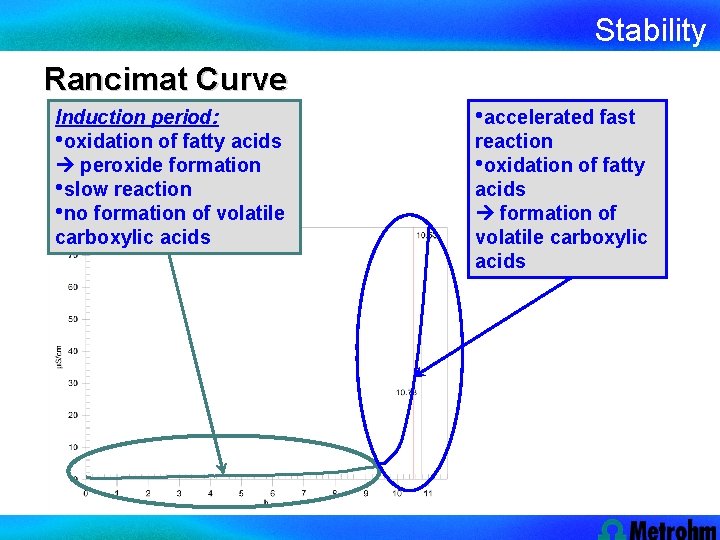
Stability Rancimat Curve Induction period: • oxidation of fatty acids peroxide formation • slow reaction • no formation of volatile carboxylic acids • accelerated fast reaction • oxidation of fatty acids formation of volatile carboxylic acids

Stability Evaluation
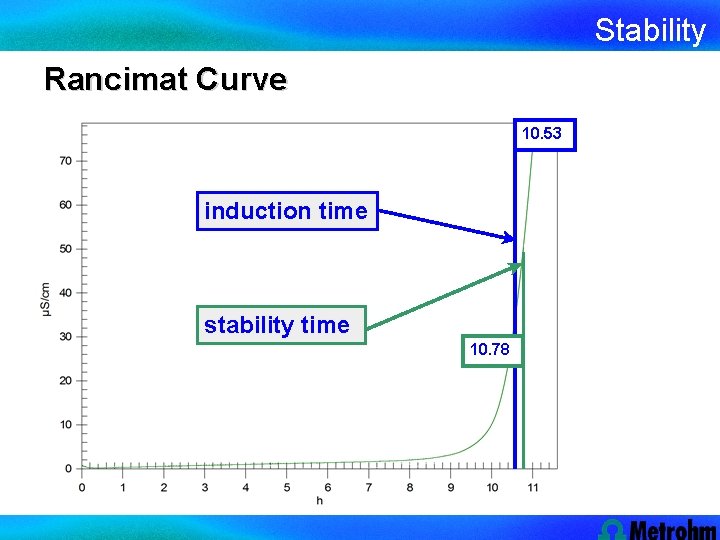
Stability Rancimat Curve 10. 53 induction time stability time 10. 78
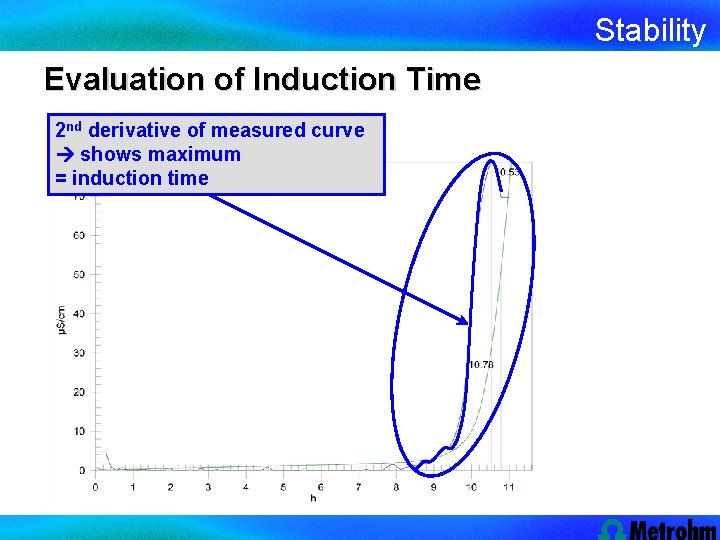
Stability Evaluation of Induction Time 2 nd derivative of measured curve shows maximum = induction time
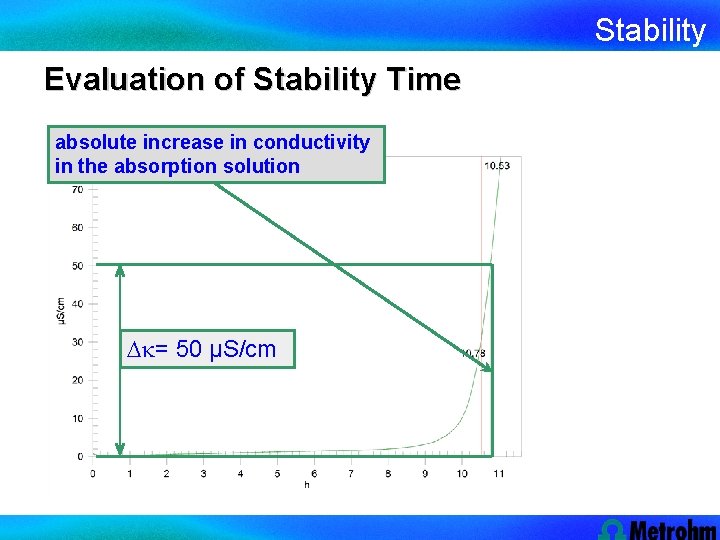
Stability Evaluation of Stability Time absolute increase in conductivity in the absorption solution = 50 µS/cm
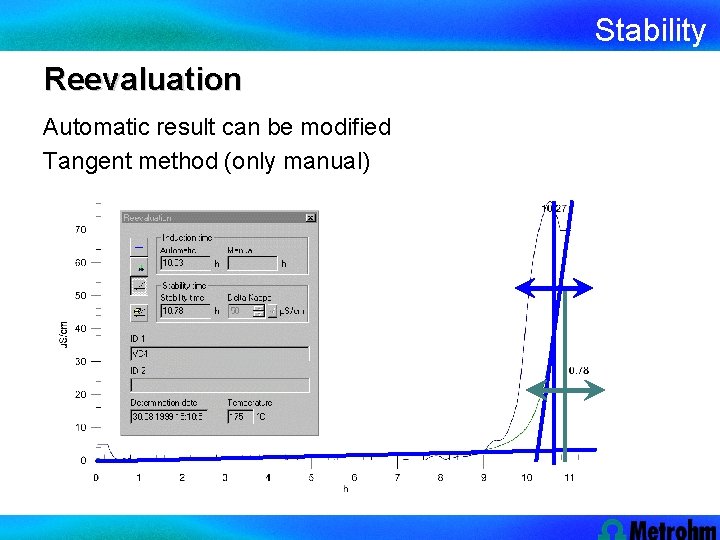
Stability Reevaluation Automatic result can be modified Tangent method (only manual)
Stability Influences on the determination Temperature Extrapolation Temperature Gas flow Sample weight
Stability Influences on the results Temperature: l 10°C increase 50% induction time l max. deviation of temperature: 0. 3°C l stability of temperature <0. 1°C l exact temperature adjustment important Gas flow: l small influence l no changes within ± 10% flow change Sample weight: l small influence l cooling effect depending on the sample weight
Stability Temperature Calibration Necessary equipment: l GLP set l with certified temperature sensor Control of the accuracy of the heating block Determination of the temperature correction l for each temperature l for each heating block l each gas flow
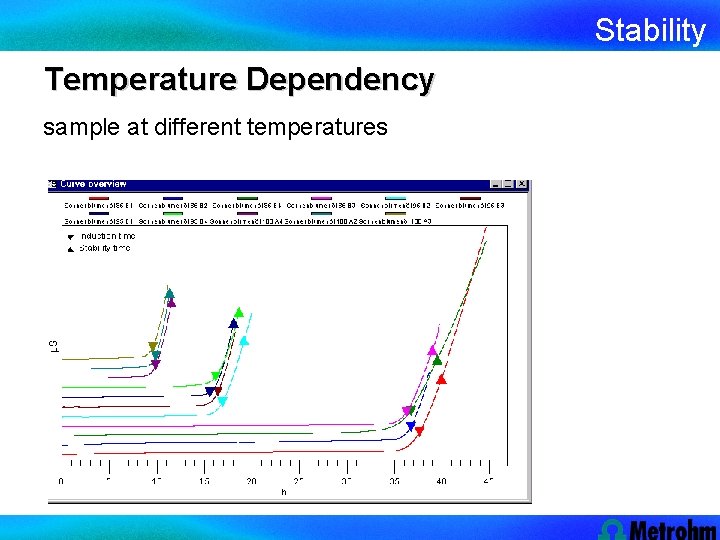
Stability Temperature Dependency sample at different temperatures
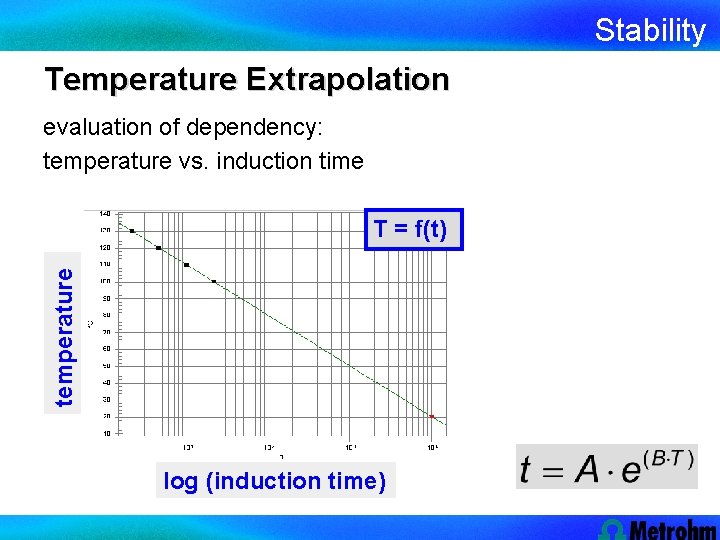
Stability Temperature Extrapolation evaluation of dependency: temperature vs. induction time temperature T = f(t) log (induction time)
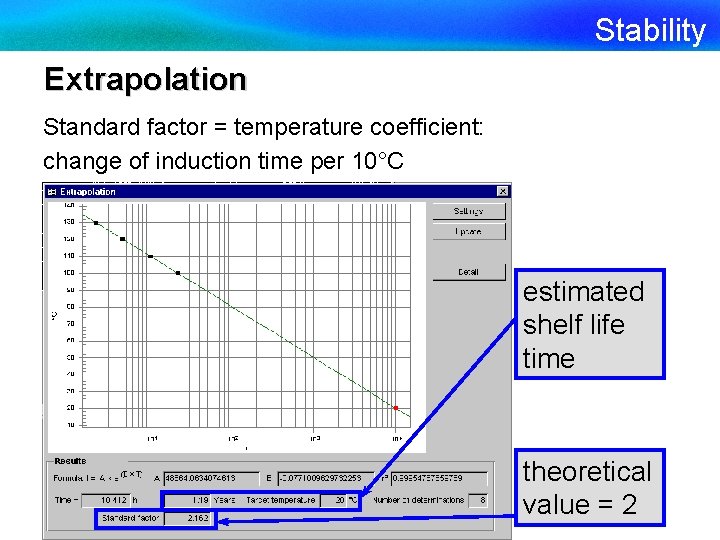
Stability Extrapolation Standard factor = temperature coefficient: change of induction time per 10°C estimated shelf life time theoretical value = 2

Stability The 743 Rancimat
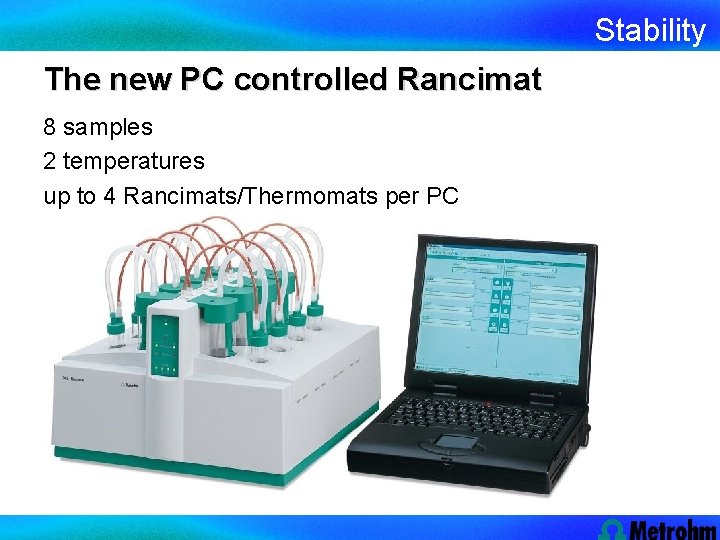
Stability The new PC controlled Rancimat 8 samples 2 temperatures up to 4 Rancimats/Thermomats per PC
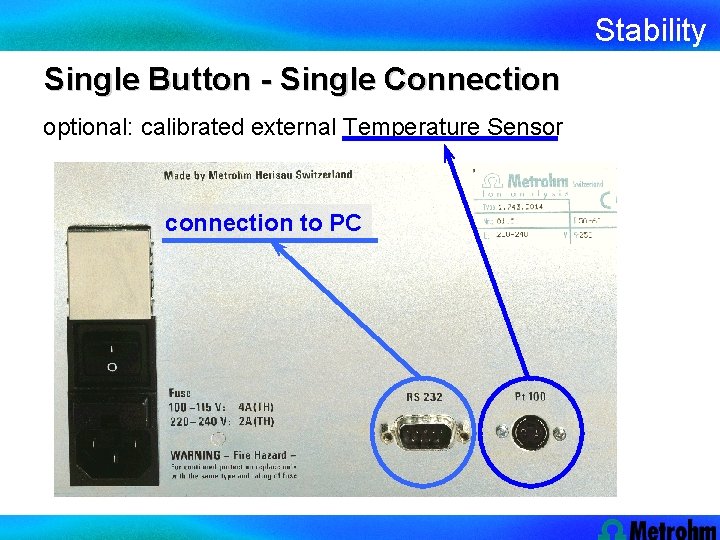
Stability Single Button - Single Connection optional: calibrated external Temperature Sensor connection to PC
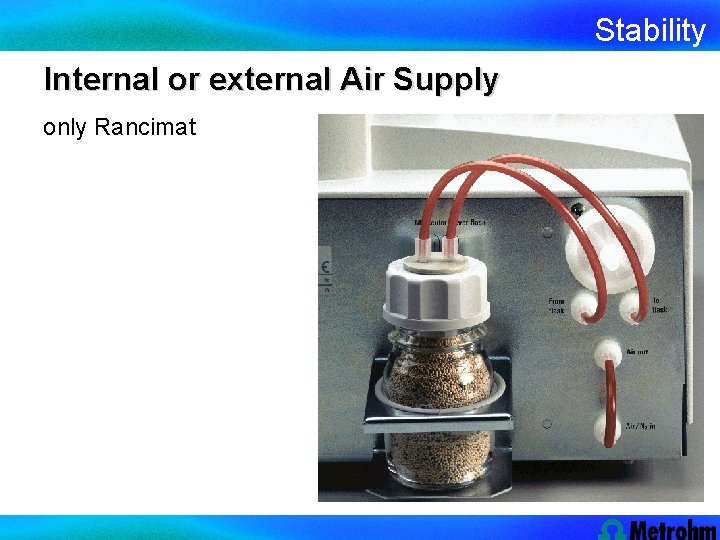
Stability Internal or external Air Supply only Rancimat

Stability Operation Disposable reaction vessels and gas inlet tubes no time-consuming cleaning no fragile and expensive glassware One-piece measuring vessel cover and conductivity cell

Stability Conductivity Cell constant: 1. 1 cm-1 (± 0. 1)
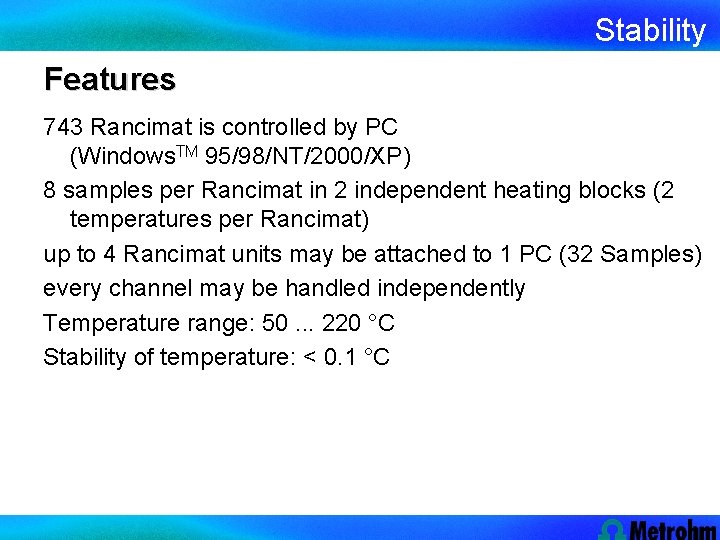
Stability Features 743 Rancimat is controlled by PC (Windows. TM 95/98/NT/2000/XP) 8 samples per Rancimat in 2 independent heating blocks (2 temperatures per Rancimat) up to 4 Rancimat units may be attached to 1 PC (32 Samples) every channel may be handled independently Temperature range: 50. . . 220 °C Stability of temperature: < 0. 1 °C
Stability Features Live curve Automatic determination of results acc. to AOCS Cd 12 b-92, AOM or other standard formats Database functions Reprocessing of single runs Determination of the temperature coefficient Disposable glassware Hardware validation / GLP Function --> improved result accuracy.

Stability Instrument Operation
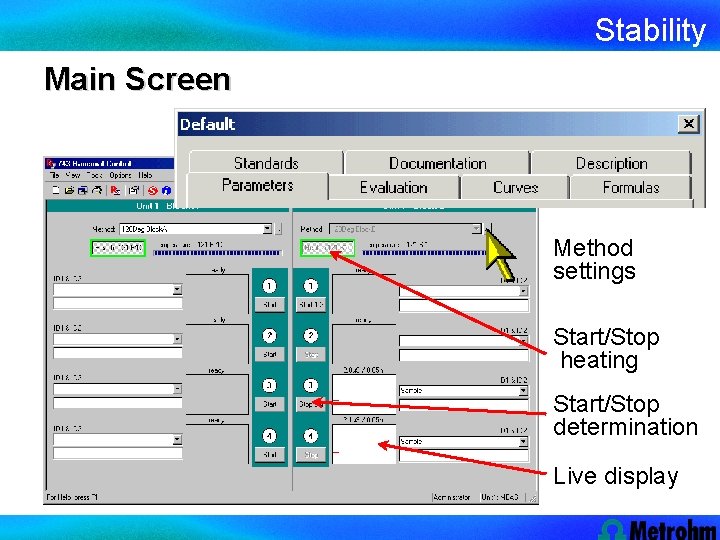
Stability Main Screen Method settings Start/Stop heating Start/Stop determination Live display
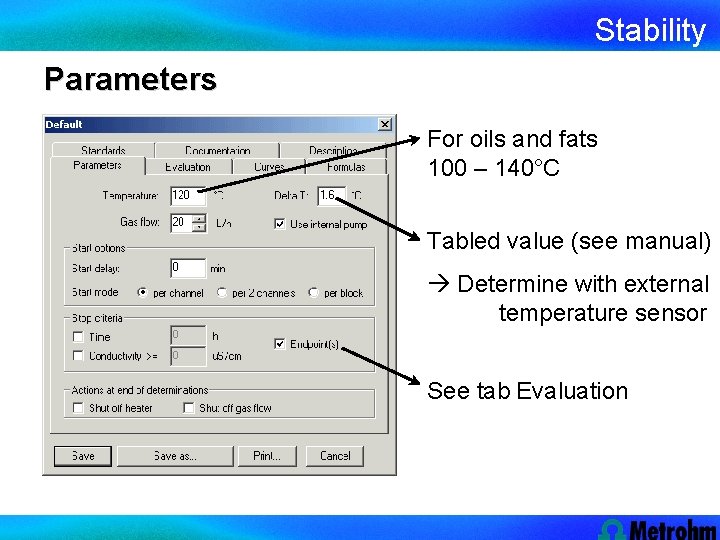
Stability Parameters For oils and fats 100 – 140°C Tabled value (see manual) Determine with external temperature sensor See tab Evaluation
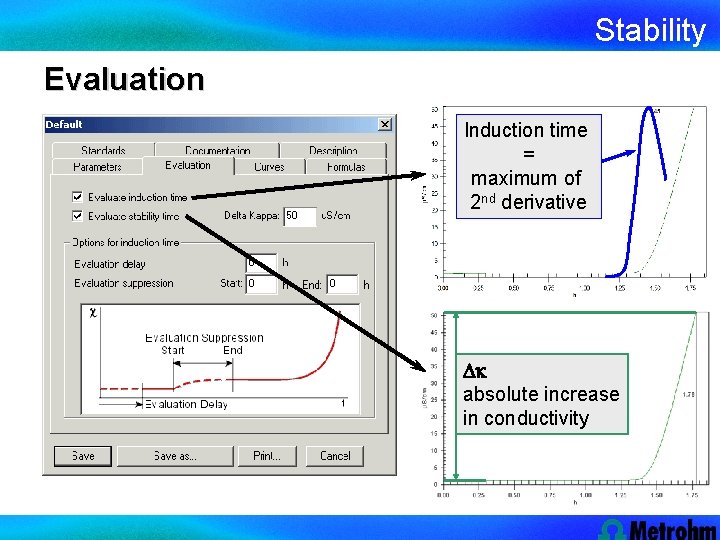
Stability Evaluation Induction time = maximum of 2 nd derivative Dk absolute increase in conductivity
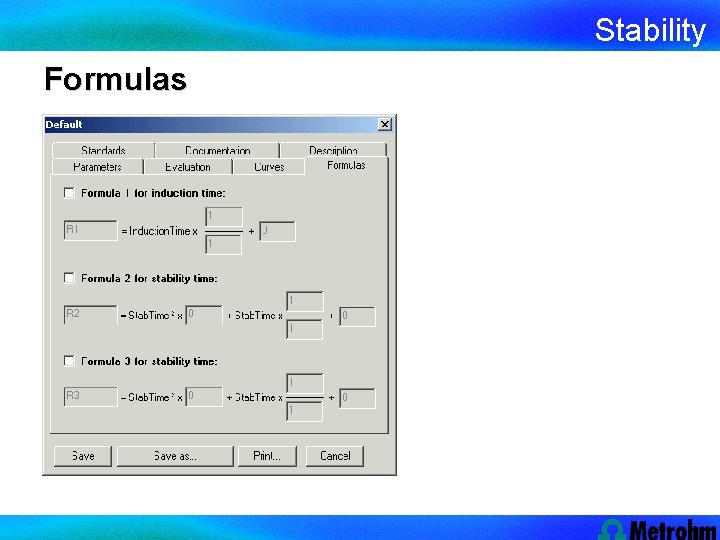
Stability Formulas
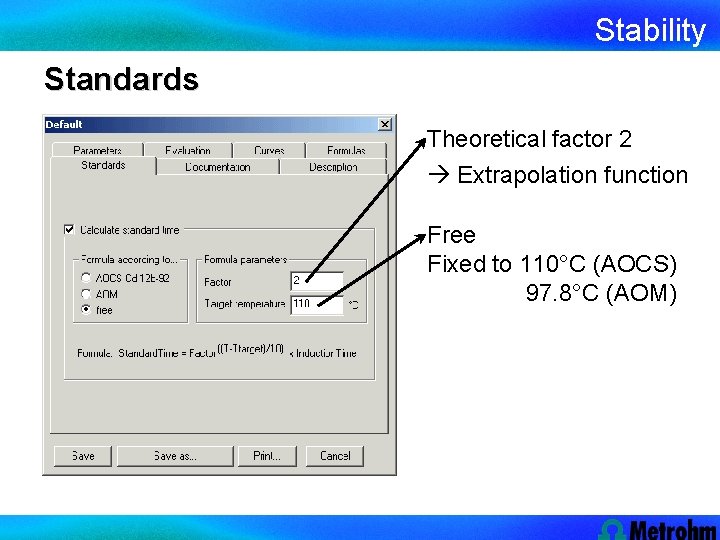
Stability Standards Theoretical factor 2 Extrapolation function Free Fixed to 110°C (AOCS) 97. 8°C (AOM)
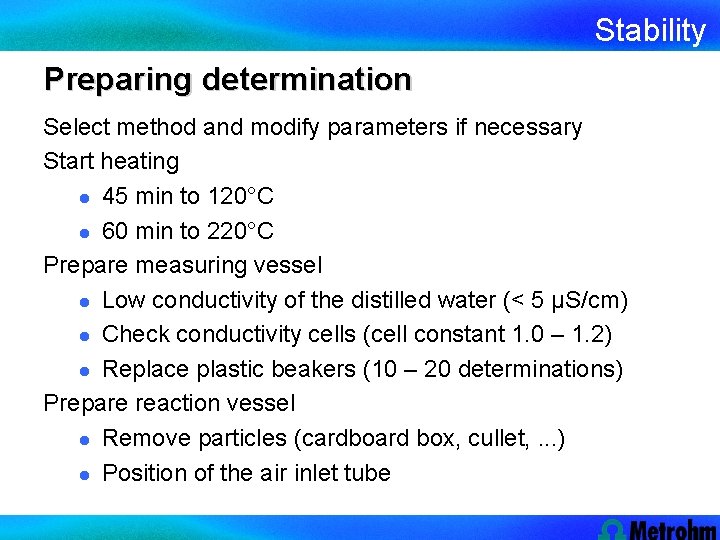
Stability Preparing determination Select method and modify parameters if necessary Start heating l 45 min to 120°C l 60 min to 220°C Prepare measuring vessel l Low conductivity of the distilled water (< 5 µS/cm) l Check conductivity cells (cell constant 1. 0 – 1. 2) l Replace plastic beakers (10 – 20 determinations) Prepare reaction vessel l Remove particles (cardboard box, cullet, . . . ) l Position of the air inlet tube
Stability When temperature is reached Place measuring vessel Connect tubings Insert reaction vessel Start determination immediately
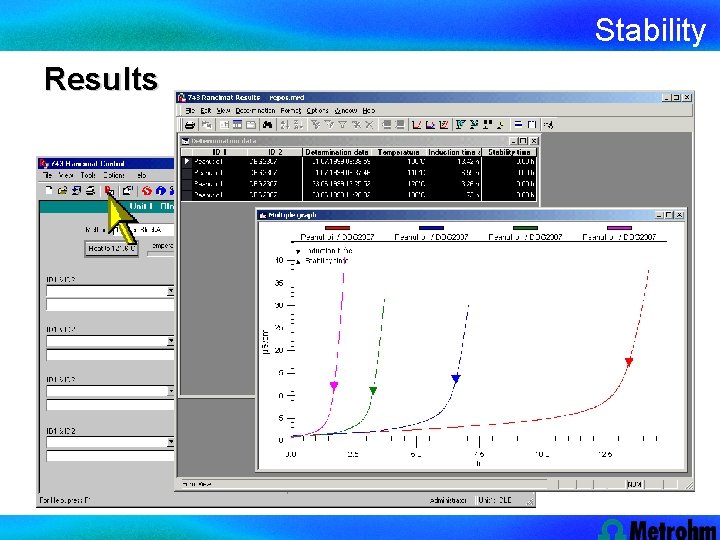
Stability Results

Stability GLP Validation of the instrument
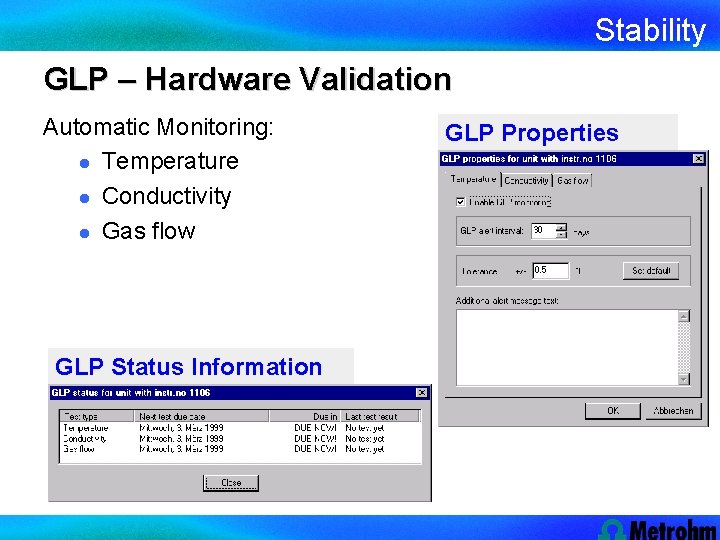
Stability GLP – Hardware Validation Automatic Monitoring: l Temperature l Conductivity l Gas flow GLP Status Information GLP Properties
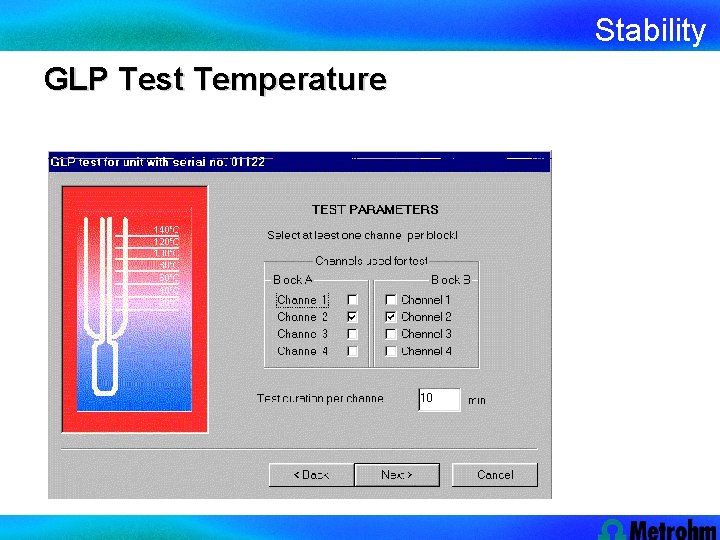
Stability GLP Test Temperature

Stability GLP Test Conductivity

Stability Applications Rancimat
Stability Applications Rancimat Oxidative stability of pure edible fats and oils from plants or animals Oxidative stability of natural fats and oils from food or cosmetics after extraction with petrol ether Antioxidant research Oxidative stability of FAME (fatty acid methyl ester, biodiesel) Oxidation stability of light heating oil with Cu catalyst
Stability Rancimat Applications 1 Oxidation Stability of Edible Fats and Oils Animal fats/oils: l Butter, fish oil, lard, etc. Vegetable fats/oils: l soybean, sunflower, coconut, peanut, palm Fat/oil containing products l direct measurements: margarine l after extraction of the fat: meat, nuts, etc. Antioxidant research
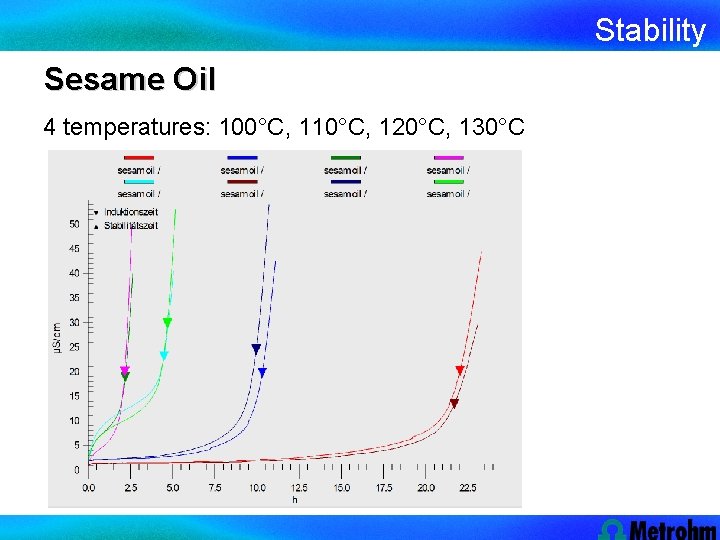
Stability Sesame Oil 4 temperatures: 100°C, 110°C, 120°C, 130°C
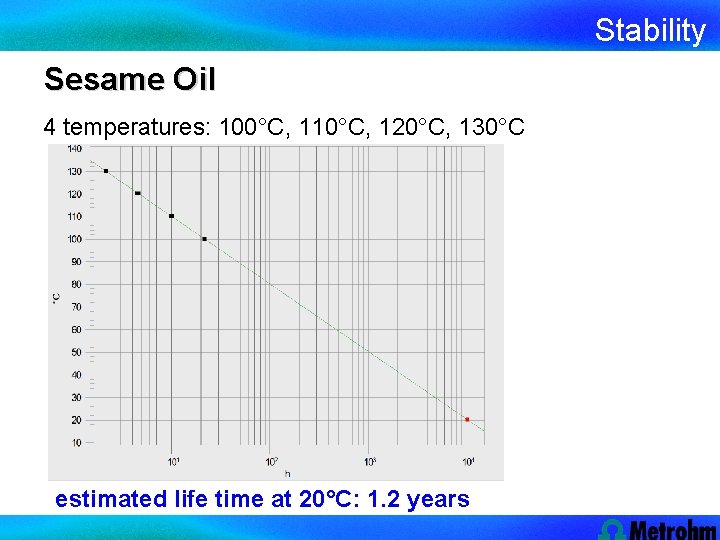
Stability Sesame Oil 4 temperatures: 100°C, 110°C, 120°C, 130°C estimated life time at 20°C: 1. 2 years
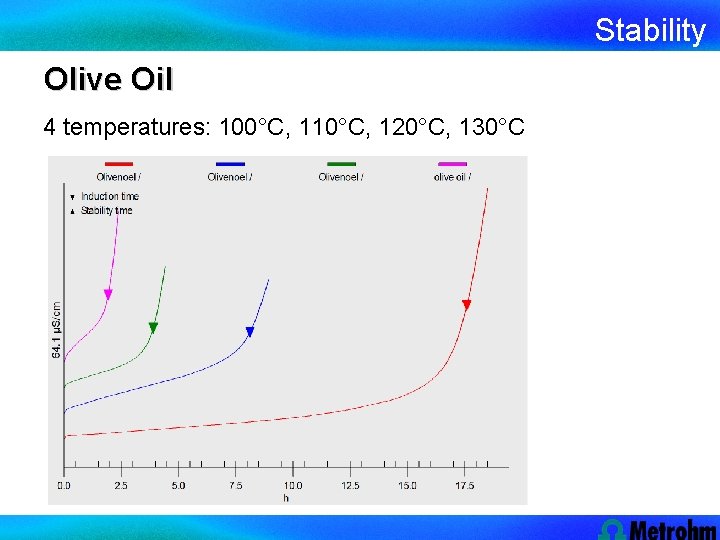
Stability Olive Oil 4 temperatures: 100°C, 110°C, 120°C, 130°C
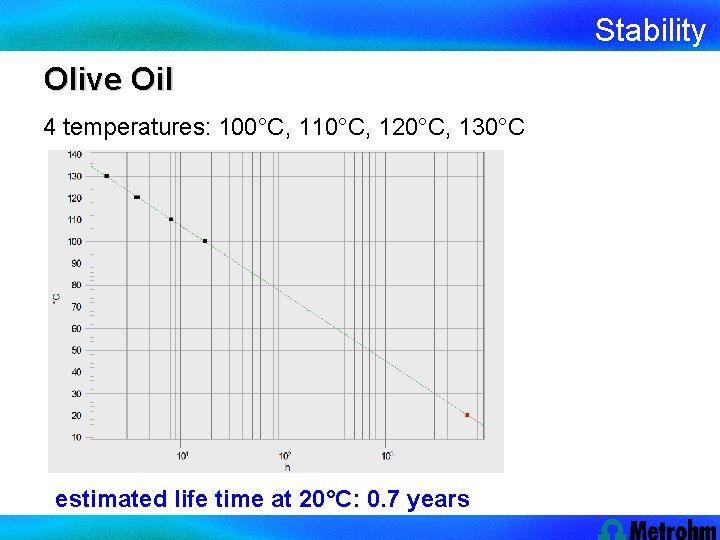
Stability Olive Oil 4 temperatures: 100°C, 110°C, 120°C, 130°C estimated life time at 20°C: 0. 7 years
Stability Standards ISO 6886 l Animal and vegetable fats and oils – Determination of oxidation stability AOCS Cd 12 b-92 l Sampling and analysis of commercial fats and oils: Oil Stability Index AOM - Active oxygen method 2. 4. 28. 4 -93 l Fat stability test on Autoxidation. CDM, Japan
Stability Information on Applications Application Bulletins l 204, 141, 232, 237 Application Notes l R-1, R-3, R-4, R-5, R-6, R-7 Reprint l A modern method of determining the oxidative stability of fats and oils (679) l Comparison AOM - Rancimat
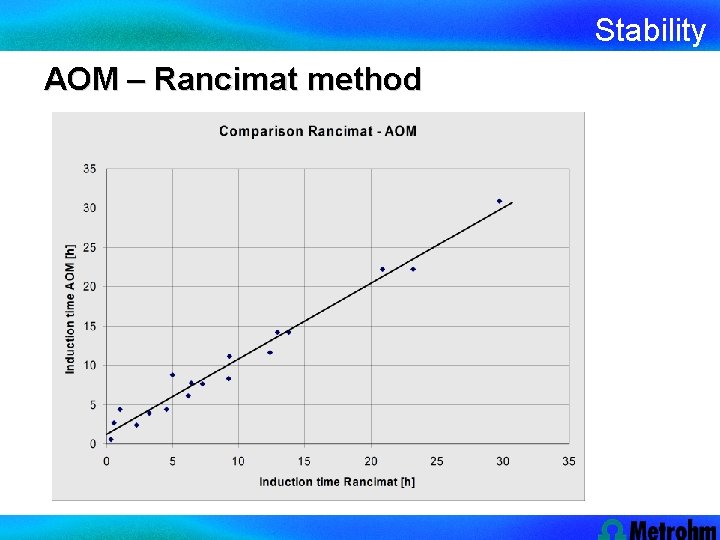
Stability AOM – Rancimat method
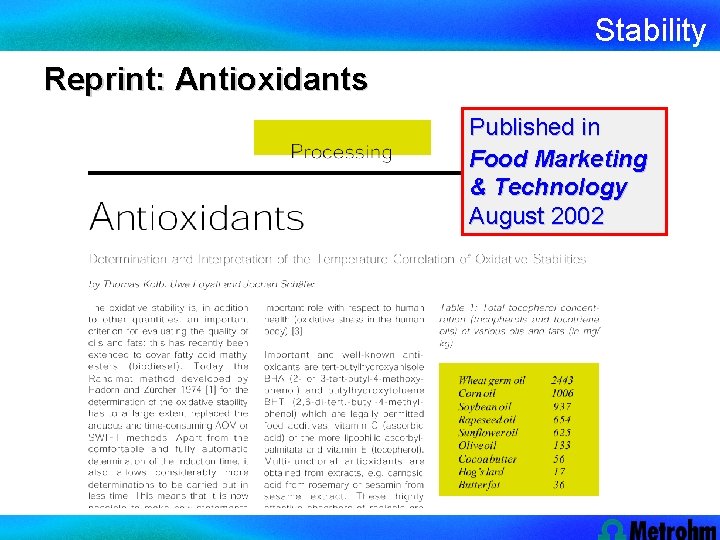
Stability Reprint: Antioxidants Published in Food Marketing & Technology August 2002
Stability Rancimat Applications 2 Oxidation Stability of FAME / Biodiesel FAME = fatty acid methyl ester replaces mineral oil based fuels (i. e. diesel) produced l from vegetable oils (e. g. canola oil, soybean oil) l by transesterification subsidized by government in some countries quality control (oxidative stability) by Rancimat method è EN 14112
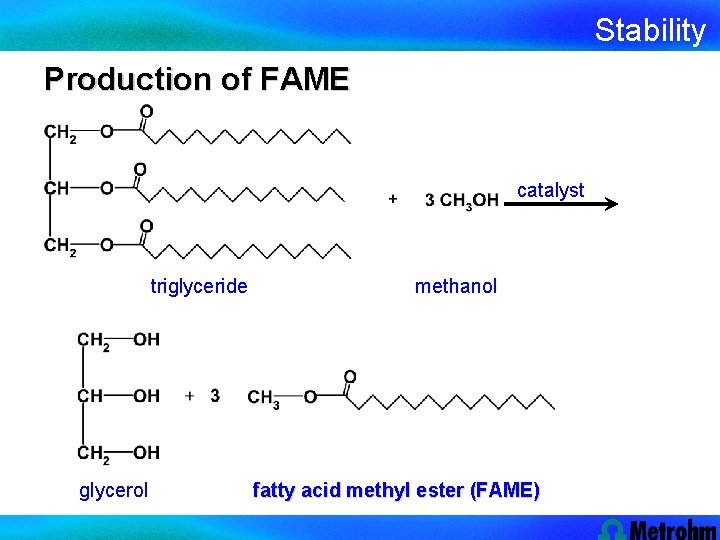
Stability Production of FAME catalyst triglyceride glycerol methanol fatty acid methyl ester (FAME)
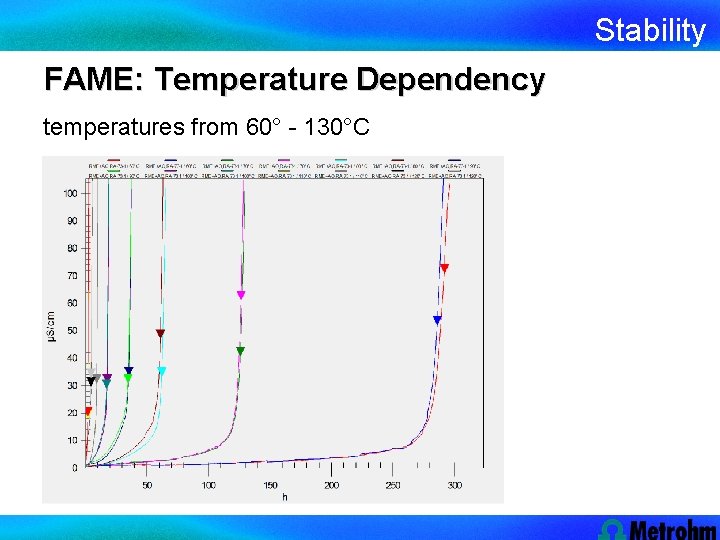
Stability FAME: Temperature Dependency temperatures from 60° - 130°C
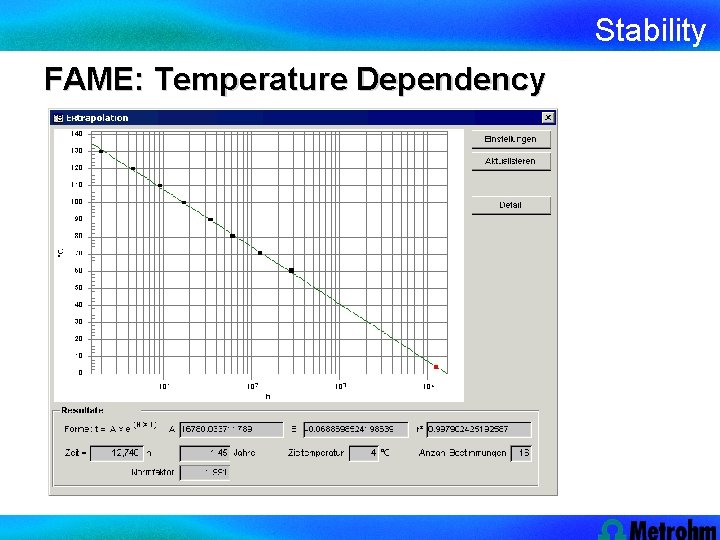
Stability FAME: Temperature Dependency
Stability Information on Applications Application Note R-9 Standard EN 14112 l Fatty Acid Methyl Esters (FAME) – Determination of oxidation stability (Accelerated oxidation test)
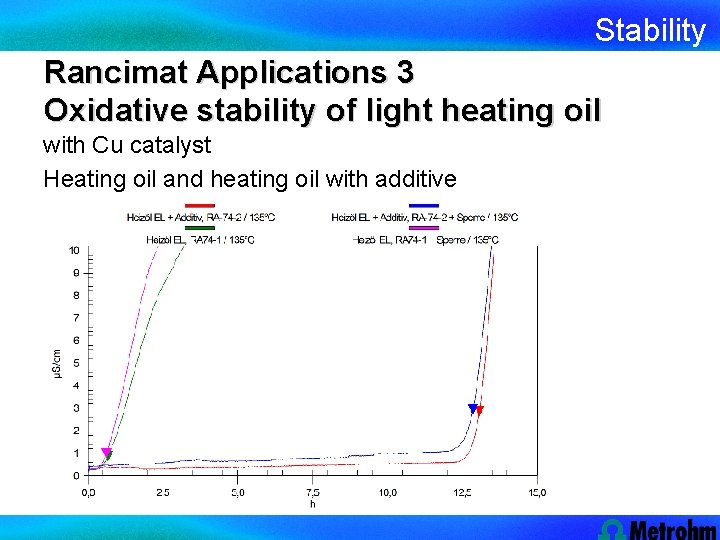
Stability Rancimat Applications 3 Oxidative stability of light heating oil with Cu catalyst Heating oil and heating oil with additive

Stability Application Information Application Works l D 7 -078 -0700 l D 7 -082 -0201
- Slides: 65