
st 1 Housing Homelessness Done Differently or what

- Slides: 35
st: 1 Housing Homelessness Done Differently; or what works now? Sam Tsemberis, Ph. D. Pathways Housing First Department of Psychiatry, Columbia University Medical Center
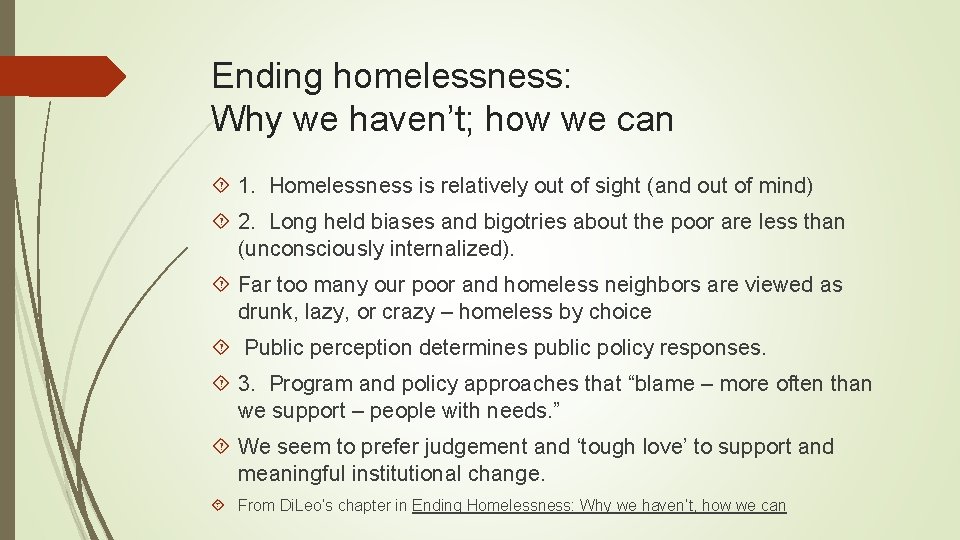
Ending homelessness: Why we haven’t; how we can 1. Homelessness is relatively out of sight (and out of mind) 2. Long held biases and bigotries about the poor are less than (unconsciously internalized). Far too many our poor and homeless neighbors are viewed as drunk, lazy, or crazy – homeless by choice Public perception determines public policy responses. 3. Program and policy approaches that “blame – more often than we support – people with needs. ” We seem to prefer judgement and ‘tough love’ to support and meaningful institutional change. From Di. Leo’s chapter in Ending Homelessness: Why we haven’t, how we can
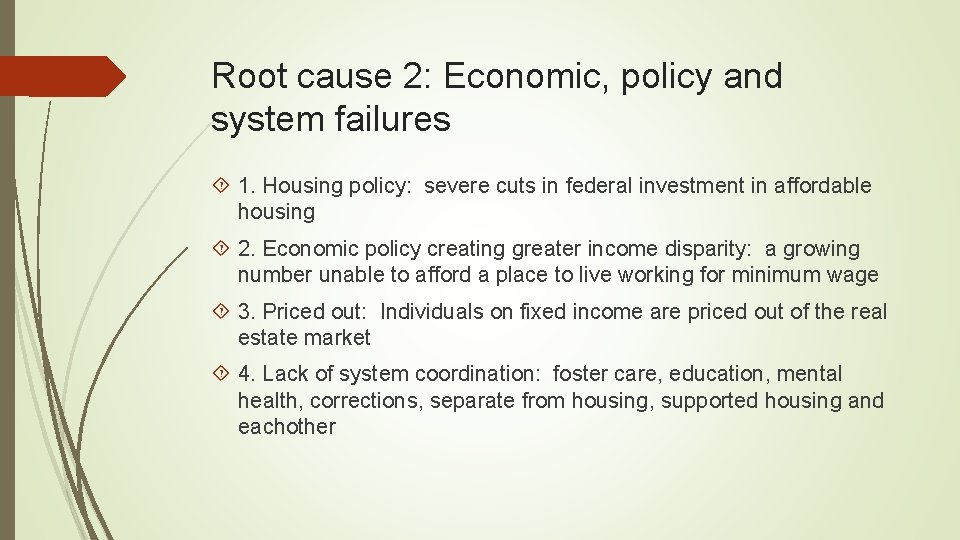
Root cause 2: Economic, policy and system failures 1. Housing policy: severe cuts in federal investment in affordable housing 2. Economic policy creating greater income disparity: a growing number unable to afford a place to live working for minimum wage 3. Priced out: Individuals on fixed income are priced out of the real estate market 4. Lack of system coordination: foster care, education, mental health, corrections, separate from housing, supported housing and eachother
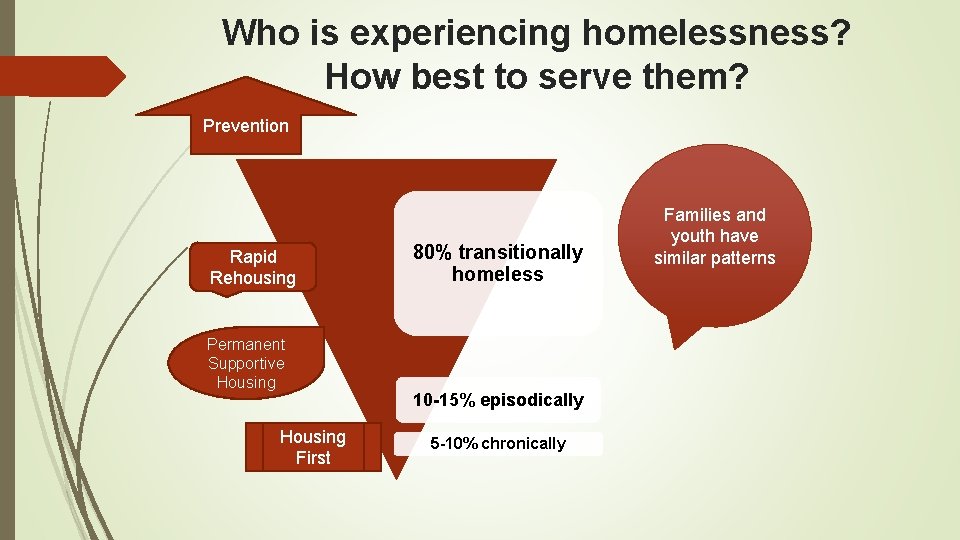
Who is experiencing homelessness? How best to serve them? Prevention Rapid Rehousing Permanent Supportive Housing First 80% transitionally homeless 10 -15% episodically 5 -10% chronically Families and youth have similar patterns
2 Perspectives on Outreach Public health/Public safety and Individual Care 1) PUBLIC HEALTH/SAFETY: programs include assertive directed outreach, enforcement of laws targeting the homeless, and other approaches designed to remove/assist individuals who are homeless away from public spaces 2) Individual Care and Support: engage, support, encourage self determination and recovery
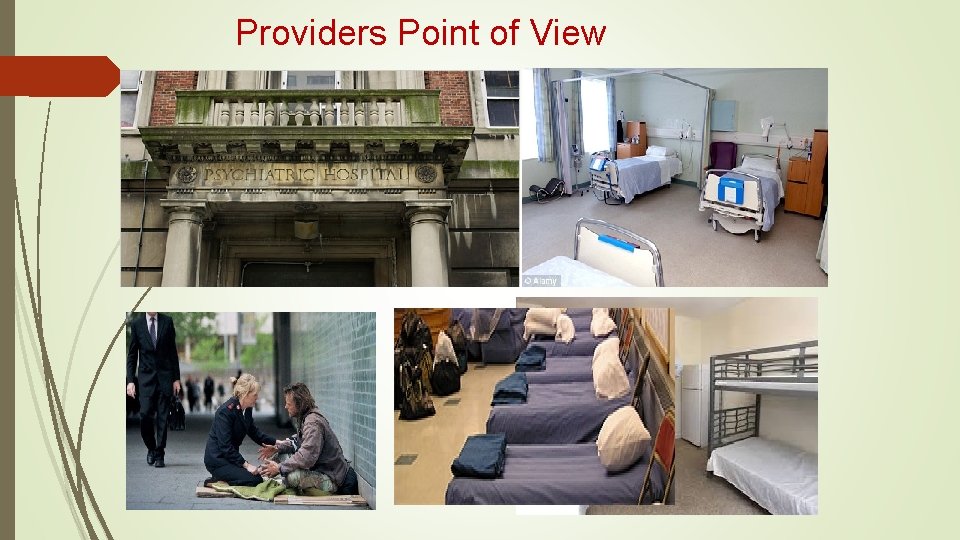
Providers Point of View
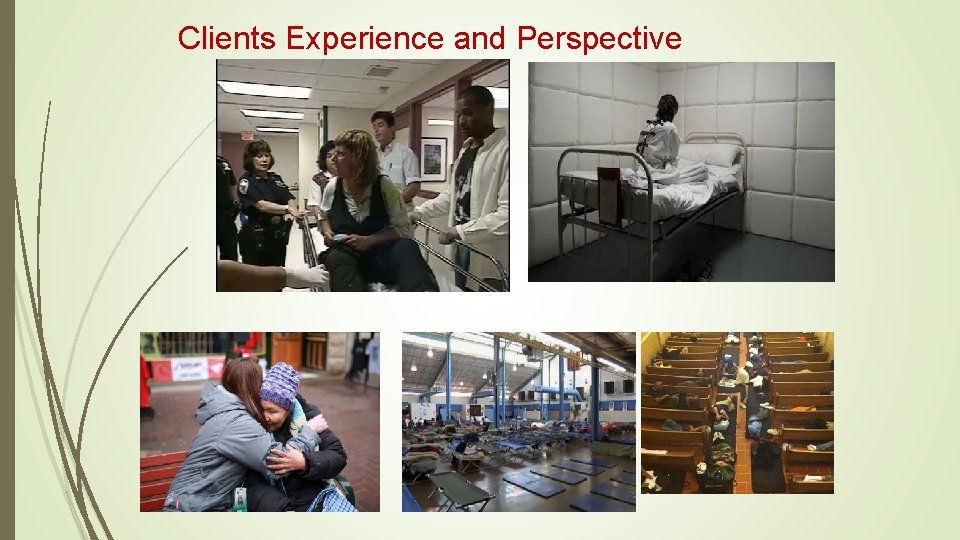
Clients Experience and Perspective
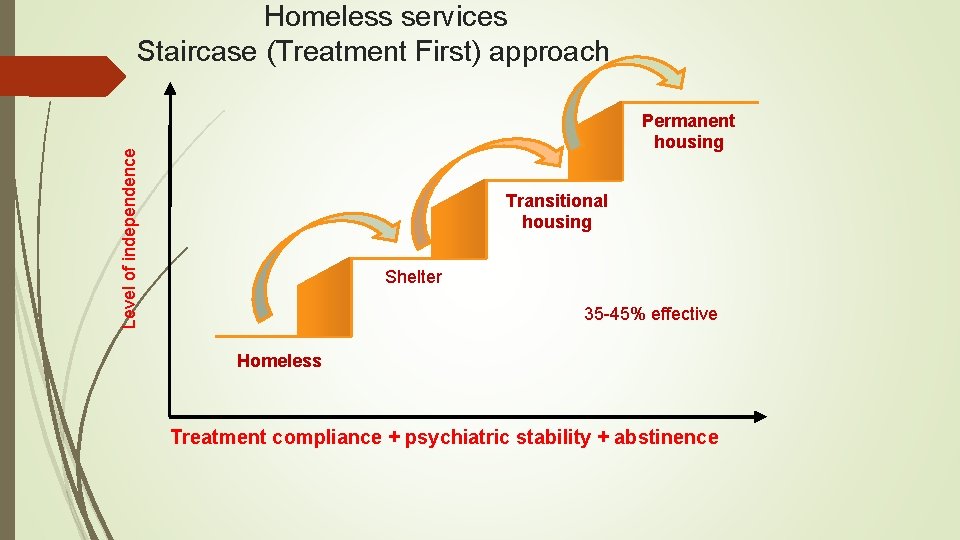
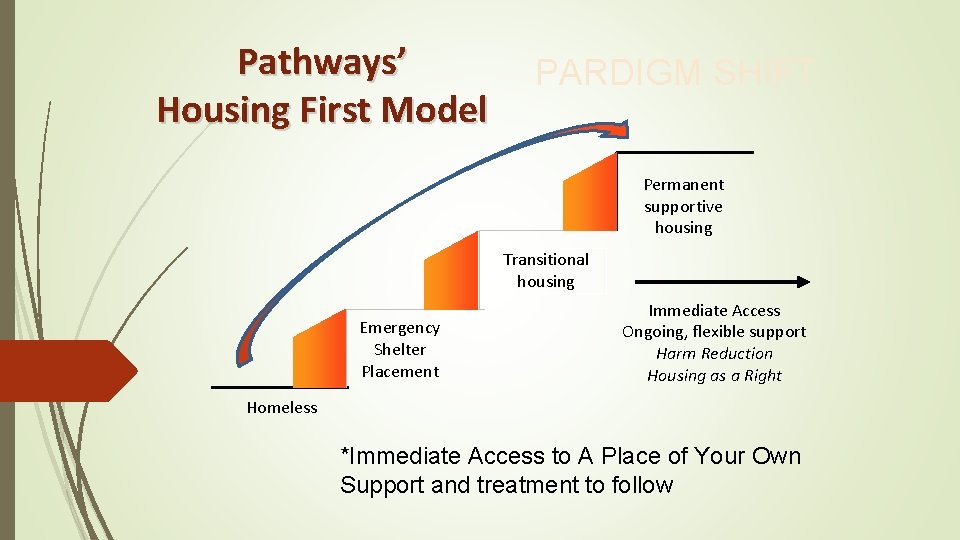
Homeless services Staircase (Treatment First) approach Level of independence Permanent housing Transitional housing Shelter 35 -45% effective Homeless Treatment compliance + psychiatric stability + abstinence
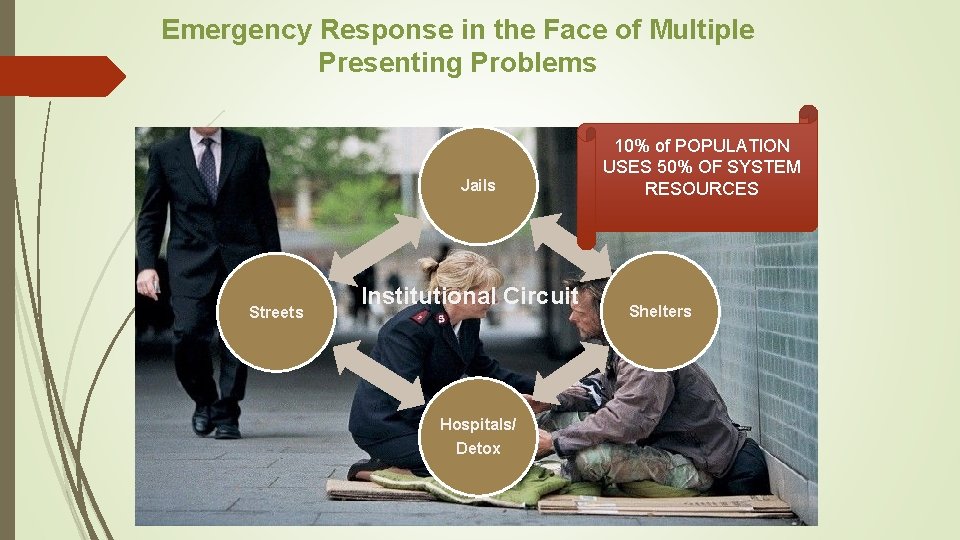
Emergency Response in the Face of Multiple Presenting Problems Jails Streets Institutional Circuit Hospitals/ Detox 10% of POPULATION USES 50% OF SYSTEM RESOURCES Shelters
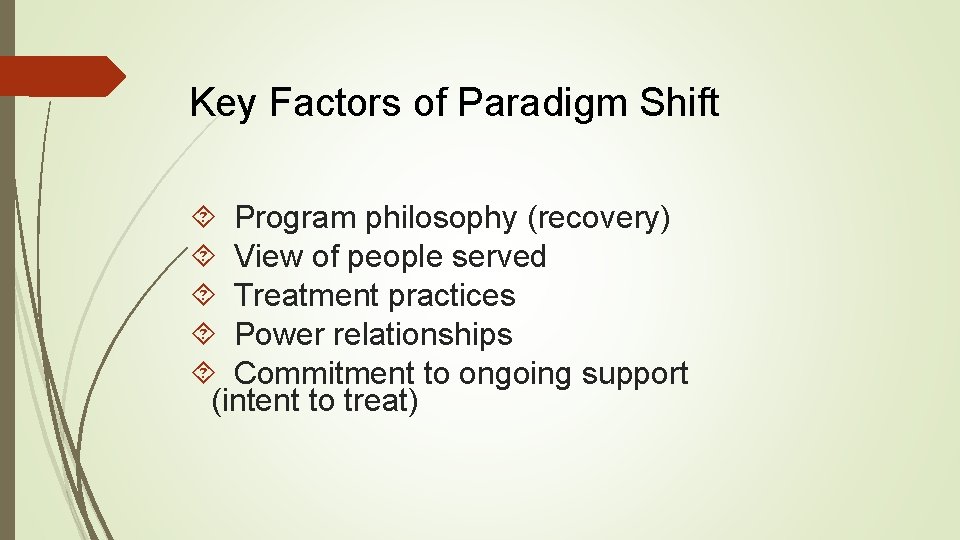
Key Factors of Paradigm Shift Program philosophy (recovery) View of people served Treatment practices Power relationships Commitment to ongoing support (intent to treat)
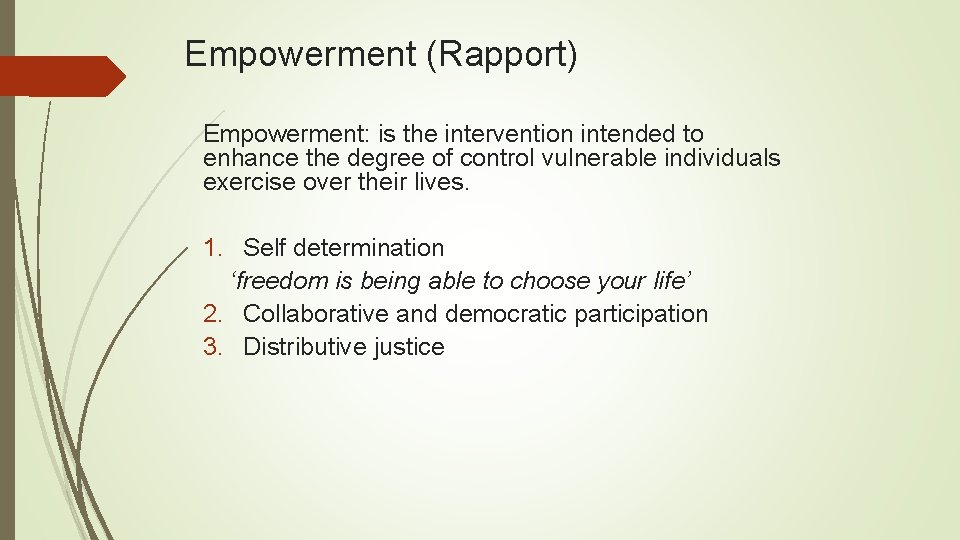
Empowerment (Rapport) Empowerment: is the intervention intended to enhance the degree of control vulnerable individuals exercise over their lives. 1. Self determination ‘freedom is being able to choose your life’ 2. Collaborative and democratic participation 3. Distributive justice
Pathways’ Housing First Model PARDIGM SHIFT Permanent supportive housing Transitional housing Emergency Shelter Placement Immediate Access Ongoing, flexible support Harm Reduction Housing as a Right Homeless *Immediate Access to A Place of Your Own Support and treatment to follow
5 Principles of Housing First 1. 2. 3. 4. 5. Consumer choice Separation of housing and services Services array to match needs Recovery focused practice Program operations
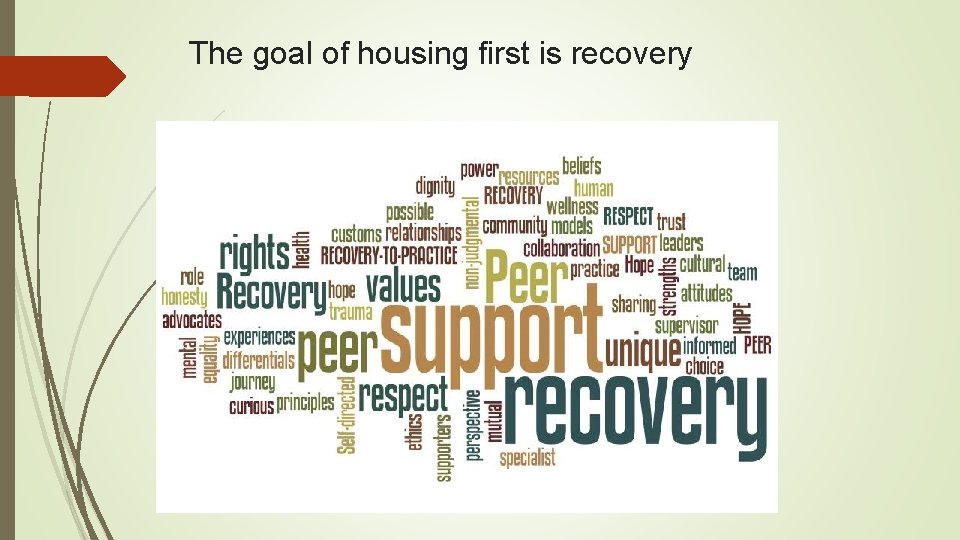
The goal of housing first is recovery
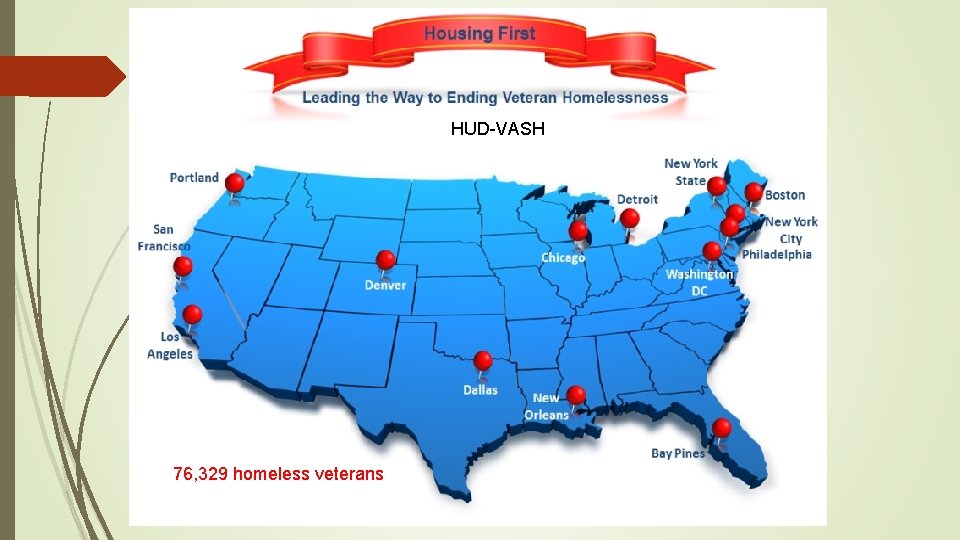
HUD-VASH 76, 329 homeless veterans
Housing Retention Of the 700 homeless Veterans admitted to HUD-VASH utilizing a Housing First approach, 84% (585) are still living in permanent housing, with varying lengths of stay one year after we started the pilot Among the 115 Veterans who have left the program, 37% (43) moved to a more independent living arrangement; 20% (23) discharged to an institutional setting, including hospital, nursing home, or prison; 30% (34) relapsed into homeless or were lost to care; 13% (15) died, the majority from natural causes. Cost savings inpatient (53%) and outpatient (31%)
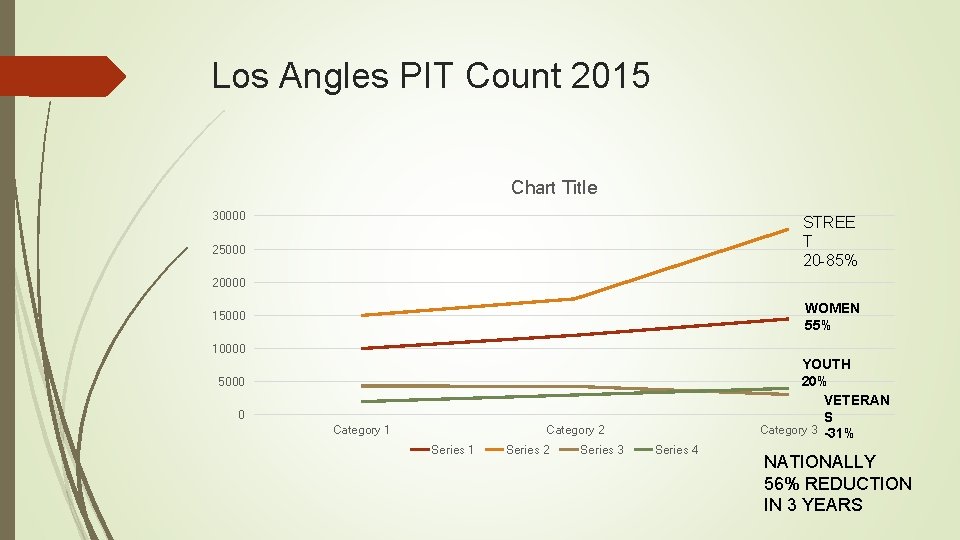
Los Angles PIT Count 2015 Chart Title 30000 STREE T 20 -85% 25000 20000 WOMEN 55% 15000 10000 YOUTH 20% VETERAN S Category 3 -31% 5000 0 Category 1 Category 2 Series 1 Series 2 Series 3 Series 4 NATIONALLY 56% REDUCTION IN 3 YEARS
Systems change in housing policy and practice Private market Community landlords Coordinate housing and treatment Accept / share risk for clients (landlord, agency, neighbor) Expand conversation from homelessness to lack of affordable housing
Lessons learned from veterans initiative Operations -targeting, -outreach -Home visits Changing STAFF attitudes Why can’t they do it themselves? He’s in there using How long do we support before it becomes enabling?
Lessons from HUD-VASH Systemic barriers risk aversive did not go well with harm reduction evidence of use resulted in write up liability issues – three calls and you are out Contracts with community agencies (11 in LA)
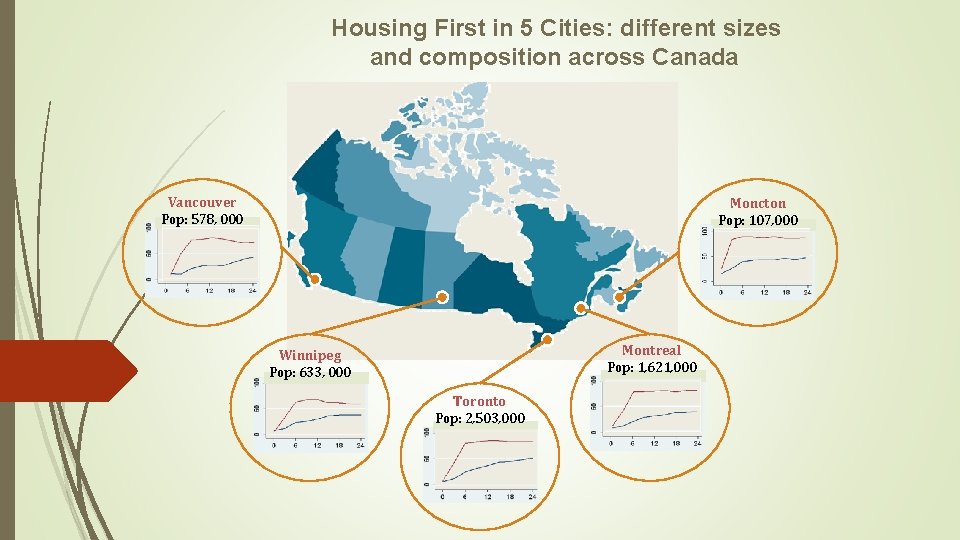
Housing First in 5 Cities: different sizes and composition across Canada Vancouver Pop: 578, 000 Moncton Pop: 107, 000 Montreal Pop: 1, 621, 000 Winnipeg Pop: 633, 000 Toronto Pop: 2, 503, 000
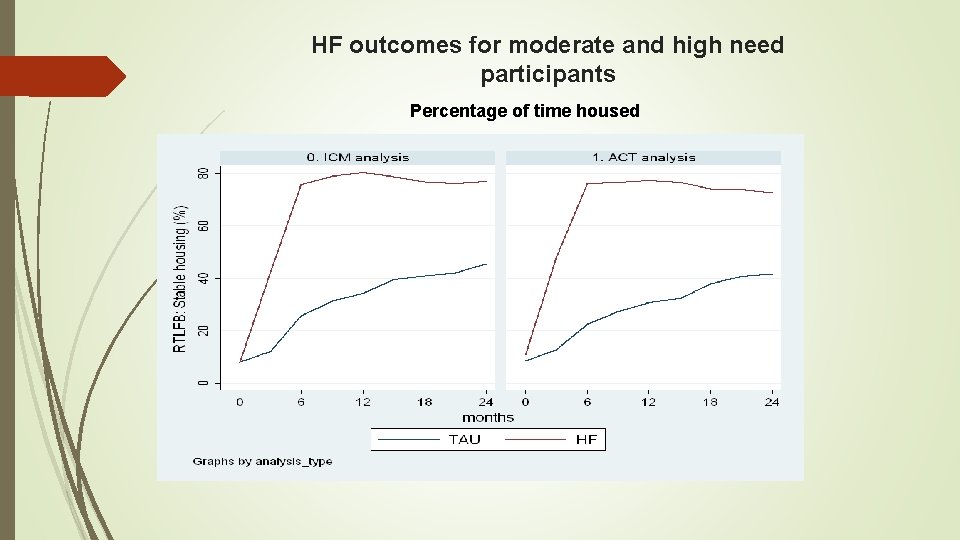
HF outcomes for moderate and high need participants Percentage of time housed
Findings from qualitative studies -Overall, being housed greatly preferred to being homeless -Greater overall sense of safety -Improvement in overall quality of life -Other goals are manifest (employment, socialization) reclaiming or building a sense of belonging -Positive sense of self, “feeling normal”
Qualitative findings continued Having a place of one’s own can serve as a platform for other positive and challenging psychological effects; -Privacy and control to establish one’s own routine -Lonely, isolated, not fitting in -Housing stability and improved quality of life was retained despite continuing to experience symptoms or struggling with addiction (affirming the HF approach) -Mental health, addiction and discretionary income marginally improved
When Housing First Doesn’t Work The 10 -20% who have repeatedly tried and failed in the scattered site model Single site options with control of entrance and exit Some recovery house options Other options in managed group setting need to be explored
Pathways Housing First Program Fidelity Assess the extent to which components of the program model are being implemented Structural and operational features: staffing, caseloads, frequency of contact, time to house, service support post housing, etc. Philosophy, values: participant choice? Harm reduction? Empowerment?
Why Fidelity? Housing First is not housing only Housing First is not “Housing is the first thing after they…” Choice is not laissez-faire Assertive engagement is not coercion Peer Specialists are not junior case managers Understand the practice Make ongoing improvements Maximize outcomes
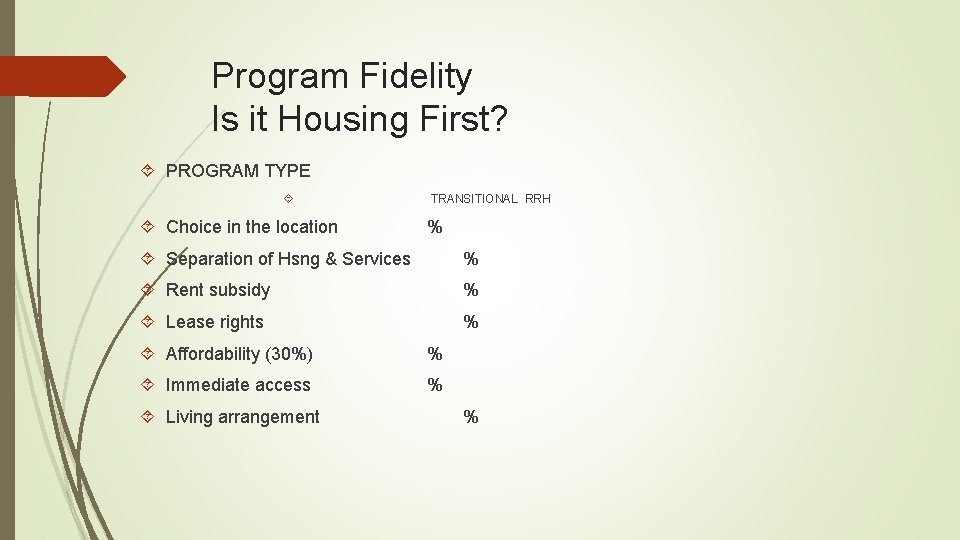
Program Fidelity Is it Housing First? PROGRAM TYPE Choice in the location TRANSITIONAL RRH % Separation of Hsng & Services % Rent subsidy % Lease rights % Affordability (30%) % Immediate access % Living arrangement %
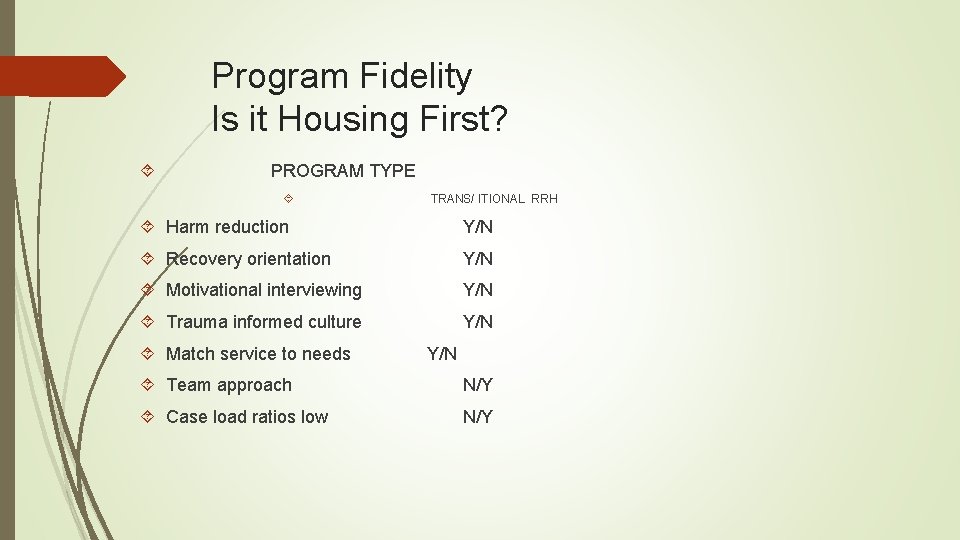
Program Fidelity Is it Housing First? PROGRAM TYPE TRANS/ ITIONAL RRH Harm reduction Y/N Recovery orientation Y/N Motivational interviewing Y/N Trauma informed culture Y/N Match service to needs Y/N Team approach N/Y Case load ratios low N/Y
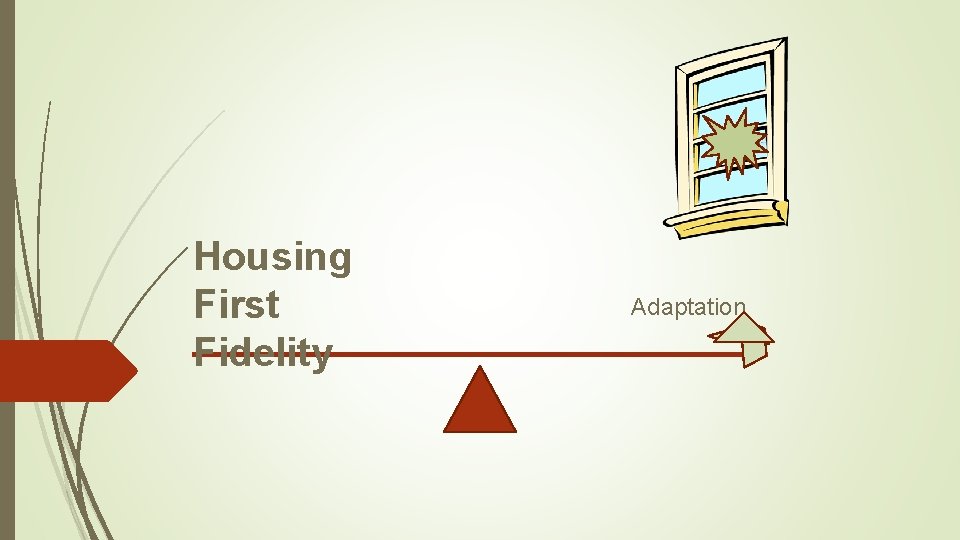
Housing First Fidelity Adaptation
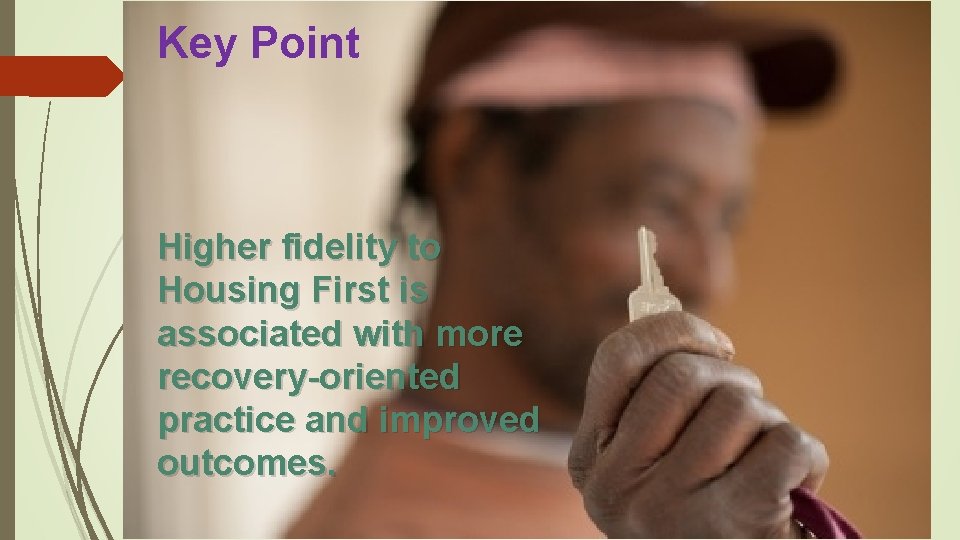
Key Point Higher fidelity to Housing First is associated with more recovery-oriented practice and improved outcomes.
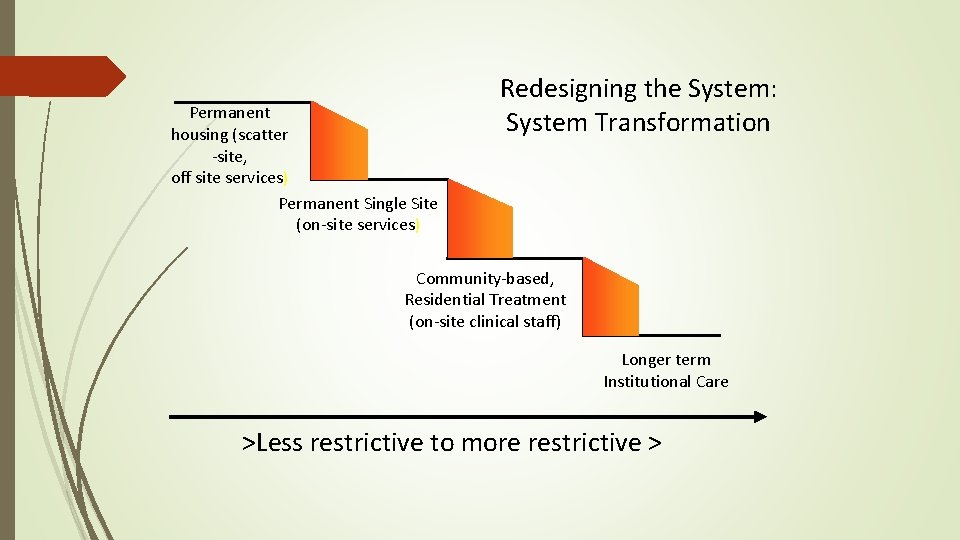
Permanent housing (scatter -site, off site services) Permanent Single Site (on-site services) Redesigning the System: System Transformation Community-based, Residential Treatment (on-site clinical staff) Longer term Institutional Care >Less restrictive to more restrictive >
Keys to effective dissemination (Damschroder et al. , 2009). 1. Leadership/political will/local champion 2. Inner setting (host program, culture , values, operations) 3. Outer setting (community funding support) 4. Intervention clearly understood, evidence base technical assistance provided to help with adaption 5. Process: clear plan with targets and accountablity
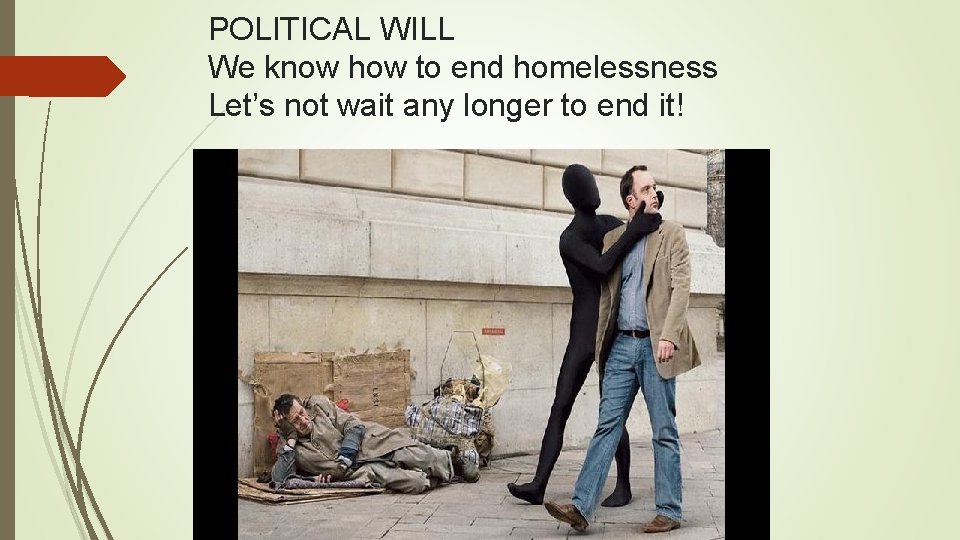
POLITICAL WILL We know how to end homelessness Let’s not wait any longer to end it!
Thank You For Your Attention Questions? Comments?