
SSWH 8 Describe the diverse characteristics of societies
SSWH 8 Describe the diverse characteristics of societies in Central and South America. a. Explain the rise and fall of the Mayan, Aztec, and Inca Empires. b. Compare and contrast the Mayan, Aztec, and Incan societies, include: religion, culture, economics, politics, and technology.
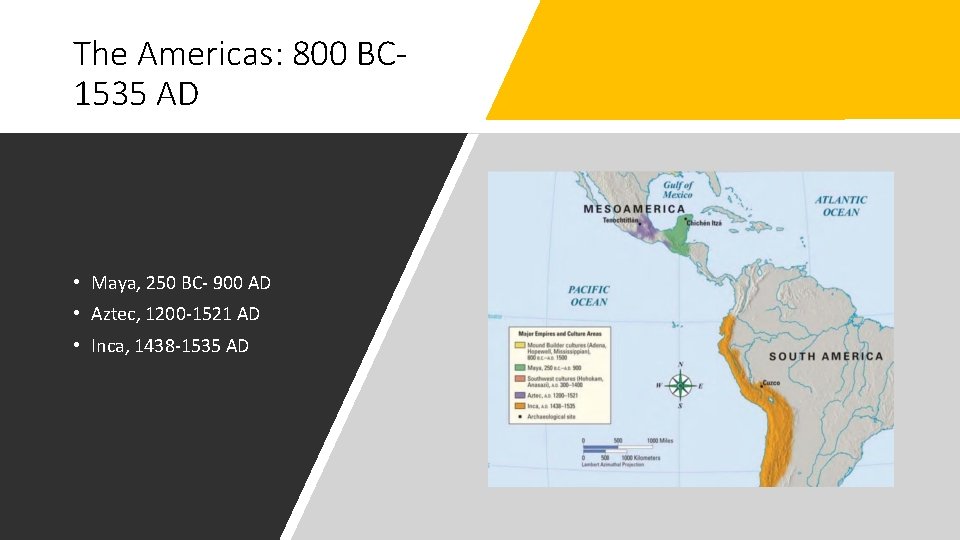
The Americas: 800 BC 1535 AD • Maya, 250 BC- 900 AD • Aztec, 1200 -1521 AD • Inca, 1438 -1535 AD
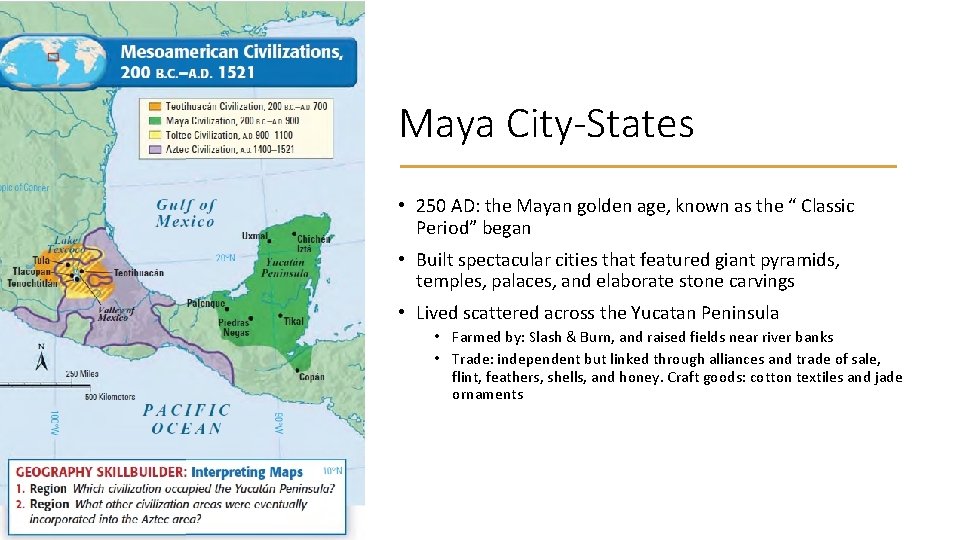
Maya City-States • 250 AD: the Mayan golden age, known as the “ Classic Period” began • Built spectacular cities that featured giant pyramids, temples, palaces, and elaborate stone carvings • Lived scattered across the Yucatan Peninsula • Farmed by: Slash & Burn, and raised fields near river banks • Trade: independent but linked through alliances and trade of sale, flint, feathers, shells, and honey. Craft goods: cotton textiles and jade ornaments
• Ruled by “god-king” • Were not united politically but through economic exchange • Largest and most powerful city-states: Tikal and Calakmul City-States Rule • Hierarchy • Each Maya city had a ruler-usually male (hereditary) • Nobles served in supporting roles to the ruler • Military leaders, Tax collectors, Law enforcers, Managed public works • Scribes, painters and sculptors were highly respected • Merchants were mostly middle class • Most of the society were farmers
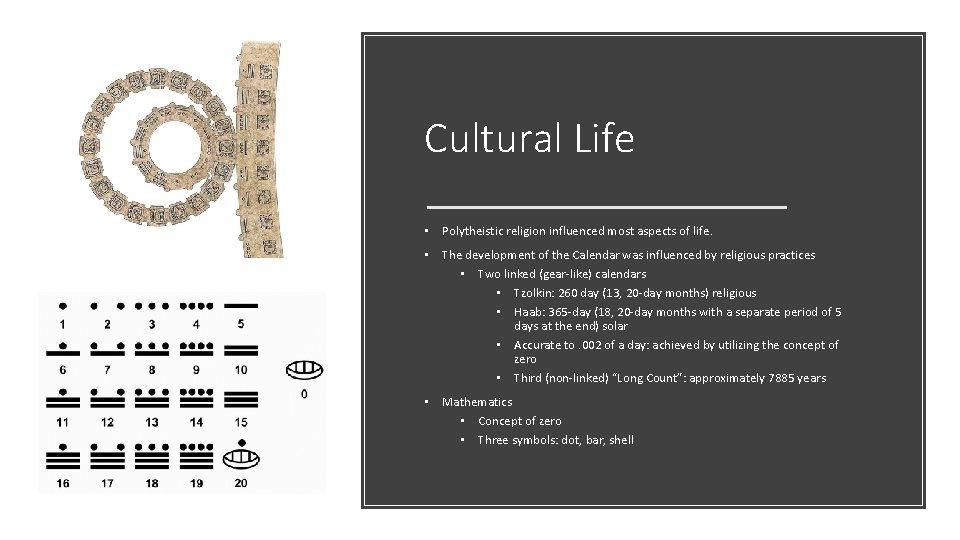
Cultural Life • Polytheistic religion influenced most aspects of life. • The development of the Calendar was influenced by religious practices • Two linked (gear-like) calendars • Tzolkin: 260 day (13, 20 -day months) religious • Haab: 365 -day (18, 20 -day months with a separate period of 5 days at the end) solar • Accurate to. 002 of a day: achieved by utilizing the concept of zero • Third (non-linked) “Long Count”: approximately 7885 years • Mathematics • Concept of zero • Three symbols: dot, bar, shell
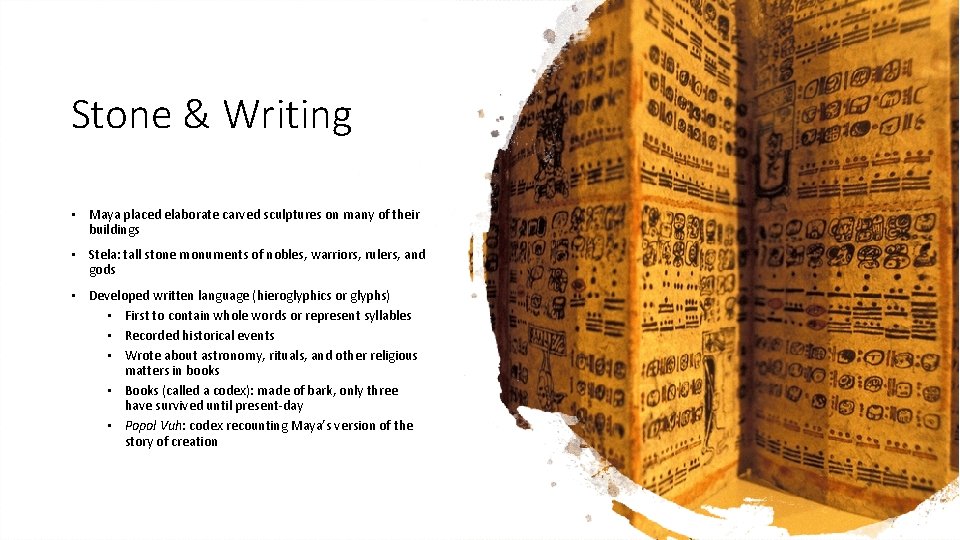
Stone & Writing • Maya placed elaborate carved sculptures on many of their buildings • Stela: tall stone monuments of nobles, warriors, rulers, and gods • Developed written language (hieroglyphics or glyphs) • First to contain whole words or represent syllables • Recorded historical events • Wrote about astronomy, rituals, and other religious matters in books • Books (called a codex): made of bark, only three have survived until present-day • Popol Vuh: codex recounting Maya’s version of the story of creation

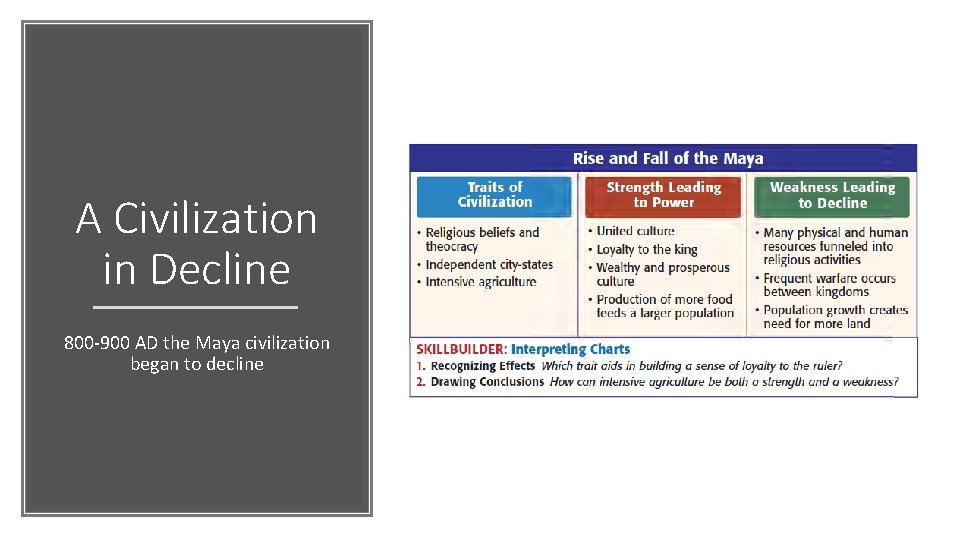
A Civilization in Decline 800 -900 AD the Maya civilization began to decline
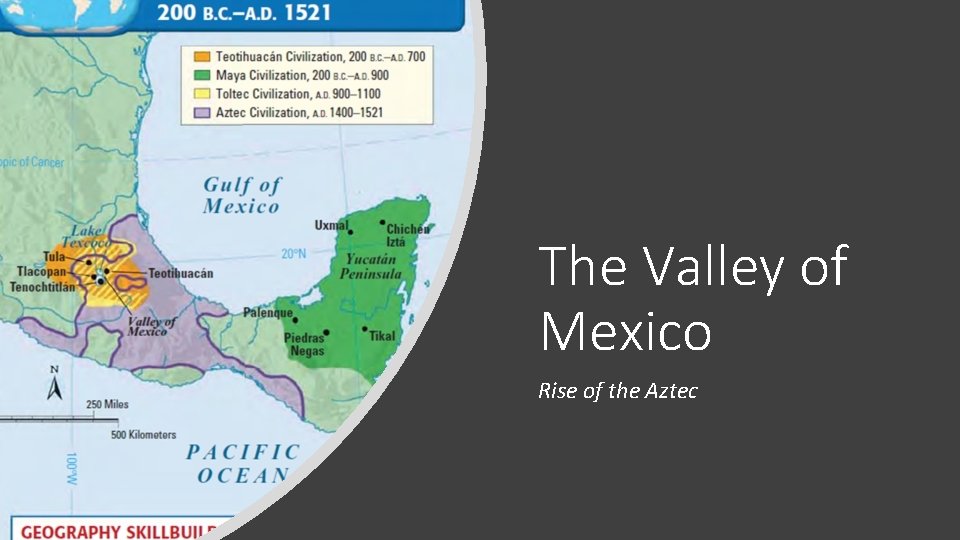
The Valley of Mexico Rise of the Aztec


The Valley of Mexico
- Slides: 11