
SSDM v 2 Updates to Seabed Survey Data

SSDM v 2 Updates to Seabed Survey Data Model 30 January, 2017 OGC Marine DWG: Vancouver, BC

Introduction – What is SSDM? • Seabed Survey Data Model • Stores locations of key elements of offshore geophysical, hydrographic, environmental, & geotechnical survey data. • Generally used by offshore O&G Operators to manage survey data for: • • Offshore Seismic (seismic/exploration survey tracks) Field Development (pre-engineering geohazard, environmental baseline, geotechnical surveys) Asset Integrity (AUV/ROV inspections & features) Infrastructure (pipeline & facility) data not included in data model
SSDM v 2 – 2017 Release • SSDM v 1 – released in 2011 by SSDM Task Force • • Task force is under IOGP Geomatics Group Adopted by: • • O&G Operators: internal data standard Survey Contractors: survey data delivery standard • Enables simple transfer and storage of standardized data • SSDM Includes: • • • Data Dictionary Data Model Template (ESRI File GDB & Seabed. ML) Data Model Guidelines Standardized Symbology (ESRI *. style & CAD) Metadata Template
Focus of SSDM V 2 development • UML design of the model in Enterprise Architect for both Arc. GIS implementation and GML encoding. • Compliance with EPSG and consistency with other IOGP Standards • Closing the gap in defining more seabed and subsurface features • Completing CAD Template and GIS Symbology stylesheet for SSDM Features • Integration of environmental/benthic survey and geotechnical surveys • Considerations for long-term sustainability and maintenance of the SSDM schema
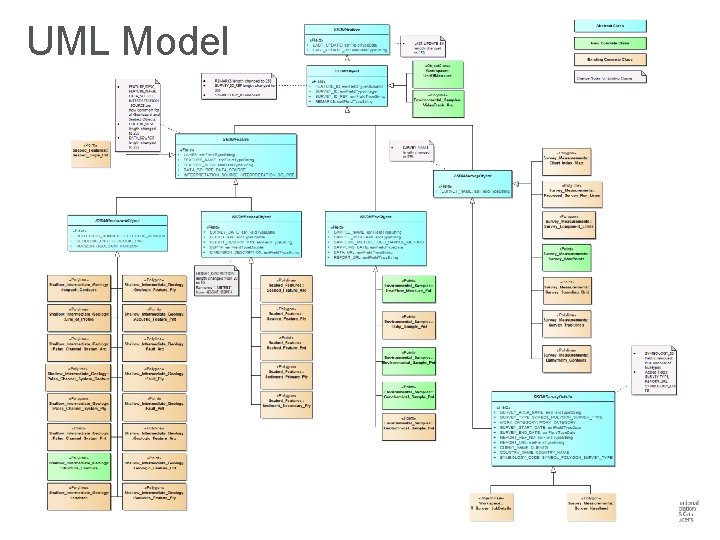
UML Model
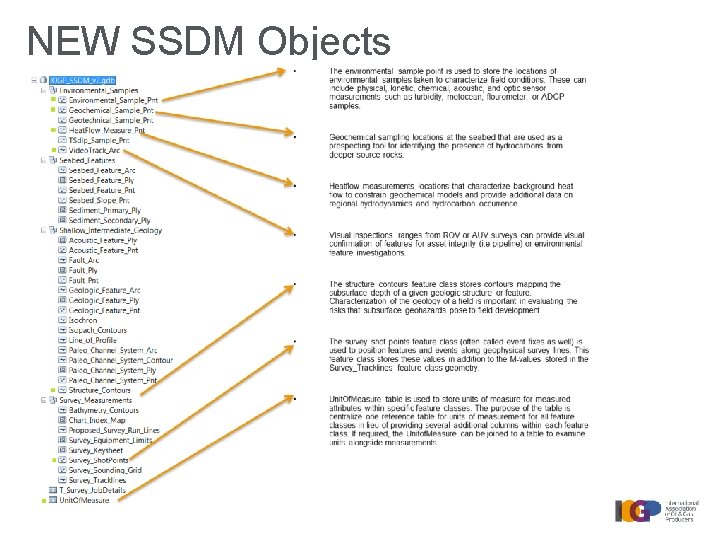
NEW SSDM Objects
EPSG Compliance • SSDM v 2 has been made compliant with EPSG and consistent with other IOGP Standards. • All coordinates in SSDM now reference a single horizontal and vertical Coordinate Reference System. • The identification of indirect (EPSG - full OGC URN string) and direct description (Well-known text (WKT)) of CRS for the whole model will be defined as string text in the attribute fields of T_Survey_Job. Details table. • Well-known Text (WKT) format will follow the requirements specified in ISO 19162. • Direct description of CRS will be required only in cases where indirect citation to EPSG code is not possible. • It was agreed to remove the coordinate attribute fields such as SOL and EOL easting and northing, latitude and longitude fields, Vertical_Datum and other CRS terminology from all of the attribute tables.
Units of Measure • All unit declarations in the field names have been removed. • SSDM v 2 includes a centralized reference table for units of measure (‘Unit. Of. Measure’) for all of the objects in SSDM. • Measurement units in ‘Unit. Of. Measure’ Table should reference the Energistics Unit Symbols (http: //w 3. energistics. org/uom/posc. Units 22. xml). • ‘Unitof. Measure’ can be joined to any table in SSDMv 2 to examine units alongside measurements. • ‘Unitof. Measure’ table is scalable to store multiple units for a specific field differentiated by Survey_ID or Survey_ID_Ref.
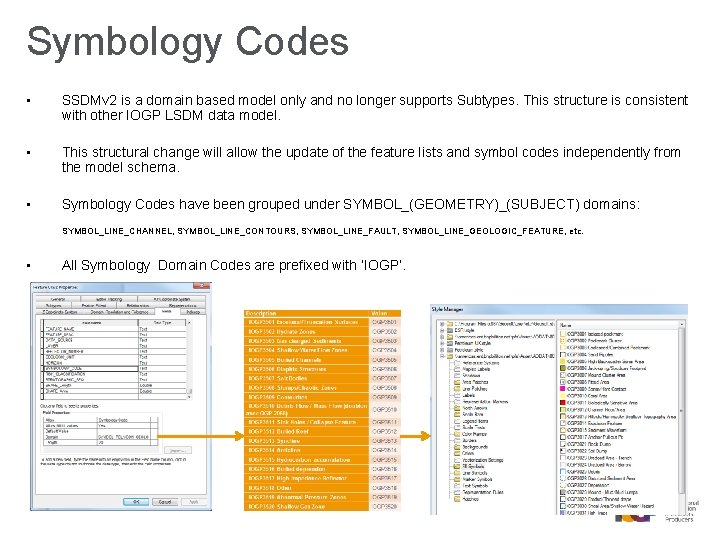
Symbology Codes • SSDMv 2 is a domain based model only and no longer supports Subtypes. This structure is consistent with other IOGP LSDM data model. • This structural change will allow the update of the feature lists and symbol codes independently from the model schema. • Symbology Codes have been grouped under SYMBOL_(GEOMETRY)_(SUBJECT) domains: SYMBOL_LINE_CHANNEL, SYMBOL_LINE_CONTOURS, SYMBOL_LINE_FAULT, SYMBOL_LINE_GEOLOGIC_FEATURE, etc. • All Symbology Domain Codes are prefixed with ‘IOGP’.
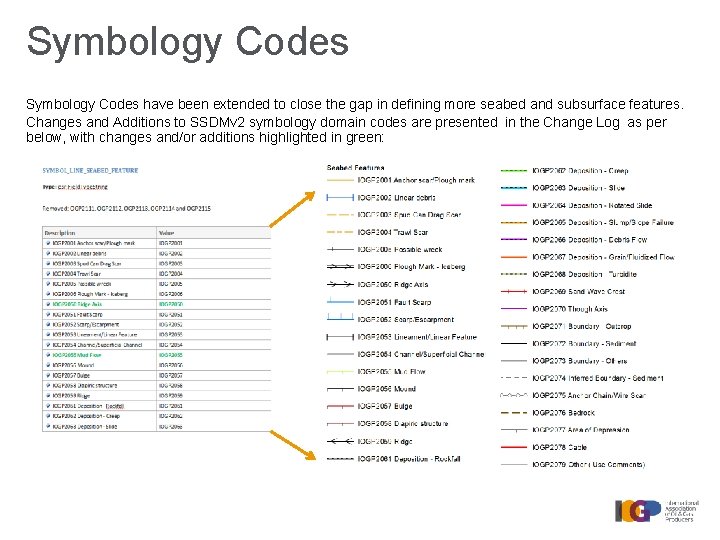
Symbology Codes have been extended to close the gap in defining more seabed and subsurface features. Changes and Additions to SSDMv 2 symbology domain codes are presented in the Change Log as per below, with changes and/or additions highlighted in green:

Symbology Codes

Questions? IOGP Geomatics Page: http: //www. iogp. org/Geomatics v 2 Release Date: February 2017 Presentation at ESRI Petroleum User Conference April 12 -13, 2017 – Houston, TX
- Slides: 12