
SS 8 H 3 b Georgias History The
SS 8 H 3 b Georgia’s History: The Revolutionary War © 2014 Brain Wrinkles
Standards SS 8 H 3 The student will analyze the role of Georgia in the American Revolution. b. Analyze the significance of people and events in Georgia on the Revolutionary War; include Loyalists, patriots, Elijah Clarke, Austin Dabney, Nancy Hart, Button Gwinnett, Lyman Hall, George Walton, Battle of Kettle Creek, and siege of Savannah. © 2014 Brain Wrinkles
SS 8 H 3 b Georgia’s History: The Revolutionary War © 2014 Brain Wrinkles
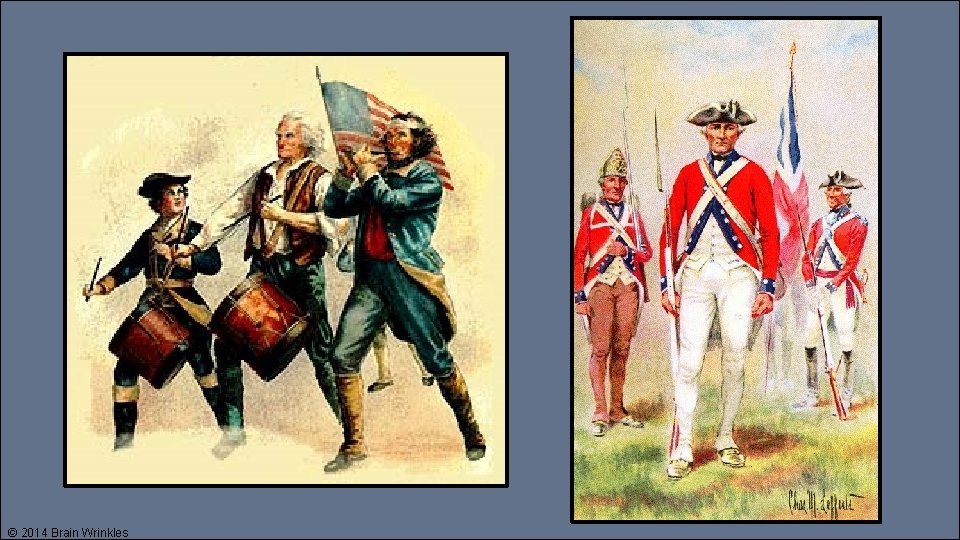
Loyalties • The colonists were split by their beliefs on American independence. • Many older colonists had been born in England were loyal to the mother country. • These people were called Loyalists or Tories. • Settlers who supported independence were called Patriots. © 2014 Brain Wrinkles
© 2014 Brain Wrinkles
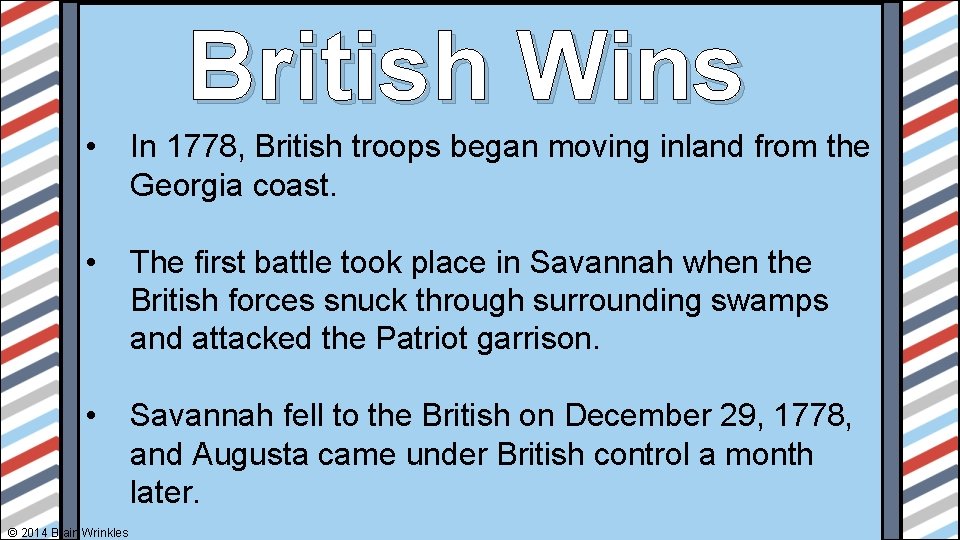
British Wins • In 1778, British troops began moving inland from the Georgia coast. • The first battle took place in Savannah when the British forces snuck through surrounding swamps and attacked the Patriot garrison. • Savannah fell to the British on December 29, 1778, and Augusta came under British control a month later. © 2014 Brain Wrinkles
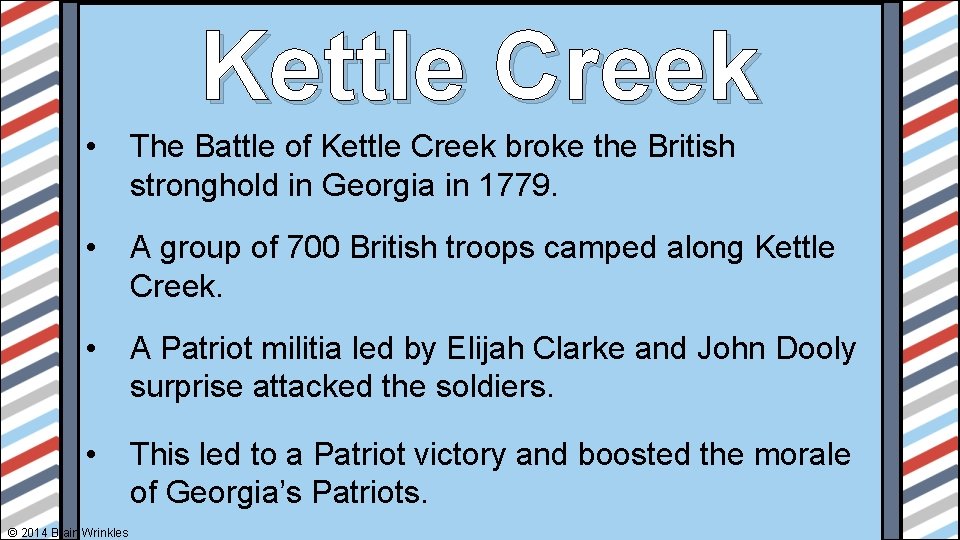
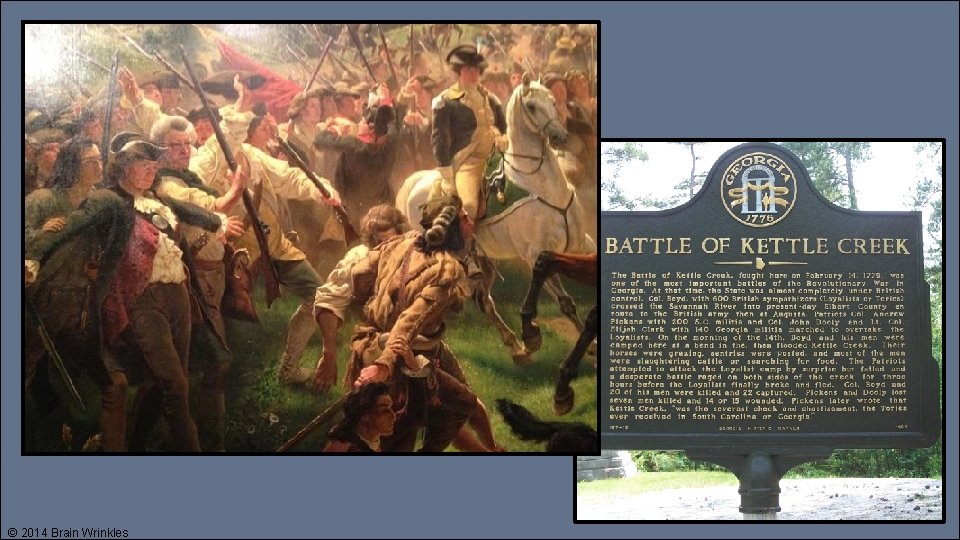
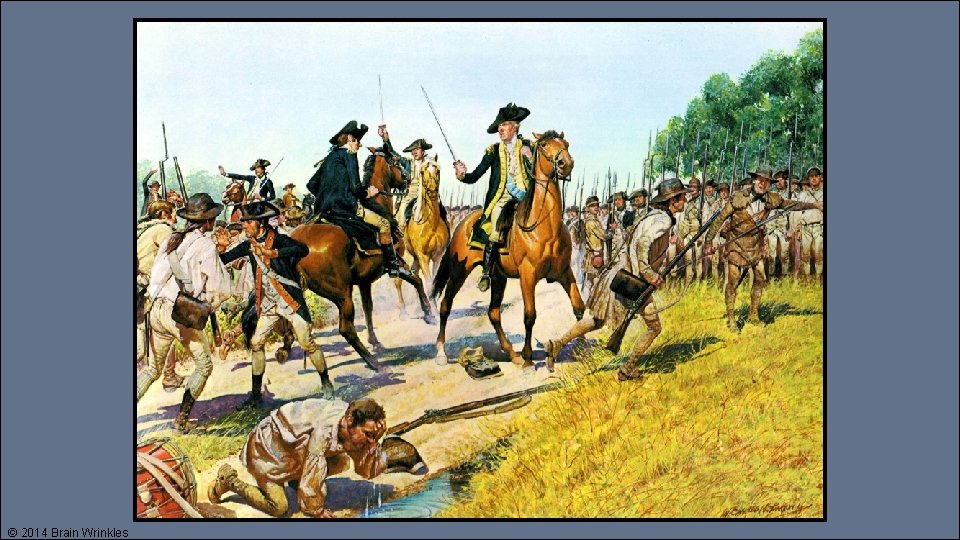
Kettle Creek • The Battle of Kettle Creek broke the British stronghold in Georgia in 1779. • A group of 700 British troops camped along Kettle Creek. • A Patriot militia led by Elijah Clarke and John Dooly surprise attacked the soldiers. • This led to a Patriot victory and boosted the morale of Georgia’s Patriots. © 2014 Brain Wrinkles
© 2014 Brain Wrinkles
Elijah Clarke • Lieutenant Colonel Elijah Clarke was a poor farmer from North Carolina who joined Georgia’s militia when fighting broke out. • After the victory at Kettle Creek, Clarke continued to lead frontier men in guerilla war tactics across Georgia and the Carolinas. • In 1781, he helped regain the control of Augusta. © 2014 Brain Wrinkles
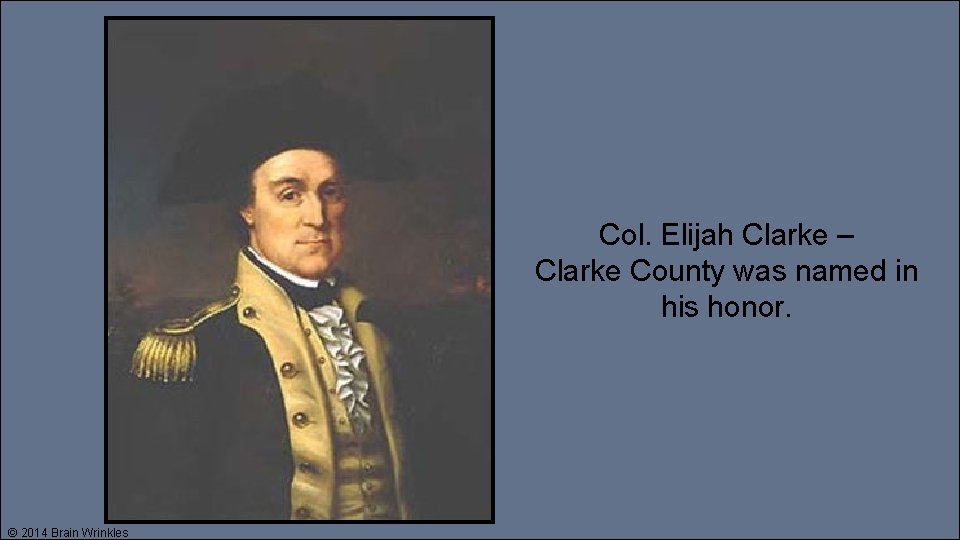
Col. Elijah Clarke – Clarke County was named in his honor. © 2014 Brain Wrinkles
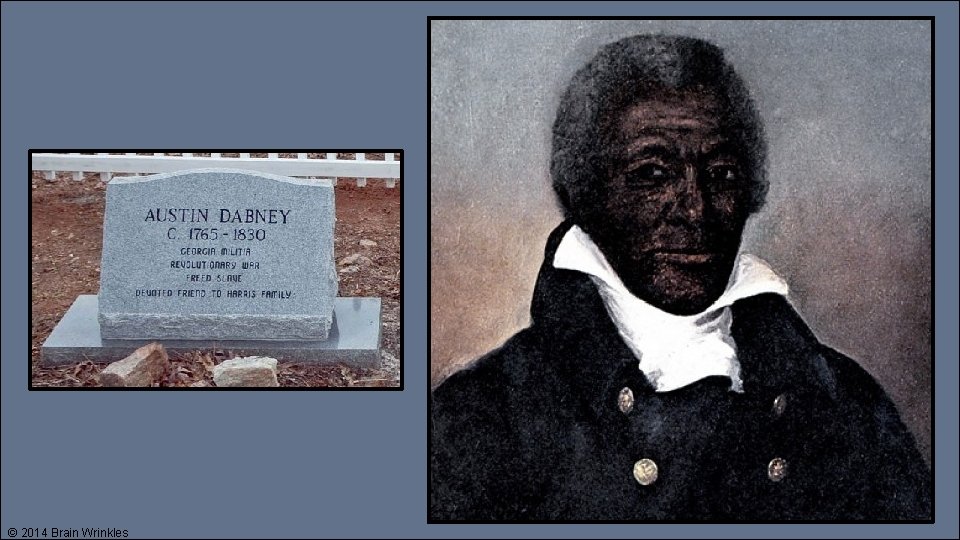
Austin Dabney • Austin Dabney was a Georgia slave who fought alongside the Patriots during the Battle of Kettle Creek. • Dabney served in place of his master, and is thought to be the only African American who fought in the battle. • Because of his bravery in the battle, Georgia’s General Assembly paid for his freedom from his former master and gave him 50 acres of land. © 2014 Brain Wrinkles
© 2014 Brain Wrinkles
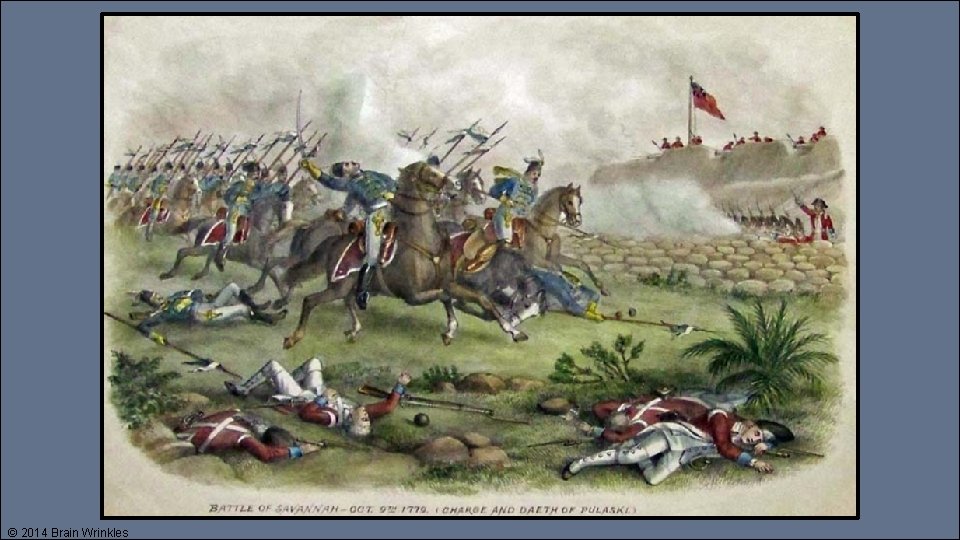
Siege of Savannah • In 1779, the second bloodiest battle of the American Revolution occurred in Savannah. • A joint force of French and patriot troops attacked Savannah and attempted to regain control of the city. • The battle itself, known as the Siege of Savannah, lasted only 90 minutes, but hundreds of men were killed. • This attack was a dismal failure and Savannah remained under British control until 1782. © 2014 Brain Wrinkles
© 2014 Brain Wrinkles
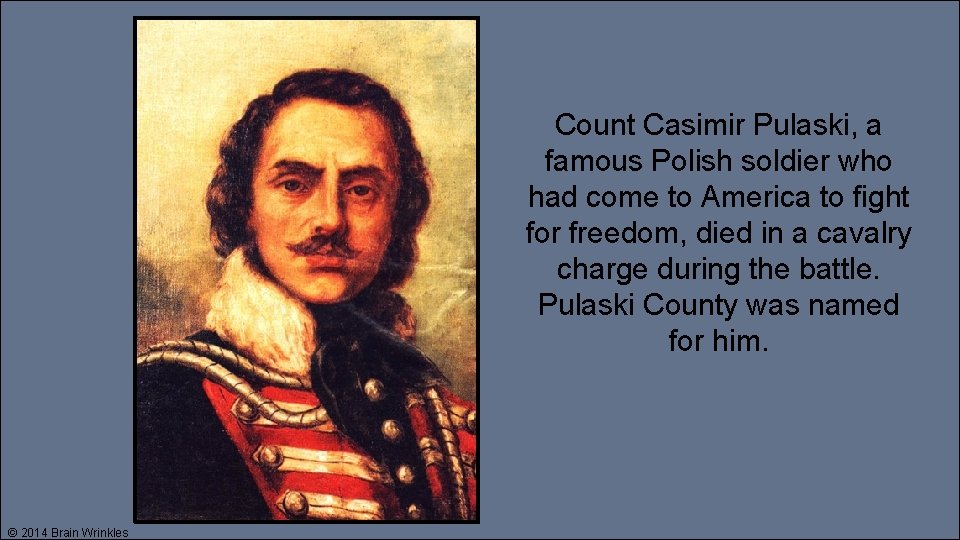
Count Casimir Pulaski, a famous Polish soldier who had come to America to fight for freedom, died in a cavalry charge during the battle. Pulaski County was named for him. © 2014 Brain Wrinkles
Patriot Wins • After the defeat in Savannah, Georgia saw many more battles between Patriots and Loyalists. • The American Revolution finally began to swing in favor of the Patriots. • In 1781, the Patriots recaptured Augusta, and the British withdrew from Savannah in 1782. • The Treaty of Paris 1783 granted America independence from England. © 2014 Brain Wrinkles
© 2014 Brain Wrinkles
Nancy Hart • Along with Elijah Clarke and Austin Dabney, many other Georgia heroes emerged during the American Revolution. • Nancy Hart’s farm was invaded by six British soldiers and demanded that she feed them. • The soldiers realized that she hid their weapons and charged at her. © 2014 Brain Wrinkles
Nancy Hart • Hart killed one soldier, wounded another, and held the rest at gunpoint until her husband returned home. • It was rumored that Hart acted as a spy for the Patriots and entered the British camp at Kettle Creek dressed as a man. © 2014 Brain Wrinkles
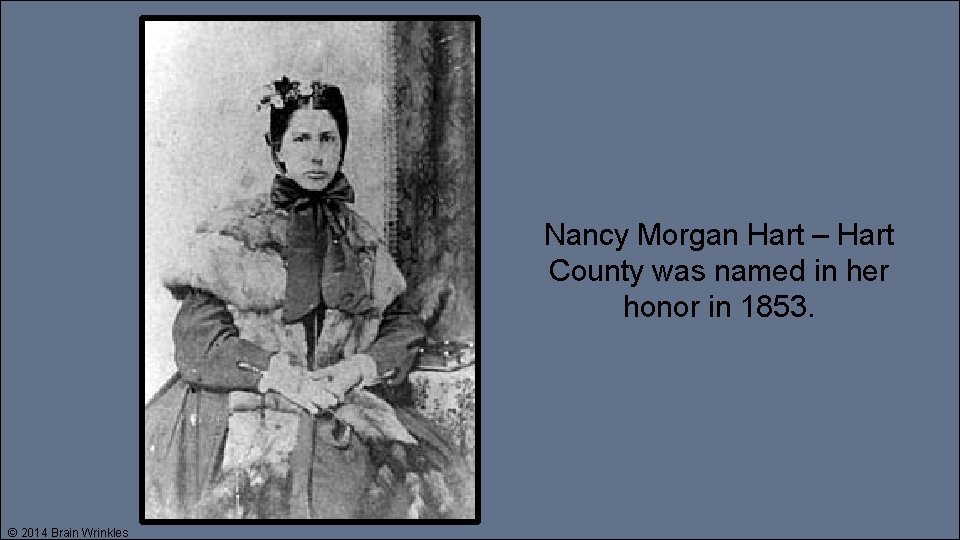
Nancy Morgan Hart – Hart County was named in her honor in 1853. © 2014 Brain Wrinkles
Button Gwinnett • Button Gwinnett was born in England in 1735 and arrived in Georgia in 1765. • He was a merchant, plantation owner, and an important figure in Georgia’s politics. • During the Revolutionary War period, Gwinnett was an influential member of the Whig Party and became the leader of the radical St. John’s Parish patriot group. © 2014 Brain Wrinkles
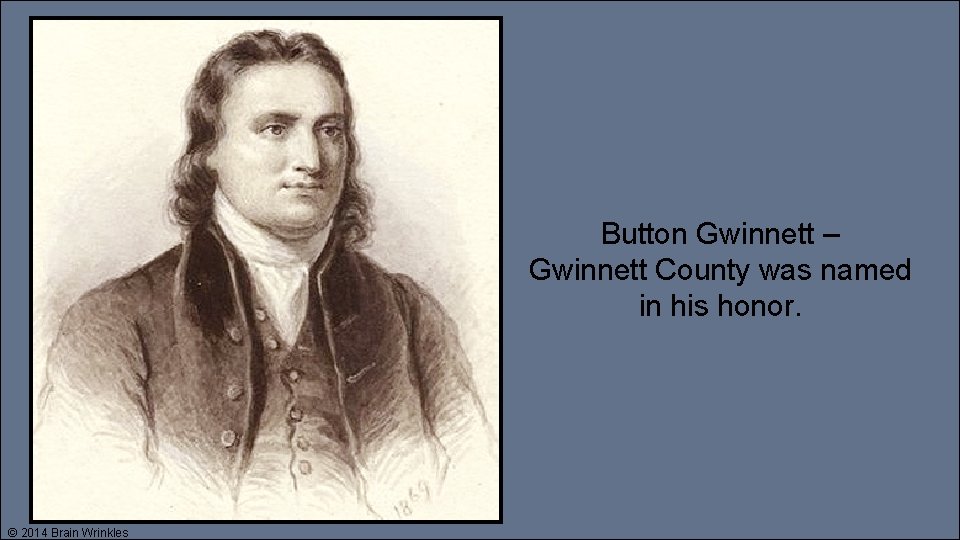
Button Gwinnett – Gwinnett County was named in his honor. © 2014 Brain Wrinkles
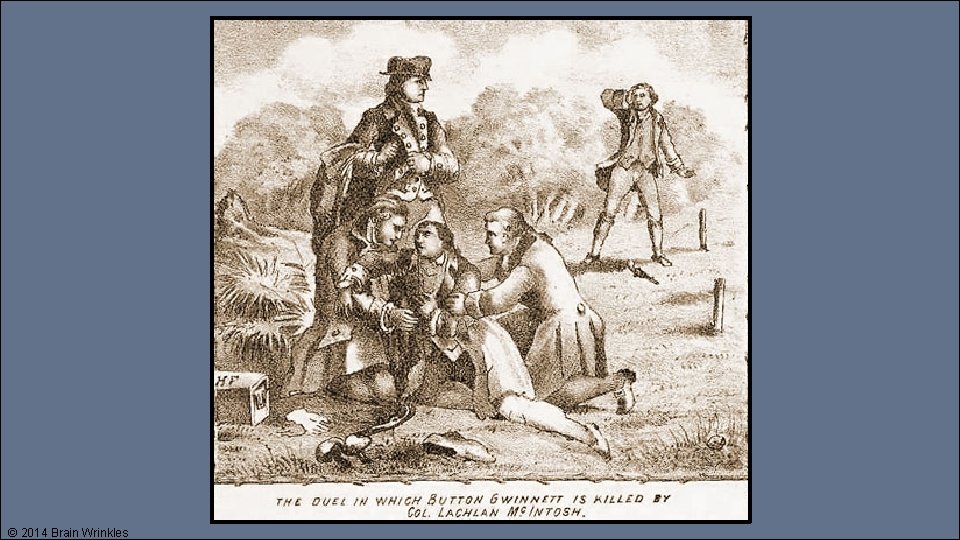
Button Gwinnett • In 1776, Gwinnett became a delegate to the Continental Congress where he signed the Declaration of Independence. • In 1776, Gwinnett became embedded in a political rivalry with Lachlan Mc. Intosh and challenged him to a deadly duel. • Both men were shot and Gwinnett passed away on May 19, 1777. © 2014 Brain Wrinkles
© 2014 Brain Wrinkles
Lyman Hall • Lyman Hall was a minister and a doctor from Connecticut who practiced medicine in Georgia and South Carolina. • He moved to Georgia in 1760 and joined Button Gwinnett in leadership of the St. John’s Parish. • Hall was a member of the Georgia delegation to the Second Continental Congress and signed the Declaration of Independence. © 2014 Brain Wrinkles
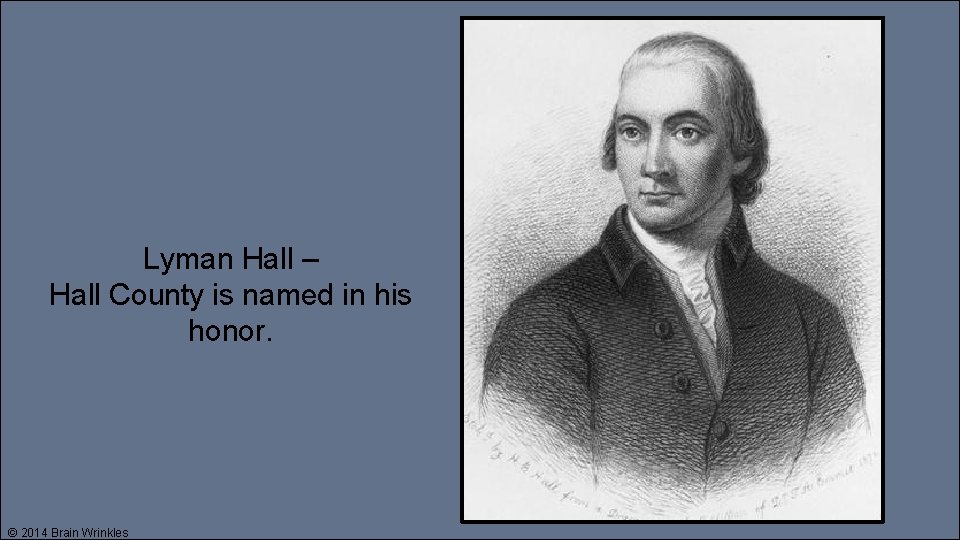
Lyman Hall – Hall County is named in his honor. © 2014 Brain Wrinkles
Lyman Hall • After the American Revolution, Hall returned to his medical practice. • He was elected governor in 1783, and focused on important issues like rebuilding Georgia’s economy and dealing with Loyalists and Native Americans. • Hall was also instrumental in the founding of the University of Georgia. © 2014 Brain Wrinkles
George Walton • George Walton moved from Virginia to Georgia in 1769 and established himself as one of the most successful lawyers in the colony. • He became active in Georgia’s politics during the American Revolution and served in the provincial congress. • Walton was named a delegate to the Continental Congress and was the third Georgian to sign the Declaration of Independence. © 2014 Brain Wrinkles
George Walton • During the war, he served as a Patriot colonel. • He was wounded and captured by the British in Savannah. • After being released in a prisoner exchange, Walton was elected governor of Georgia. • In his 30 -year political career, he served as a representative to Congress, circuit court judge, chief justice of Georgia, governor of Georgia, and U. S. Senator. © 2014 Brain Wrinkles
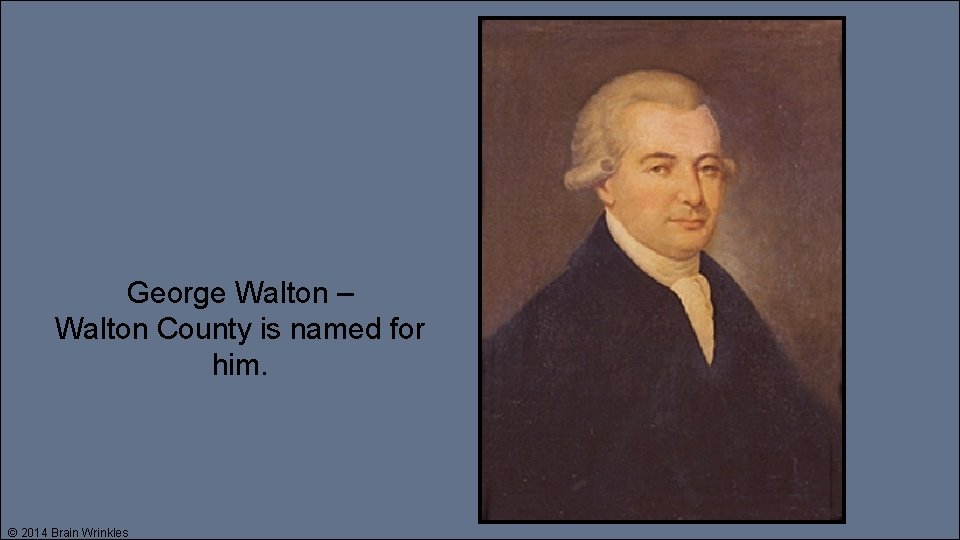
George Walton – Walton County is named for him. © 2014 Brain Wrinkles
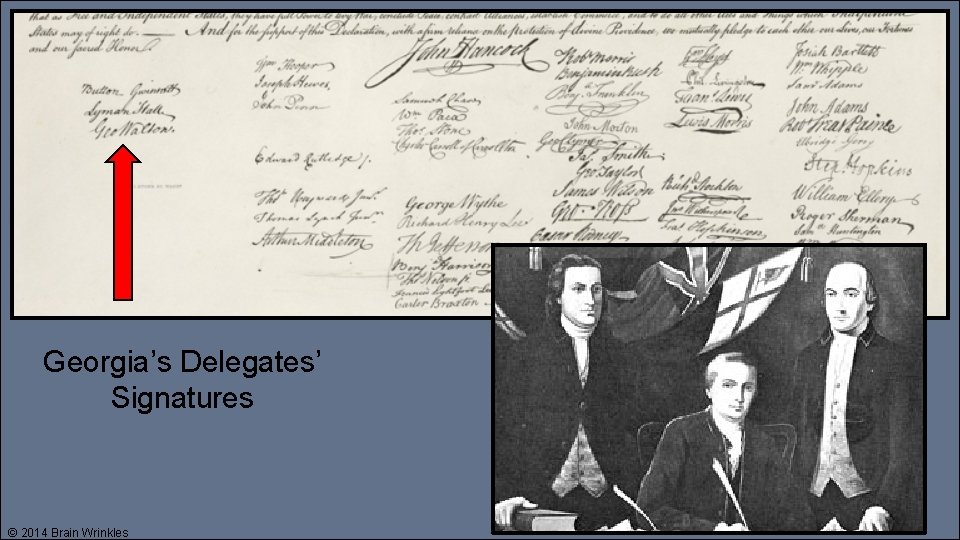
Georgia’s Delegates’ Signatures © 2014 Brain Wrinkles
Two Viewpoints Loyalist Patriot The left lens will represent the perspective of a Loyalist. Write how Loyalists felt about American independence from Great Britain. Also include a small illustration that represents this viewpoint. © 2014 Brain Wrinkles The right lens will represent the perspective of a Patriot. Write how Patriots felt about American independence from Great Britain. Also include a small illustration that represents this viewpoint. American Independence
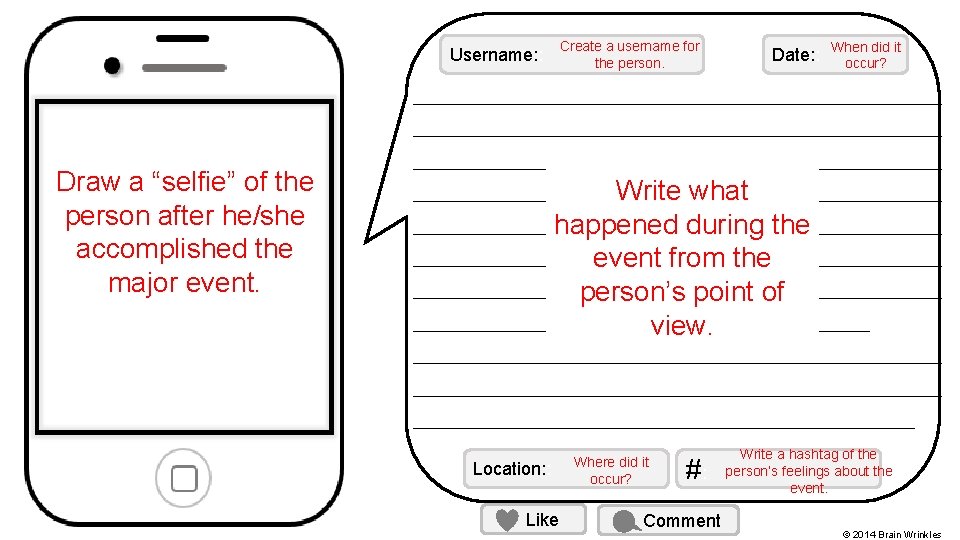
Username: : Create a username for the person. Date: : When did it occur? ___________________________________________________________ Draw a “selfie” of the person after he/she accomplished the major event. ___________________________________________________________ Write what ______________________________ happened during the ______________________________ event from the ______________________________ person’s point of __________________________ view. ___________________________________________________________ Location: : Like Where did it occur? #: Comment Write a hashtag of the person’s feelings about the event. © 2014 Brain Wrinkles
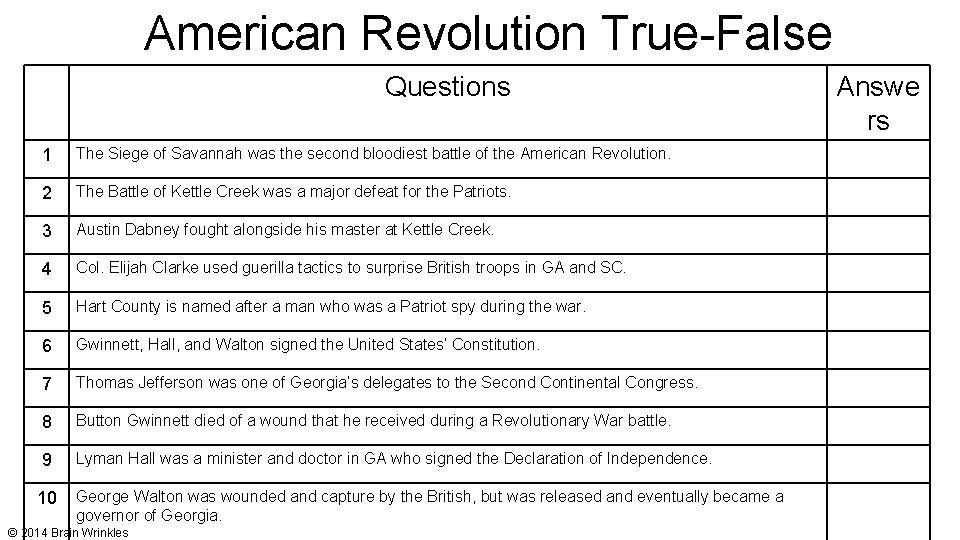
American Revolution True-False Questions 1 The Siege of Savannah was the second bloodiest battle of the American Revolution. 2 The Battle of Kettle Creek was a major defeat for the Patriots. 3 Austin Dabney fought alongside his master at Kettle Creek. 4 Col. Elijah Clarke used guerilla tactics to surprise British troops in GA and SC. 5 Hart County is named after a man who was a Patriot spy during the war. 6 Gwinnett, Hall, and Walton signed the United States’ Constitution. 7 Thomas Jefferson was one of Georgia’s delegates to the Second Continental Congress. 8 Button Gwinnett died of a wound that he received during a Revolutionary War battle. 9 Lyman Hall was a minister and doctor in GA who signed the Declaration of Independence. 10 George Walton was wounded and capture by the British, but was released and eventually became a governor of Georgia. © 2014 Brain Wrinkles Answe rs
- Slides: 34