
SS 7 Signaling System No 7 takes a
- Slides: 16
SS 7 • Signaling System No. 7 takes a whole new (digital) approach to signaling. With the new approach comes great functionality and better service.
SS 7 Requirements • Optimized for operation with digital (ISDN) networks • can meet present and future requirements for information transfer for inter processor transactions • to provide a reliable means of information transfer in correct sequence and without loss or duplication
SS 7 Signaling Links • Out of band signaling • Messages exchanged over 56 or 64 K bidirectional signaling links • Supports services requiring database systems (IN) • Allows for improved control over fraudulent network usage
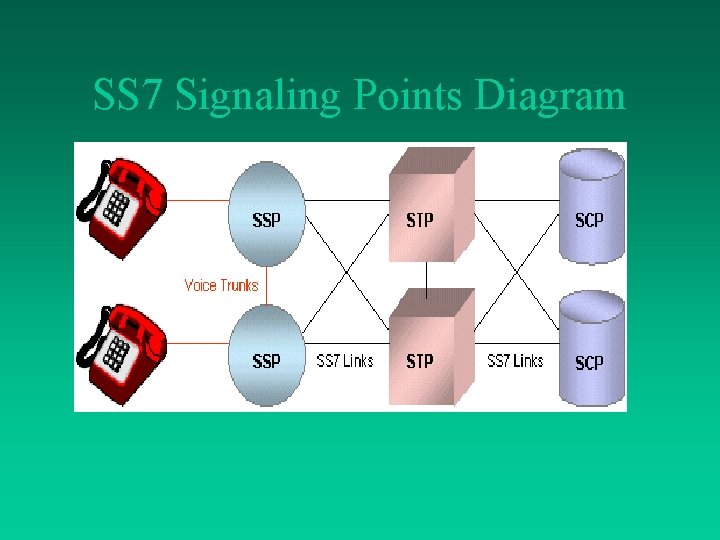
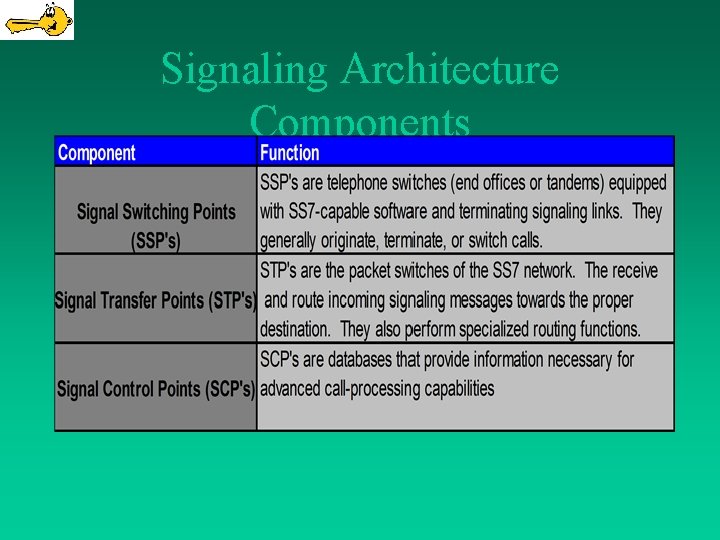
SS 7 Signaling Points • 3 types of signaling points: – – – 1) SSP(Service Switching Point) 2) STP(Signal Transfer Point) 3) Service Control Point
SS 7 Signaling Points Diagram
Signaling Architecture Components
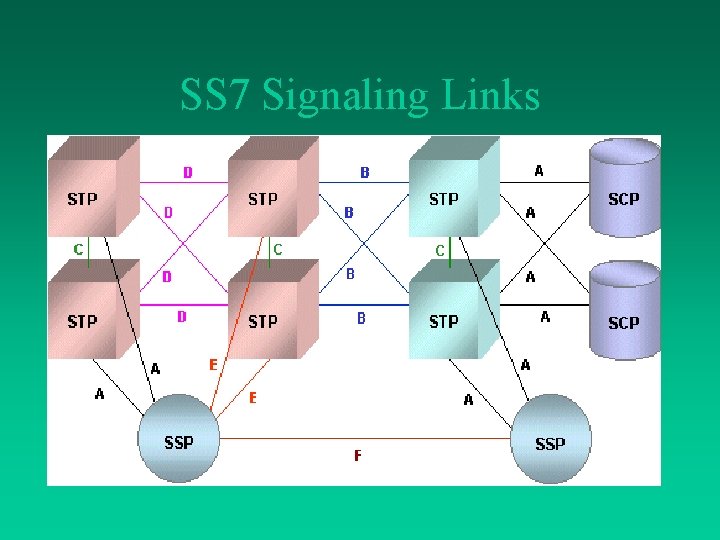
SS 7 Signaling Links
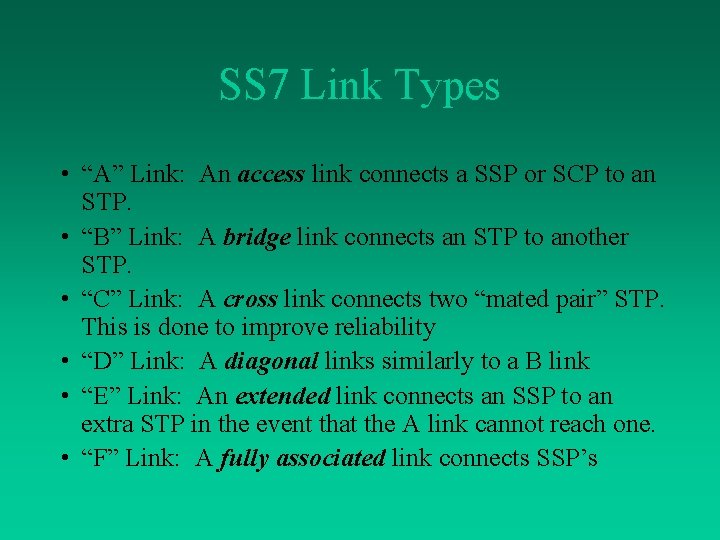
SS 7 Link Types • “A” Link: An access link connects a SSP or SCP to an STP. • “B” Link: A bridge link connects an STP to another STP. • “C” Link: A cross link connects two “mated pair” STP. This is done to improve reliability • “D” Link: A diagonal links similarly to a B link • “E” Link: An extended link connects an SSP to an extra STP in the event that the A link cannot reach one. • “F” Link: A fully associated link connects SSP’s
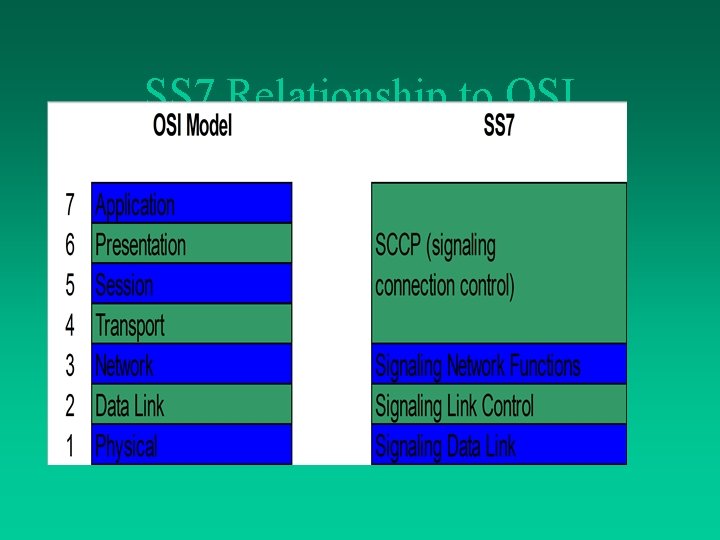
SS 7 Relationship to OSI
SS 7 Data-Link Layer (Layer 1) • Physical layer in OSI • Two bi-directional transmission paths for signaling • Two data channels running in opposite directions at same date rate (usually 5664 K)
SS 7 Signal Link Layer (Layer 2) • Signal unit alignment and delimitation • Error detection • Error correction (preventive cyclic retransmission method) • Flow Control
SS 7 Signal Units • Signaling units come in three types – – – 1) MSU (message signal unit) - carries signaling information 2) LSSU (link station signal unit) carries the link status information 3) FISU (Fill-in signal unit) - fills in idle – time
SS 7 Network Functions (Layer 3) • Message-handling functions – * message routing: used at each signaling point to determine the outgoing link – * message discrimination: determines if a received message is destined for it, or another point – * message distribution: delivers received message to correct user part
SS 7 Network Functions (Layer 3) • Traffic Management Functions – * To control message routing. This includes modification of message routing to destination points, or to continue normal routing. – * Control signaling traffic by avoiding irregularities in message flow – * Flow control
SS 7 Network Functions (Layer 3) • Link Management – – – * * * Can restore the availability of a link set Monitors status of signaling link Corrects out-of-service links Can provision new signaling links Automatically configures/reconfigures signaling links
SS 7 Connection Control Part • Services: – - connection oriented – - connection-less – - peer-to-peer communication – * Connection established – * Data transfer starts – * Connection releases