
SQL Technologies Involved in Project Architecture Web server
SQL
Technologies Involved in Project • Architecture • Web server • Web pages, JS files, and data • Database server (if necessary) • Data • Web server • Team web space URL: • http: //teams. up. ist. psu. edu/ist 402 sp 17/section 2/Team 01/. . • Each team member can access the folder and files under it. • Be careful when you modify a document.
Database Server • SQL Server • Help manage data and respond dynamic queries • Why is Python insufficient? • Python is good if you know what data users may need • Database server is better if user info and needs are more dynamic and unpredicatable. • Team database • IST 402 SP 1700201 – IST 402 SP 1700210
Revisit to Relational Database and SQL
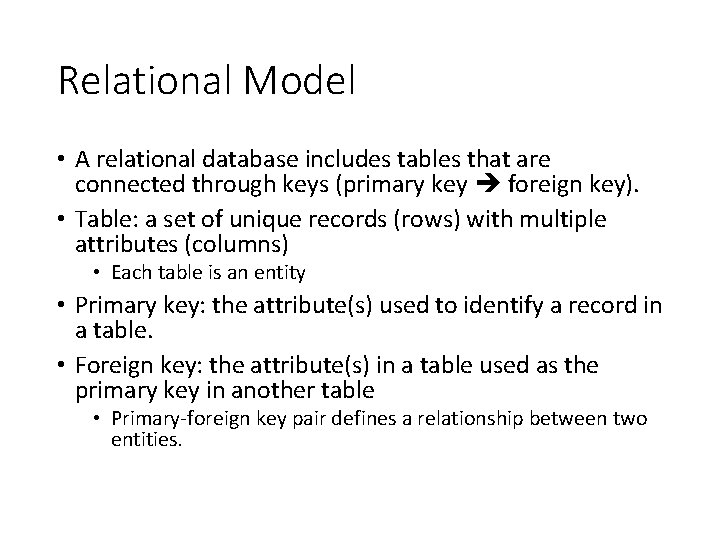
Relational Model • A relational database includes tables that are connected through keys (primary key foreign key). • Table: a set of unique records (rows) with multiple attributes (columns) • Each table is an entity • Primary key: the attribute(s) used to identify a record in a table. • Foreign key: the attribute(s) in a table used as the primary key in another table • Primary-foreign key pair defines a relationship between two entities.
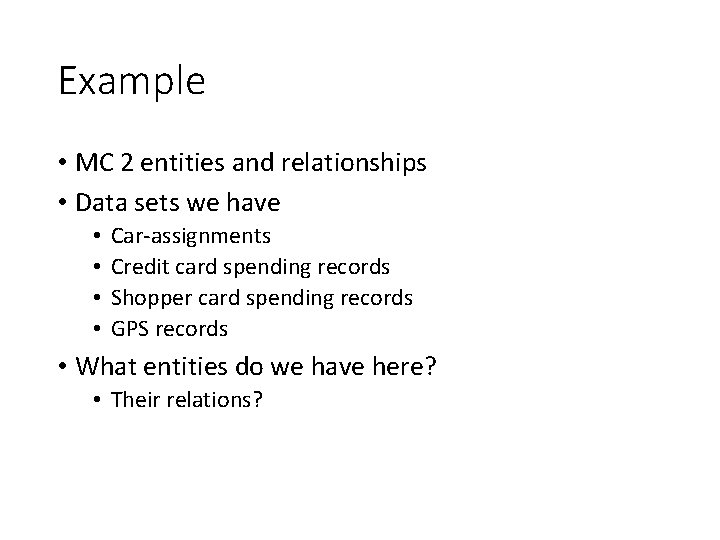
Example • MC 2 entities and relationships • Data sets we have • • Car-assignments Credit card spending records Shopper card spending records GPS records • What entities do we have here? • Their relations?
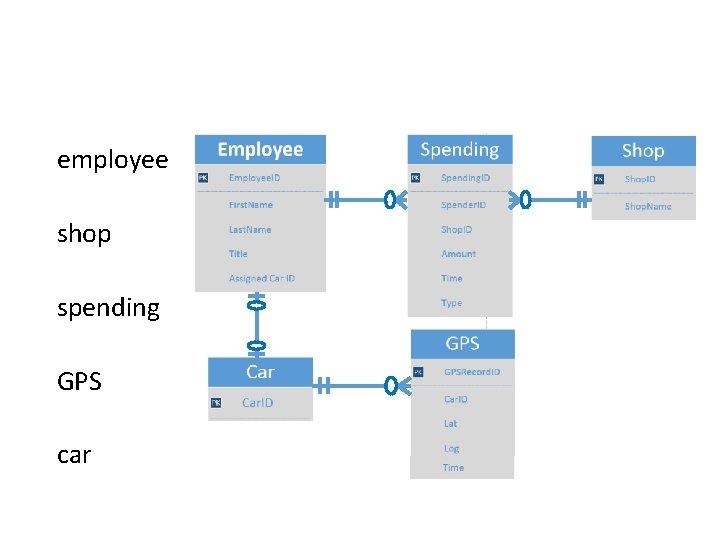
employee shop spending GPS car
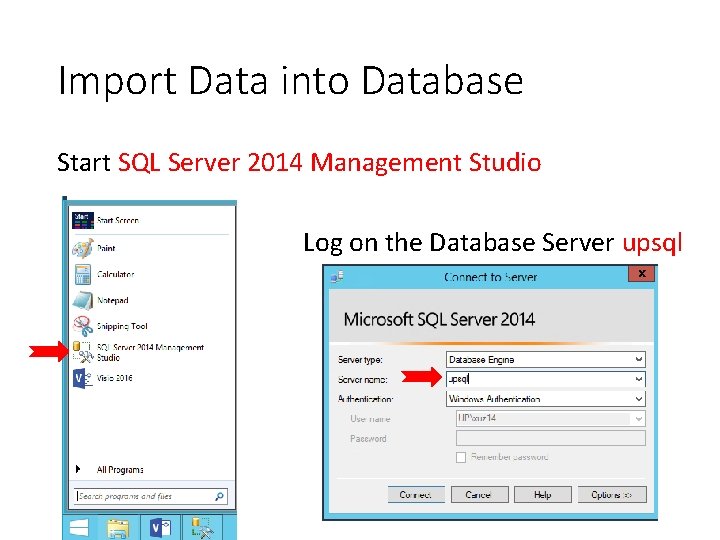
Import Data into Database Start SQL Server 2014 Management Studio Log on the Database Server upsql
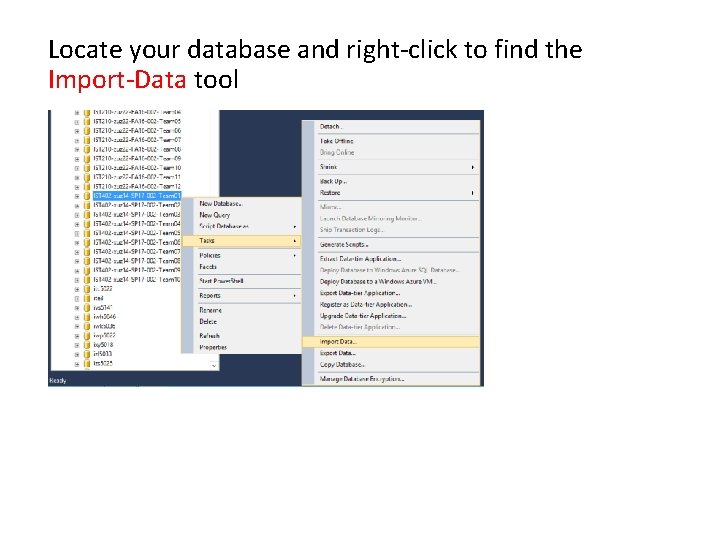
Locate your database and right-click to find the Import-Data tool
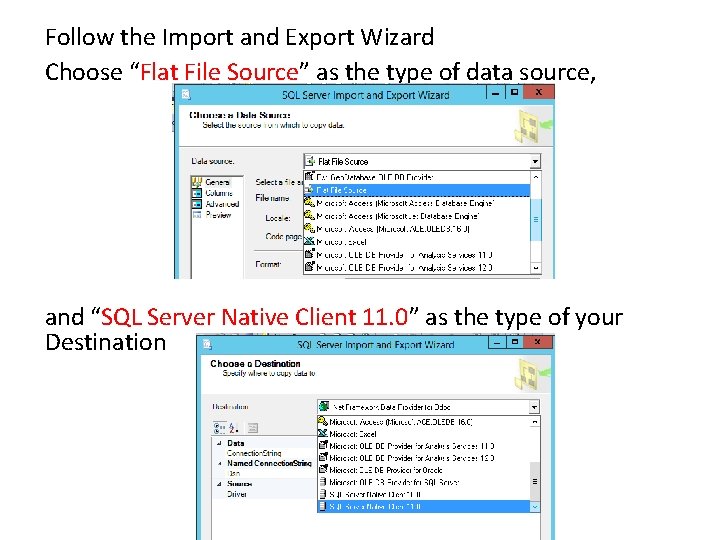
Follow the Import and Export Wizard Choose “Flat File Source” as the type of data source, and “SQL Server Native Client 11. 0” as the type of your Destination
Exercise: Import the cc_data. csv into your database • Use your personal database. • Copy the source file to your desktop and import the copied file.
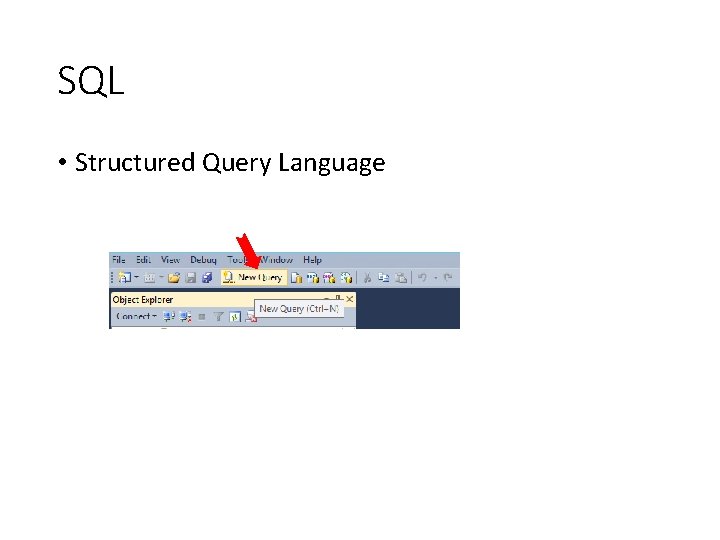
SQL • Structured Query Language
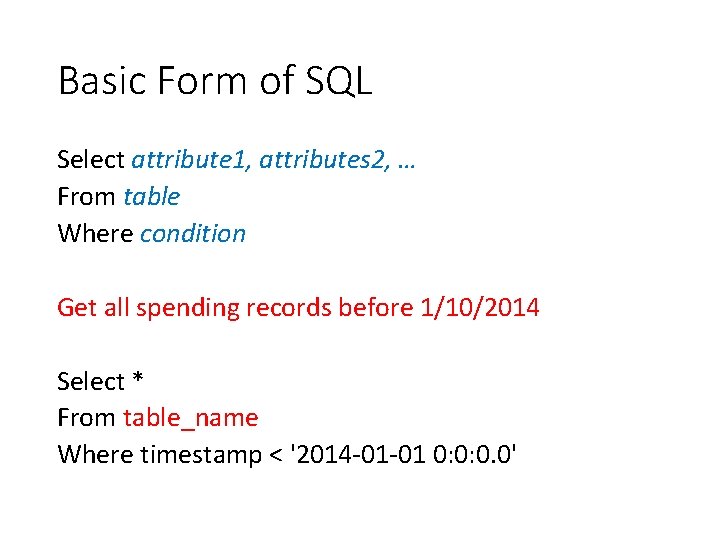
Basic Form of SQL Select attribute 1, attributes 2, … From table Where condition Get all spending records before 1/10/2014 Select * From table_name Where timestamp < '2014 -01 -01 0: 0: 0. 0'
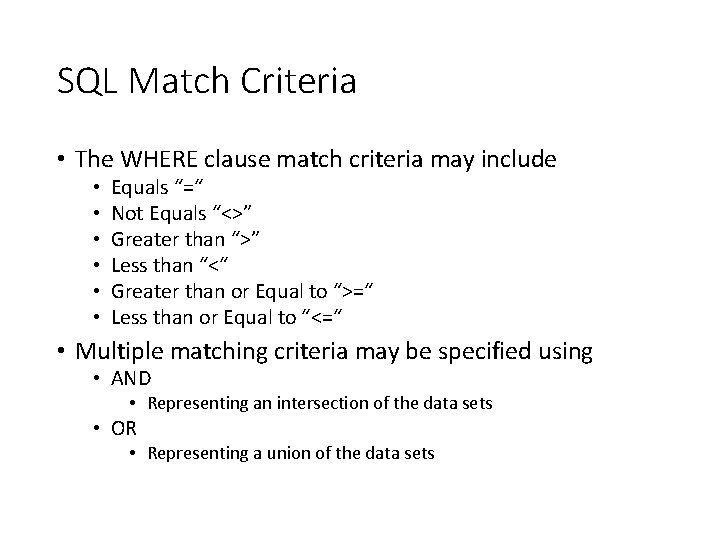
SQL Match Criteria • The WHERE clause match criteria may include • • • Equals “=“ Not Equals “<>” Greater than “>” Less than “<“ Greater than or Equal to “>=“ Less than or Equal to “<=“ • Multiple matching criteria may be specified using • AND • Representing an intersection of the data sets • OR • Representing a union of the data sets
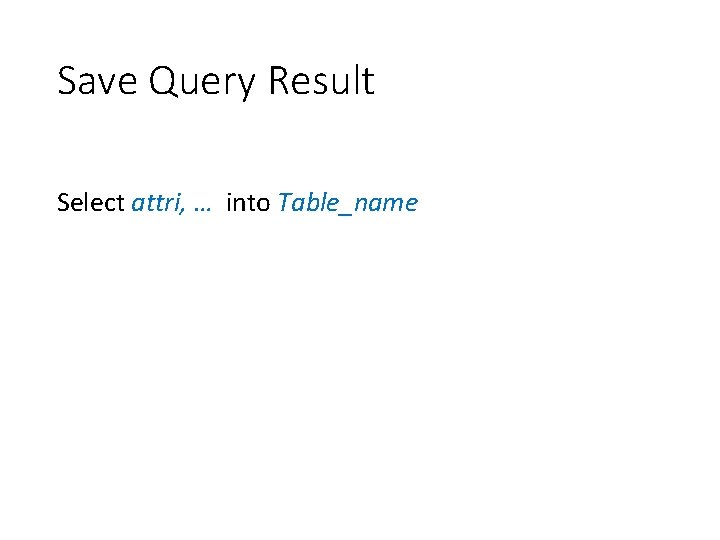
Save Query Result Select attri, … into Table_name
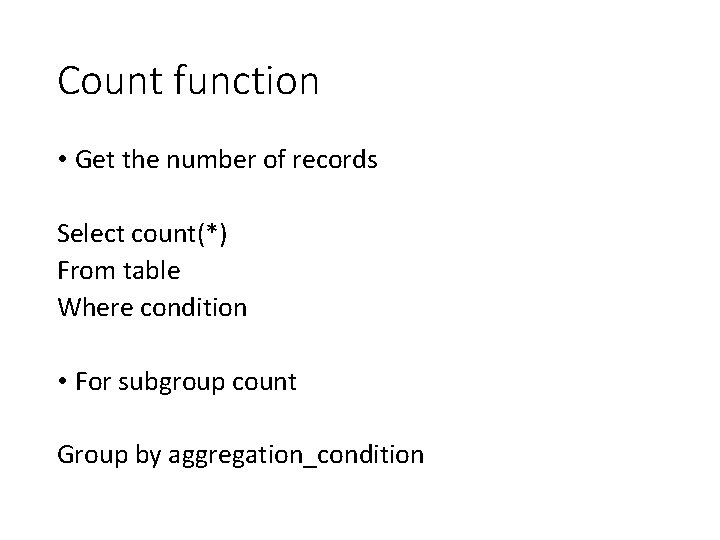
Count function • Get the number of records Select count(*) From table Where condition • For subgroup count Group by aggregation_condition
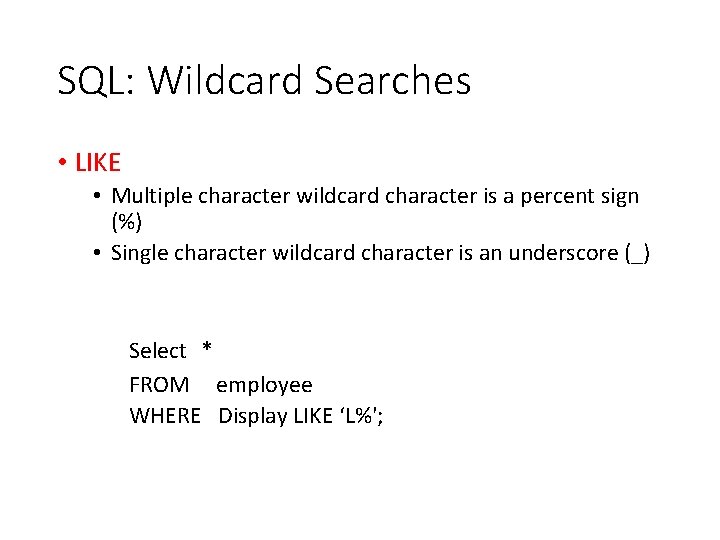
SQL: Wildcard Searches • LIKE • Multiple character wildcard character is a percent sign (%) • Single character wildcard character is an underscore (_) Select * FROM employee WHERE Display LIKE ‘L%';
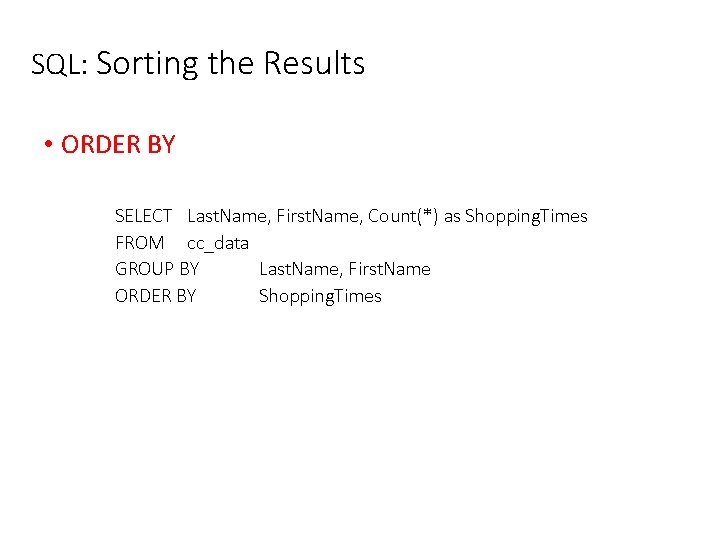
SQL: Sorting the Results • ORDER BY SELECT Last. Name, First. Name, Count(*) as Shopping. Times FROM cc_data GROUP BY Last. Name, First. Name ORDER BY Shopping. Times
Find the amount of Spending
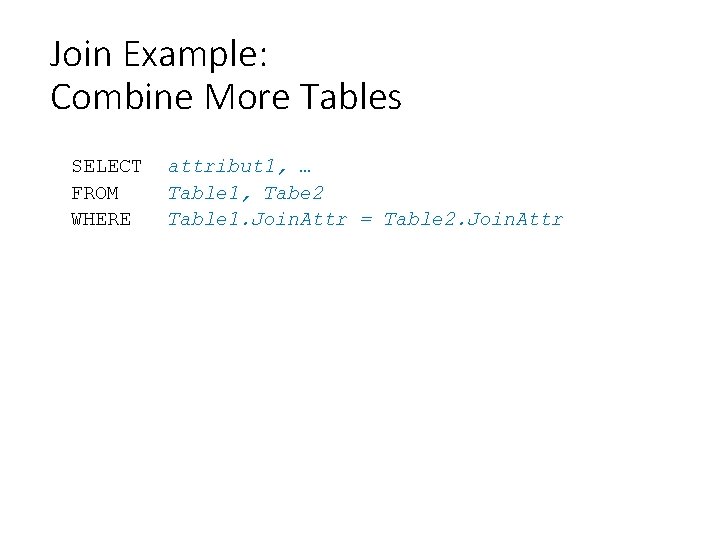
Join Example: Combine More Tables SELECT FROM WHERE attribut 1, … Table 1, Tabe 2 Table 1. Join. Attr = Table 2. Join. Attr
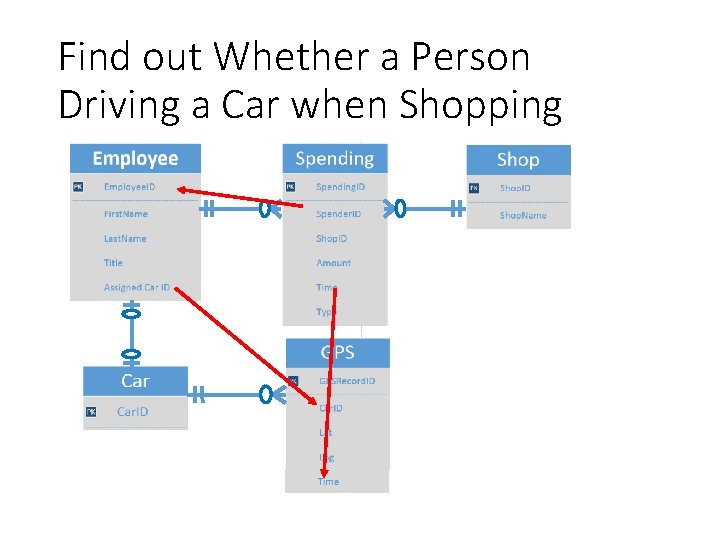
Find out Whether a Person Driving a Car when Shopping
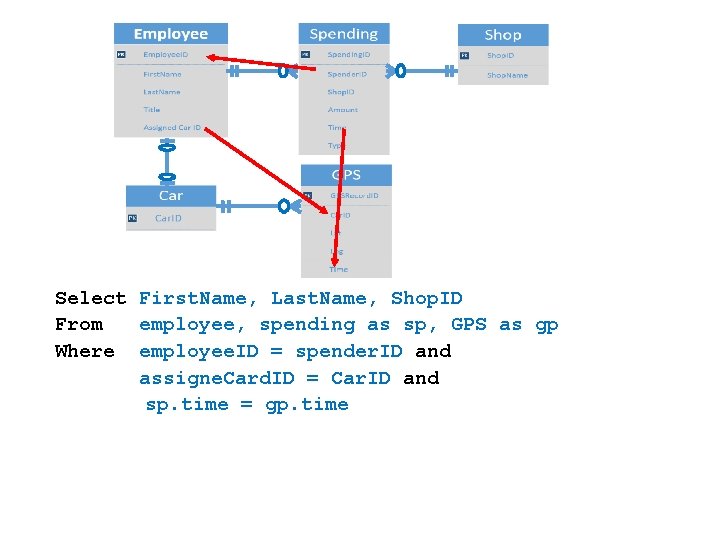
Select First. Name, Last. Name, Shop. ID From employee, spending as sp, GPS as gp Where employee. ID = spender. ID and assigne. Card. ID = Car. ID and sp. time = gp. time
- Slides: 22