
SQL Statement Logging for Making SQLite Truly Lite
- Slides: 24
SQL Statement Logging for Making SQLite Truly Lite Jong-Hyeok Park, Gihwan Oh, Sang-Won Lee
How to make SQLite faster? Why logical logging implementation is a perfect fit for mobile applications running on SQLite database using WAL and providing TCC?
What is the problem with SQLite ? • Forcing commit for every transaction • 2/3 of all writes in smartphones are from SQLite • Shorten lifespan of flash storage in mobile devices • Increased locality • Same pages are repeatedly updated by consecutive transactions
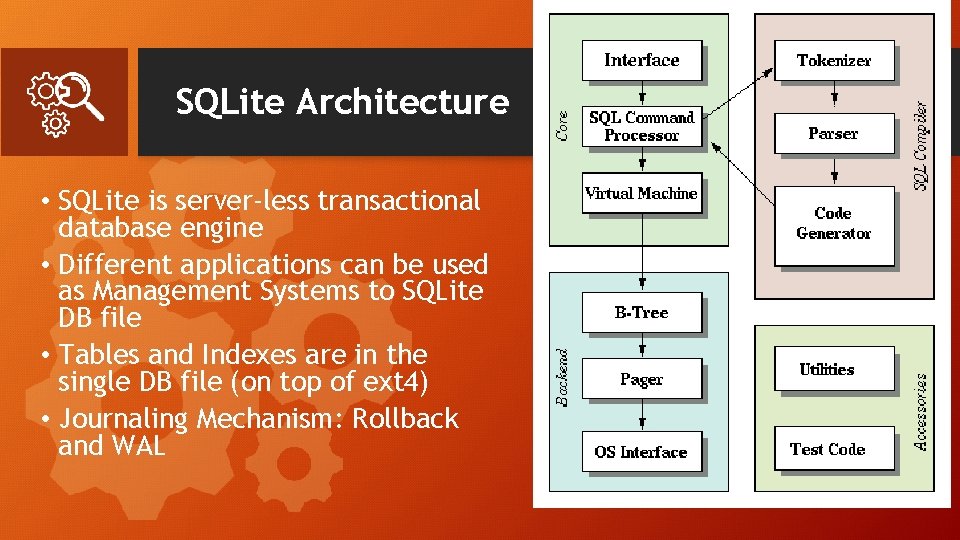
SQLite Architecture • SQLite is server-less transactional database engine • Different applications can be used as Management Systems to SQLite DB file • Tables and Indexes are in the single DB file (on top of ext 4) • Journaling Mechanism: Rollback and WAL
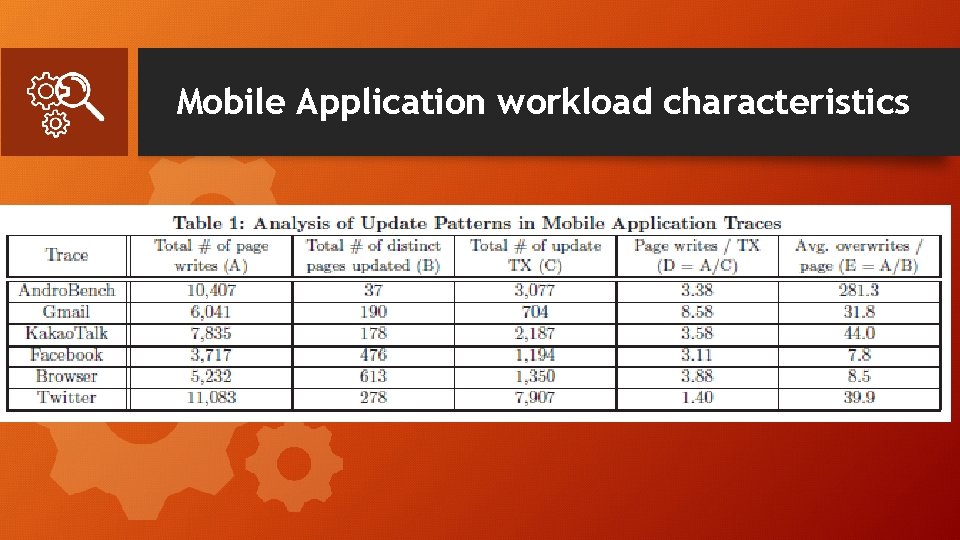
Mobile Application workload characteristics
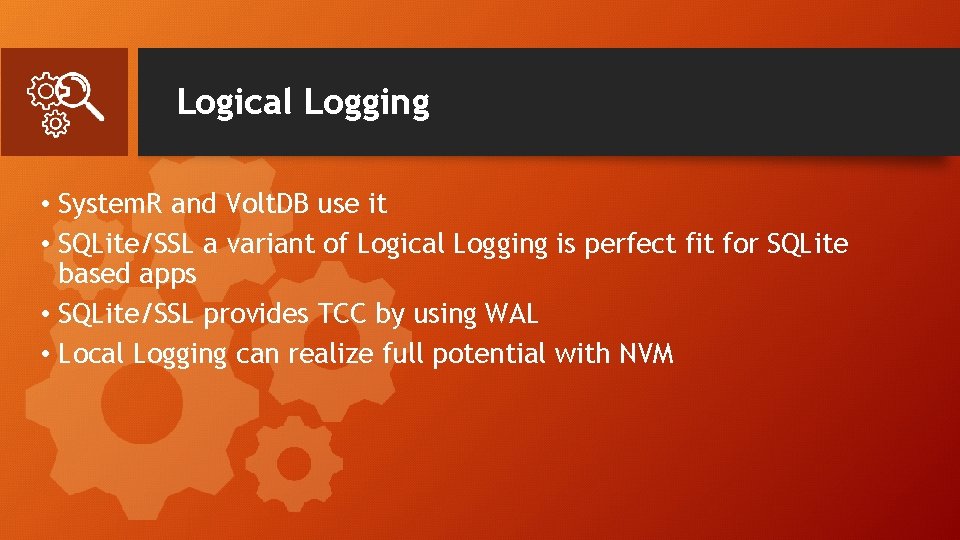
Logical Logging • System. R and Volt. DB use it • SQLite/SSL a variant of Logical Logging is perfect fit for SQLite based apps • SQLite/SSL provides TCC by using WAL • Local Logging can realize full potential with NVM
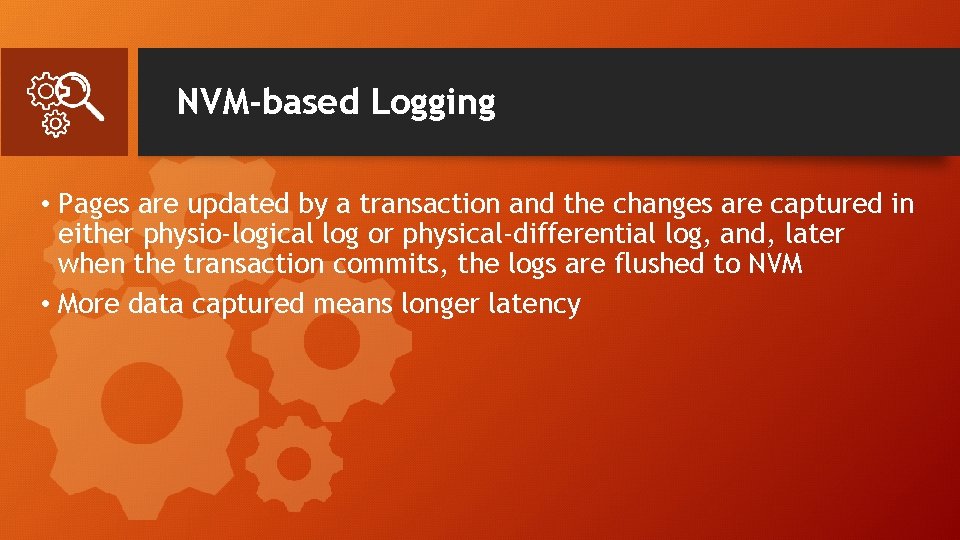
NVM-based Logging • Pages are updated by a transaction and the changes are captured in either physio-logical log or physical-differential log, and, later when the transaction commits, the logs are flushed to NVM • More data captured means longer latency
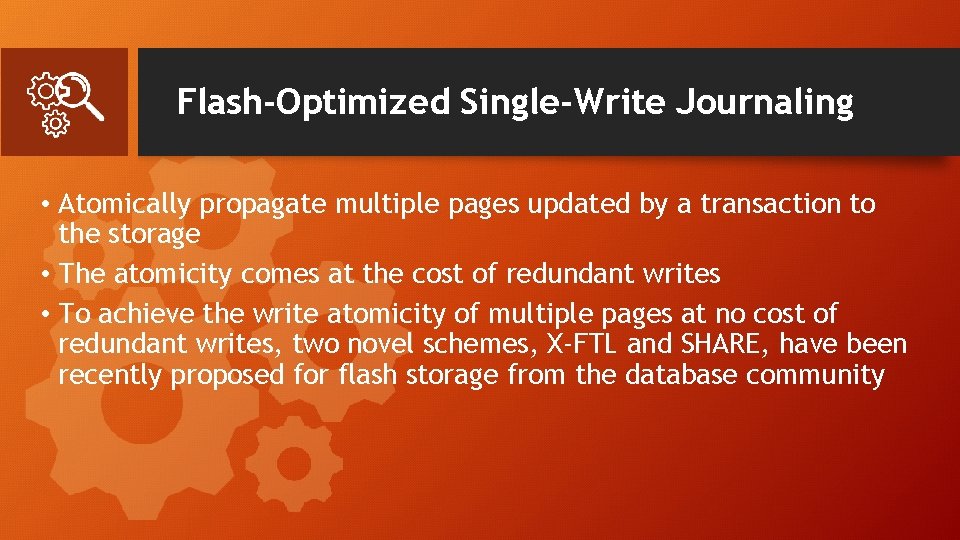
Flash-Optimized Single-Write Journaling • Atomically propagate multiple pages updated by a transaction to the storage • The atomicity comes at the cost of redundant writes • To achieve the write atomicity of multiple pages at no cost of redundant writes, two novel schemes, X-FTL and SHARE, have been recently proposed for flash storage from the database community
Design of SQLite/SSL • It is a mobile database manager, which logs only SQL statements upon commit • Achieving its transactional atomicity and durability in a truly lightweight manner • Have modified its existing modules minimally
Design of SQLite/SSL (2) 1. Only minimal changes to keep the codebase as reliable as vanilla SQLite, WAL mode was modified to embody a TCC 2. Recovery logic remained as simple as before, added additional data structure for logging SQL statements 3. Use of mmap and msync to achieve byte-addressability and device independence
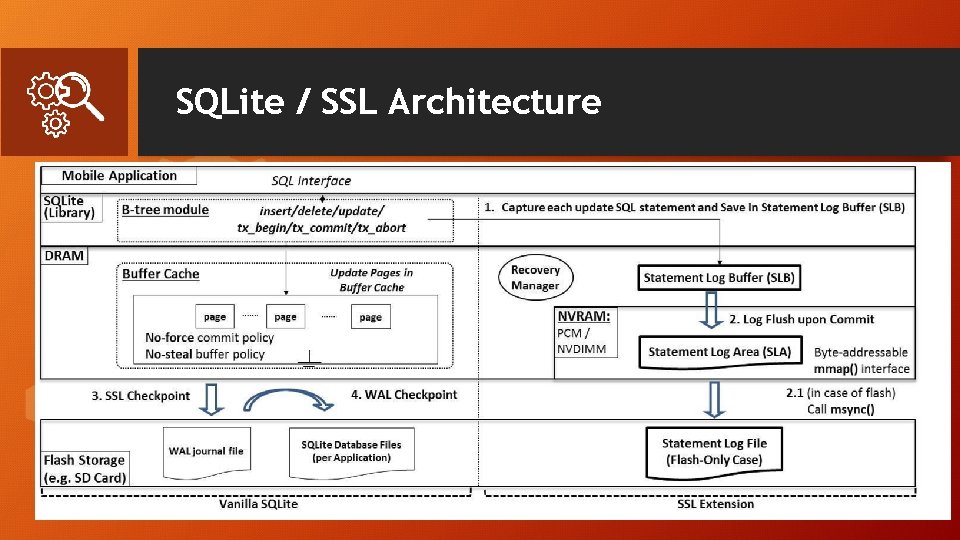
SQLite / SSL Architecture
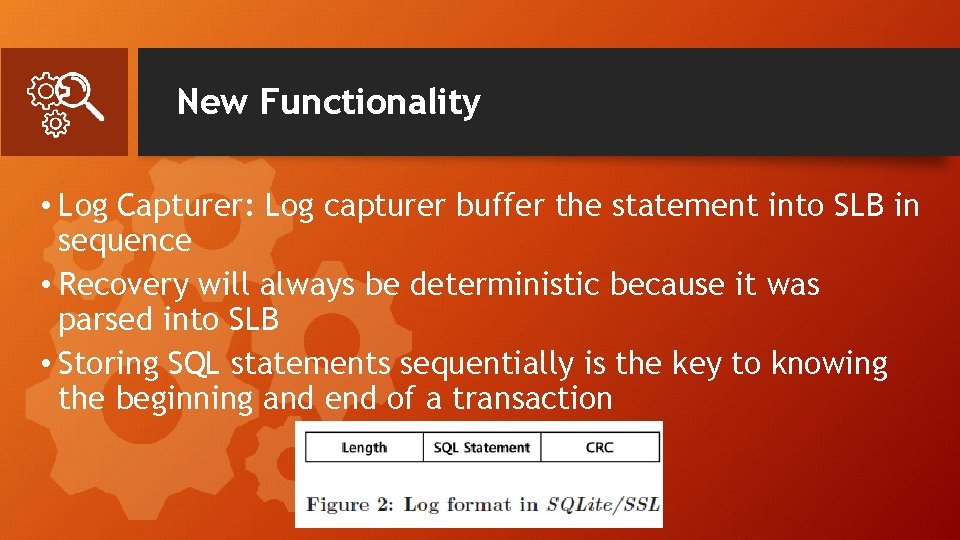
New Functionality • Log Capturer: Log capturer buffer the statement into SLB in sequence • Recovery will always be deterministic because it was parsed into SLB • Storing SQL statements sequentially is the key to knowing the beginning and end of a transaction
New Functionality • Log writer: When a transaction commits, the log writer is responsible for writing all the update SQL statement logs of the transaction persistently to SLA • Msync: is used to flush all data from DRAM which is used as SLB to PCM which is used as SLA. This is achievable because reference are byte addressable.
Transaction Consistent Checkpoint • No force commit policy – faster commit • Recovery will have to replay all logged SQL statements in SLA against old database each time – very time consuming • 2 Checkpoints • SSL-checkpoint: is triggered when the transaction commits or the buffer of SLA has reached the 70% or 1024 dirty pages. • WAL-checkpoint: is triggered when 1000 pages reached. Because of update locality only the most recent versions of each page will be copied from WAL to database
Transaction Consistent Checkpoint (2) • WAL-checkpoint will also be triggered after SSLcheckpoint • Reduce complexity of WAL lazy checkpoint if remain full after ssl • To benefit from write buffering effect by WAL journal
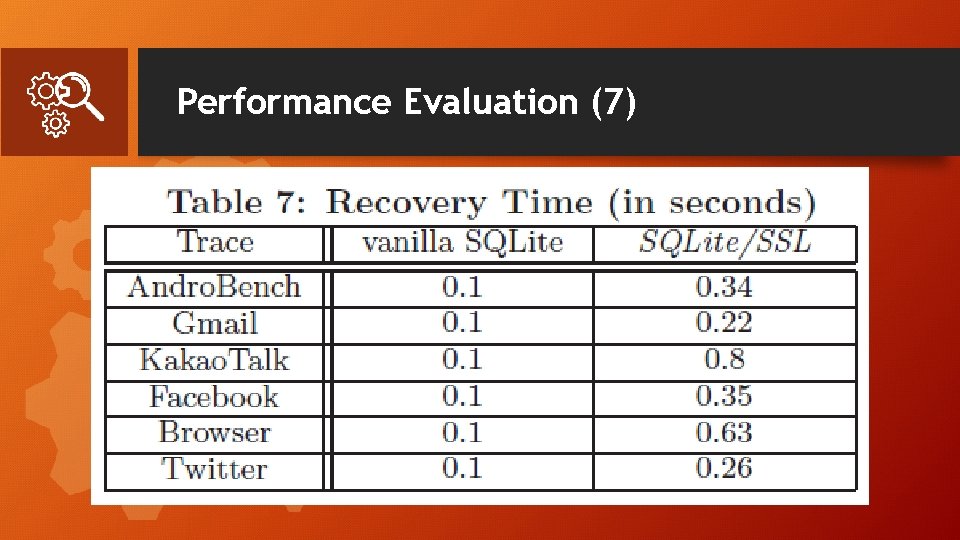
Recovery • Vanilla SQLite: recovers all pages in WAL journal and commits them to database • SQLite/SSL: can cope with all the type of crashes. • If SLA exists then check it status (reset or in use) and flush all dirty pages from buffer to wal and resseting sla • Copy pages from wal to original database and reset wal
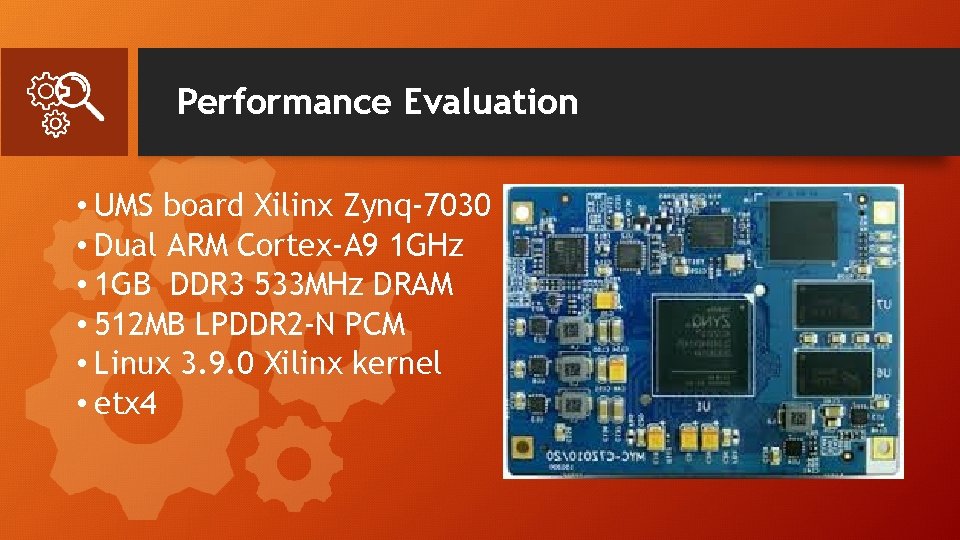
Performance Evaluation • UMS board Xilinx Zynq-7030 • Dual ARM Cortex-A 9 1 GHz • 1 GB DDR 3 533 MHz DRAM • 512 MB LPDDR 2 -N PCM • Linux 3. 9. 0 Xilinx kernel • etx 4
Performance Evaluation (2) • Intel i 7 3370 3. 40 GHz • 12 GB DRAM • Ext 4
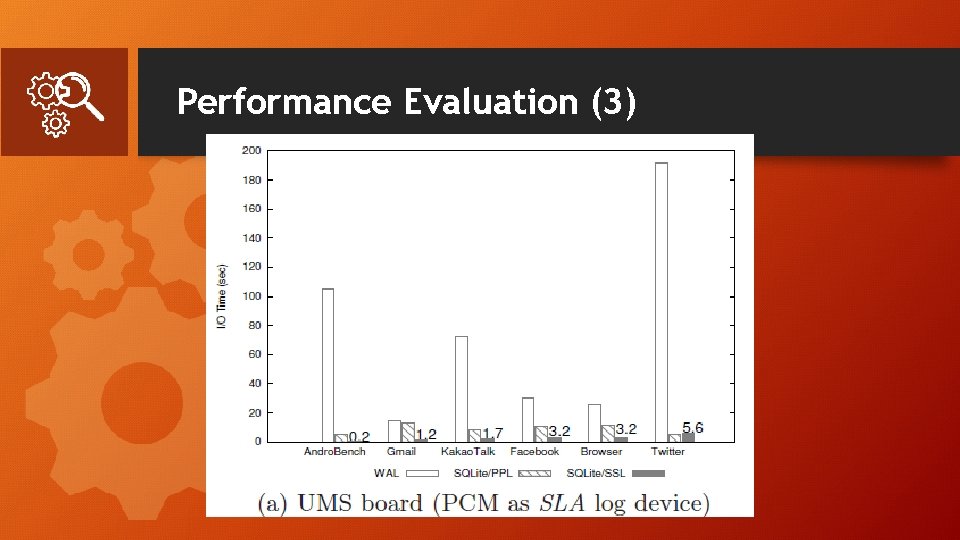
Performance Evaluation (3)
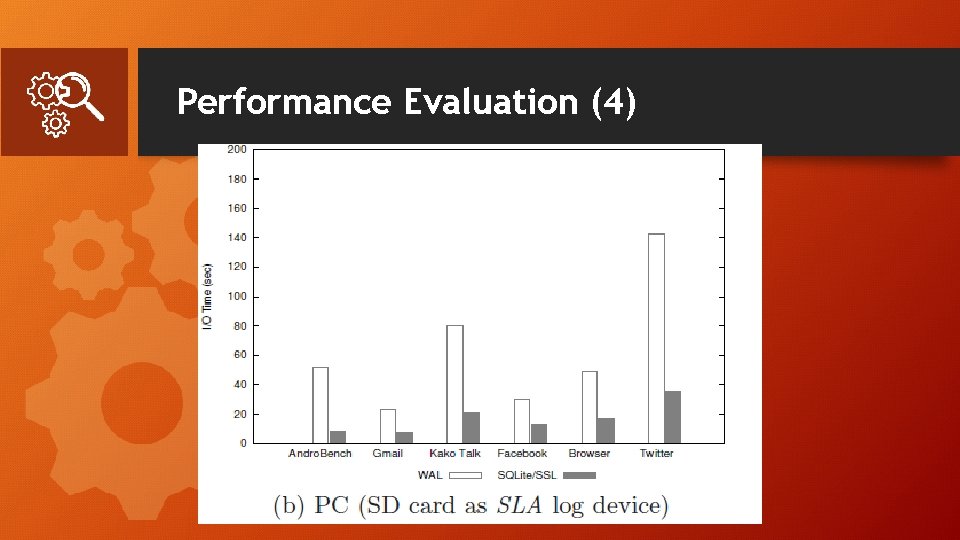
Performance Evaluation (4)
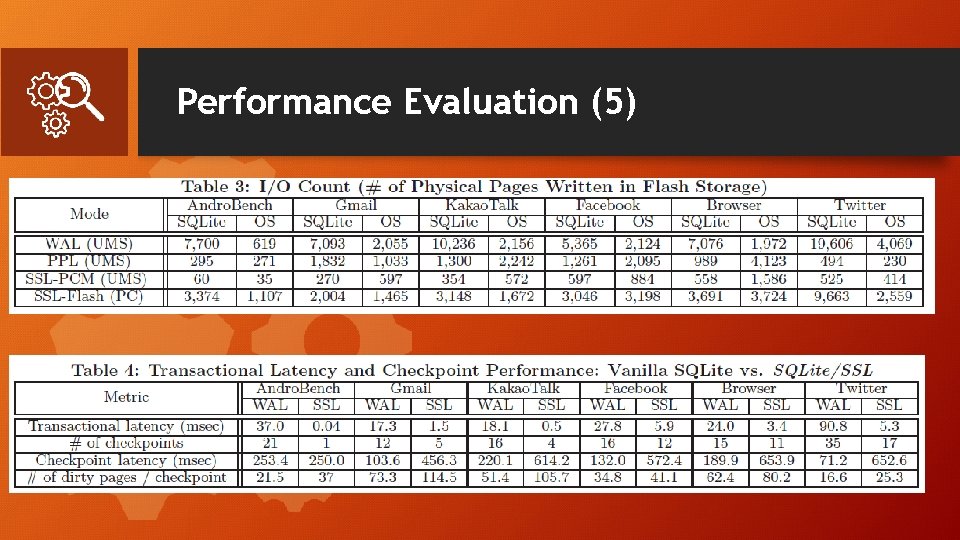
Performance Evaluation (5)
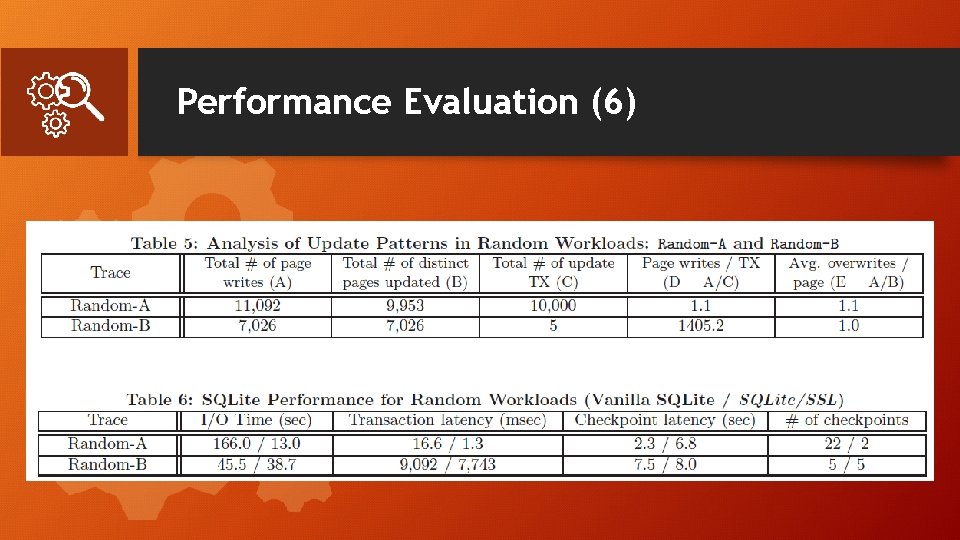
Performance Evaluation (6)
Performance Evaluation (7)
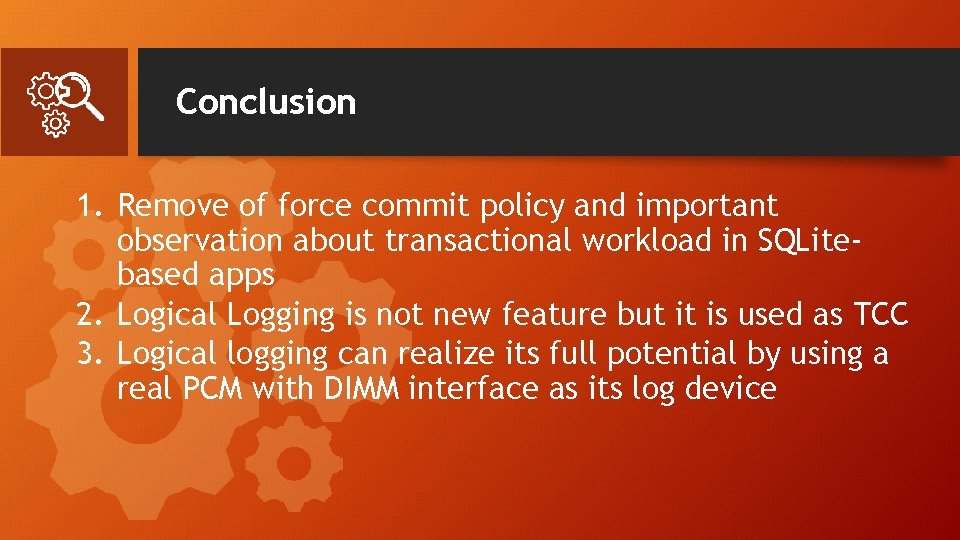
Conclusion 1. Remove of force commit policy and important observation about transactional workload in SQLitebased apps 2. Logical Logging is not new feature but it is used as TCC 3. Logical logging can realize its full potential by using a real PCM with DIMM interface as its log device