
SQL LANGUAGE AND RELATIONAL DATA MODEL TUTORIAL Prof
- Slides: 31
SQL LANGUAGE AND RELATIONAL DATA MODEL TUTORIAL Prof: Dr. Shu-Ching Chen TA: Hsin-Yu Ha
Outline Relational Data Model Step 1 Define the purpose Step 2 Gather data, define constraints Step 3 Create Relationship Step 4 Refine and Normalize the design SQL Language
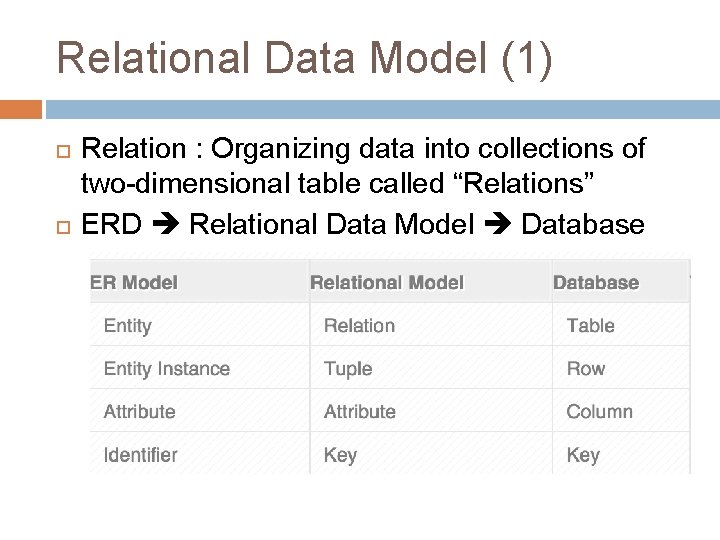
Relational Data Model (1) Relation : Organizing data into collections of two-dimensional table called “Relations” ERD Relational Data Model Database
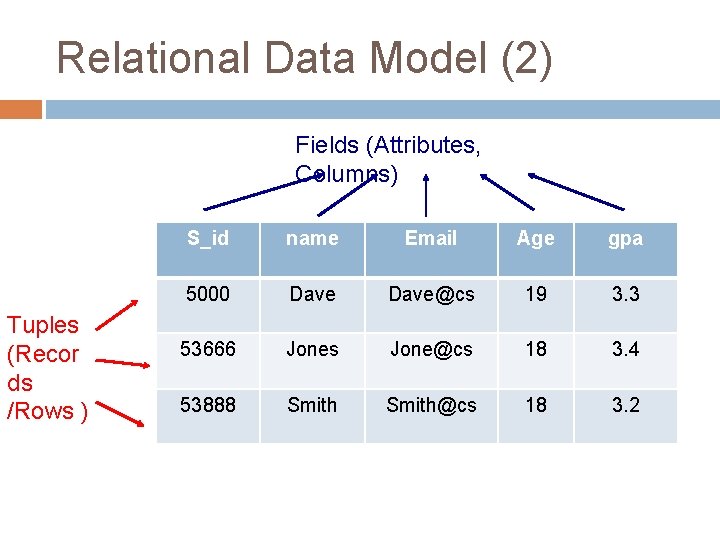
Relational Data Model (2) Fields (Attributes, Columns) Tuples (Recor ds /Rows ) S_id name Email Age gpa 5000 Dave@cs 19 3. 3 53666 Jones Jone@cs 18 3. 4 53888 Smith@cs 18 3. 2
RD- Step 1 Define the purpose Gather the requirements and define the objective of your database
RD Step 2 Gather data, define constraints Primary Key Unique and not Null Simple Should not change Often uses Integer Other constraints Not null Positive values
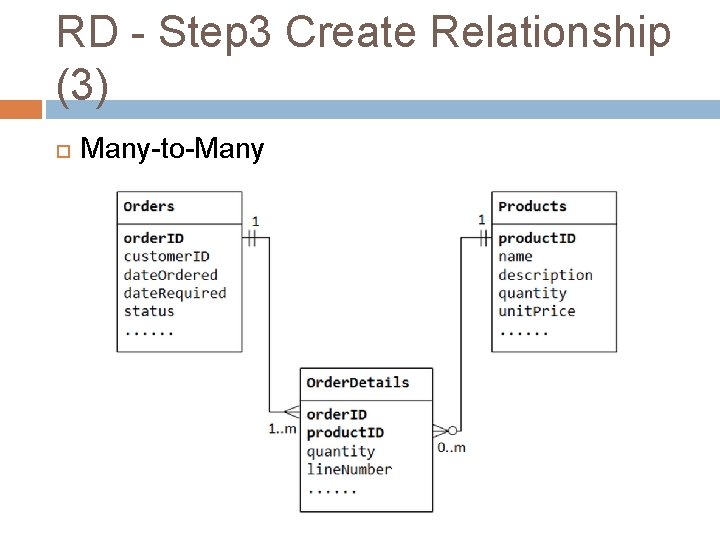
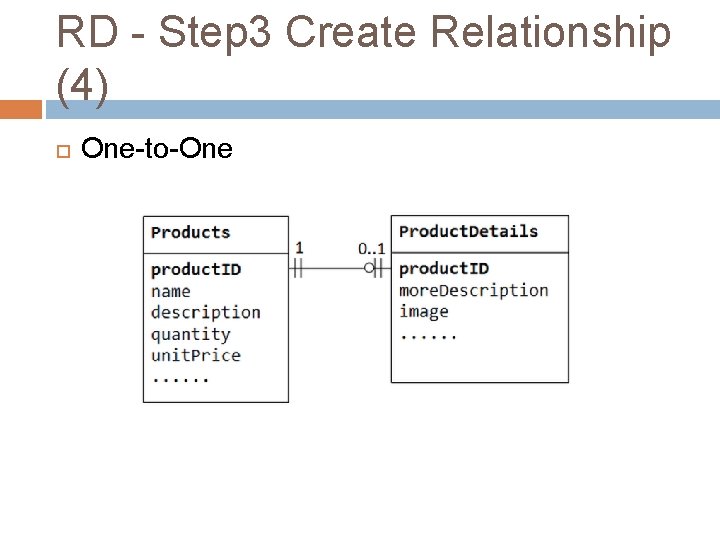
RD - Step 3 Create Relationship (1) Identify the relationships among tables: One-to-Many Many-to-Many One-to-One
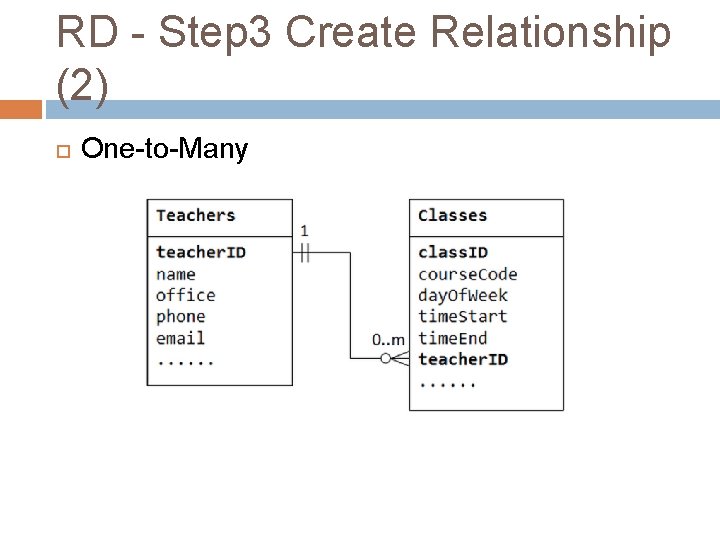
RD - Step 3 Create Relationship (2) One-to-Many
RD - Step 3 Create Relationship (3) Many-to-Many
RD - Step 3 Create Relationship (4) One-to-One
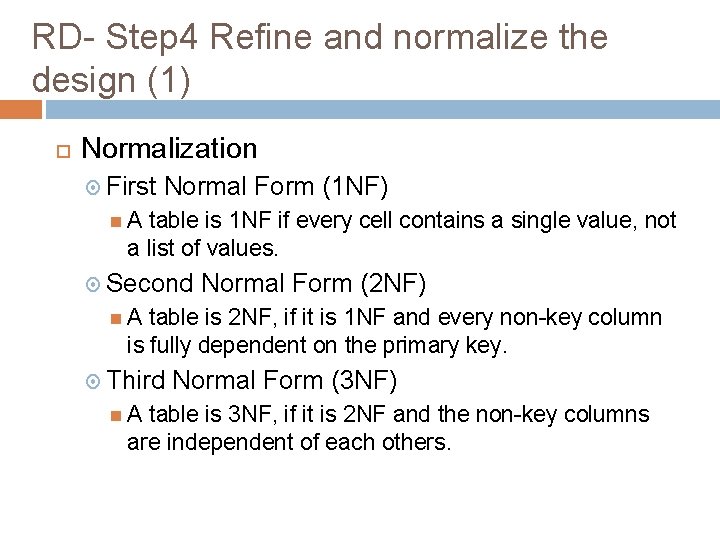
RD- Step 4 Refine and normalize the design (1) Normalization First Normal Form (1 NF) A table is 1 NF if every cell contains a single value, not a list of values. Second Normal Form (2 NF) A table is 2 NF, if it is 1 NF and every non-key column is fully dependent on the primary key. Third A Normal Form (3 NF) table is 3 NF, if it is 2 NF and the non-key columns are independent of each others.
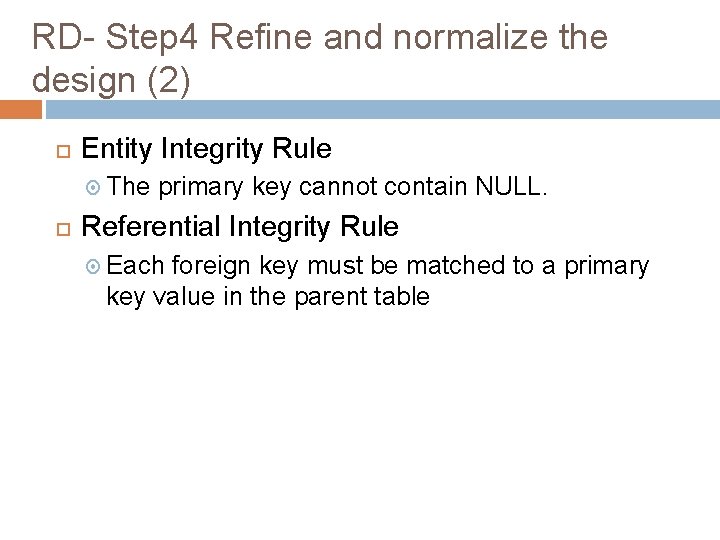
RD- Step 4 Refine and normalize the design (2) Entity Integrity Rule The primary key cannot contain NULL. Referential Integrity Rule Each foreign key must be matched to a primary key value in the parent table
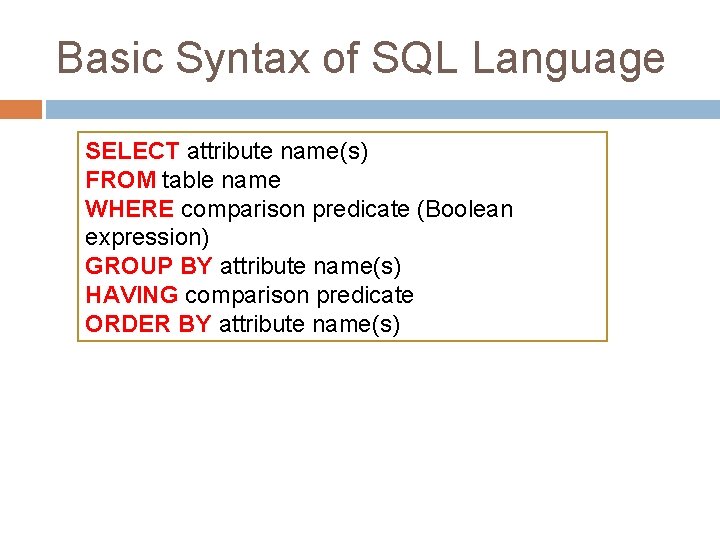
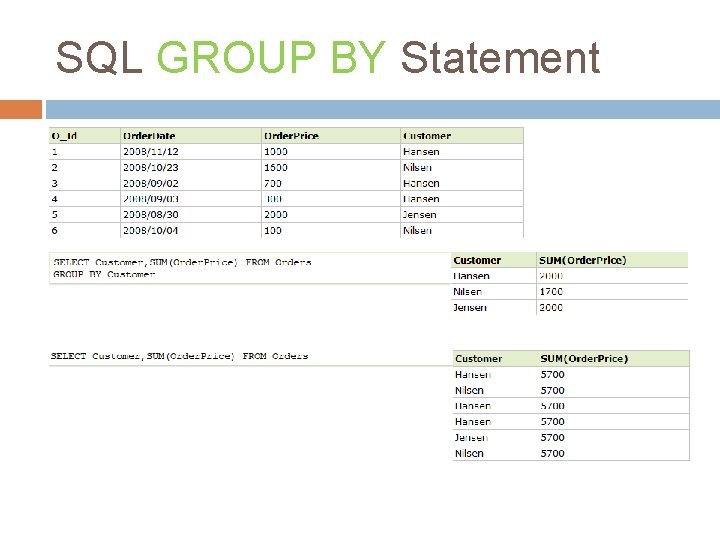
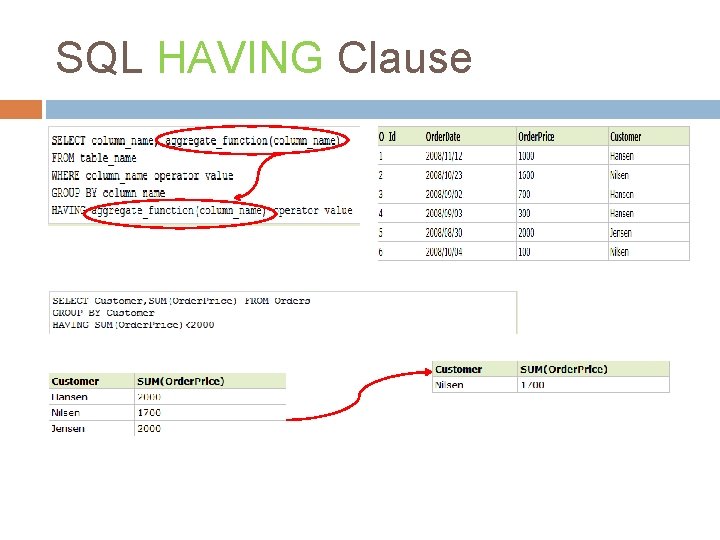
Basic Syntax of SQL Language SELECT attribute name(s) FROM table name WHERE comparison predicate (Boolean expression) GROUP BY attribute name(s) HAVING comparison predicate ORDER BY attribute name(s)
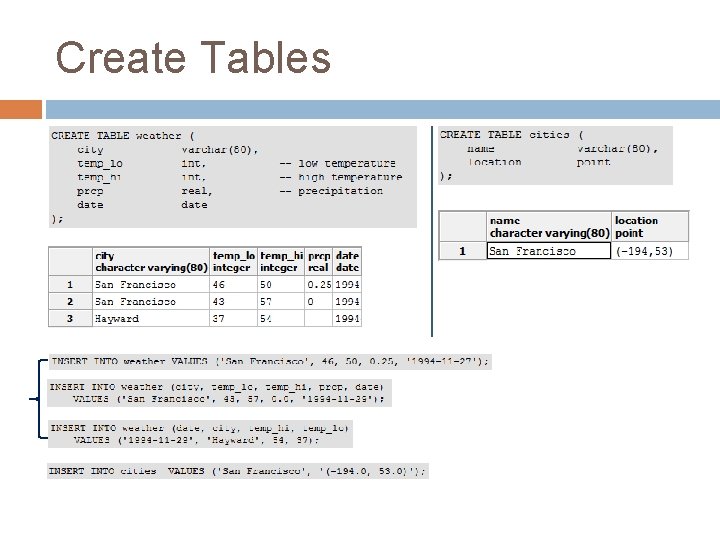
Create Tables
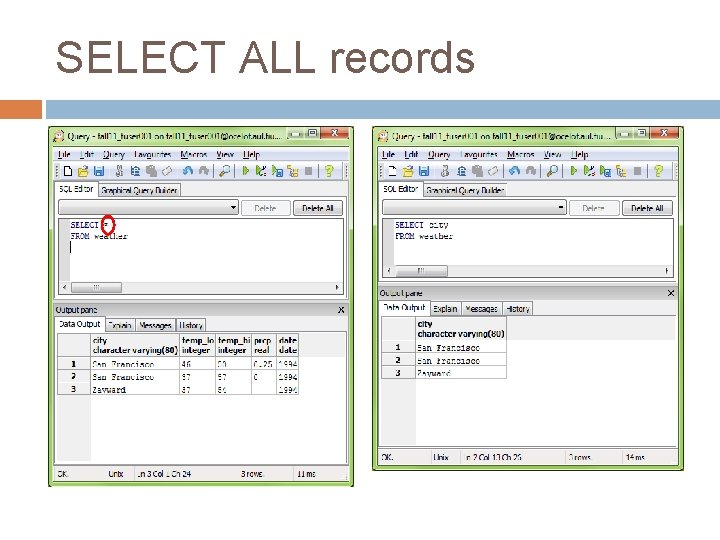
SELECT ALL records
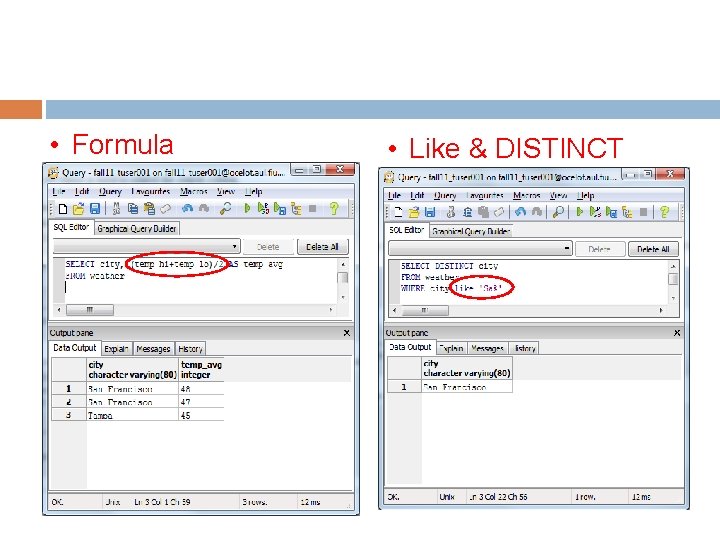
• Formula • Like & DISTINCT
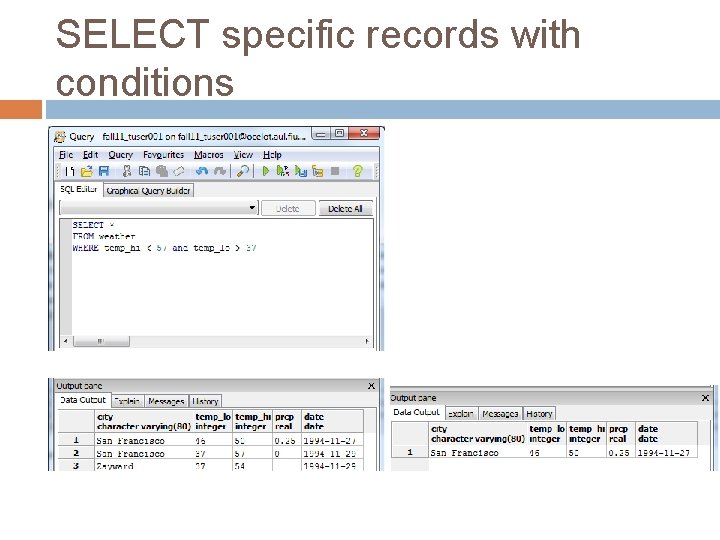
SELECT specific records with conditions
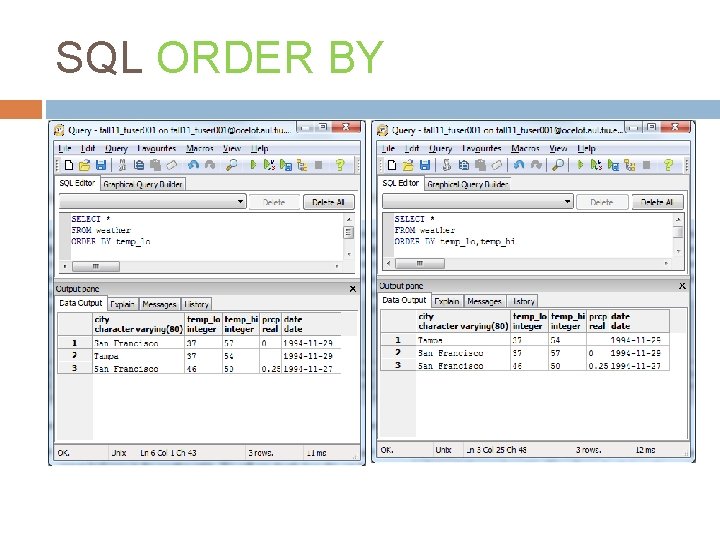
SQL ORDER BY
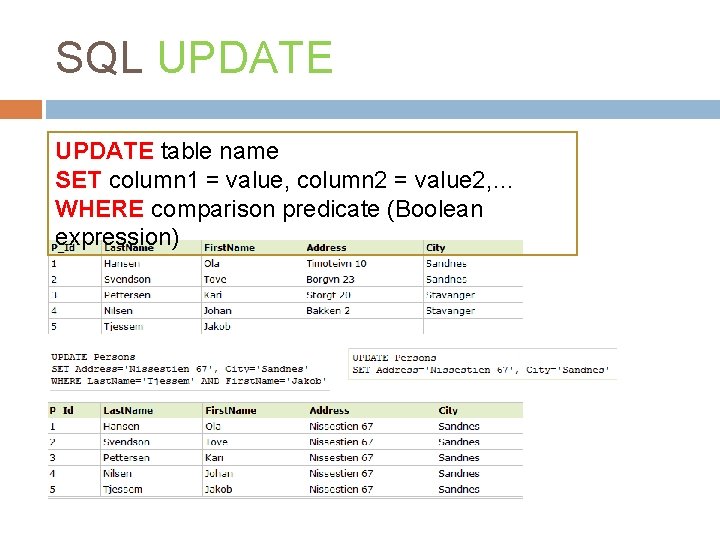
SQL UPDATE table name SET column 1 = value, column 2 = value 2, … WHERE comparison predicate (Boolean expression)
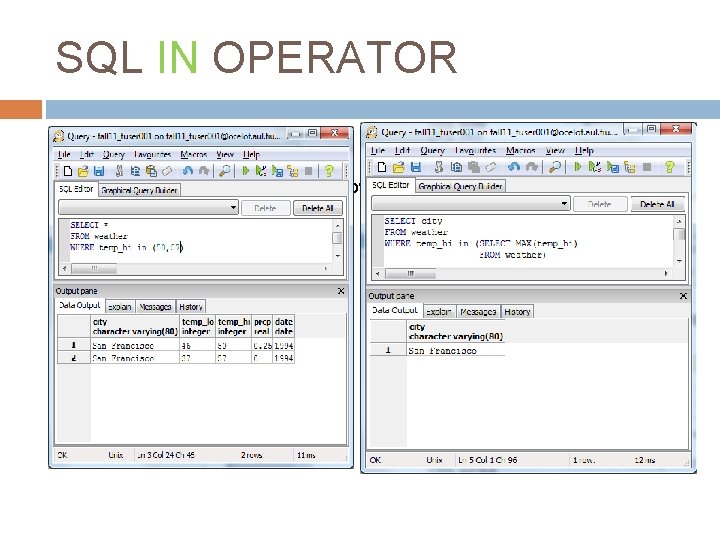
SQL IN OPERATOR AVG() - Returns the average value COUNT() - Returns the number of rows FIRST() - Returns the first value LAST() - Returns the last value MAX() - Returns the largest value MIN() - Returns the smallest value SUM() - Returns the sum
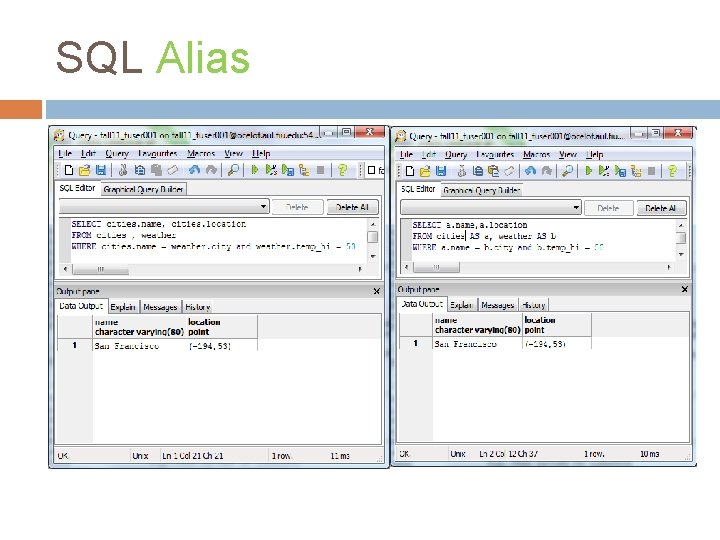
SQL Alias
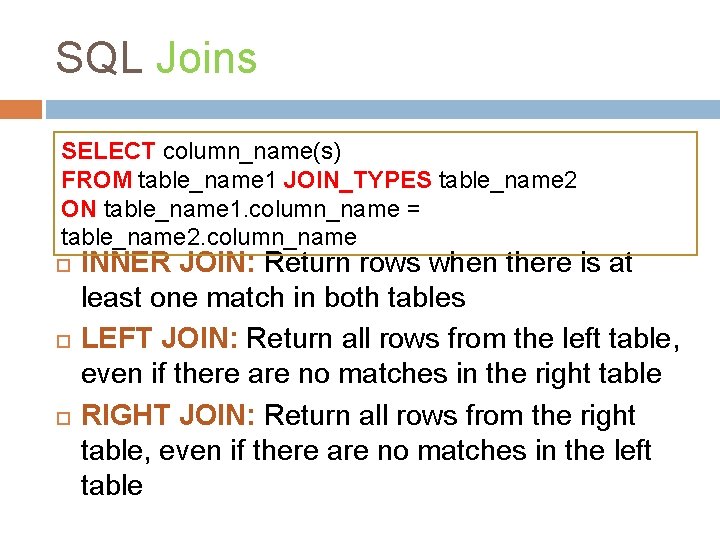
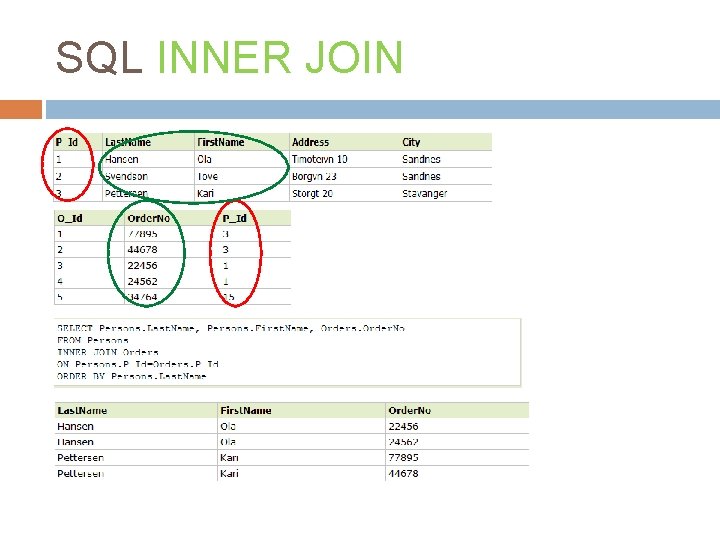
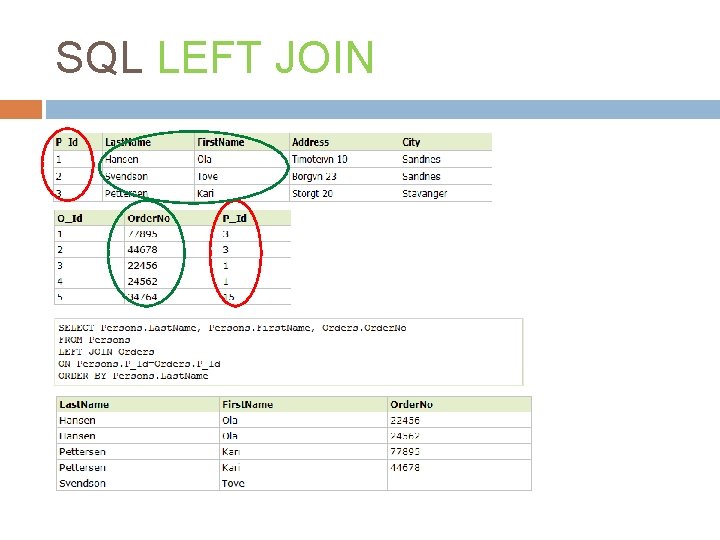
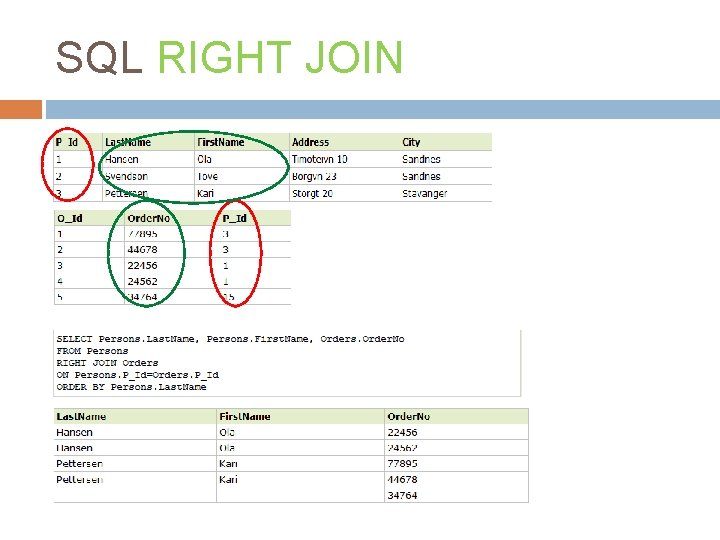
SQL Joins SELECT column_name(s) FROM table_name 1 JOIN_TYPES table_name 2 ON table_name 1. column_name = table_name 2. column_name INNER JOIN: Return rows when there is at least one match in both tables LEFT JOIN: Return all rows from the left table, even if there are no matches in the right table RIGHT JOIN: Return all rows from the right table, even if there are no matches in the left table
SQL INNER JOIN
SQL LEFT JOIN
SQL RIGHT JOIN
SQL GROUP BY Statement
SQL HAVING Clause
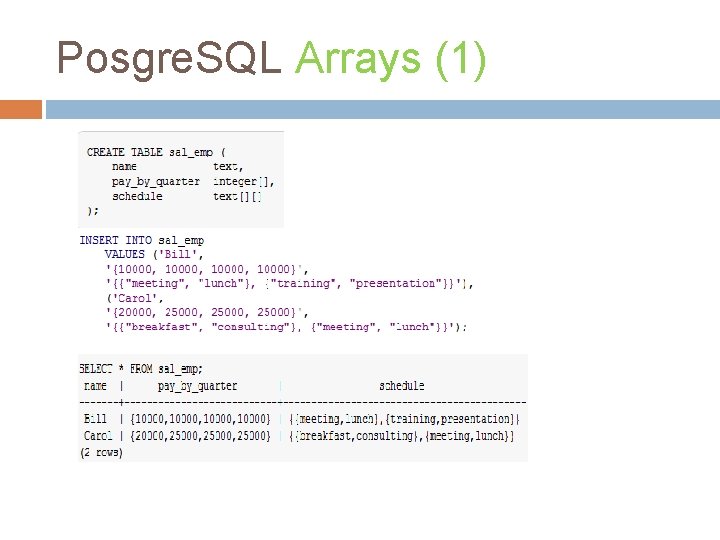
Posgre. SQL Arrays (1)
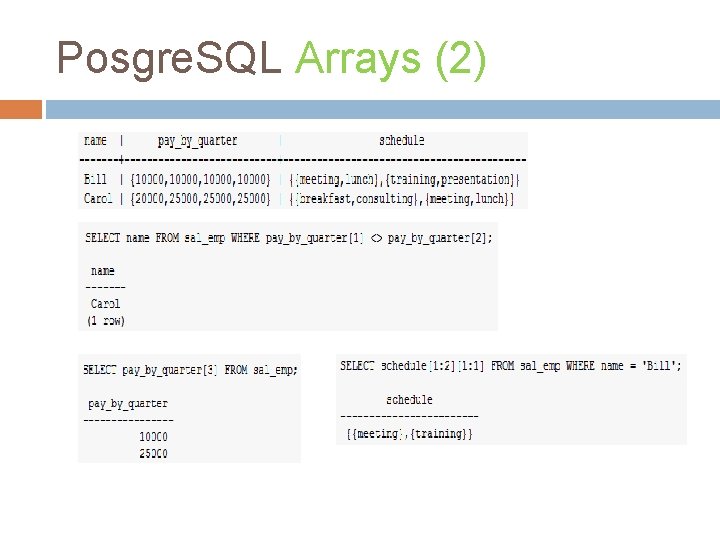
Posgre. SQL Arrays (2)
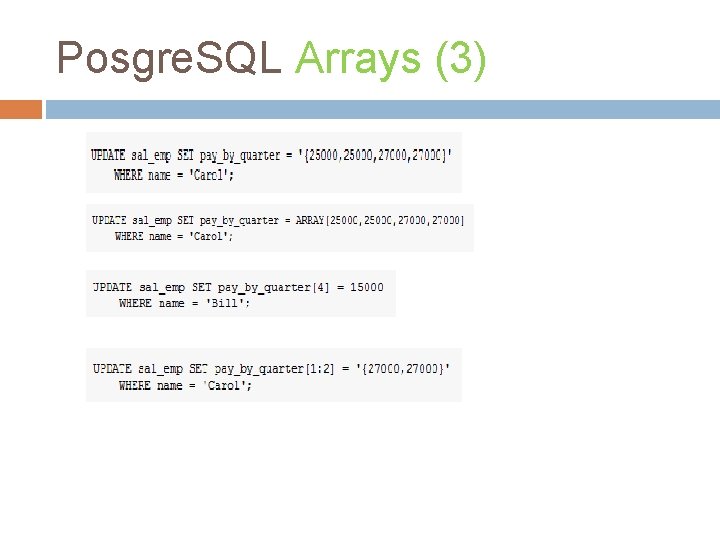
Posgre. SQL Arrays (3)
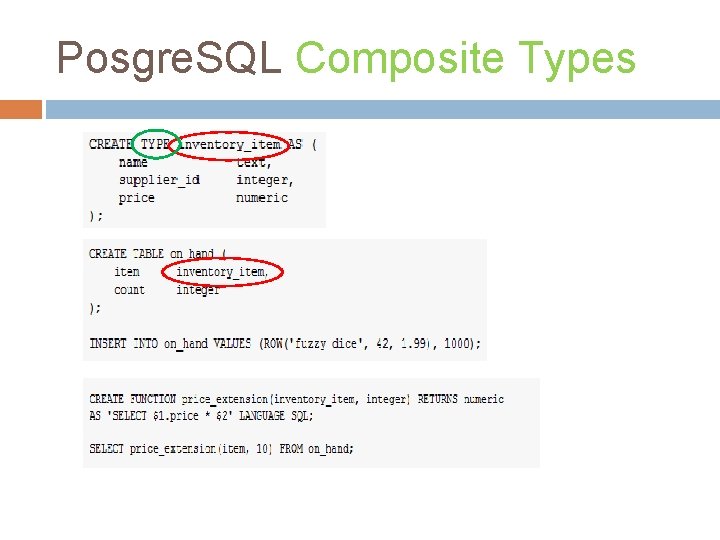
Posgre. SQL Composite Types