
Spruce Harbour Marina Fire Fighting Agenda Fire System
Spruce Harbour Marina Fire Fighting
Agenda - Fire System Emergency Procedures Handbook Case Studies Practical Exercise/Fire Hose Training
Why are we here • Discuss emergency response plan • Discuss dangers of fire in marine environment • Discuss tactics for minimizing damage to marina • Practice with equipment to understand limitations and use

What is fire? • Fire is 4 parts – Heat – O 2 – Fuel – Chemical Reaction – Break any of the 4 and you extinguish the flames
Fire Dangers Heat – can burn from quite a long way away Fumes – down wind fumes can be deadly Smoke – reduced visibility/noxious substances Electrical – if spraying with water electricity can travel back up the water stream and electrocute • Steam – can cause burns • Explosion – debris/flames/shockwave • •
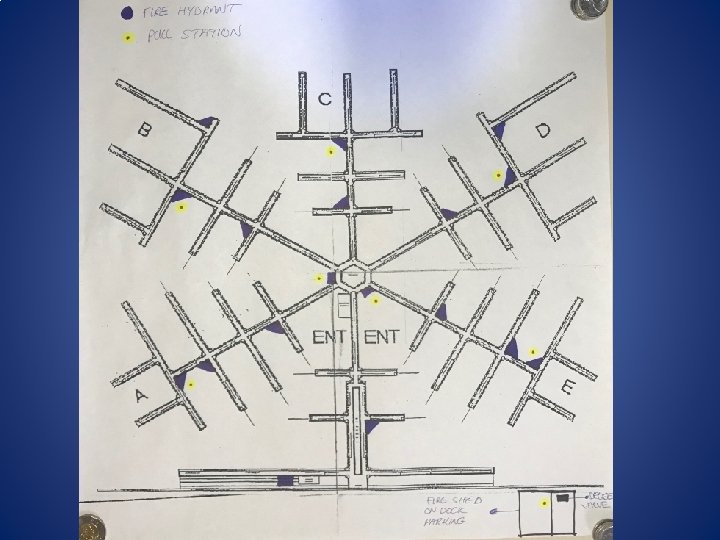
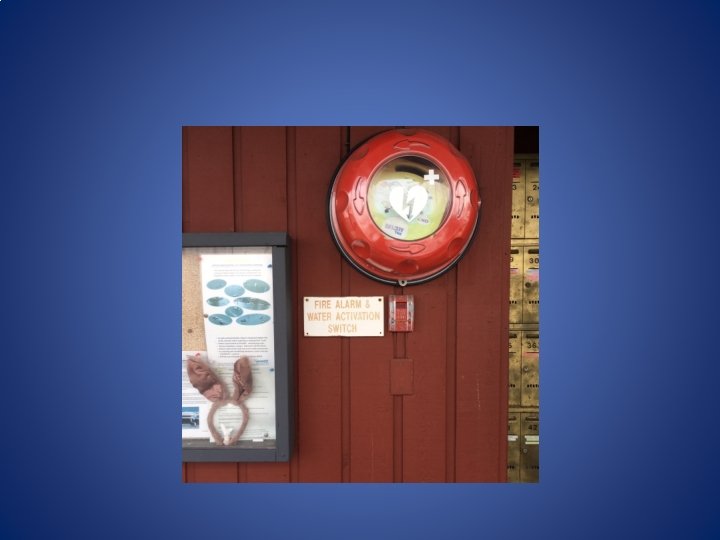
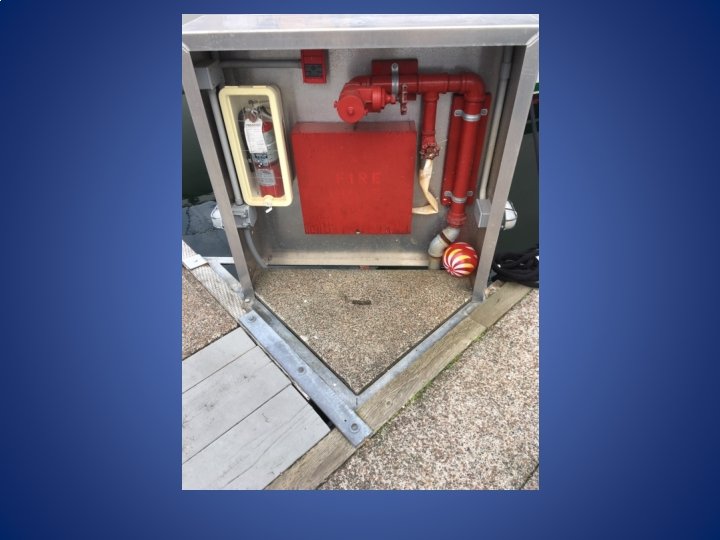
Spruce Harbour Fire System • Single main line run to dock from shore • Every dock has at least one fire station with one 50+ foot hose and dry chem fire extinguisher • System not pressurized normally – Alarm system notifies fire department and pressurizes water main – Any pull station will arm the system – Valve at hose turns on water supply – Multiple hoses at stations can be used at the same time • May reduce system pressure
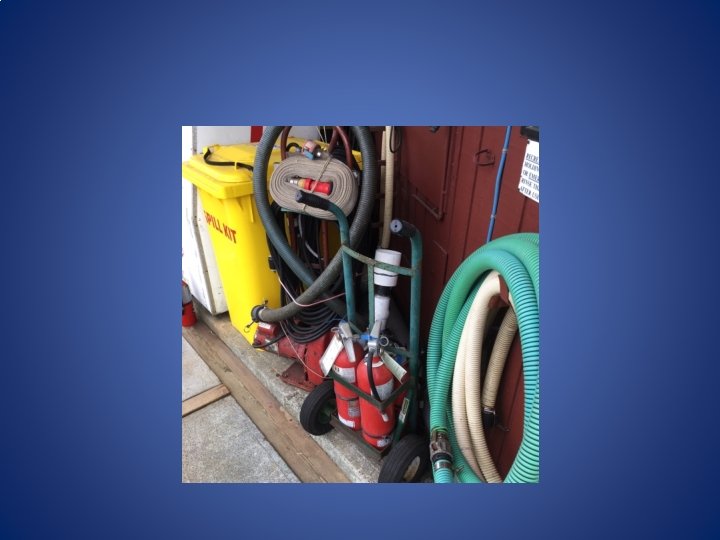
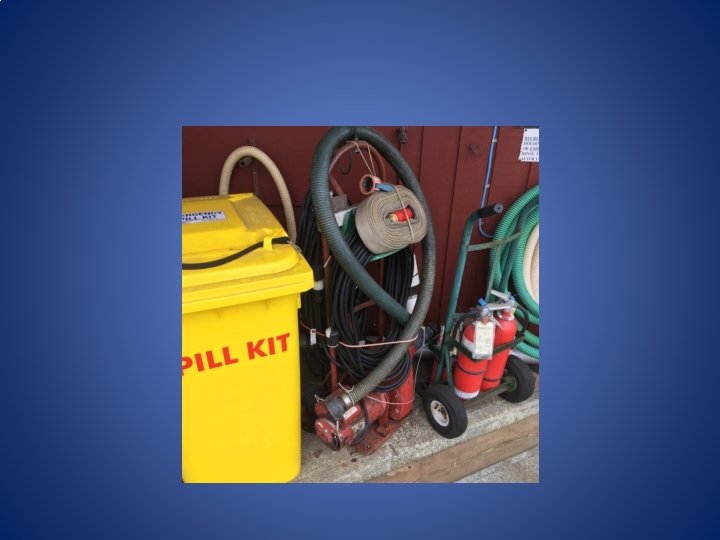
• Simple checklist at each hub hose station • Portable pump and extinguishers – Portable pump is 230 V and only plugs into certain outlets in the marina – Look for Green Taped Covered Electrical outlets halfway out each float • Enough extension cord to reach anywhere on the float or between floats

Marina Fire Hazards • 3 possible sources of fire at Spruce Harbour – Boat Fire – Structure Fire – Dock fire • All 3 have their own separate dangers • All 3 require their own strategy for extinguishing/reducing spread of fire
Dock Fire • Most likely source – Electrical – All electrical lines run through the center of the dock as does cable/water/sewage – Overloaded electrical outlets/boxes possible source – Lighting can short out – Dock boxes – paints/rags/solvents etc
Structure Fire • 3 possible structures to catch fire – Center hub – Office – Mikes work sheds
Center Hub • Multiple Fire Dangers in center hub – Electrical – washers/dishwasher/fridge/tv/sauna/hair dryers/stove/heat – Gas barbecue/dryers – Mikes work/storage garage – The whole thing is built of 40 year old wood – Workshop tools and projects
Boat Fire • Many possible dangers – Gas and diesel on board many – Electrical either 110 or 12 volt – Electric Heaters – Propane stoves – Propane BBQ – All sorts of other fluids on board (oils, cleaners etc) – Boats themselves – epoxy/fiberglass/paint/sails
Dealing with Fire • Emergency Response Manual – 2 Different Procedures • One for structure fire • One for boat fire – Are different due to the different hazards and complexities – Dock fire is easiest – remove electrical power if suspected electric source • NOTE – Never try to extinguish an electrical fire before the electricity is turned off!
EMERGENCY PROCEDURE FOR FIRE IN OFFICE/STORAGE/LOUNGE BUILDING • • • Any staff/co-op member will activate the nearest fire handle situated in all fire stands at the ends of the docks and outside the common area/washroom building. This person becomes the person in charge for the situation. The same staff/co-op member to advise the Fire Department immediately. See page 3 for the appropriate number. All persons to evacuate the marina and building and assemble in the loading area beside the garbage. During evacuation ensure gate and door to the marina are propped open to allow fire crew access. DO NOT attempt to fight fire – natural gas lines run to the building. Person in charge confirms numbers and any reports of missing persons. Person in charge should assign a person to meet the fire engines and guide fire crews to the dock. Staff/co-op members/safety team carry out check of all areas if able and safe and report to the person in charge. Staff/co-op members to notify person in charge if people are missing and a possible location. Account for all visitors and general public. Report any missing people/medical emergencies to the Fire Captain and they will arrange search/assistance. On advice of Fire Captain once the fire is out staff and co-op members can then return to marina or leave premises. Call staff/Board of Directors to assist in securing the site and determine extent of damage. Log all details of the incident.
Not much we can do for a building fire – Turn Gas off up at Dog Water Shed – Make sure power is off to building – Prepare to evacuate people by boat if center area on fire as it will not be passable if not evacuated promptly – Make sure Fire Department has good access. – If possible move boats closest to buildings to reduce chance of fire spread – If we must fight fire (no Fire Department Available) move nearby vessels away and cool outside of building to reduce spread
EMERGENCY PROCEDURE FOR FIRE ON A BOAT • Call for assistance from other staff/co-op members. Any staff/co-op member will activate the warning alarm situated in all fire stands at the end of the docks throughout the marina or at the common house. This person becomes the person in charge. • The same staff/co-op member to advise the Fire Department and first person available on the call out list immediately. Phone numbers are available on pages 3 and 4. • All persons not dealing with the emergency to evacuate the marina and surrounding vessels and assemble in the loading area beside the garbage. During evacuation ensure gate and door to the marina are propped open to allow fire crew access. Assign a person to lead fire crews down to docks. • If decision is made to fight the fire, person in charge to keep track of who is engaged and try to arrange teams. • Ascertain type of fire if possible, e. g. LPG, electrical, fuel. • If practicable and safe remove the vessels surrounding it. • If safe to do so, fight the fire. Only attempt to fight fire if it is very minor. Do not work alone. • Person in charge to brief Vancouver Fire Department on their arrival of all information known about the fire and persons involved. • Bring a spill kit to the scene and deploy if necessary • Remove debris, foam, etc from area and ensure all spills have been cleaned and removed. • Secure the vessel • Notify the Maintenance Manager and the Board of Directors. • Log all details of the incident
Boat Fire Dos and Don’ts • If decision is made to fight fire – Do • Remove people, vessels and flammable objects from around the vessel on fire • Cut power to the vessel on fire • Stay safe distance away while spraying vessel • Expect noxious fumes from all vessels on fire • Ensure escape route/plan incase firefighting is not effective • Work as a team with other members • Expect vessel to sink if fighting for long period with water
• Don’t – Board the vessel unless absolutely necessary – Jet spray with fire hose any flaming gasoline or diesel – Get any closer than necessary – LPG and gasoline are explosive as are other aerosols and unknown substances aboard
Fire Hose Safety • Hi pressure + large hose diameter = big force – Enough to knock a person into the water • Lay out hose before turning on the valve • Ensure someone is on the nozzle and ready before turning on the valve • Test hose before attacking a fire

https: //www. youtube. com/watch? v=Ci_sfp 1 r. Gj E
Fire Nozzle Use • Multiple settings on a fire nozzle from stream to spray • Stream used for distance and accuracy and force • Spray used for cooling, suppression, and barrier • Situation will determine how you set your nozzle
Fire Extinguishers • Effective for small fire and enclosed space • 5 Classes of Fire – – – A – Solids B – Liquids C – Electrical D – Metal K – Grease fire • 5 Types of extinguishers – – – CO 2 Dry Chem Halon Water Foam
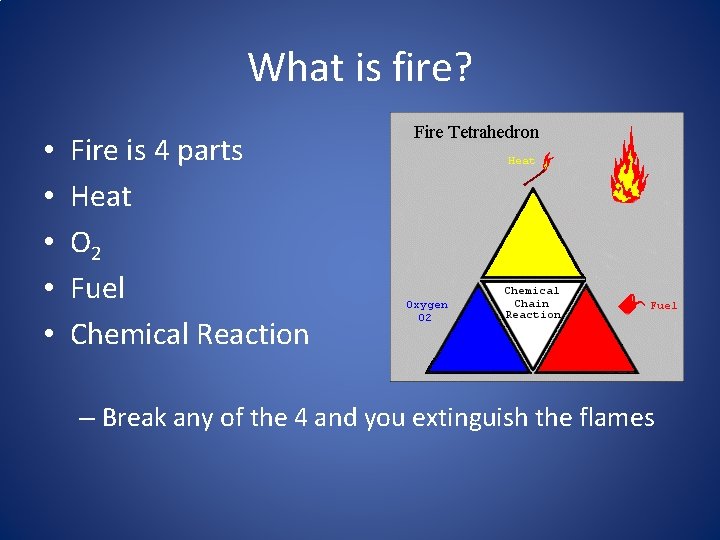
What is fire? • • • Fire is 4 parts Heat O 2 Fuel Chemical Reaction – Break any of the 4 and you extinguish the flames
Fire Extinguisher • • Check label for appropriate extinguisher Pull pin Test extinguisher at a safe distance Approach fire with sweeping motion – Aim at base of fire • When exhausted back away – never turn back to fire • Place extinguisher on its side in safe place.
Fire Extinguisher Dangers • CO 2 – can reduce O 2 content to dangerous low level – very cold – frostbite/cold burns on hands • Water – electricity can travel up stream • Dry Chem – irritant – can cause breathing problems – also mildy corrosive and hard to clean • Foam – like water with electricity – hard to clean up • Halon – byproduct from interaction with fire creates poisonous gas
Fire Extinguishers in use • https: //www. youtube. com/watch? v=EUVzpii. L 3 Ng
Some recent Marina Fires • Reed Point Marina 2018 • Quayside Marina 2017 • Everett Marina 2017
Reed Point Marina • Things to note – Watch Fire Fighters position – Watch vessels around vessel on fire – Watch hose use – https: //www. youtube. com/watch? v=Ayw 5 u. J 1 Vc 1 8
Quayside Marina • Note – Firefighter positions – Local persons hose antics and dangerous position – Vessel near vessel on fire – https: //www. youtube. com/watch? v=q. R 7 Yv. PK 5 M SA
Everett Marina Fire • Note – Fire Spread between boats – Movement of boats away from fire – Lack of escape route – Smoke travel – Dangerous boat move – https: //www. youtube. com/watch? v=n. RIDTlxp. WL 4
Scenario • Fire in power boat base of E dock south side • Smoke visible coming out of the vessel • No owners around • 0600 on a Saturday morning
- Slides: 37