
Springs A spring occurs where the water table
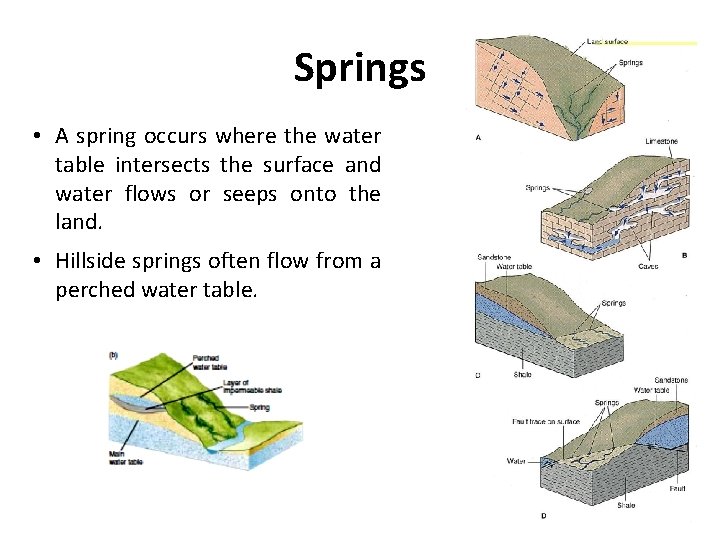
Springs • A spring occurs where the water table intersects the surface and water flows or seeps onto the land. • Hillside springs often flow from a perched water table.
Hot springs and geysers • In hot springs the ground water is heated through: • 1. The geothermal gradient of the Earth increases by about 30⁰C per kilometer in the upper portion of the crust. • 2. In regions of recent volcanism, magma or hot igneous rock can heat ground water at shallow depths (hot springs of Hammam Faraon).
Hot springs and geysers • 3. Hot springs are of rotten eggs odor from (H 2 S). The water in these springs is heated by chemical reactions. Pyrite (Fe. S 2), react chemically with water to produce hydrogen sulfide and heat.
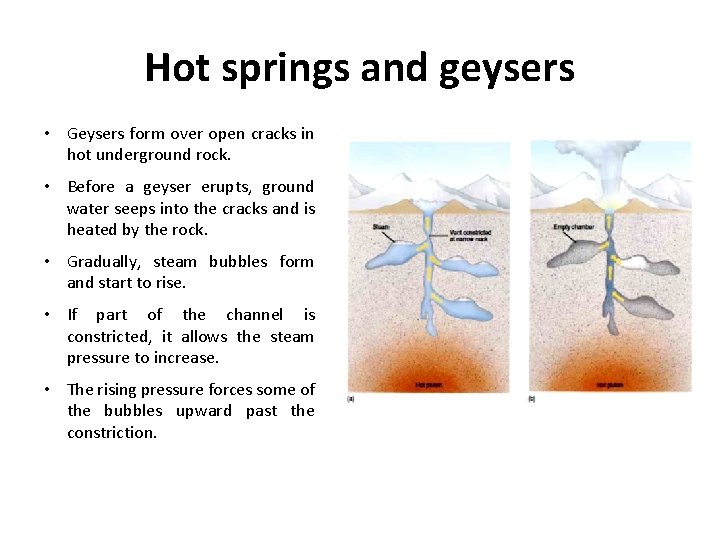
Hot springs and geysers • Geysers form over open cracks in hot underground rock. • Before a geyser erupts, ground water seeps into the cracks and is heated by the rock. • Gradually, steam bubbles form and start to rise. • If part of the channel is constricted, it allows the steam pressure to increase. • The rising pressure forces some of the bubbles upward past the constriction.
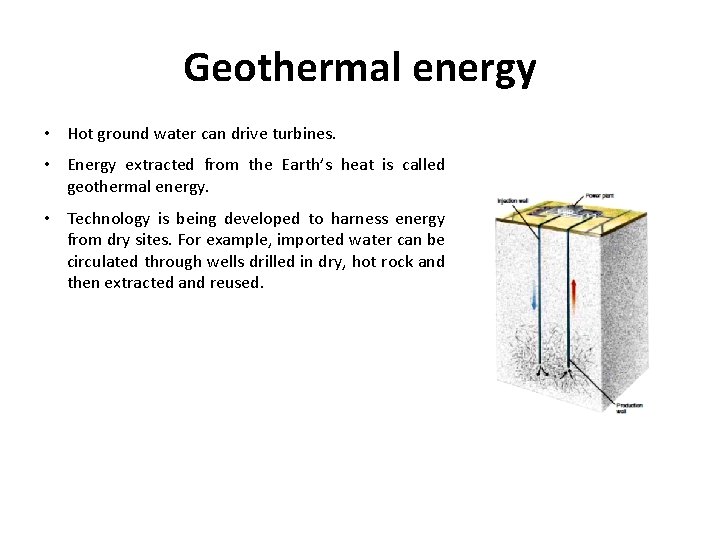
Geothermal energy • Hot ground water can drive turbines. • Energy extracted from the Earth’s heat is called geothermal energy. • Technology is being developed to harness energy from dry sites. For example, imported water can be circulated through wells drilled in dry, hot rock and then extracted and reused.
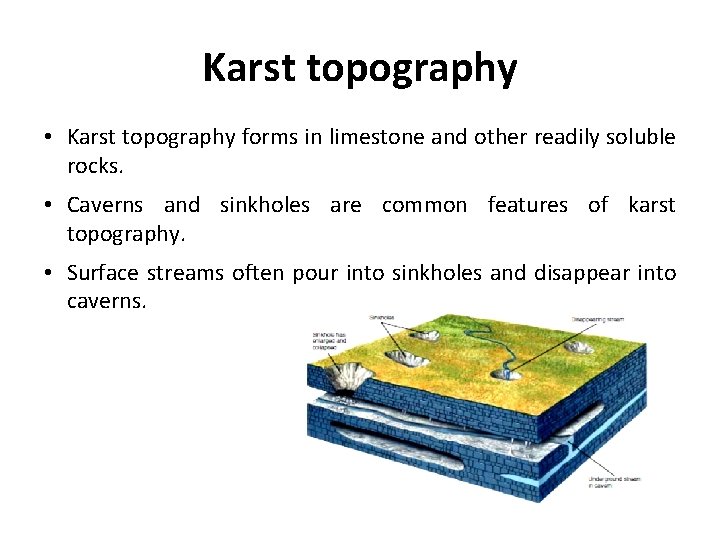
Karst topography • Karst topography forms in limestone and other readily soluble rocks. • Caverns and sinkholes are common features of karst topography. • Surface streams often pour into sinkholes and disappear into caverns.

Caverns • Slightly acidic water seeps through a crack in limestone, dissolving the rock and enlarging the crack. • All mineral deposits formed by water in caves hanging from the ceilings called a stalactite; others rise from the floors called a stalagmite.
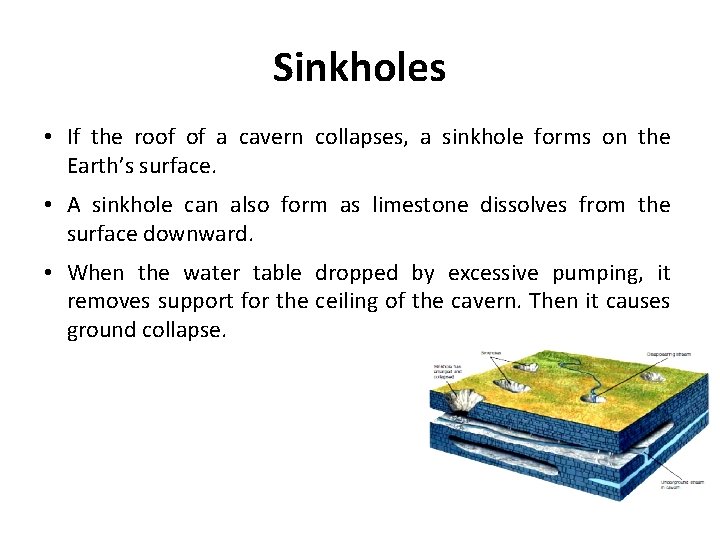
Sinkholes • If the roof of a cavern collapses, a sinkhole forms on the Earth’s surface. • A sinkhole can also form as limestone dissolves from the surface downward. • When the water table dropped by excessive pumping, it removes support for the ceiling of the cavern. Then it causes ground collapse.
- Slides: 8