
Spreadsheets In Clinical Medicine Grenville J Croll Raymond
- Slides: 22
Spreadsheets In Clinical Medicine Grenville J. Croll & Raymond J. Butler Eu. Sp. RIG 2006, Cambridge, UK
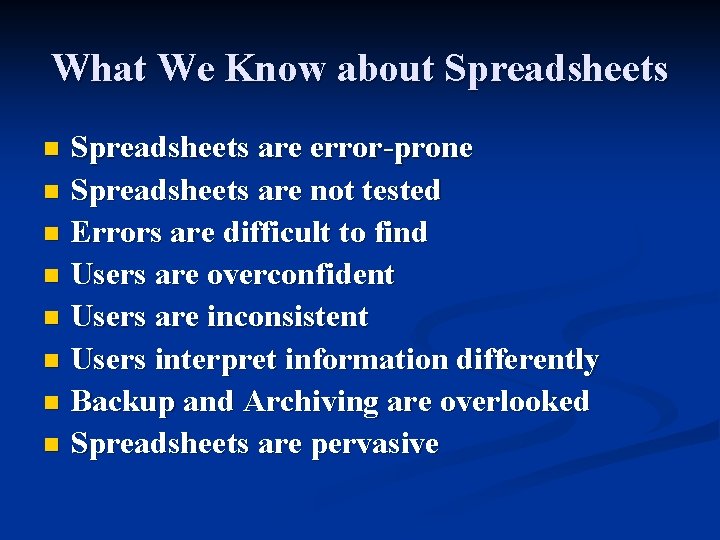
What We Know about Spreadsheets are error-prone n Spreadsheets are not tested n Errors are difficult to find n Users are overconfident n Users are inconsistent n Users interpret information differently n Backup and Archiving are overlooked n Spreadsheets are pervasive n
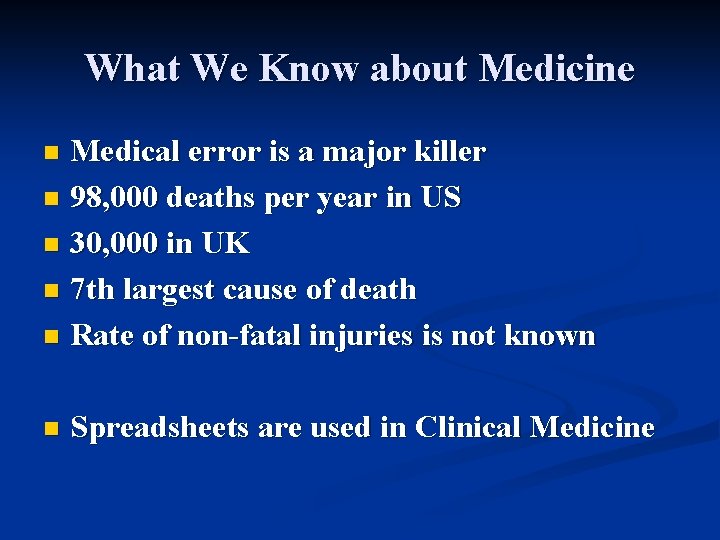
What We Know about Medicine Medical error is a major killer n 98, 000 deaths per year in US n 30, 000 in UK n 7 th largest cause of death n Rate of non-fatal injuries is not known n n Spreadsheets are used in Clinical Medicine
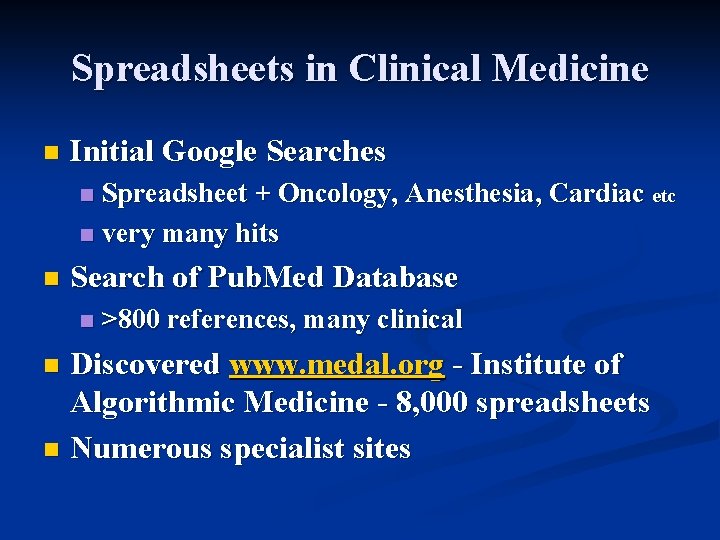
Spreadsheets in Clinical Medicine n Initial Google Searches Spreadsheet + Oncology, Anesthesia, Cardiac etc n very many hits n n Search of Pub. Med Database n >800 references, many clinical Discovered www. medal. org - Institute of Algorithmic Medicine - 8, 000 spreadsheets n Numerous specialist sites n
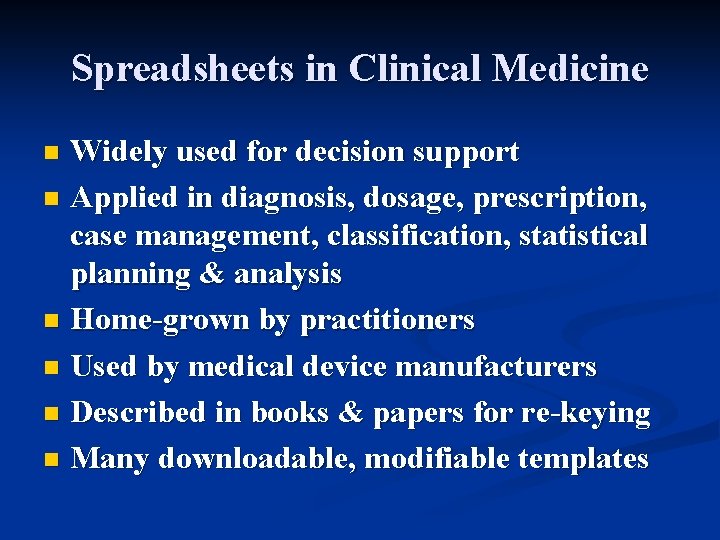
Spreadsheets in Clinical Medicine Widely used for decision support n Applied in diagnosis, dosage, prescription, case management, classification, statistical planning & analysis n Home-grown by practitioners n Used by medical device manufacturers n Described in books & papers for re-keying n Many downloadable, modifiable templates n
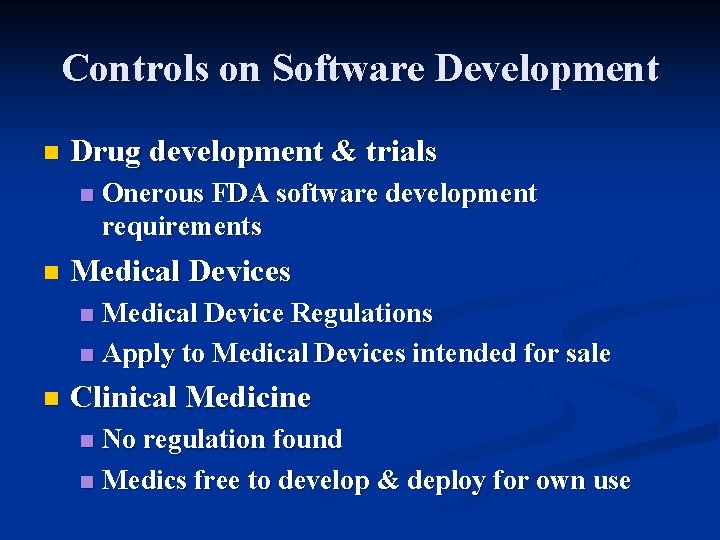
Controls on Software Development n Drug development & trials n n Onerous FDA software development requirements Medical Device Regulations n Apply to Medical Devices intended for sale n n Clinical Medicine No regulation found n Medics free to develop & deploy for own use n
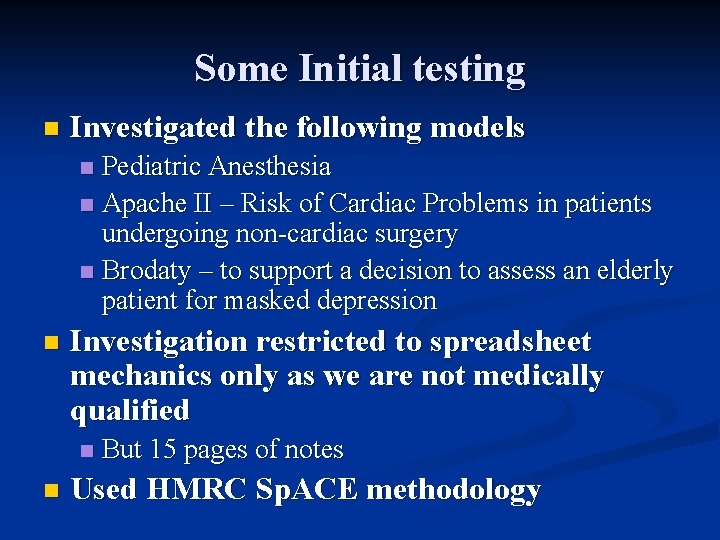
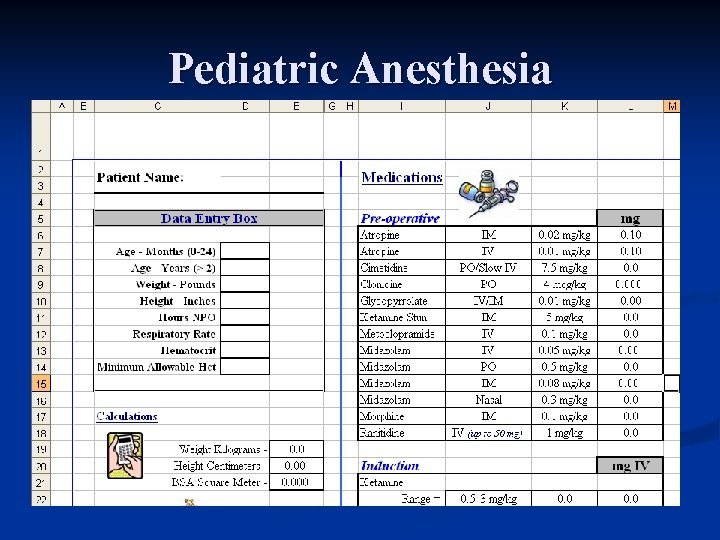
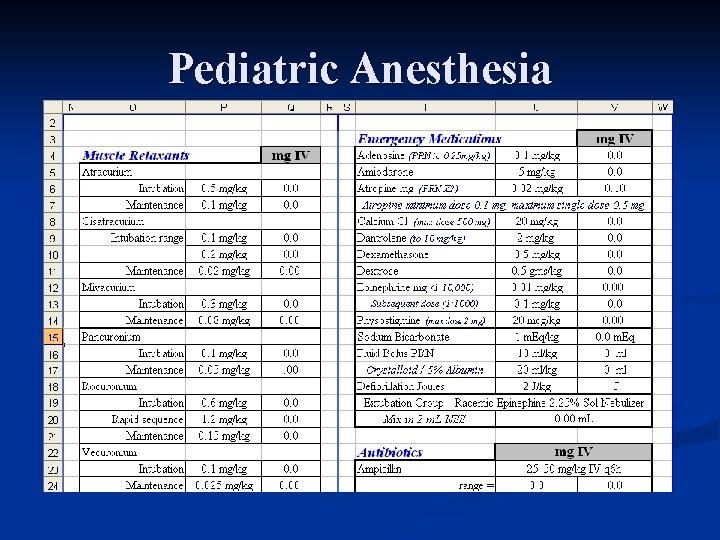
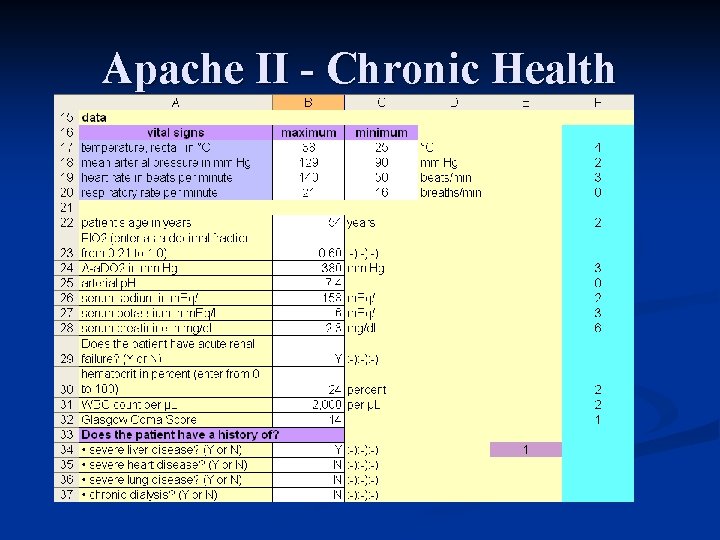
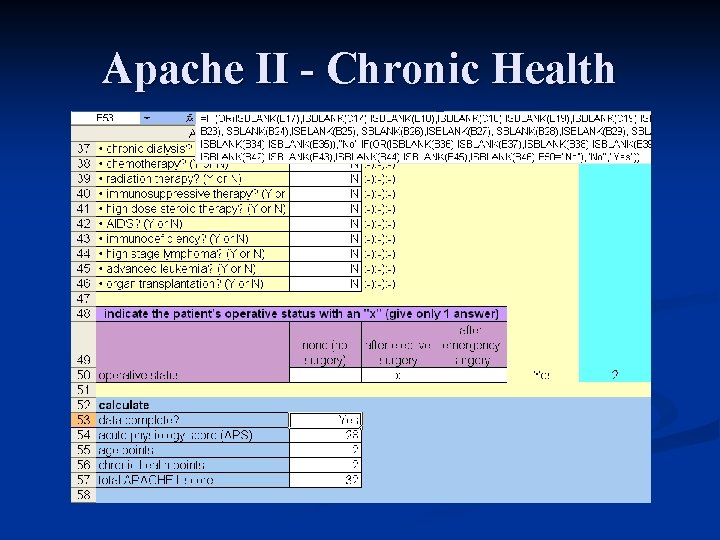
Some Initial testing n Investigated the following models Pediatric Anesthesia n Apache II – Risk of Cardiac Problems in patients undergoing non-cardiac surgery n Brodaty – to support a decision to assess an elderly patient for masked depression n n Investigation restricted to spreadsheet mechanics only as we are not medically qualified n n But 15 pages of notes Used HMRC Sp. ACE methodology
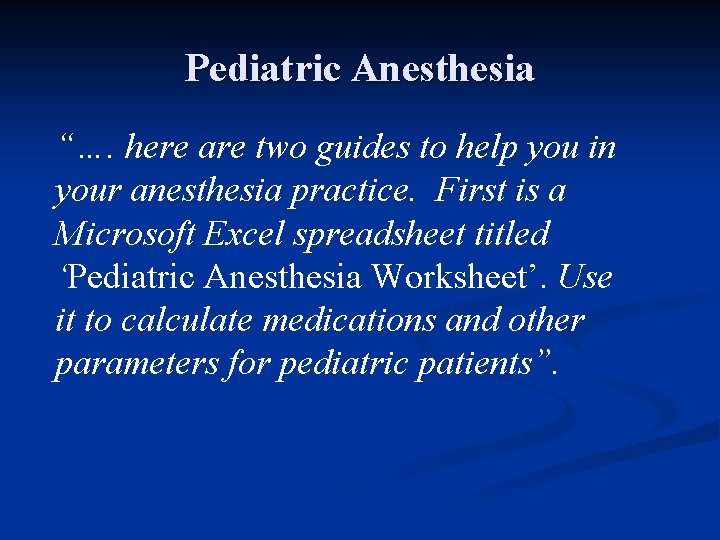
Pediatric Anesthesia “…. here are two guides to help you in your anesthesia practice. First is a Microsoft Excel spreadsheet titled ‘Pediatric Anesthesia Worksheet’. Use it to calculate medications and other parameters for pediatric patients”.
Pediatric Anesthesia
Pediatric Anesthesia
Apache II - Chronic Health
Apache II - Chronic Health
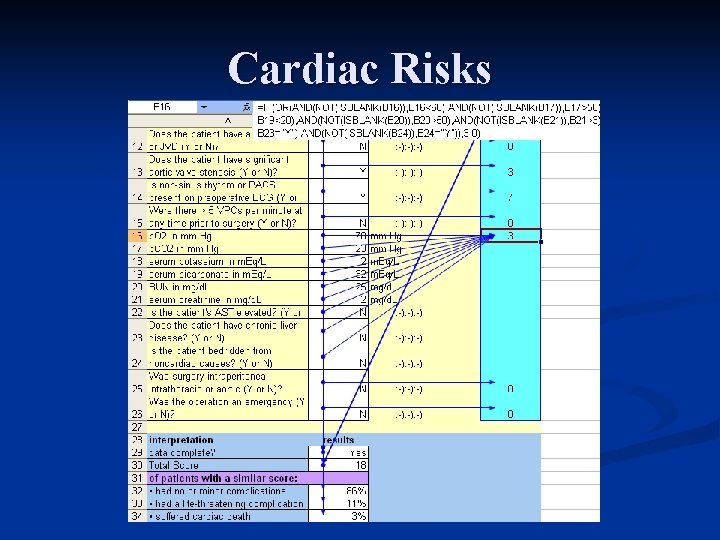
Cardiac Risks
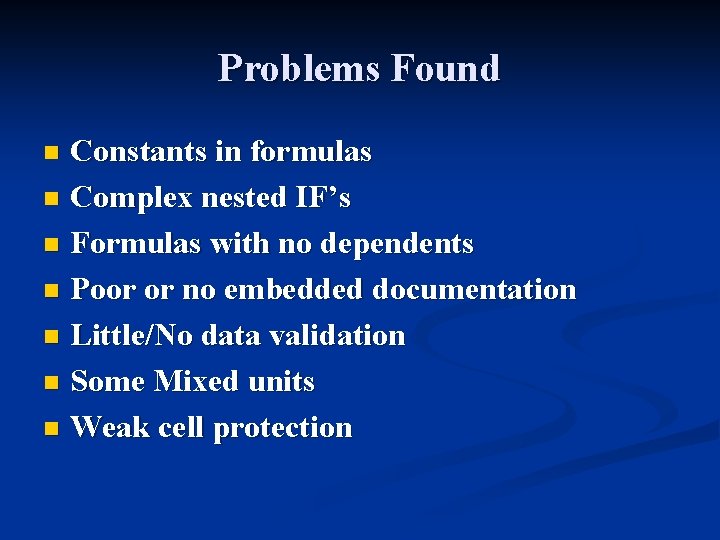
Problems Found Constants in formulas n Complex nested IF’s n Formulas with no dependents n Poor or no embedded documentation n Little/No data validation n Some Mixed units n Weak cell protection n
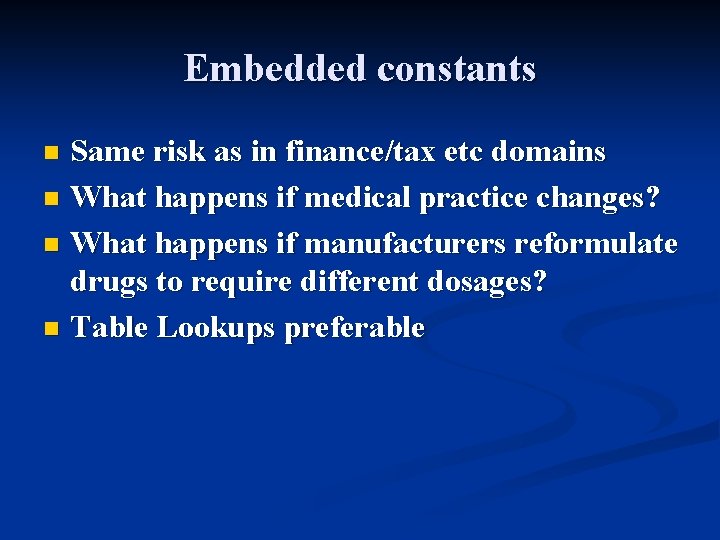
Embedded constants Same risk as in finance/tax etc domains n What happens if medical practice changes? n What happens if manufacturers reformulate drugs to require different dosages? n Table Lookups preferable n
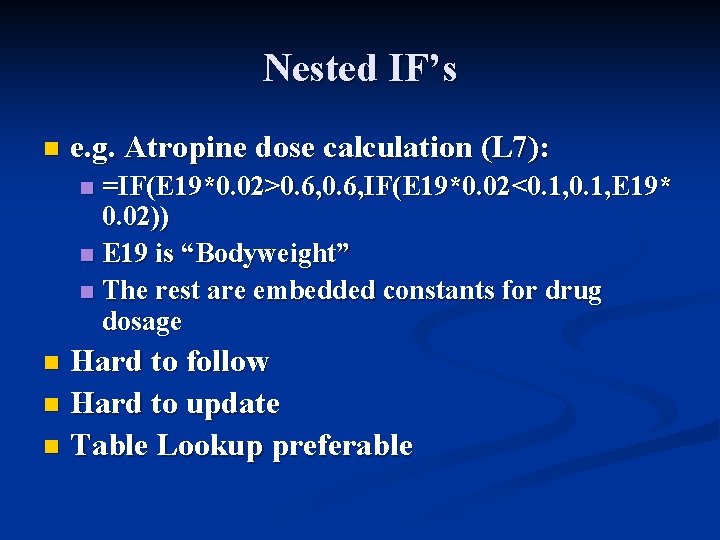
Nested IF’s n e. g. Atropine dose calculation (L 7): =IF(E 19*0. 02>0. 6, IF(E 19*0. 02<0. 1, E 19* 0. 02)) n E 19 is “Bodyweight” n The rest are embedded constants for drug dosage n Hard to follow n Hard to update n Table Lookup preferable n
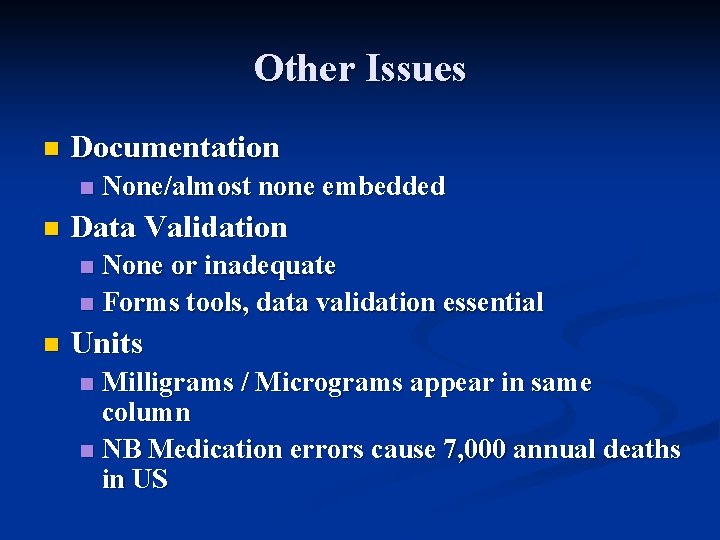
Other Issues n Documentation n n None/almost none embedded Data Validation None or inadequate n Forms tools, data validation essential n n Units Milligrams / Micrograms appear in same column n NB Medication errors cause 7, 000 annual deaths in US n
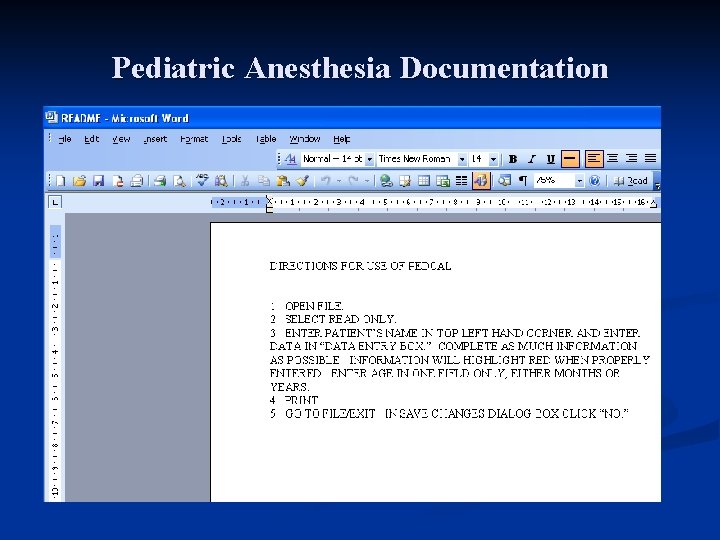
Pediatric Anesthesia Documentation
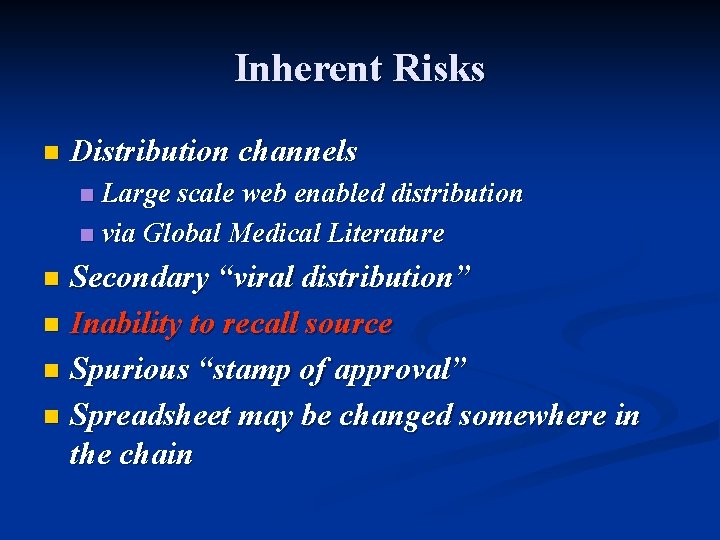
Inherent Risks n Distribution channels Large scale web enabled distribution n via Global Medical Literature n Secondary “viral distribution” n Inability to recall source n Spurious “stamp of approval” n Spreadsheet may be changed somewhere in the chain n
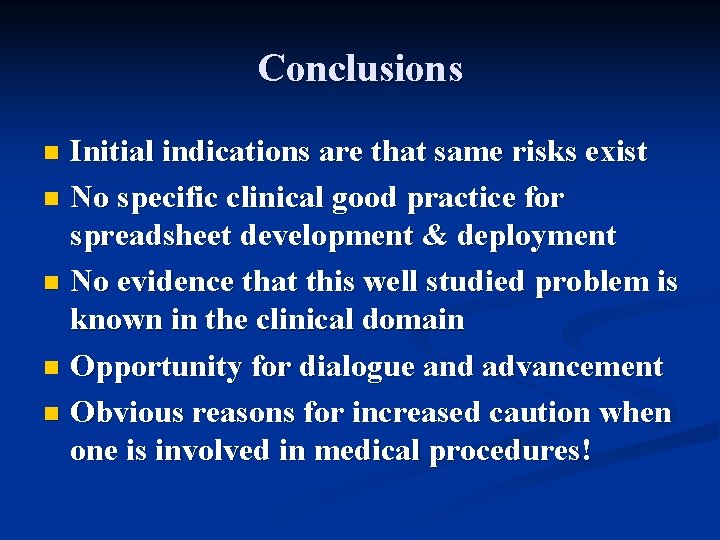
Conclusions Initial indications are that same risks exist n No specific clinical good practice for spreadsheet development & deployment n No evidence that this well studied problem is known in the clinical domain n Opportunity for dialogue and advancement n Obvious reasons for increased caution when one is involved in medical procedures! n
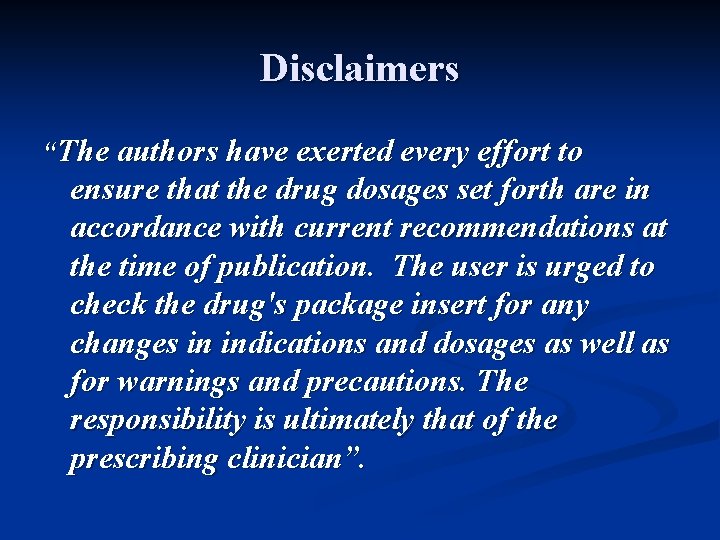
Disclaimers “The authors have exerted every effort to ensure that the drug dosages set forth are in accordance with current recommendations at the time of publication. The user is urged to check the drug's package insert for any changes in indications and dosages as well as for warnings and precautions. The responsibility is ultimately that of the prescribing clinician”.
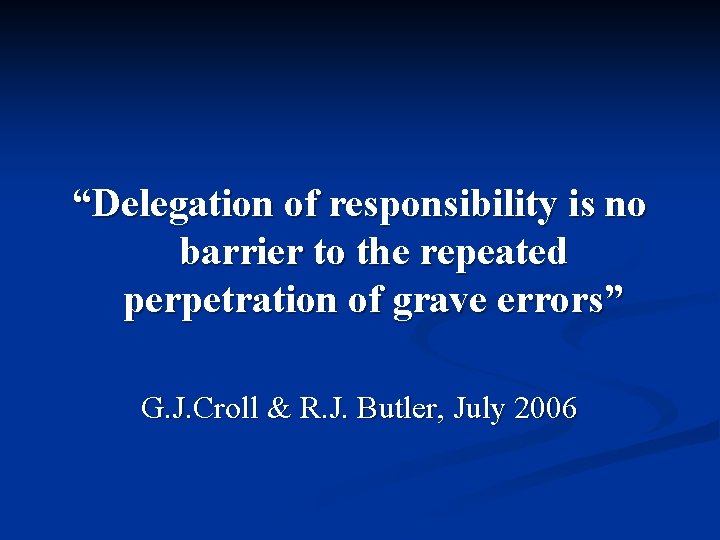
“Delegation of responsibility is no barrier to the repeated perpetration of grave errors” G. J. Croll & R. J. Butler, July 2006