
Spray Droplet Size and Drift Bob Wolf Kansas
Spray Droplet Size and Drift Bob Wolf - Kansas State University / Biological and Ag. Engineering Bobby Grisso - VA Tech / Biological Systems Engineering Pat Hipkins - VA Tech / VT Pesticide Programs Tom Reed - Spraying Systems / Tee. Jet Northeast
Relationship of Drift to Drop Size: The smaller the droplet, the greater the odds of particle drift.
• Spray droplets are: – measured in microns ( m) – described by Volume Median Diameter (VMD)
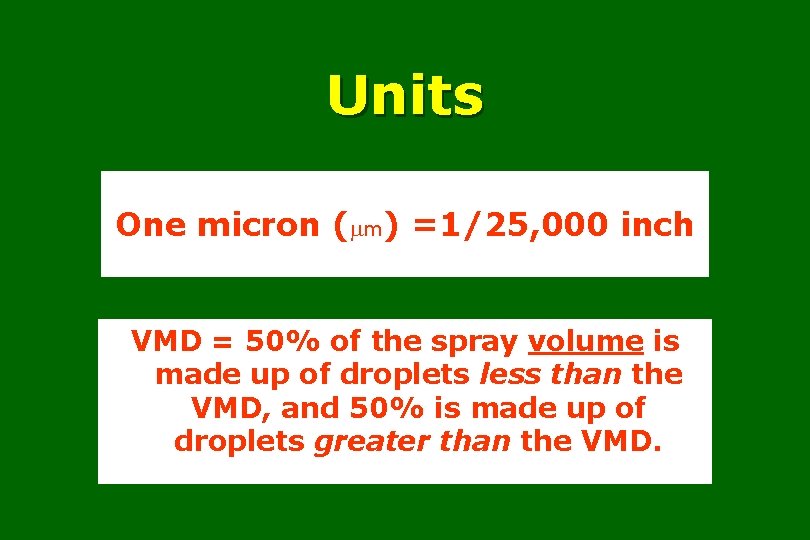
Units One micron ( m) =1/25, 000 inch VMD = 50% of the spray volume is made up of droplets less than the VMD, and 50% is made up of droplets greater than the VMD.
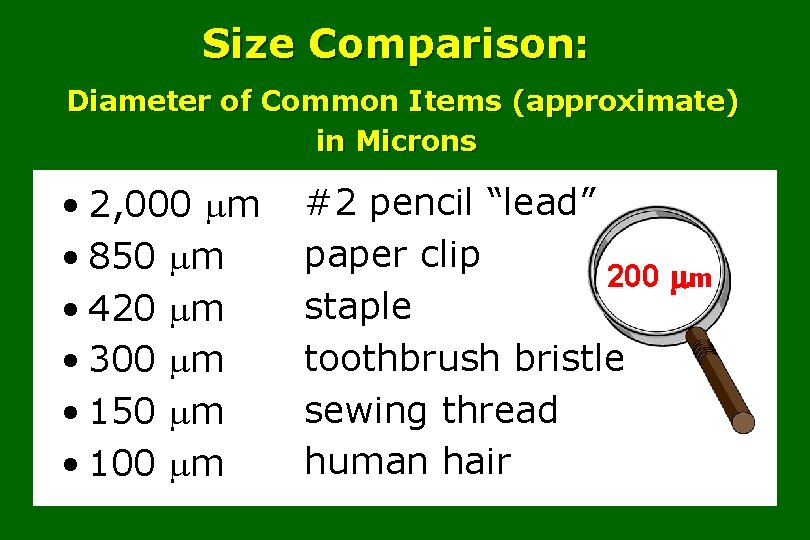
Size Comparison: Diameter of Common Items (approximate) in Microns • 2, 000 m • 850 m • 420 m • 300 m • 150 m • 100 m #2 pencil “lead” paper clip 200 m staple toothbrush bristle sewing thread human hair
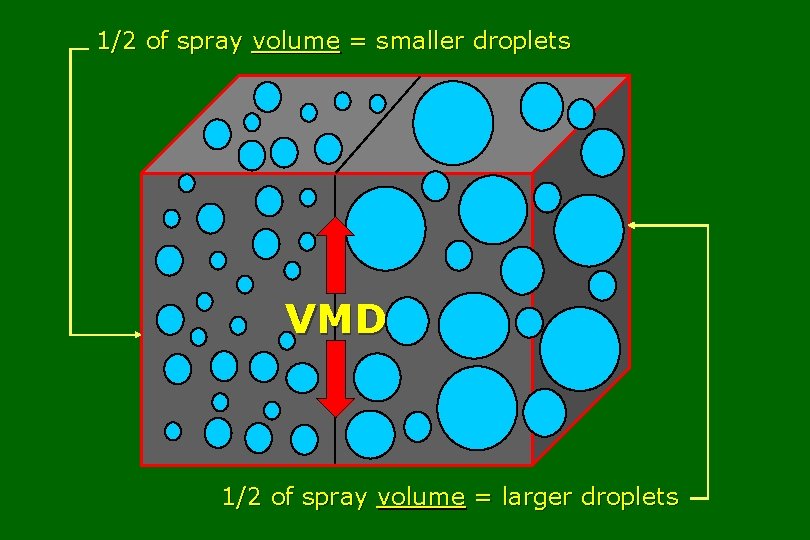
1/2 of spray volume = smaller droplets VMD 1/2 of spray volume = larger droplets
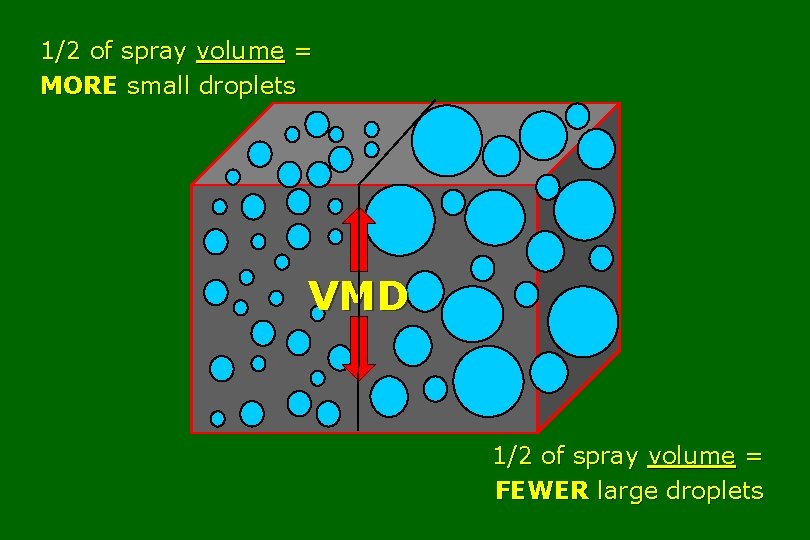
1/2 of spray volume = MORE small droplets VMD 1/2 of spray volume = FEWER large droplets
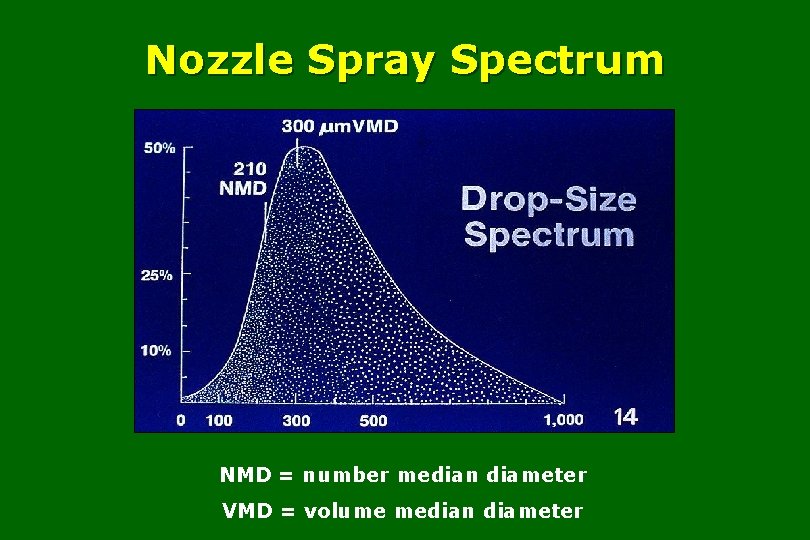
Nozzle Spray Spectrum NMD = number median diameter VMD = volume median diameter
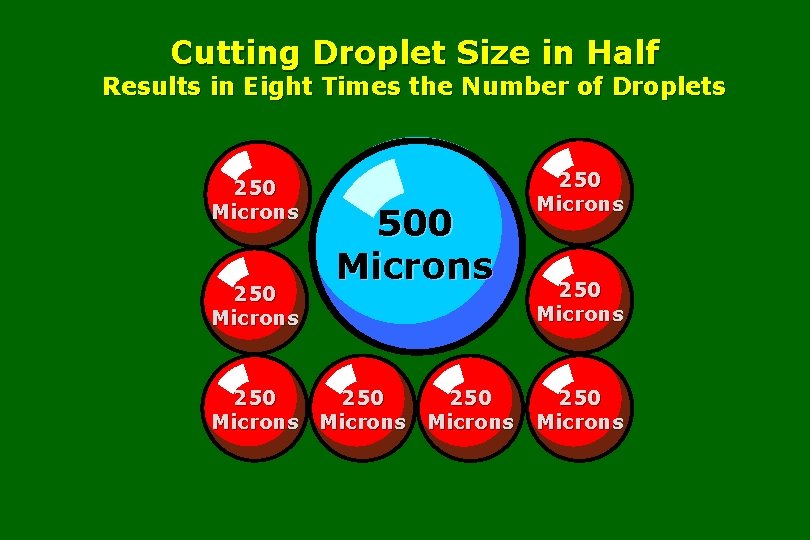
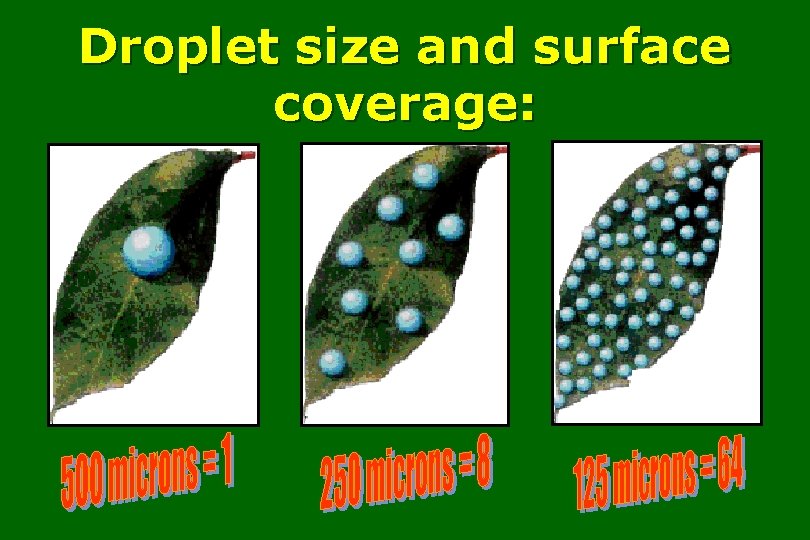
Cutting Droplet Size in Half Results in Eight Times the Number of Droplets 250 Microns 500 Microns 250 250 Microns 250 Microns
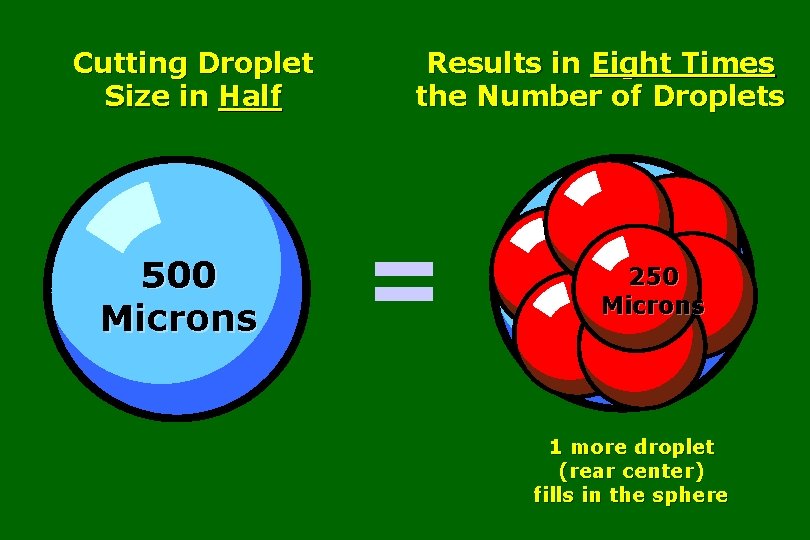
Cutting Droplet Size in Half 500 Microns Results in Eight Times the Number of Droplets = 250 Microns 1 more droplet (rear center) fills in the sphere
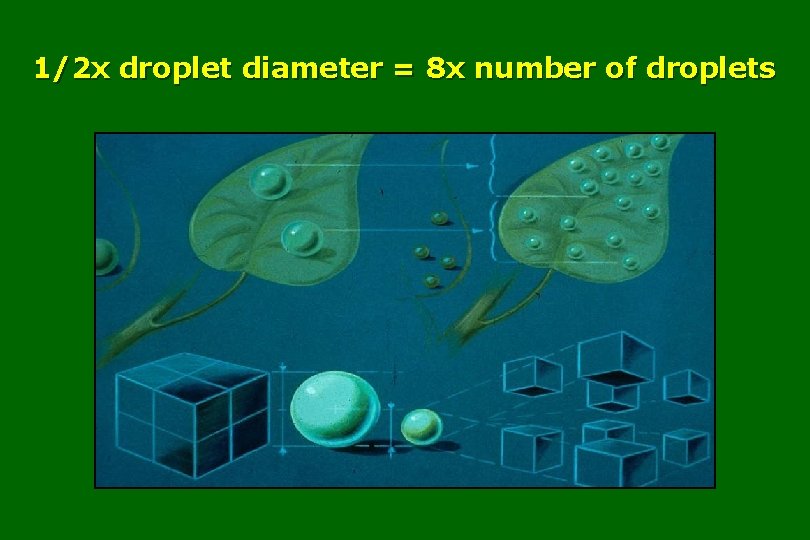
1/2 x droplet diameter = 8 x number of droplets
Spray Characteristics: • Comparisons: for a given / fixed volume: – droplet diameter – number of droplets – surface area
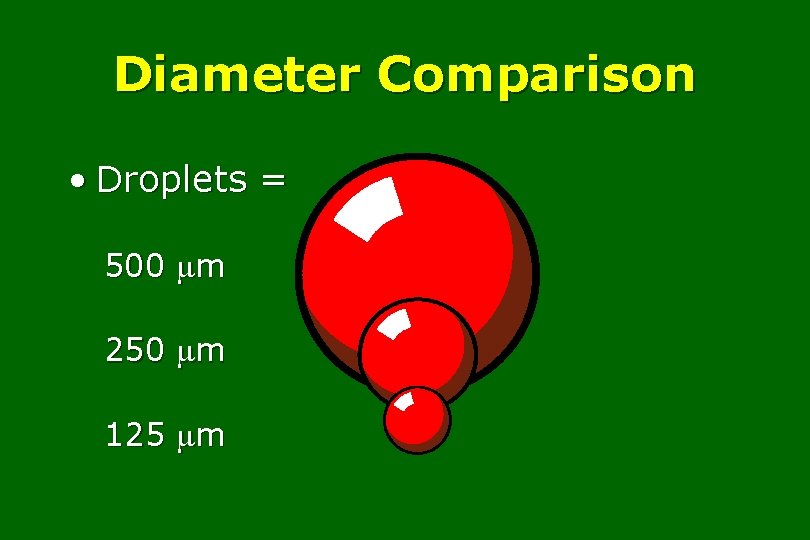
Diameter Comparison • Droplets = 500 m 250 m 125 m
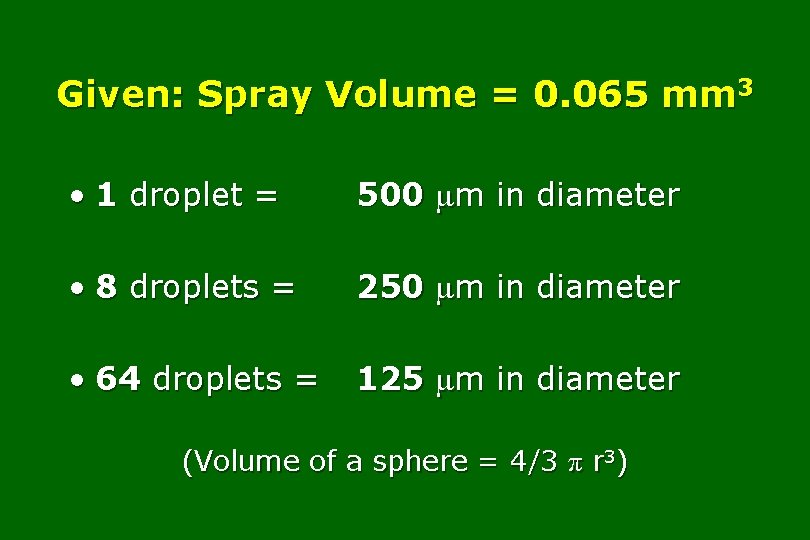
Given: Spray Volume = 0. 065 mm 3 • 1 droplet = 500 m in diameter • 8 droplets = 250 m in diameter • 64 droplets = 125 m in diameter (Volume of a sphere = 4/3 π r 3)
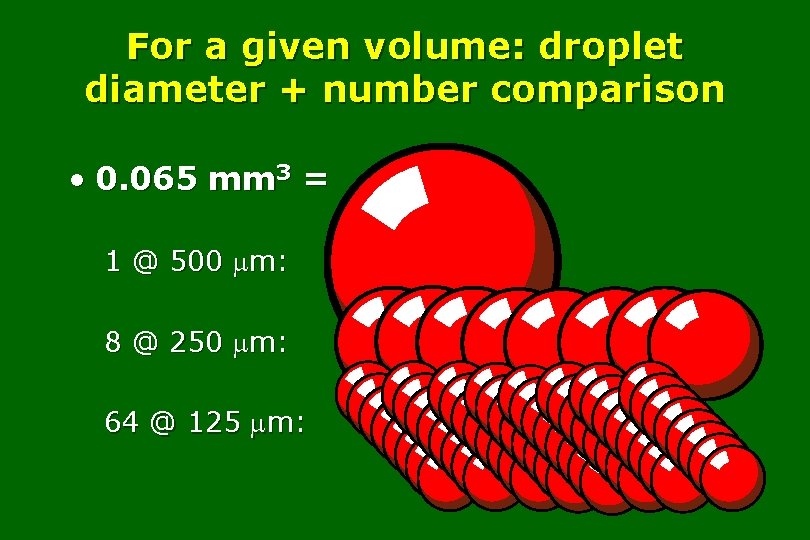
For a given volume: droplet diameter + number comparison • 0. 065 mm 3 = 1 @ 500 m: 8 @ 250 m: 64 @ 125 m:
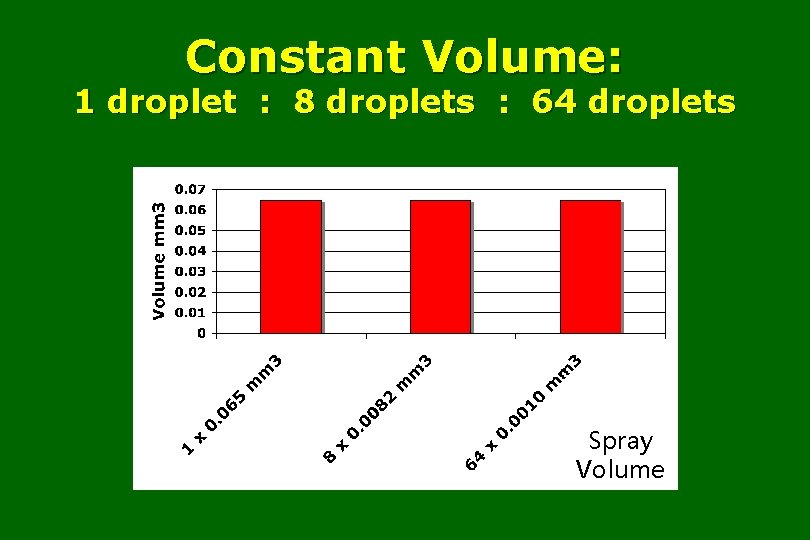
Constant Volume: 1 droplet : 8 droplets : 64 droplets Spray Volume
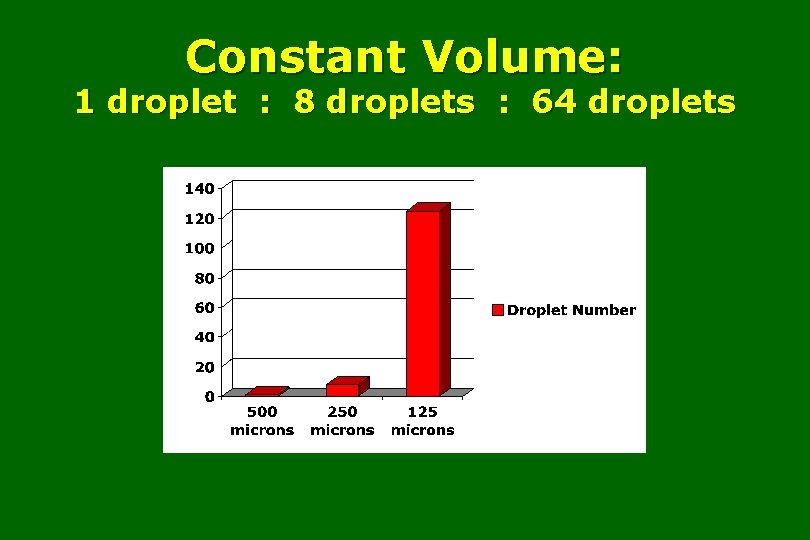
Constant Volume: 1 droplet : 8 droplets : 64 droplets
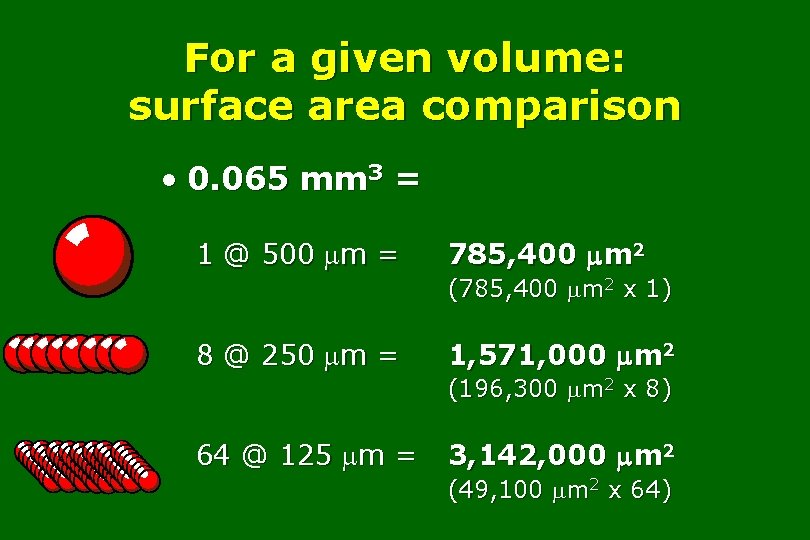
For a given volume: surface area comparison • 0. 065 mm 3 = 1 @ 500 m = 785, 400 m 2 (785, 400 m 2 x 1) 8 @ 250 m = 1, 571, 000 m 2 (196, 300 m 2 x 8) 64 @ 125 m = 3, 142, 000 m 2 (49, 100 m 2 x 64)
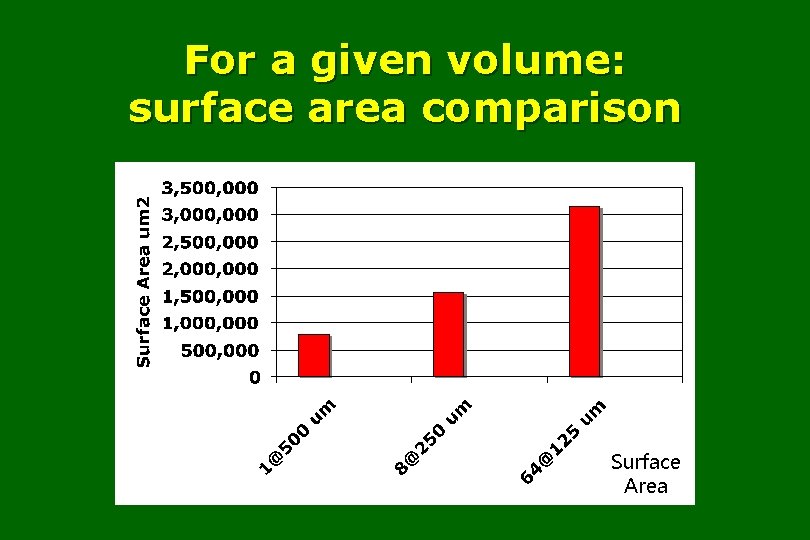
For a given volume: surface area comparison Surface Area
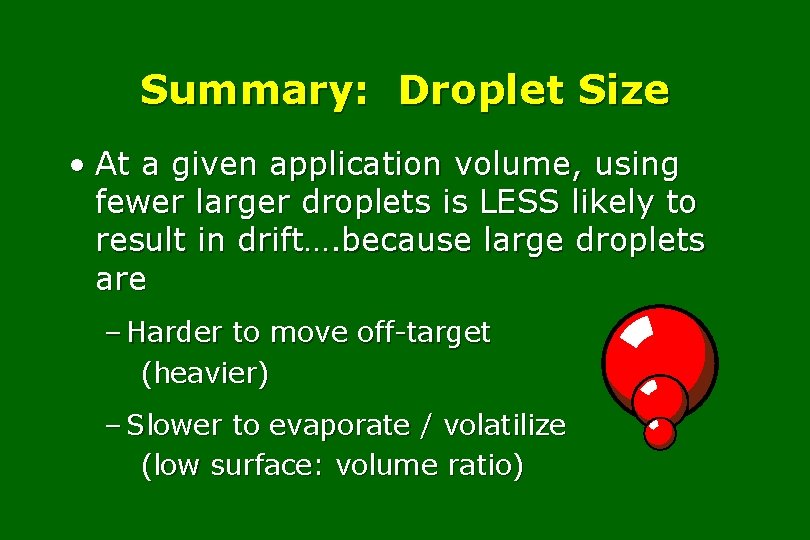
Summary: Droplet Size • At a given application volume, using fewer larger droplets is LESS likely to result in drift…. because large droplets are – Harder to move off-target (heavier) – Slower to evaporate / volatilize (low surface: volume ratio)
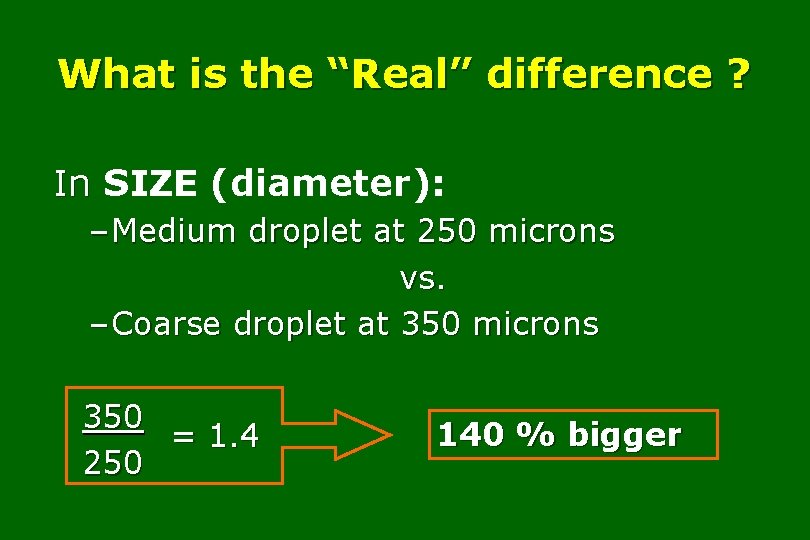
What is the “Real” difference ? In SIZE (diameter): – Medium droplet at 250 microns vs. – Coarse droplet at 350 microns 350 = 1. 4 250 140 % bigger
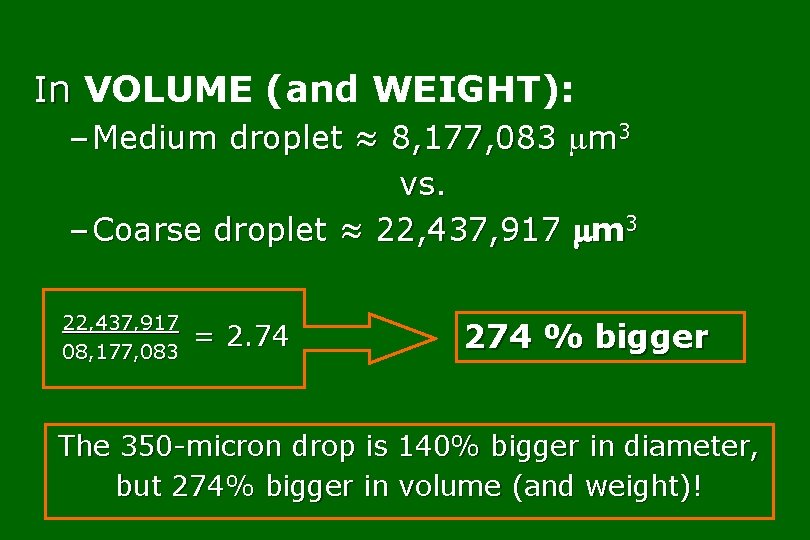
In VOLUME (and WEIGHT): – Medium droplet ≈ 8, 177, 083 m 3 vs. – Coarse droplet ≈ 22, 437, 917 m 3 22, 437, 917 08, 177, 083 = 2. 74 274 % bigger The 350 -micron drop is 140% bigger in diameter, but 274% bigger in volume (and weight)!
Why is Droplet Size Important? ! • Coverage • Drift
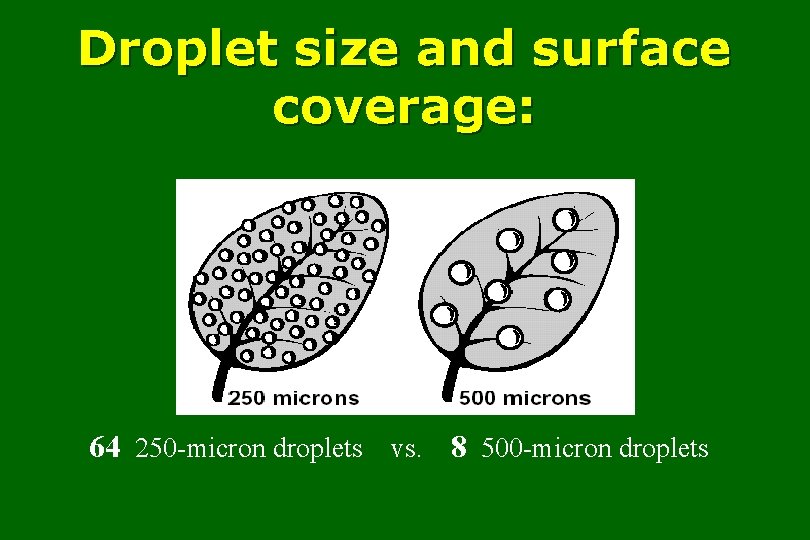
Droplet size and surface coverage: 64 250 -micron droplets vs. 8 500 -micron droplets
Droplet size and surface coverage:
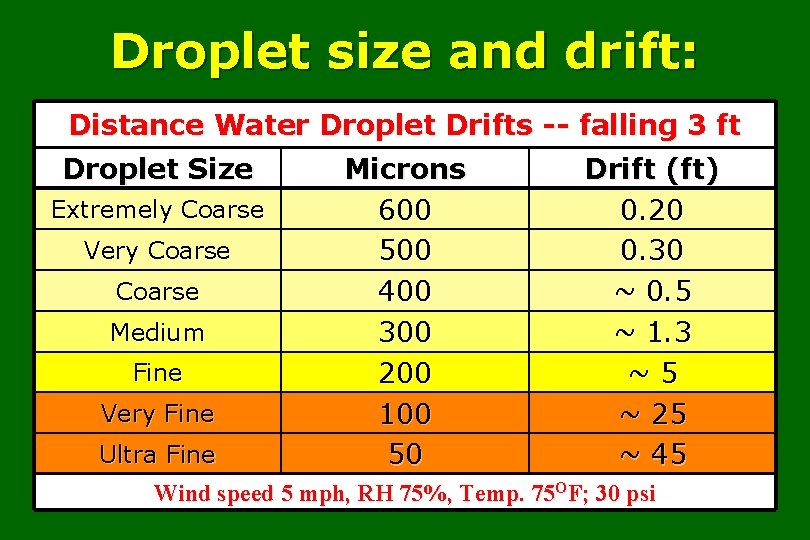
Droplet size and drift: Distance Water Droplet Drifts -- falling 3 ft Droplet Size Extremely Coarse Very Coarse Medium Fine Very Fine Ultra Fine Microns 600 500 400 300 200 100 50 Drift (ft) 0. 20 0. 30 ~ 0. 5 ~ 1. 3 ~5 ~ 25 ~ 45 Wind speed 5 mph, RH 75%, Temp. 75 OF; 30 psi
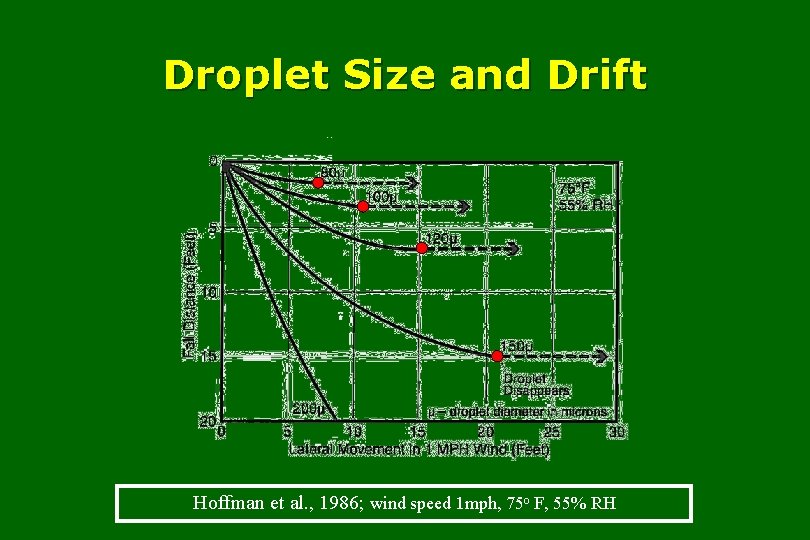
Droplet Size and Drift Hoffman et al. , 1986; wind speed 1 mph, 75 o F, 55% RH
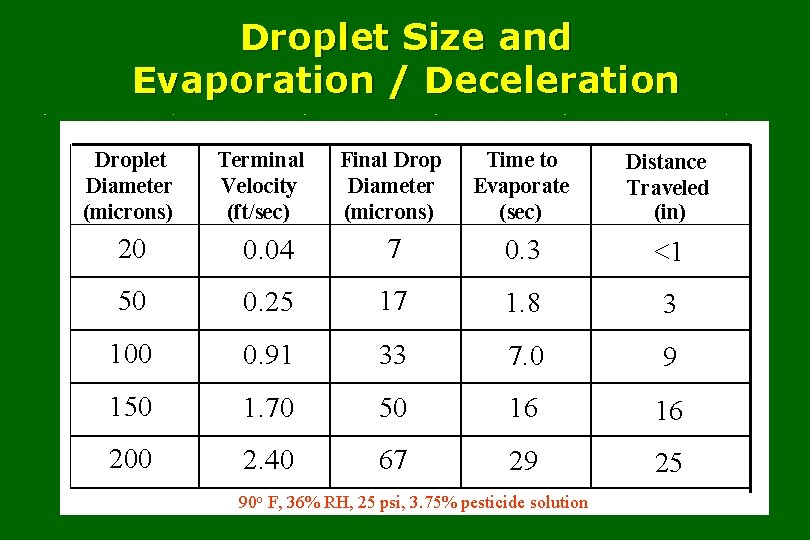
Droplet Size and Evaporation / Deceleration Droplet Diameter (microns) Terminal Velocity (ft/sec) Final Drop Diameter (microns) Time to Evaporate (sec) Distance Traveled (in) 20 0. 04 7 0. 3 <1 50 0. 25 17 1. 8 3 100 0. 91 33 7. 0 9 150 1. 70 50 16 16 200 2. 40 67 29 25 90 o F, 36% RH, 25 psi, 3. 75% pesticide solution
Droplet Size and Drift • Large droplets have less drift potential because they are: –heavier and drop / fall faster –evaporate slower –less affected by wind
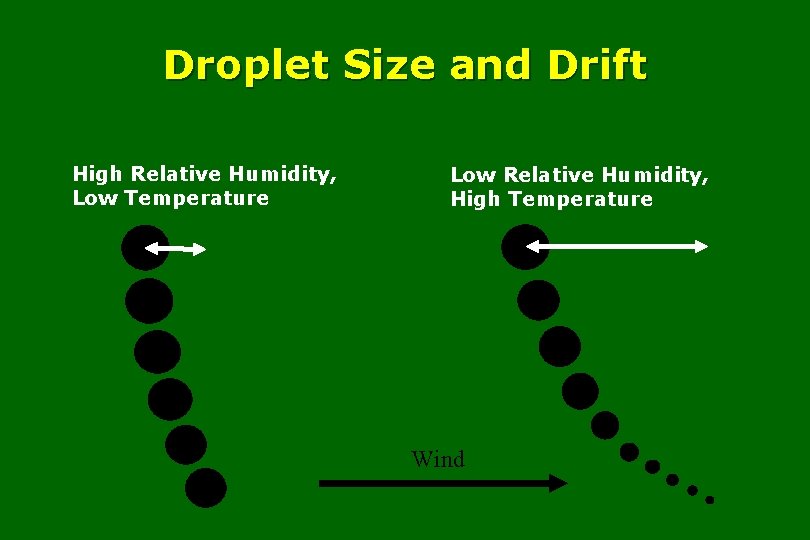
Droplet Size and Drift High Relative Humidity, Low Temperature Low Relative Humidity, High Temperature Wind
Droplet Size Management • Small droplets often result from: – high spray pressures – small nozzle tips/orifices – wind shear across the nozzles • Nozzle design also affects droplet size
Drift Potential Is Influenced by • Nozzle / droplet – Volume Median Diameter (VMD) – Spectrum (range: big to small) To minimize the risk of drift, avoid using nozzles that will create an increased % volume of droplets < 200 microns (VD 0. 1)
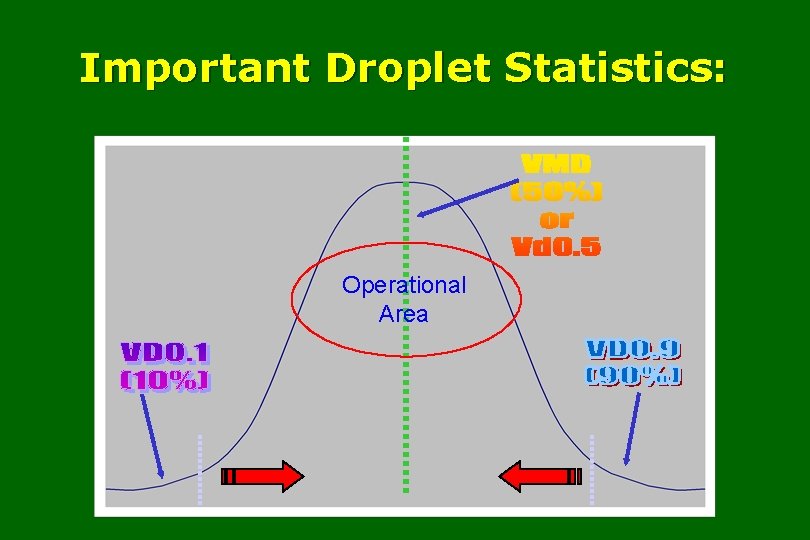
Important Droplet Statistics: Operational Area
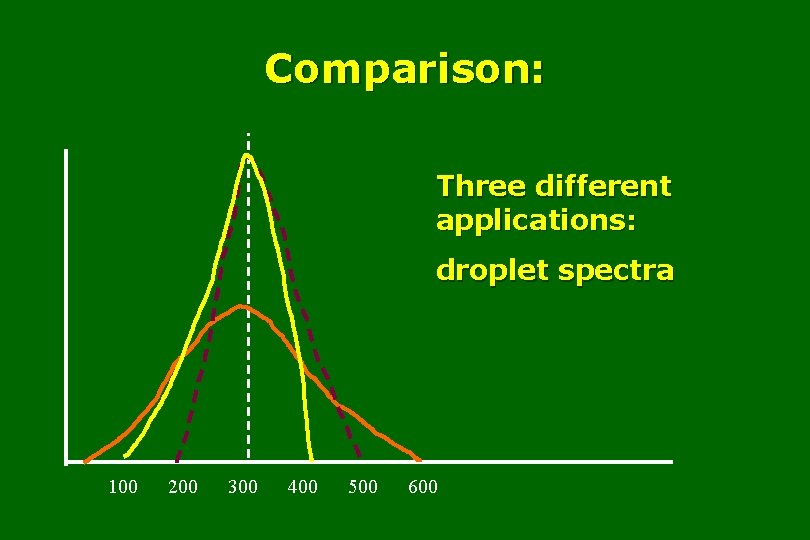
Comparison: Three different applications: droplet spectra 100 200 300 400 500 600
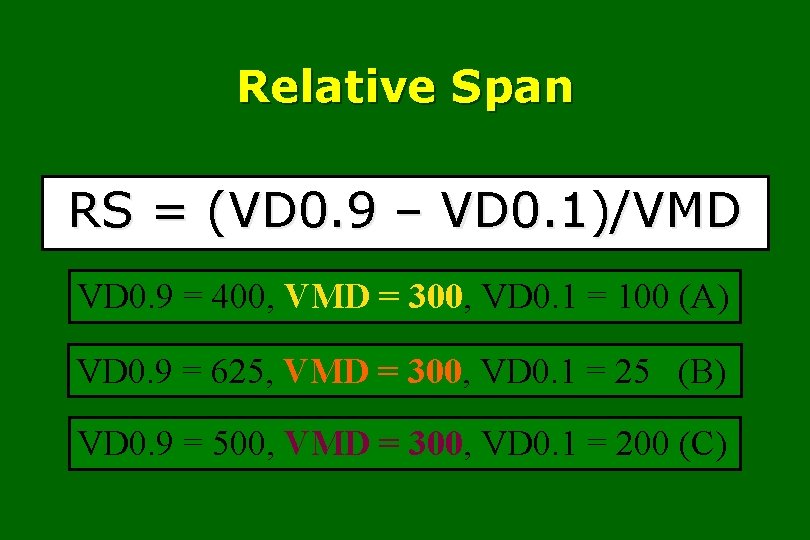
Relative Span RS = (VD 0. 9 – VD 0. 1)/VMD VD 0. 9 = 400, VMD = 300, VD 0. 1 = 100 (A) VD 0. 9 = 625, VMD = 300, VD 0. 1 = 25 (B) VD 0. 9 = 500, VMD = 300, VD 0. 1 = 200 (C)
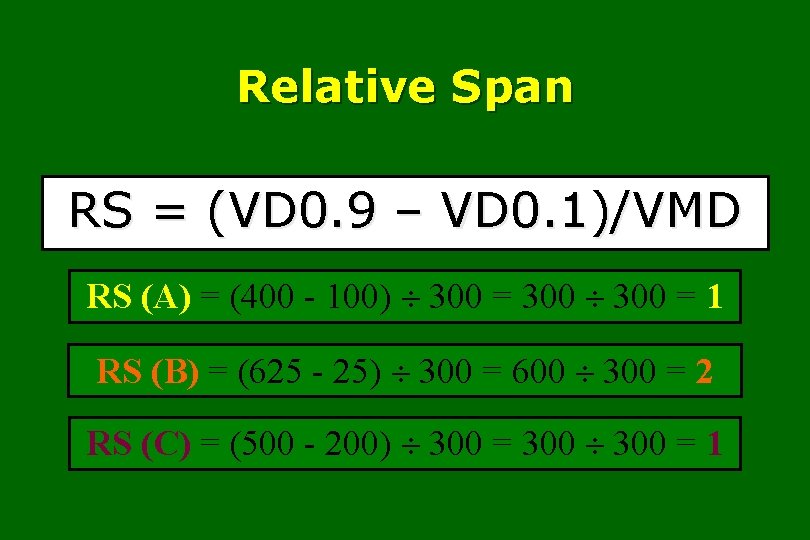
Relative Span RS = (VD 0. 9 – VD 0. 1)/VMD RS (A) = (400 - 100) 300 = 1 RS (B) = (625 - 25) 300 = 600 300 = 2 RS (C) = (500 - 200) 300 = 1
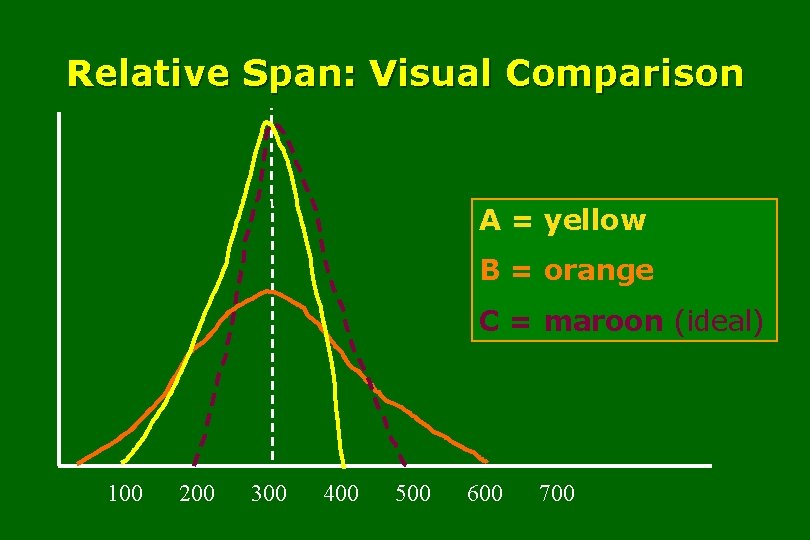
Relative Span: Visual Comparison A = yellow B = orange C = maroon (ideal) 100 200 300 400 500 600 700
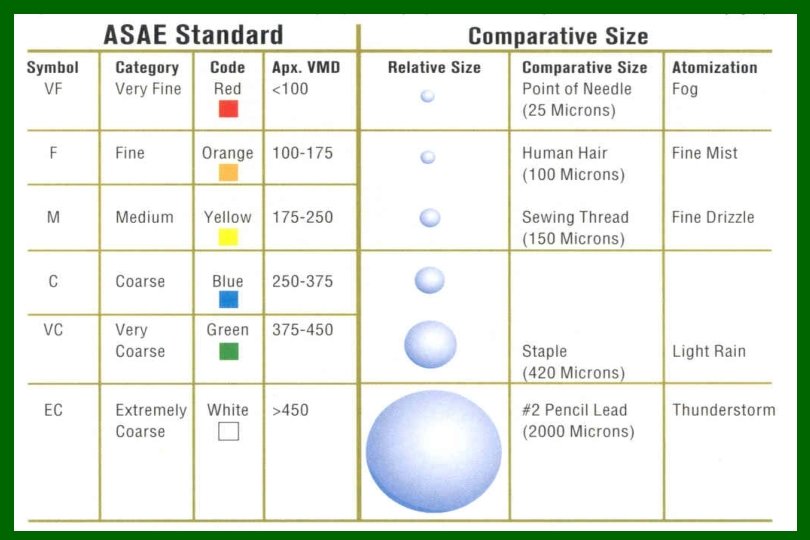
Droplet Size Categories • Initiated by BCPC (British Crop Protection Council) • Adopted by ASABE (American Society of Agricultural & Biological Engineers) - Standard 572 • Assigns a spray tip (at a given pressure) to a droplet size category based on spray characteristics - Nozzles are tested using a prescribed protocol against a standard set, which allows for comparisons - In order to market their tips, manufacturers must have all nozzles tested as described above • In the future, pesticide labels will have droplet size category recommendations/requirements
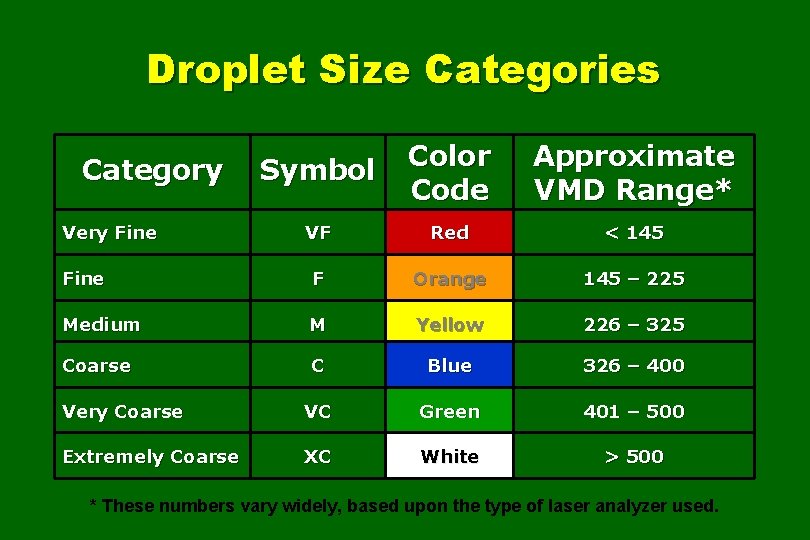
Droplet Size Categories Symbol Color Code Approximate VMD Range* VF Red < 145 Fine F Orange 145 – 225 Medium M Yellow 226 – 325 Coarse C Blue 326 – 400 Very Coarse VC Green 401 – 500 Extremely Coarse XC White > 500 Category Very Fine * These numbers vary widely, based upon the type of laser analyzer used.
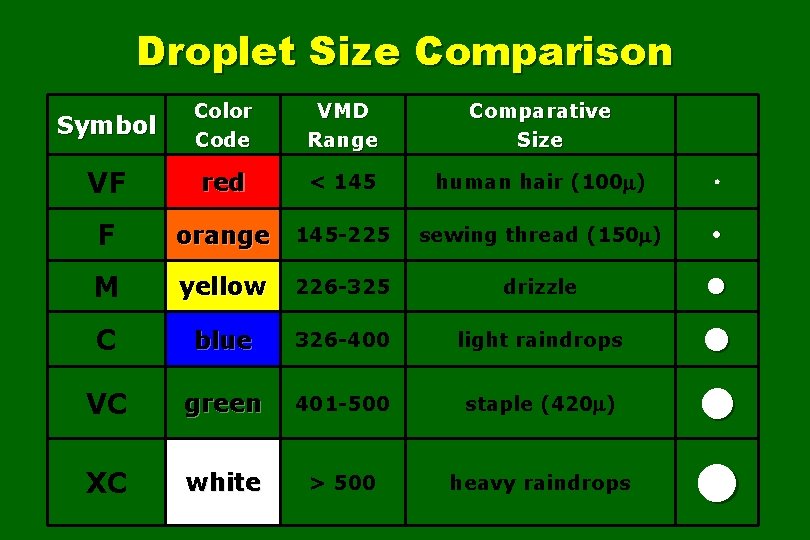
Droplet Size Comparison Symbol Color Code VMD Range Comparative Size VF red < 145 human hair (100 ) F orange 145 -225 sewing thread (150 ) M yellow 226 -325 drizzle C blue 326 -400 light raindrops VC green 401 -500 staple (420 ) XC white > 500 heavy raindrops
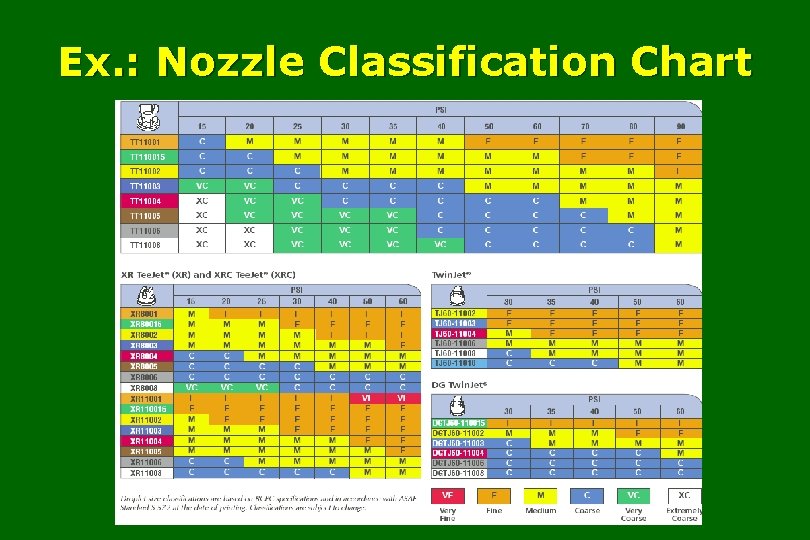
Ex. : Nozzle Classification Chart
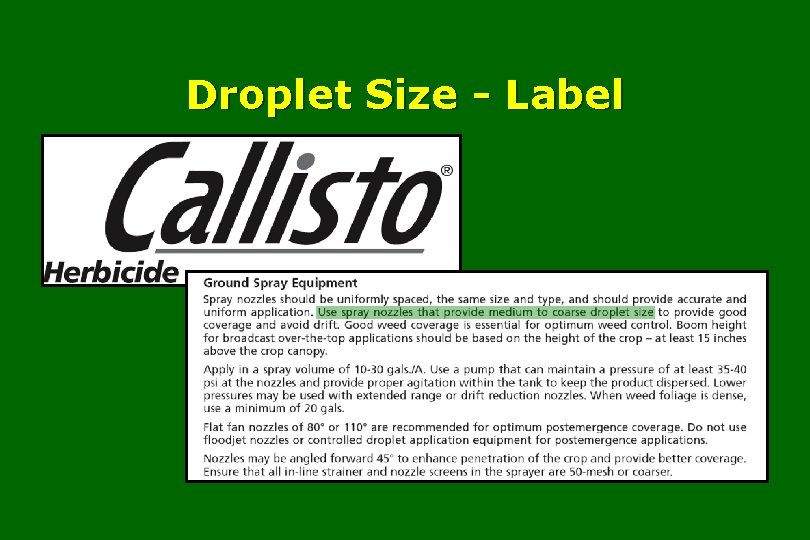
Droplet Size - Label
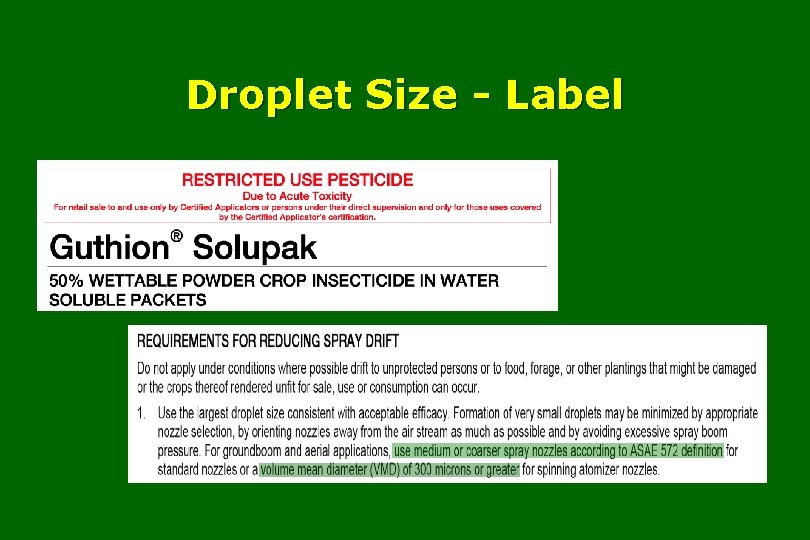
Droplet Size - Label
Summary • When choosing a nozzle for a spray application, read the label FIRST • In the absence of directions: – consider both flow rate and droplet size – base decision on target and properties of active ingredient – in most cases, avoid using nozzles and pressures that will produce a VMD of < 200 microns (Fine, Very Fine)

- Slides: 46