
Sprains Strains and Broken Bones Musculoskeletal Injuries Sprain

Sprains, Strains and Broken Bones
Musculoskeletal Injuries Sprain - is a stretch and/or tear of a ligament Strain - is a twist, pull and/or tear of a muscle and/or tendon Break - is a fracture, splinter or complete break in a bone
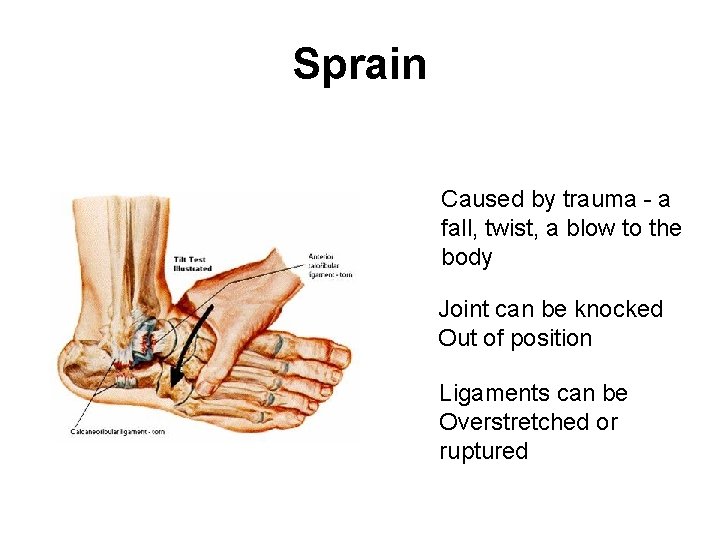
Sprain Caused by trauma - a fall, twist, a blow to the body Joint can be knocked Out of position Ligaments can be Overstretched or ruptured
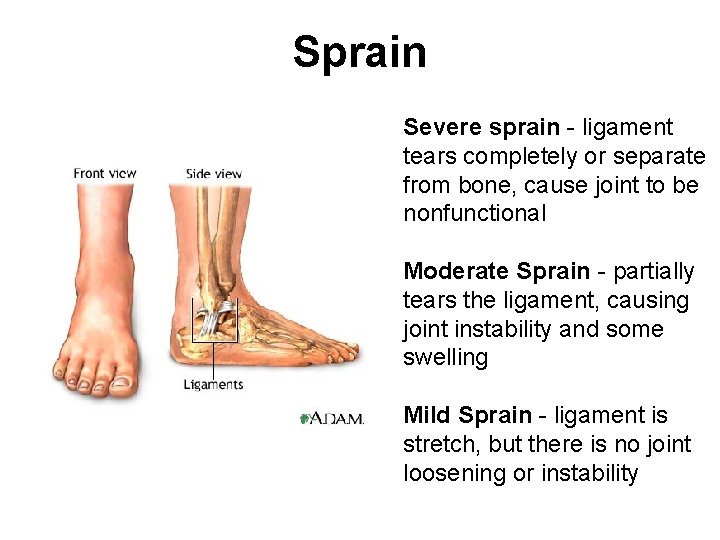
Sprain Severe sprain - ligament tears completely or separate from bone, cause joint to be nonfunctional Moderate Sprain - partially tears the ligament, causing joint instability and some swelling Mild Sprain - ligament is stretch, but there is no joint loosening or instability
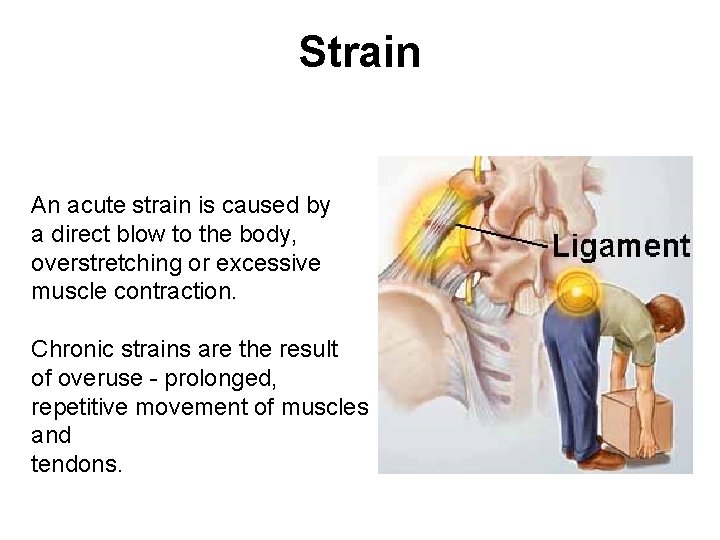
Strain An acute strain is caused by a direct blow to the body, overstretching or excessive muscle contraction. Chronic strains are the result of overuse - prolonged, repetitive movement of muscles and tendons.
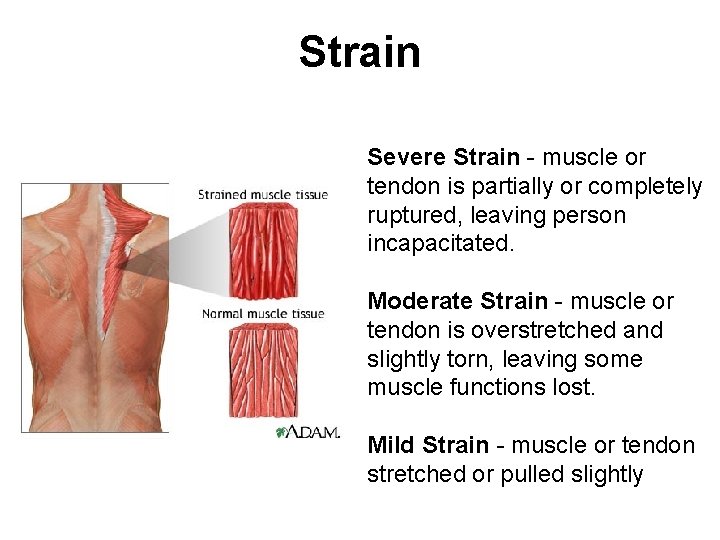
Strain Severe Strain - muscle or tendon is partially or completely ruptured, leaving person incapacitated. Moderate Strain - muscle or tendon is overstretched and slightly torn, leaving some muscle functions lost. Mild Strain - muscle or tendon stretched or pulled slightly
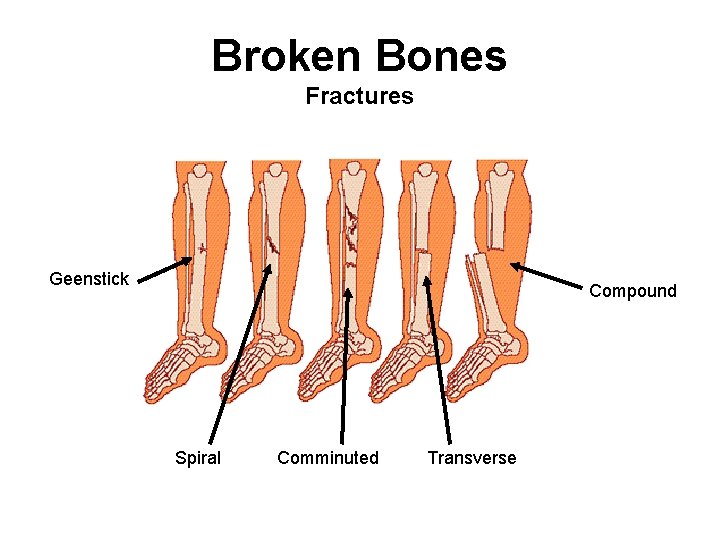
Broken Bones Fractures Geenstick Compound Spiral Comminuted Transverse

Broken Bones Fractures Greenstick Fracture The bones cracks one side only, not all the way through, usually seen in children due to the softness of their bones
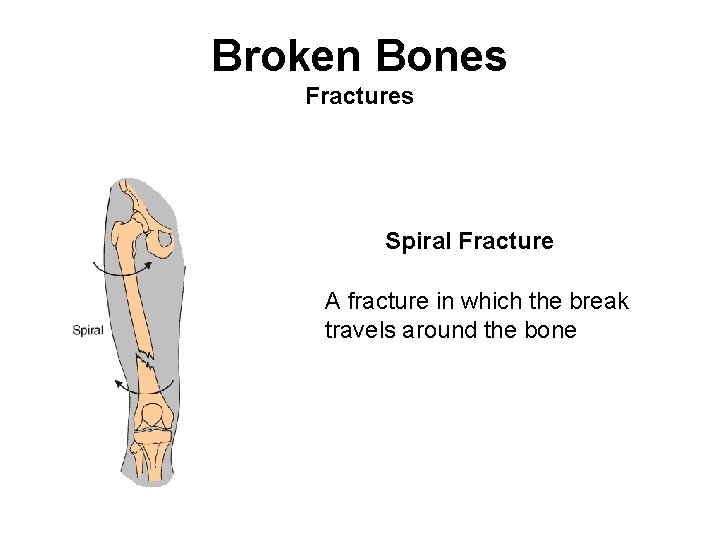
Broken Bones Fractures Spiral Fracture A fracture in which the break travels around the bone
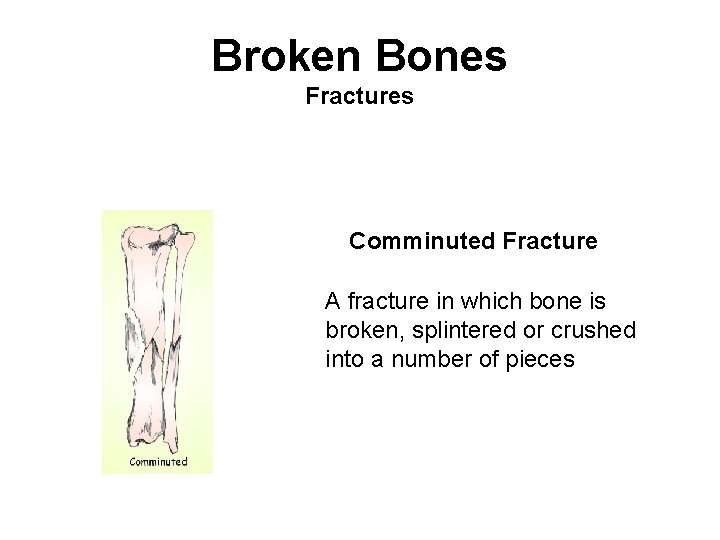
Broken Bones Fractures Comminuted Fracture A fracture in which bone is broken, splintered or crushed into a number of pieces
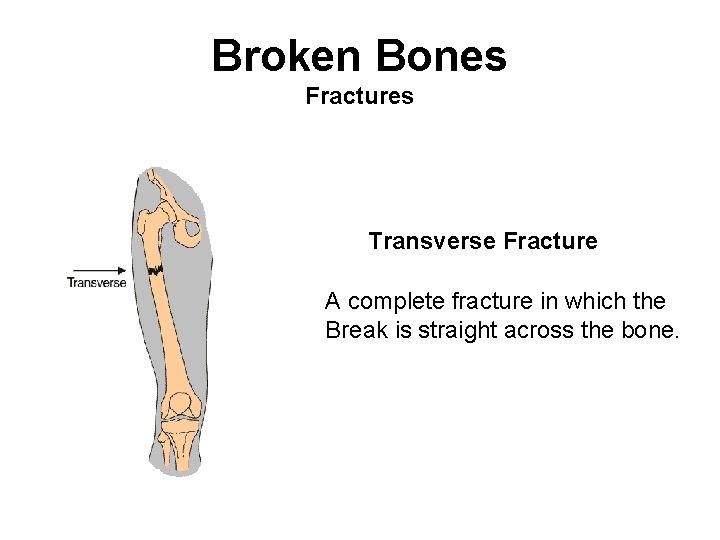
Broken Bones Fractures Transverse Fracture A complete fracture in which the Break is straight across the bone.
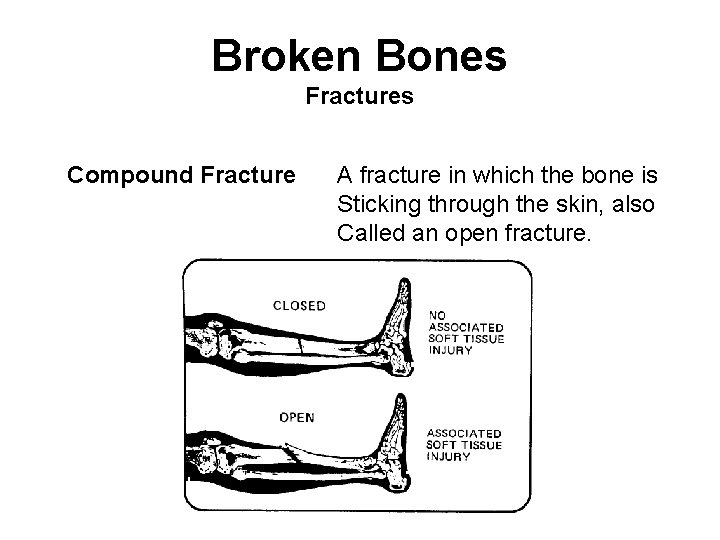
Broken Bones Fractures Compound Fracture A fracture in which the bone is Sticking through the skin, also Called an open fracture.
RICE Treating minor sprains, strains & breaks Rest - Reduce or stop using the injured area for 48 hours Ice - Put an ice pack on the injured area for 20 minutes at time, 4 to 8 times per day. Compression - Compression of an injured ankle, knee, wrist may help reduce swelling. Elevation - Keep the injured area elevated above the level of the heart.
Questions?
- Slides: 14