
Spot Weld Al Equipment Various Types of Equipment

![Surface Burning and Tip Pickup [Remedy Those Conditions] [Cause] • Surface burning is caused](https://slidetodoc.com/presentation_image_h/2faf45b2c6ab781009f94dcf7b46da69/image-34.jpg "Surface Burning and Tip Pickup [Remedy Those Conditions] [Cause] • Surface burning is caused")
![Cracks [Cause] • Internal and external cracks in welds, generally caused by improper thermal](https://slidetodoc.com/presentation_image_h/2faf45b2c6ab781009f94dcf7b46da69/image-35.jpg "Cracks [Cause] • Internal and external cracks in welds, generally caused by improper thermal")
![Excessive Indentation [Cause] • Excessive indentation, generally caused by improper force application, is indicated](https://slidetodoc.com/presentation_image_h/2faf45b2c6ab781009f94dcf7b46da69/image-36.jpg "Excessive Indentation [Cause] • Excessive indentation, generally caused by improper force application, is indicated")
![Sheet Separation [Cause] • Excessive sheet separation, generally caused by poor fitup of parts](https://slidetodoc.com/presentation_image_h/2faf45b2c6ab781009f94dcf7b46da69/image-37.jpg "Sheet Separation [Cause] • Excessive sheet separation, generally caused by poor fitup of parts")
![Porosity [Cause] • A porous weld structure, generally caused by improper application of heat](https://slidetodoc.com/presentation_image_h/2faf45b2c6ab781009f94dcf7b46da69/image-38.jpg "Porosity [Cause] • A porous weld structure, generally caused by improper application of heat")
![Weld Metal Expulsion [Cause] • Weld expulsion, generally caused by extreme heat and improper](https://slidetodoc.com/presentation_image_h/2faf45b2c6ab781009f94dcf7b46da69/image-39.jpg "Weld Metal Expulsion [Cause] • Weld expulsion, generally caused by extreme heat and improper")
![Unsymmetrical Weld Nugget [Cause] • Unsymmetrical welds, generally caused by unsymmetrical gauge combination, improper](https://slidetodoc.com/presentation_image_h/2faf45b2c6ab781009f94dcf7b46da69/image-40.jpg "Unsymmetrical Weld Nugget [Cause] • Unsymmetrical welds, generally caused by unsymmetrical gauge combination, improper")
- Slides: 40
Spot Weld Al Equipment
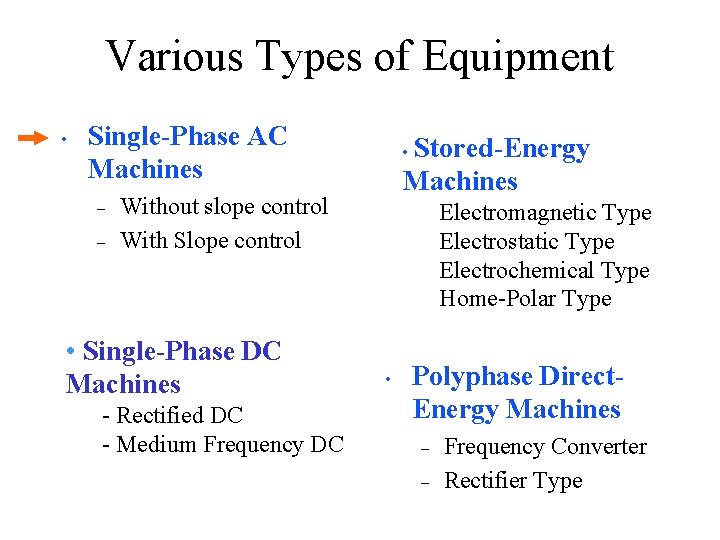
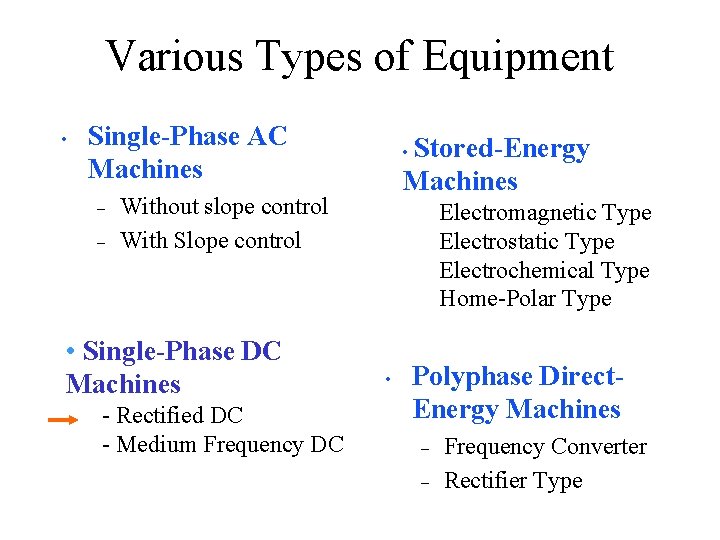
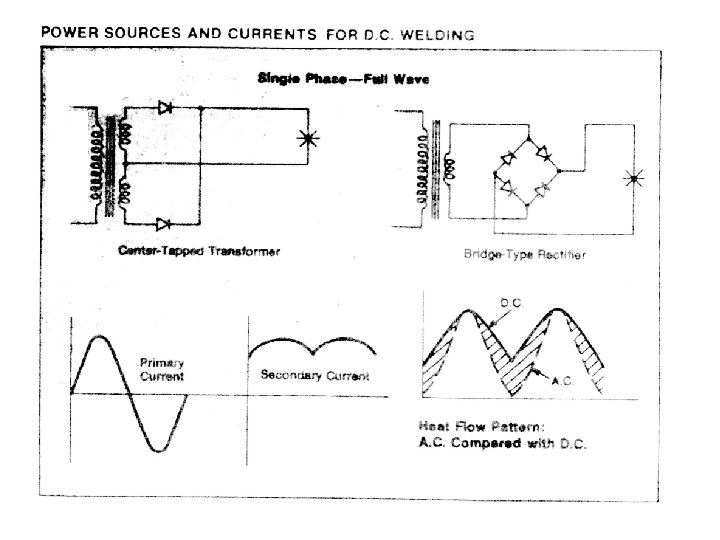
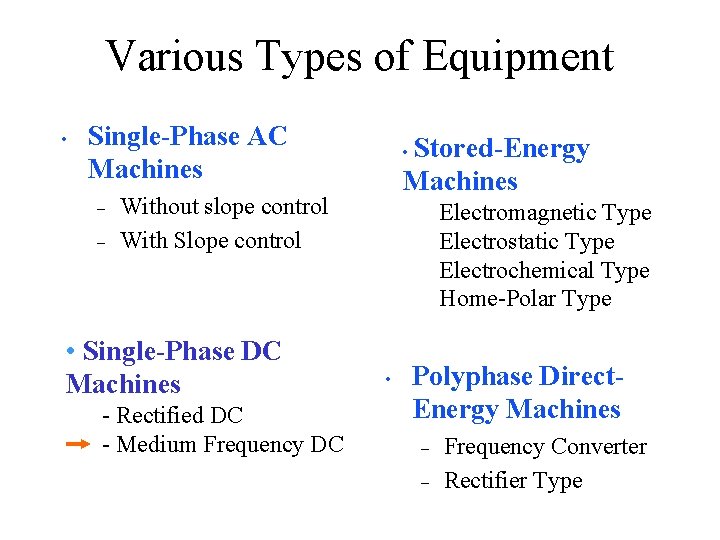
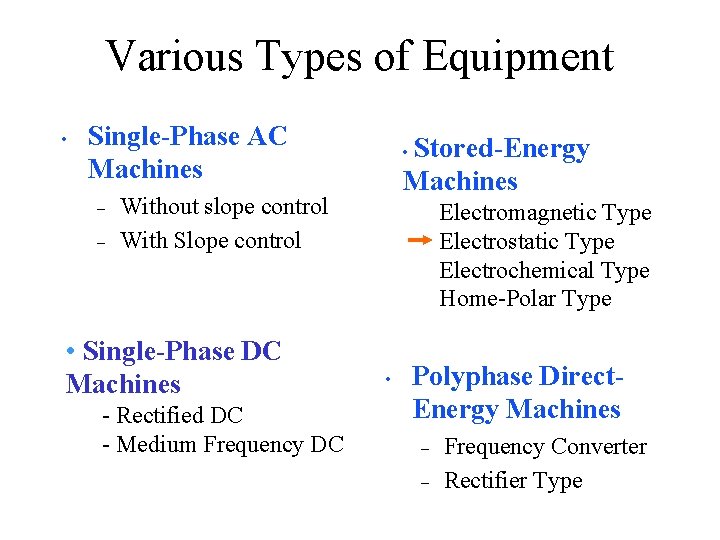
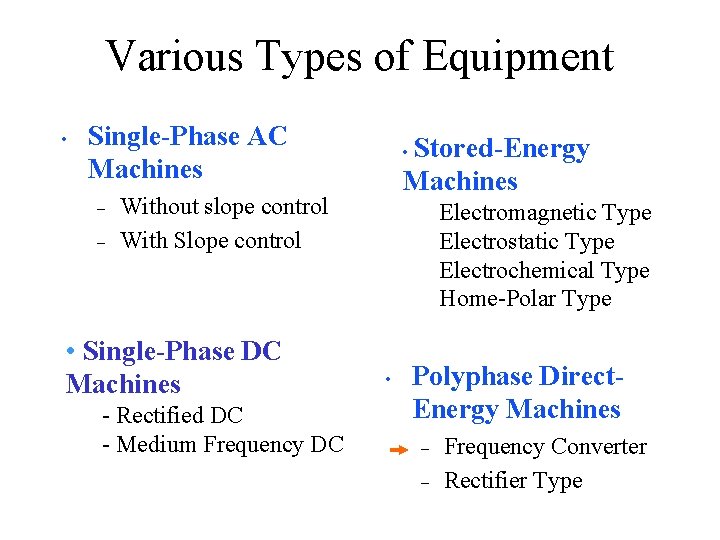
Various Types of Equipment • Single-Phase AC Machines – – Stored-Energy Machines • Without slope control With Slope control • Single-Phase DC Machines - Rectified DC - Medium Frequency DC Electromagnetic Type Electrostatic Type Electrochemical Type Home-Polar Type • Polyphase Direct. Energy Machines – – Frequency Converter Rectifier Type
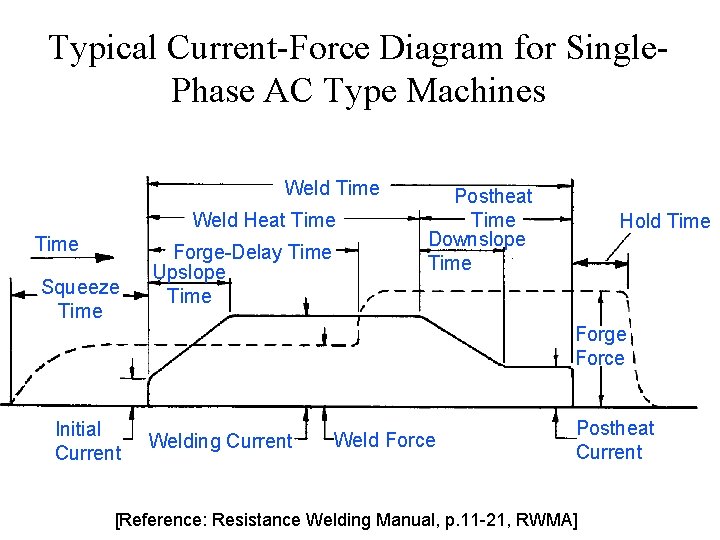
Typical Current-Force Diagram for Single. Phase AC Type Machines Weld Time Weld Heat Time Squeeze Time Forge-Delay Time Upslope Time Postheat Time Downslope Time Hold Time Forge Force Initial Current Welding Current Weld Force Postheat Current [Reference: Resistance Welding Manual, p. 11 -21, RWMA]
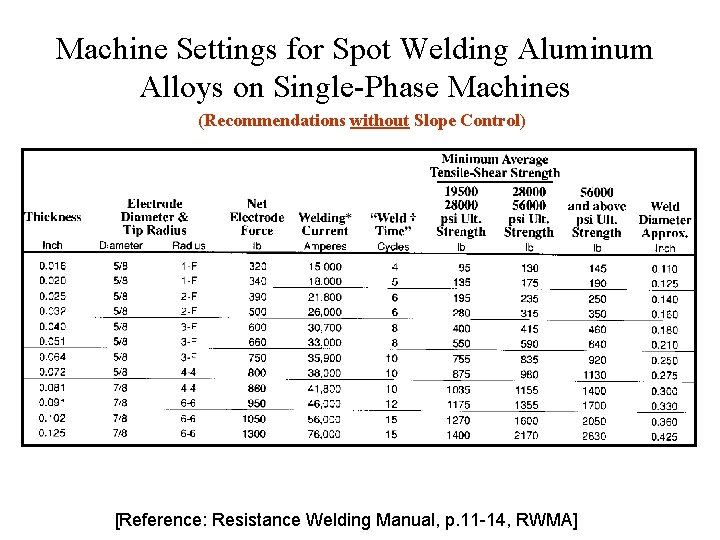
Machine Settings for Spot Welding Aluminum Alloys on Single-Phase Machines (Recommendations without Slope Control) [Reference: Resistance Welding Manual, p. 11 -14, RWMA]
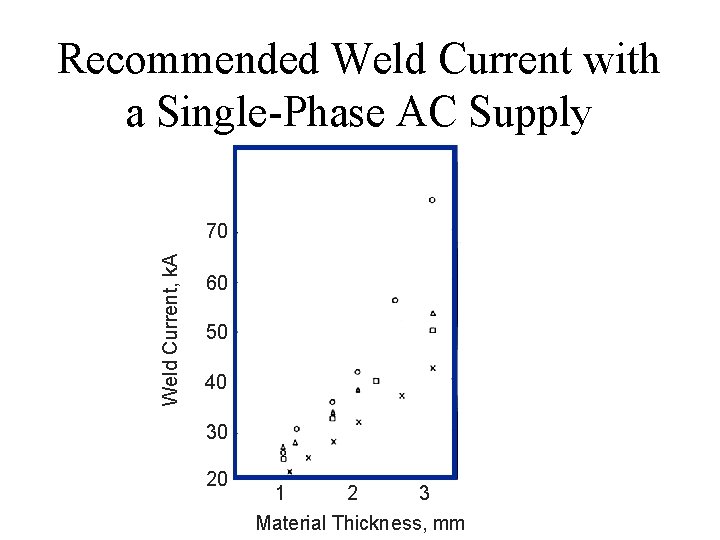
Recommended Weld Current with a Single-Phase AC Supply Weld Current, k. A 70 60 50 40 30 20 1 2 3 Material Thickness, mm
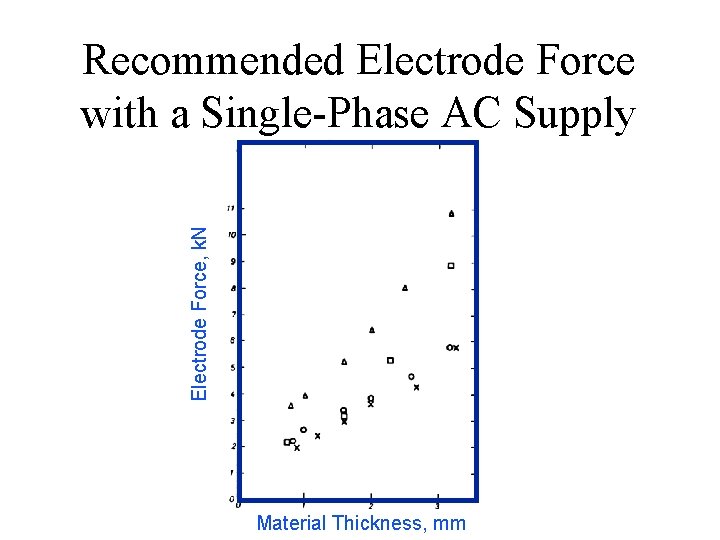
Electrode Force, k. N Recommended Electrode Force with a Single-Phase AC Supply Material Thickness, mm
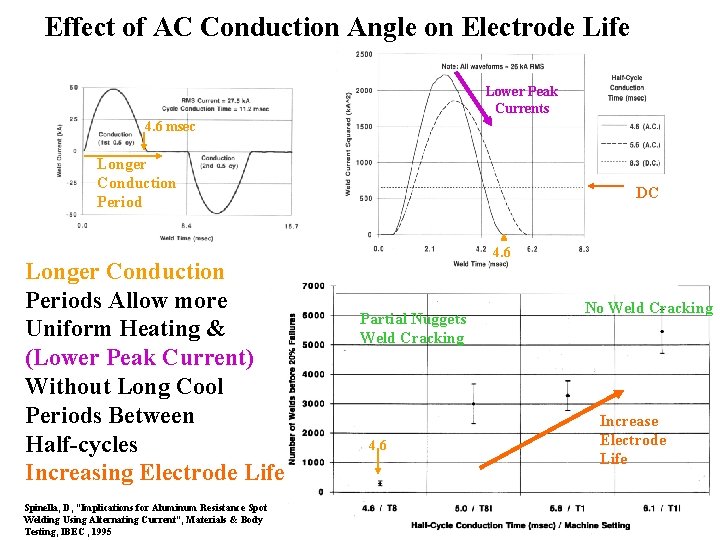
Effect of AC Conduction Angle on Electrode Life Lower Peak Currents 4. 6 msec Longer Conduction Periods Allow more Uniform Heating & (Lower Peak Current) Without Long Cool Periods Between Half-cycles Increasing Electrode Life Spinella, D, “Implications for Aluminum Resistance Spot Welding Using Alternating Current”, Materials & Body Testing, IBEC , 1995 DC 4. 6 Partial Nuggets Weld Cracking 4. 6 No Weld Cracking Increase Electrode Life
Various Types of Equipment • Single-Phase AC Machines – – Stored-Energy Machines • Without slope control With Slope control • Single-Phase DC Machines - Rectified DC - Medium Frequency DC Electromagnetic Type Electrostatic Type Electrochemical Type Home-Polar Type • Polyphase Direct. Energy Machines – – Frequency Converter Rectifier Type
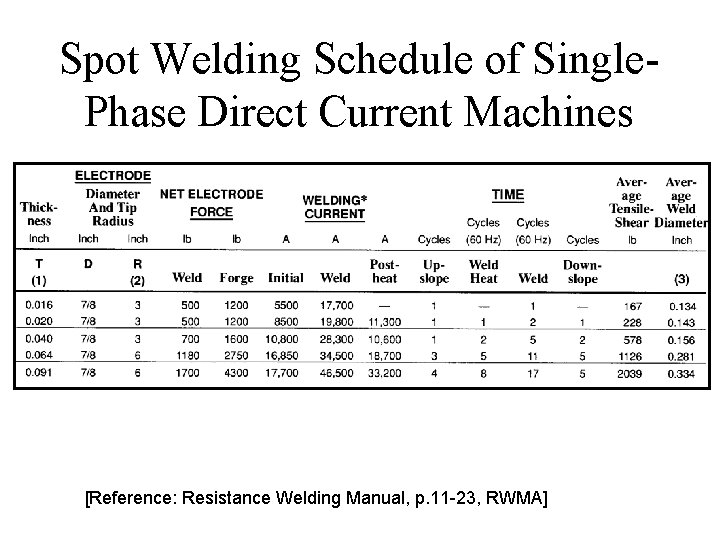
Spot Welding Schedule of Single. Phase Direct Current Machines [Reference: Resistance Welding Manual, p. 11 -23, RWMA]
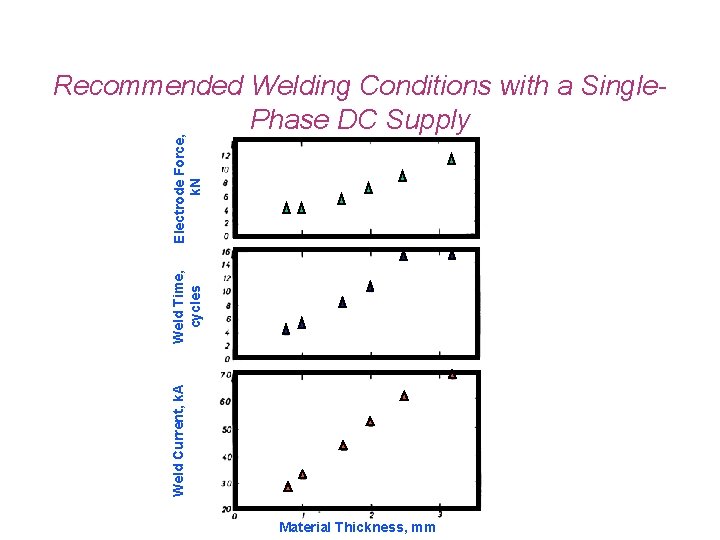
Weld Current, k. A Weld Time, cycles Electrode Force, k. N Recommended Welding Conditions with a Single. Phase DC Supply Material Thickness, mm
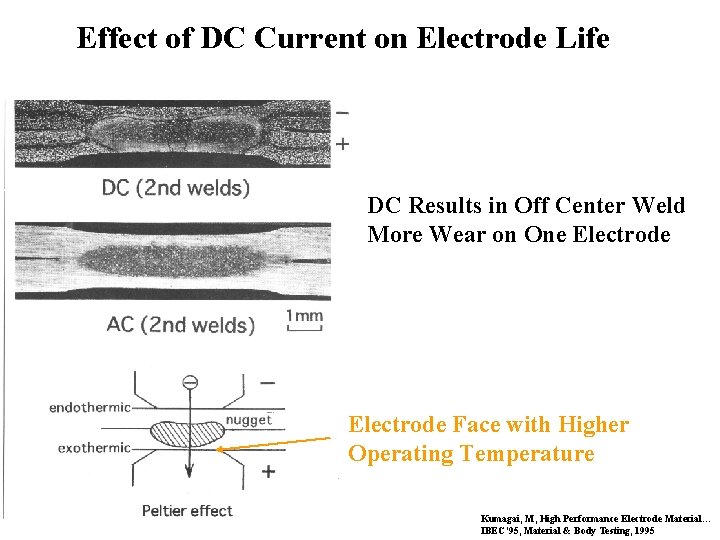
Effect of DC Current on Electrode Life DC Results in Off Center Weld More Wear on One Electrode Face with Higher Operating Temperature Kumagai, M, High Performance Electrode Material… IBEC’ 95, Material & Body Testing, 1995
Various Types of Equipment • Single-Phase AC Machines – – Stored-Energy Machines • Without slope control With Slope control • Single-Phase DC Machines - Rectified DC - Medium Frequency DC Electromagnetic Type Electrostatic Type Electrochemical Type Home-Polar Type • Polyphase Direct. Energy Machines – – Frequency Converter Rectifier Type
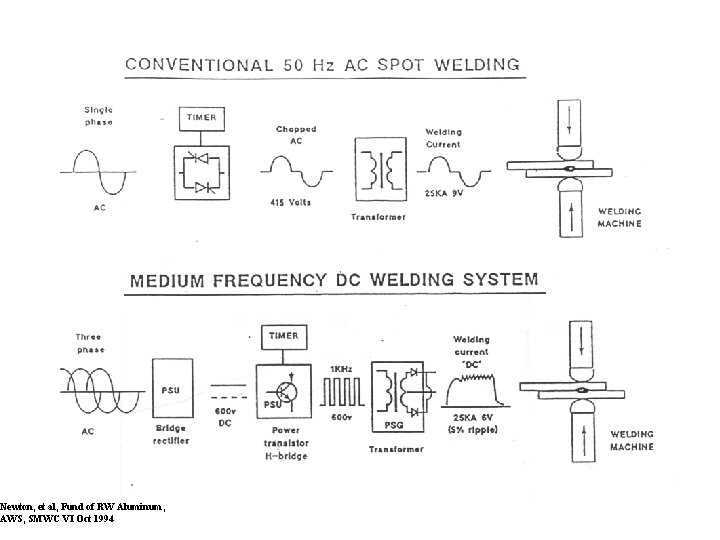
Newton, et al, Fund of RW Aluminum, AWS, SMWC VI Oct 1994
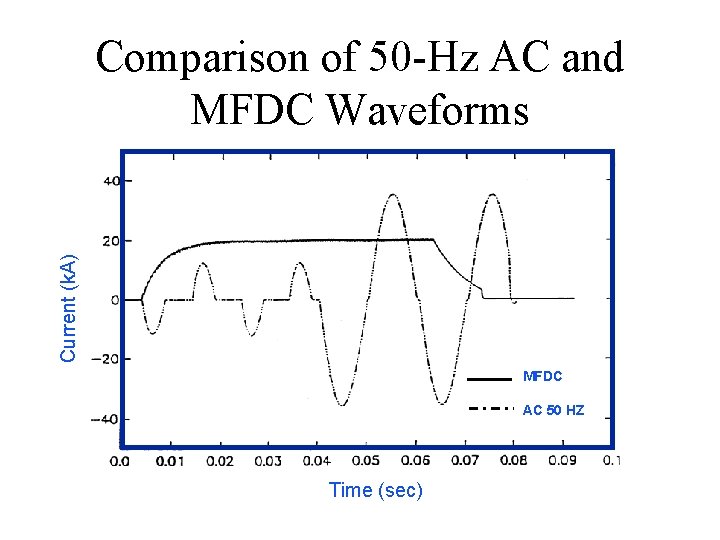
Current (k. A) Comparison of 50 -Hz AC and MFDC Waveforms MFDC AC 50 HZ Time (sec)
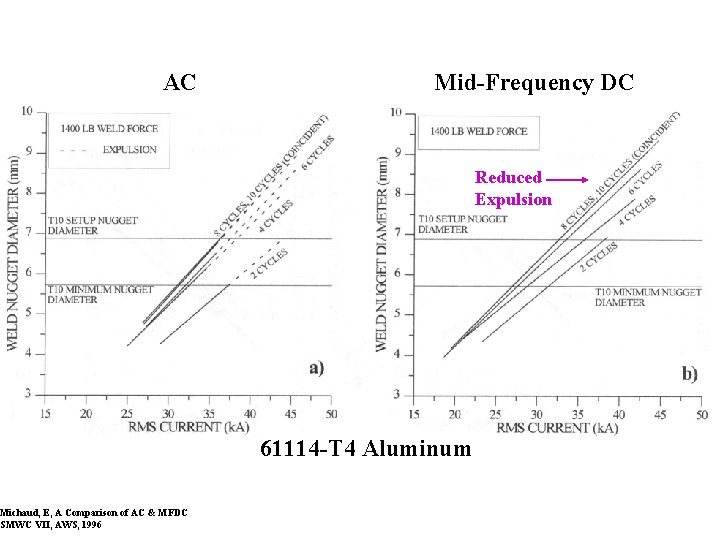
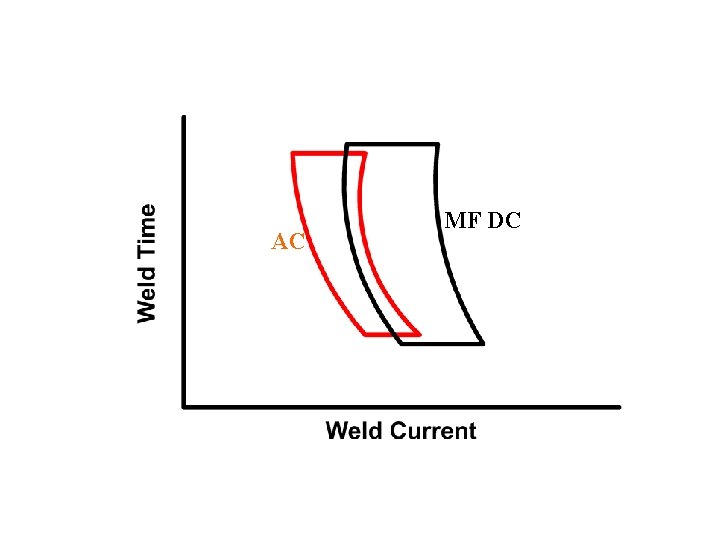
AC Michaud, E, A Comparison of AC & MFDC SMWC VII, AWS, 1996 Mid-Frequency DC Reduced Expulsion 61114 -T 4 Aluminum
AC MF DC
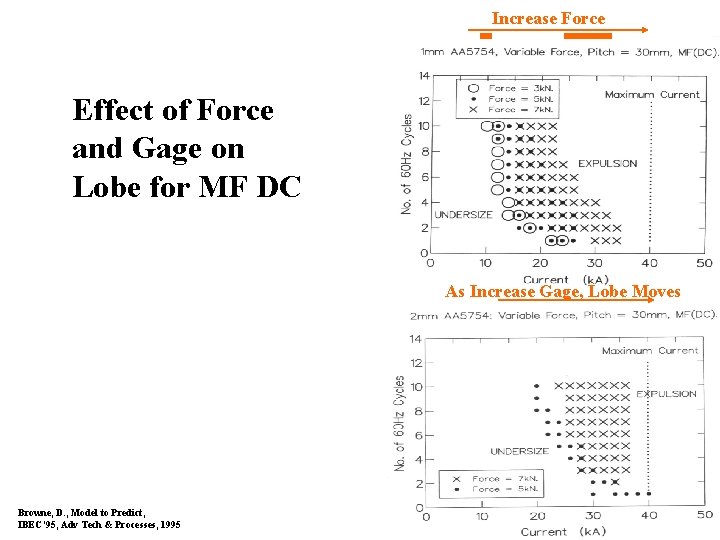
Increase Force Effect of Force and Gage on Lobe for MF DC As Increase Gage, Lobe Moves Browne, D. , Model to Predict, IBEC’ 95, Adv Tech & Processes, 1995
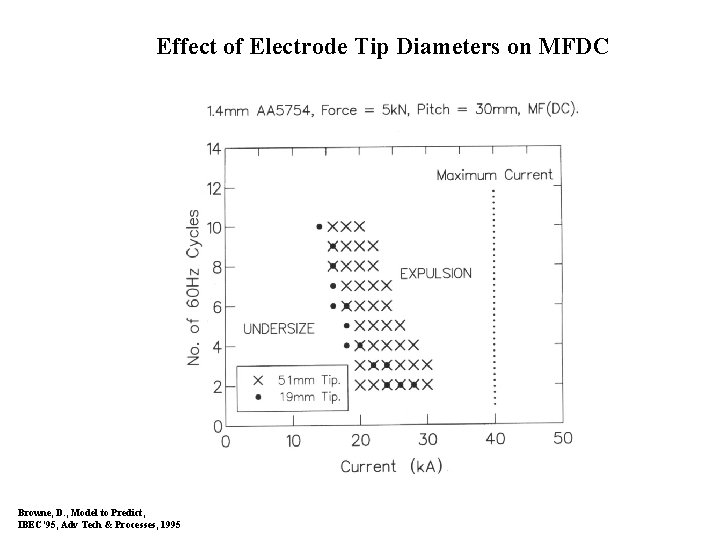
Effect of Electrode Tip Diameters on MFDC Browne, D. , Model to Predict, IBEC’ 95, Adv Tech & Processes, 1995
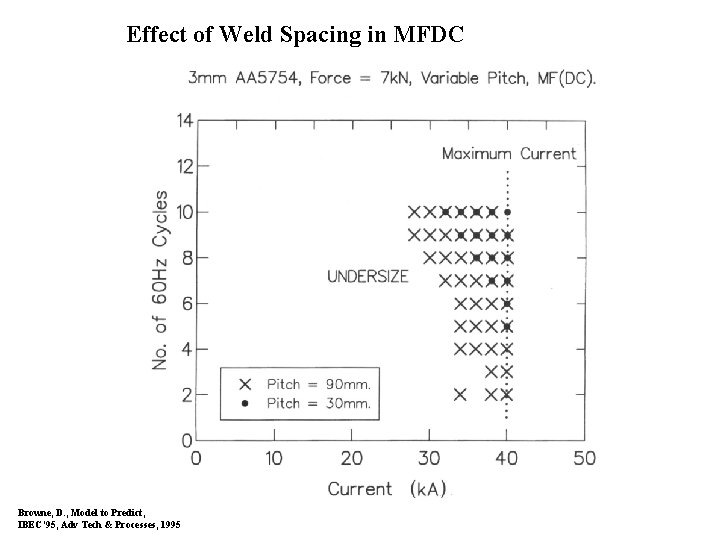
Effect of Weld Spacing in MFDC Browne, D. , Model to Predict, IBEC’ 95, Adv Tech & Processes, 1995
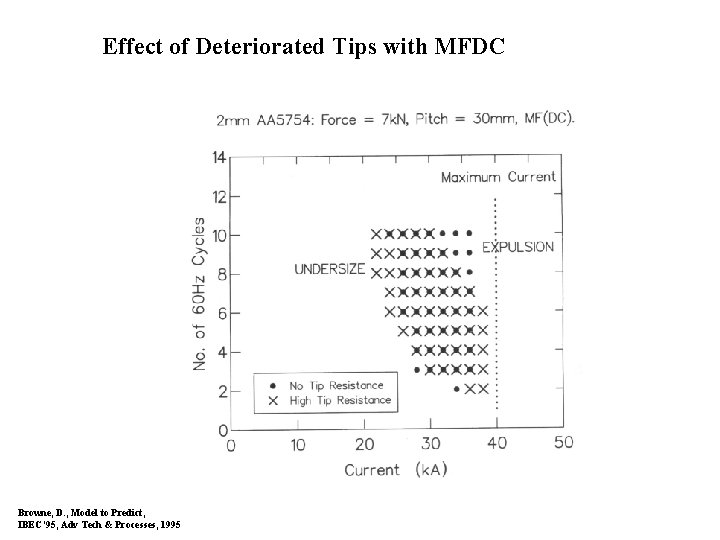
Effect of Deteriorated Tips with MFDC Browne, D. , Model to Predict, IBEC’ 95, Adv Tech & Processes, 1995
Various Types of Equipment • Single-Phase AC Machines – – Stored-Energy Machines • Without slope control With Slope control • Single-Phase DC Machines - Rectified DC - Medium Frequency DC Electromagnetic Type Electrostatic Type Electrochemical Type Home-Polar Type • Polyphase Direct. Energy Machines – – Frequency Converter Rectifier Type
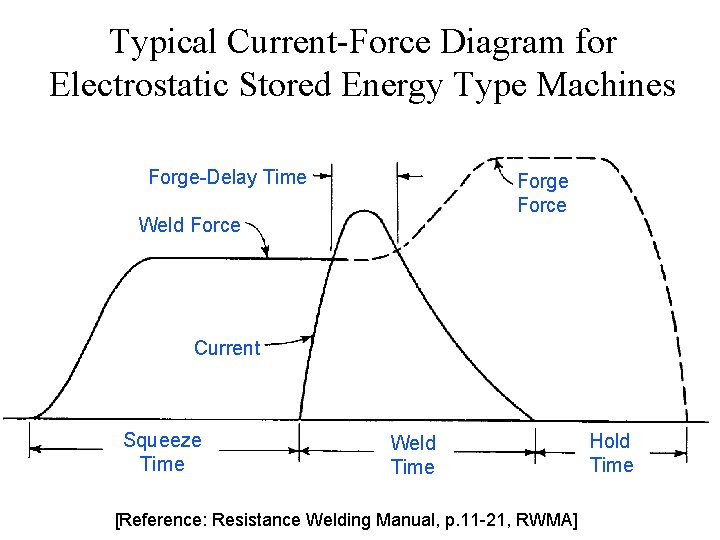
Typical Current-Force Diagram for Electrostatic Stored Energy Type Machines Forge-Delay Time Forge Force Weld Force Current Squeeze Time Weld Time [Reference: Resistance Welding Manual, p. 11 -21, RWMA] Hold Time
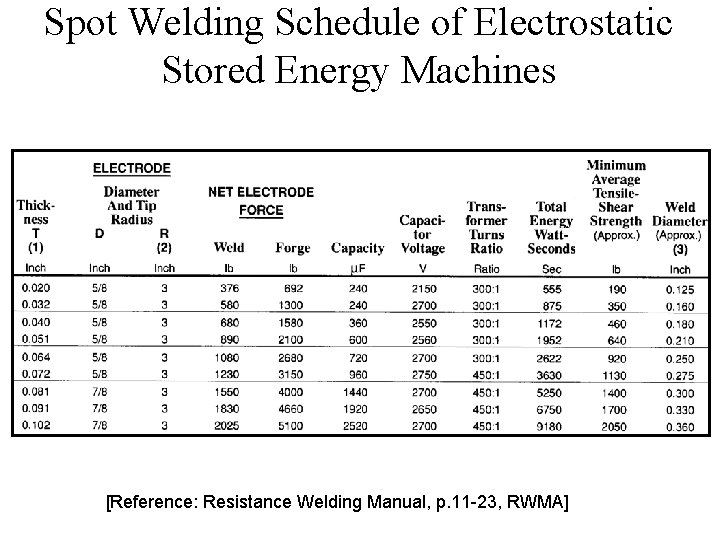
Spot Welding Schedule of Electrostatic Stored Energy Machines [Reference: Resistance Welding Manual, p. 11 -23, RWMA]
Various Types of Equipment • Single-Phase AC Machines – – Stored-Energy Machines • Without slope control With Slope control • Single-Phase DC Machines - Rectified DC - Medium Frequency DC Electromagnetic Type Electrostatic Type Electrochemical Type Home-Polar Type • Polyphase Direct. Energy Machines – – Frequency Converter Rectifier Type
Insert diagram of Frequency Converter waveform
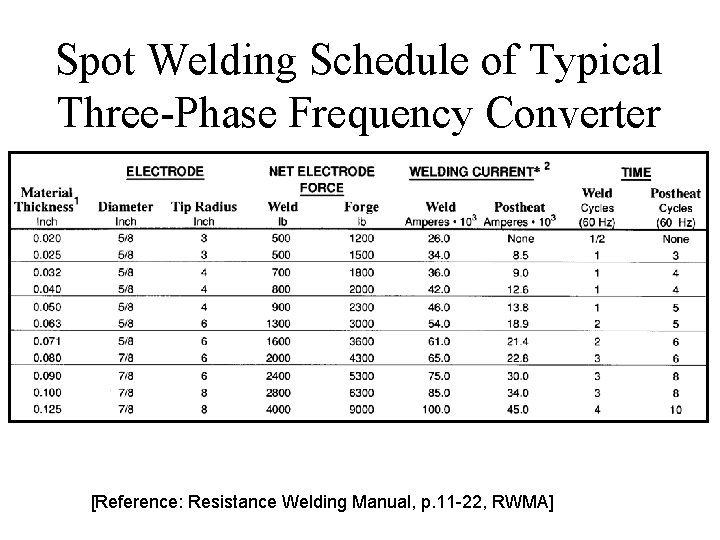
Spot Welding Schedule of Typical Three-Phase Frequency Converter [Reference: Resistance Welding Manual, p. 11 -22, RWMA]
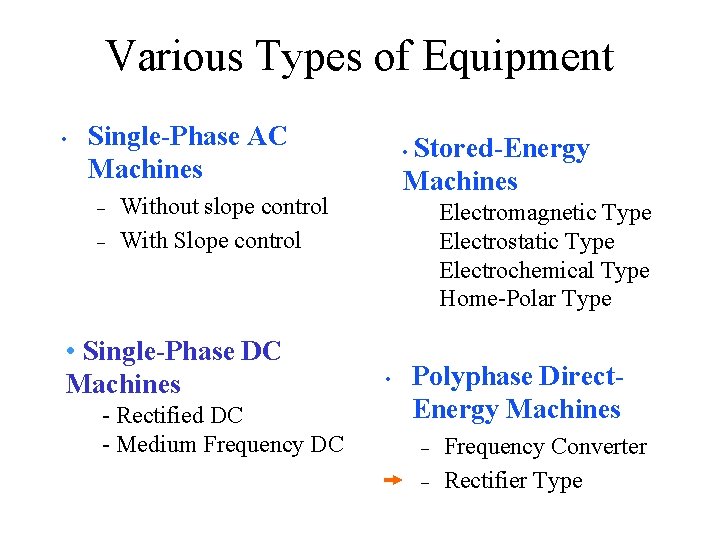
Various Types of Equipment • Single-Phase AC Machines – – Stored-Energy Machines • Without slope control With Slope control • Single-Phase DC Machines - Rectified DC - Medium Frequency DC Electromagnetic Type Electrostatic Type Electrochemical Type Home-Polar Type • Polyphase Direct. Energy Machines – – Frequency Converter Rectifier Type
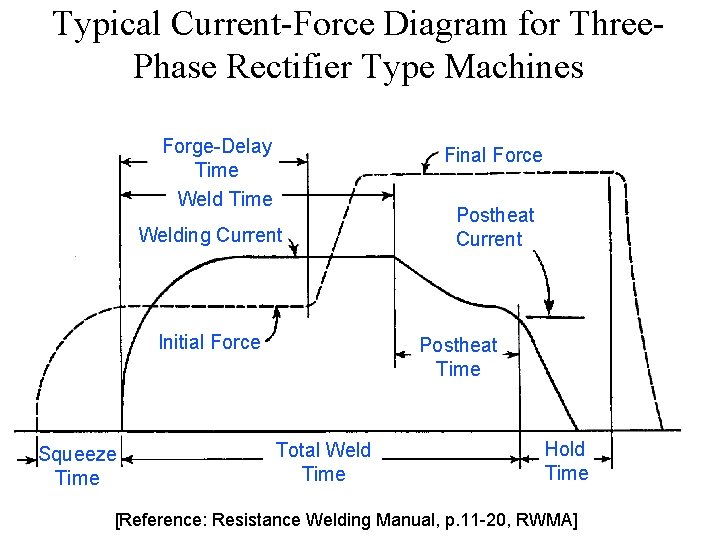
Typical Current-Force Diagram for Three. Phase Rectifier Type Machines Forge-Delay Time Weld Time Final Force Welding Current Initial Force Squeeze Time Postheat Current Postheat Time Total Weld Time Hold Time [Reference: Resistance Welding Manual, p. 11 -20, RWMA]
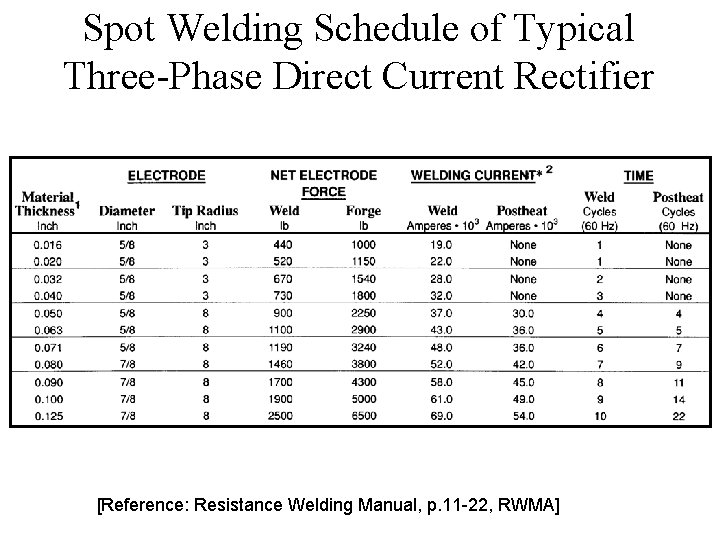
Spot Welding Schedule of Typical Three-Phase Direct Current Rectifier [Reference: Resistance Welding Manual, p. 11 -22, RWMA]
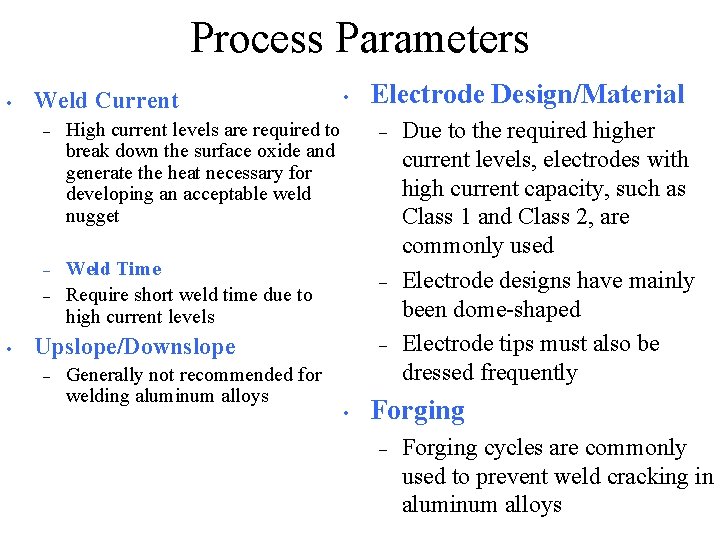
Process Parameters • Weld Current – High current levels are required to break down the surface oxide and generate the heat necessary for developing an acceptable weld nugget – Weld Time Require short weld time due to high current levels – • • – – Upslope/Downslope – Generally not recommended for welding aluminum alloys Electrode Design/Material – • Due to the required higher current levels, electrodes with high current capacity, such as Class 1 and Class 2, are commonly used Electrode designs have mainly been dome-shaped Electrode tips must also be dressed frequently Forging – Forging cycles are commonly used to prevent weld cracking in aluminum alloys
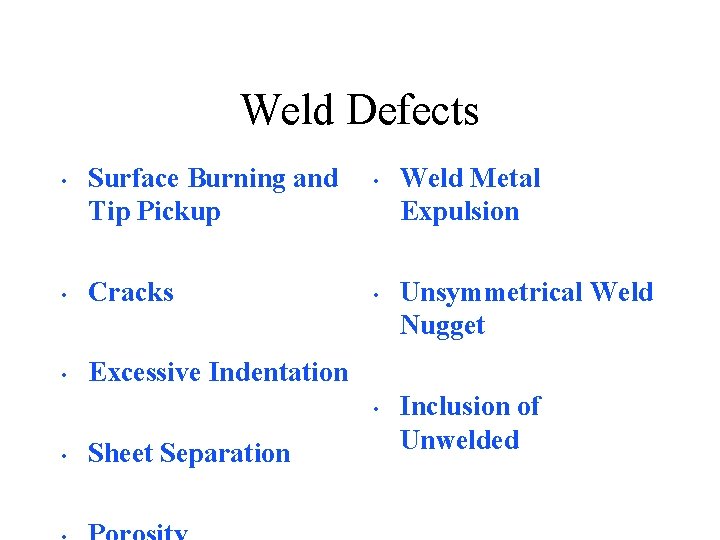
Weld Defects • Surface Burning and Tip Pickup • Cracks • Excessive Indentation • • Sheet Separation Weld Metal Expulsion Unsymmetrical Weld Nugget Inclusion of Unwelded
Surface Burning and Tip Pickup [Remedy Those Conditions] [Cause] • Surface burning is caused • Improper surface conditions • Electrode skidding by excessive heat on the metal surface under the • Improper Electrode Material electrode and is indicated - conductivity too low by burned, pitted and • Dirty or improper cleaned discolored welds. electrodes • Excessive electrode pickup • Excessive “weld time” is caused primarily by the • Excessive welding current same factors. • Inadequate welding force
Cracks [Cause] • Internal and external cracks in welds, generally caused by improper thermal and pressure conditions, are observed in the weld structure and surface, respectively. [Remedy Those Conditions] • • Excessive penetration Insufficient force Improper rate of current rise Improper electrode cooling Improper electrode contour Delayed application of forging force Electrode skidding
Excessive Indentation [Cause] • Excessive indentation, generally caused by improper force application, is indicated by depression on the weld surface. [Remedy Those Conditions] • • • Excessive force Weld metal expulsion Improper electrode contour Excessive surface heating Improper forging cycle Excessive Welding Current
Sheet Separation [Cause] • Excessive sheet separation, generally caused by poor fitup of parts and excessive surface deformation, is indicated by a wide separation of the base metal adjacent to the weld. [Remedy Those Conditions] • • Excessive force Improper fitup of parts Weld metal expulsion Incorrect electrode contour Excessive welding current Tip misalignment Excessive “weld time”
Porosity [Cause] • A porous weld structure, generally caused by improper application of heat and force, is observed by sectioning and etching the weld. [Remedy Those Conditions] • • • Insufficient “weld time” Improper rate of current rise Improper electrode contour Incorrect sequencing of weld and forging force Insufficient force
Weld Metal Expulsion [Cause] • Weld expulsion, generally caused by extreme heat and improper force, is indicated by expelled metal from the weld. [Remedy Those Conditions] • • Insufficient force Tip misalignment Erratic contact resistance Foreign substance at faying surface Electrode skidding Excessive welding current Excessive “weld time”
Unsymmetrical Weld Nugget [Cause] • Unsymmetrical welds, generally caused by unsymmetrical gauge combination, improper electrode contour, poor fitting workpiece or surface preparation, may be observed by sectioning the weld. [Remedy Those Conditions] • • • Improper electrode contour Inadequate surface preparation Improper fitup of workpieces Electrode misalignment Electrode skidding