
Spot the Differences 14 Title Humidity Notes EQ



- Slides: 21
Spot the Differences (14)
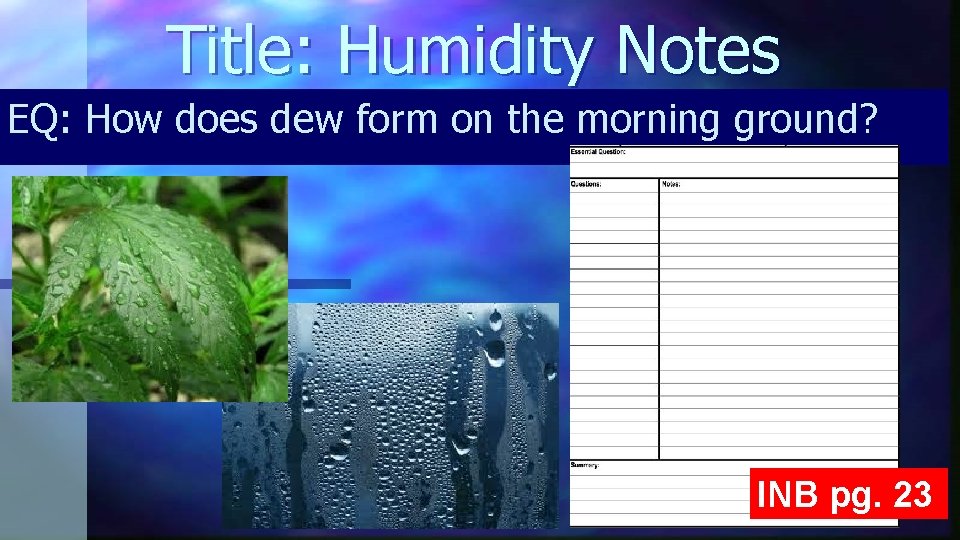
Title: Humidity Notes EQ: How does dew form on the morning ground? INB pg. 23
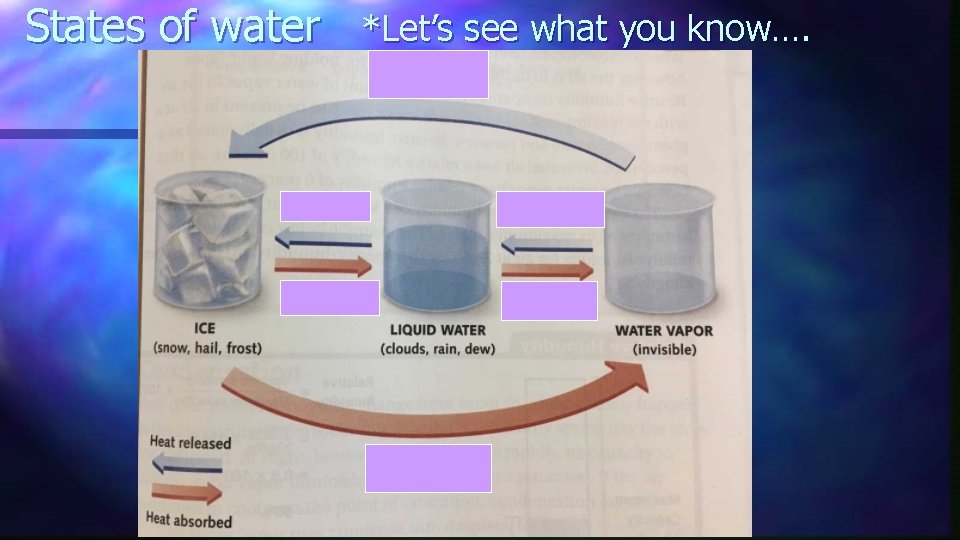
States of water *Let’s see what you know….
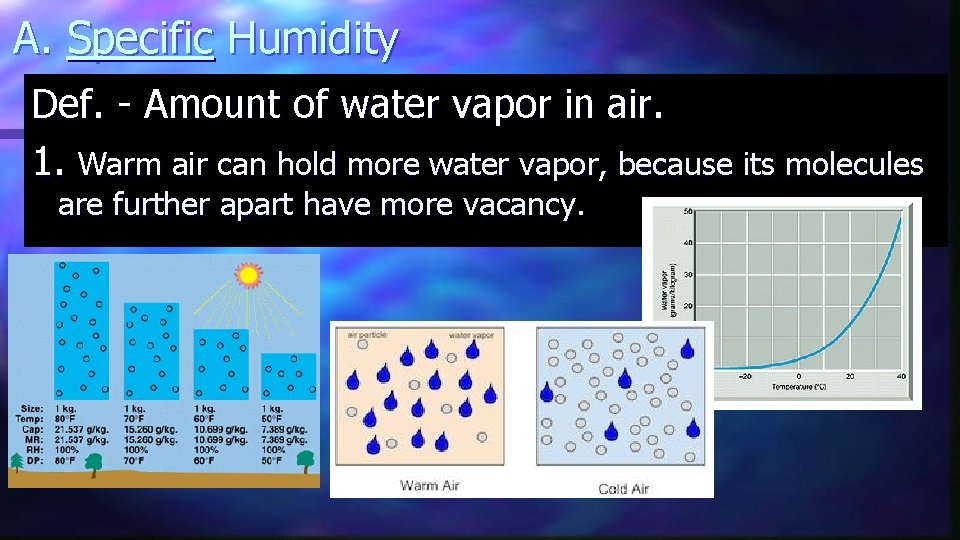
A. Specific Humidity Def. - Amount of water vapor in air. 1. Warm air can hold more water vapor, because its molecules are further apart have more vacancy.
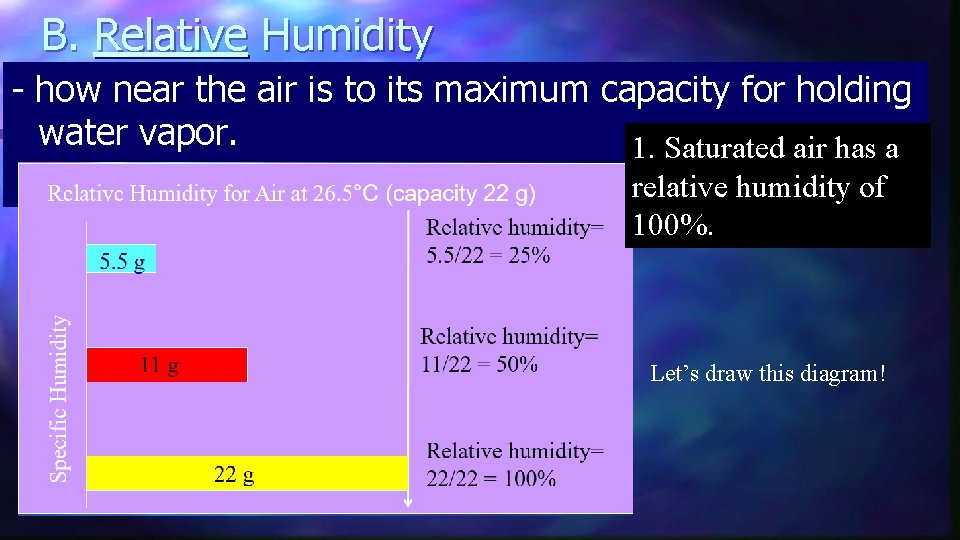
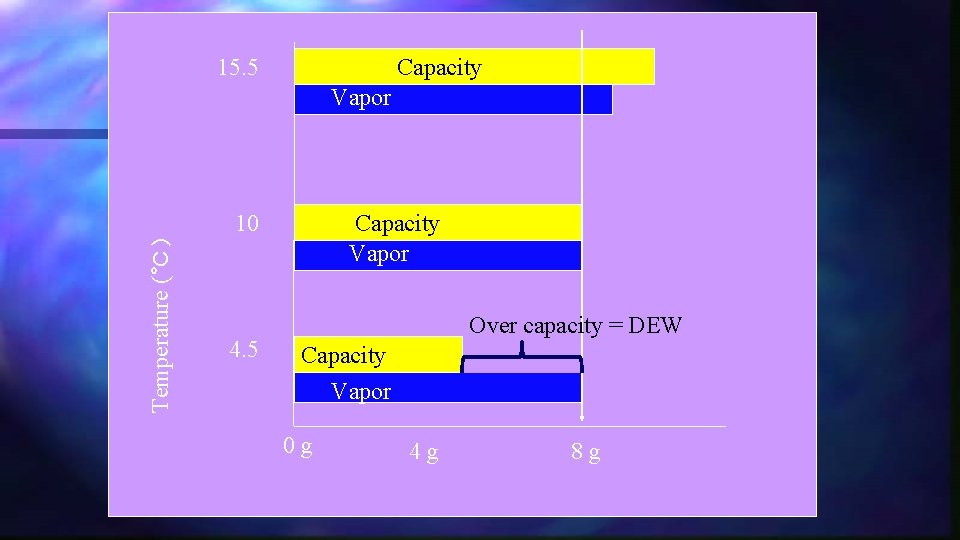
B. Relative Humidity - how near the air is to its maximum capacity for holding water vapor. 1. Saturated air has a relative humidity of 100%. Let’s draw this diagram!
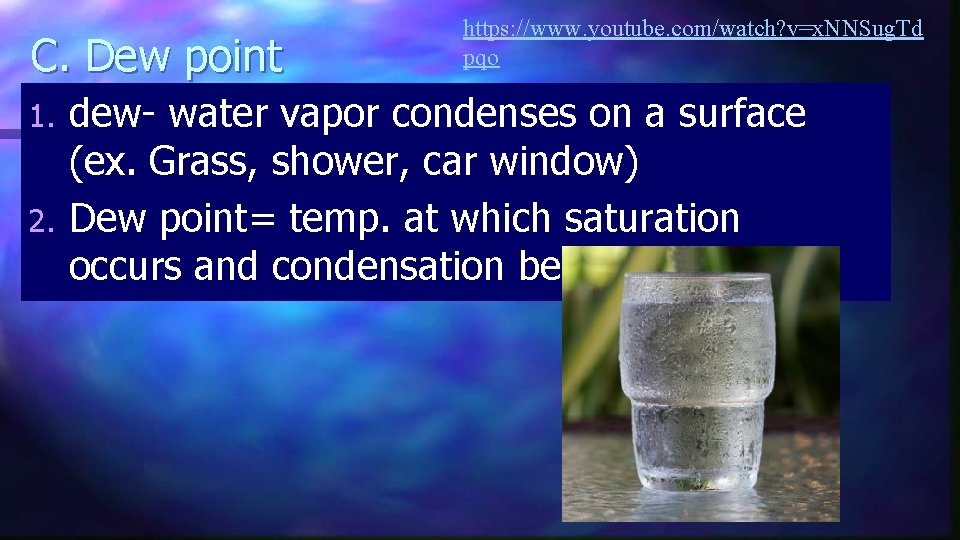
C. Dew point https: //www. youtube. com/watch? v=x. NNSug. Td pqo dew- water vapor condenses on a surface (ex. Grass, shower, car window) 2. Dew point= temp. at which saturation occurs and condensation begins. 1.
Earth Science Lab Pg. 24: Humidity & Dew Point Lab
Pre-Lab Questions 1. 2. 3. 4. 5. Compare specific humidity vs. relative humidity. Draw the relative humidity diagram on pg. 392 (blue txt) to help support your answer to question #1. Define dew point in your own terms. Read the “Formation of Dew and Frost” on pg. 394 Sketch a diagram on why dew forms on grass & leaves. The amount of dew decreases during the daytime. Explain why this occurs. (Hint: think about what temperature holds more water and when dew forms. )
15. 5 Capacity Temperature (°C) Vapor 10 4. 5 Capacity Vapor Over capacity = DEW Capacity Vapor 0 g 4 g 8 g
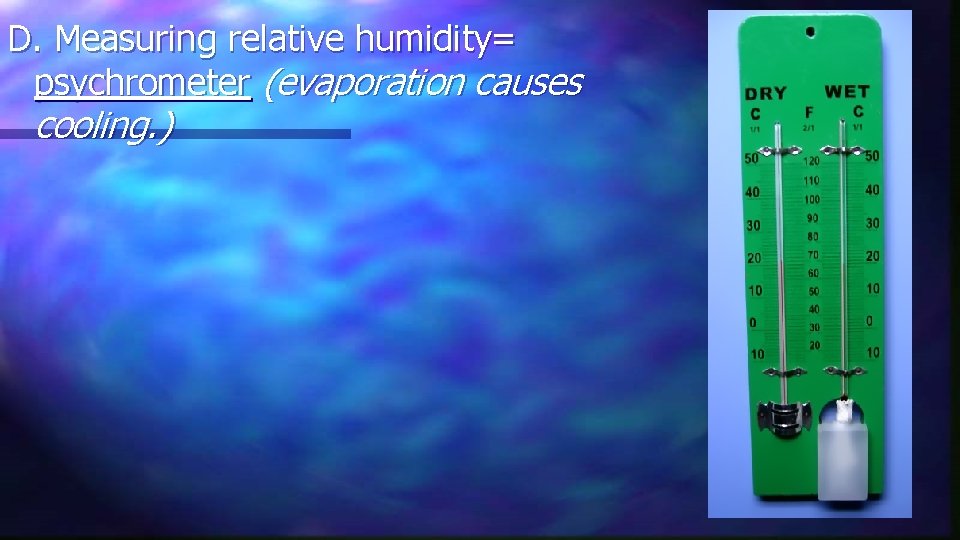
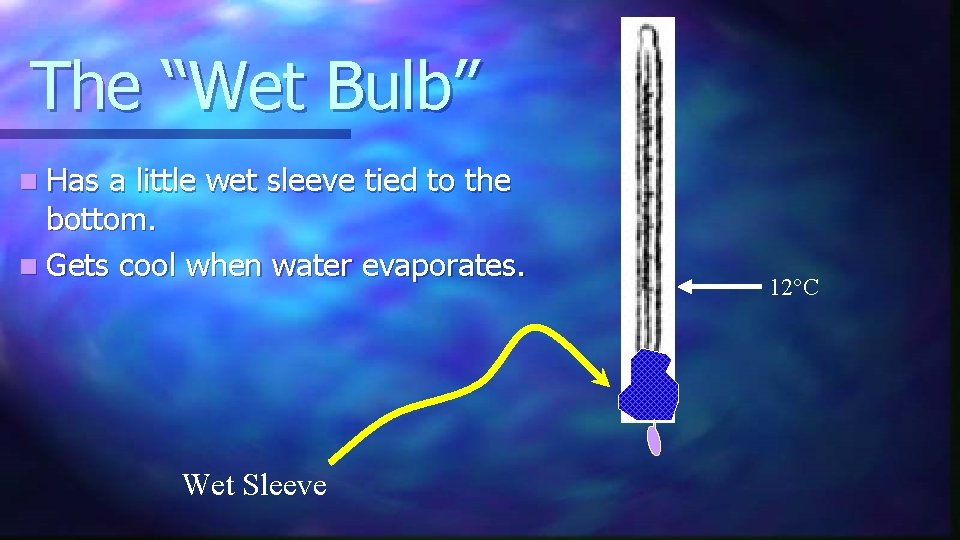
D. Measuring relative humidity= psychrometer (evaporation causes cooling. )
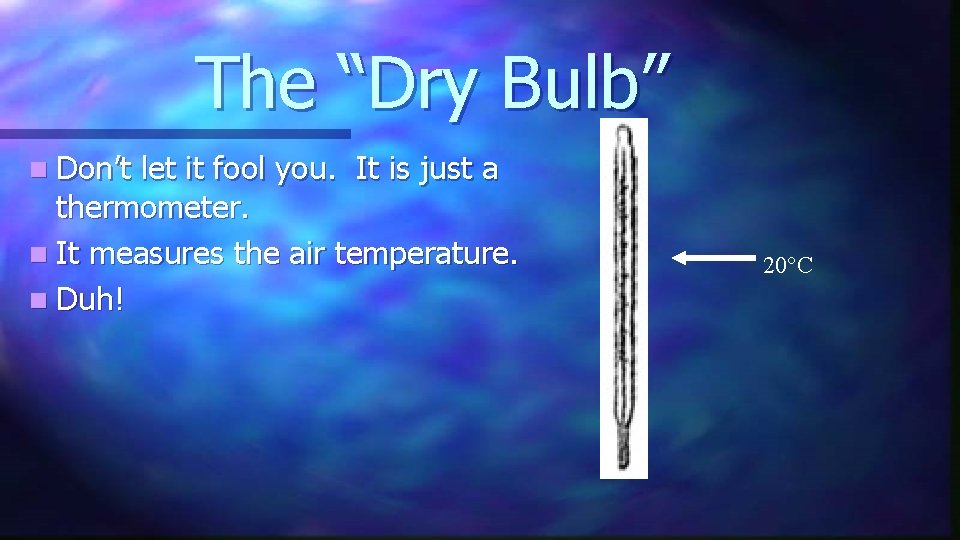
The “Dry Bulb” n Don’t let it fool you. It is just a thermometer. n It measures the air temperature. n Duh! 20°C
The “Wet Bulb” n Has a little wet sleeve tied to the bottom. n Gets cool when water evaporates. Wet Sleeve 12°C
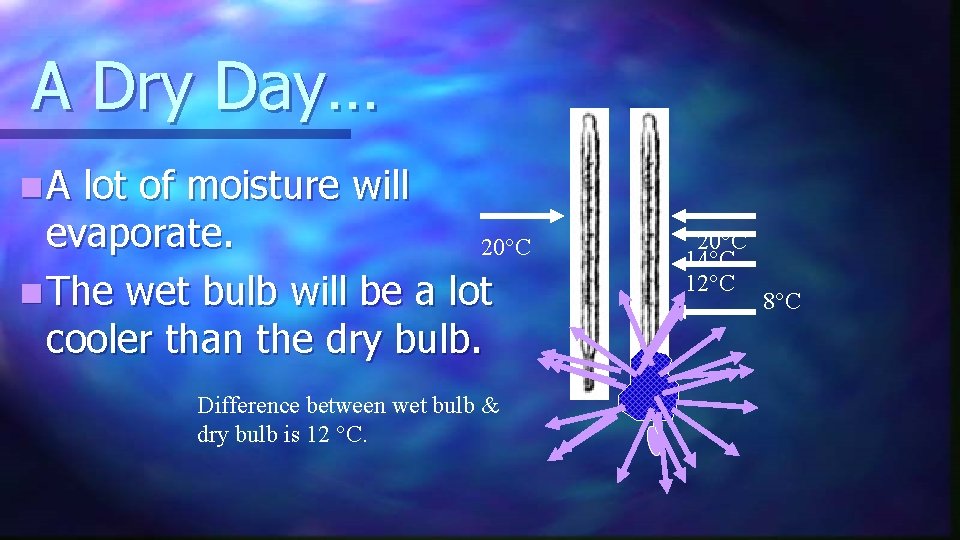
A Dry Day… n. A lot of moisture will evaporate. 20°C n The wet bulb will be a lot cooler than the dry bulb. Difference between wet bulb & dry bulb is 12 °C. 20°C 14°C 12°C 8°C
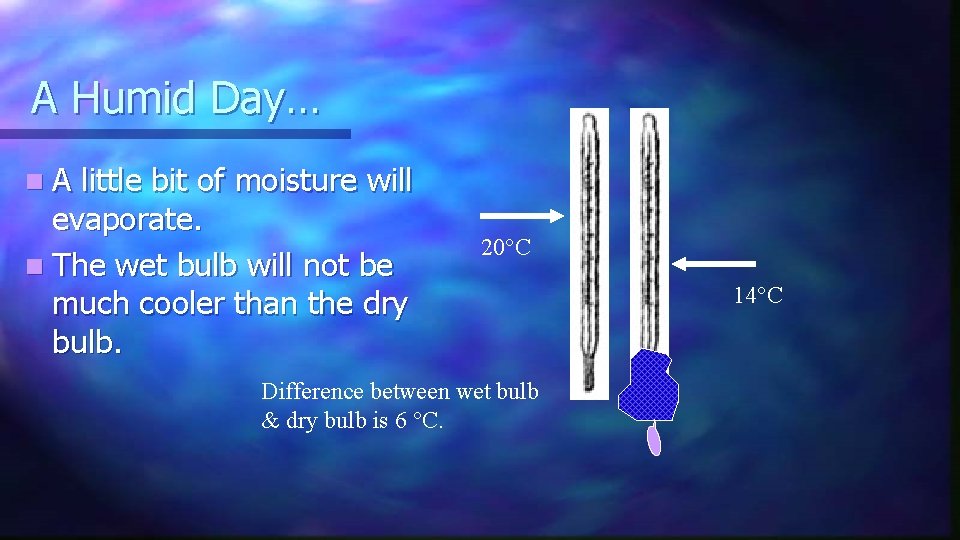
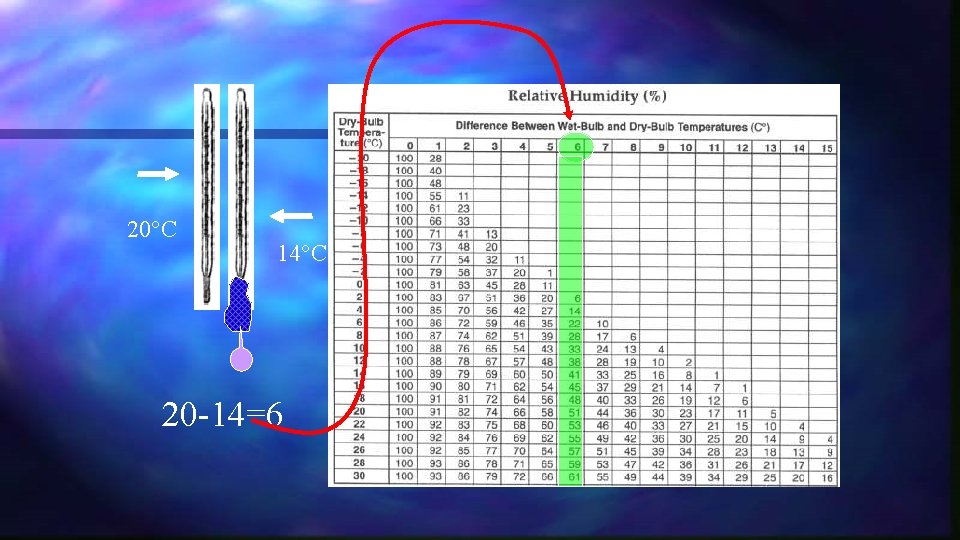
A Humid Day… n. A little bit of moisture will evaporate. n The wet bulb will not be much cooler than the dry bulb. 20°C Difference between wet bulb & dry bulb is 6 °C. 14°C
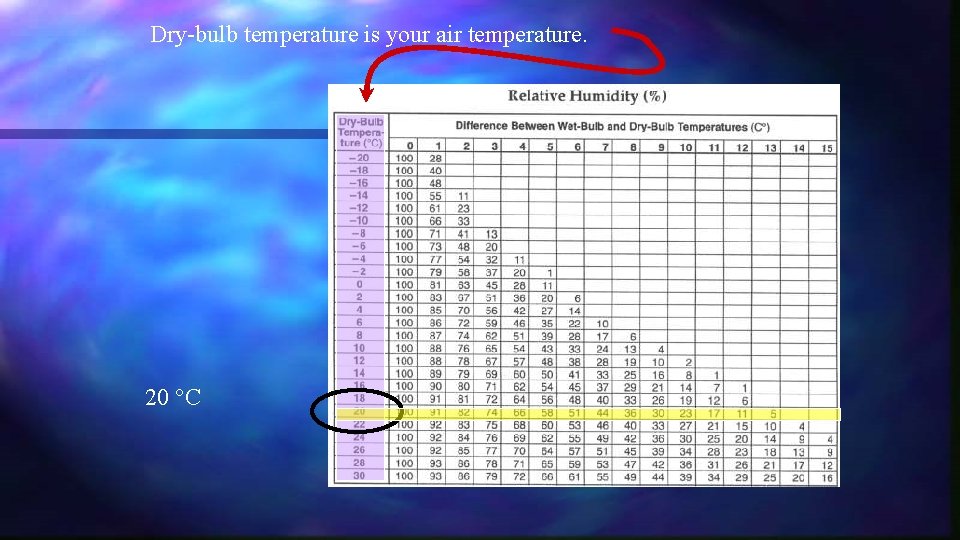
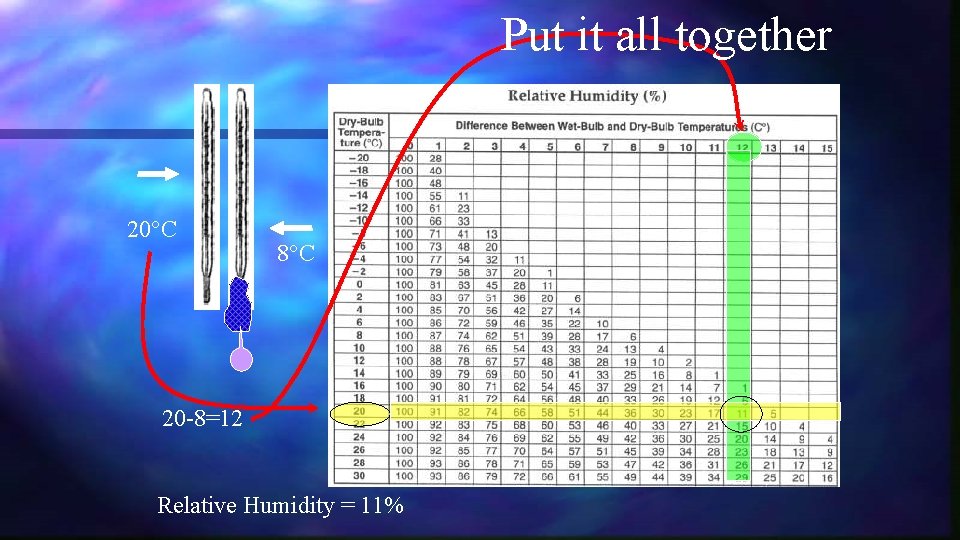
Dry-bulb temperature is your air temperature. 20 °C
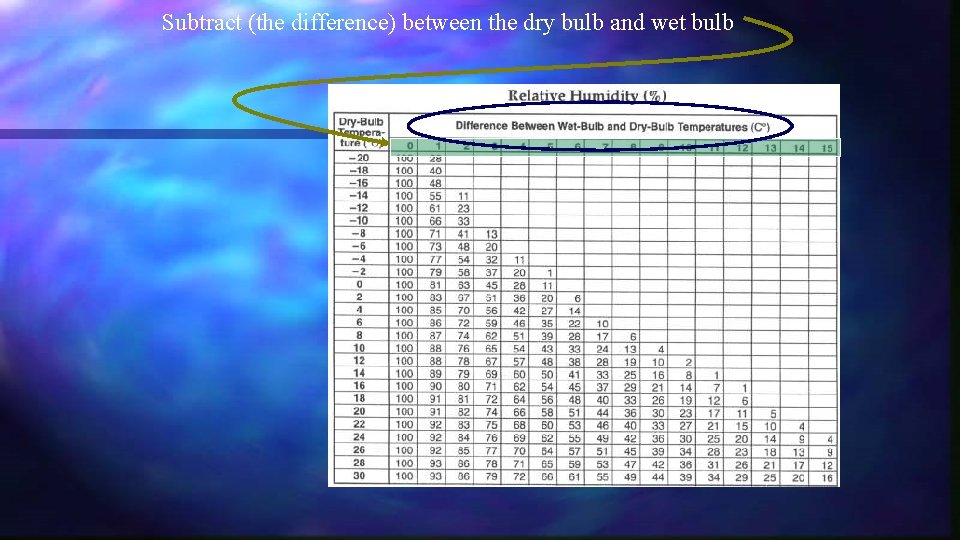
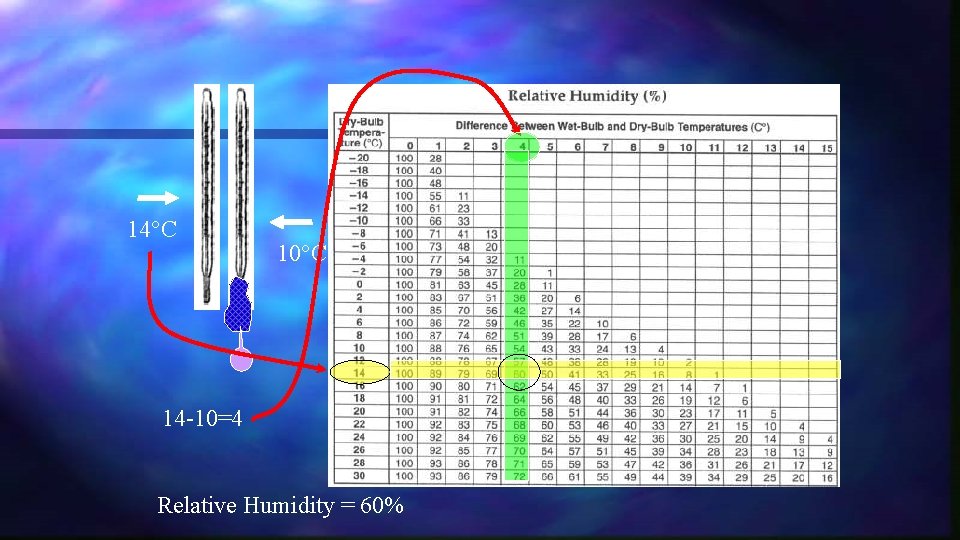
Subtract (the difference) between the dry bulb and wet bulb
20°C 14°C 20 -14=6
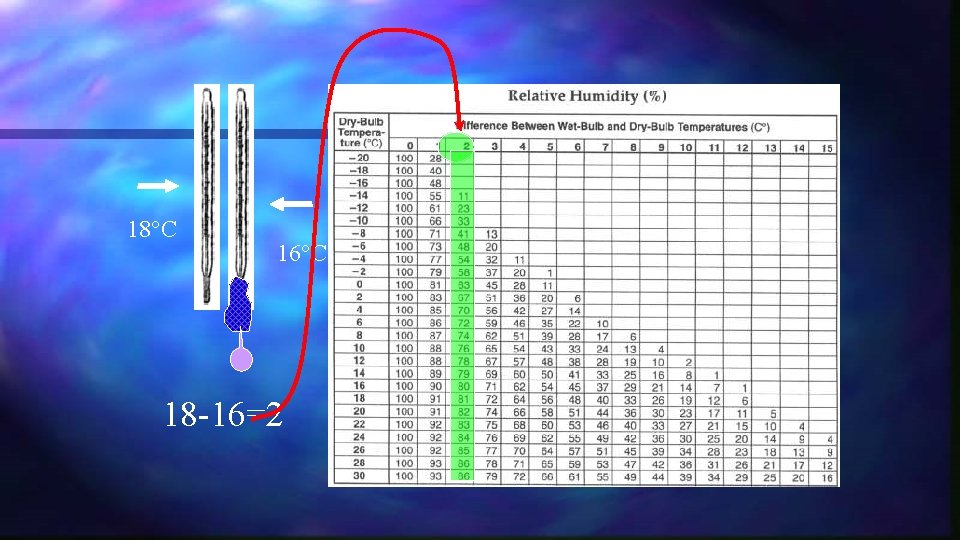
18°C 16°C 18 -16=2
Put it all together 20°C 8°C 20 -8=12 Relative Humidity = 11%
14°C 10°C 14 -10=4 Relative Humidity = 60%
Lab Instructions: 1. 2. 3. 4. Copy Data Table A & B pg. 519 (black text) into your comp. book. Draw the procedure for Part A & Part B Following instructions PRECISELY Answer 1 -3 “Analysis & Conclusion” questions