
SPORTS PSYCHOLOGY GROUP DYNAMICS IN SPORTS CONTENTS Introduction




- Slides: 21
SPORTS PSYCHOLOGY
GROUP DYNAMICS IN SPORTS
CONTENTS Introduction Groups Linear perspective Cyclic perspective Pendular perspective Group structure Social loafing Violence and aggression in sports
INTRODUCTION ØA number of people or things that are located, gathered or classed together. ØThree theories of Group Development ØGroup Structure ØIt is the phenomenon of a person exerting less effort to achieve a goal when they work in group than they work alone. ØAggression is defined as any behavior directed toward intentionally harming or injuring another living being. ØExercise and Psychological well-being
DEFINITION OF GROUP A number of people or things that are located, gathered, or classed together. A collection of individuals who have regular contact and frequent interactions, mutual influence, common feelings and who work together to achieve a common set of goals.
THREE THEORIES OF GROUP DEVELOPMENT Linear Perspective Cyclic(Life cycle) Perspective Pendular Perspective
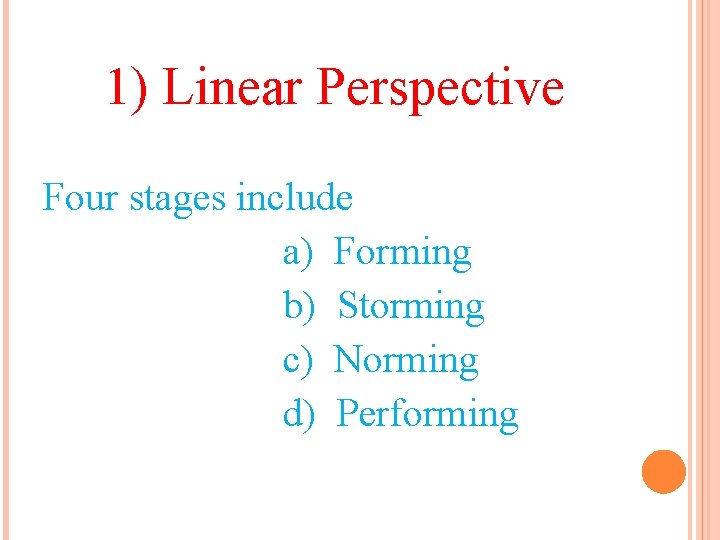
1) Linear Perspective Four stages include a) Forming b) Storming c) Norming d) Performing
2)Cyclic Or Life Cycle Perspective The life cycle have common in assumption that groups that develop in a manner similar to the life cycle of individuals. üInclude birth, growth and death ü
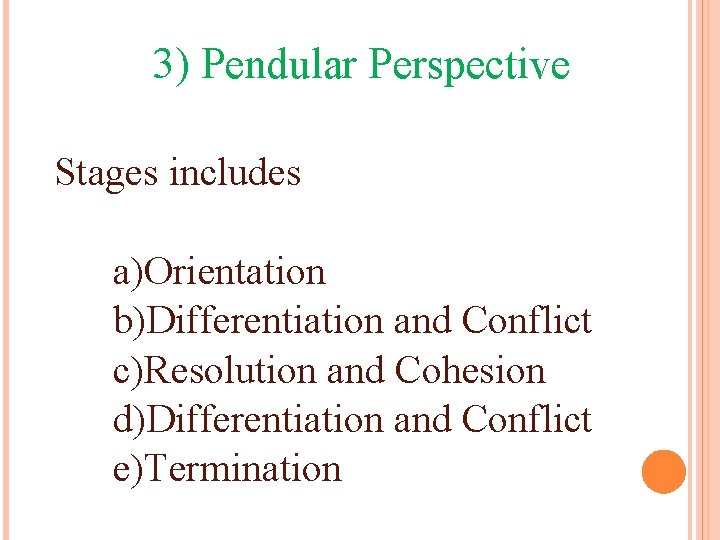
3) Pendular Perspective Stages includes a)Orientation b)Differentiation and Conflict c)Resolution and Cohesion d)Differentiation and Conflict e)Termination
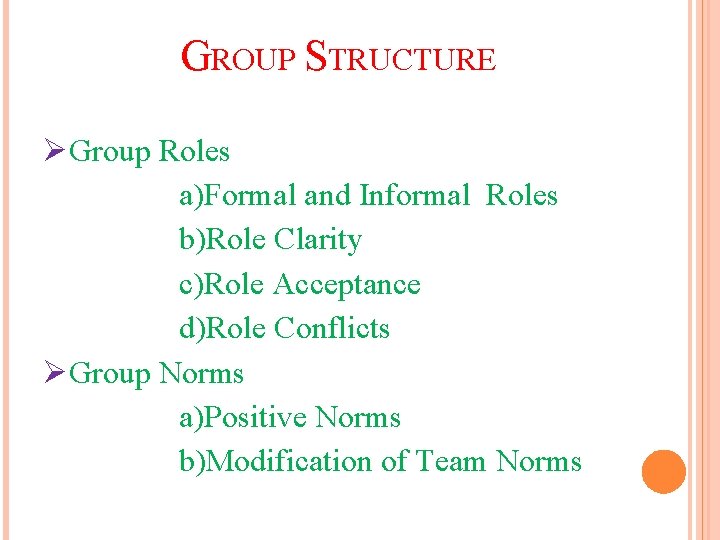
GROUP STRUCTURE ØGroup Roles a)Formal and Informal Roles b)Role Clarity c)Role Acceptance d)Role Conflicts ØGroup Norms a)Positive Norms b)Modification of Team Norms
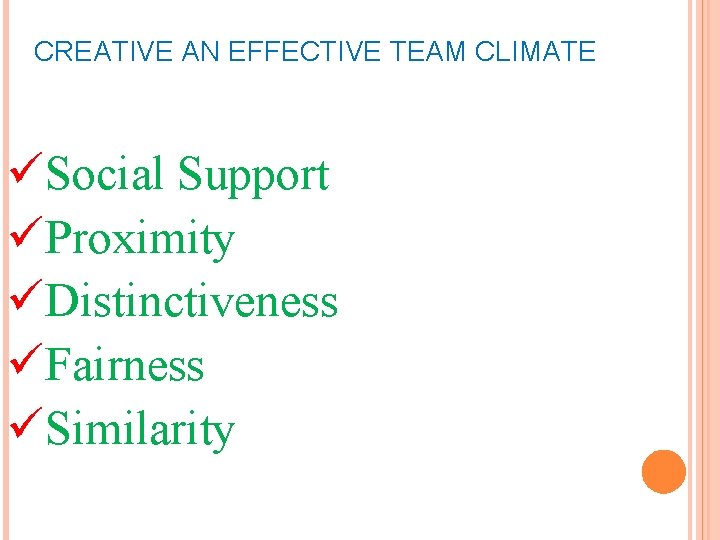
CREATIVE AN EFFECTIVE TEAM CLIMATE üSocial Support üProximity üDistinctiveness üFairness üSimilarity
Social Loafing v. It is the phenomenon of a person exerting less effort to achieve a goal when they work in group than they work alone.
VIOLENCE IN SPORTS üSports can bring out the best in people through teamwork, shared goals, competition and motivation, they also can be violent. üViolence in Sports and violence by athletes out of sport present a challenge to the field. üAs a part of Psychology Professionals we must prevent and deal with violence in and out sport at both individual and institutional level.
AGGRESSION IN SPORTS ØAggression is defined as any behavior directed toward intentionally harming or injuring another living being. ØCriteria for Aggression a)It is a behavior. b)It involve intent c)It involve harm or injury d)it is directed toward a living organism
Understanding the Causes of Aggression üInstinct Theory üFrustration-Aggression Theory üSocial Learning Theory üGeneral Aggression Model
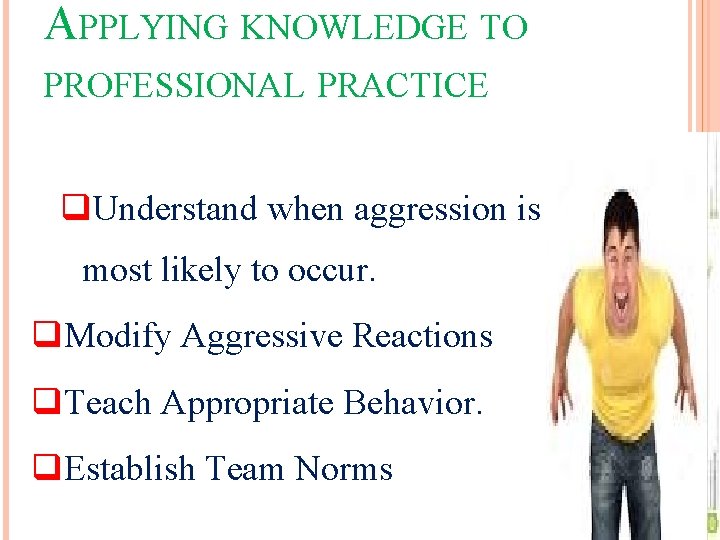
APPLYING KNOWLEDGE TO PROFESSIONAL PRACTICE q. Understand when aggression is most likely to occur. q. Modify Aggressive Reactions q. Teach Appropriate Behavior. q. Establish Team Norms
EXERCISE AND PSYCHOLOGICAL WELL-BEING ØReasons to exercise a)Weight Control b)Reduced Risk of Cardiovascular Disease c)Reduced in stress and Depression d)Enjoyment e)Enhancement of Self-Esteem f) Opporchunity to Socialize
REASONS FOR NOT EXERCISING a)Perceived Lack of Time b) Lack of Energy c)Lack of Motivation
CONCLUSION Group Dynamics Theories of Development Group Structure Creating Effective team climate Social Loafing Violence and Aggression in Sports Causes Of Aggression Exercise and Psychological well-being
REFERENCES v. Weinberg, R. S and Gould, D. (2011). Foundation of sports and Exercise Psychology(5 th ed). Human Kinetics. United States of America. vhttps: //en. oxforddictionaries. com vhttps: //en. mwikipedia. org>wiki>socialloafing. vwww. apadivision. org/division.