
Sports Injuries Thats a bad day Tissue Properties
Sports Injuries That's a bad day
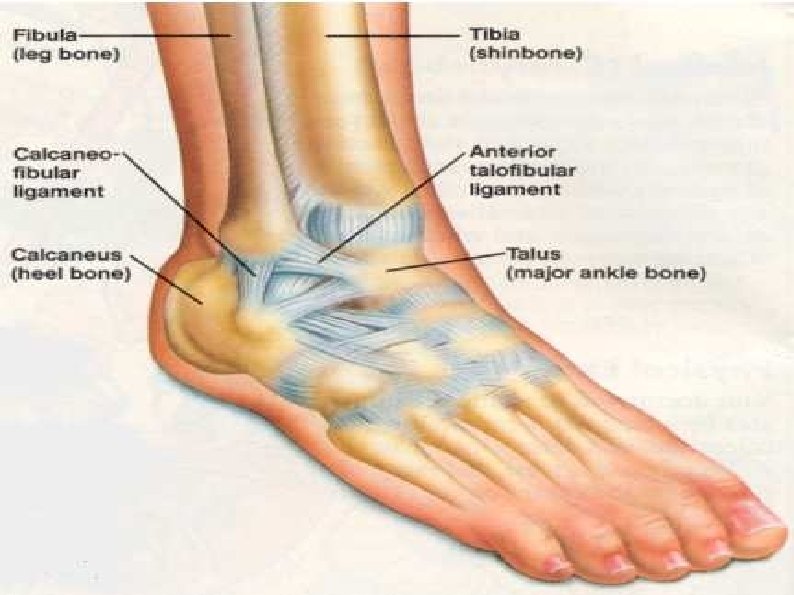
Tissue Properties - Ligaments Attaches bone to bone Made up of tough bands of white, fibrous tissues Allow a certain amount of stretch but not as much as tendons Referred to as static stabilizers of joints Stronger ligament = stronger joint When ligaments reach their threshold they will stretch minimally or tear
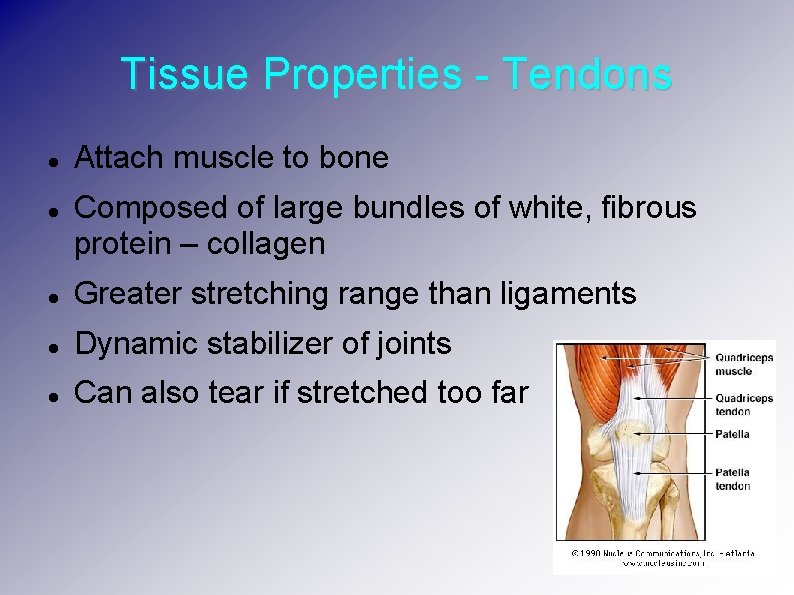
Tissue Properties - Tendons Attach muscle to bone Composed of large bundles of white, fibrous protein – collagen Greater stretching range than ligaments Dynamic stabilizer of joints Can also tear if stretched too far
Vascularity Refers to the amount of supplied blood a tissue has or requires Tendons and ligaments are avascular Their nutritional needs are not met through blood Injuries may take longer to heal due to lack of blood supply
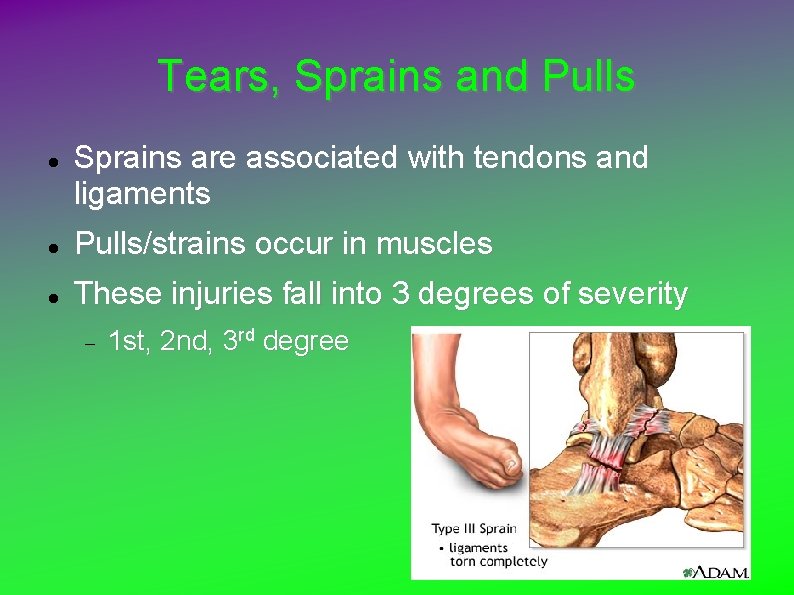
Tears, Sprains and Pulls Sprains are associated with tendons and ligaments Pulls/strains occur in muscles These injuries fall into 3 degrees of severity 1 st, 2 nd, 3 rd degree
1 st, 2 nd, rd 3 Degree Injuries 1 st degree: mild, least severe, will take a short amount of time to heal 2 nd degree: moderate in severity, will require treatment by a physiotherapist 3 rd degree: most severe, may require surgery, could take 6 months to a year to recover
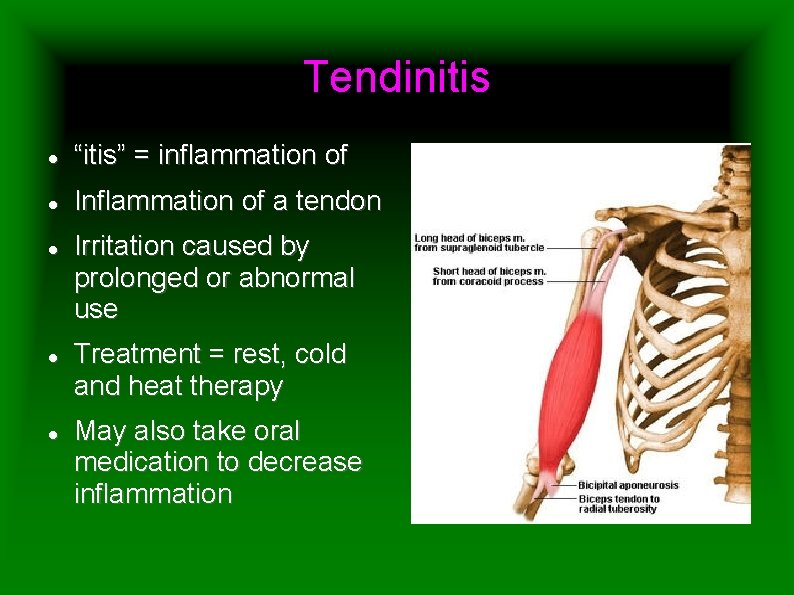
Tendinitis “itis” = inflammation of Inflammation of a tendon Irritation caused by prolonged or abnormal use Treatment = rest, cold and heat therapy May also take oral medication to decrease inflammation
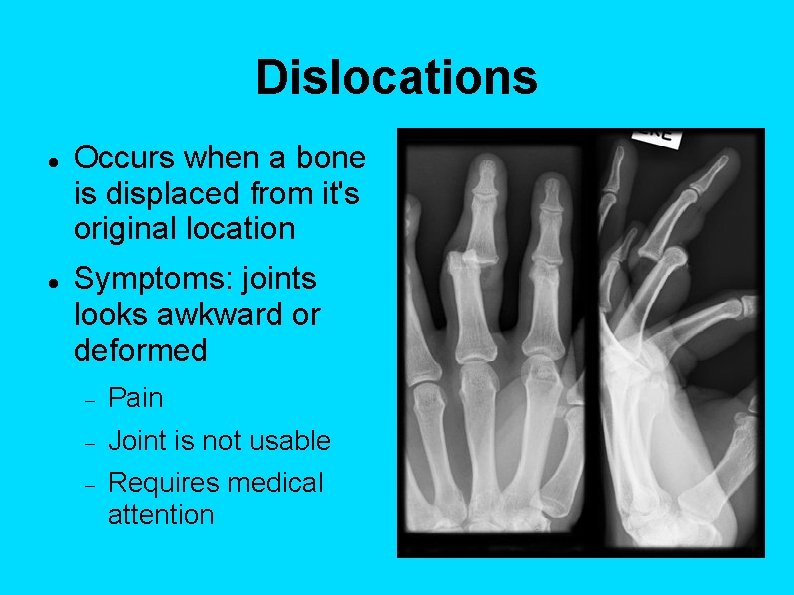
Dislocations Occurs when a bone is displaced from it's original location Symptoms: joints looks awkward or deformed Pain Joint is not usable Requires medical attention
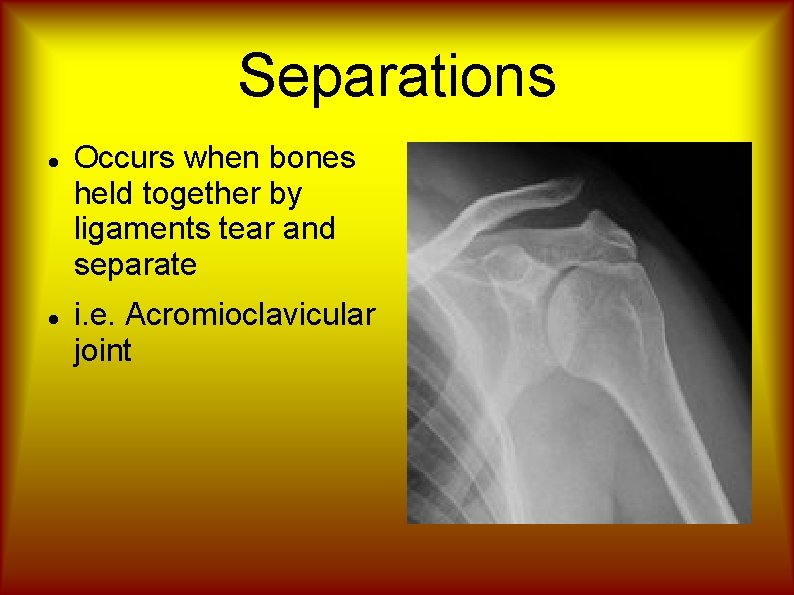
Separations Occurs when bones held together by ligaments tear and separate i. e. Acromioclavicular joint
Cartilage 3 main types of cartilage: Hyaline cartilage – most widespread, found at the ends of bones and free-moving joints, at the ends of the ribs, in the nose, larynx, trachea, and bronchi Fibrocartilage – tough, mainly found between the vertebrae Elastic cartilage – makes up external ear, auditory tube of middle ear, and epiglottis Avascular therefore injuries take longer to heal
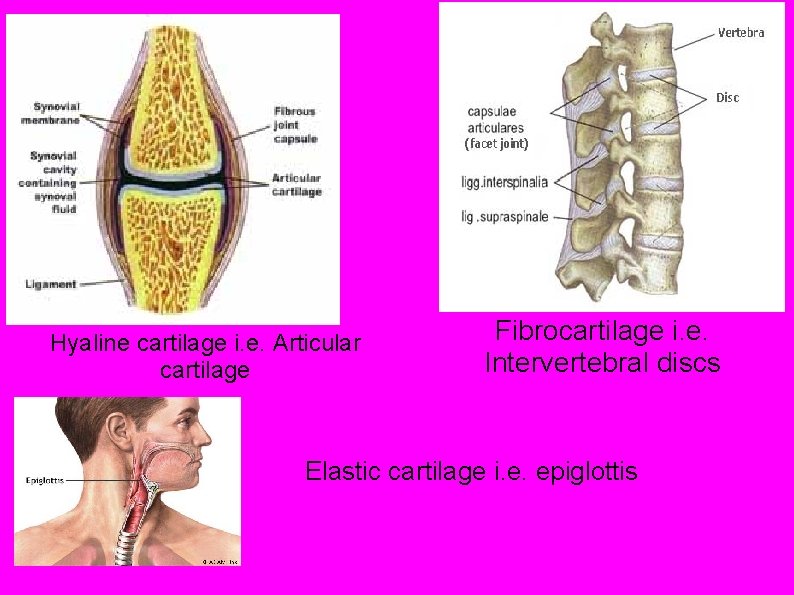
Hyaline cartilage i. e. Articular cartilage Fibrocartilage i. e. Intervertebral discs Elastic cartilage i. e. epiglottis
Cartilage Damage Usually referred to as “torn cartilage” Occurs frequently in the knee especially among athletes who make a lot of lateral movement i. e. Basketball and football Arthroscopy: a surgical procedure in which a few small incisions are made so that small fibre optic camera devices can assess the damage http: //www. youtube. com/watch? v=kp. W 2 MOOI 5 yw
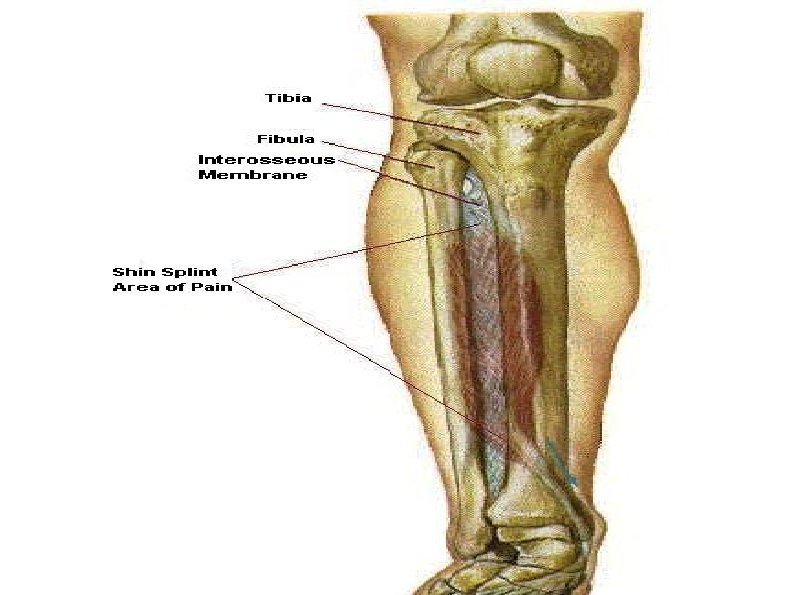
Shin Splints Result of overuse without adequate time for recovery Occurs on the medial or lateral side of the tibia on its shaft Caused by the tearing of the interosseous membrane (between the tibia and fibula) or the periosteum Similar to a stress fracture Can be caused by: training surface, frequency, duration, intensity, old running shoes, etc.
In your notes. . . What is the difference between a tendon and a ligament? Define vascularity and explain its importance What is the difference between a pull/strain and a sprain? List and describe the 3 different degrees on these injuries What are the 3 types of cartilage and how do they differ?
- Slides: 16