
Sport and the Media Contents 1 Sports and






- Slides: 58
Sport and the Media
Contents 1. Sports and Media 2. The Profession of Sports Journalism 3. Sports Writing (Coverage) and Journalism 4. Sports Broadcasting 5. Sports Photography 6. Careers in Sports Media
Media • A form of mass communication, usually comprising the press, television and radio, although it can also include cinema. • The media has a direct influence on the values and morals of a society because it reaches such a large proportion of the population.
In the Past • Prior to the known media of today, people had to rely on word of mouth and the limited number of literate people to tell them when sports fixtures would take place. • With the introduction of compulsory education and the subsequent increases in literacy, newspapers and sports journals became more popular as a way of reporting about sport and notifying the population about an event. • Along side this, came shorter working hours and better transportation to allow people to attend events. • This is the introduction of the media into sport, about 1820.
Today • Sports information can be gained from newspapers • Radio (The BBC began live broadcasting in 1920 s, without advertiser’s influences unlike in USA) • Television (including Sky channels) • Internet
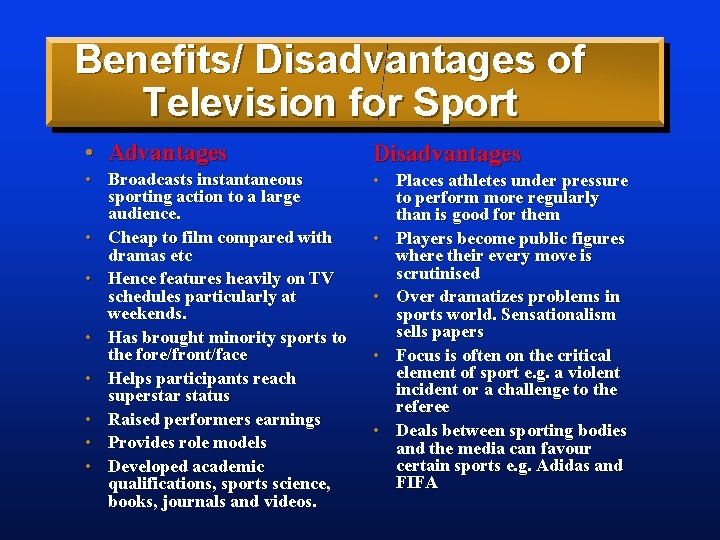
Benefits/ Disadvantages of Television for Sport • Advantages Disadvantages • Broadcasts instantaneous sporting action to a large audience. • Cheap to film compared with dramas etc • Hence features heavily on TV schedules particularly at weekends. • Has brought minority sports to the fore/front/face • Helps participants reach superstar status • Raised performers earnings • Provides role models • Developed academic qualifications, sports science, books, journals and videos. • Places athletes under pressure to perform more regularly than is good for them • Players become public figures where their every move is scrutinised • Over dramatizes problems in sports world. Sensationalism sells papers • Focus is often on the critical element of sport e. g. a violent incident or a challenge to the referee • Deals between sporting bodies and the media can favour certain sports e. g. Adidas and FIFA
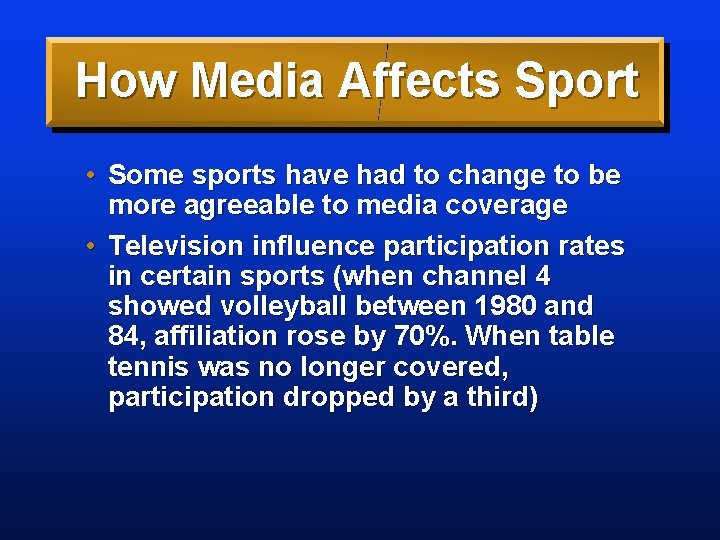
How Media Affects Sport • Some sports have had to change to be more agreeable to media coverage • Television influence participation rates in certain sports (when channel 4 showed volleyball between 1980 and 84, affiliation rose by 70%. When table tennis was no longer covered, participation dropped by a third)
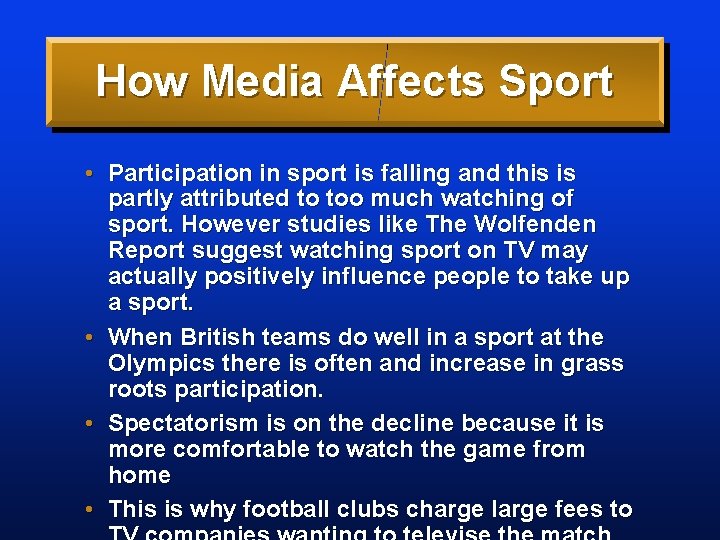
How Media Affects Sport • Participation in sport is falling and this is partly attributed to too much watching of sport. However studies like The Wolfenden Report suggest watching sport on TV may actually positively influence people to take up a sport. • When British teams do well in a sport at the Olympics there is often and increase in grass roots participation. • Spectatorism is on the decline because it is more comfortable to watch the game from home • This is why football clubs charge large fees to
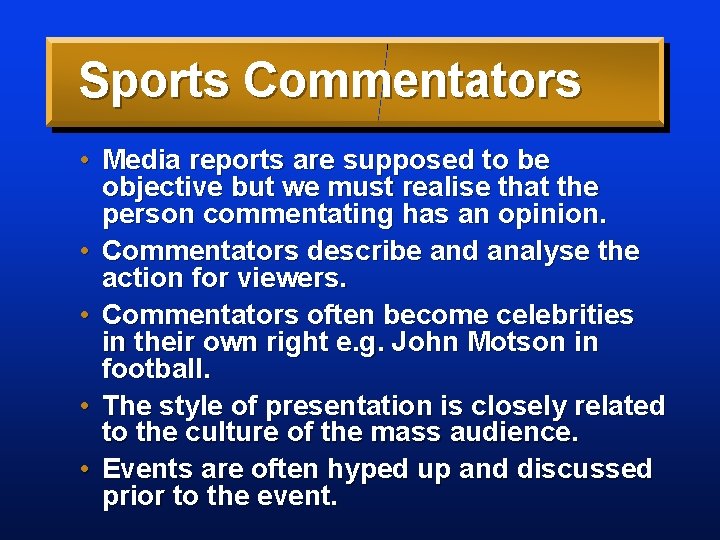
Sports Commentators • Media reports are supposed to be objective but we must realise that the person commentating has an opinion. • Commentators describe and analyse the action for viewers. • Commentators often become celebrities in their own right e. g. John Motson in football. • The style of presentation is closely related to the culture of the mass audience. • Events are often hyped up and discussed prior to the event.
Influence of Technology • With cameras being placed in gaols, under water and in racing cars, the viewer at home gets a more detailed coverage than a live spectator. • Action replays and freeze frames mean a detailed analysis can take place even minutes after the goal. • Satellite communication means international events can be screened live to all homes. • The broadcasting Act of 1990 declared all rights to broadcast sport could be sold to the highest bidder.
Media and Culture • The mass media both reflects and shapes a country’s culture by establishing and maintaining stereotypes. • Even quality newspapers are dominated by a few, male dominated sports with gambling associations. Women and ethnic minorities are rarely shown. • War-like headlines about beating the French or Germans sensationalise sport and refer back to sports historical links with war.
Media and Social Values • TV coverage often concentrates on the conduct of players and is generally sympathetic to officials. • Male sports and male commentators tend to get more coverage, with females only commenting on female sports. Non-contact female sports e. g. gymnastics are given more positive media coverage than contact sports. • The media generates nationalism, particularly at International events, with symbols of nationality clear to see. • Media maintains stereotypes e. g. black people excel in sports but not other areas of their life.
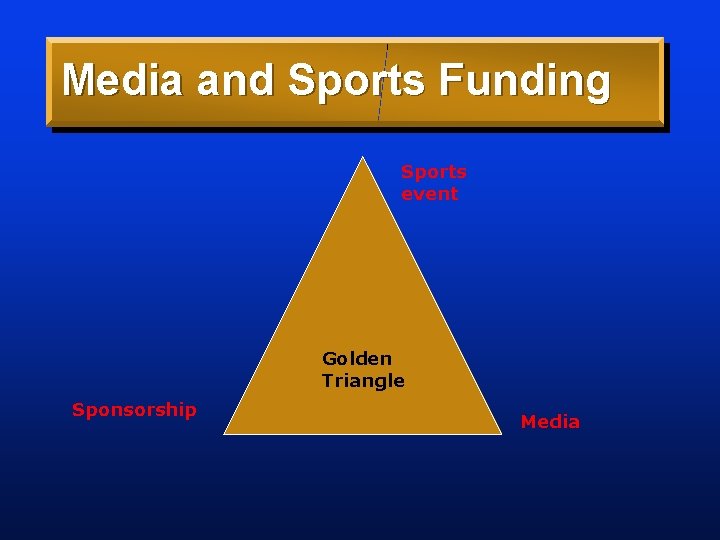
Media and Sports Funding Sports event Golden Triangle Sponsorship Media
Media and Sports Funding • TV companies pay huge sums to cover sports and the advertisers and sponsors back the sport because of the exposure they will get in the media. • Individuals train for sport because the media gives them the stage on which to demonstrate their talents.
Media and Sports Funding • Media coverage brings in the sponsors and advertising to sports (essential for sports to be practicable) • Sponsorship of sports is a cheap form of advertising • Sponsorship funds the sport • Sport attracts paying customers to the media’s presentation
The Profession of Sports Journalism
Definition of Journalism assessing, creating, and presenting news and information. It is also the product of these activities. ” Journalism can be notable from other activities and products by certain identifiable characteristics and practices. These elements not only separate journalism from other forms of communication, they are what make it indispensable to democratic societies. History reveals that the more democratic a society, the more news and information it tends to have.
Sports Journalism • The basic idea of sports journalism is to report about the local (or national) sporting events occurring. • Whether big or small, all events should be covered.
The Sports Journalism • Sports journalism is a form of writing that reports on sporting topics and games. • Sports journalism is an essential element of any news media organization. • Sports journalism includes organizations devoted entirely to sports reporting. • As with reporters on other news beats, sports journalism should involve investigating the story, rather than simply relying on press releases and prepared statements from the sports team, coaching staff, or players. Sports journalists are expected to verify facts given to them by the athletes, teams, leagues, or organizations they are covering.
Sports Journalist Job Description • Sports journalist duties and job description depends on which type of media he / she is working with, whether it is newspaper, magazine, TV, radio or online media. He / she may also find him / herself working as a media coordinator, announcer, or communications representative for a sports association or sports team.
Jobs for Sports Journalist • Sports reporter/writer for print media (newspapers, magazines, etc. ) • Sports reporter/writer for online media (websites, blogs, e-magazines, e-newspapers, etc. ) • Editor of a sports publication (online or print) • Sports broadcaster/host/announcer (TV or radio) • Writer/reporter for sports broadcasts (TV or radio) • Sports broadcast producer or director • Sports information center specialist • Media Representative for an amateur, university or professional sports team • Communications Officer for a sports association • Play-by-play announcer / Commentator
General Duties of a Sports Journalist Editorial Meetings Sports reporters/writers meet with their sports editor to discuss assignments, due dates and publishing schedules. Depending on how frequently the print or online publication is created, editorial meetings may take place daily, weekly or more or less frequently. • Production Sports journalists perform extensive research, conduct interviews and attend events they are covering, such as games, tournaments and press conferences.
General Duties of a Sports Journalist (Cont…) • Prepare for Presentation Sports writers/reporters write articles for publications or scripts for broadcasts. Editors or producers ensure all staff members are able to stick to deadline, answer questions and ensure all content is covered; they may also write articles and scripts themselves. • Presentation/Publication TV/Radio Broadcasters read prepared scripts or provide on the spot commentary, news or play-by-play, while directors ensure the broadcasts run smoothly. Editors ensure the quality of all content and work with designers to present the material effectively in the final print or online publication.
Sports Writing in Journalism
Sports Writing • The basic idea of sports writing in journalism is to report about the local (or national) & International sporting events occurring. • Whether big or small, all events should be covered.
Covering Events • The point of a sports article is to focus on the important events that occurred during the game and the outcome of the game. • Record the most important or exciting parts. Readers find those the most interesting.
Deciding What to Cover? • Try covering all teams at least once in good detail. • Cover as much as you can about each sport or team in each issue. • Consider all successes • In a feature, cover outstanding players and/or achievements
Deciding What to Cover? • Leave some space for off campus sports. • Make sure it’s newsworthy and Timely • Remember: Readers would rather know the why and how rather than the who and what.
Sports Writing – Writing Sports Leads – What to avoid in Sports Leads – Sports Writing Pointers – Reporters guidelines
Writing Sports Leads • Most stories have events that occur in order. It should be that the most interesting or exciting that happened during the event is mentioned first.
What to Avoid in Your Lead • Date of the game- On Wednesday, the wrestling team will… • The name of the school or team- The Punjab University Volleyball team will… • Obvious facts- Once again it is volleyball season… • Any opinion- The baseball team played their best game of the whole season… • Non-newsworthy facts- The swim team competed in the state finals last week…
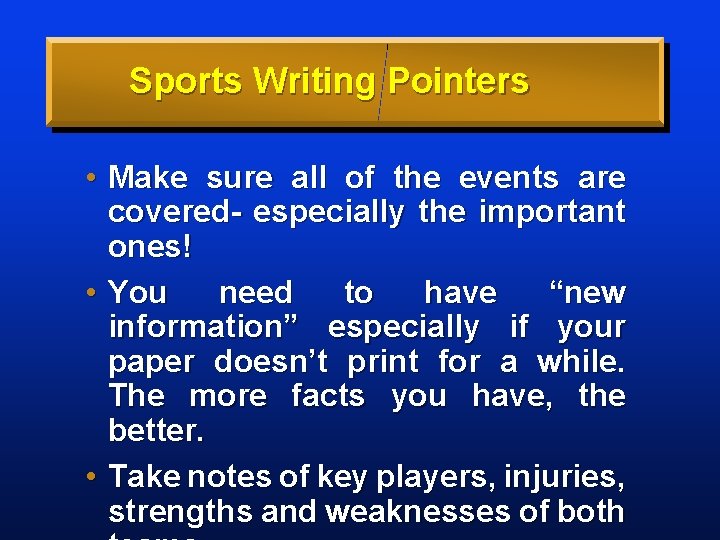
Sports Writing Pointers • Make sure all of the events are covered- especially the important ones! • You need to have “new information” especially if your paper doesn’t print for a while. The more facts you have, the better. • Take notes of key players, injuries, strengths and weaknesses of both
More Pointers • Provide information about all Teams. • Know names. The players and coaches have names- use them! • Use the inverted pyramid when putting your story together.
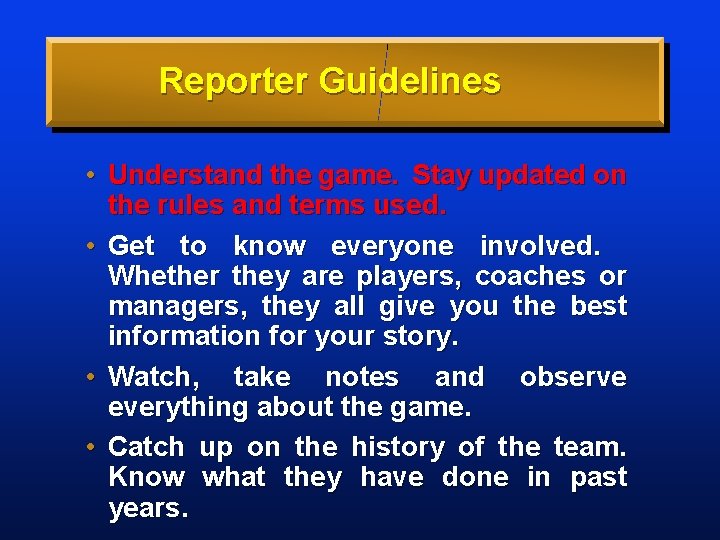
Reporter Guidelines • Understand the game. Stay updated on the rules and terms used. • Get to know everyone involved. Whether they are players, coaches or managers, they all give you the best information for your story. • Watch, take notes and observe everything about the game. • Catch up on the history of the team. Know what they have done in past years.
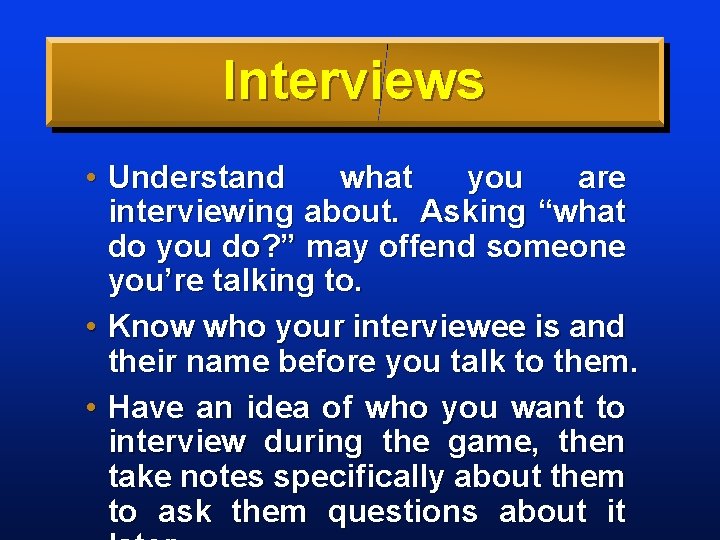
Interviews • Understand what you are interviewing about. Asking “what do you do? ” may offend someone you’re talking to. • Know who your interviewee is and their name before you talk to them. • Have an idea of who you want to interview during the game, then take notes specifically about them to ask them questions about it
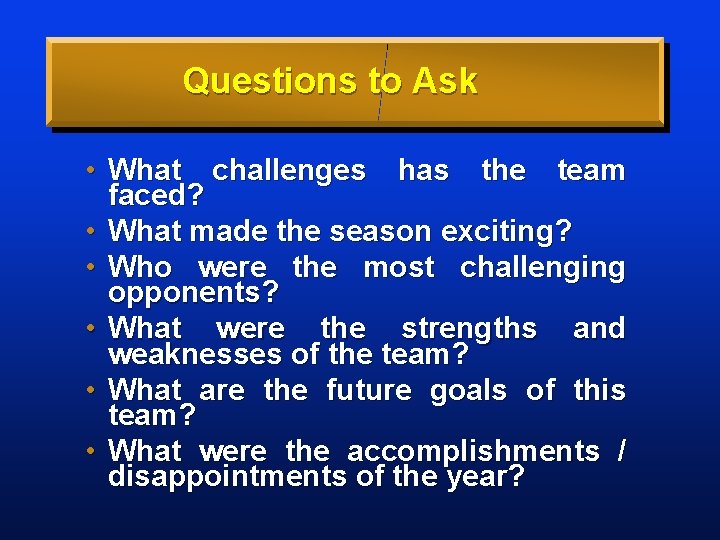
Questions to Ask • What challenges has the team faced? • What made the season exciting? • Who were the most challenging opponents? • What were the strengths and weaknesses of the team? • What are the future goals of this team? • What were the accomplishments / disappointments of the year?
The Concept of Sports Broadcasting
Sports Broadcasting – Sports Broadcaster – Requirements – Market (Small &Major) – History of Broadcasting – Television and Sports – Problems of Televised Sports – Televising rights and rights fee
What is a Sports Broadcaster? • A Sports Broadcaster is someone who provides coverage of sporting events in a wide variety of different media outlets. • This includes: radio, television, and the internet. • There are numerous positions in this field including: » Commentary » Research » Production » Presentation
The Requirements • A student should first and foremost have a love for sports. • After that a student should either become a Mass Communications or a Sports Management Major. • A student should familiarize themselves in courses that are beneficial including: • Writing for the Media • News Editing and Design • Sports Governance and History • Media Relations in Sports
Small Markets • Before a broadcaster makes it to the top, they have to start out small by going to small market media outlets. • Often times these small stations and networks are used as stepping stones to get to larger markets. • They teach the basics and get a young broadcaster familiar with all the different types of technology sometimes or more often they will use old technology. • Their knowledge is limited to their area thus lacking in nationwide coverage.
Major Markets • A major media market is a radio or television network that broadcasts all across the country as opposed to a small market where a broadcast signal is transmitted in a certain radius. • The broadcasters on television and radio tend to get a larger recognition than professionals in a smaller market. • Examples of a major market are: –Islamabad –Lahore –Karachi
Making the Audience Feel they are at the Event • A good broadcaster should be able to make a boring game exciting and a close game, a nail biter. • It is the job for a broadcaster to have a wide range of vocabulary of words to describe the events they are broadcasting. • A broadcaster should never allow more then five to seven seconds of dead air which is a short period of time when nothing is said. • A broadcaster should also know the in and outs of the issue or sport they are relaying to the audiences. • Most importantly have a catch phrase that people can remember you by.
Sports Broadcasting History • KDKA (Pioneer Broadcasting Station of the World) broadcast a Davis Cup tennis match on August 4, 1921, and a Pittsburgh Pirate (Reproduce) baseball game a day later. • Major college football games were broadcast on WEAF( is a gospel music formatted radio station in Camden, South Carolina) in 1925. • Chicago Cub baseball game was broadcast on radio beginning in late ‘ 20 s. • NBC, with one camera, produced the first telecast of a sporting event, a Princeton-Columbia baseball game, in 1939. • Invention of videotape (1956) and satellite transmissions (1962) encouraged/stimulated the growth of television sports. • ESPN (Entertainment and Sports Programming Network )debuted in 1979. The all-sports network reaches over 85 million households.
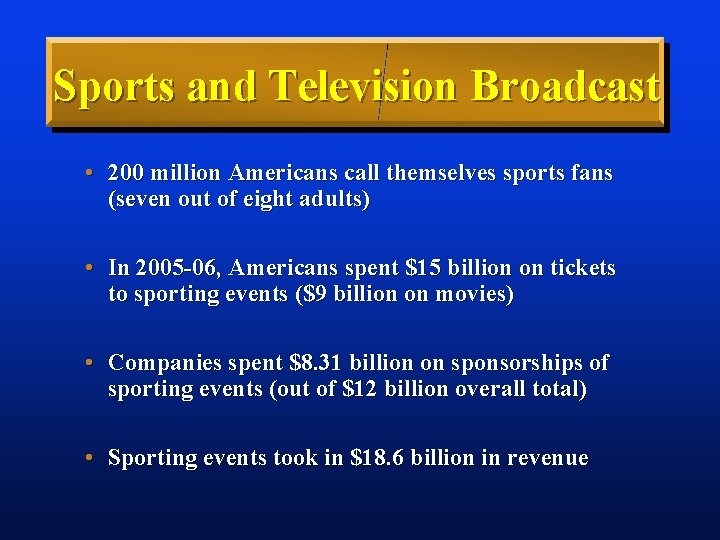
Sports and Television Broadcast • 200 million Americans call themselves sports fans (seven out of eight adults) • In 2005 -06, Americans spent $15 billion on tickets to sporting events ($9 billion on movies) • Companies spent $8. 31 billion on sponsorships of sporting events (out of $12 billion overall total) • Sporting events took in $18. 6 billion in revenue
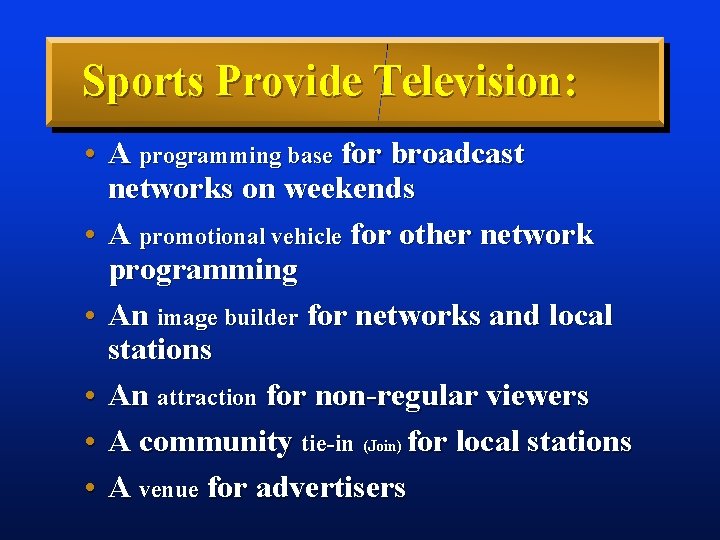
Sports Provide Television: • A programming base for broadcast networks on weekends • A promotional vehicle for other network programming • An image builder for networks and local stations • An attraction for non-regular viewers • A community tie-in (Join) for local stations • A venue for advertisers
Television Provides Sports: – Exposure – Public Relations – Money
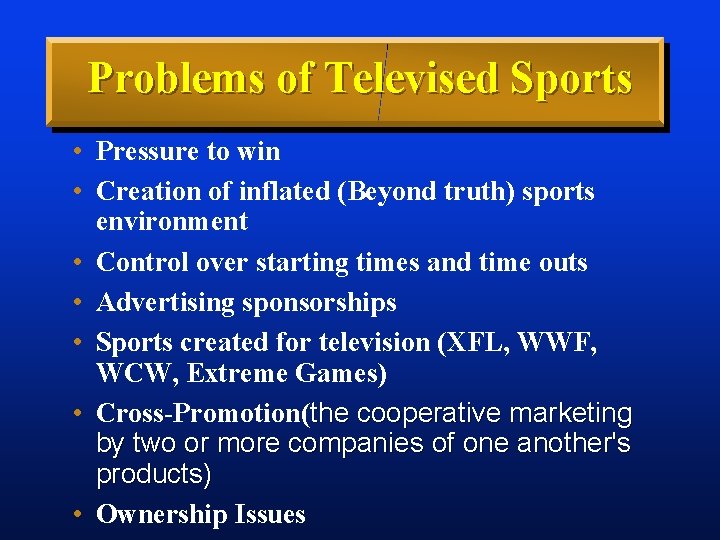
Problems of Televised Sports • Pressure to win • Creation of inflated (Beyond truth) sports environment • Control over starting times and time outs • Advertising sponsorships • Sports created for television (XFL, WWF, WCW, Extreme Games) • Cross-Promotion(the cooperative marketing by two or more companies of one another's products) • Ownership Issues
Why Don’t We See? – More women’s sports. . . – Horse racing. . . – College “Olympic” sports. . . – High school sports. . . – Little league games. . .
Sports Photography » Definition » Camera » Famous Sports Photographer » Guidelines
What is Sports Photography? • Sports photography is the process of taking pictures of sports and the people playing in them.
Components Taken into Consideration during Sports Photography • • Lighting Planning and Location Angle of Photography Equipment and Setting
General Rules and Practices • • Emphasize on close-ups Don’t be afraid to experiment. Try first-person action. Above all, still tell the story. Respect and take care of the equipment. Know what the camera can do. Concentrate on framing and focus. Be concentrated and Well aware of Events • Don’t let the highlights go too long or too short.
8 Tips to become a pro sports photographer 1. Prepare to Use High Resolution 2. Try Something Different 3. Don’t Forget the Surroundings 4. Be Prepared With an Equipment Belt or Bag 5. Long Glass Goes a Long Way 6. Don’t Chimp(chimping is the act of checking your results on the LCD panel and going Ooh when you like what you see). 7. Use a Slow Shutter Speed 8. Avoid Using a Flash
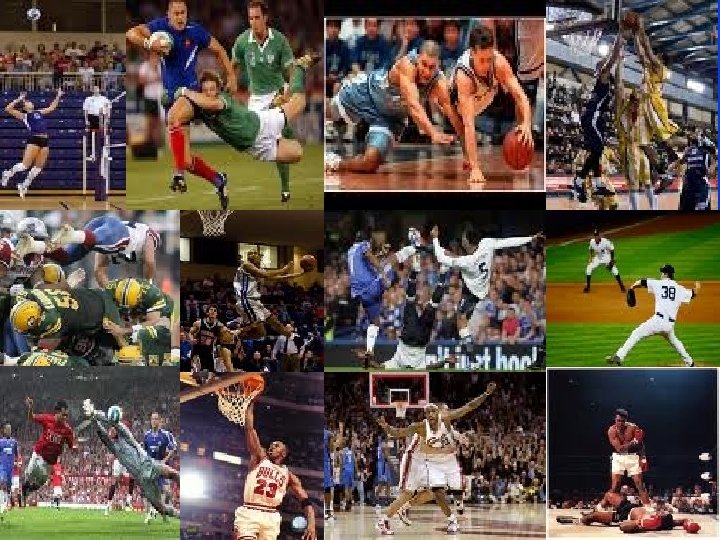
Pictures
Famous Photographers: • Walter Iooss Jr. - Was known around the world as the most famous sports photographer to ever pick up a camera. • Neil Leifer- Was considered “boy wonder" at Sports Illustrated. Caught the picture of Muhammad Ali knocking out Sonny Liston. • Aaron Chang- “The best surf photographer in the world”, with his senior positions at Surfing magazine and shot more than 100 covers for other sports publications, Chang's images have been used in ads for Nike, Yamaha, Levi's, Macy's, Polaris, and Mercedes-Benz. • Hy Money- Britains first female sports photographer, fought against women not being able to be on the sidelines at certain sporting events for two years.
THANKS!
Any Question