
Sporadic Server Scheduling in Linux Theory vs Practice
- Slides: 46
Sporadic Server Scheduling in Linux Theory vs. Practice Mark Stanovich Theodore Baker Andy Wang
Real-Time Scheduling Theory Analysis techniques to design a system to meet timing constraints Schedulability analysis – – – Workload models Processor models Scheduling algorithms
Real-Time Scheduling Theory Analysis techniques to design a system to meet timing constraints Schedulability analysis – – – Workload models Processor models Scheduling algorithms
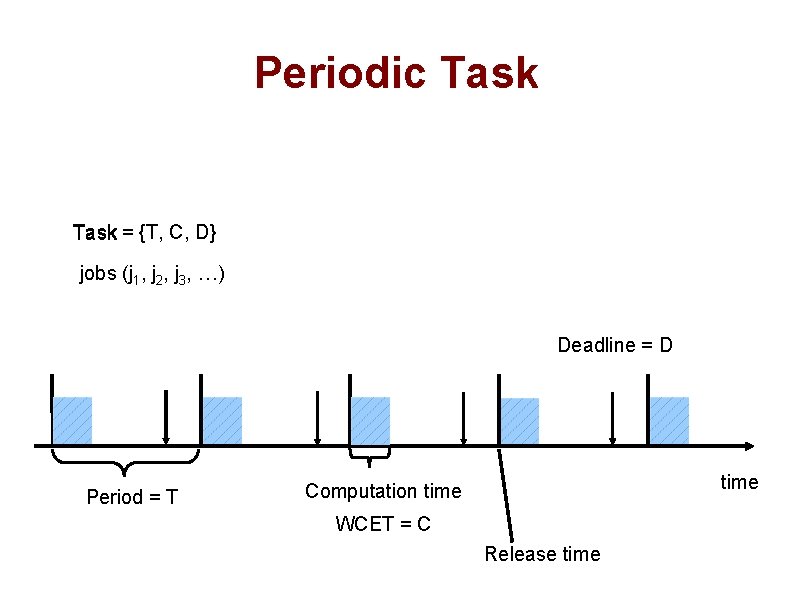
Periodic Task = {T, C, D} jobs (j 1, j 2, j 3, …) Deadline = D Period = T time Computation time WCET = C Release time 4
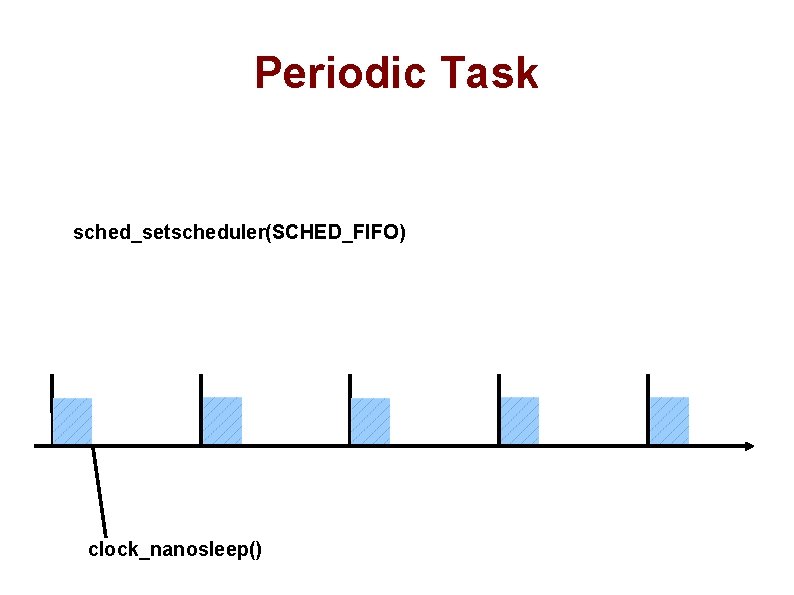
Periodic Task sched_setscheduler(SCHED_FIFO) clock_nanosleep()
Periodic Task Assumptions WCET is reliable Arrivals are periodic Not realistic for most tasks
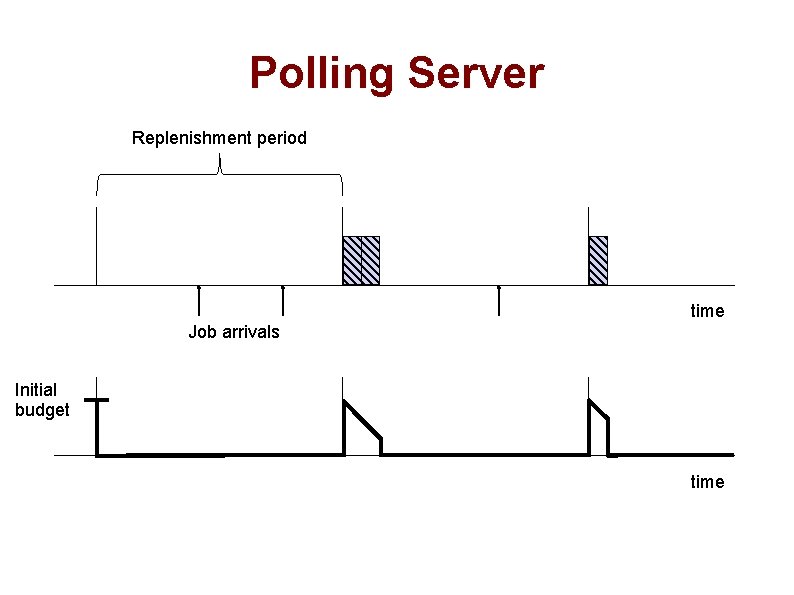
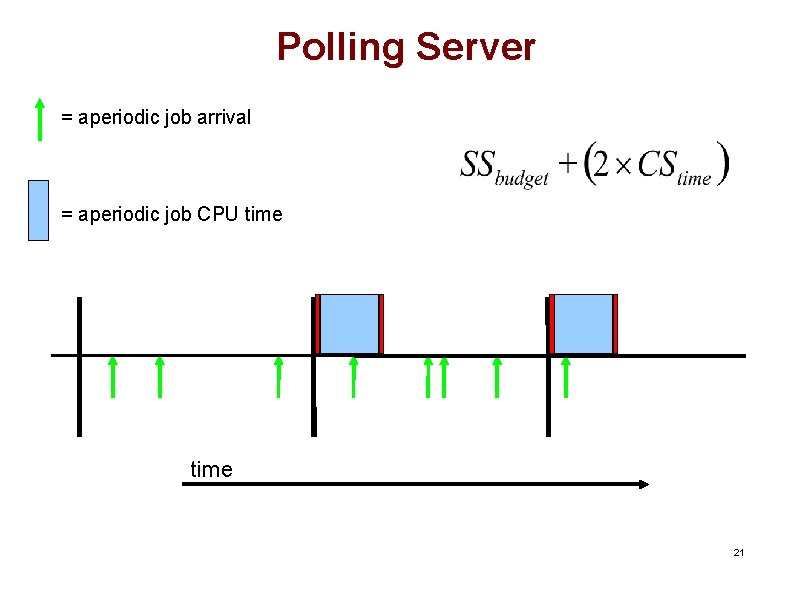
Polling Server Replenishment period time Job arrivals Initial budget time
Polling Server Type of aperiodic server CPU time no worse than an equivalent periodic task Can be modeled as a periodic task Budget consumed as CPU time is used WCET = Initial Budget Period = Replenishment Period CPU time forfeited if not used Replenish budget every period
Polling Server Good Bounds CPU time Analyzable workload Simplicity Can be better Faster response time if budget is not forfeited
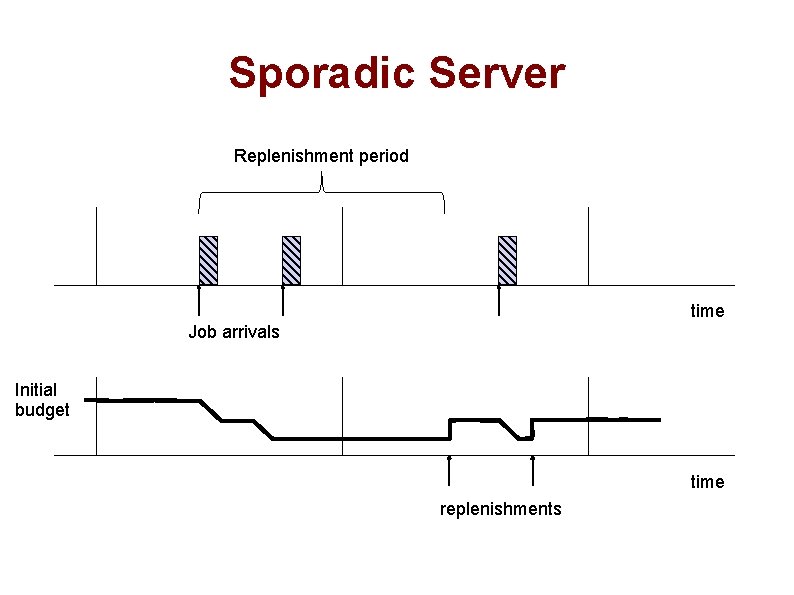
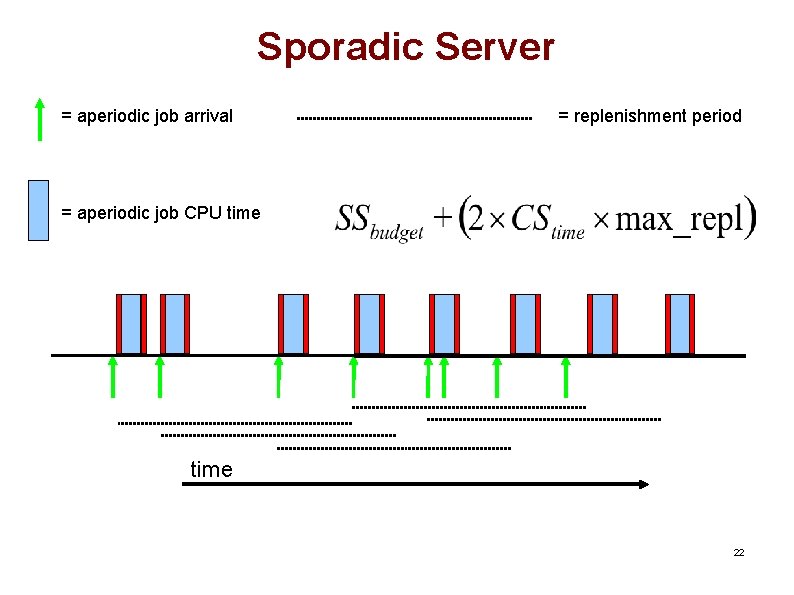
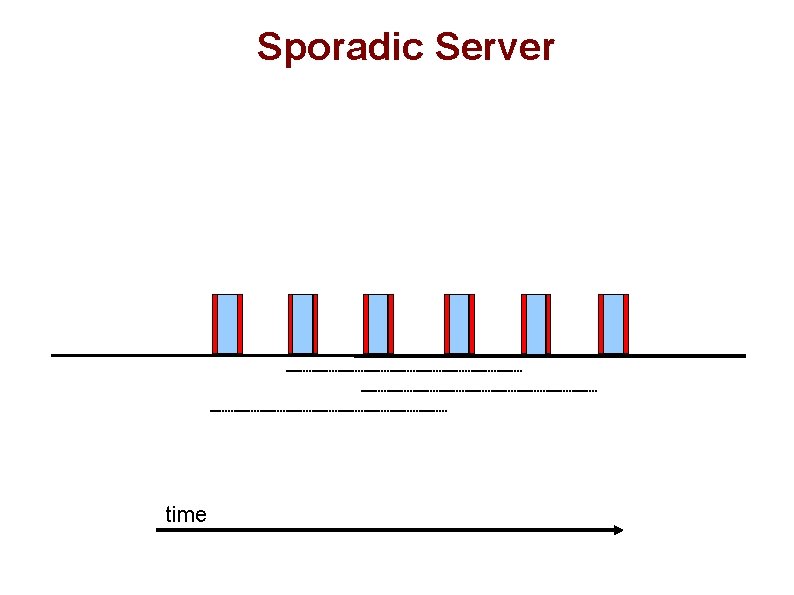
Sporadic Server Replenishment period time Job arrivals Initial budget time replenishments
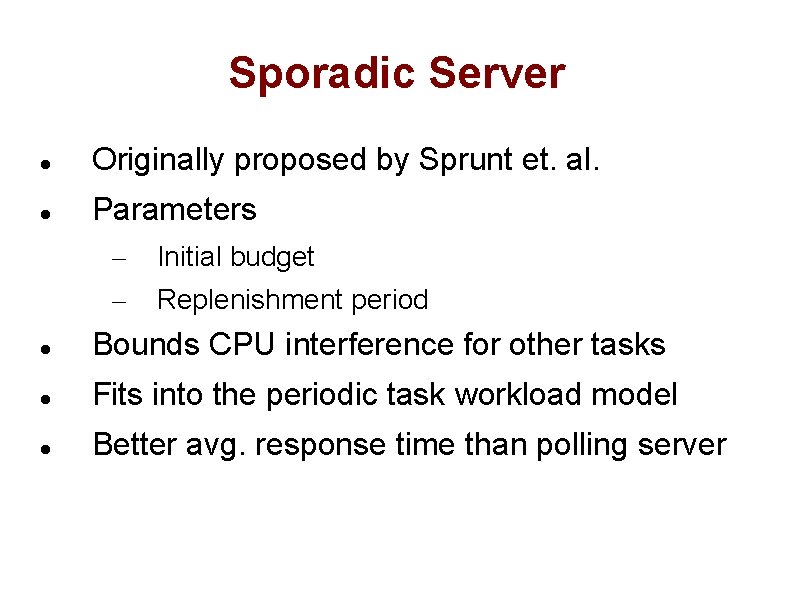
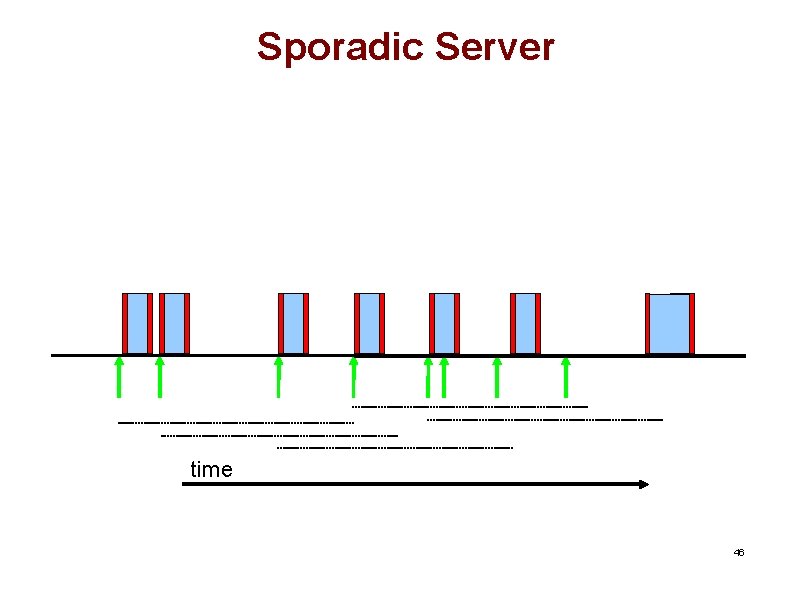
Sporadic Server Originally proposed by Sprunt et. al. Parameters – – Initial budget Replenishment period Bounds CPU interference for other tasks Fits into the periodic task workload model Better avg. response time than polling server
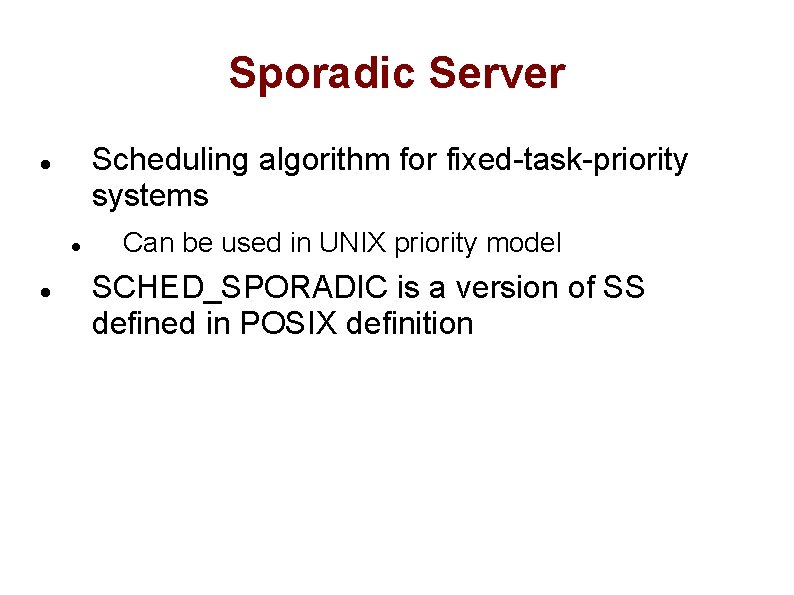
Sporadic Server Scheduling algorithm for fixed-task-priority systems Can be used in UNIX priority model SCHED_SPORADIC is a version of SS defined in POSIX definition
Implementation Linux 2. 6. 38 Softirq threading patch ported from earlier RT patch Sporadic server implementation Uniprocessor
Sporadic Server Performance Metrics Interference for lower priority tasks Average response time
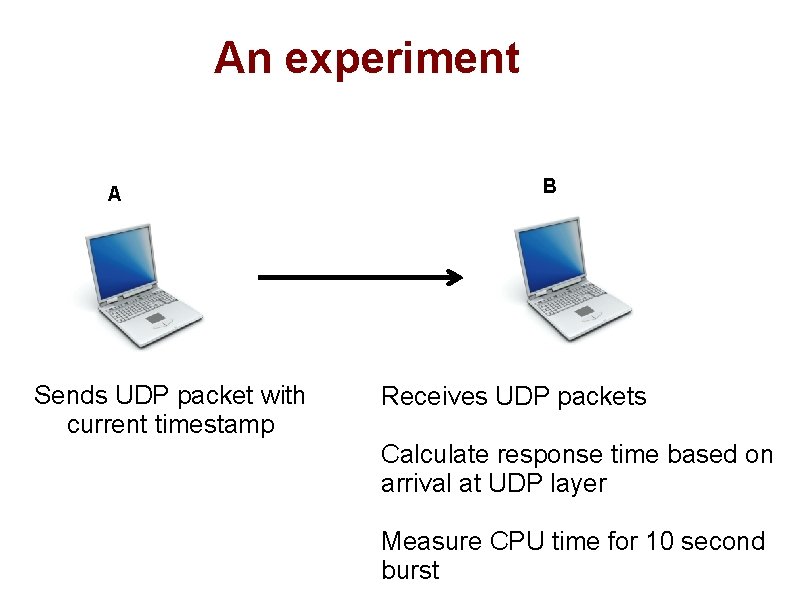
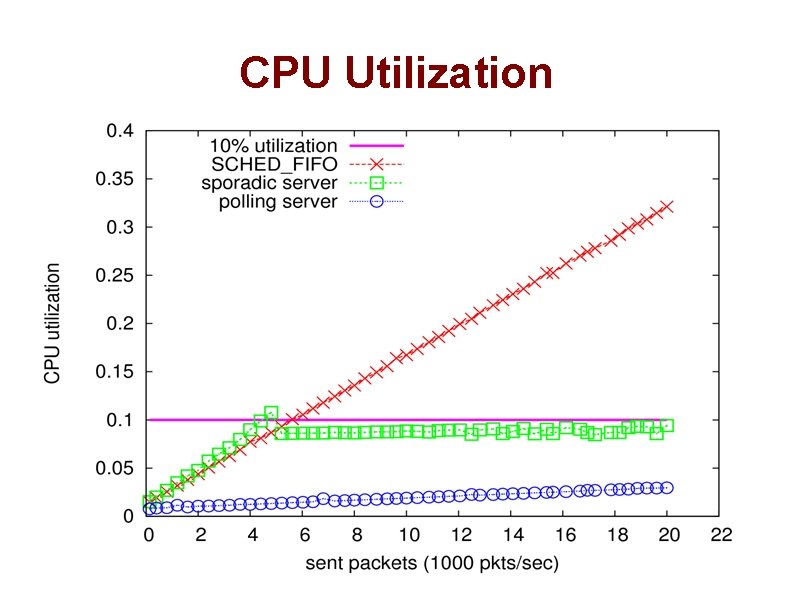
An experiment A Sends UDP packet with current timestamp B Receives UDP packets Calculate response time based on arrival at UDP layer Measure CPU time for 10 second burst
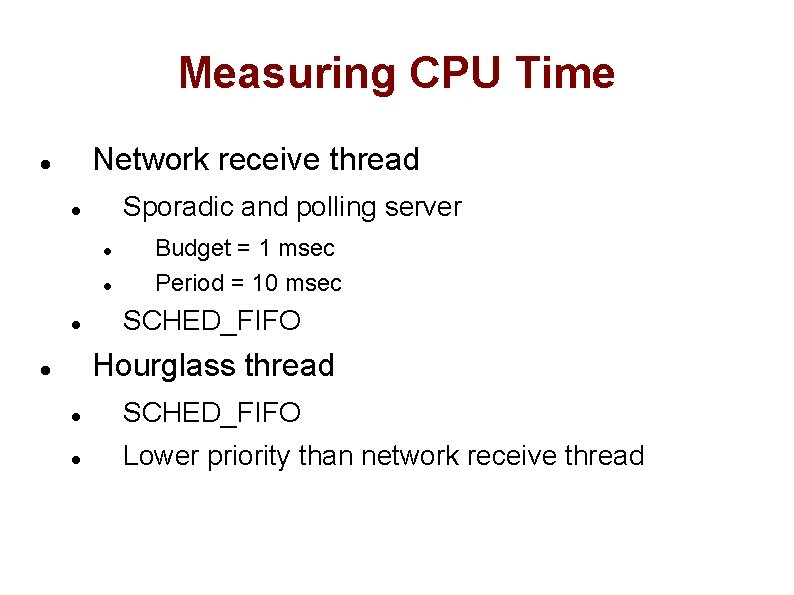
Measuring CPU Time Regher's “hourglass” technique Constantly read time stamp counter – – Detect preemptions by larger gaps Sum execution chunks Hourglass thread lower than SS thread – Measures interference from SS thread
Measuring CPU Time Network receive thread Sporadic and polling server Budget = 1 msec Period = 10 msec SCHED_FIFO Hourglass thread SCHED_FIFO Lower priority than network receive thread
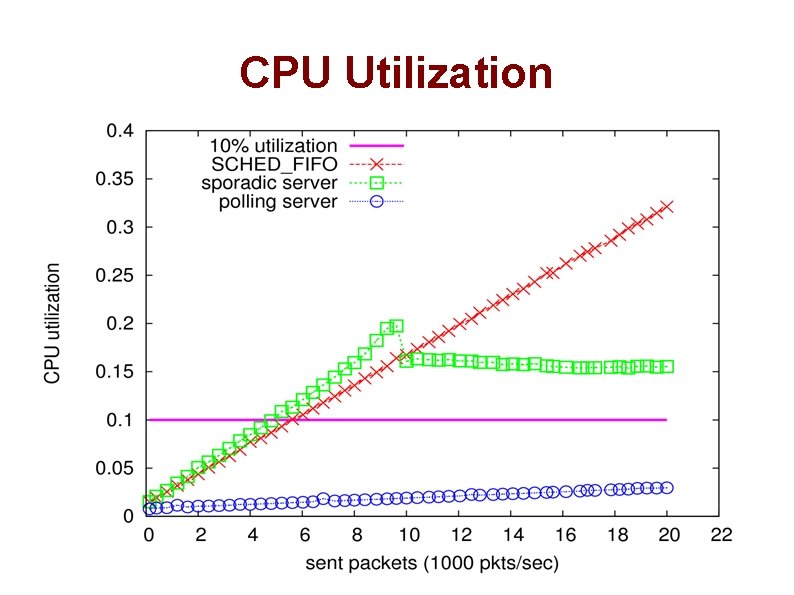
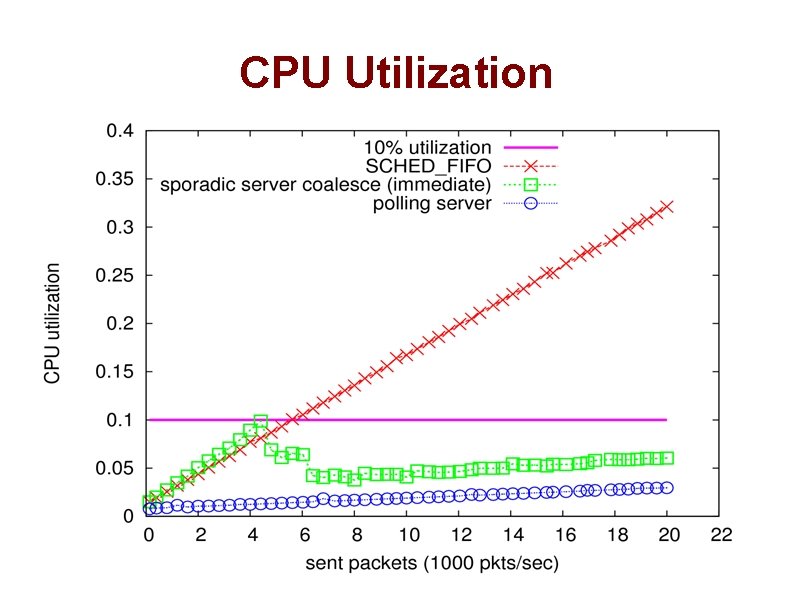
CPU Utilization
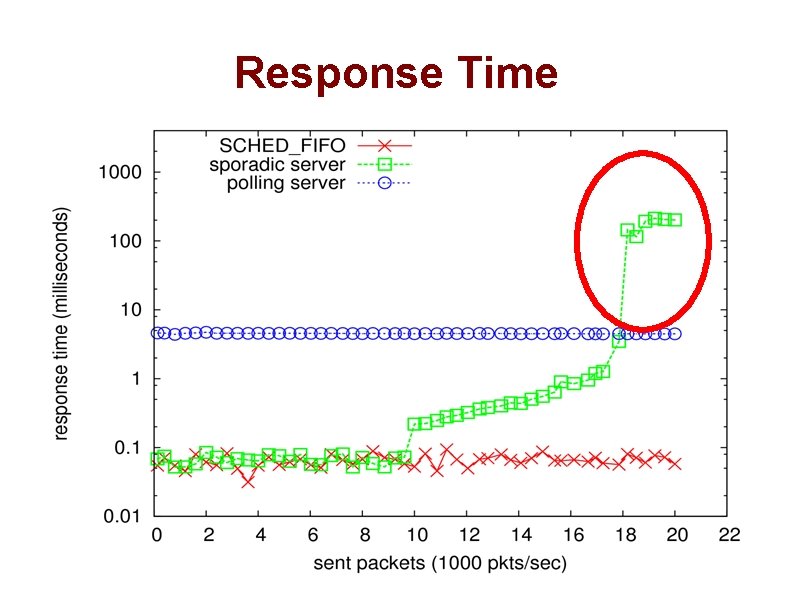
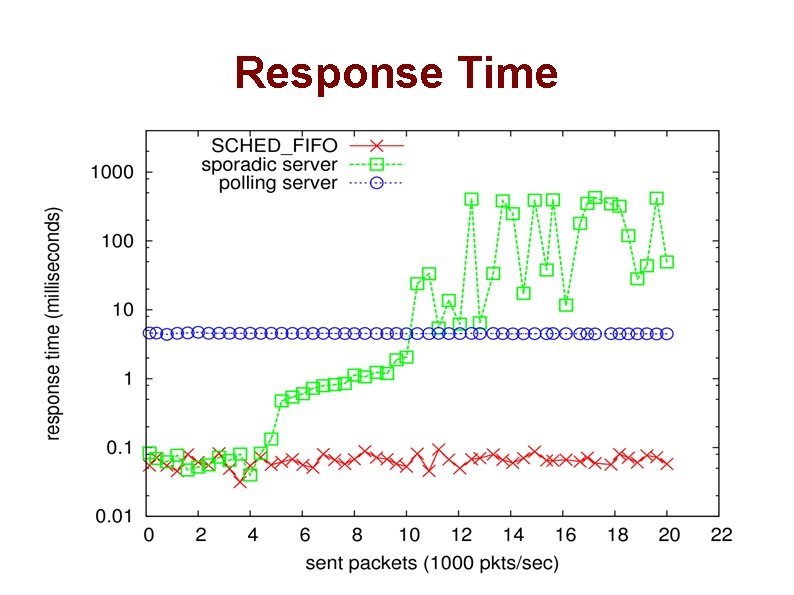
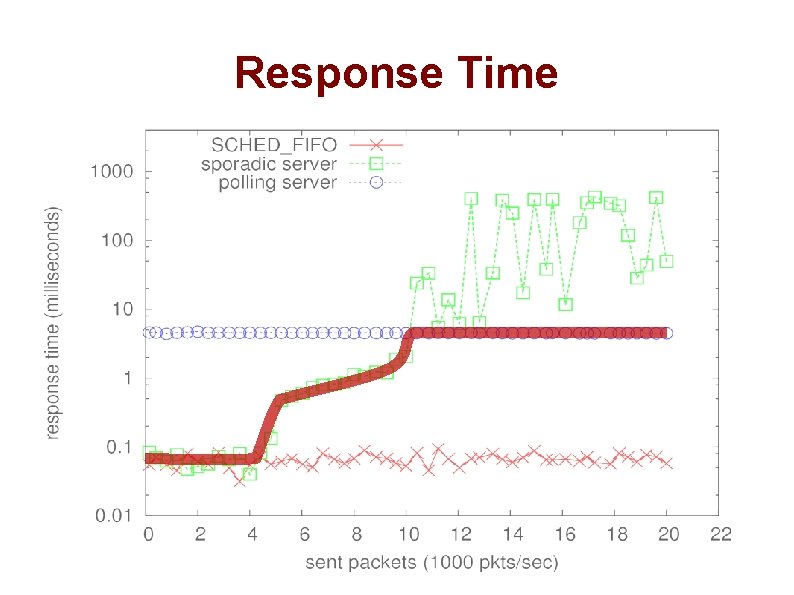
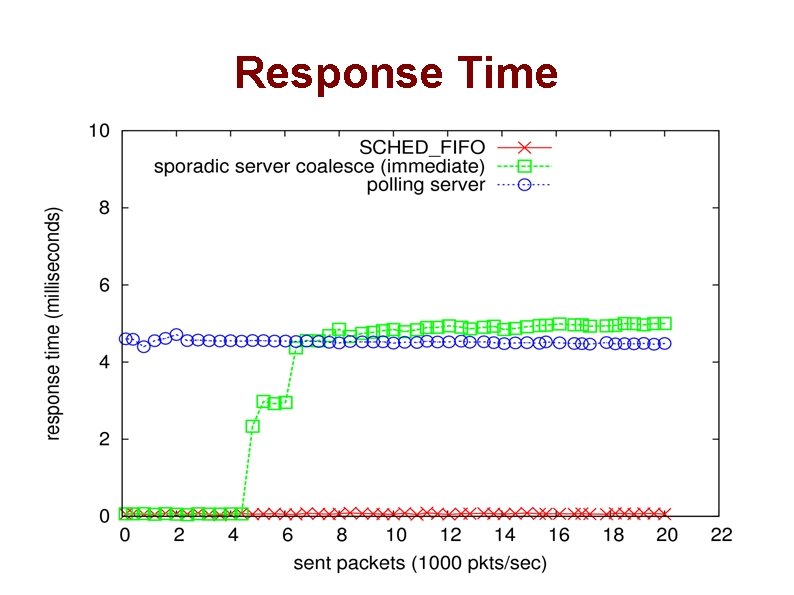
Response Time
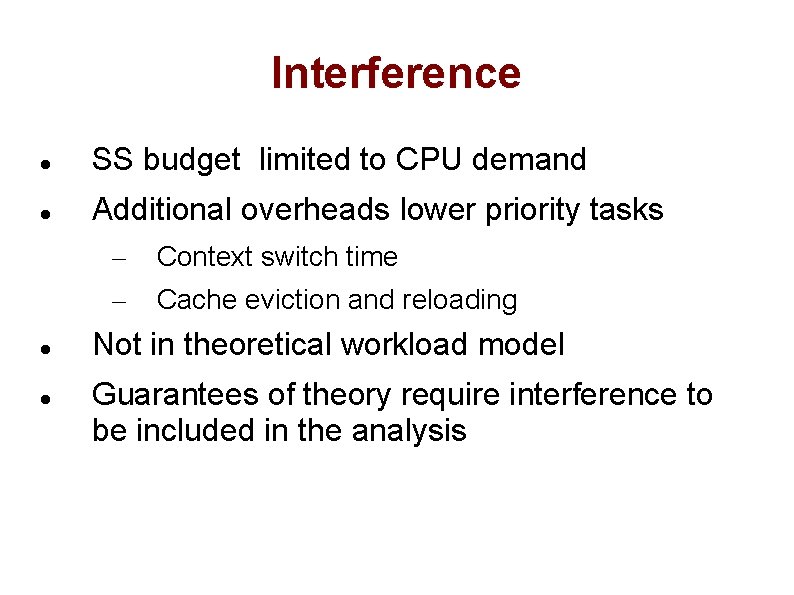
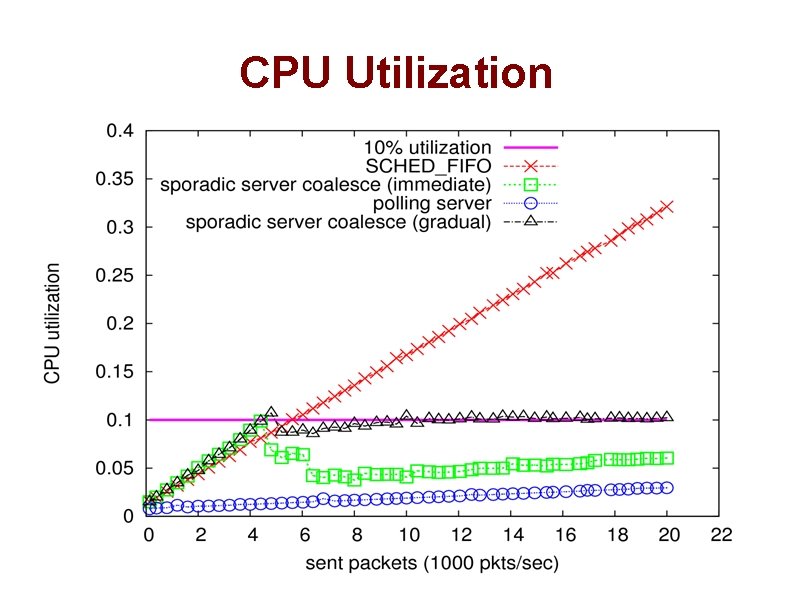
Interference SS budget limited to CPU demand Additional overheads lower priority tasks – – Context switch time Cache eviction and reloading Not in theoretical workload model Guarantees of theory require interference to be included in the analysis
Polling Server = aperiodic job arrival = aperiodic job CPU time 21
Sporadic Server = aperiodic job arrival = replenishment period = aperiodic job CPU time 22
Over Provisioning All context switch time may not be used – e. g. , one replenishment period Account for CS time on-line – Charge SS for each preemption
CPU Utilization
Response Time
Response Time
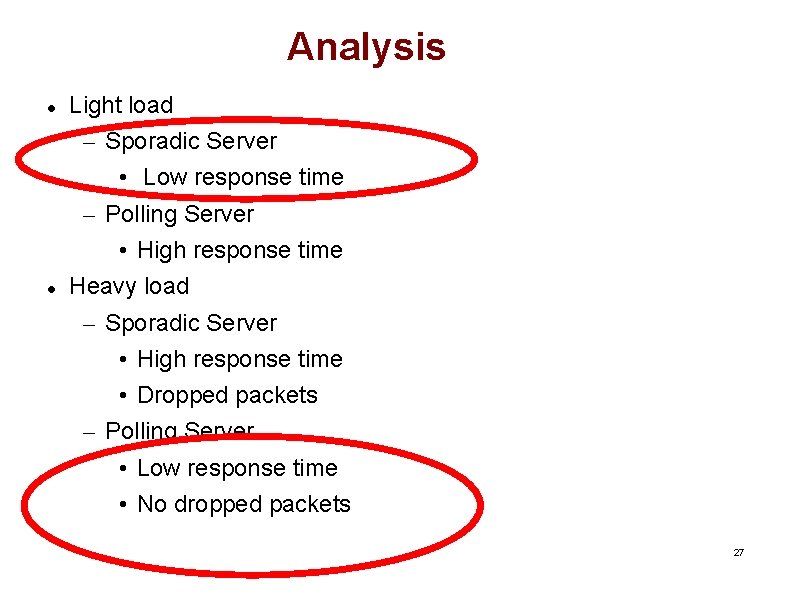
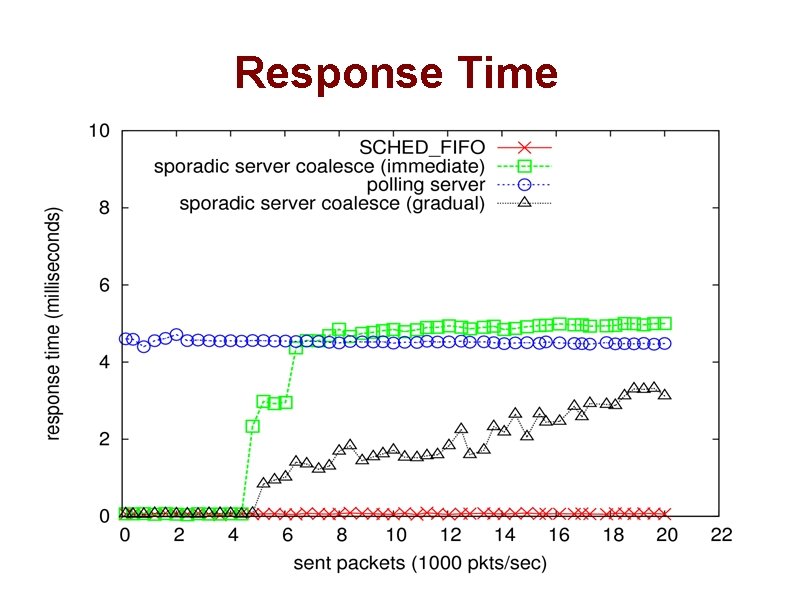
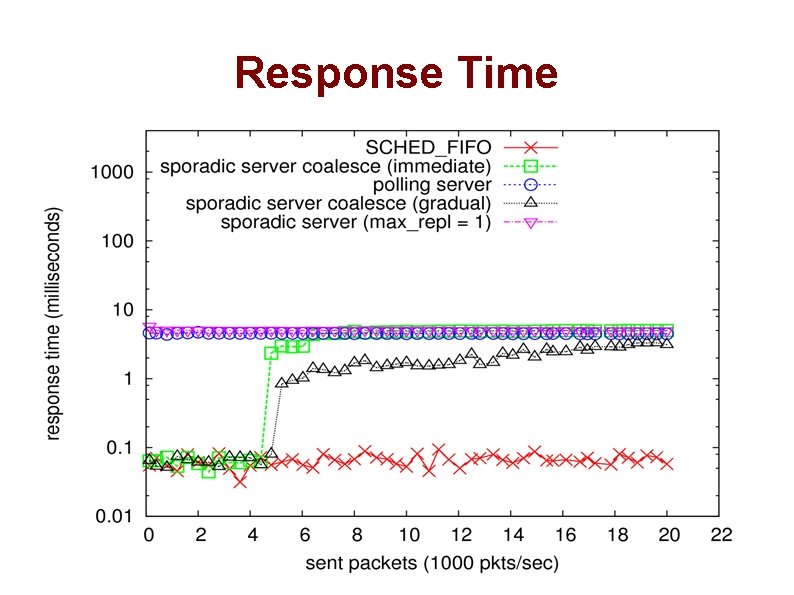
Analysis Light load – Sporadic Server • Low response time – Polling Server • High response time Heavy load – Sporadic Server • High response time • Dropped packets – Polling Server • Low response time • No dropped packets 27
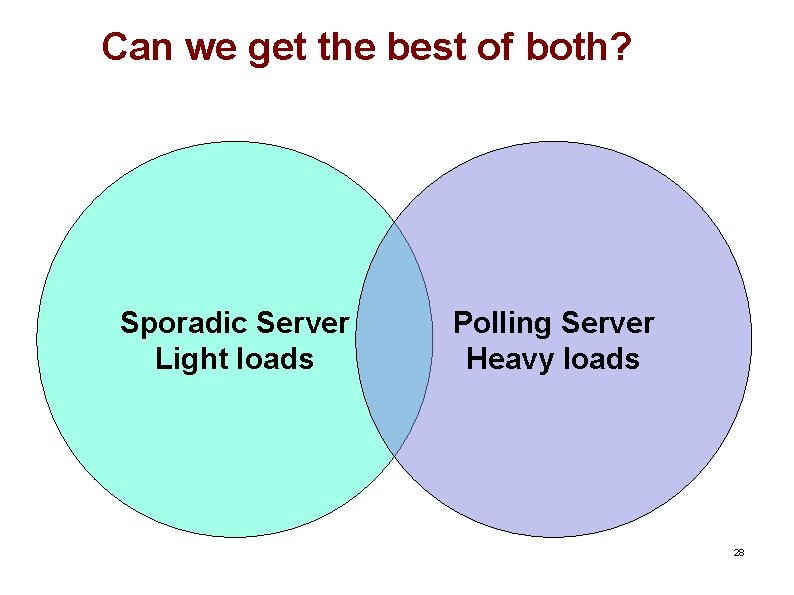
Can we get the best of both? Sporadic Server Light loads Polling Server Heavy loads 28
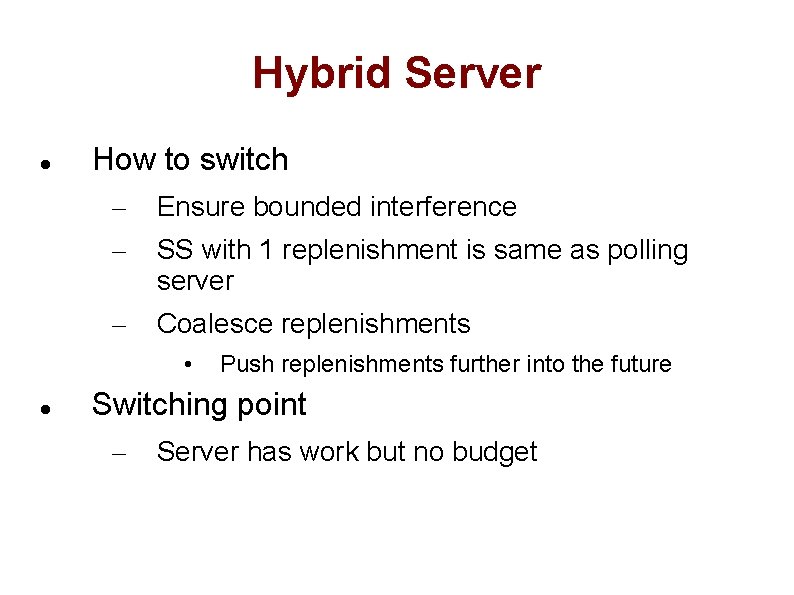
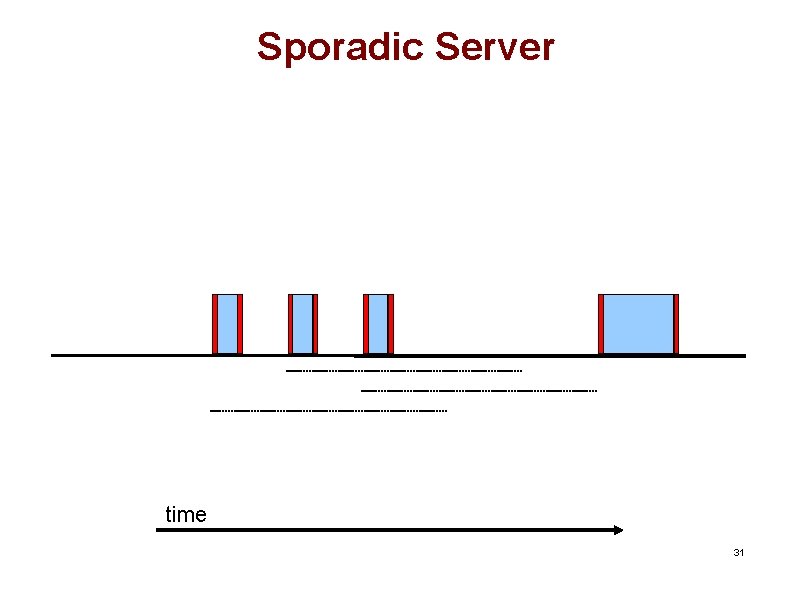
Hybrid Server How to switch – – Ensure bounded interference – Coalesce replenishments SS with 1 replenishment is same as polling server • Push replenishments further into the future Switching point – Server has work but no budget
Sporadic Server time
Sporadic Server time 31
Response Time
CPU Utilization
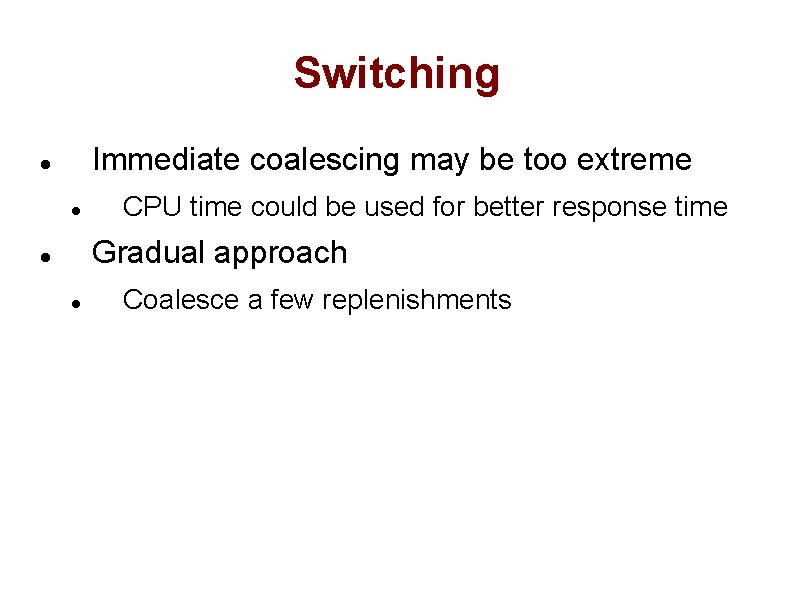
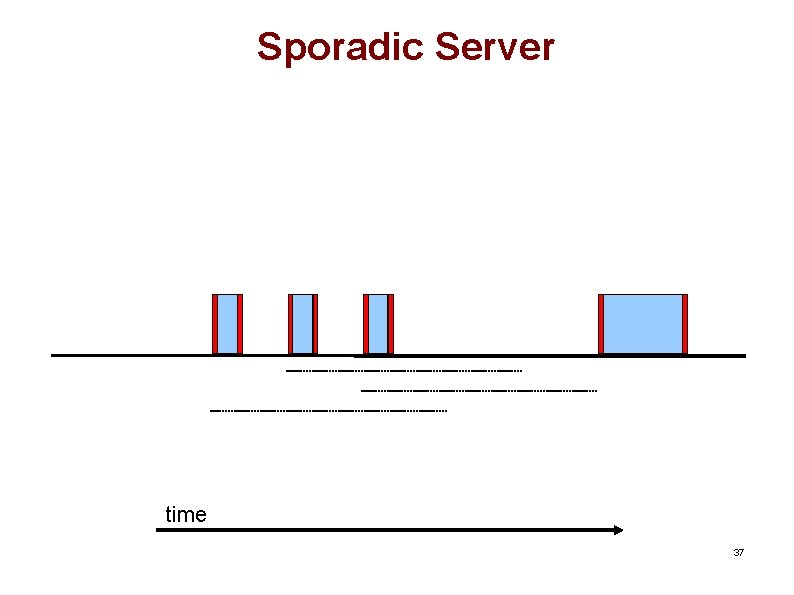
Switching Immediate coalescing may be too extreme CPU time could be used for better response time Gradual approach Coalesce a few replenishments
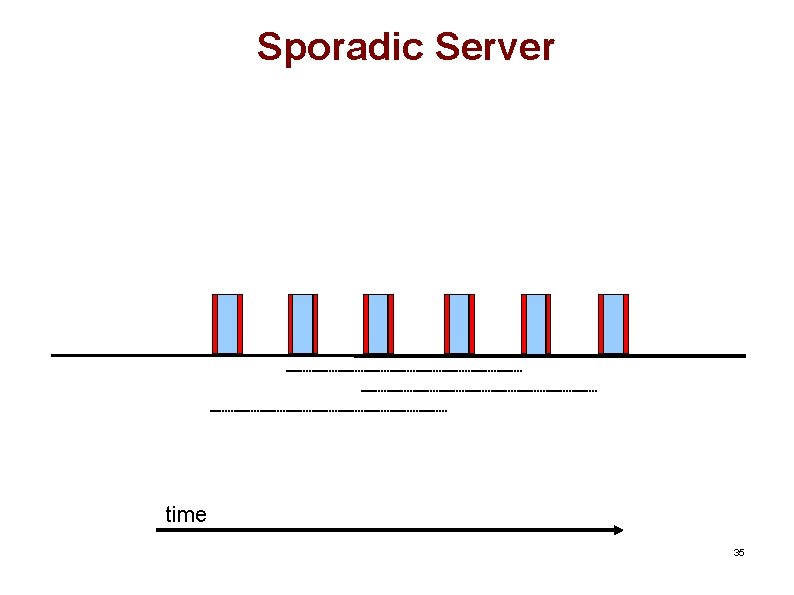
Sporadic Server time 35
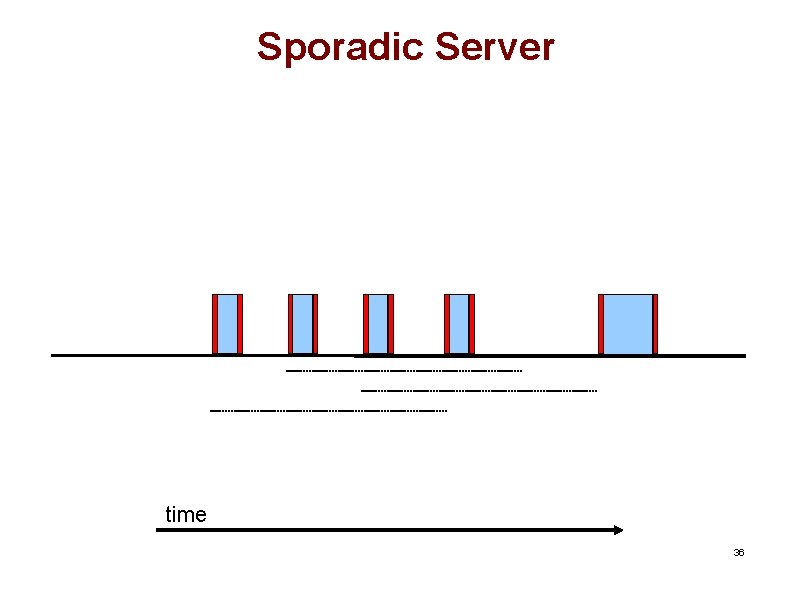
Sporadic Server time 36
Sporadic Server time 37
Response Time
CPU Utilization
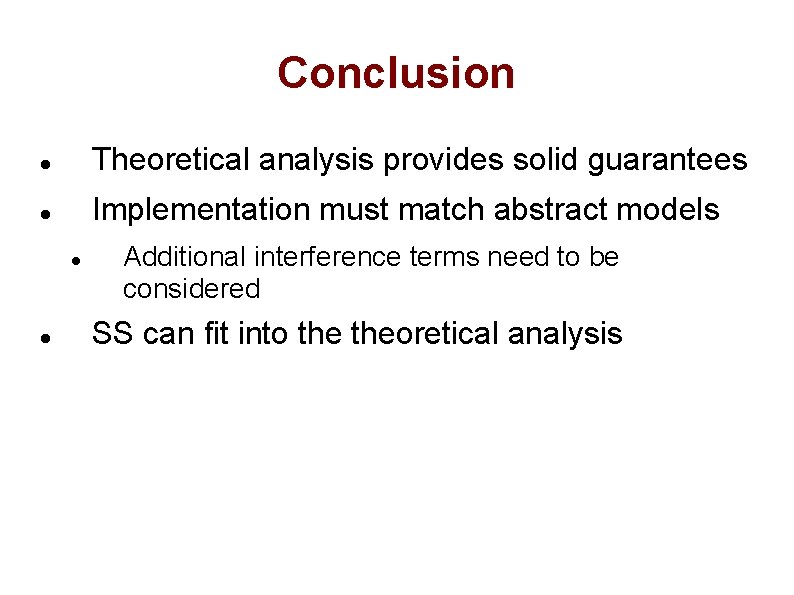
Conclusion Theoretical analysis provides solid guarantees Implementation must match abstract models Additional interference terms need to be considered SS can fit into theoretical analysis
Deferrable Server
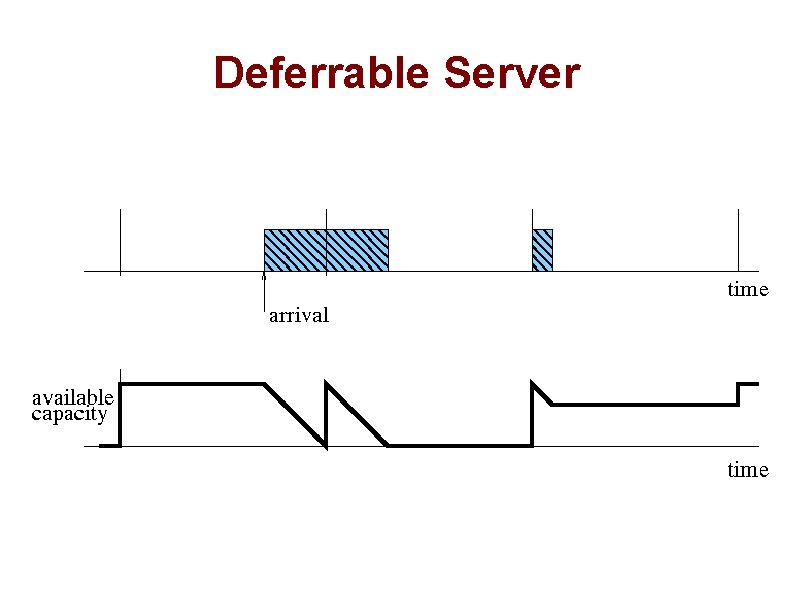
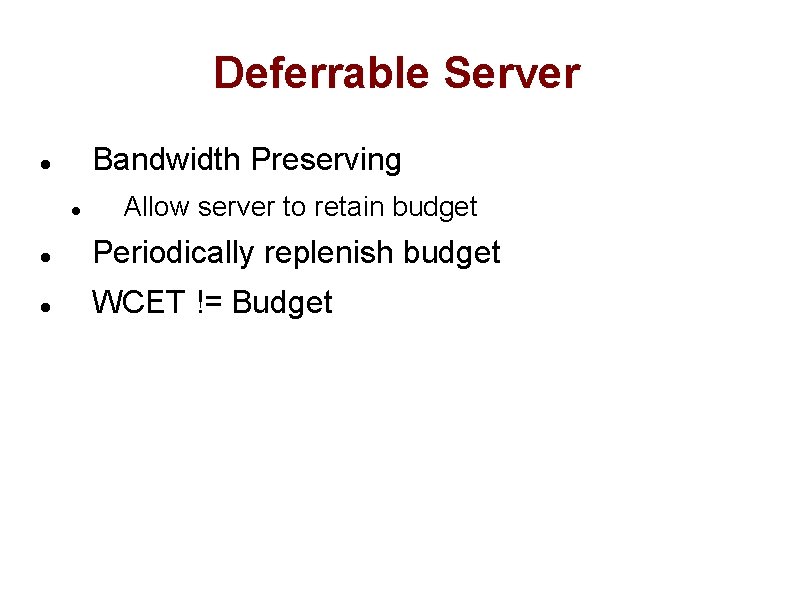
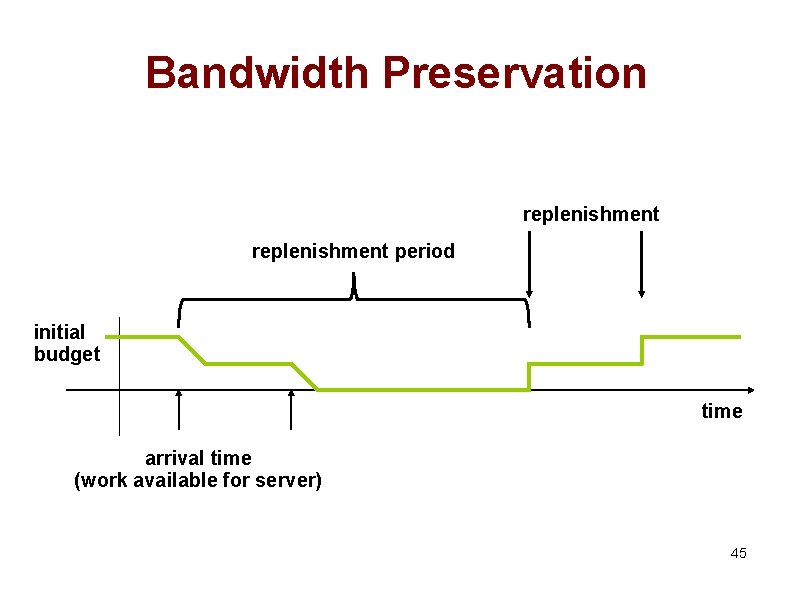
Deferrable Server Bandwidth Preserving Allow server to retain budget Periodically replenish budget WCET != Budget
Response Time
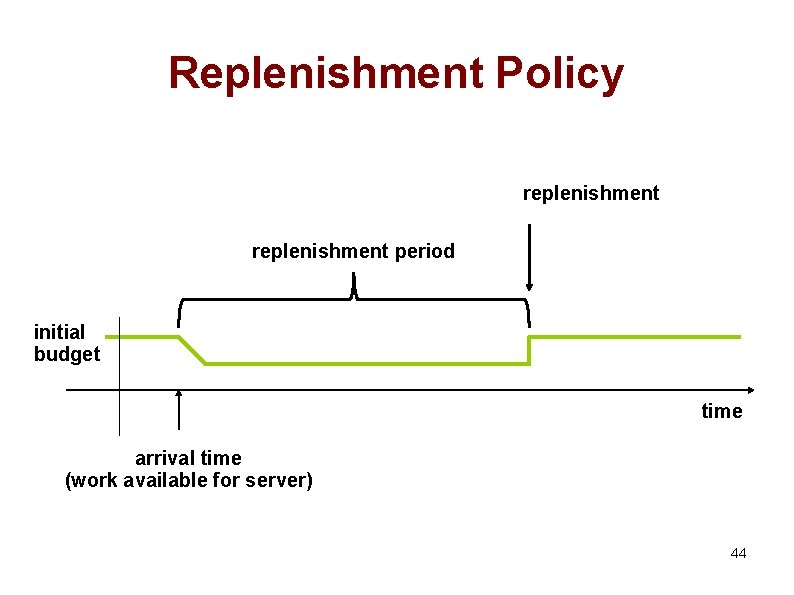
Replenishment Policy replenishment period initial budget time arrival time (work available for server) 44
Bandwidth Preservation replenishment period initial budget time arrival time (work available for server) 45
Sporadic Server time 46