
Spontaneous Morphing Visual Intelligence Donald D Hoffman Chapter









- Slides: 25
Spontaneous Morphing Visual Intelligence Donald D. Hoffman Chapter Four
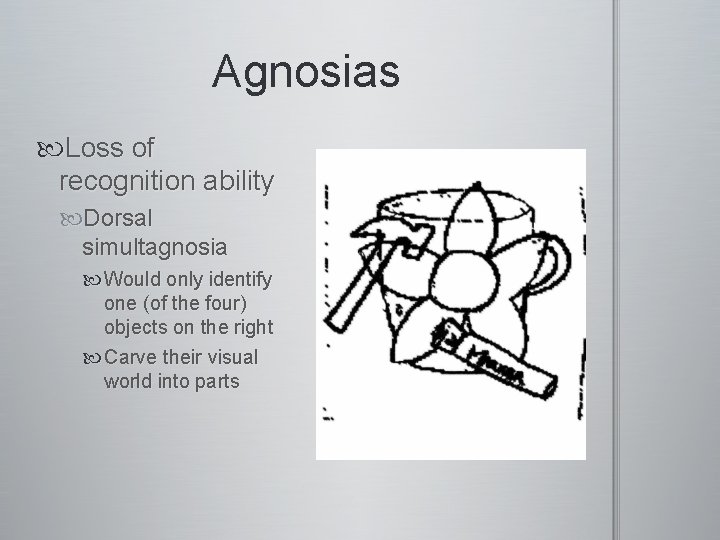
Agnosias Loss of recognition ability Dorsal simultagnosia Would only identify one (of the four) objects on the right Carve their visual world into parts
…but wait, so do we! The only difference is that we quickly and effortlessly assemble many parts into many objects, whereas she is limited to one part or one object at a time
Parts are useful Countless ways to carve shape into parts Any subset of a shape is a possible part 4 conditions for a useful part Shouldn’t change if you move your view a bit Shouldn’t change if the object changes its configuration a bit Should be able to construct the parts from the retinal images at your eyes Should be able to construct the parts on a wide variety of objects; the larger the better
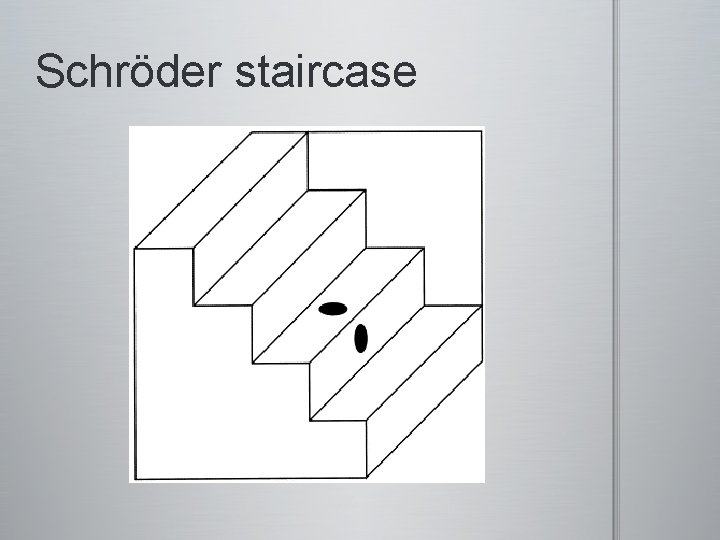
Rule 14: Rule of Concave Creases Divide shapes into parts along concave creases
Rule of Concave Creases Must be generalized to apply to smooth parts
Schröder staircase
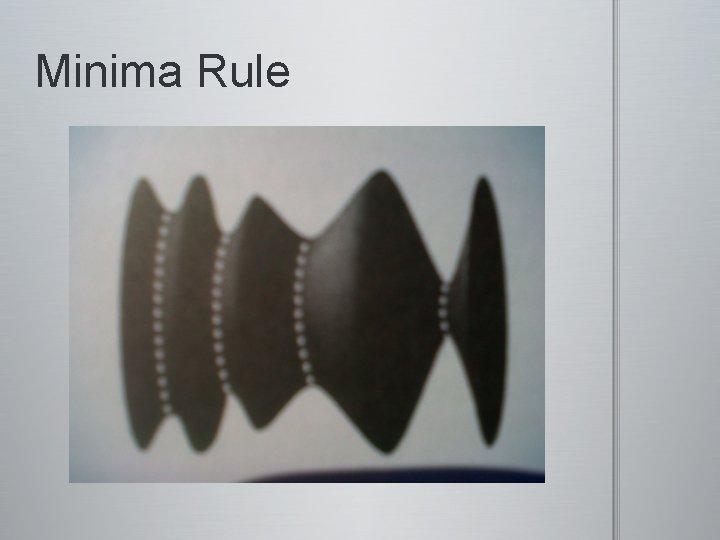
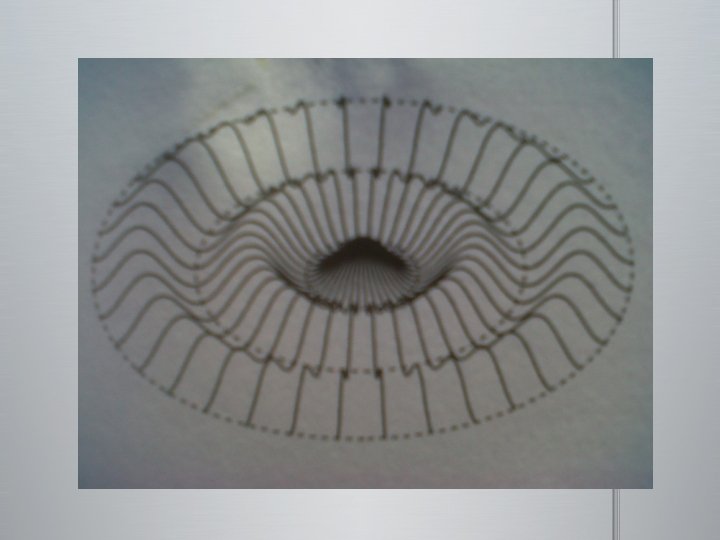
Rule 15: Minima Rule Divide shapes into parts at negative minima, along lines of curvature, of the principal curvatures
Minima Rule
Rule 16: Minima Rule for Silhouettes Divide silhouettes into parts at concave cusps and negative minima of curvature
Minima Rule for Silhouettes Curvature is negative in concavities and positive on convexities Make a part boundary at each concave cusp, and at the point of highest curvature in each smooth concavity
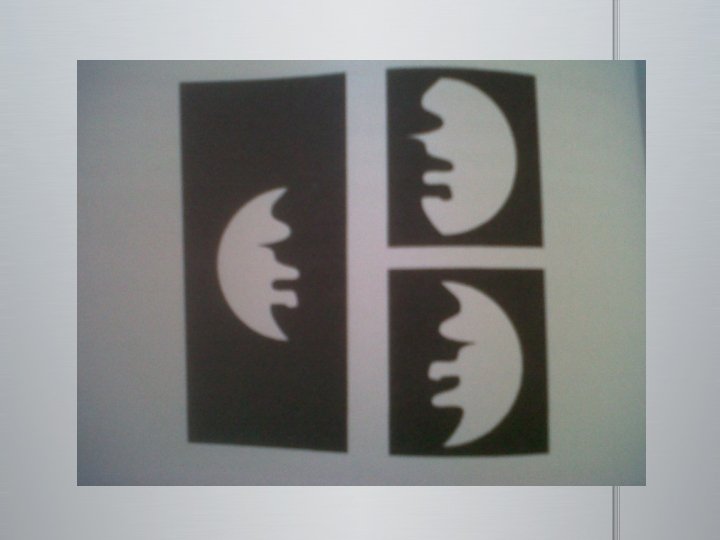
Quick Challenge! You will be shown an image on the left. Pick the image on the right that fits – shout it our right away!
Did you choose the right one? Similarity is your construction Construct every line, curve, and 3 D shape you see Then describe these constructions a language of parts You judge two constructions to be similar if you have given them similar descriptions Similarity, like beauty, is in the eye of the beholder
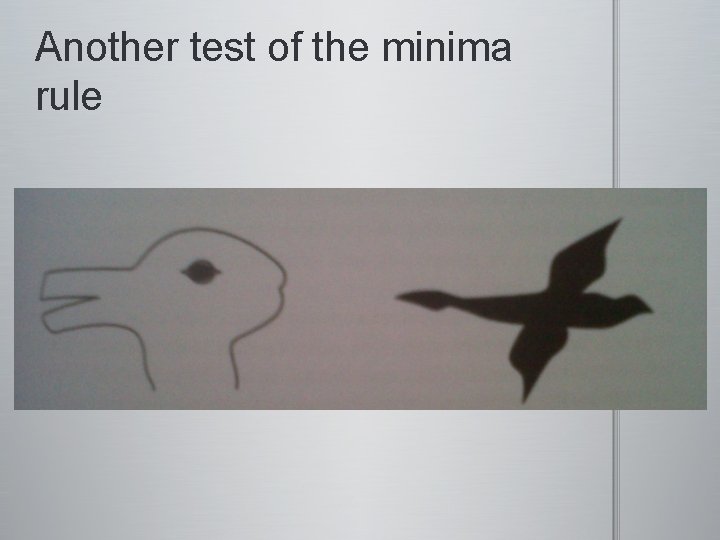
Another test of the minima rule
Rule 17: The salience of a cusp boundary increases with increasing sharpness of the angle at the cusp
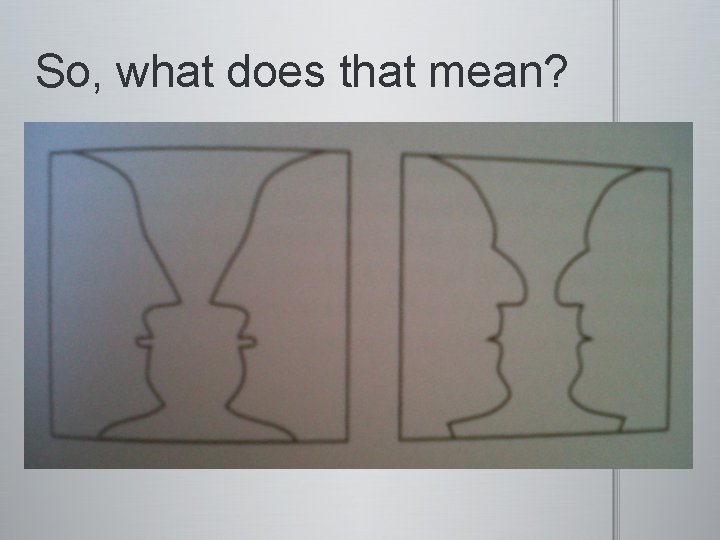
Rule 17: The salience of a smooth boundary increases with the magnitude of (normalized) curvature at the boundary
So, what does that mean?
Rule 19: Salient Boundaries Choose figure and ground so that figure has the more salient part boundaries
Rule 20: Salient Parts Choose figure and ground so that figure has the more salient parts
The Big Picture? We view everything by breaking images up into parts – and we follow several rules to synthesize and assign these parts.