
SPONSORED BY Economic Impacts The Graduation Effect If

SPONSORED BY:
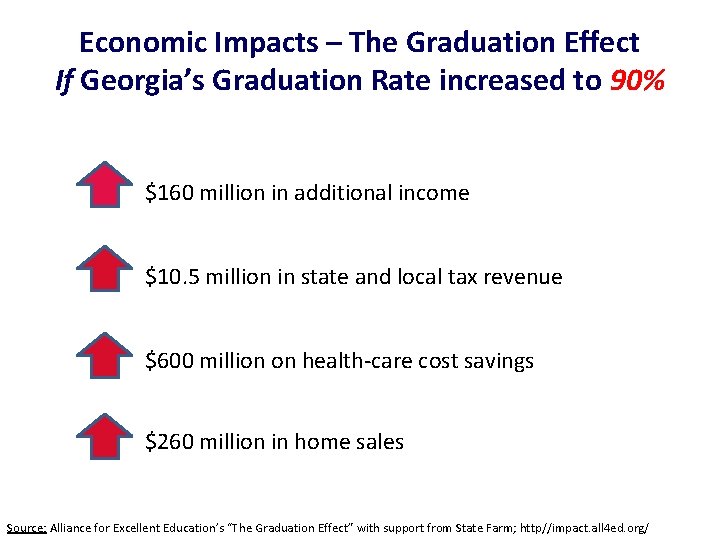
Economic Impacts – The Graduation Effect If Georgia’s Graduation Rate increased to 90% $160 million in additional income $10. 5 million in state and local tax revenue $600 million on health-care cost savings $260 million in home sales Source: Alliance for Excellent Education’s “The Graduation Effect” with support from State Farm; http//impact. all 4 ed. org/
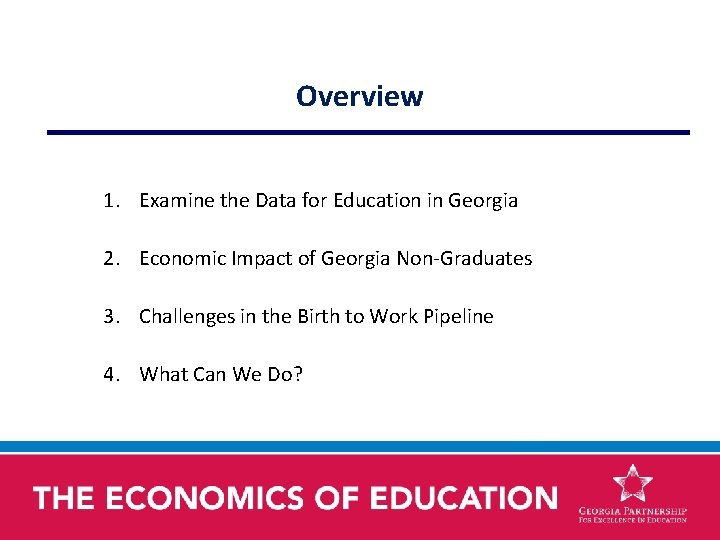
Overview 1. Examine the Data for Education in Georgia 2. Economic Impact of Georgia Non-Graduates 3. Challenges in the Birth to Work Pipeline 4. What Can We Do?
Examine the Data for Education in Georgia
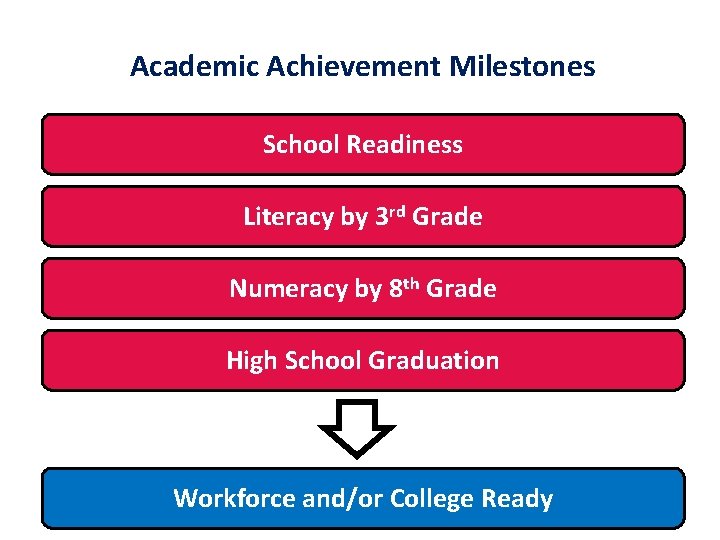
Academic Achievement Milestones School Readiness Literacy by 3 rd Grade Numeracy by 8 th Grade High School Graduation Workforce and/or College Ready
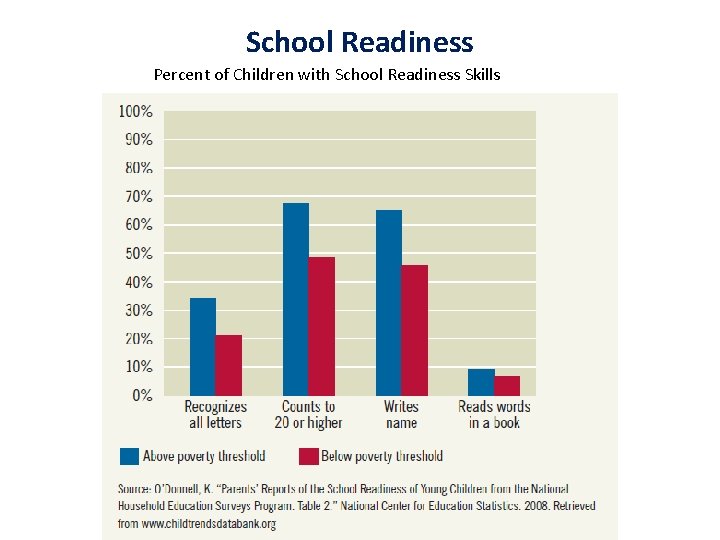
School Readiness Percent of Children with School Readiness Skills
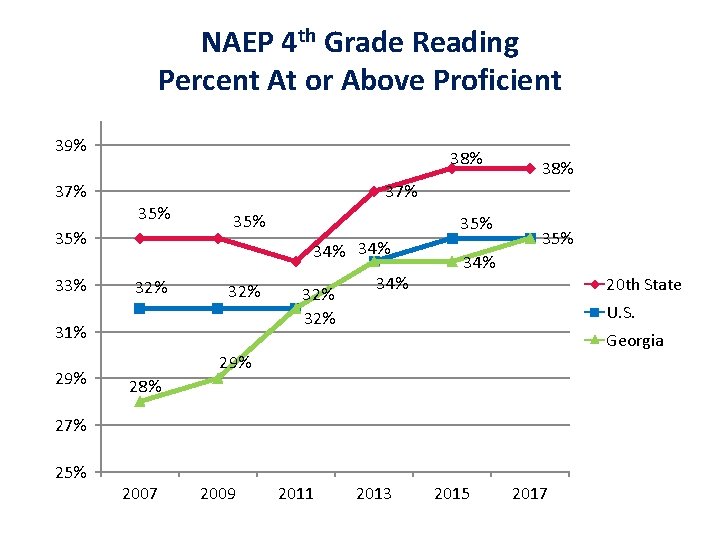
NAEP 4 th Grade Reading Percent At or Above Proficient 39% 37% 38% 35% 33% 37% 35% 32% 31% 29% 35% 34% 32% 38% 32% 34% 35% 34% 20 th State U. S. Georgia 29% 28% 27% 25% 2007 2009 2011 2013 2015 2017
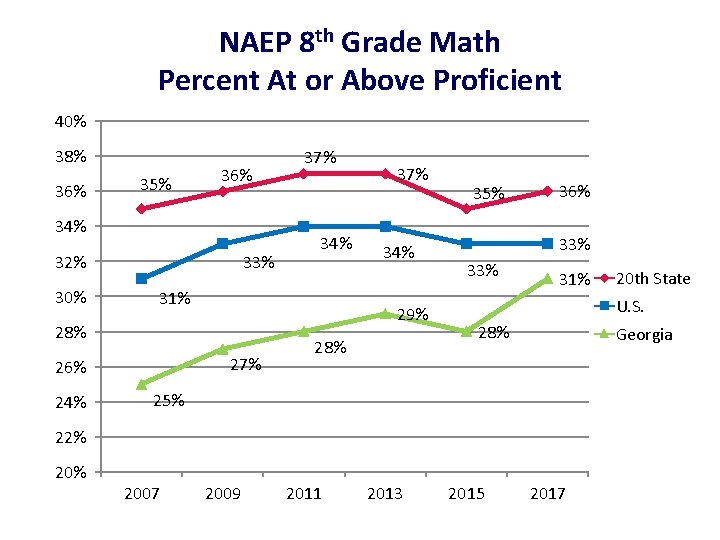
NAEP 8 th Grade Math Percent At or Above Proficient 40% 38% 36% 35% 36% 34% 32% 30% 33% 34% 31% 27% 26% 37% 34% 29% 28% 24% 37% 28% 35% 36% 33% 31% U. S. 28% Georgia 25% 22% 2007 2009 2011 2013 20 th State 2015 2017
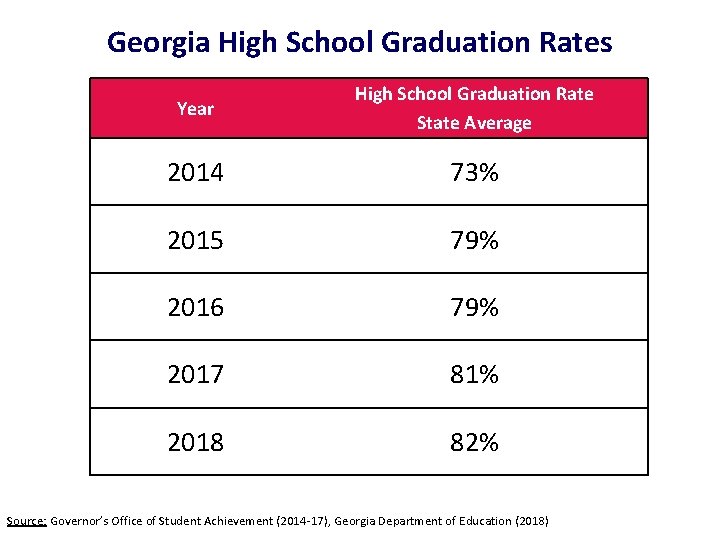
Georgia High School Graduation Rates Year High School Graduation Rate State Average 2014 73% 2015 79% 2016 79% 2017 81% 2018 82% Source: Governor’s Office of Student Achievement (2014 -17), Georgia Department of Education (2018)
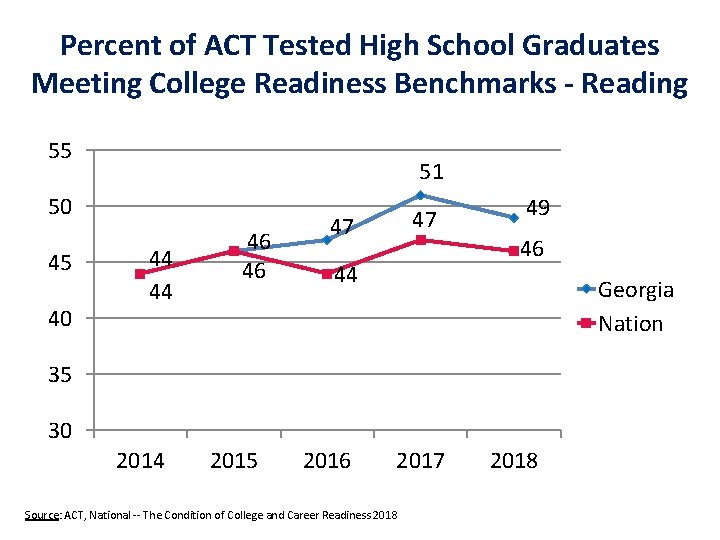
Percent of ACT Tested High School Graduates Meeting College Readiness Benchmarks - Reading 55 51 50 45 40 44 44 46 46 47 47 44 49 46 Georgia Nation 35 30 2014 2015 2016 2017 Source: ACT, National -- The Condition of College and Career Readiness 2018
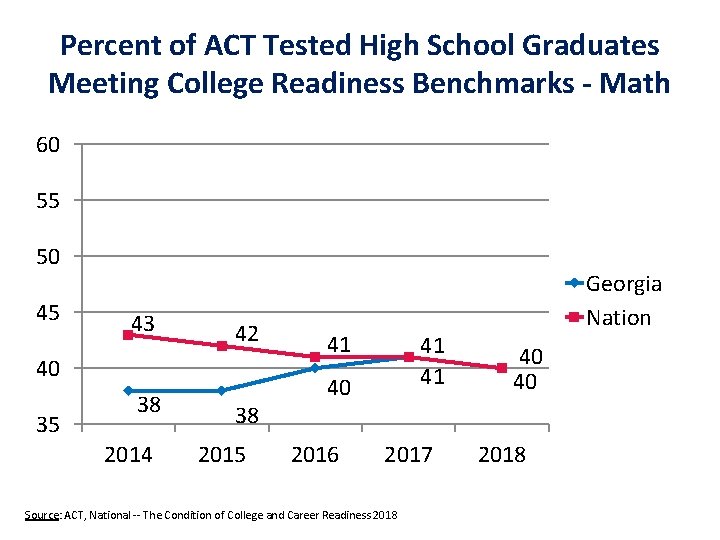
Percent of ACT Tested High School Graduates Meeting College Readiness Benchmarks - Math 60 55 50 45 43 42 40 35 38 2014 38 2015 41 41 41 40 2016 2017 Source: ACT, National -- The Condition of College and Career Readiness 2018 Georgia Nation 40 40 2018
Economic Impact of Georgia Non-Graduates
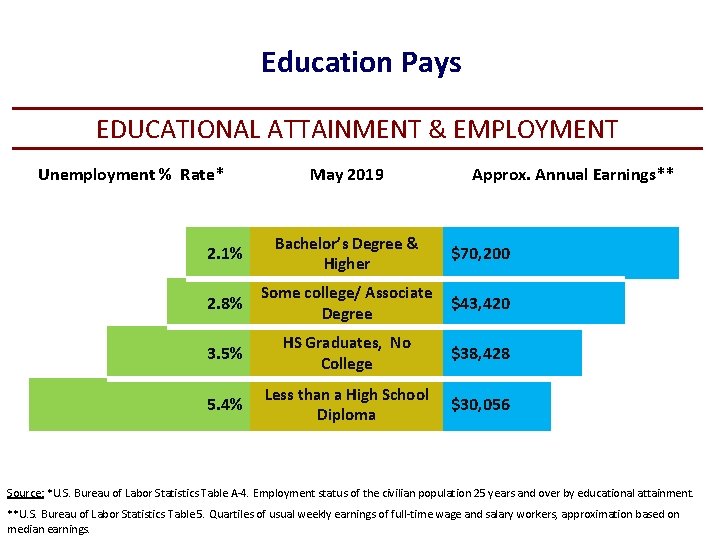
Education Pays EDUCATIONAL ATTAINMENT & EMPLOYMENT Unemployment % Rate* May 2019 Approx. Annual Earnings** 2. 1% Bachelor’s Degree & Higher $70, 200 2. 8% Some college/ Associate Degree $43, 420 3. 5% HS Graduates, No College $38, 428 5. 4% Less than a High School Diploma $30, 056 Source: *U. S. Bureau of Labor Statistics Table A-4. Employment status of the civilian population 25 years and over by educational attainment. **U. S. Bureau of Labor Statistics Table 5. Quartiles of usual weekly earnings of full-time wage and salary workers, approximation based on median earnings.
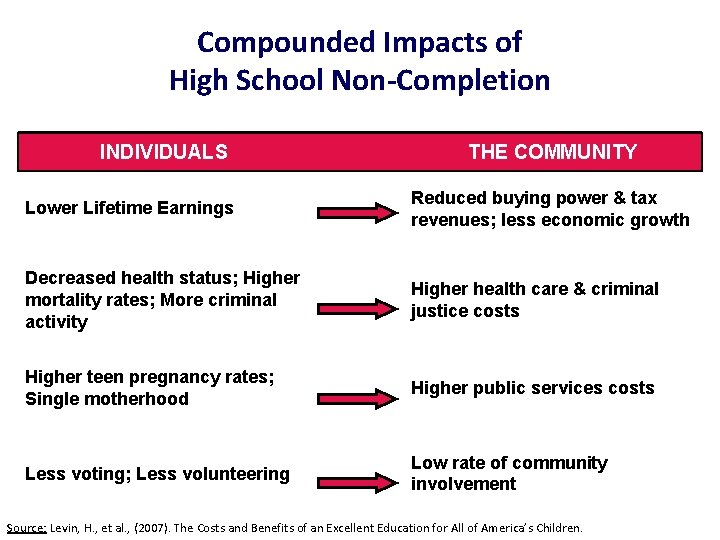
Compounded Impacts of High School Non-Completion INDIVIDUALS THE COMMUNITY Lower Lifetime Earnings Reduced buying power & tax revenues; less economic growth Decreased health status; Higher mortality rates; More criminal activity Higher health care & criminal justice costs Higher teen pregnancy rates; Single motherhood Higher public services costs Less voting; Less volunteering Low rate of community involvement Source: Levin, H. , et al. , (2007). The Costs and Benefits of an Excellent Education for All of America’s Children.
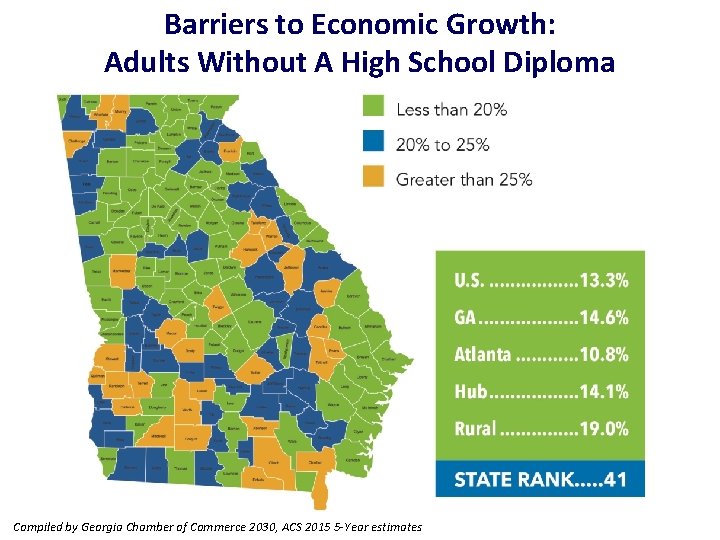
Barriers to Economic Growth: Adults Without A High School Diploma Compiled by Georgia Chamber of Commerce 2030, ACS 2015 5 -Year estimates
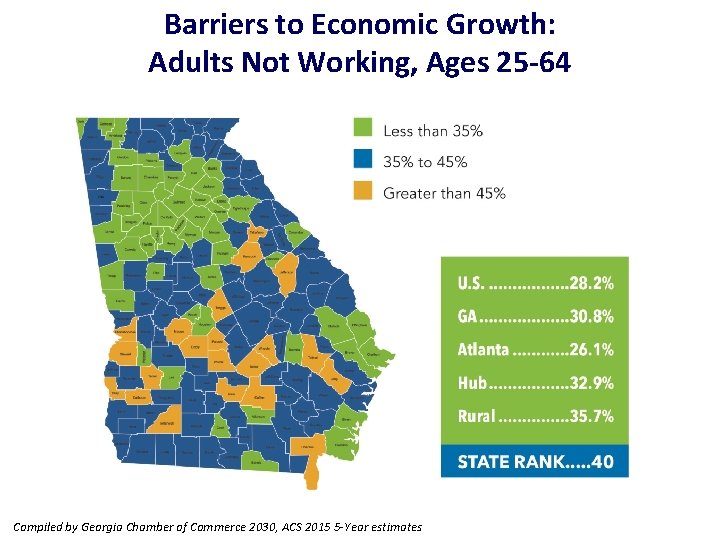
Barriers to Economic Growth: Adults Not Working, Ages 25 -64 Compiled by Georgia Chamber of Commerce 2030, ACS 2015 5 -Year estimates
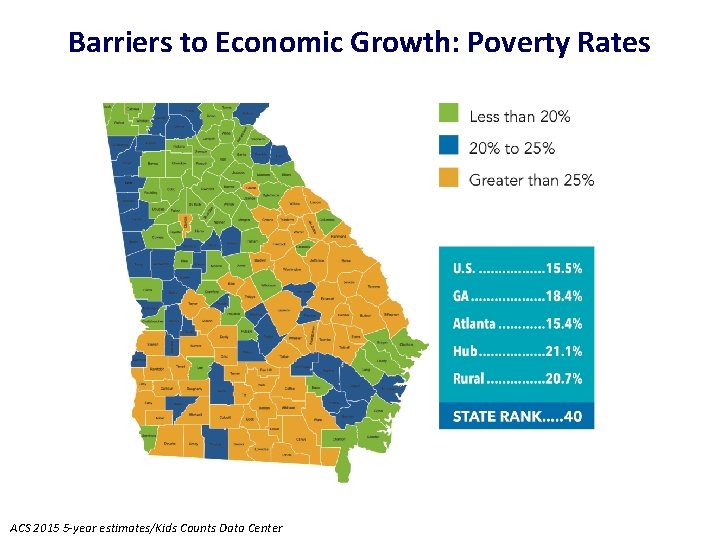
Barriers to Economic Growth: Poverty Rates ACS 2015 5 -year estimates/Kids Counts Data Center
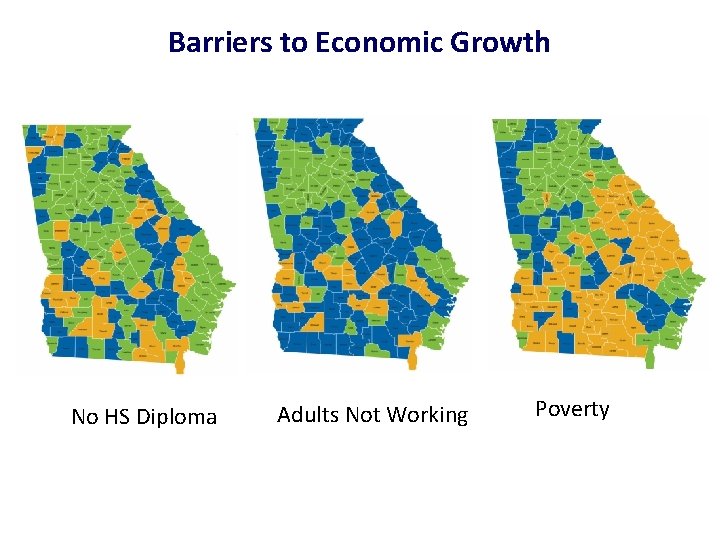
Barriers to Economic Growth No HS Diploma Adults Not Working Poverty
Challenges in the Birth to Work Pipeline
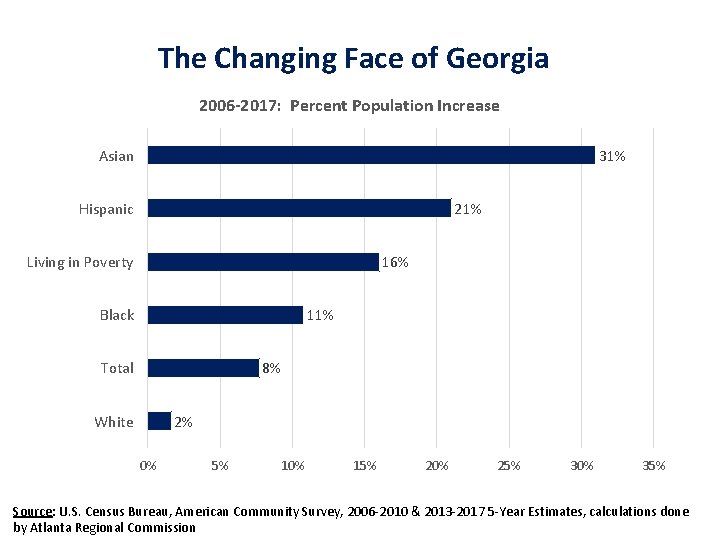
The Changing Face of Georgia 2006 -2017: Percent Population Increase Asian 31% Hispanic 21% Living in Poverty 16% Black 11% Total 8% White 2% 0% 5% 10% 15% 20% 25% 30% 35% Source: U. S. Census Bureau, American Community Survey, 2006 -2010 & 2013 -2017 5 -Year Estimates, calculations done by Atlanta Regional Commission
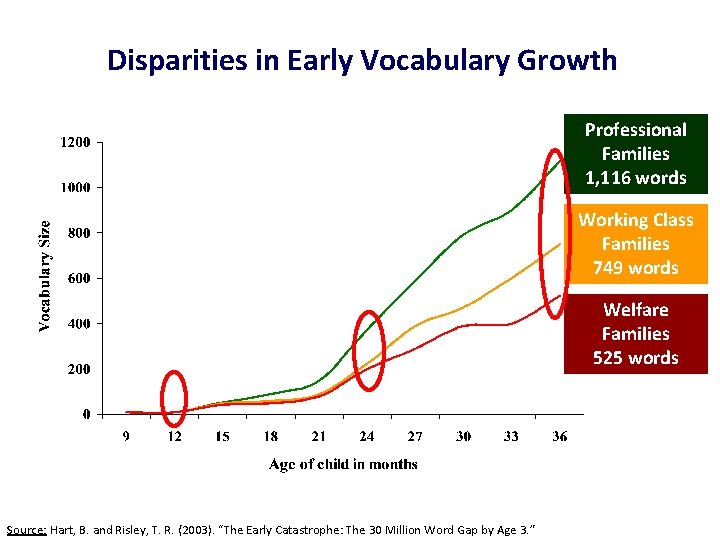
Disparities in Early Vocabulary Growth Professional Families 1, 116 words Working Class Families 749 words Welfare Families 525 words Source: Hart, B. and Risley, T. R. (2003). “The Early Catastrophe: The 30 Million Word Gap by Age 3. ”
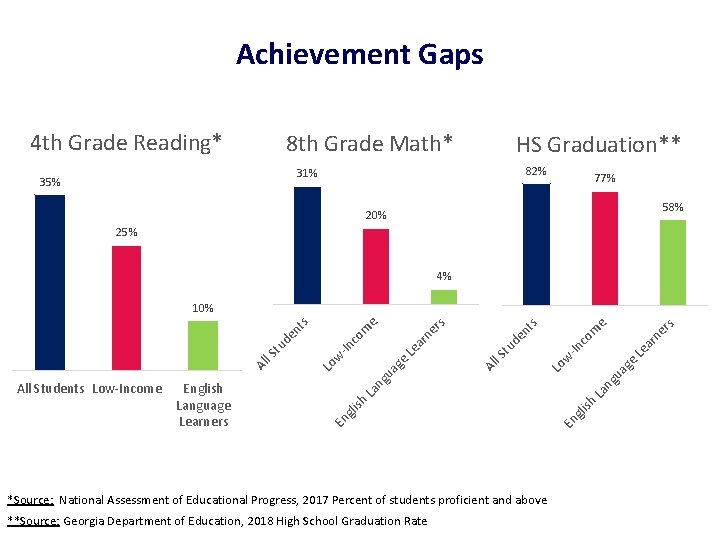
Achievement Gaps 4 th Grade Reading* 8 th Grade Math* HS Graduation** 82% 31% 35% 77% 58% 20% 25% 4% ar ne Le -In co ua ge Lo w *Source: National Assessment of Educational Progress, 2017 Percent of students proficient and above **Source: Georgia Department of Education, 2018 High School Graduation Rate rs e m nt tu de l. S Al Le ge En gli sh La ng ng ua s rs ar ne m -In co Lo w La English Language Learners sh All Students Low-Income En gli Al l. S tu de nt s e 10%
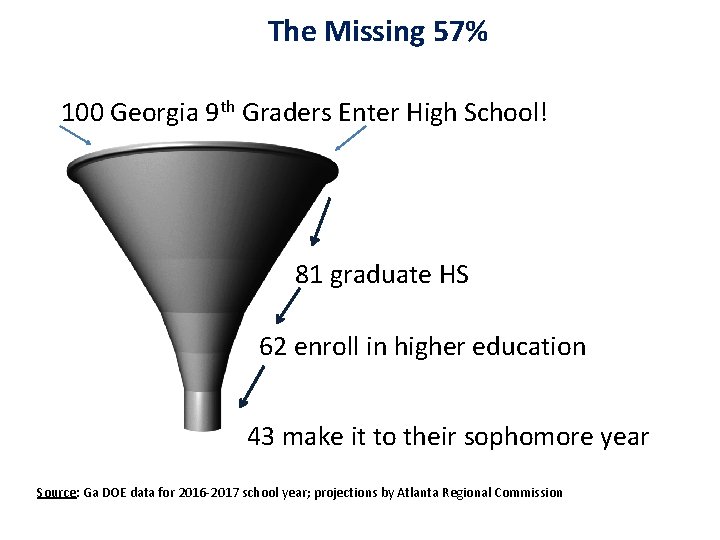
The Missing 57% 100 Georgia 9 th Graders Enter High School! 81 graduate HS 62 enroll in higher education 43 make it to their sophomore year Source: Ga DOE data for 2016 -2017 school year; projections by Atlanta Regional Commission
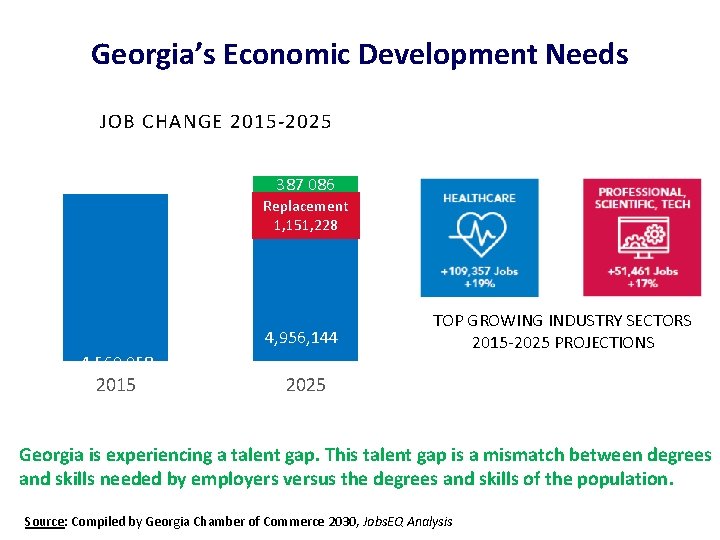
Georgia’s Economic Development Needs JOB CHANGE 2015 -2025 387 086 Replacement 1, 151, 228 4, 956, 144 4 569 058 2015 TOP GROWING INDUSTRY SECTORS 2015 -2025 PROJECTIONS 2025 Georgia is experiencing a talent gap. This talent gap is a mismatch between degrees and skills needed by employers versus the degrees and skills of the population. Source: Compiled by Georgia Chamber of Commerce 2030, Jobs. EQ Analysis
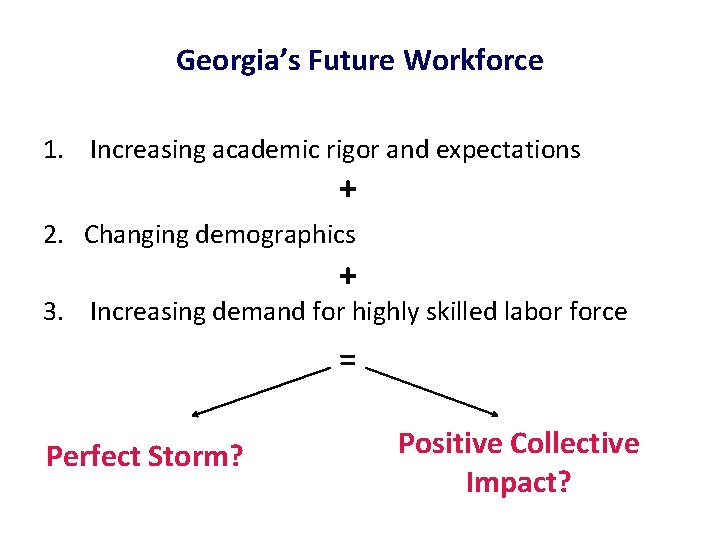
Georgia’s Future Workforce 1. Increasing academic rigor and expectations + 2. Changing demographics + 3. Increasing demand for highly skilled labor force = Perfect Storm? Positive Collective Impact?
What Can We Do?
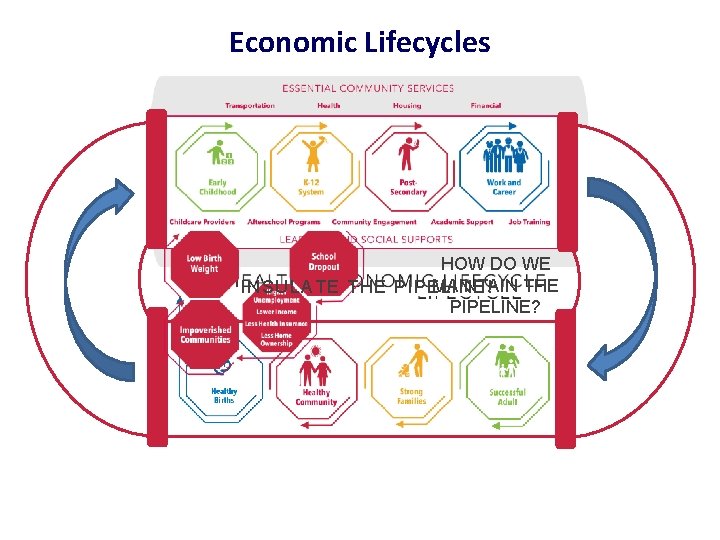
Economic Lifecycles HOW DO WE MAINTAIN THE INSULATE THE PIPELINE! PIPELINE?
Profile of Child Wellbeing and Academic Achievement 50% 45% 40% 35% 30% 25% 20% 15% 10% 5% 0% 2013 2014 2015 2016 2017 Source: Georgia Kids Count, Georgia Family Connection Partnership, http: //www. gafcp. org Bartow Catoosa Chattooga Dade Fannin Floyd Gilmer Gordon Murray Pickens Walker Whitfield
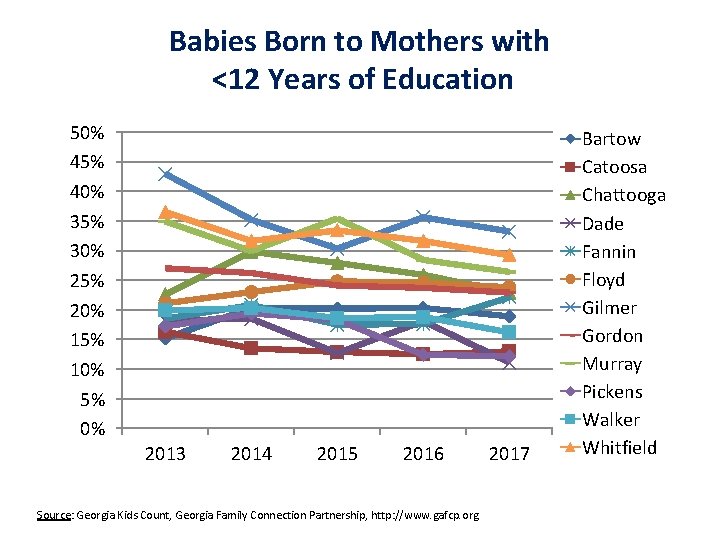
Babies Born to Mothers with <12 Years of Education 50% 45% 40% 35% 30% 25% 20% 15% 10% 5% 0% 2013 2014 2015 2016 Source: Georgia Kids Count, Georgia Family Connection Partnership, http: //www. gafcp. org 2017 Bartow Catoosa Chattooga Dade Fannin Floyd Gilmer Gordon Murray Pickens Walker Whitfield
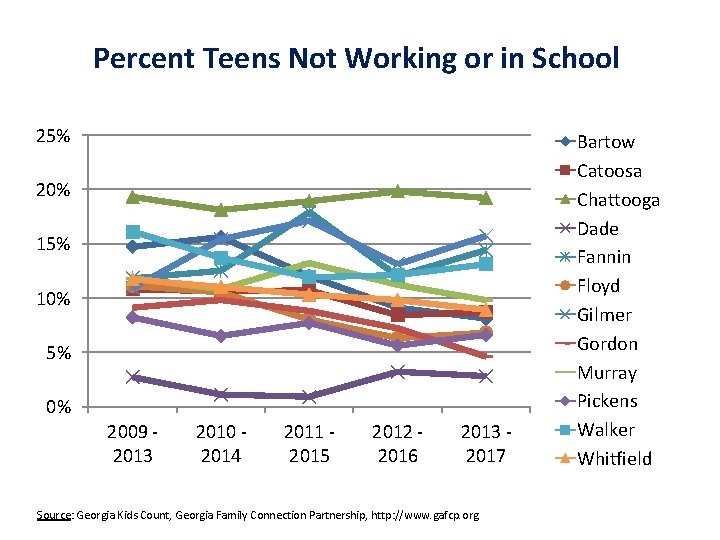
Percent Teens Not Working or in School 25% 20% 15% 10% 5% 0% 2009 2013 2010 2014 2011 2015 2012 2016 2013 2017 Source: Georgia Kids Count, Georgia Family Connection Partnership, http: //www. gafcp. org Bartow Catoosa Chattooga Dade Fannin Floyd Gilmer Gordon Murray Pickens Walker Whitfield
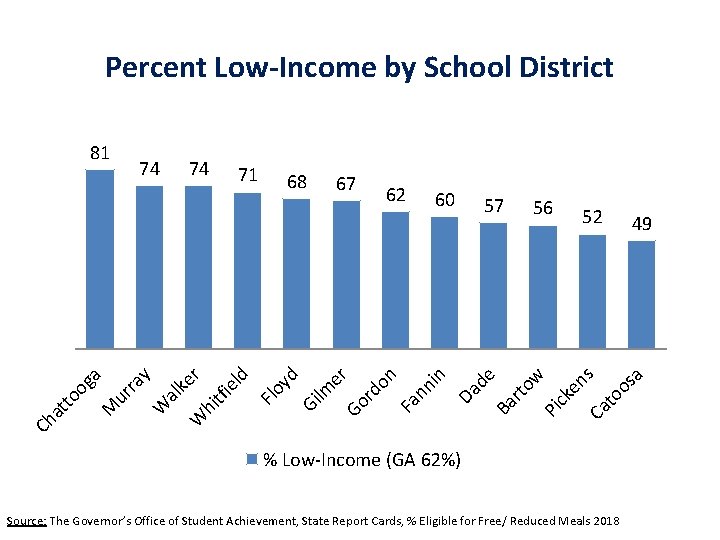
Percent Low-Income by School District 67 57 56 52 49 nn in Da de Ba rto w Pi ck en Ca s to os a 60 Fa rd on 62 Go lm er Gi yd 68 Flo el d 71 hi tfi al ke r 74 W M ur ra y 74 W Ch at to o ga 81 % Low-Income (GA 62%) Source: The Governor’s Office of Student Achievement, State Report Cards, % Eligible for Free/ Reduced Meals 2018
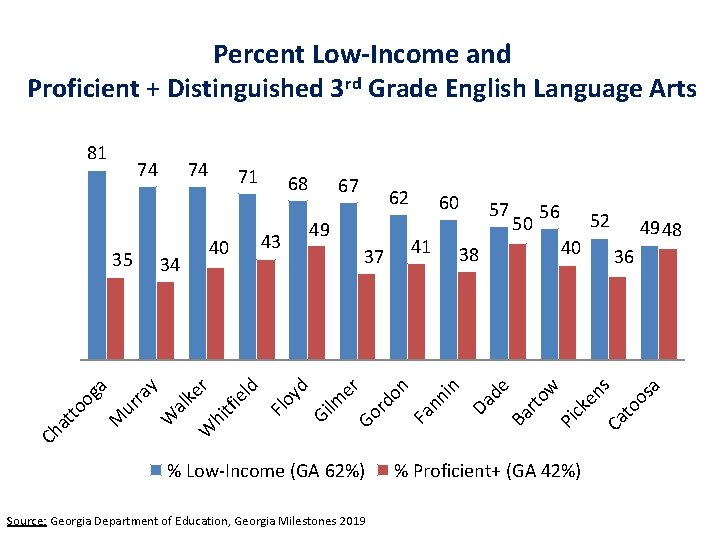
Percent Low-Income and Proficient + Distinguished 3 rd Grade English Language Arts % Low-Income (GA 62%) Source: Georgia Department of Education, Georgia Milestones 2019 52 49 48 40 % Proficient+ (GA 42%) os a to en s 36 ck Pi Da 56 w 38 50 rto 41 Fa on Go rd er lm yd 37 57 nn in 49 60 Ba 62 de 67 Gi hi tfi Flo d r ke al y W 68 43 40 34 ur ra M 71 Ca Ch at to o ga 35 74 el 74 W 81
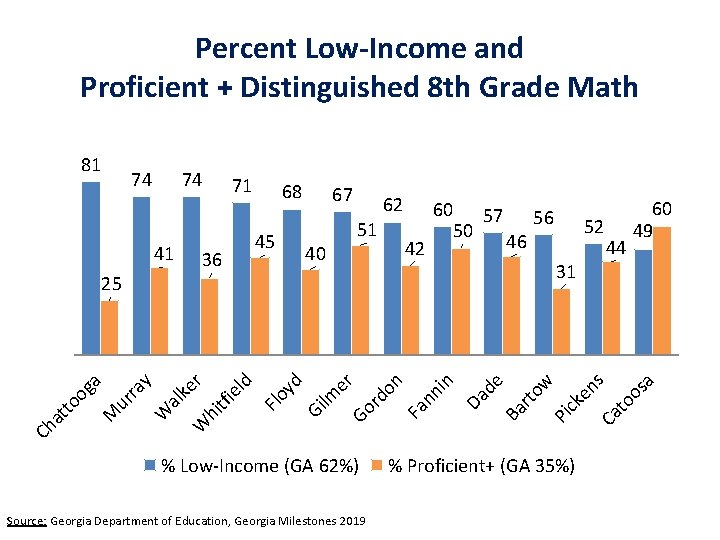
Percent Low-Income and Proficient + Distinguished 8 th Grade Math Source: Georgia Department of Education, Georgia Milestones 2019 46 56 52 44 to os s % Proficient+ (GA 35%) Ca en Pi ck w rto e 31 60 49 a 50 57 Ba Fa nn in 42 on rd Go % Low-Income (GA 62%) 60 Da d 62 51 lm er hi tfi 67 40 yd r ke W W al y ur ra M ga to o at Ch 45 36 25 68 Flo 41 71 Gi 74 d 74 el 81
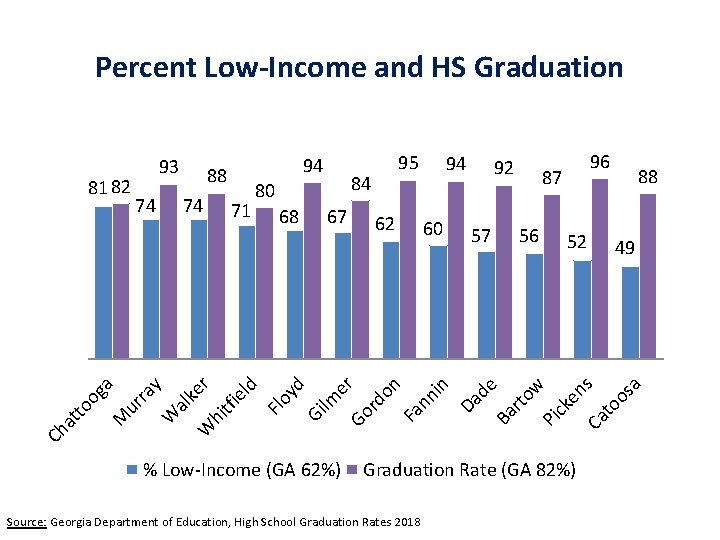
Percent Low-Income and HS Graduation 74 94 88 74 71 84 80 68 95 67 62 94 60 92 57 96 87 56 52 M ga to o at Ch 88 49 ur ra y W al ke W r hi tfi el d Flo yd Gi lm er Go rd on Fa nn in Da de Ba rto w Pi ck en Ca s to os a 81 82 93 % Low-Income (GA 62%) Graduation Rate (GA 82%) Source: Georgia Department of Education, High School Graduation Rates 2018
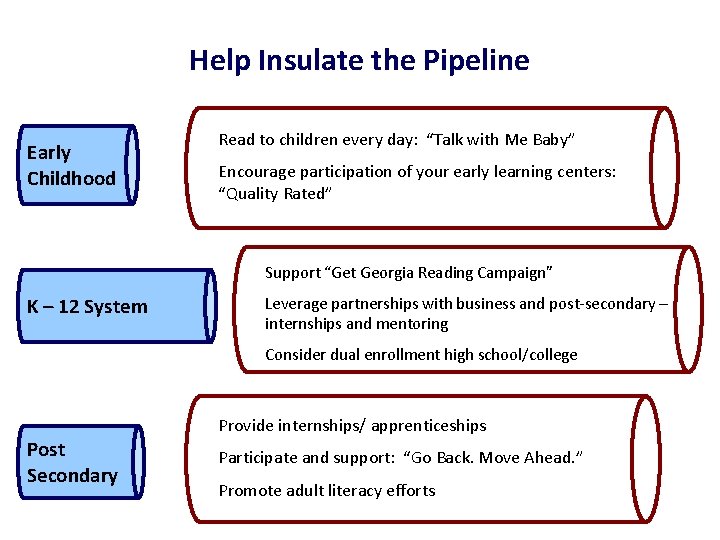
Help Insulate the Pipeline Early Childhood Read to children every day: “Talk with Me Baby” Encourage participation of your early learning centers: “Quality Rated” Support “Get Georgia Reading Campaign” K – 12 System Leverage partnerships with business and post-secondary – internships and mentoring Consider dual enrollment high school/college Provide internships/ apprenticeships Post Secondary Participate and support: “Go Back. Move Ahead. ” Promote adult literacy efforts
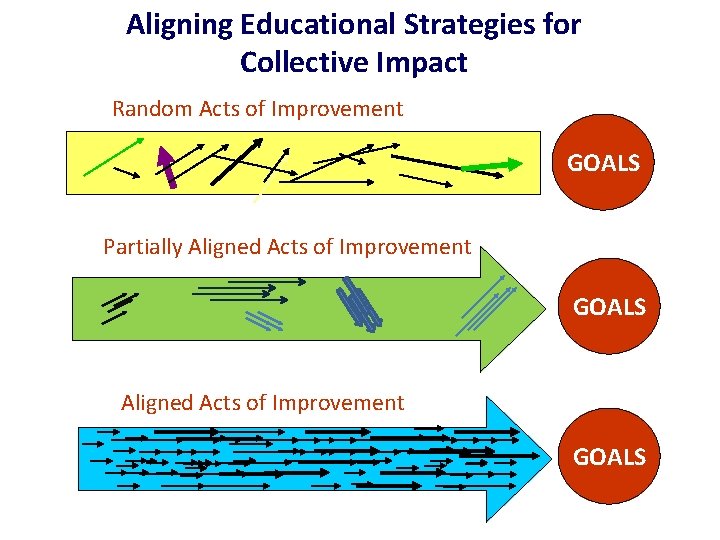
Aligning Educational Strategies for Collective Impact Random Acts of Improvement GOALS Partially Aligned Acts of Improvement GOALS
Small Group Discussion
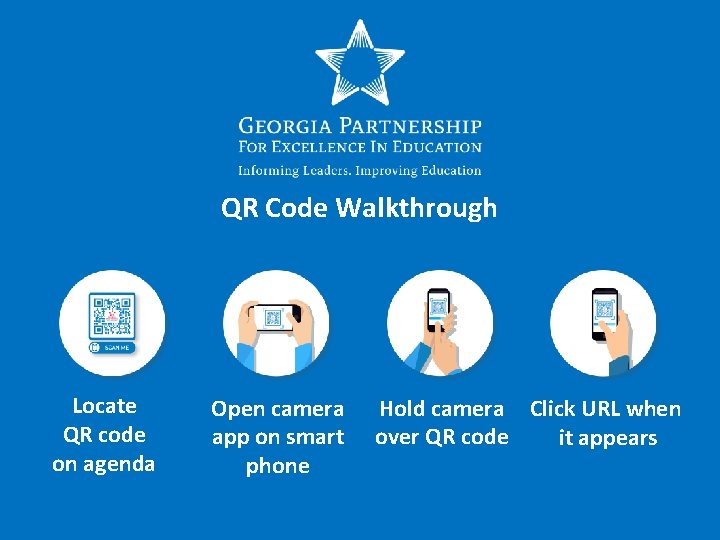
QR Code Walkthrough Locate QR code on agenda Open camera app on smart phone Hold camera Click URL when over QR code it appears
Connect with us Twitter: @GAPartnership Facebook: Georgia Partnership for Excellence in Education Instagram: @GAPARTNERSHIP PROGRAM SPONSOR: Linked. In: Georgia Partnership for Excellence in Education Website: www. gpee. org
- Slides: 40