
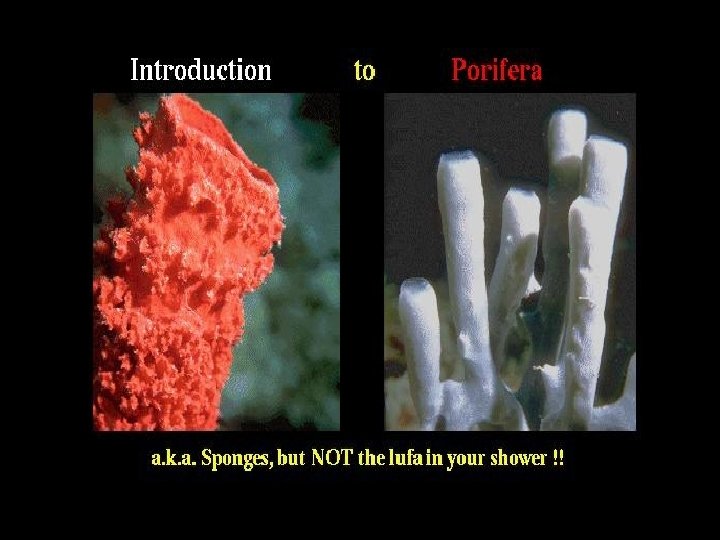
Sponges Phylum Porifera The most primitive multicellular animals

- Slides: 32
Sponges • Phylum Porifera • The most primitive multi-cellular animals that possess no proper organs • Multicellular animals but do not contain true tissues • Body is covered in pores and canals • Sessile (permanently attached to a surface)
Sponges • All aquatic • > 10, 000 species: 150 freshwater species, 9, 850 marine species • Symmetry: Asymmetrical or radially symmetrical • Classified according to shape (asconoid, syconoid, leuconoid)
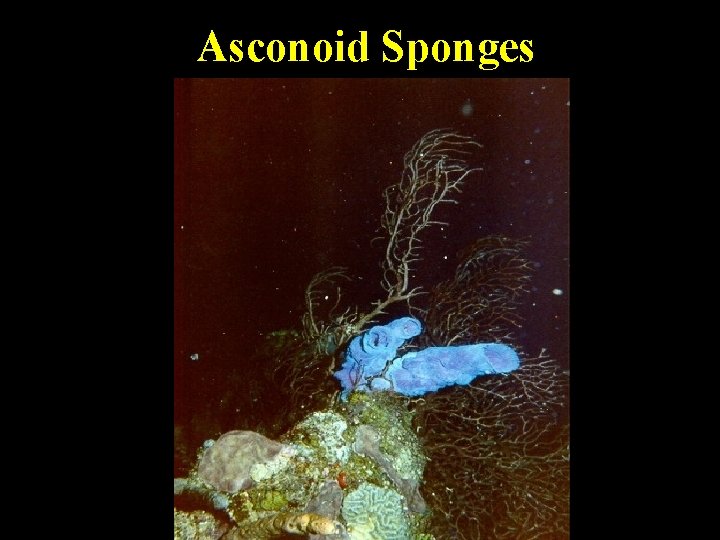
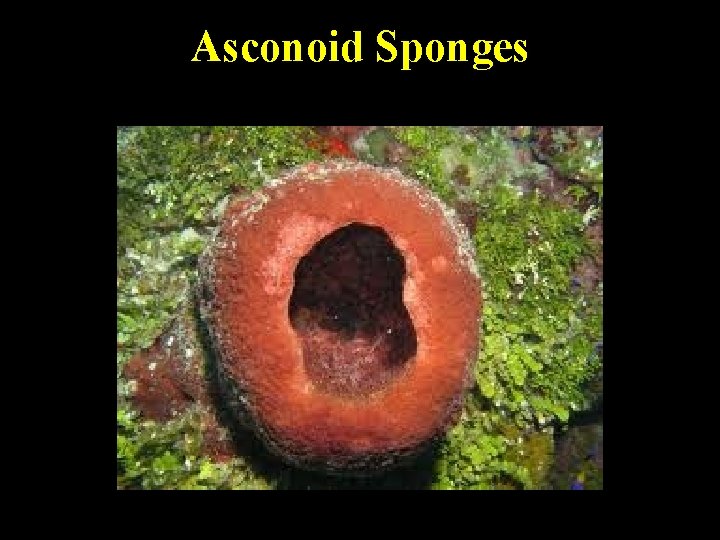
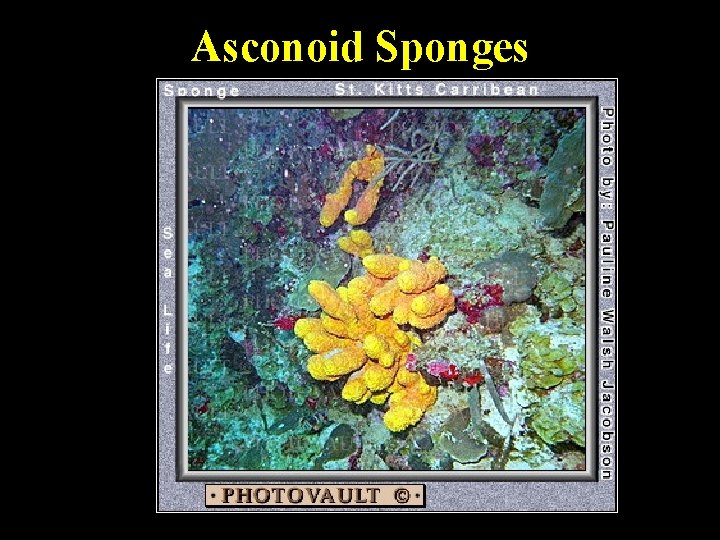
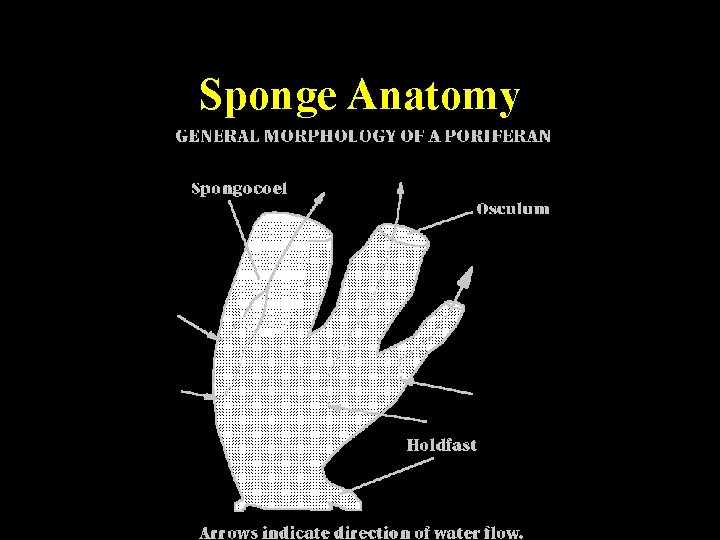
Asconoid Sponges • Shaped like a simple tube perforated by pores • Spongocoel: open, internal part of tube • Osculum: single opening to spongocoel
Asconoid Sponges
Asconoid Sponges
Asconoid Sponges
Sponge Anatomy
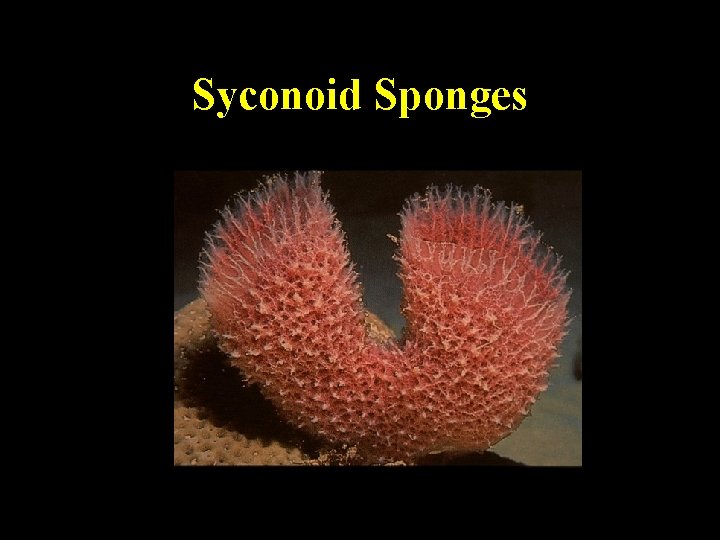
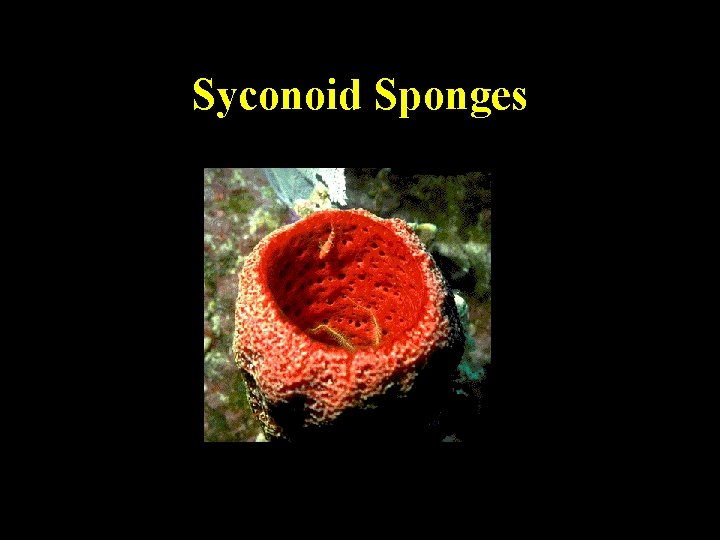
Syconoid Sponges • • More complex than asconoid sponges Larger in size Tubular shape with a single osculum Thicker body wall with longer pore canals • Canals are lined by choanocytes
Syconoid Sponges
Syconoid Sponges
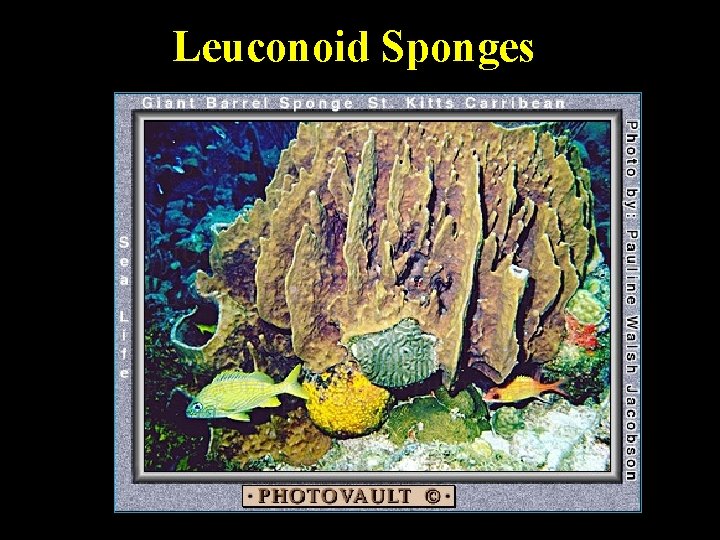
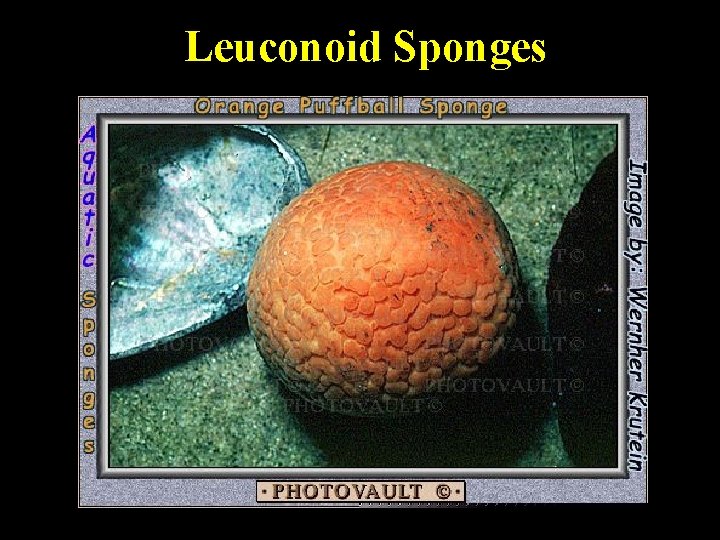
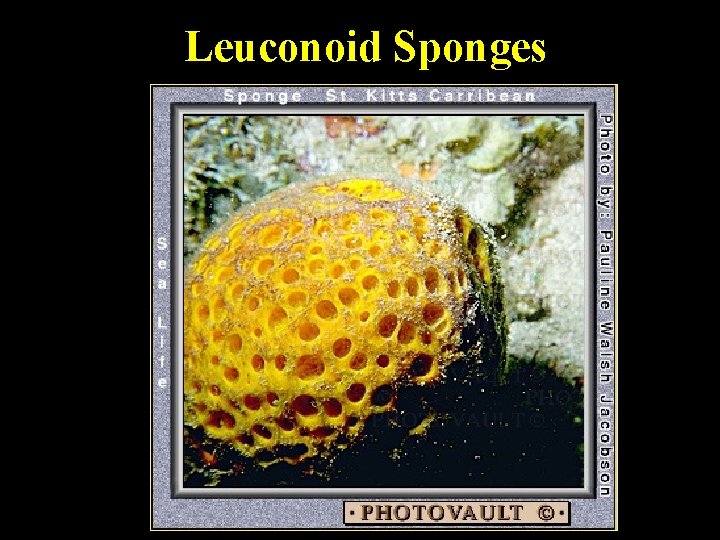
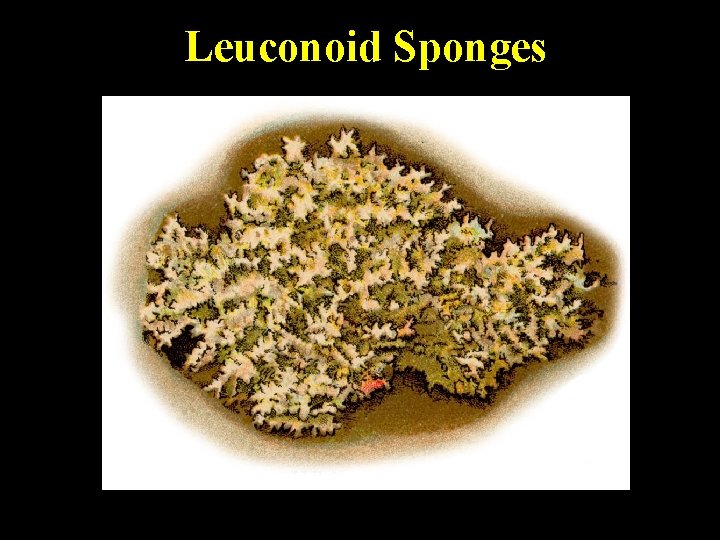
Leuconoid Sponges • Largest and most complex sponges • Made up of masses of tissue penetrated by numerous canals • Canals lead to many small chambers lined with flagellated collar cells • Central canal and spongocoel eliminated • Thick body wall with many folds that allow for high surface area and low volume
Leuconoid Sponges
Leuconoid Sponges
Leuconoid Sponges
Leuconoid Sponges
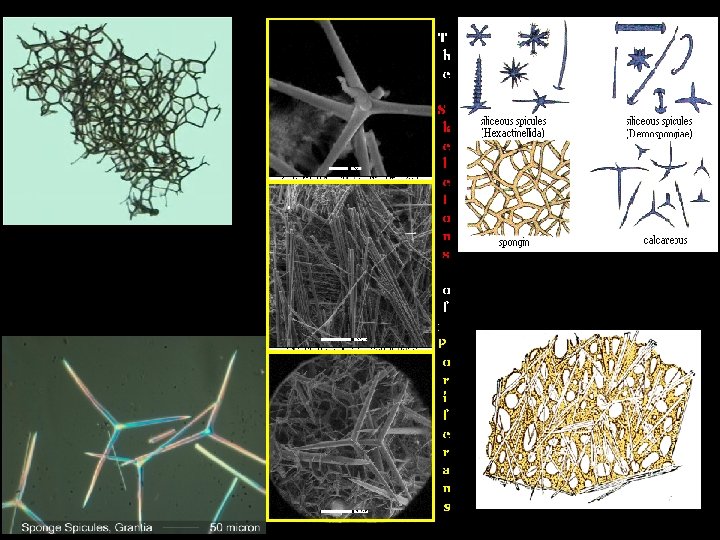
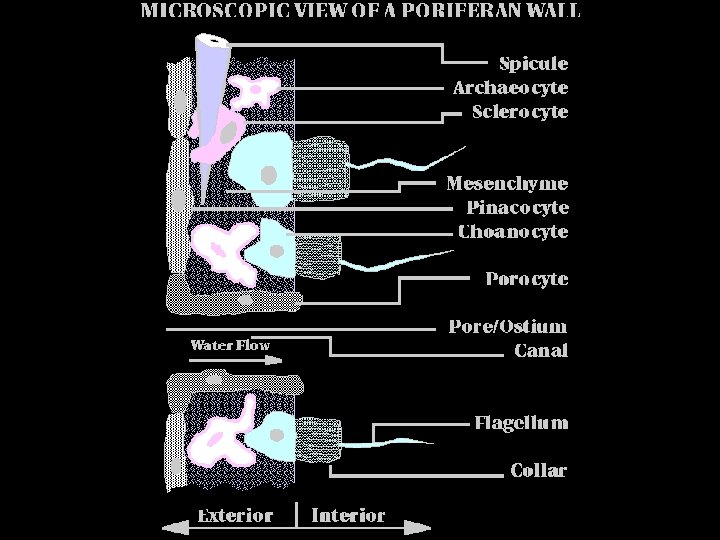
Sponge Anatomy • Skeletons consist of spicules and spongin • Many sponges have a skeleton made up of spicules (spiny strengthening rods made of silica or calcium) • Other sponges have a skeleton made up of spongin (a flexible, fibrous material) • Some sponges have both
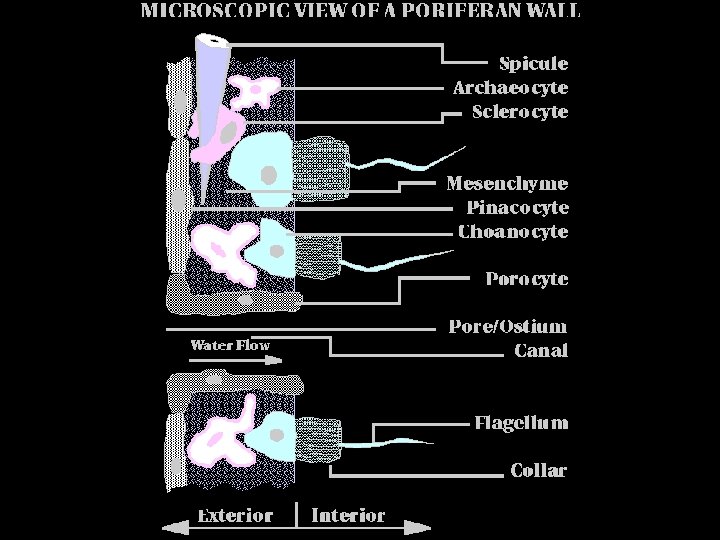
Sponge Anatomy • 3 layers: – Epithelial: Outer protective layer – Mesenchyme: Middle jelly-like layer also contains skeletal sponging and spicules – Inner: lined with choanocytes and forms the spongocoel
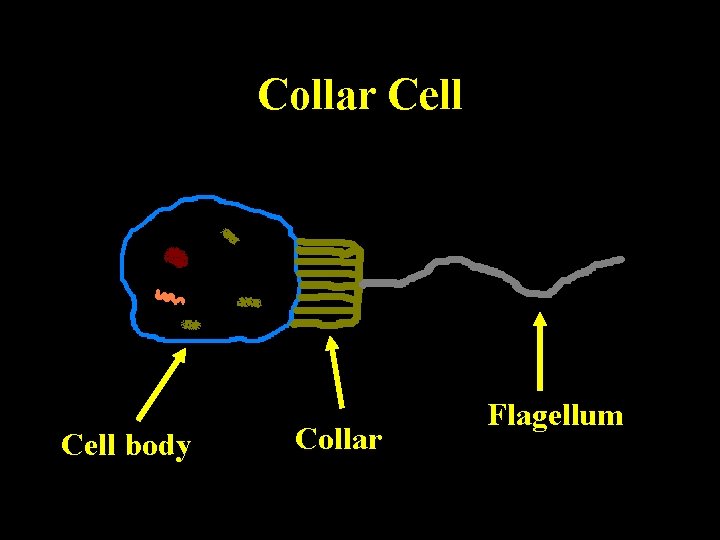
Sponge Anatomy • Types of Cells – Amoebocytes: mobile cells found in the mesenchyme – Porocytes: cells that line the pores – Choanocytes AKA collar cells • Specialized cells with a jelly-like collar and a single flagellum – Collar traps plankton – Flagellum creates water current • These cells line the central canal and pores
Collar Cell body Collar Flagellum
Sponge Anatomy • Types of Cells (cont. ) – Pinacocyte: cells that form the epithelial layer
How Do Sponges Eat? • Large volumes of water pass through a sponge’s body every day (5. 3 gallons for a large sponge) • Filter plankton and detritus from water • Particles of food are trapped by jelly-like collar of choanocyte and is phagocytised by cell body • Wastes are excreted into spongocoel and expelled through osculum
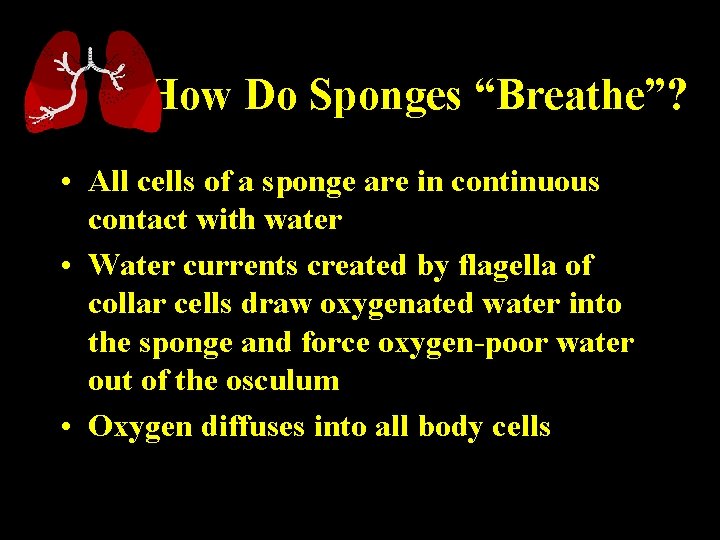
How Do Sponges “Breathe”? • All cells of a sponge are in continuous contact with water • Water currents created by flagella of collar cells draw oxygenated water into the sponge and force oxygen-poor water out of the osculum • Oxygen diffuses into all body cells
Not Much of Anything • Sponges don’t have – a nervous system – a circulatory system – muscles – a digestive system • Why? Because they don’t have any organs which are needed to make a “system”…they don’t even have tissues that make up organs!
Sponge Reproduction • Only way a sponge species can disperse and colonize new areas • Both sexual and asexual reproduction • Regeneration can also be a means of reproduction
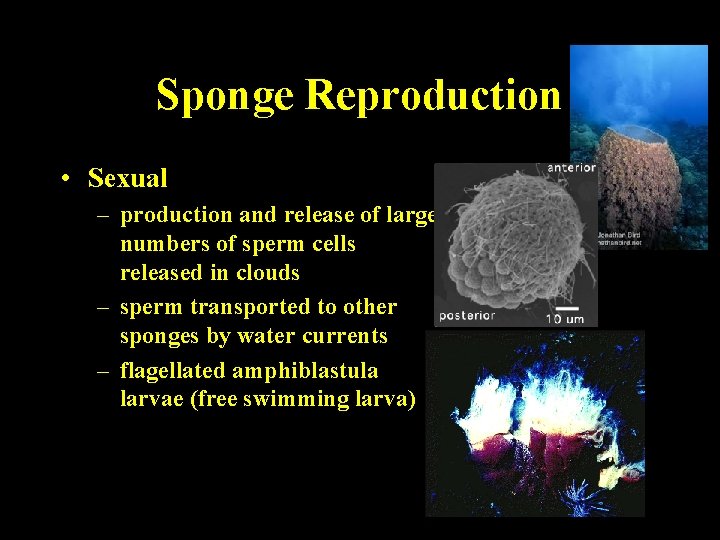
Sponge Reproduction • Sexual – production and release of large numbers of sperm cells released in clouds – sperm transported to other sponges by water currents – flagellated amphiblastula larvae (free swimming larva)
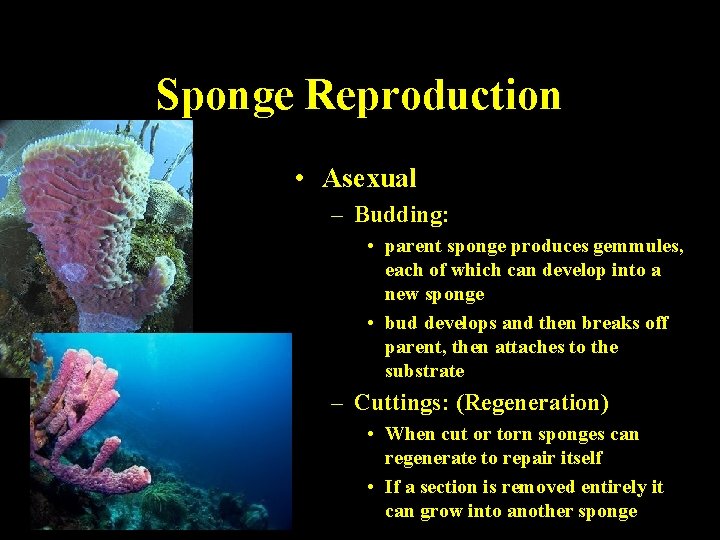
Sponge Reproduction • Asexual – Budding: • parent sponge produces gemmules, each of which can develop into a new sponge • bud develops and then breaks off parent, then attaches to the substrate – Cuttings: (Regeneration) • When cut or torn sponges can regenerate to repair itself • If a section is removed entirely it can grow into another sponge
Threats and Predators of Sponges • Sedimentation: clog up pores – agricultural practices – deforestation – dredging or other disturbance of water • Parasitism • Aquatic and terrestrial-based pollutants kill or weaken sponges • Reef destruction destroys sponge habitats
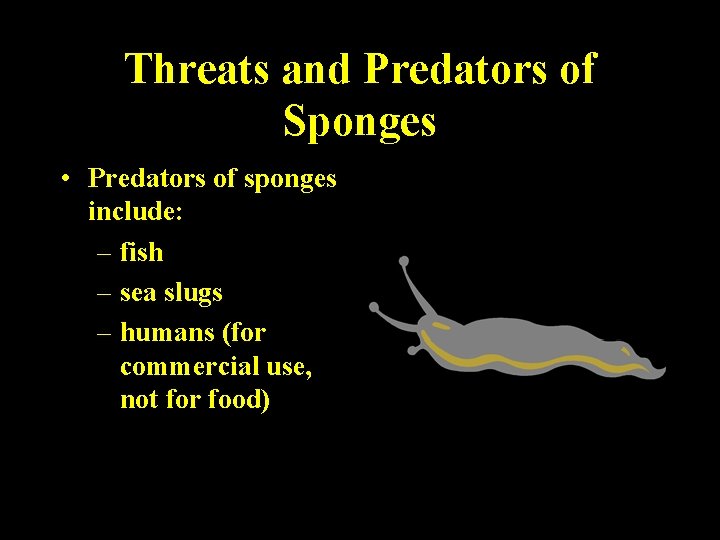
Threats and Predators of Sponges • Predators of sponges include: – fish – sea slugs – humans (for commercial use, not for food)