
Spoken language phonetics Transcription articulation consonants LING 400
![A language with no writing system Witsuwit’en 1. ‘driftwood’ 2. ‘cane’ 3. ‘footwear’ [təz]](https://slidetodoc.com/presentation_image_h2/6834db6b6f1c8ff6499a740aaf11c599/image-4.jpg "A language with no writing system Witsuwit’en 1. ‘driftwood’ 2. ‘cane’ 3. ‘footwear’ [təz]")






![Back to phonetic transcription • Transcription symbols abbreviate phonetic descriptions – E. g. [p]](https://slidetodoc.com/presentation_image_h2/6834db6b6f1c8ff6499a740aaf11c599/image-24.jpg "Back to phonetic transcription • Transcription symbols abbreviate phonetic descriptions – E. g. [p]")
- Slides: 25
Spoken language phonetics: Transcription, articulation, consonants LING 400 Winter 2010
Overview • • Phonetic transcription Phonetics Articulation of speech sounds Description of consonants cell phones off please
What is a phonetic transcription? • Way of writing languages that – have no writing system or – have writing systems that don’t represent sounds consistently • Spoken vs. signed languages
A language with no writing system Witsuwit’en 1. ‘driftwood’ 2. ‘cane’ 3. ‘footwear’ [təz] [thʌz] [qhɛ] Notice • some familiar symbols (but may have new values) • some unfamiliar symbols
A language that doesn’t represent sound consistently • English • Different letters but same sound – she, tree, ski, believe, receive, amoeba • Same letter but different sounds – red, she, the, get
Value of phonetic transcription • Allows us to “freeze” language and talk about – structure – how structure learned – how structure varies between speakers – how structure changes over time • A universal framework for the description of spoken languages
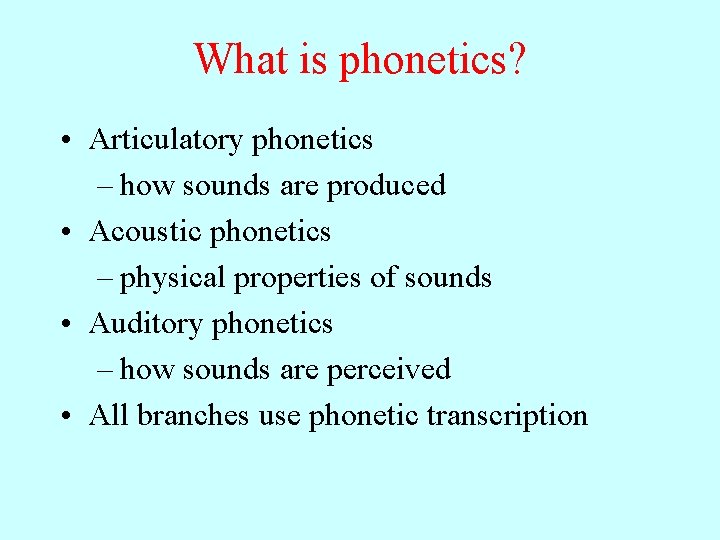
What is phonetics? • Articulatory phonetics – how sounds are produced • Acoustic phonetics – physical properties of sounds • Auditory phonetics – how sounds are perceived • All branches use phonetic transcription
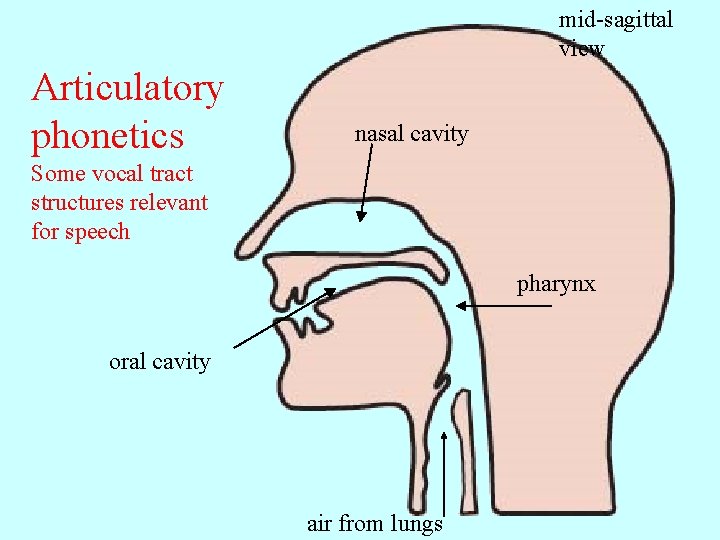
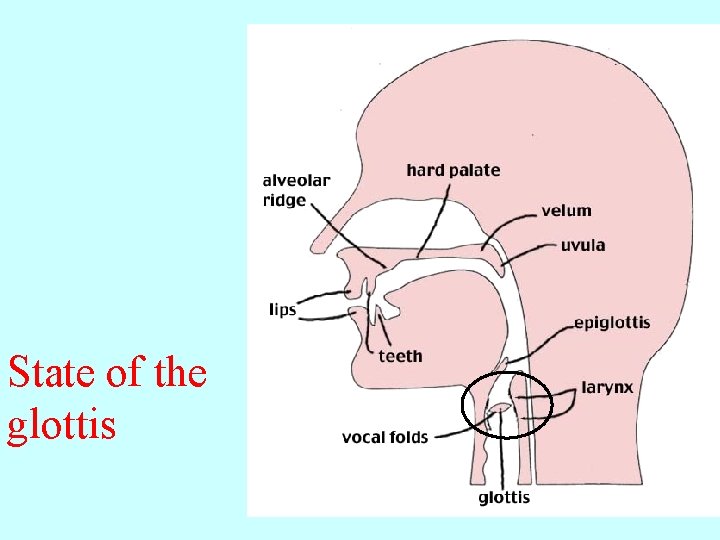
mid-sagittal view Articulatory phonetics nasal cavity Some vocal tract structures relevant for speech pharynx oral cavity air from lungs
More vocal tract structures relevant for speech Distinct sound results from location, degree of constriction in vocal tract
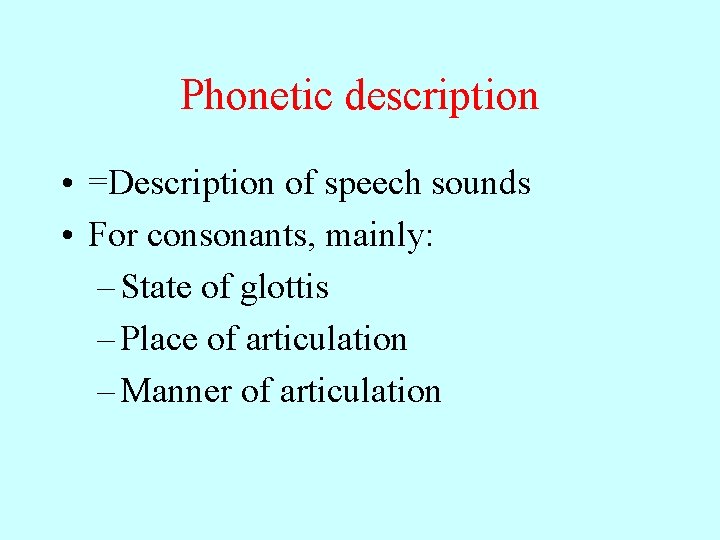
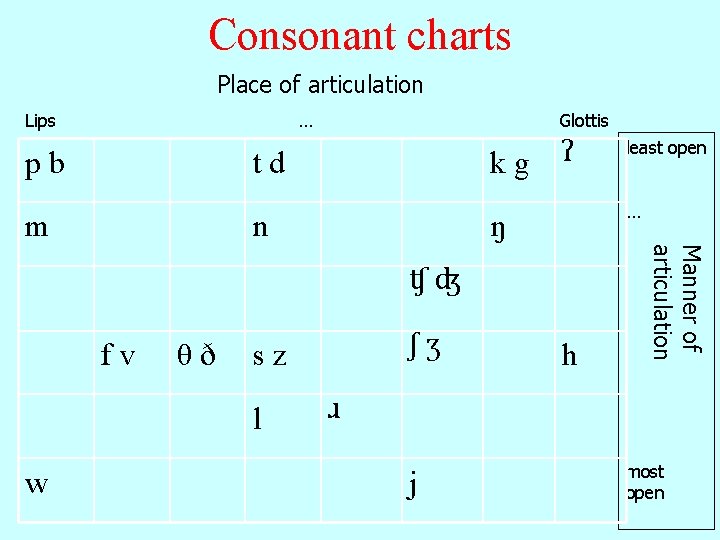
Phonetic description • =Description of speech sounds • For consonants, mainly: – State of glottis – Place of articulation – Manner of articulation
Some places of articulation upper articulator lower articulator (“dancers”) “lips” (1) “ 3 different parts of the tongue” • tip(3)/blade(6) • body(front-7) • back-8 (and root) “soft palate” “larynx”
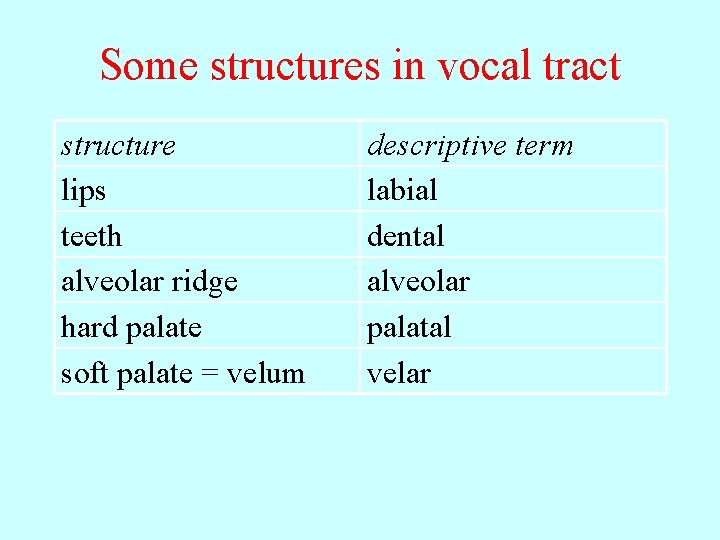
Some structures in vocal tract structure lips teeth alveolar ridge hard palate soft palate = velum descriptive term labial dental alveolar palatal velar
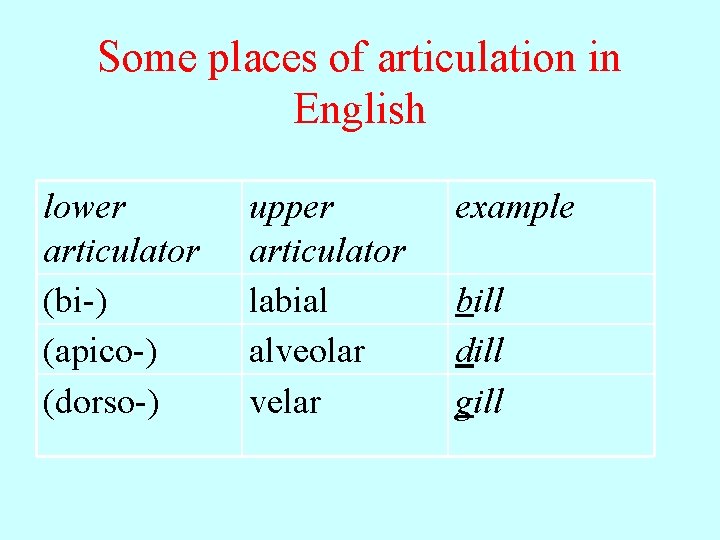
Some places of articulation in English lower articulator (bi-) (apico-) (dorso-) upper articulator labial alveolar velar example bill dill gill
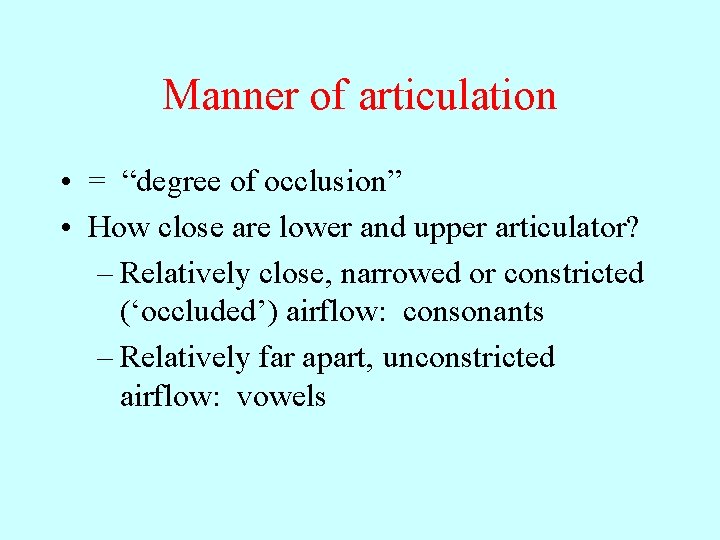
Manner of articulation • = “degree of occlusion” • How close are lower and upper articulator? – Relatively close, narrowed or constricted (‘occluded’) airflow: consonants – Relatively far apart, unconstricted airflow: vowels
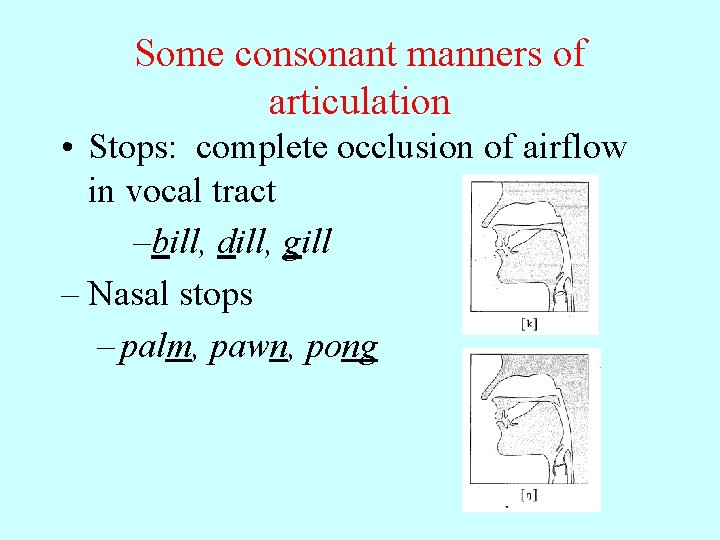
Some consonant manners of articulation • Stops: complete occlusion of airflow in vocal tract –bill, dill, gill – Nasal stops – palm, pawn, pong
Some English fricatives air pressure build-up behind occlusion; turbulent airflow place of articulation example labiodental fin interdental thin alveolar sin palato-alveolar shin laryngeal hinder
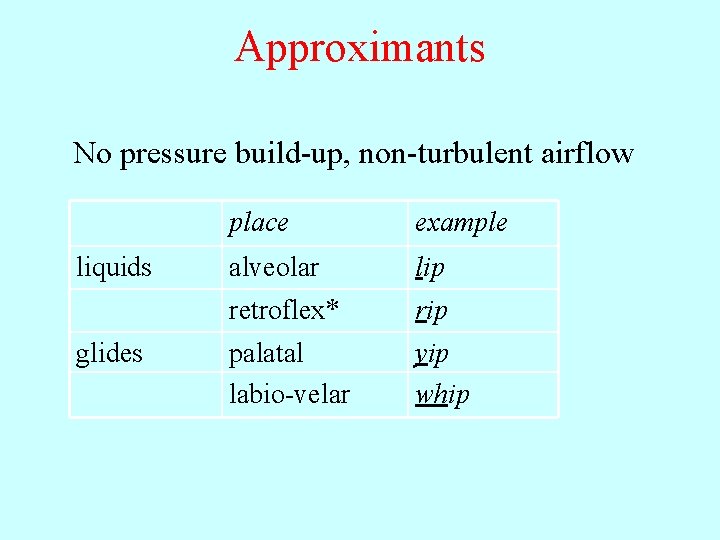
Approximants No pressure build-up, non-turbulent airflow liquids glides place example alveolar lip retroflex* rip palatal labio-velar yip whip
State of the glottis
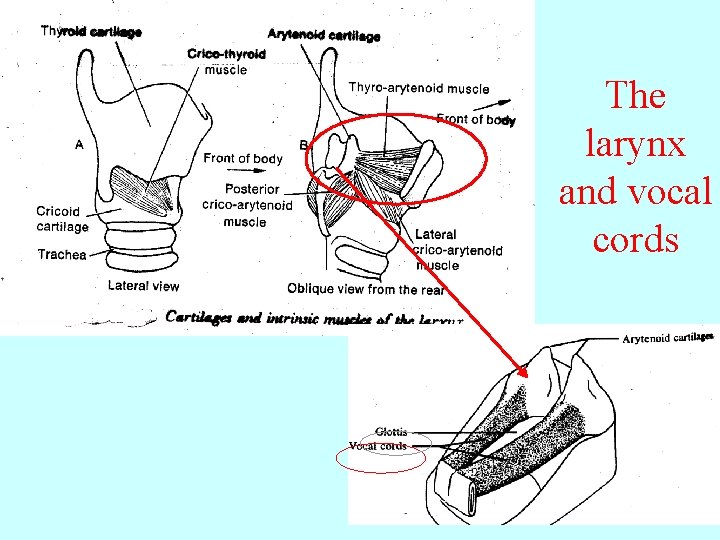
The larynx and vocal cords
The Human Language Evolves (Human Language, pt. 3) • Video clip of the vocal cords in action • Lieberman: The vocal cords “convert a steady flow of air from the lungs, like ([h]), which you cannot hear, into very, very loud” [acoustic energy] • Vocal cords pulse 60 -300 x/sec
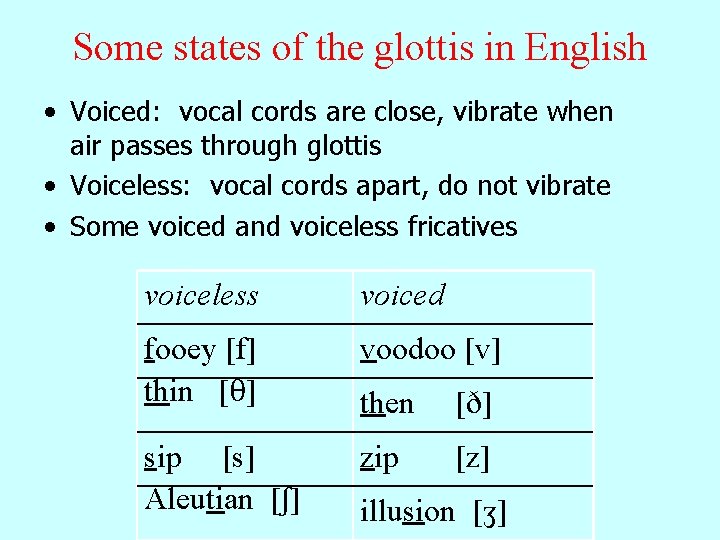
Some states of the glottis in English • Voiced: vocal cords are close, vibrate when air passes through glottis • Voiceless: vocal cords apart, do not vibrate • Some voiced and voiceless fricatives voiceless voiced fooey [f] thin [θ] voodoo [v] then [ð] sip [s] Aleutian [ʃ] zip [z] illusion [ʒ]
Glottal stop • A third state of the glottis: complete occlusion (stop) at vocal cords • Examples – uh-oh, unh-unh – For some people • Hawaii – _apple, the _apple – “t” before syllabic [n] • mountain, Gorton
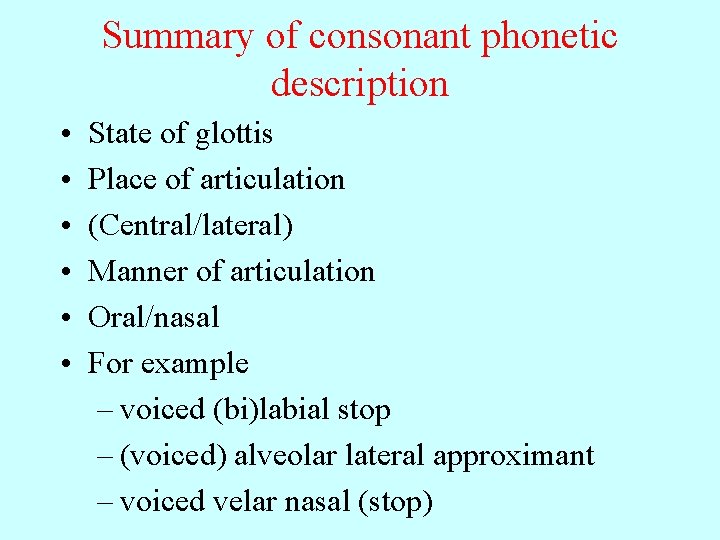
Summary of consonant phonetic description • • • State of glottis Place of articulation (Central/lateral) Manner of articulation Oral/nasal For example – voiced (bi)labial stop – (voiced) alveolar lateral approximant – voiced velar nasal (stop)
Back to phonetic transcription • Transcription symbols abbreviate phonetic descriptions – E. g. [p] = voiceless bilabial stop – [ʔ] = glottal stop • Phonetic transcription in square brackets • International Phonetic Association (http: //www. arts. gla. ac. uk/IPA/ipachart. html) – interactive chart: http: //www. ladefogeds. com/course/chapter 1. html
Consonant charts Place of articulation Lips … pb Glottis td m kg n ʔ … ŋ θð l w ʃʒ sz h Manner of articulation ʧʤ fv least open ɹ j most open