
Splinting Immobilization Learning Objectives Appropriate immobilization for common

Splinting & Immobilization

Learning Objectives Appropriate immobilization for common extremity injuries.

What Should Be Checked Both Pre & Post Immobilization?
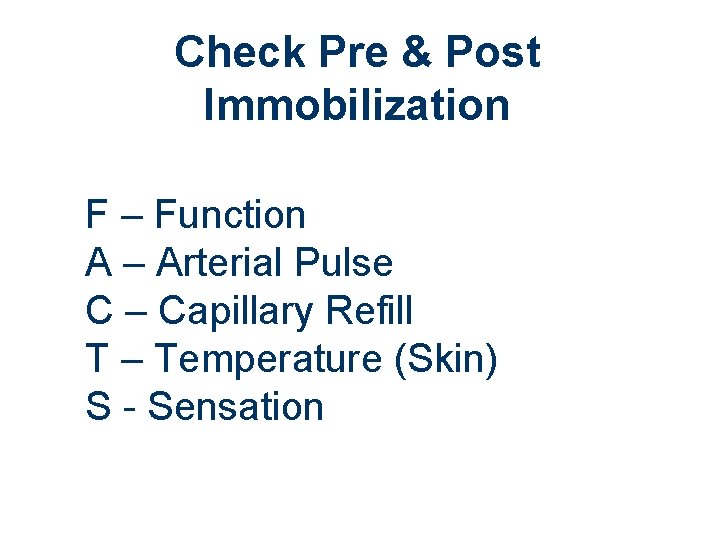
Check Pre & Post Immobilization F – Function A – Arterial Pulse C – Capillary Refill T – Temperature (Skin) S - Sensation
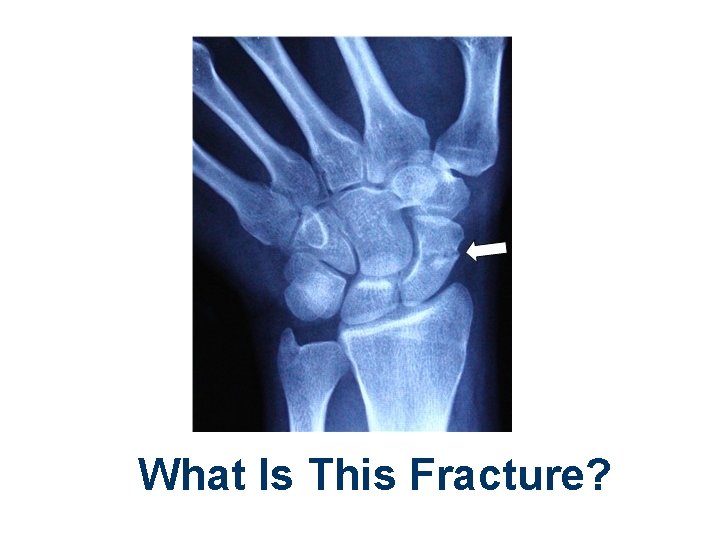
What Is This Fracture?

Scaphoid Fracture How Should It Be Immobilized?

What Is This Injury?
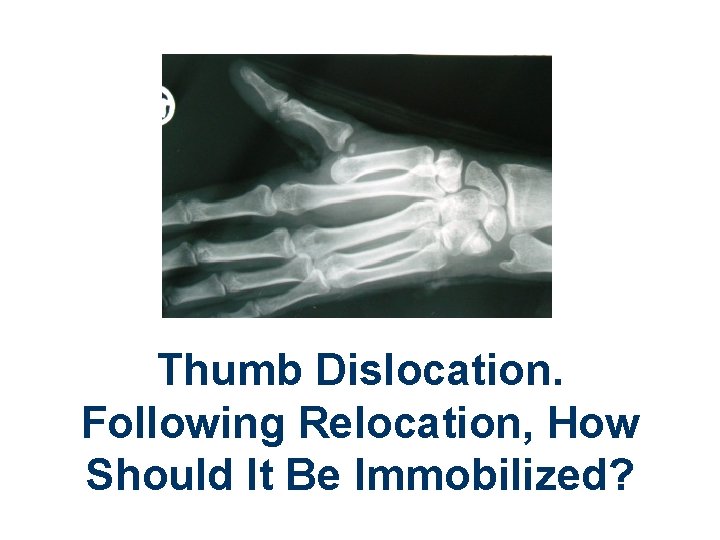
Thumb Dislocation. Following Relocation, How Should It Be Immobilized?

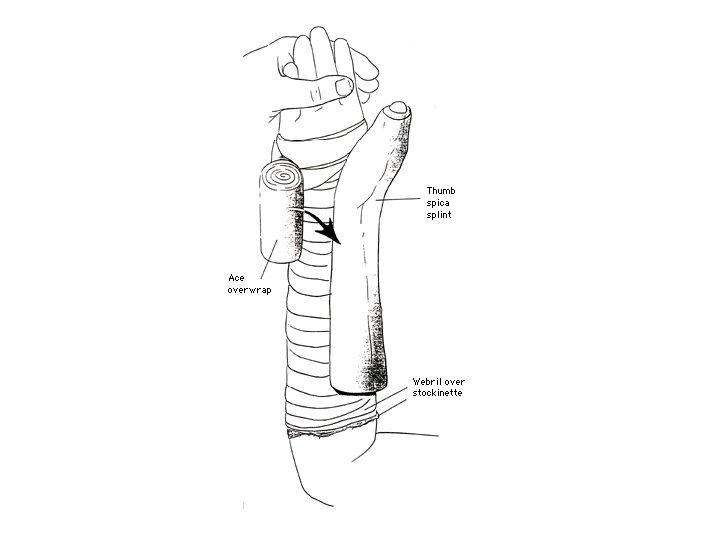
Thumb Spica Splint Indications for thumb spica: n Scaphoid fractures n Thumb dislocations/proximal fracture n Tendonitis Key Points: n 2” (3 fingers) below the antecubital fossa n Spiral at tip of thumb
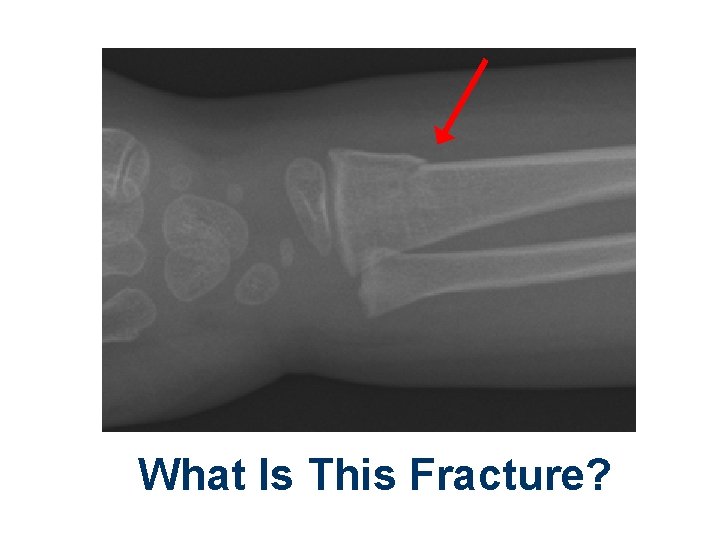
What Is This Fracture?
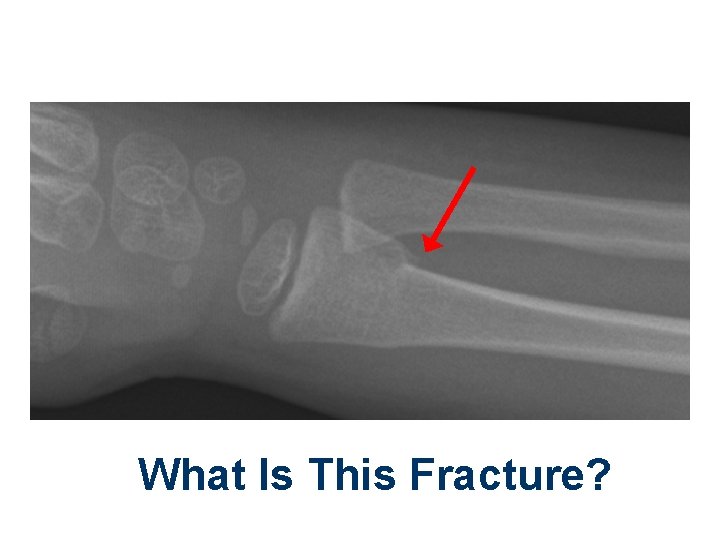
What Is This Fracture?
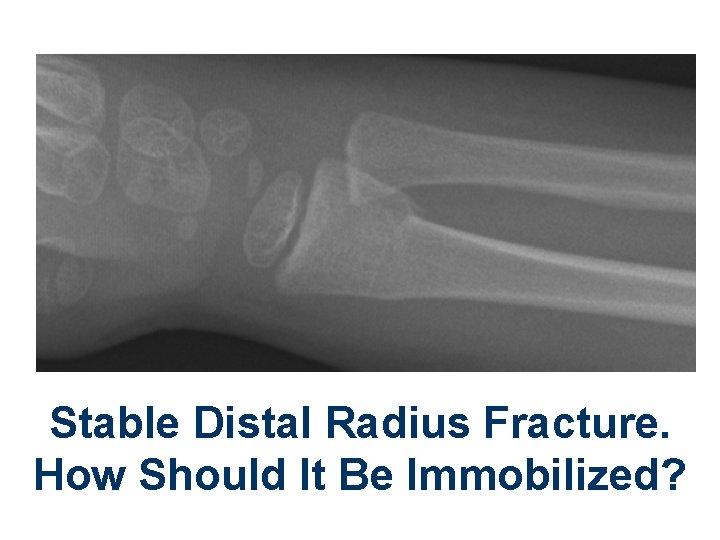
Stable Distal Radius Fracture. How Should It Be Immobilized?

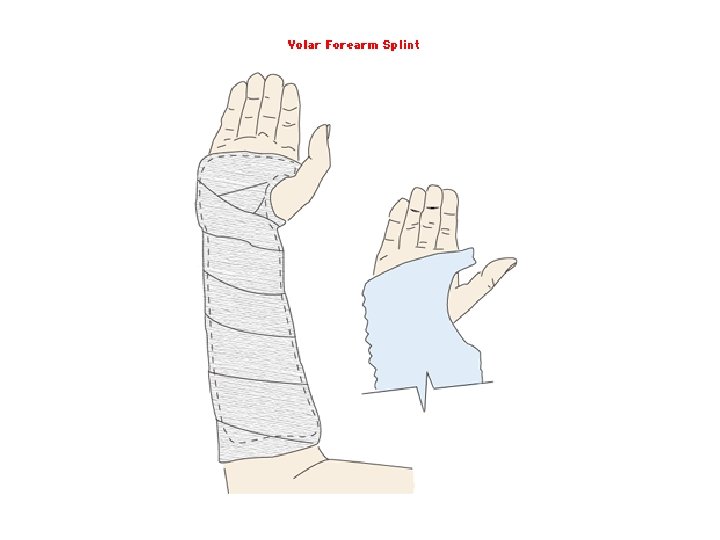
Volar Splint Indications n Wrist Sprains n Carpal Tunnel Syndrome n Lacerations n Stable Distal Radius Fracture Key Points n Thumb and fingers remain mobile
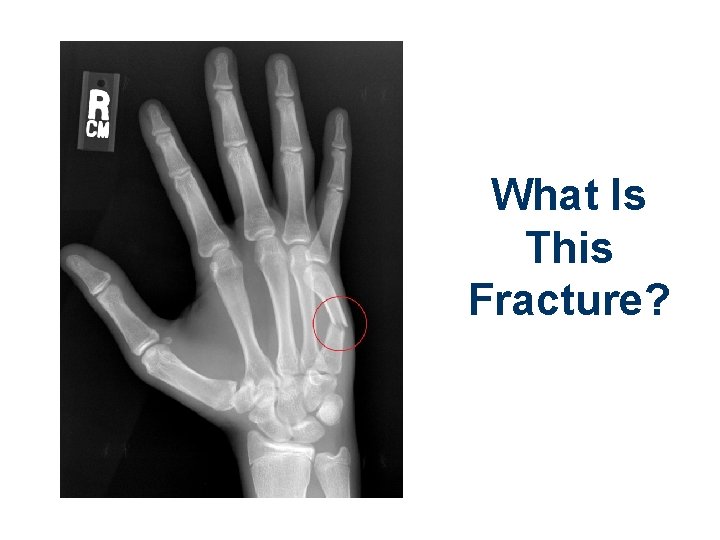
What Is This Fracture?
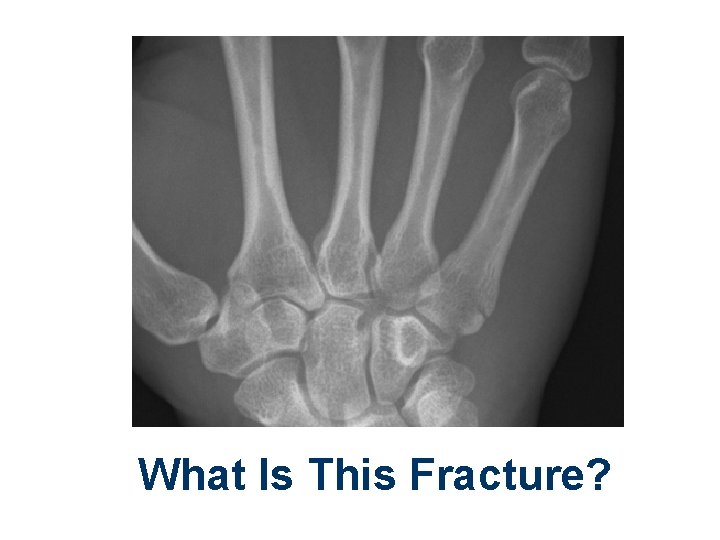
What Is This Fracture?
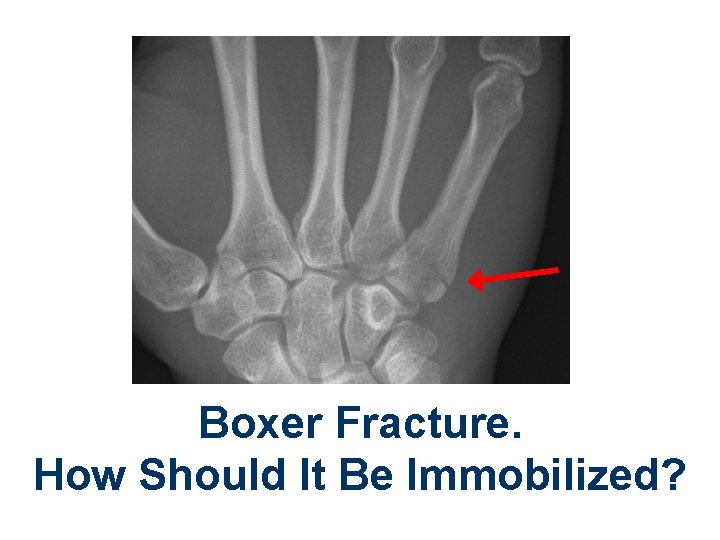
Boxer Fracture. How Should It Be Immobilized?

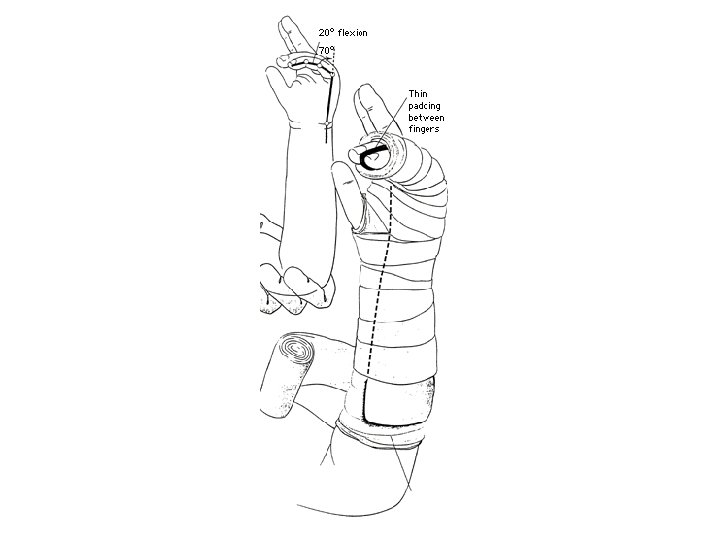
Boxer Splint Indications: n n 5 th Metacarpal Fractures 4 th Metacarpal Fractures Key Points n n n Extends from tip of 5 th finger to 2” from antecubital (3 Fingers) Ulnar gutter Mold to position, with MCP joints at 90° flexion to maintain positioning
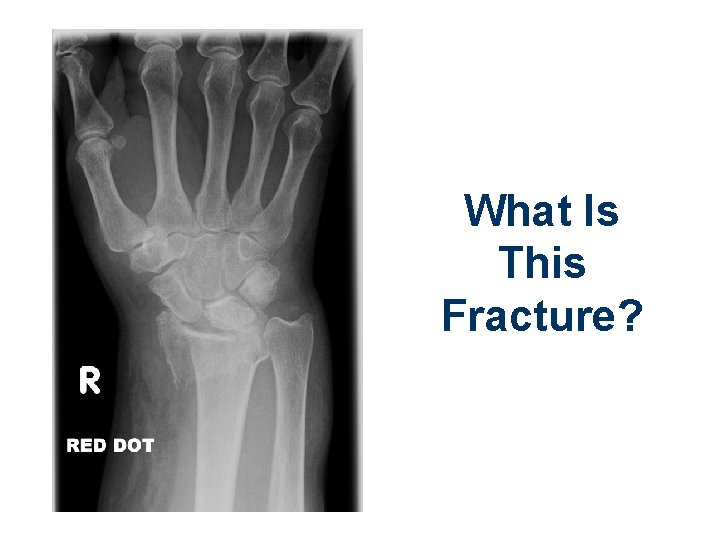
What Is This Fracture?

Unstable Distal Radius Fracture. How Should It Be Immobilized?
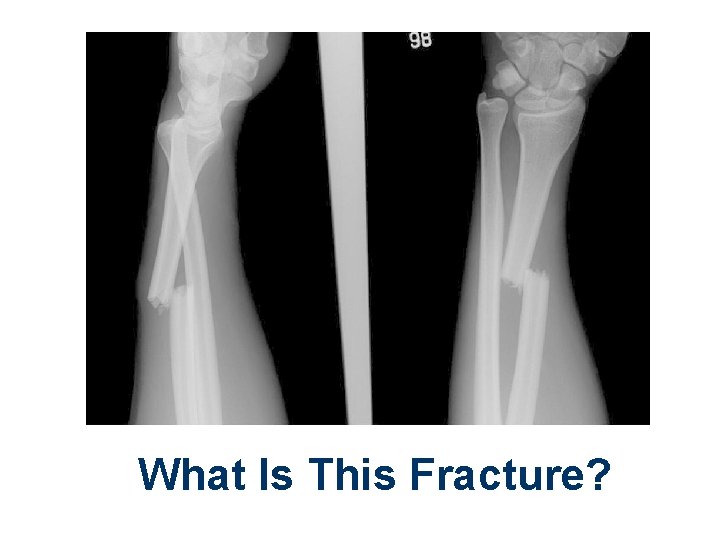
What Is This Fracture?
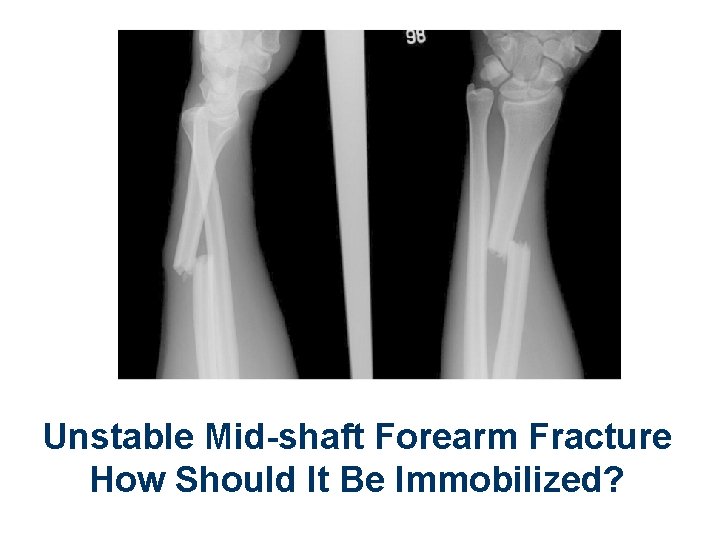
Unstable Mid-shaft Forearm Fracture How Should It Be Immobilized?
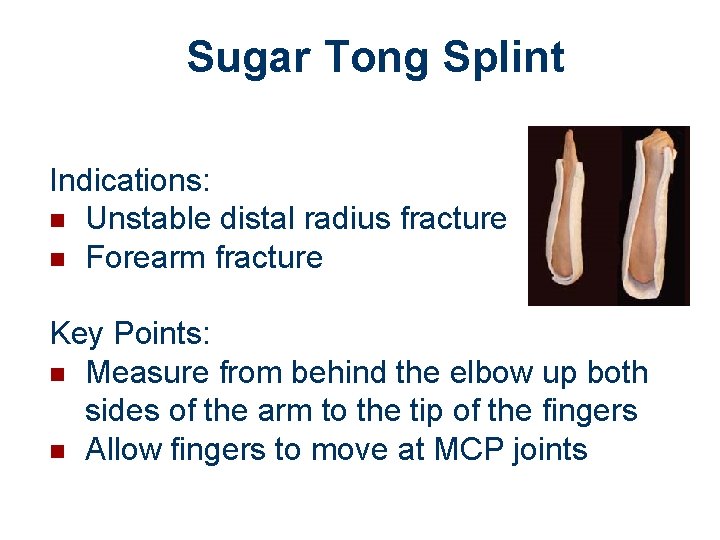
Sugar Tong Splint Indications: n Unstable distal radius fracture n Forearm fracture Key Points: n Measure from behind the elbow up both sides of the arm to the tip of the fingers n Allow fingers to move at MCP joints
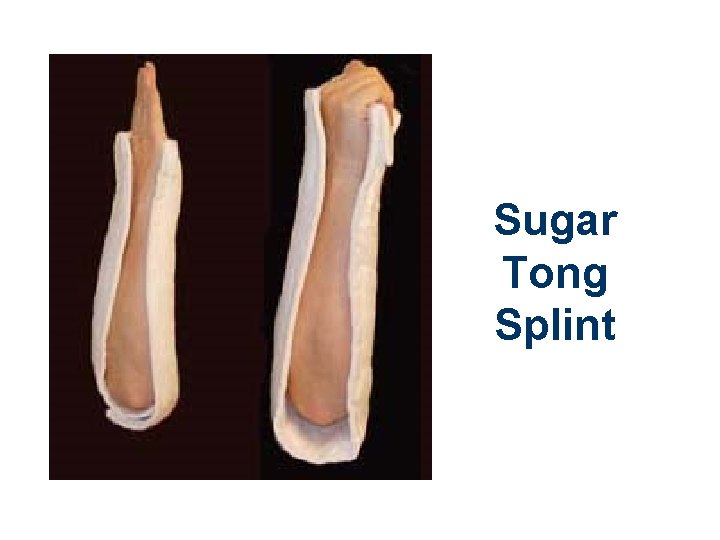
Sugar Tong Splint
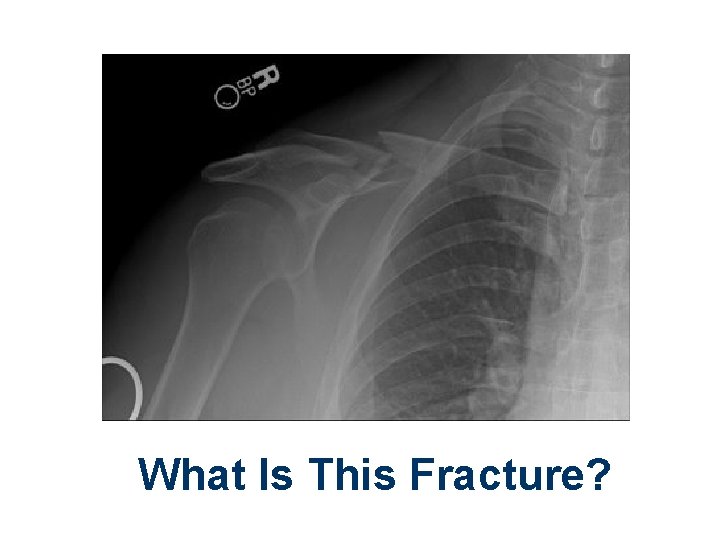
What Is This Fracture?
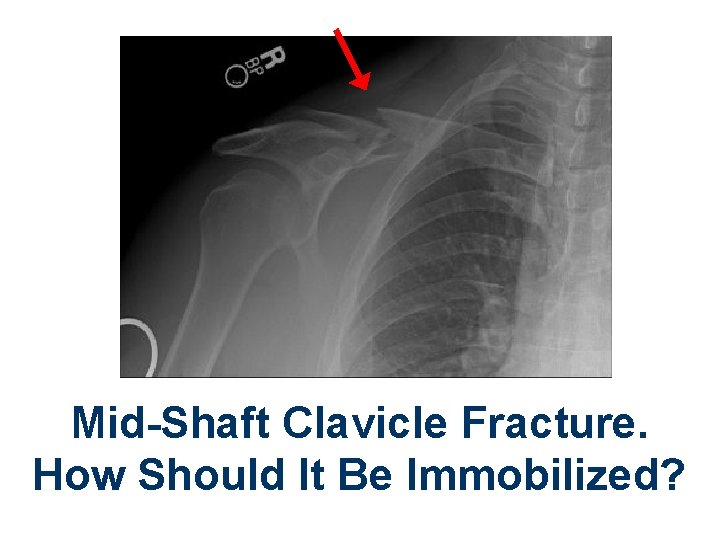
Mid-Shaft Clavicle Fracture. How Should It Be Immobilized?

Figure 8 Splint Indications: n Mid-shaft clavicular fractures n (Proximal/distal clavicular fractures often treated with a sling immobilizer) Key Points n Assure that “position of attention” attained n An advantage is leaving elbow and hand free n Counsel patient that bony deformity is possible
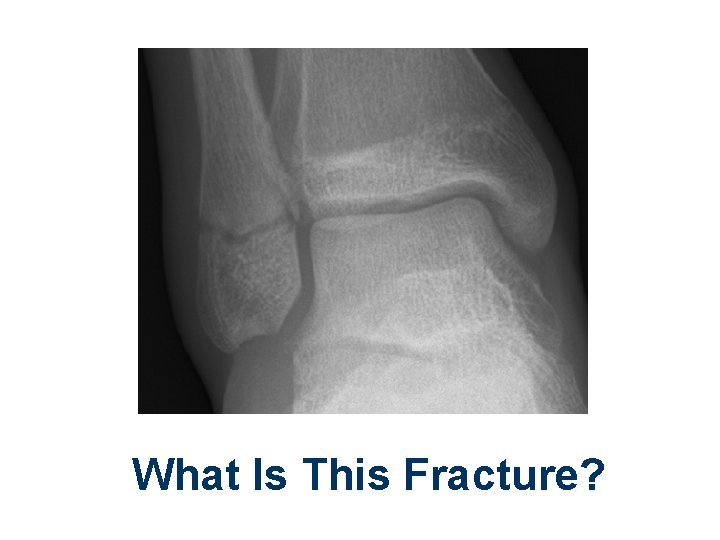
What Is This Fracture?
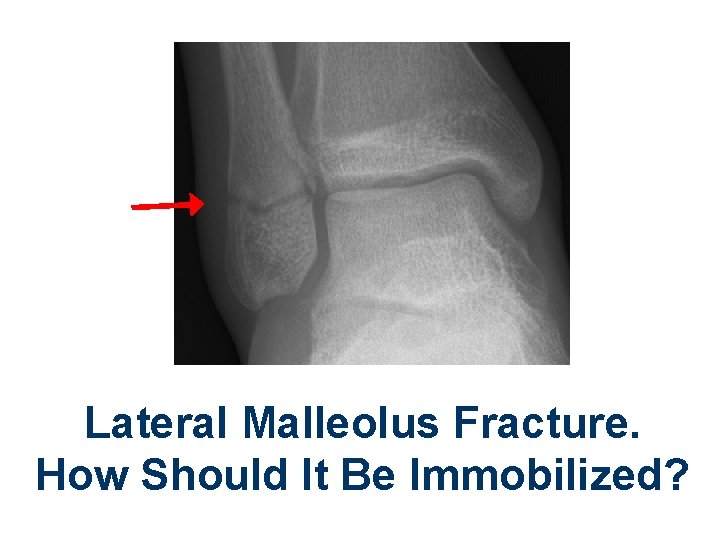
Lateral Malleolus Fracture. How Should It Be Immobilized?
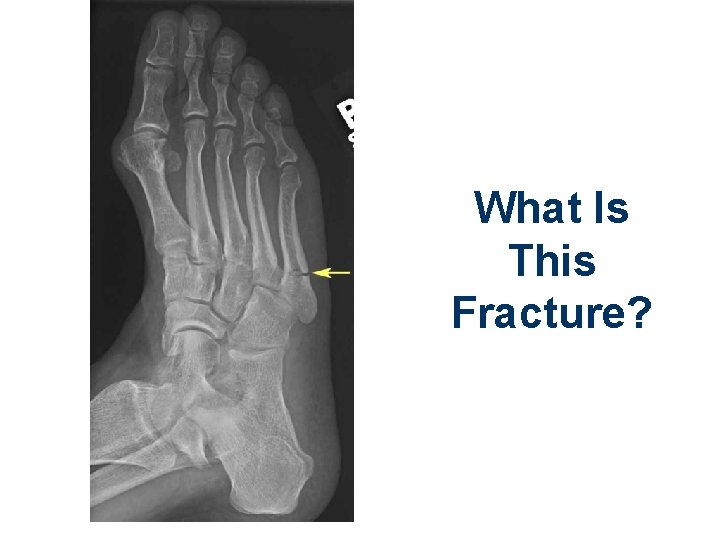
What Is This Fracture?
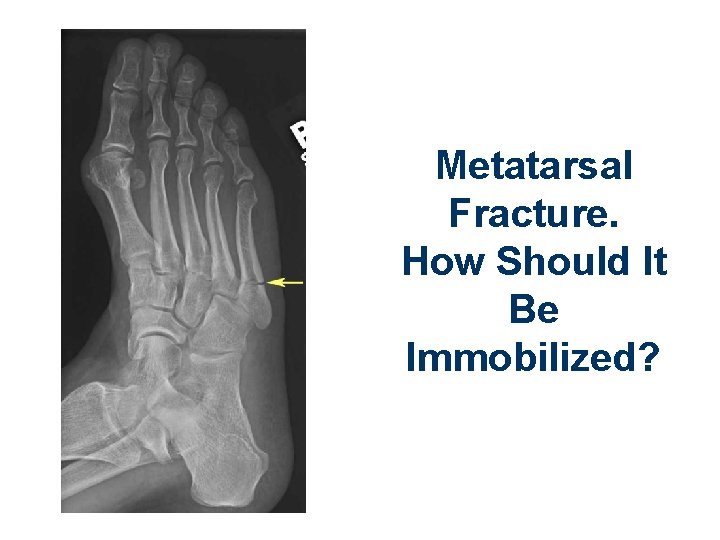
Metatarsal Fracture. How Should It Be Immobilized?
Posterior Ankle Splint Indications: n Distal Tib / Fib Fractures n Ankle Sprains n Maleolar Fractures n Metatarsal Fractures Key Points n From 2” below the popliteal to 2” beyond toes n Fold 1” under toes n Wrap from the toes up n Maintain ankle at 90 degrees


What Should Be Checked Both Pre & Post Immobilization?
Check Pre & Post Immobilization F – Function A – Arterial Pulse C – Capillary Refill T – Temperature (Skin) S - Sensation

For next steps in serving forgotten people please contact: Institute for International Medicine 2340 E Meyer Blvd Building 1, Suite 338 Kansas City MO 64132 816 -444 -6400 office@inmed. us www. inmed. us
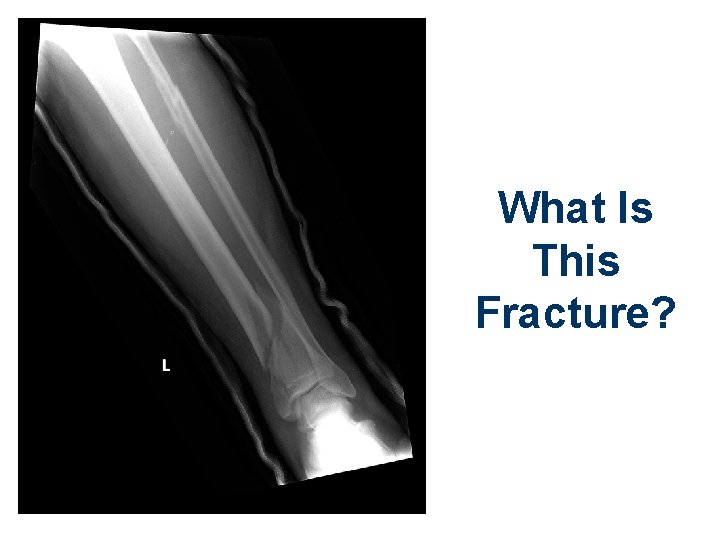
What Is This Fracture?
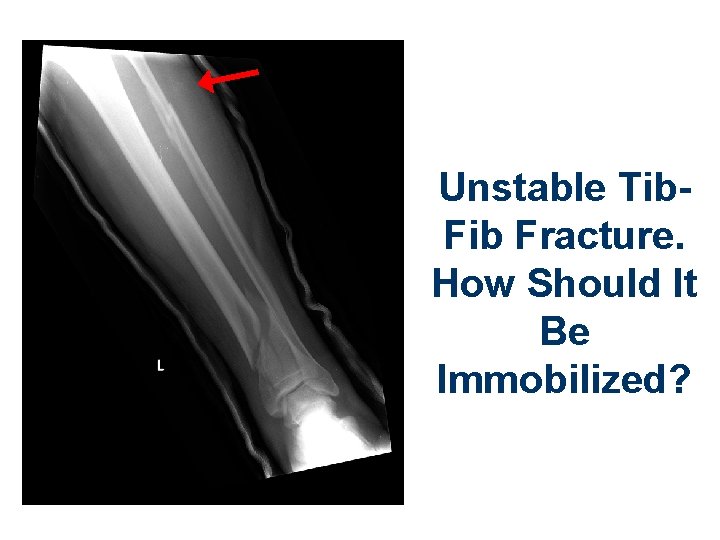
Unstable Tib. Fib Fracture. How Should It Be Immobilized?
- Slides: 40