SPIROMETRY Introduction Spirometry measures the lung function specifically
- Slides: 17
SPIROMETRY
Introduction • Spirometry measures the lung function, specifically the amount (volume) and speed(flow) of air that can be inhaled and exhaled. • A simple and safe Pulmonary Function Test(PFT)
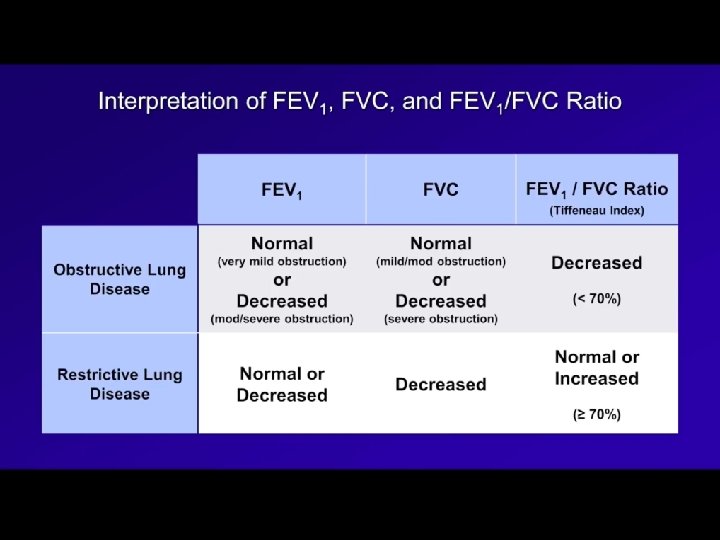
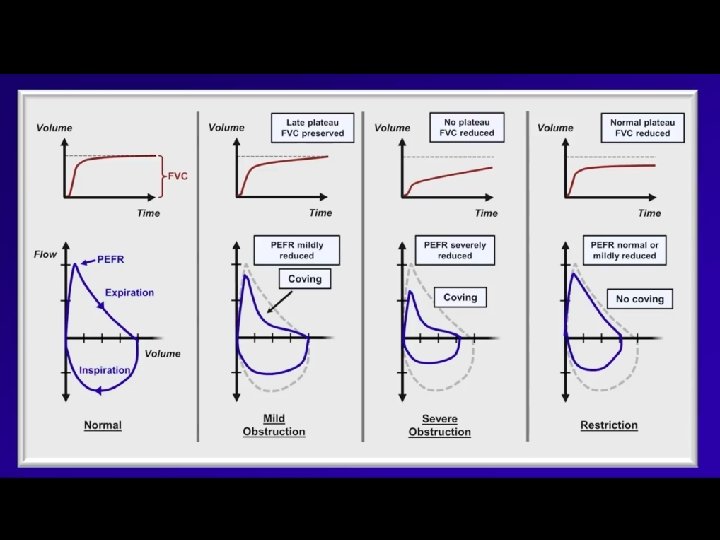
USES • To detect respiratory disease in patients presenting with breathlessness • To diagnose and differentiate between Obstructive lung disease and Restrictive lung disease • To Indicate a patient’s optimal response to treatment or the rate of decline in lung function
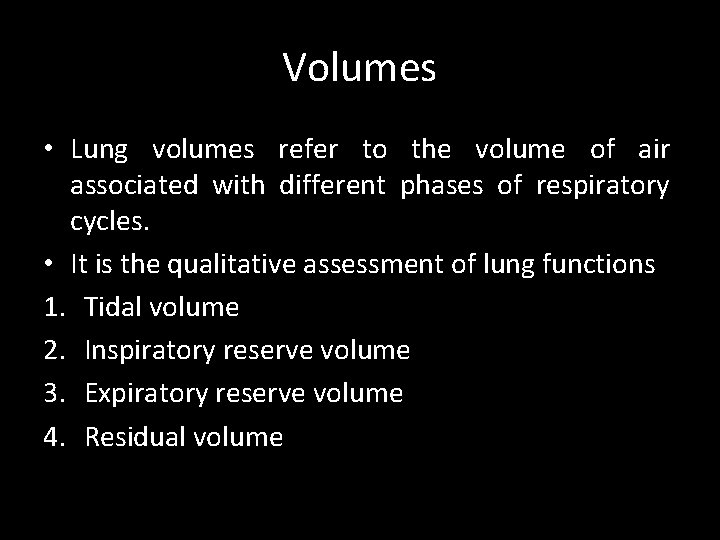
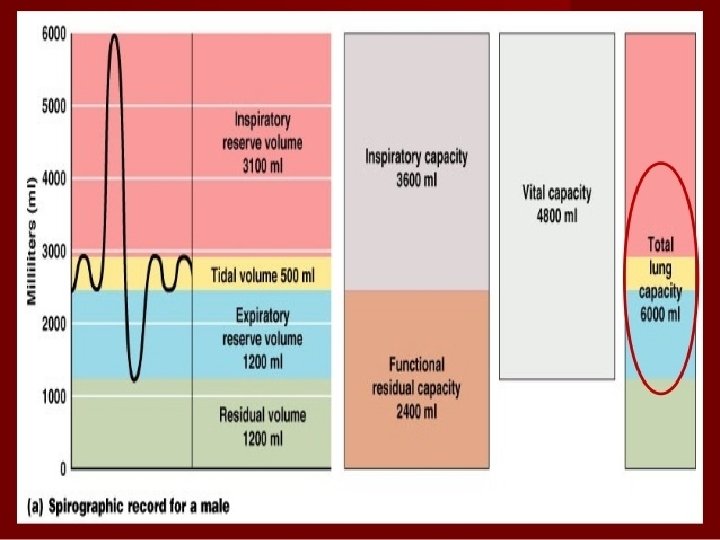
Volumes • Lung volumes refer to the volume of air associated with different phases of respiratory cycles. • It is the qualitative assessment of lung functions 1. Tidal volume 2. Inspiratory reserve volume 3. Expiratory reserve volume 4. Residual volume
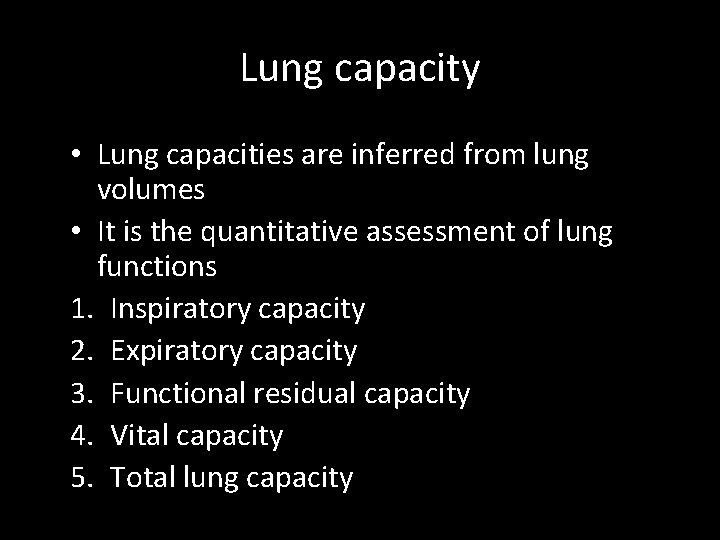
Lung capacity • Lung capacities are inferred from lung volumes • It is the quantitative assessment of lung functions 1. Inspiratory capacity 2. Expiratory capacity 3. Functional residual capacity 4. Vital capacity 5. Total lung capacity
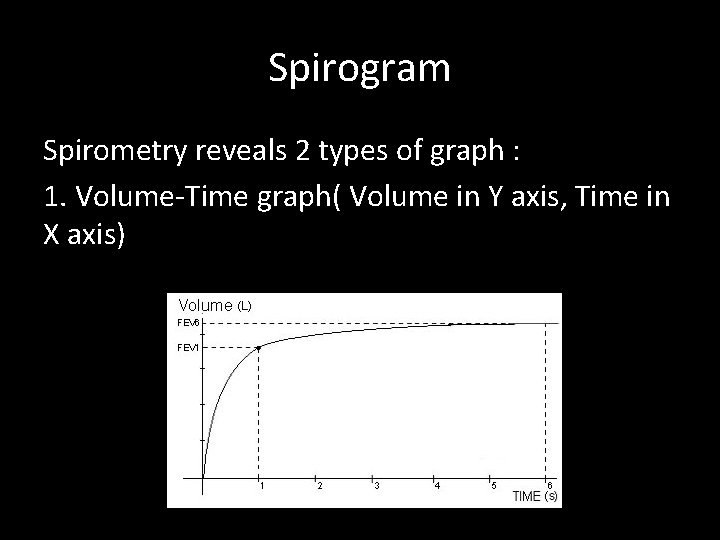
Spirogram Spirometry reveals 2 types of graph : 1. Volume-Time graph( Volume in Y axis, Time in X axis)
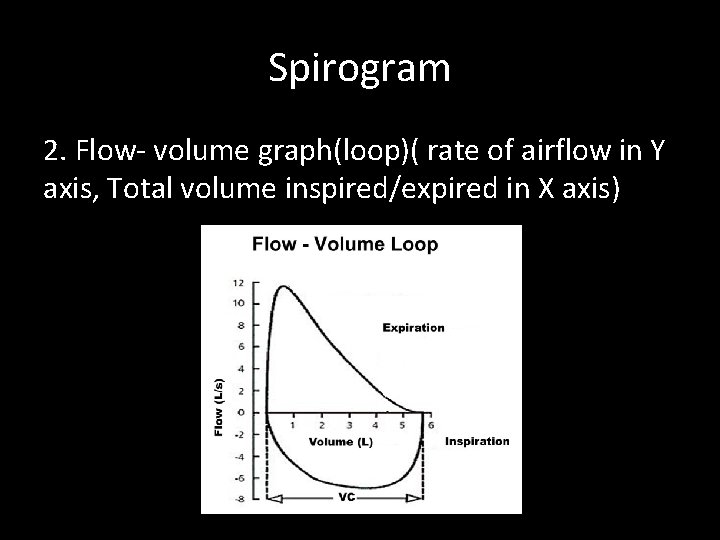
Spirogram 2. Flow- volume graph(loop)( rate of airflow in Y axis, Total volume inspired/expired in X axis)
Contraindications • • Hemoptysis pneumothorax Recent angina/MI Aneurysm Recent eye surgery Recent viral infection Undiagnosed hypertension
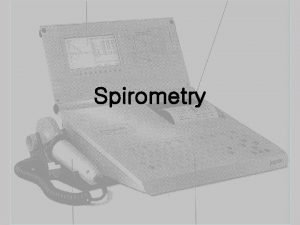
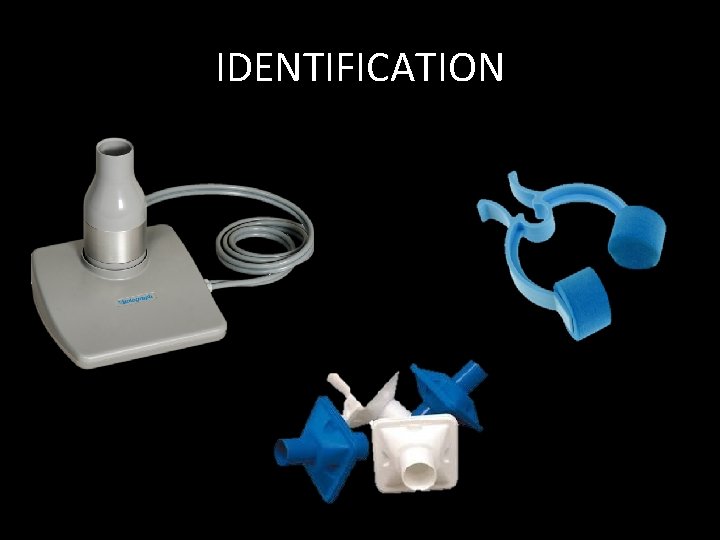
IDENTIFICATION • The basic components of Spirometer are: • Mouth piece • Tube / hose- connecting mouth piece and spirometer • An electronic device to measure flows and calculate spirometry parameters.
IDENTIFICATION
PROCEDURE • The patient should be seated in a chair with arms • Two relaxed measurements of vital capacity should be performed first , (the patient should use nose clips)followed by three forced vital capacity measurements • A large breath to full inspiration is taken through mouth
PROCEDURE • The mouth piece is placed into the patient’s mouth and the patient is asked to place his or her lips and teeth around the mouth piece to form a tight seal • For the relaxed VC, the patient breathes out at a comfortable speed, but for the FVC the patient should breathe out hard and quickly until all air is expired • The FVC should take 6 s, but in some patients with obstructive breathing patterns it can take up to 15 s
CAUTION • At least 30 s should be left between blows to enable the patient to recover • A mininum of three and a maximum of eight blows should be attempted at any one time • It is vital that patients inhale completely, to total lung capacity, and continue to exhale until they have fully emptied their lungs • Observe the shape of the flow/ volume or volume/time curves to detect poor effort
Spirometry