
SPIROCHETES INFECTIONS Classification Kingdom Bacteria Phylum Spirochaetes Class
SPIROCHETES INFECTIONS
Classification • Kingdom : Bacteria • Phylum : Spirochaetes • Class : Spirochaetes • Order : Spirochaetales • Family : Leptospriaceae • Genus : Leptospira
• Order : Spirochaetales • Family : Leptospriaceae Leptospira genus : Spirochaetaceae Borrelia and Treponema genus : Brachyspiraceae Brachyspira genus
General Features • Common in the land • Spiral and helical • Gram negative • Facultative anaerobic • 20 genomic species according to DNA hybridization • Antigenically, there are 200 serovars • Axial flament between HD and SM • Axial fibrils (2 -100 pieces per type) are wrapped with an outer envelope. It moves cautiously and rotates and moves actively
LEPTOSPIRA
• Both hooks are spiral-shaped • Spore-free, non-encapsulated and mobile • It is found everywhere except Antarctica, it is durable • Although they are Gram negative, they can not be well stained by conventional methods • Dark field microscopy is used • Textiles use Giemsa, Fontana (silver) and immunological methods
• It is aerobic and it is at 28 -32 C • Previously serologically pathogenic species were identified as L. interrogans and saprophytic species as L. biflexa • Today, DNA is classified according to homologues (about 20 genomes) and there are more than 250 serovars in these species • Serologically similar leptospires may belong to different species. For example; serovar Hard. Jo is a serovar of both L. borgpetersenii and L. interrogans species. The reason for this is that genetically distinct 2 way common surface antigens
• Primer moored wild mammals, especially rodents • It is seen in the rareest cats • Asymptomatic, mild or chronic infectious • Pathogenic leptospires continue to live in the kidney tubules or in the genital system of transporter animals
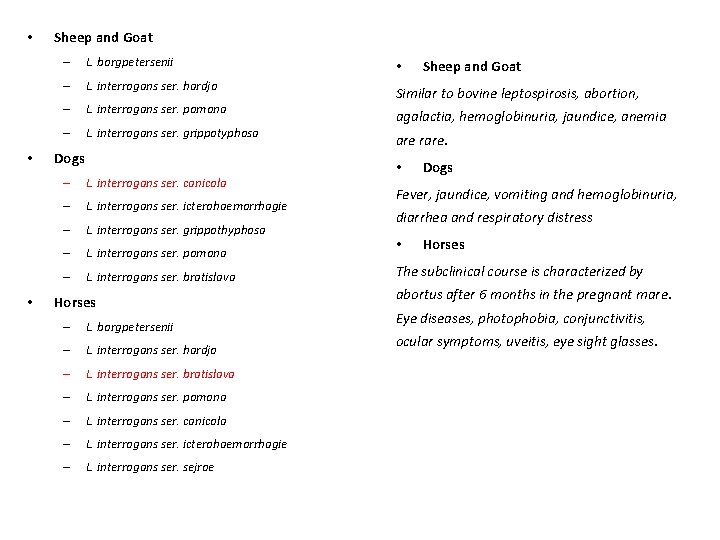
• • • Sheep and Goat – L. borgpetersenii • – L. interrogans ser. hardjo – L. interrogans ser. pomona Similar to bovine leptospirosis, abortion, – L. interrogans ser. grippotyphosa Dogs – L. interrogans ser. canicola – L. interrogans ser. icterohaemorrhagie – L. interrogans ser. grippothyphosa – L. interrogans ser. pomona – L. interrogans ser. bratislava Horses – L. borgpetersenii – L. interrogans ser. hardjo – L. interrogans ser. bratislava – L. interrogans ser. pomona – L. interrogans ser. canicola – L. interrogans ser. icterohaemorrhagie – L. interrogans ser. sejroe Sheep and Goat agalactia, hemoglobinuria, jaundice, anemia are rare. • Dogs Fever, jaundice, vomiting and hemoglobinuria, diarrhea and respiratory distress • Horses The subclinical course is characterized by abortus after 6 months in the pregnant mare. Eye diseases, photophobia, conjunctivitis, ocular symptoms, uveitis, eye sight glasses.
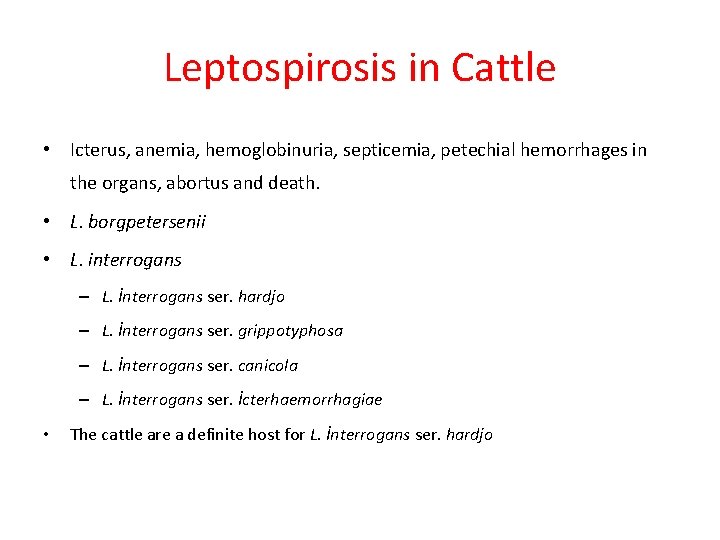
Leptospirosis in Cattle • Icterus, anemia, hemoglobinuria, septicemia, petechial hemorrhages in the organs, abortus and death. • L. borgpetersenii • L. interrogans – L. İnterrogans ser. hardjo – L. İnterrogans ser. grippotyphosa – L. İnterrogans ser. canicola – L. İnterrogans ser. İcterhaemorrhagiae • The cattle are a definite host for L. İnterrogans ser. hardjo
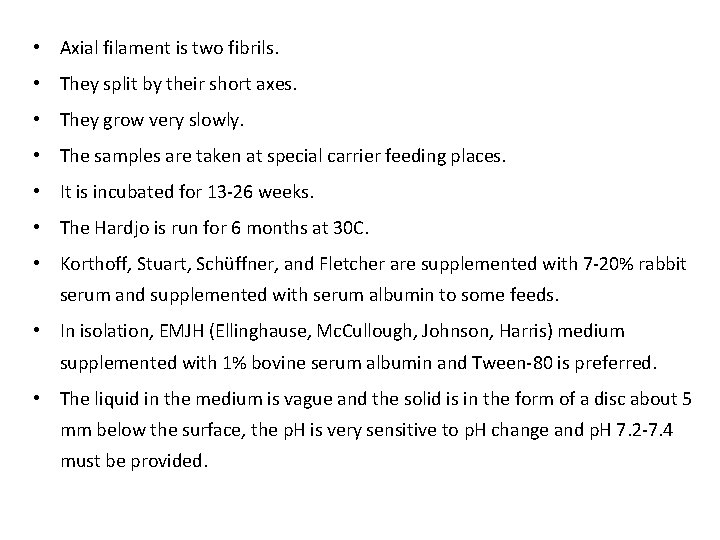
• Axial filament is two fibrils. • They split by their short axes. • They grow very slowly. • The samples are taken at special carrier feeding places. • It is incubated for 13 -26 weeks. • The Hardjo is run for 6 months at 30 C. • Korthoff, Stuart, Schüffner, and Fletcher are supplemented with 7 -20% rabbit serum and supplemented with serum albumin to some feeds. • In isolation, EMJH (Ellinghause, Mc. Cullough, Johnson, Harris) medium supplemented with 1% bovine serum albumin and Tween-80 is preferred. • The liquid in the medium is vague and the solid is in the form of a disc about 5 mm below the surface, the p. H is very sensitive to p. H change and p. H 7. 2 -7. 4 must be provided.
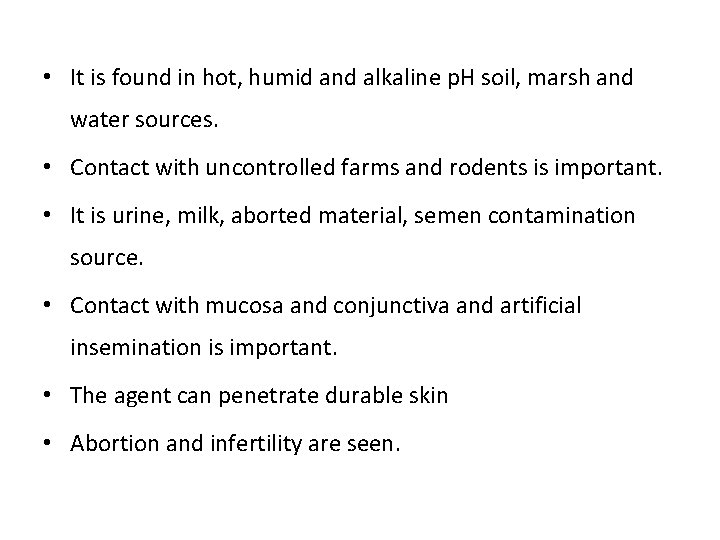
• It is found in hot, humid and alkaline p. H soil, marsh and water sources. • Contact with uncontrolled farms and rodents is important. • It is urine, milk, aborted material, semen contamination source. • Contact with mucosa and conjunctiva and artificial insemination is important. • The agent can penetrate durable skin • Abortion and infertility are seen.
Pathogenesis • Derivative and mucous penetrating agent is spread to the tissues. • Within 4 -6 days of the onset, calming is produced in abundant quantities and at the end of septicemia, KC, parenchymal organs such as kidney, spleen and sometimes meninges are placed. • At this stage, can be isolated from blood. • Penetrate to fetus in pregnant. • Disorders and necrosis of the tubules occur in the kidneys. • Chemotaxis against hemoglobin is the first step in the infection. • It may escape phagocytosis by inducing macrophage apoptosis. • They cause hemorrhages by destroying the vascular endothelium. • Anemia, jaundice, hemoglobinuria and hemorrhages are formed by disrupting the hepatocellular structure.
Clinical Findings • Three forms are visible clinically • Acute form – Fever, anorexia, conjunctivitis and diarrhea, jaundice, hemoglobinuria, hemolytic anemia, anuria, pneumonia, incoordination, meningitis. Death in 3 -5 days in the calf. Abortion and infertility are the most important findings. • Subacute form – Mild form in adults. Similar findings are seen. • Chronic form – Only in adults are attenuation. There are no symptoms other than abortus and reproductive disorders. • Mortality may increase to 50% in peracute and acute cases.
Diagnosis Clinical diagnosis: Bovine leptospirosis can be confusable with babesiozis, anaplasmosis, plant poisoning, basilar icterohemoglobinuria, brucellosis, literiozis, Campylobacter fetus and Trichomonas fetus infections and mastitis according to the symptoms that are being described. Laboratory examinations: Incubation can be performed by dark field microscopy and fluorescent antibody technique from urine and body fluids. Blood during leptospiremia (defibrine) The agent can be found in blood, milk, cerebrospinal fluid in acute form, but only in chronic form.
• Since the acidic p. H of the urine will have an adverse effect on leptospires, urine samples should preferably be examined as soon as possible after ingestion or adjusted to p. H 7. 27. 4 using sterile buffer liquids.
Blood Culture • During the first 7 -10 days of leptospiremia, the blood is inoculated with 1, 2, 3, 4 drops of blood, instead of 4 5 ml of liquid fat. For this purpose EMJH liquid medium supplemented with 1% warm albumin and Tween-80 is preferred. • At 28 -32 C, incubation is allowed for 5 -6 weeks. • It is checked by dark field microscopy and visual inspection for a week.
Urine Culture • After 2 weeks from infectious, the urine is prepared by direct seeding and diluted 1/10 with PBS or 1% BSA. • This stock is diluted in two layers and one drop is passed instead of EMJH fattening from each dilution. • It is incubated at 28 -32 C for 5 * 6 weeks. • Is controlled
Serological Tests • Serological tests are generally preferred • After 7 to 10 days from infection, the specific antibody against the effect begins to form. • It reaches the diagnostic level after 2 -5 weeks. • Macroscopic and microscopic agglutination test or CFT, ELISA techniques are applied. • Macroscopic agglutination test – It's a screening test. Dead antigens are used. The specialty is low. 0. 02 ml of suspected serum and 1 drop of group antigen are mixed for 4 minutes. It is then switched to serovar antigens.
Microscopic agglutination test (MAT) • Standard reference test. This test can be performed in two ways, with live and formulated antigen. The microscopic agglutination test using live leptospires as antigen is a highly sensitive and serovarspecific technique. • In the microscopic agglutination test with live antigen, suspend the sera diluted two folds starting with PBS at 1/20 and place 0. 2 ml of the tube in each tube without dilution. • The tubes are then mixed with equal amounts of fresh and each serovar leptospira culture for 5 -8 days. The tubes are left at 25 -30 ° C for one hour, then one drop is taken from each and placed on a clean slide and examined in the dark field microscope. • The reaction is evaluated as 1+, 2+, 3+ and 4+ according to the degree of agglutination or lysis (granulation, scattering, movement stop, scattering, fragmentation and dissolution in leptospiral). • The final dilution with a 2+ reaction in the test result is considered as the serum vibrate.

BORRELIA
• Longer and wider helical than other spirochetes. • Gram negative, non-spore, non-encapsulated, mobile, microaerophilic • It has linear chromosomes and circular plasmids. • Arthropod vectors are important in transmission. • You can not survive when you leave the mansions, so you need reservoir hosts or arthropod vectors. • Expression is based on molecular methods. • The genotyping result includes at least 9 B. burgdorferi sensu lato genotypes.
Lyme Disease • Surf by the edges (Ixodes type). • The causative agent is B. burgdorfer. • It was first discovered in 1975 in Old Lyme, Connecticut, USA. • Grams are negative but they are better colored with Giemsa and silvering. • Microaerophilic conditions are required at 30 -35 C in the Barbour-Stoenner-Kelly-II (BSK-II) medium for production. • Lyme; dog, horse, cattle, sheep and man. • Infection of larval forms of blood-sucking cords on small rodents. • Mice, hedgehog, lizards and wild birds reservoir. • The spirochetes taken by the larva form remain in the body in the nymph and mature tick forms. • When the tick sucks the blood passes from the borrelia midgut to the salivary glands and the mature edges infect the infection. • Borrelia, which enters into the blood of the mosquito, multiplies and spreads to the body.
• The joint is affected by joint, brain, nervous system, eye and heart. • Infection is usually subclinical. • In dogs fever, fatigue and arthritis are typical. • 2 leg lamellas are visible. • In horses lameness, uveitis, nephritis, hepatitis and encephalitis are seen. • Culture is hard. serology and PCR are preferred.
• Acaricidal sprays, baths or immersion baths should be used to control tick infestation. • Pastures and shrubs, where the habitats are located, can be cleaned. • A recombinant subunit vaccine containing all-cell bacterium for use in dogs is commercially available. • Lyme disease is an important disease that people carry with ticks. • Infection is often taken during a walk in the endemic area at a time when the hemispheres are active. • Clinical manifestations are fever, arthritis, muscle pain, cardiac and neurological abnormalities following redness in the area of adhesion.
• Erythema migrans – Typical lesion with two zones seen in humans. Deep develops due to tickling (Bull's eye) – Pathognomonic

BACTERIODECEAE FAMILY
General Features • It is found in the gastrointestinal flora of humans and animals. • Gram negative, rod, non-spore, capsular, ANAEROBIC • Bacteriodes Genus • Fusobacterium Genus • Streptobacillus Genus
Bacterioides Genus • Mouth flora is the agent. They cause tooth decay and dental apnea. • In terms of veterinary medicine; ; • B. nodosus (Dichelobacter nodosus) – Pyemic in sheeps (FOOTROT+nail inflammation)
Footrot in Sheeps • necrosis of the area where the nail is connected to the skin is characterized by severe lameness. • D. nodosus is agent • F. necrophorum, Spirochaeta penortha may be involved • Strict anaerobe , Trypticase-Arginine-Serine (TAS) agar, at 37 C, growth in 3 -7 days
• Sheep and goats of all ages are sensitive. • In humid, hot climates, bad pale land, lesioned foot skin is important. • Strongyloides (hooked card) are common in areas where the larvae are common, worms come from open lesions. • Licking starts with one foot before the other, and then the other punches. The foot is painful and hyperemic and has a bad smelling current. • Zinc-copper sulphate-formalin footbath.
Fusobacterium Genus • It is found in the oral cavity and intestinal tract. • Fusiform-filamentous, filamentous • Synergetic effect with Trueperella pyogenes. • The most important species is Fusobacterium necrophorum • Oral Necrobasillosis in calves and lambs (Calf and lamb diphtheria) • Liver necrobasilosis of cattle • PANARISY IN CATTLE(FOOTROT)
Oral Necrobasillosis in calves and lambs (Calf and lamb diphtheria) • In a few weeks calves and lambs, the nose of the mouth, pharynx and larynx mucosa causes ulcers in the digestive tract. • Agent F. necrophorum • It enters from the wounds formed by hard baits and forms necrosis at the place where it enters, and necrosis spreads in wider languages. • Necrotic white-yellow lesions all over the mouth and on the underside • The membranes on the lesions fall and ulcers form.
Hepatic Necrobasilosis of Cattle • F. necrophorum • Characterized by liver apses • Sensitive to all ages and animals • An important breeding problem • The agent can infect alone or in combination with T. pyogenes, E. coli, Staphylococcus and Bacteriodes.
• The formation of rumen acid in the transition from eating berries creates inflammation. • Rumenitis is the resultant damage, which is already in floride. • It comes to the liver and forms necrotic foci. • Slimming, pain on the right side is seen in the final cost zone. • In chronic cases, there is no evidence, the disease occurs after slaughter.
Footrot in Cattle (Panarisyum) • The infectious and necrotic inflammation of the interdigital region tissues. • D. nodosus is accompanied by the disease of F. necrophorum. • Lameness is typical. • Similar to Piyeten
MYCOPLASMA INFECTIONS
Classification • Kingdom : Bacteria • Phylum : Tenericutes • Class : Mollicutes • Order : Mycoplasmatales • Family : Mycoplasmataceae • Genus : Mycoplasma • Genus : Ureaplasma • Genus : Haemobartonella
General Features • The smallest prokaryote • Has not cell wall. • It can pass through 0. 45 μm filters • It was first isolated in 1898 by Nocard and Roux from contagious bovine pleuro-pneumonia cases • For this reason, Pleuro Pneumonia Like Organism (PPLO), Asterococcus, Anulomyces were given, and in 1929 Nowak was named Mycoplasma • Mykes (fungus), plasma (formed), fungus-like organism • It is sensitive to dryness, heat, detergents and disinfectants. However, they are resistant to antibiotics such as penicillin that affect the cell wall
General Features • Stationary, non-spore, without capsules • Gram is considered negative (phylogenetically Gram positive) • Giemsa, Macchiavella and Castenada painting methods are used • Pleomorphic because it is not HD • Instead of HD, it has a flexible, 3 -layer outer membrane called the "unit membrane" • In M. gallisepticum there are half-moon shaped protrusions on this layer which are useful for holding onto erythrocytes and epithelial cells • It has hemagglutination properties like paramyxoviruses
• Needs production factors and isotonic environments • For cholesterol requirements 20% horse serum is added instead of fat • Yeast extract and DNA • Very good quality distilled water • Penicillin for the suppression of Gram positives • Thallium acetate is added to suppress fungi • It should be p. H 7. 2 -7. 8 • "Phenol red" indicator is added for control of uremene • Incubated for 14 days in an atmosphere of 5% CO 2 + 95% N at 37 ° C
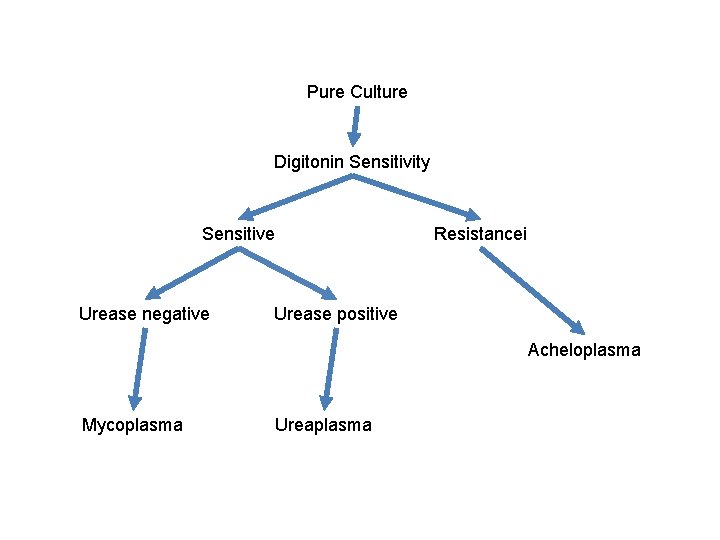
• In the solid medium, it forms columns in the appearance of the fake egg embedded in the agar and able to pass the light • Since these columns are not visible, they are examined in a stereo microscope in oblique light • The wedge style is buried in the agar and is dense granular structure • Similar to L-forms • Sowing in non-antibacterial mediums is separated from L-forms by Dienes staining method (Mycollasma colonies are not decolored) • It is distinguished by "digitonin sensitivity" and "urease" tests from Acheloplasma and Ureaplasm • Mild turbidity in liquid medium
• Extracellular factors • Upper respiratory tract, intestinal, genital systems, breast gland joint flora factors • Respiratory canals and lungs tend to settle • Siliar disrupts activity and supports the formation of bacterial infections • Immune homologues are inhibited by specific anti -sera (Reproduction inhibition test)
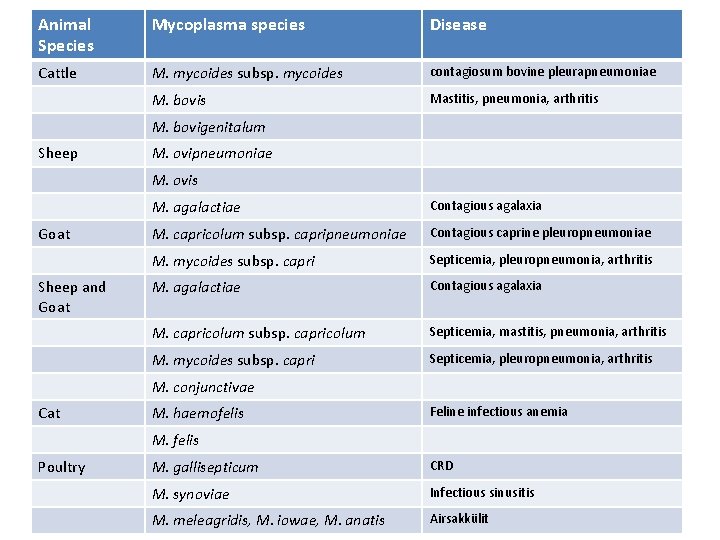
Animal Species Mycoplasma species Disease Cattle M. mycoides subsp. mycoides contagiosum bovine pleurapneumoniae M. bovis Mastitis, pneumonia, arthritis M. bovigenitalum Sheep M. ovipneumoniae M. ovis Goat Sheep and Goat M. agalactiae Contagious agalaxia M. capricolum subsp. capripneumoniae Contagious caprine pleuropneumoniae M. mycoides subsp. capri Septicemia, pleuropneumonia, arthritis M. agalactiae Contagious agalaxia M. capricolum subsp. capricolum Septicemia, mastitis, pneumonia, arthritis M. mycoides subsp. capri Septicemia, pleuropneumonia, arthritis M. conjunctivae Cat M. haemofelis Feline infectious anemia M. felis Poultry M. gallisepticum CRD M. synoviae Infectious sinusitis M. meleagridis, M. iowae, M. anatis Airsakkülit
Infectious Pleuropneumonia in Cattle • It is a contagious disease characterized by subacute or chronic, serofibrinous and lober pneumonia • It is a disease on the OIE list • The notice is compulsory, Compensation (2/4) • Mycoplasma mycoides subsp. mycoides (small colony) • Cattle, buffalo, wild ruminant, antelope, bison, reindeer are visible • The agent is found in AC and its mucoid secretions, and cough spreads • Animal disease is only respiratory • Crowds, cold and humid stables, stress is important
Pathogenesis • Droplet droplets reach the lungs • It locates in the walls of small bronchi • Here, interstitial tissue between the lobes and loose spreads • As the infection progresses, the pink-red subspecies in the front surrounded by the interstitial tissue begin to form lober hepatization areas in gray • The pulmonary side arteries and veins consist of necrotic foci that result in thrombosis • They are surrounded by fibrous tissue and the factor can survive for many years here • These coughs, tiredness, hunger, and stress result in these foci becoming sick again
Clinical Findings • The disease is usually chronic • High fever, loss of appetite, cough, constipation • Cough gets painful over time • There is a mucopurulent flow • Mat sounds in the percussion, rubbing sounds in the auscultation and fluid sounds • Age rallies (fluid whell) are heard
• Necropsy pleura thickened and fibrinized • There are too many serous and fibrinous exudates in the chest cavity • Bronchial swelling and haemorrhagic • There are red-gray or dark pneumonic foci within the lung • Mortality 30 -50% • Planting instead of PPLO for diagnosis • Tylosin tartarate in treatment • There are vaccination applications in protection
Contagious caprine pleuropneumonia (CCPP) • It is a contagious disease characterized by lung and pleural inflammation in goats • It is on the OIE list • M. mycoides subsp. capripneumoniae, M. mycoides subsp. I capricola • Beta hemolysis occurs in blood agar • Especially in hot and humid places • Transmission is through the respiratory tract • Acute or chronic • Clinical finding is similar to cattle • Indicates deaths after 3 -6 days after starting
Contagious Agalactia in Sheep and Goats • Sheep and goats are characterized by cuts of pills, conjunctivitis and arthritis • It is on the OIE list • M. agalactia • Effect comes out with milk and tears • Mastitis, conjunctivitis, arthritis • Prior to purulent milk like water, milk is blue, the breast tissue becomes blunted and atrophy happens • Conjunctivitis may result in blindness • Arthritis joints are swollen, edematous and hot. The agent spreads by fistula
Mycoplasma haemofelis • Hemotropic Mycoplasma • Subclinical infection • Direct erythrocyte makes damage • Some strains target the vascular endothelium and cause vascular thrombosis • Giemsa staining can be shown on erythrocytes • Anemia, fever • 21 days doxyciline treatment
UREAPLASMA
General Features • Similar to Mycoplasmas • The prior was called T-mycoplasma (Tiny form) • Passes through filters • It is called Ureaplasma because it has urease activity • Without flagella, without spore, without capsule • At 37 ° C the p. H 6. 0 da urine • It is the central buttoned column • Sensitive to thallium acetate, digitonin, tetracycline and streptomycin • Humans and animals are linked to the epithelium of the genital and urinary system • Human causes U. urealyticum, urethritis • Cattle cause mastitis with U. divergence, genital, respiratory and eye infections
Pure Culture Digitonin Sensitivity Sensitive Urease negative Resistancei Urease positive Acheloplasma Mycoplasma Ureaplasma
CHLAMYDIA AND CHLAMYDOPHILA INFECTIONS
Classification • Kingdom : Bacteria • Phylum : Chlamydiae • Class : Chlamydiae • Order : Chlamydiales • Family : Chlamydiaceae • Genus : Chlamydia (3 tür) • Genus : Chlamydophila (6 tür)
• 3 species in Chlamydia • C. trachomatis • Inside the trahom • C. suis • C. muridarum • 6 species in Chlamydophila • C. psittaci, C. abortus, C. felis, C. caviae, C. pneumoniae, C. pecorum
General Features • It was first identified in humans (1879) and then correlated with parrots (psittacine) • It was understood that he passed on to humans from parrots and was called "psittacosis"

General Features • Mandatory intracellular bacteria • Host cell multiplies in phagosome • Can not produce ATP and provides energy from the host cell "energy parasitic" • There are different infectious and reproductive forms from the morphological point of view in the reproductive cycle
General Features • Infectious extracellular forms called elementary bodies (EB) are small and metabolic inactive and osmotically stable • EBs enter host cell with endocytosis • Converted to EB reticulum (RB) with structural reorganization for several hours • Non-infectious RB is metabolically active, osmotically fragile and replicates in the endosomes
General Features • Endosomes and their contents are called "inclusions" when they are dyed • Some RBs break up after 20 hours of infection, some mature to form EBs • Elementary bodies are red with Macchiavello and Gimenez, blue with Castaneda and red-purple with Giemsa • Reticular bodies are painted with the same dyes as blue, green, red and blue respectively
General Features • All chlamydials have a specific antigen • Also known as complement fixation antigen • Chlamydials also include species-specific and serovarspecific antigens • Chlamydia can not reproduce in cell-free medium • ETY egg yellow section, L- and Mc. Coy cell cultures are good
Epidemiology • Over 130 infected birds and numerous mammalian species including humans • Inhalation of infectious dust and droplets • Chlamydophila locates in the gastrointestinal tract • Intestinal infections are subclinical and persistent • C. felis infections may be spread by direct or indirect contact with conjunctival or nasal secretions • People are more likely to be infected with infected birds • Human infections from psittacine species are called "psittacosis" and those from avian species are called "ornithozis" • Both cause disease in the respiratory system
Pathogenesis • Chlamydial mucous membranes show affinity to epithelial cells • Pneumonia is caused by the inhalation of infectious dust and droplets • The infection pathway is digested in the enzootic abdomen of the cows • The general characteristic of latent-looking chlamydial infections
Clinical Findings • Change the type and severity of the disease • Clinically non-significant infections vary from local infections of the epithelial surface to severe systemic infections • Conjunctivitis, arthritis, abortion, urethritis, enteritis, pneumonia and encephalitis can be seen • Enzootic abortion in female sheep, conjunctivitis and rhinitis in cattle, intestinal infections in cattle, psittacosis in humans and psittacine birds
Enzootic Abortion of Sheep • Agent C. is abortus • Digestion through digestion • Early wastes are visible • Female lambs may be infected during the neonatal period and may be wasted during their first pregnancy • Abortors rarely abort again
Feline Chlamydiosis • The causative agent is C. felis • Conjuktivit rarely characterized by rhinitis • The incubation period is 5 days • Unilateral or bilateral conjunctival convulsion, clean school discharge and blepharospasm • With sequester infections, discharge may be mucopurulent
Sporadic Bovine Ensefalomyelitis • The agent is C. pecorum • Intestinal infection spreads in cattle • Sporadic cattle encephalomyelitis is seen incidentally • Generally, cattle under the age of 3 have high fever, incoordination, depression, excessive salivation and diarrhea • At last stage, the animal lies and the opustotonus is visible • It lasts about 2 weeks and mortality can reach 50%
Avian Chlamydiosis • Psittacosis is a zoonotic disease of humans and psittacine birds (budgerigar, parrot) • Etken C. psittaci • Ornithosis is the name given to chlamydiosis seen in nonpsittacious birds (pigeons, sparrows, domestic wings) • Widespread in the world • The effect is found in the spleen and kidneys of birds that appear normal
• The agent is thrown out with stool • When feces is dry, infectious dust forms for susceptible birds and mammals • Most Turks in economic terms are important • The incubation time is 10 days • Loss of appetite, weight loss, reduced egg production, school discharge, diarrhea and respiratory distress syndrome • The most common necropsy findings are hepatosplenomegaly, airsacculitis and peritonitis
Diagnosis • Clinical Diagnosis: • Infection is very difficult to diagnose clinically and according to necropsy findings • Laboratory Testimonials: • Samples should be delivered to the laboratory in the appropriate transport fluid
• Bacterioscopy : • Preparations and histological sections prepared from liver and subspecies taken from aborted fetus or avian species are examined • Ziehl-Neelsen, Giemsa, modified Machiavello and Castaneda painting methods • Culture: • Egg York can be inoculated or inoculated from appropriate cell culture
• Serological Tests: • Techniques involving complement fixation, ELISA, indirect immunofluorescence, and microimmunofluorescence can be used to detect chlamydia antibodies • Molecular diagnosis: • Specific gene regions can be investigated by PCR
• Chlamydials are sensitive to antibiotics such as tetracycline, oxytetracycline, tylosin, penicillin • There are live attenuated vaccines available for female sheep before pregnancy • Feline Klamio. Ziste has parenterally applied modified live vaccines • Avian chlamydiosis commercial vaccines are not available
RICKETTSIA INFECTIONS
General Features • Obligate intracellular, small cocobacilliform or pleomorphic • immobile • Gram negative • They are painted with Gimenez, Macchiavello, Stamp or Giemsa stains • Host cell is dependent • Requires invertebrate vectors • R. prowazekii, human typhus effect
General Features • Can be produced in embryonic eggs, tissue culture or laboratory animals • Optimal reproduction temperature is 37 ° C • Cross react with Proteus strains (Weil-Felix reaction)
Infection • As a consequence of feeding an infected arthropod (tick, bit, flea or mite) in the mem- bories, • As a result of the absorption of the blood of infected animals in arthropods • Atropod with infected eggs in the next generations • As with trout poisoning, infected trematodes are taken by digestion
• Infection begins in the vascular system • The agent multiplies and spreads in endothelial and phagocytic cells • Endothelial cell hyperplasia shapes small thrombosis • Fever, haemorrhagic stains, mood swings, shock, deep gangrene
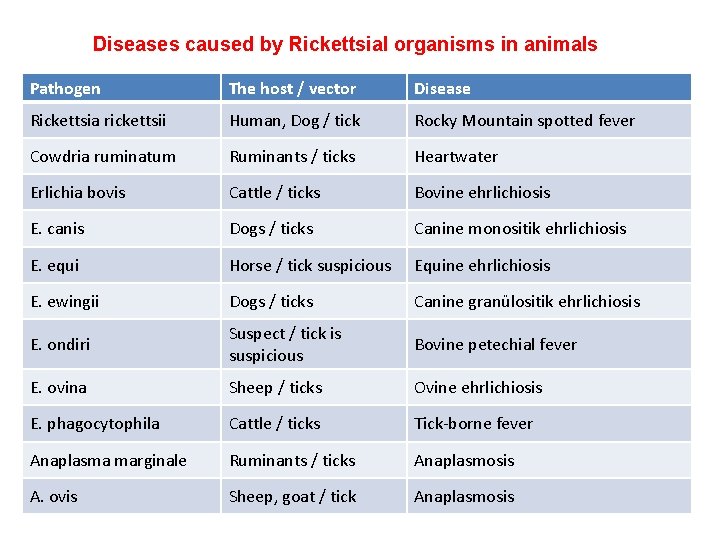
Diseases caused by Rickettsial organisms in animals Pathogen The host / vector Disease Rickettsia rickettsii Human, Dog / tick Rocky Mountain spotted fever Cowdria ruminatum Ruminants / ticks Heartwater Erlichia bovis Cattle / ticks Bovine ehrlichiosis E. canis Dogs / ticks Canine monositik ehrlichiosis E. equi Horse / tick suspicious Equine ehrlichiosis E. ewingii Dogs / ticks Canine granülositik ehrlichiosis E. ondiri Suspect / tick is suspicious Bovine petechial fever E. ovina Sheep / ticks Ovine ehrlichiosis E. phagocytophila Cattle / ticks Tick-borne fever Anaplasma marginale Ruminants / ticks Anaplasmosis A. ovis Sheep, goat / tick Anaplasmosis
- Slides: 80