
Spiral Model Contents What is spiral model Four


- Slides: 7
Spiral Model Contents: What is spiral model? Four steps of spiral model Advantages & disadvantages of spiral model When do we use spiral model ?
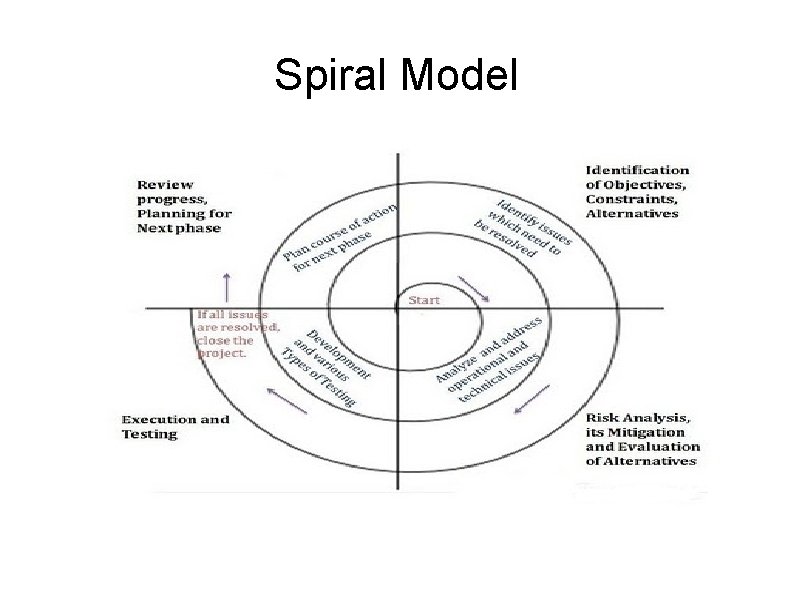
Spiral Model What is Spiral ? It is an approach to application development that focuses in minimizing risk. Each transition around the spiral involves repeating the same four steps.
Spiral Model
Four steps of spiral are: Planning- determine the objectives, alternatives and constraints of this iteration. Risk analysis- evaluate alternatives, identify and resolve risks. Execution- develop and verify deliverables from this iteration Verification- Plan the next iteration.
Advantages High amount of risk analysis hence, avoidance of Risk is enhanced. Good for large and mission-critical projects. Strong approval and documentation control. Software is produced early in the software life cycle. Additional Functionality can be added at a later date.
Disadvantages Can be a costly model to use. Risk analysis requires highly specific expertise. Project’s success is highly dependent on the risk analysis phase. Doesn’t work well for smaller projects.
When do we use Spiral model ? When costs and risk evaluation is important. For medium to high-risk projects. Users are unsure of their needs. Requirements are complex. Significant changes are expected (research and exploration).