
Spintronics The Search for Effective Spin Polarized Current
- Slides: 16
Spintronics The Search for Effective Spin Polarized Current Injection Into Semiconductors Presented by Alan Gabel Boston University Introduction to Solid State
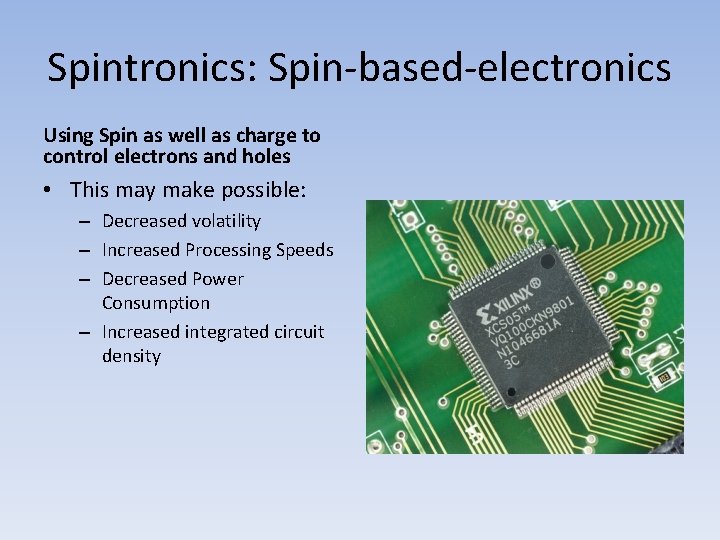
Spintronics: Spin-based-electronics Using Spin as well as charge to control electrons and holes • This may make possible: – Decreased volatility – Increased Processing Speeds – Decreased Power Consumption – Increased integrated circuit density
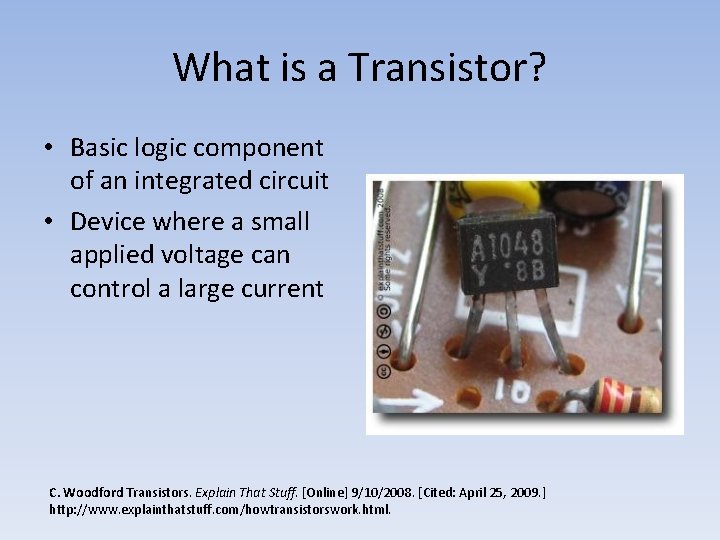
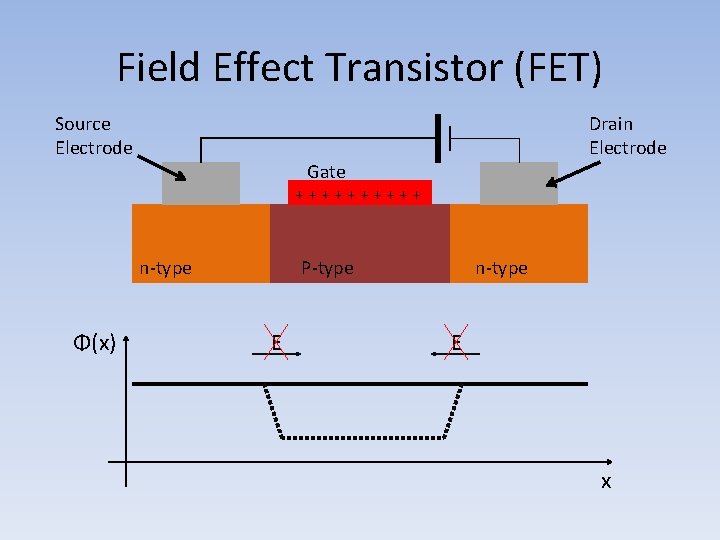
What is a Transistor? • Basic logic component of an integrated circuit • Device where a small applied voltage can control a large current C. Woodford Transistors. Explain That Stuff. [Online] 9/10/2008. [Cited: April 25, 2009. ] http: //www. explainthatstuff. com/howtransistorswork. html.
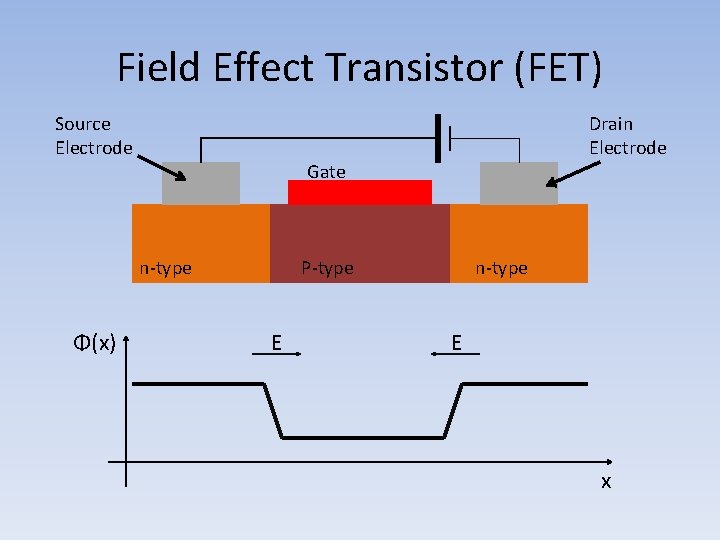
Field Effect Transistor (FET) Source Electrode Gate n-type Φ(x) Drain Electrode P-type E n-type E x
Field Effect Transistor (FET) Source Electrode Drain Electrode Gate +++++ n-type Φ(x) P-type E n-type E x
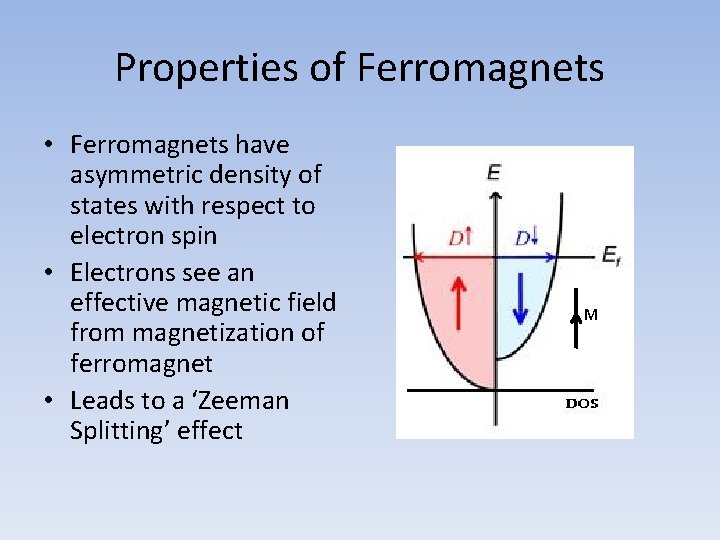
Properties of Ferromagnets • Ferromagnets have asymmetric density of states with respect to electron spin • Electrons see an effective magnetic field from magnetization of ferromagnet • Leads to a ‘Zeeman Splitting’ effect M
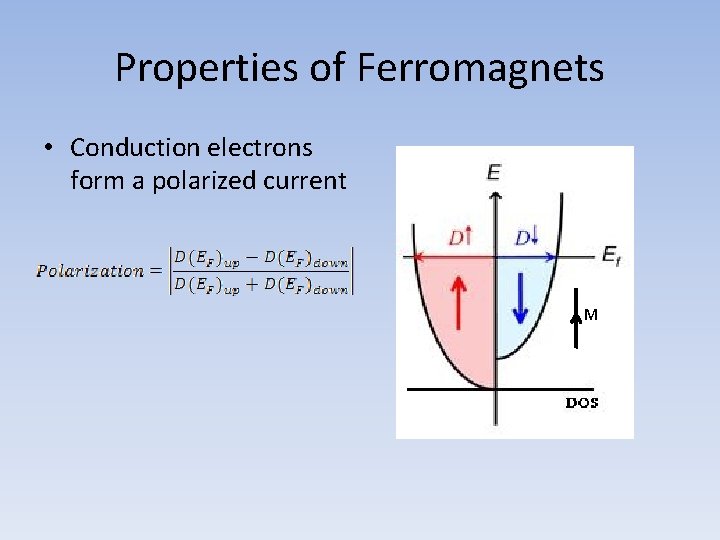
Properties of Ferromagnets • Conduction electrons form a polarized current M
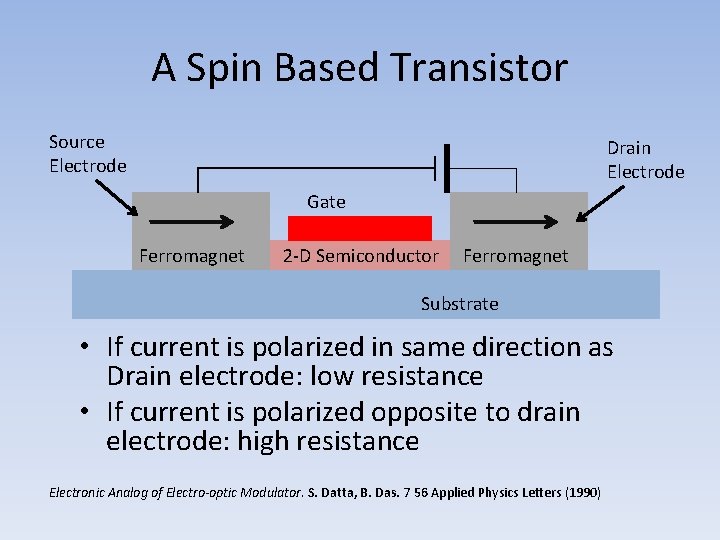
A Spin Based Transistor Source Electrode Drain Electrode Gate Ferromagnet 2 -D Semiconductor Ferromagnet Substrate • If current is polarized in same direction as Drain electrode: low resistance • If current is polarized opposite to drain electrode: high resistance Electronic Analog of Electro-optic Modulator. S. Datta, B. Das. 7 56 Applied Physics Letters (1990)
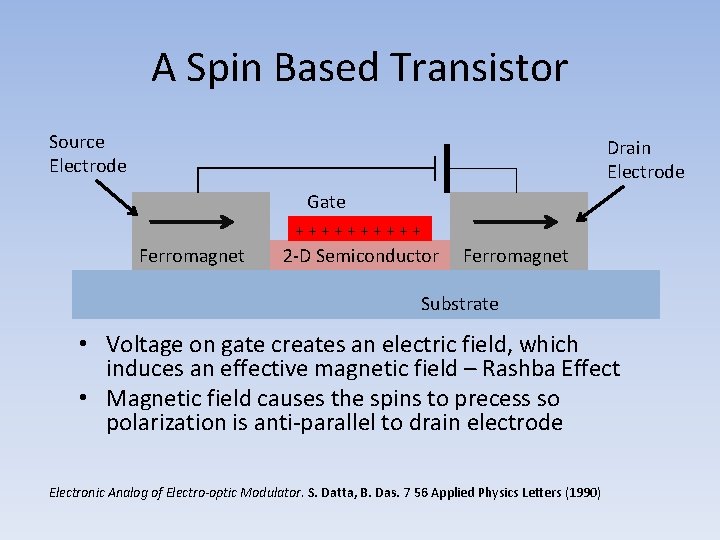
A Spin Based Transistor Source Electrode Drain Electrode Gate +++++ Ferromagnet 2 -D Semiconductor Ferromagnet Substrate • Voltage on gate creates an electric field, which induces an effective magnetic field – Rashba Effect • Magnetic field causes the spins to precess so polarization is anti-parallel to drain electrode Electronic Analog of Electro-optic Modulator. S. Datta, B. Das. 7 56 Applied Physics Letters (1990)
Key Ingredients • Injection of Spin polarized current into semiconductor from source electrode • Propagation through the semiconductor • Induced spin precession • Spin-selective collection of current by drain electrode Spintronics: A Spin-Based Electronics. S. A. Wolf, D. D. Awschalom, R. A. Buhrman, J. M. Daughton, S. von Molna. Science, 294 (2001), p. 1488.
Key Ingredients • Injection of Spin polarized current into semiconductor from source electrode • Propagation through the semiconductor • Induced spin precession • Spin-selective collection of current by drain electrode Spintronics: A Spin-Based Electronics. S. A. Wolf, D. D. Awschalom, R. A. Buhrman, J. M. Daughton, S. von Molna. Science, 294 (2001), p. 1488.
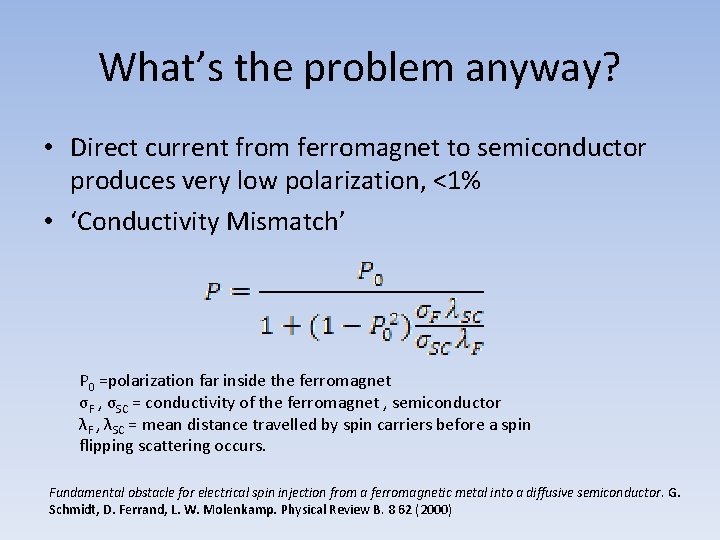
What’s the problem anyway? • Direct current from ferromagnet to semiconductor produces very low polarization, <1% • ‘Conductivity Mismatch’ P 0 =polarization far inside the ferromagnet σF , σSC = conductivity of the ferromagnet , semiconductor λF , λSC = mean distance travelled by spin carriers before a spin flipping scattering occurs. Fundamental obstacle for electrical spin injection from a ferromagnetic metal into a diffusive semiconductor. G. Schmidt, D. Ferrand, L. W. Molenkamp. Physical Review B. 8 62 (2000)
What if Ferromagnet was a Semiconductor? • Use a ferromagneticaly doped semiconductor • It Works! P measured between 90 -100% • BUT… Electrical spin injectin in a ferromagnetic semiconductor heterostructure. Y. Ohno, D. Young, B. Beschoten, F. Matsukura, H. Ohno, D. Awschalom. Nature 402 790 (1999) Injection and detection of a spin-polarized current in a light-emitting diode. R. Fiederling, M. Keim, G. Reuscher, W. Ossau, G. Schmidt, A. Waag, L. Molenkamp. Nature 402 787 (1999)
What if Ferromagnet was a Semiconductor? • Use a ferromagneticaly doped semiconductor • It Works! P measured between 90 -100% • BUT… – Need high magnetic fields (~1. 5 T) – Need super-low temperatures (<40 K) – Not viable for commercial application Electrical spin injectin in a ferromagnetic semiconductor heterostructure. Y. Ohno, D. Young, B. Beschoten, F. Matsukura, H. Ohno, D. Awschalom. Nature 402 790 (1999) Injection and detection of a spin-polarized current in a light-emitting diode. R. Fiederling, M. Keim, G. Reuscher, W. Ossau, G. Schmidt, A. Waag, L. Molenkamp. Nature 402 787 (1999)
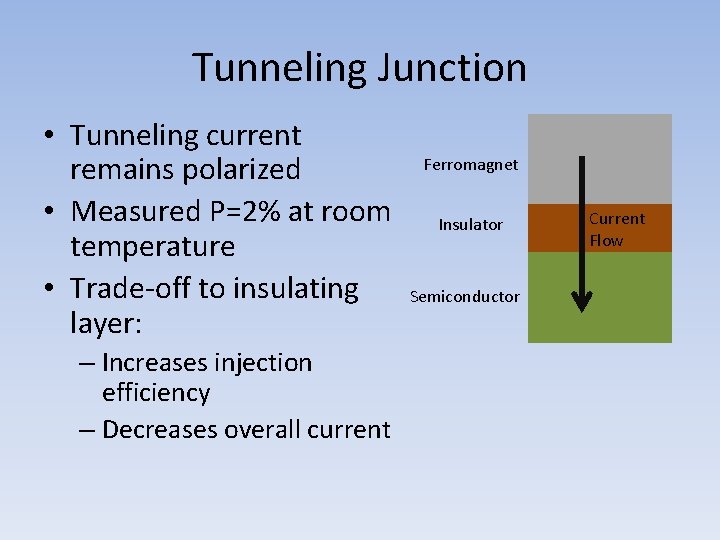
Tunneling Junction • Tunneling current remains polarized • Measured P=2% at room temperature • Trade-off to insulating layer: – Increases injection efficiency – Decreases overall current Ferromagnet Insulator Semiconductor Current Flow
Conclusions • Spintronics promises great, if vague, improvements – but is yet to be realized • Obstacles to a working spin transistor are substantial – Device was proposed 20 years ago, and no working model has ever been made • Will take hard work and possibly a major breakthrough to succeed.