
Spine Abdomen The spinal column is very complex
Spine & Abdomen
� The spinal column is very complex compared to other joint in the body � Because it protects the spinal cord, injury to the spinal column can be permanently debilitating or even life threatening.
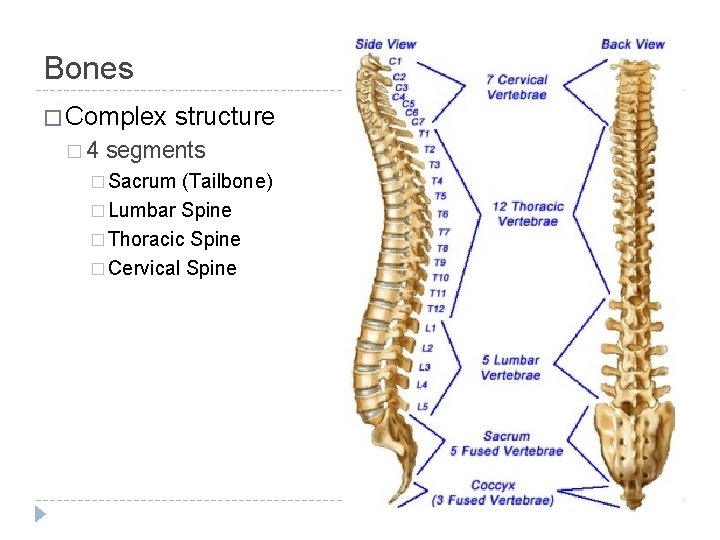
Bones � Complex � 4 structure segments � Sacrum (Tailbone) � Lumbar Spine � Thoracic Spine � Cervical Spine
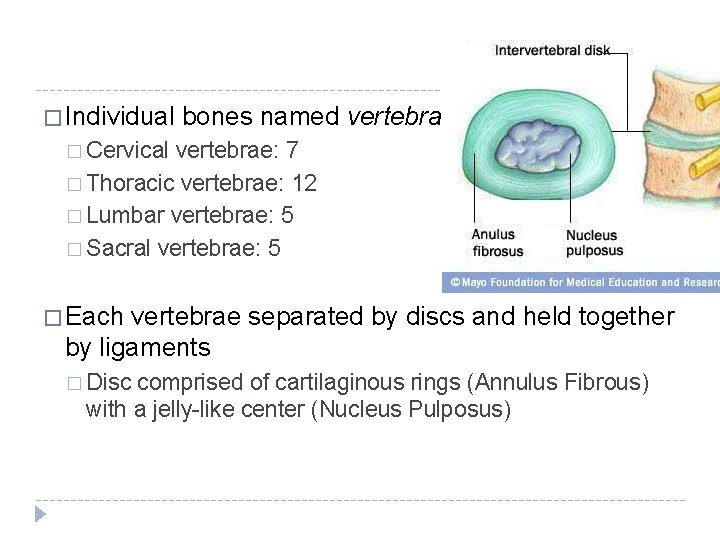
� Individual bones named vertebrae � Cervical vertebrae: 7 � Thoracic vertebrae: 12 � Lumbar vertebrae: 5 � Sacral vertebrae: 5 � Each vertebrae separated by discs and held together by ligaments � Disc comprised of cartilaginous rings (Annulus Fibrous) with a jelly-like center (Nucleus Pulposus)
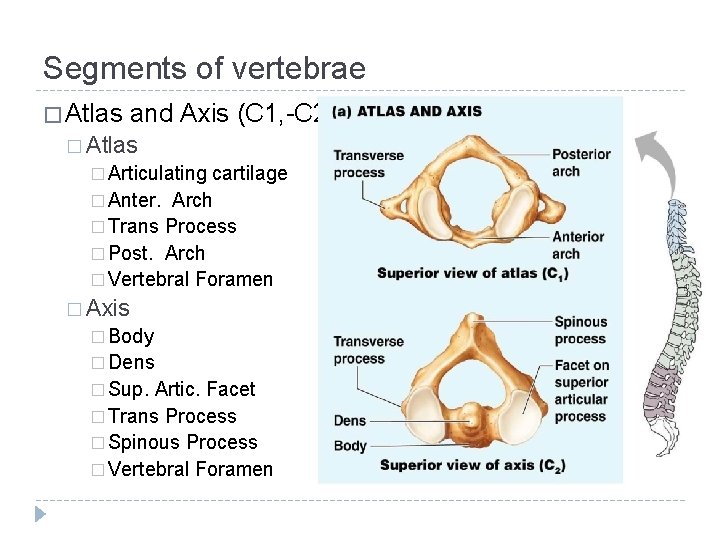
Segments of vertebrae � Atlas and Axis (C 1, -C 2) � Atlas � Articulating cartilage � Anter. Arch � Trans Process � Post. Arch � Vertebral Foramen � Axis � Body � Dens � Sup. Artic. Facet � Trans Process � Spinous Process � Vertebral Foramen
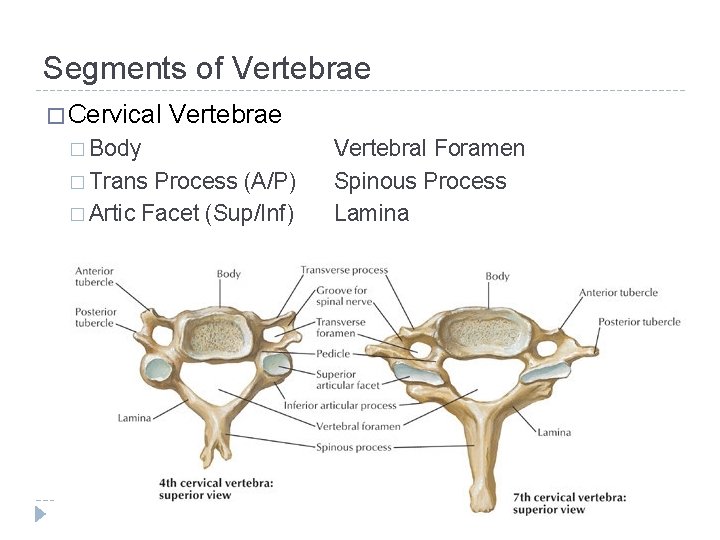
Segments of Vertebrae � Cervical Vertebrae � Body � Trans Process (A/P) � Artic Facet (Sup/Inf) Vertebral Foramen Spinous Process Lamina
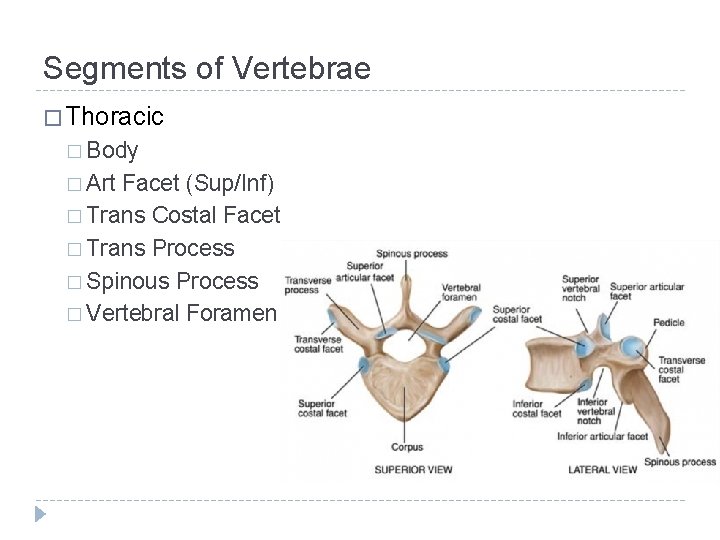
Segments of Vertebrae � Thoracic � Body � Art Facet (Sup/Inf) � Trans Costal Facet � Trans Process � Spinous Process � Vertebral Foramen
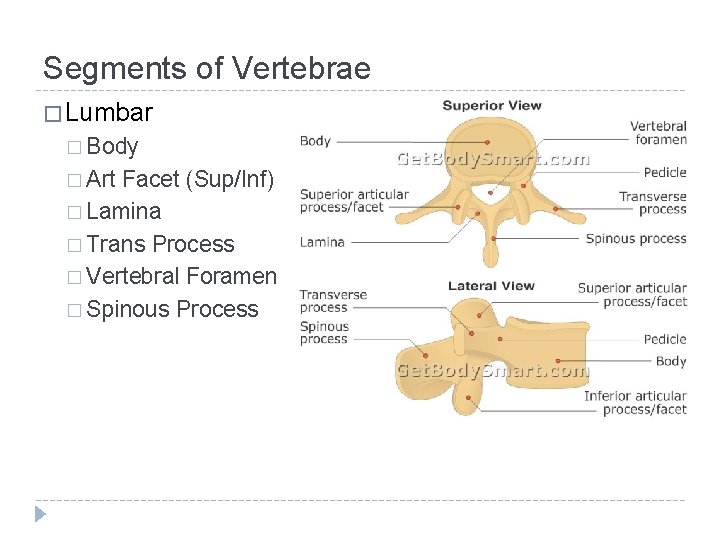
Segments of Vertebrae � Lumbar � Body � Art Facet (Sup/Inf) � Lamina � Trans Process � Vertebral Foramen � Spinous Process
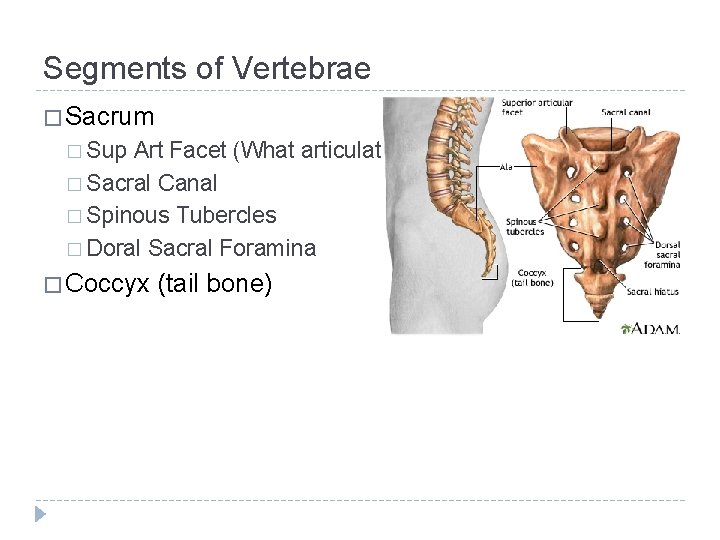
Segments of Vertebrae � Sacrum � Sup Art Facet (What articulates) � Sacral Canal � Spinous Tubercles � Doral Sacral Foramina � Coccyx (tail bone)
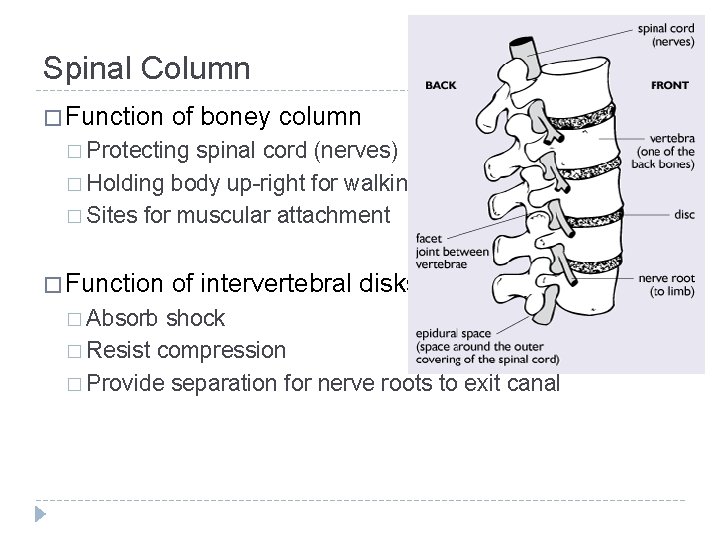
Spinal Column � Function of boney column � Protecting spinal cord (nerves) � Holding body up-right for walking � Sites for muscular attachment � Function � Absorb of intervertebral disks shock � Resist compression � Provide separation for nerve roots to exit canal
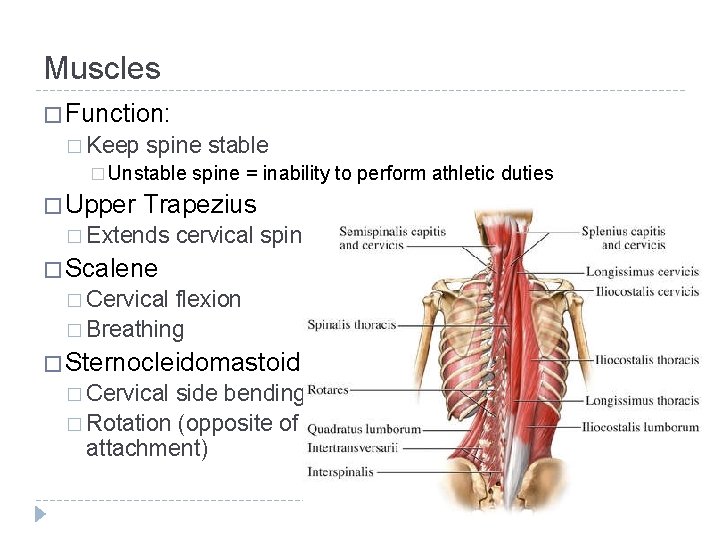
Muscles � Function: � Keep spine stable � Unstable � Upper spine = inability to perform athletic duties Trapezius � Extends cervical spine � Scalene � Cervical flexion � Breathing � Sternocleidomastoid � Cervical side bending � Rotation (opposite of attachment)
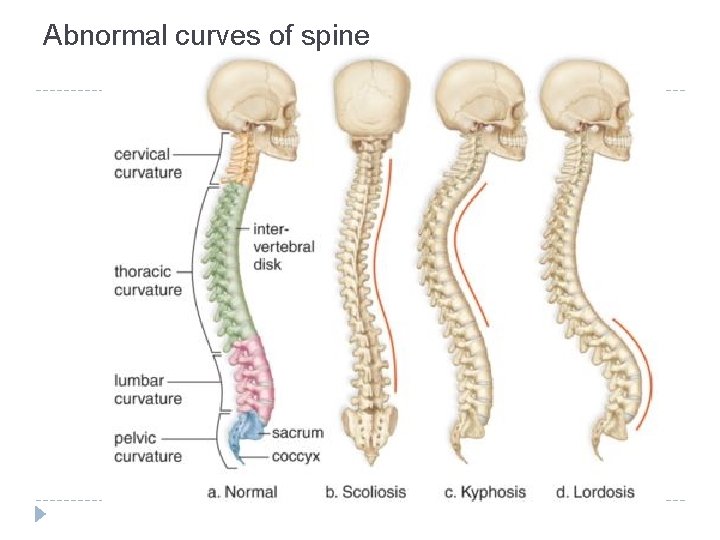
Abnormal curves of spine
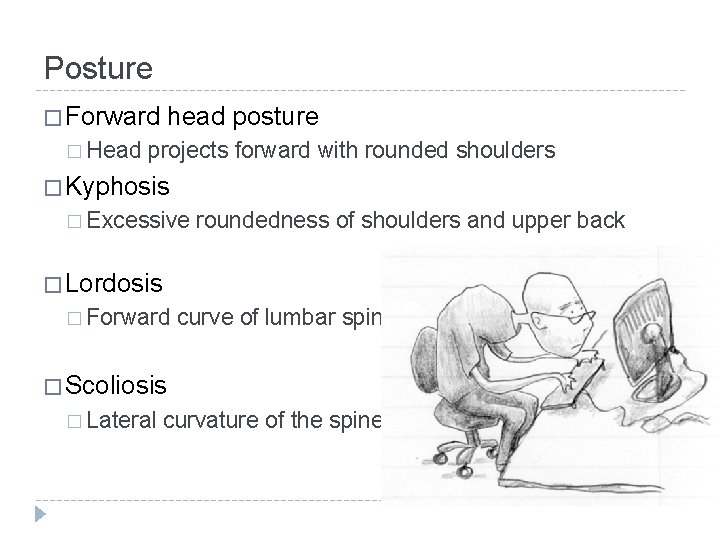
Posture � Forward � Head head posture projects forward with rounded shoulders � Kyphosis � Excessive roundedness of shoulders and upper back � Lordosis � Forward curve of lumbar spine � Scoliosis � Lateral curvature of the spine
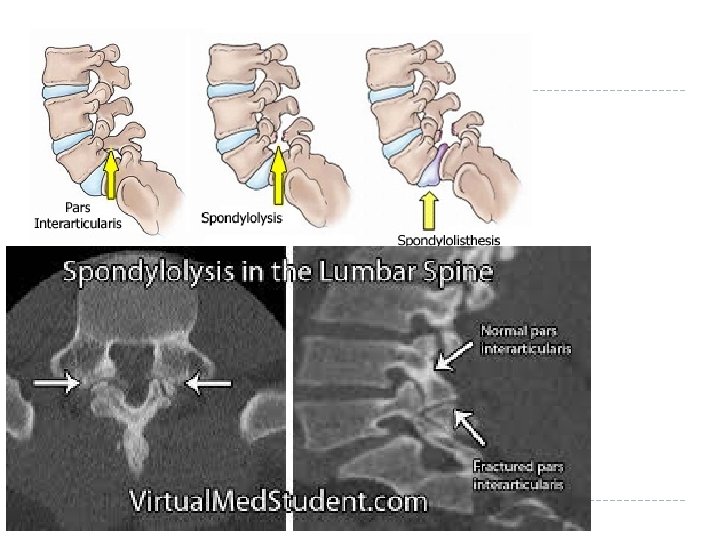
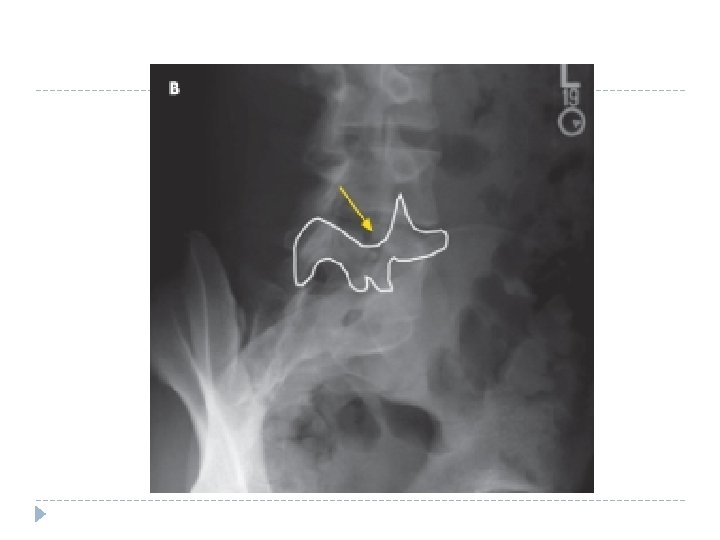
Common Spinal Injuries � Bone: � Spondylolysis � Stress fracture or bone degeneration � Spondylolisthesis � Superior vertebrae “shunts” forward on vertebrae beneath Progression of un-healed spondylolysis � Most commonly found in gymnasts and cheerleaders � MOI: excessive hyperextension of vertebral column � Cervical spine Fx � MOI: axial load � C/O: Pain, tingling, weakness in arms. If ath c/o during acute trauma, leave ath in position found, including helmet ON
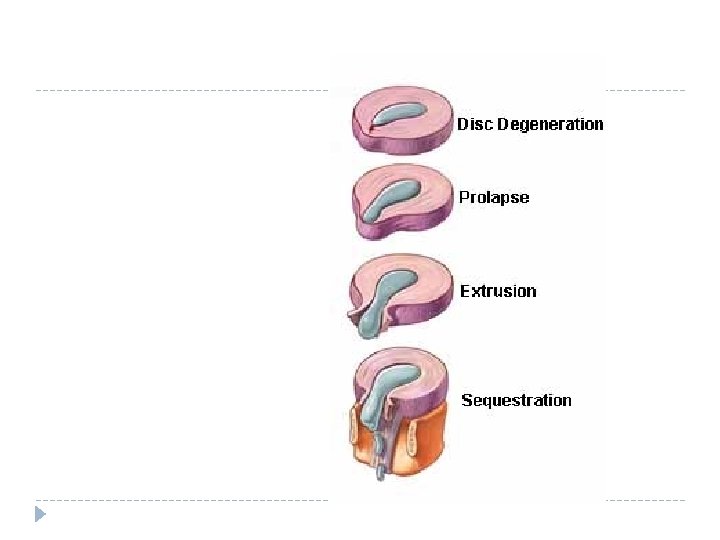
Common Spinal Injuries � Disk bulge: not common in younger athletes (higher incidence in contact sports) � MOI: Axial Load, Excessive trunk flexions during loading � Sometimes referred to as “slipped disk” – not appropriate term Disk bulge: nucleus pulposus is pushed through cartilage until is protrudes Can put pressure on nerve causing tingling, numbness, pain and eventually loss of function. Bulge can never be fully retracted, however tx can reduce bulge. Tx: strengthen core, use good posture, traction
Common Spinal Injuries � Muscle/Tendon � Mild Injuries: to moderate strains of musculature and tendons � C/O P opposite the side they bend, muscle spasm, decreased ROM secondary to P Tx: Pain is controlled first, then PRE and ROM routine. AT should observe ath in weight room/tx to make sure correct posture and mechanics are utilized
Fun Fact � 12% of American Indians have 25 vertebrae (instead of 24) � High % of African American WOMEN have 23 instead of 24 vertebrae � Both of these conditions are due to genetic anomaly passed down � Both can be the cause of idiopathic back pain
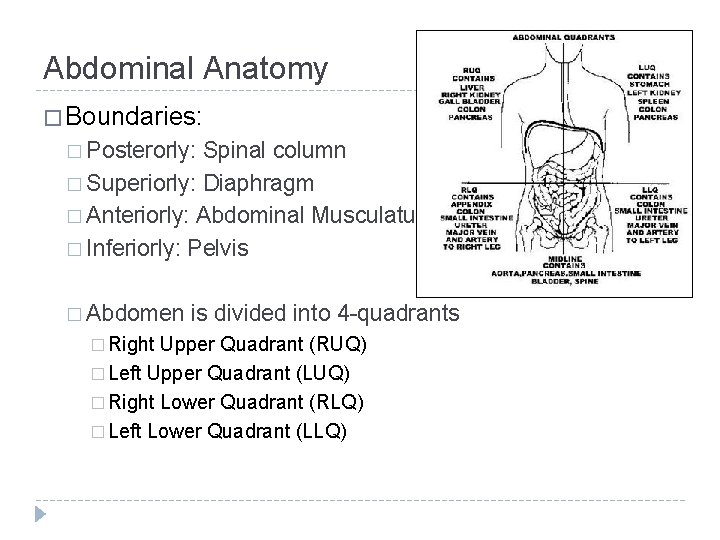
Abdominal Anatomy � Boundaries: � Posterorly: Spinal column � Superiorly: Diaphragm � Anteriorly: Abdominal Musculature � Inferiorly: Pelvis � Abdomen � Right is divided into 4 -quadrants Upper Quadrant (RUQ) � Left Upper Quadrant (LUQ) � Right Lower Quadrant (RLQ) � Left Lower Quadrant (LLQ)
Abdominal Anatomy � RUQ: contains liver, portion of pancreas, right kidney, gallbladder (if you have one) Large and small intestines � LUQ: contains Stomach, portion of Liver, portions of Pancreas, left Kidney, the spleen, large and small intestines � RLQ: contains large and small intestines, appendix, portion of bladder, uterus and R ovary (females) prostate (males). � LLQ: large and small intestines, portion of bladder, uterus and L ovary (females) prostate (males)
Abdominal Anatomy � Contains both solid and hollow organs. � Injuries to HOLLOW organs (such as bladder, intestines etc) RARELY cause rapid death; injuries to SOLID organs (such as liver, kidney, spleen) CAN cuase rapid death due to large blood supply � Hollow organs tend to bend and move out of the way upon impact
Hollow Organs and Solid Organs � Hollow organs: � esophagus, � small intestine, � colon (large intestine), � stomach. � Solid � gall organs: bladder, � spleen, � pancreas, � Liver � kidney � adrenal glands
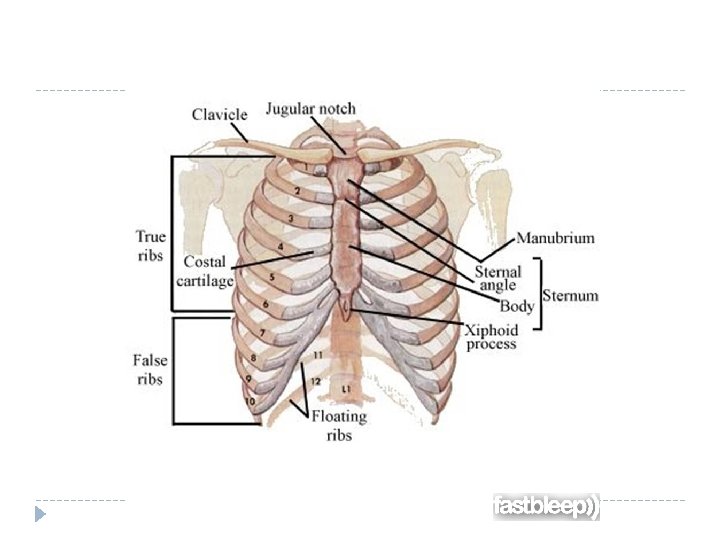
Abdominal Anatomy � Bones: � Ribs: � True, � False, � Floating, � Manubrium, � Sternum, � Xyphoid Process � Musculature: � Rectus Abdominis, � Oblique, � Diaphragm
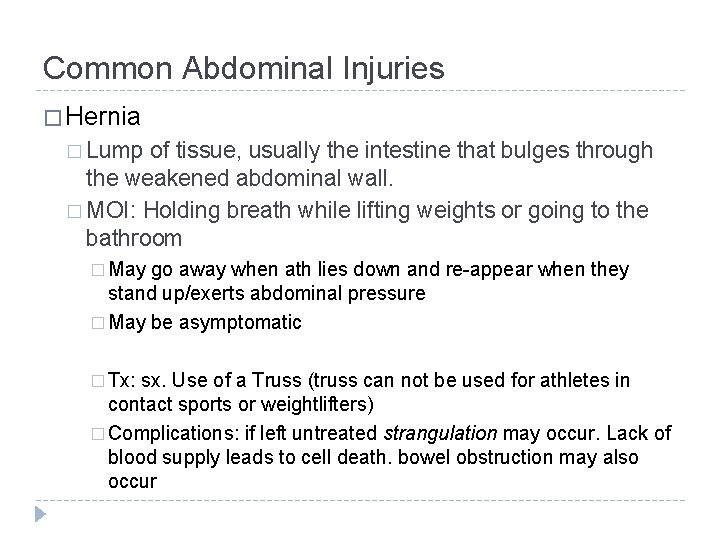
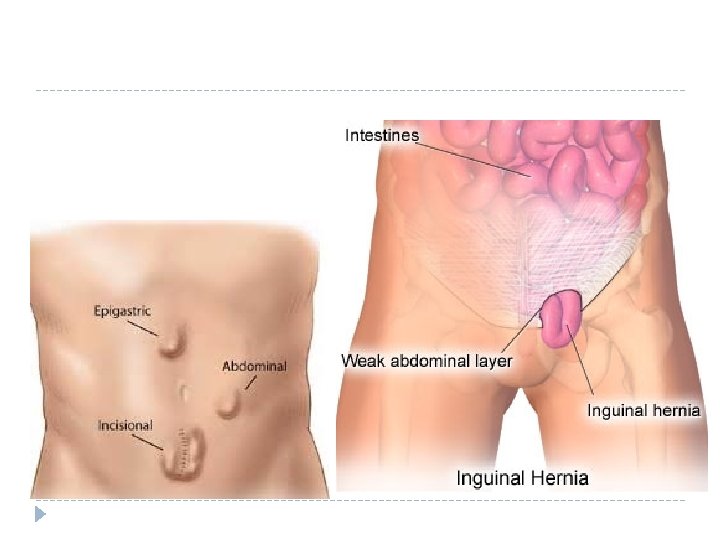
Common Abdominal Injuries � Hernia � Lump of tissue, usually the intestine that bulges through the weakened abdominal wall. � MOI: Holding breath while lifting weights or going to the bathroom � May go away when ath lies down and re-appear when they stand up/exerts abdominal pressure � May be asymptomatic � Tx: sx. Use of a Truss (truss can not be used for athletes in contact sports or weightlifters) � Complications: if left untreated strangulation may occur. Lack of blood supply leads to cell death. bowel obstruction may also occur
Common Abdominal Injuries � Pancreas � Found behind stomach, near liver and spinal cord � MOI: upon impact, pancreas tears away from wall � Medical Emergency: ath will have p in middle of abdomen, c/o of nausea, vomiting and experience signs of shock. Abdomen may be distented from internal bleeding � Liver � MOI: Blow to RUQ � C/O P that may radiate to R shoulder � Medical Emergency is ruptured: experience signs of shock, have rapid, weak pulse; drop in BP
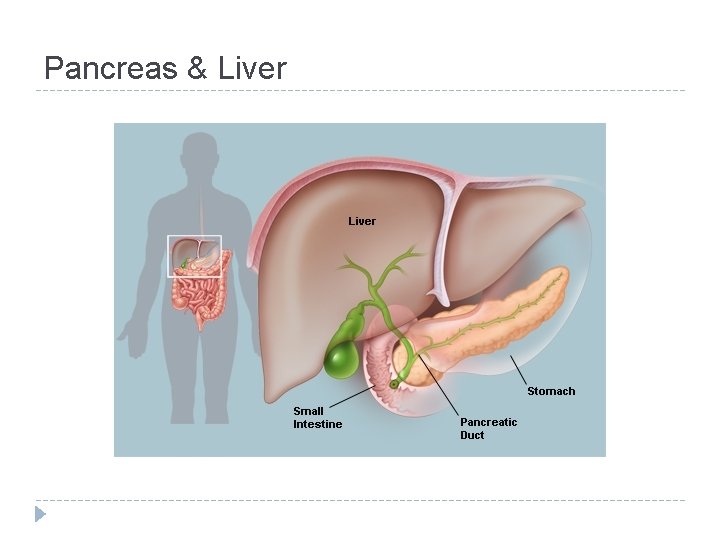
Pancreas & Liver
Common Abdominal Injuries � Kidney � MOI: Direct blow � 3 levels: contusion, laceration, rupture � C/O P in the back may radiate towards bladder. P increase w/ trunk extension, decrease with knee/hip flexion. Nausea, vomiting, visible blood in urine, shock. � Spleen � Direct blow � C/O p over spleen or in L shoulder (Kehr’s sign) (L shoulder pain is caused by internal bleeding putting pressure on the diaphragm, which puts pressure on nerve), Abdominal P, rapid pulse, vomiting, decreased BP, shock.
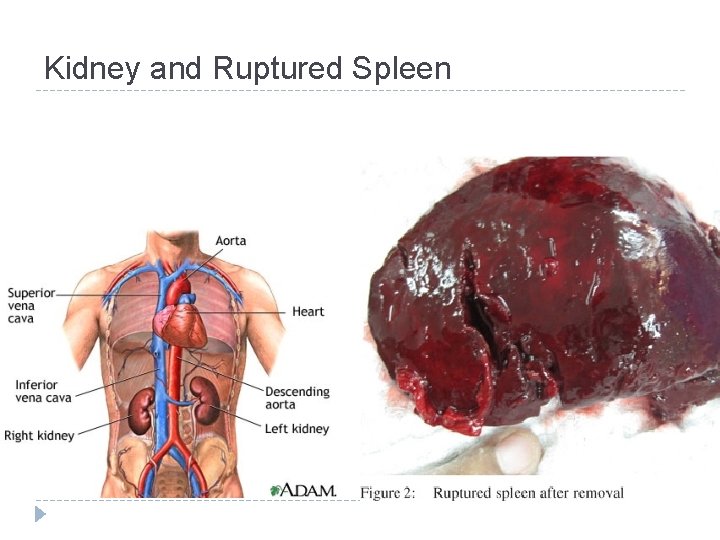
Kidney and Ruptured Spleen
Extra Credit � Short power-point report on referred pain � Organ-shaped food to share with class
- Slides: 33