
SPINAL FUSION OVERVIEW in Congenital deformities When is
- Slides: 24
SPINAL FUSION OVERVIEW in Congenital deformities When is short segment fusion or resection appropriate? When to give up on fusionless technique? F. S. Pérez-Grueso. Hospital La Paz. Madrid
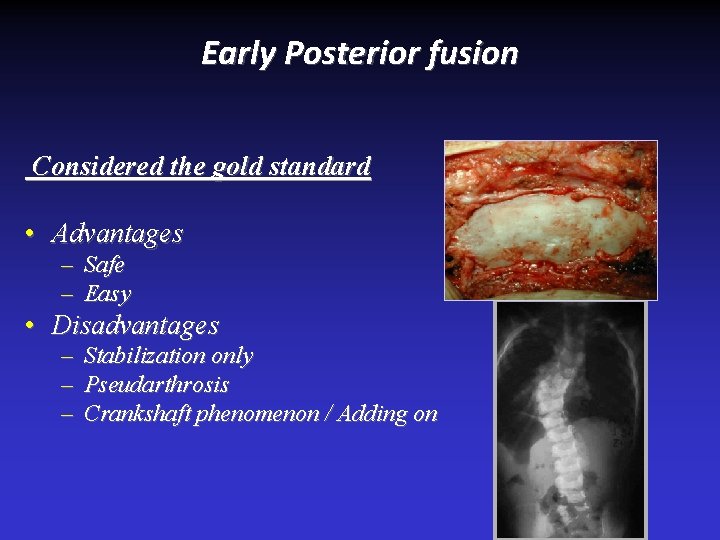
Early Posterior fusion Considered the gold standard • Advantages – Safe – Easy • Disadvantages – – – Stabilization only Pseudarthrosis Crankshaft phenomenon / Adding on
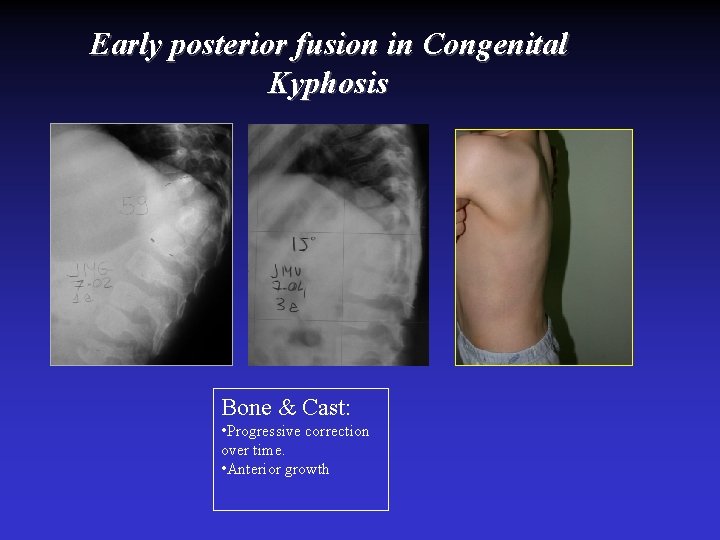
RB Winter and JH Moe The results of spinal arthrodesis for congenital spinal deformity in patients younger than five years old J. Bone Joint Surg. Am. , Mar 1982; 64: 419 432. We reviewed the results of spinal arthrodesis for congenital spinal deformity in forty-nine patients who were younger than five years old. The minimum follow-up was five years, and eleven patients had completed their growth. Posterior arthrodesis alone was found to be effective in most scoliotic patients. There was minimum bending of the fusion mass in most patients, almost no creation of lordosis, and minimum effect on torso-lower limb relationships. For congenital kyphosis, posterior arthrodesis was highly effective, giving better eventual correction than when both anterior and posterior arthrodesis was done.
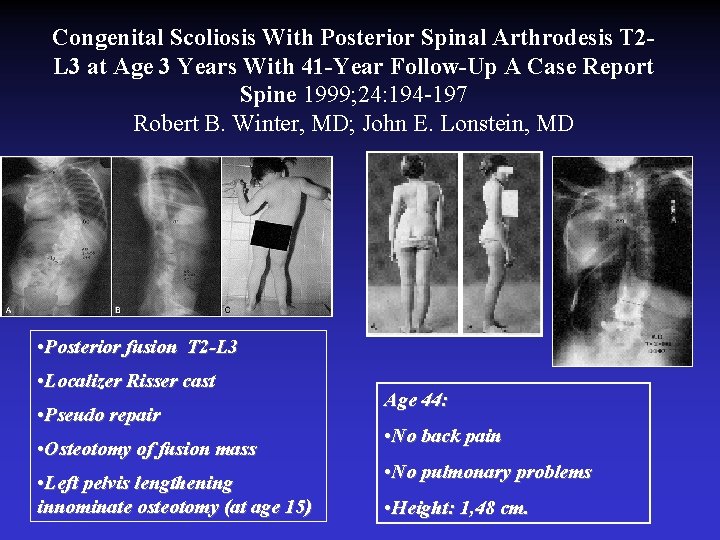
Congenital Scoliosis With Posterior Spinal Arthrodesis T 2 L 3 at Age 3 Years With 41 -Year Follow-Up A Case Report Spine 1999; 24: 194 -197 Robert B. Winter, MD; John E. Lonstein, MD • Posterior fusion T 2 -L 3 • Localizer Risser cast • Pseudo repair • Osteotomy of fusion mass • Left pelvis lengthening innominate osteotomy (at age 15) Age 44: • No back pain • No pulmonary problems • Height: 1, 48 cm.
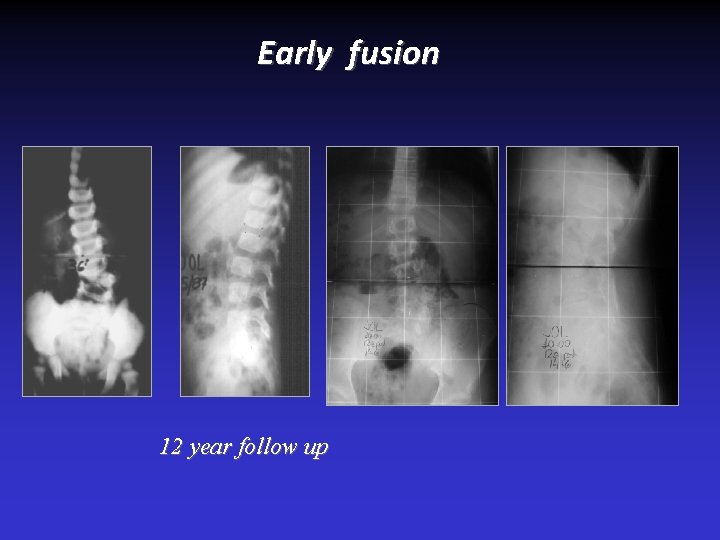
Early fusion 12 year follow up
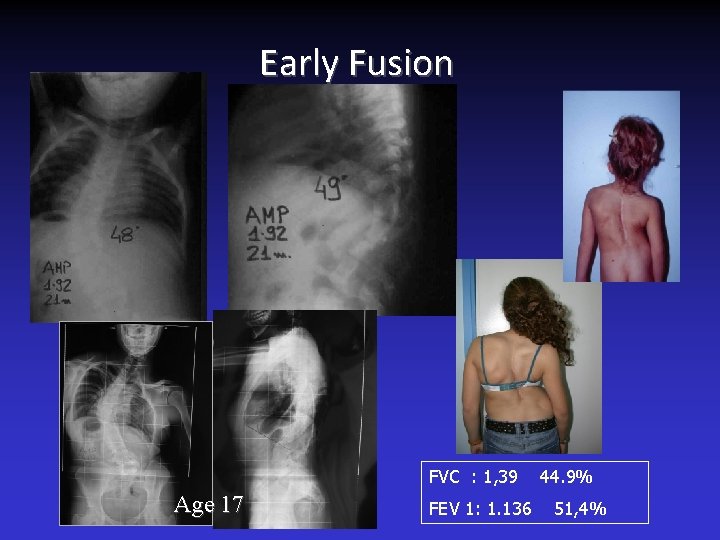
Early Fusion FVC : 1, 39 Age 17 FEV 1: 1. 136 44. 9% 51, 4%
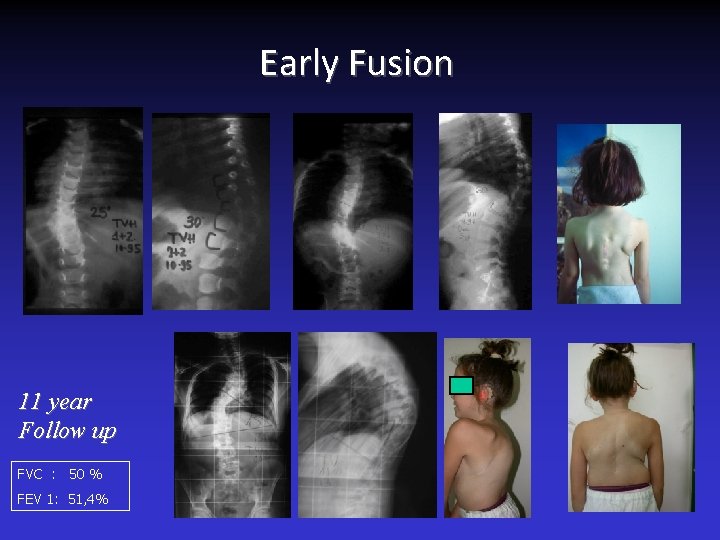
Early Fusion 11 year Follow up FVC : 50 % FEV 1: 51, 4%
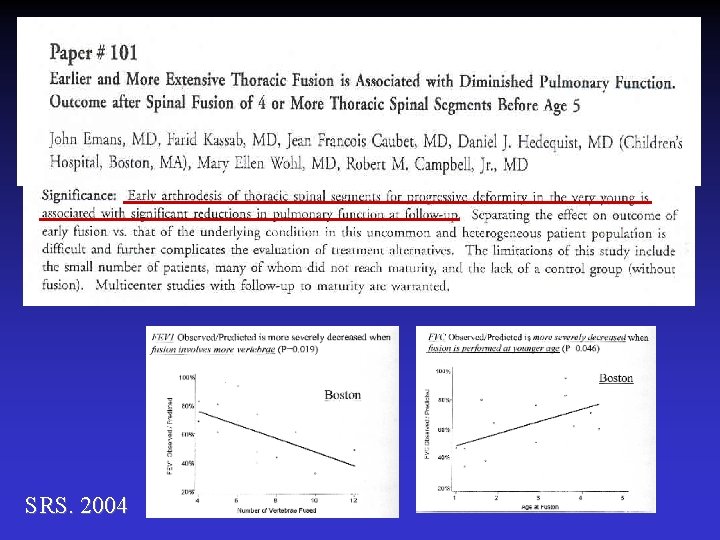
SRS. 2004
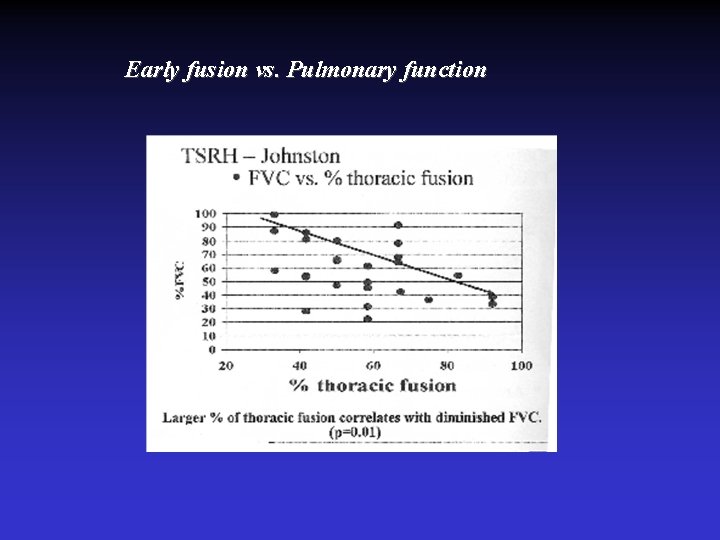
Early fusion vs. Pulmonary function
Fusion at an early age “it is always better to have a short straight spine than a shorter crooked spine” DOES NOT WORK
Short fusion in long congenital curves • Control the deformity while minimizing spinal growth arrest • Simple surgery for complex deformity • Fail to prevent progression: • Adding on • Crankshaft
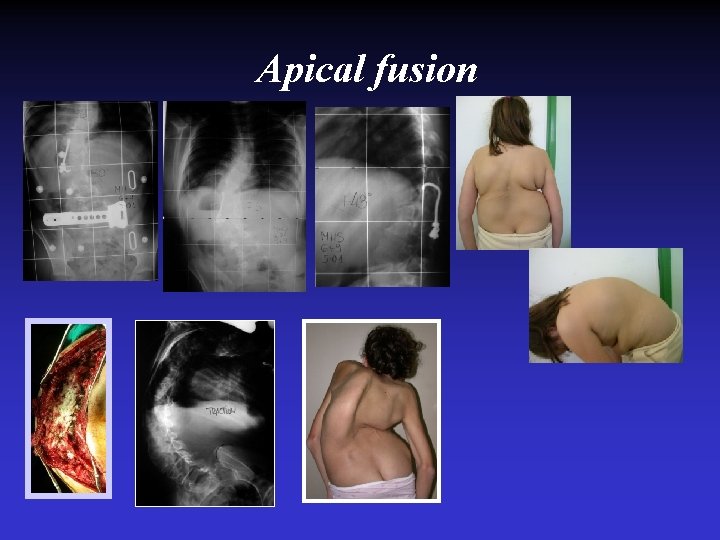
Apical fusion
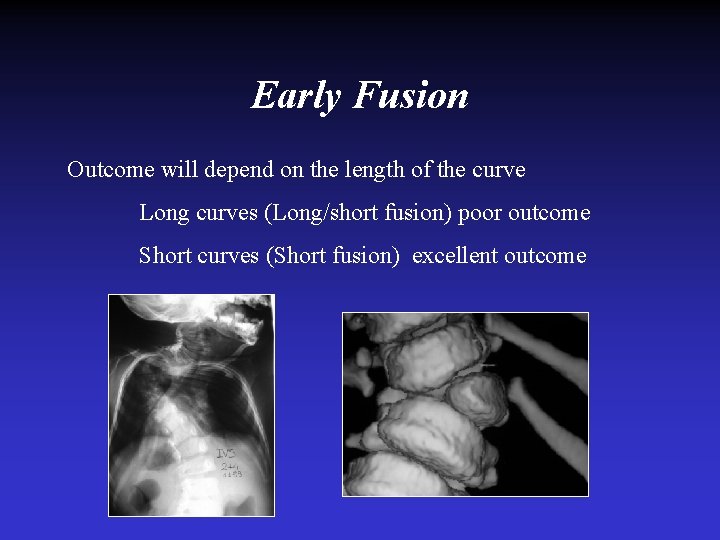
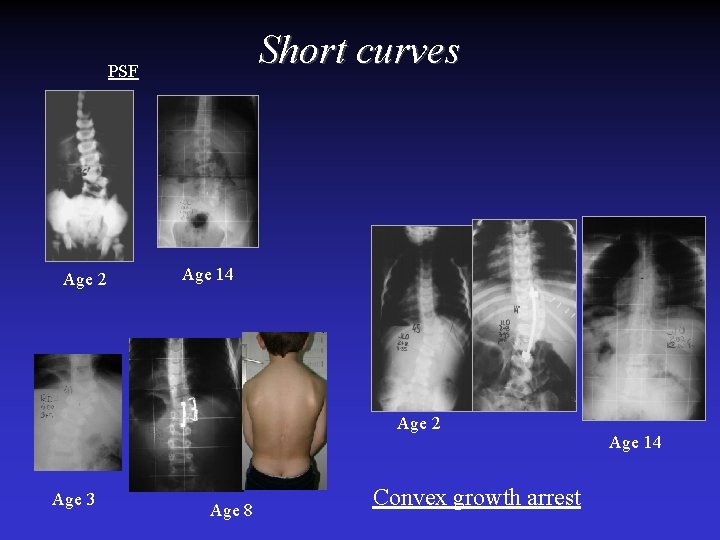
Early Fusion Outcome will depend on the length of the curve Long curves (Long/short fusion) poor outcome Short curves (Short fusion) excellent outcome
Short curves PSF Age 2 Age 14 Age 2 Age 3 Age 8 Convex growth arrest Age 14
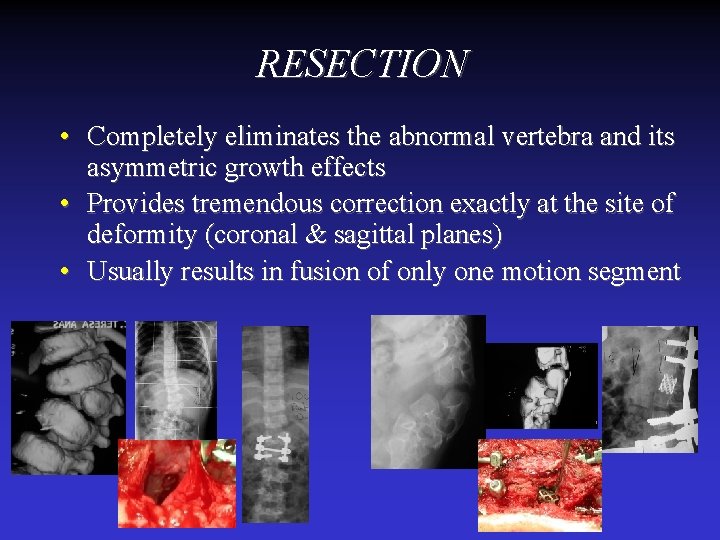
RESECTION • Completely eliminates the abnormal vertebra and its asymmetric growth effects • Provides tremendous correction exactly at the site of deformity (coronal & sagittal planes) • Usually results in fusion of only one motion segment
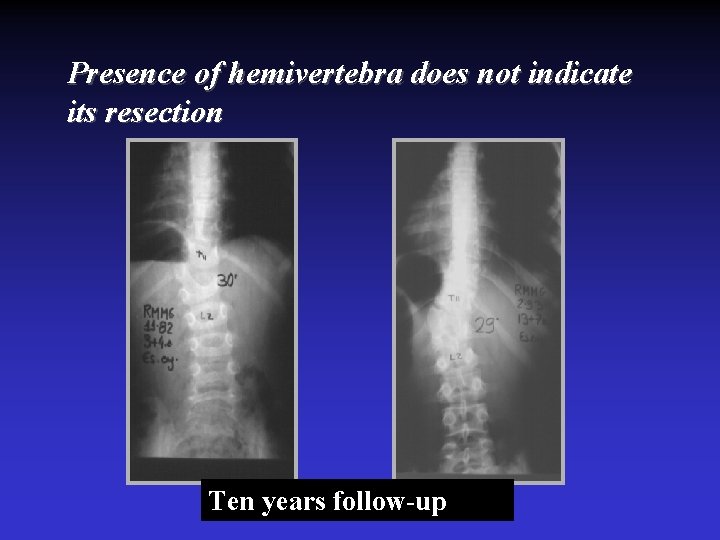
Presence of hemivertebra does not indicate its resection Ten years follow-up
Early posterior fusion in Congenital Kyphosis Bone & Cast: • Progressive correction over time. • Anterior growth
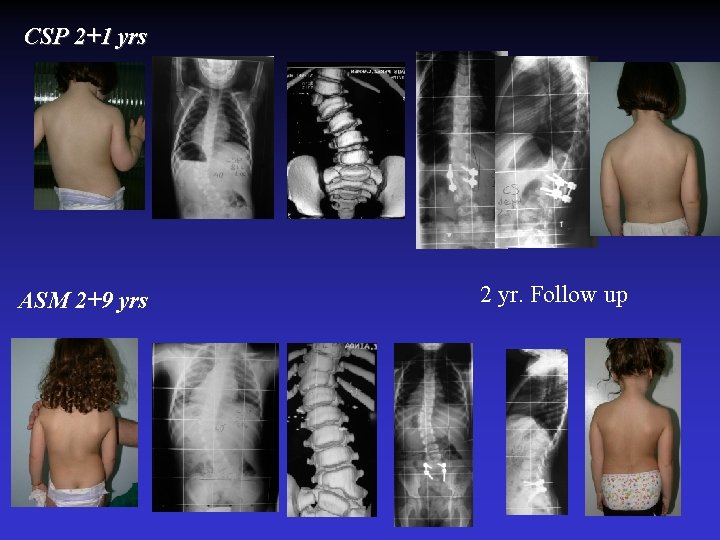
RESECTION • Indicated when correction advisable to prevent late progression of compensatory curves • Right procedure provided enough surgical skills to minimize complications
CSP 2+1 yrs ASM 2+9 yrs 2 yr. Follow up
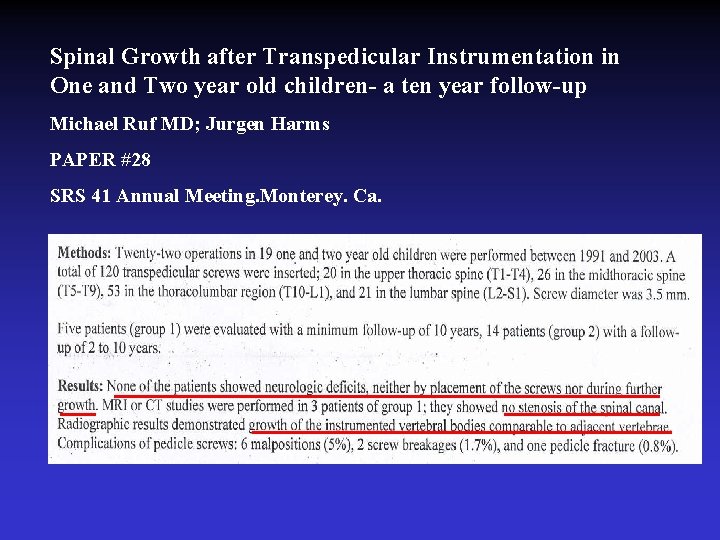
Spinal Growth after Transpedicular Instrumentation in One and Two year old children- a ten year follow-up Michael Ruf MD; Jurgen Harms PAPER #28 SRS 41 Annual Meeting. Monterey. Ca.
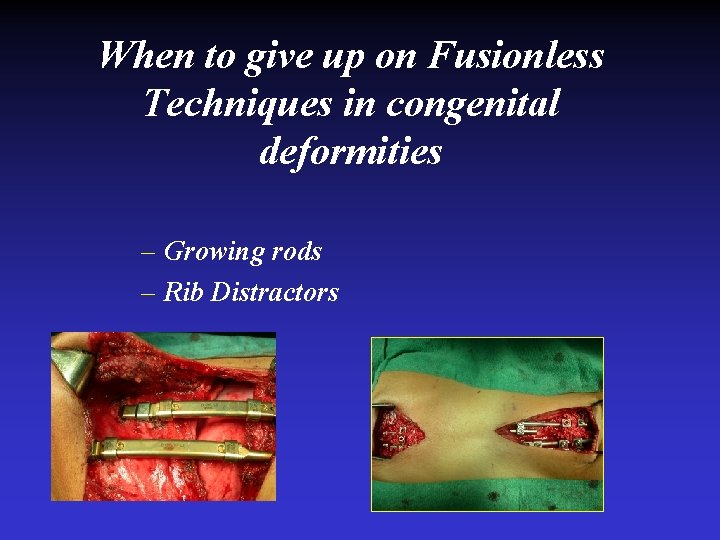
When to give up on Fusionless Techniques in congenital deformities – Growing rods – Rib Distractors
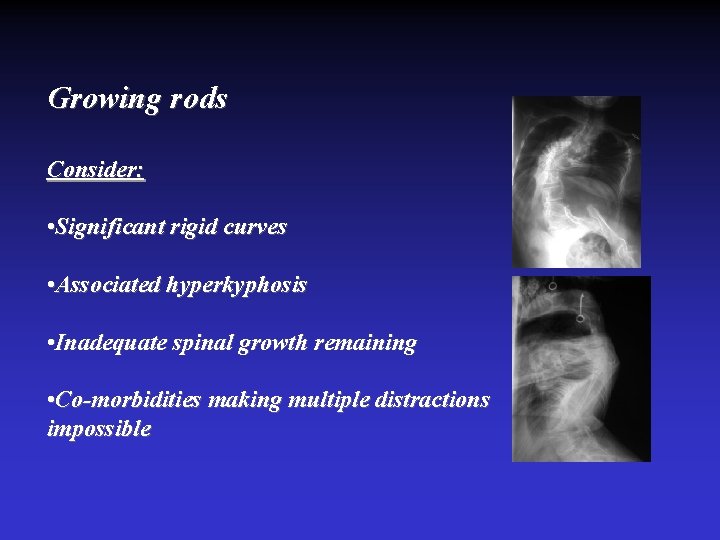
Growing rods Consider: • Significant rigid curves • Associated hyperkyphosis • Inadequate spinal growth remaining • Co-morbidities making multiple distractions impossible
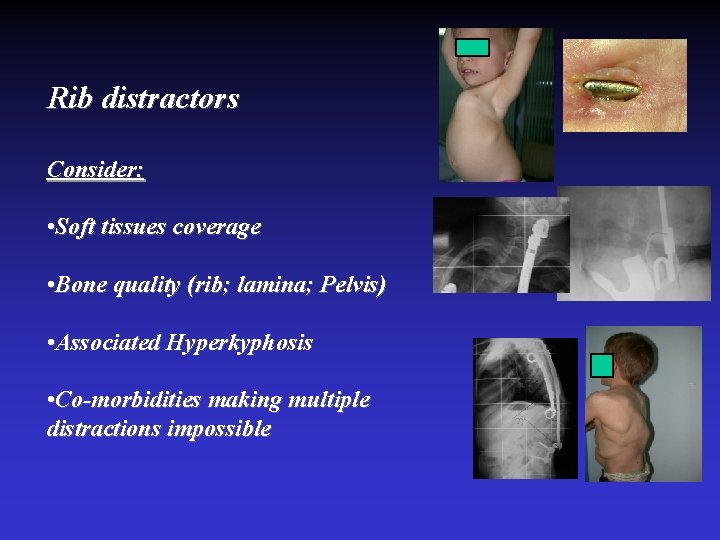
Rib distractors Consider: • Soft tissues coverage • Bone quality (rib; lamina; Pelvis) • Associated Hyperkyphosis • Co-morbidities making multiple distractions impossible
When to give up When treatment goals cannot be achieved due to repeated complications • Control / Improve spine and chest deformity • Allow spinal growth and normal pulmonary function