
SPINAL DEFORMITIES NORMAL SPINE ALLIGNMENT FRONTAL PLANE STRAIGHT

- Slides: 36
SPINAL DEFORMITIES
NORMAL SPINE ALLIGNMENT FRONTAL PLANE STRAIGHT LATERAL PLANE 20 -40 DEGREE THORACIC KYPHOSIS 30 -60 DEGREE LUMBAR LORDOSIS
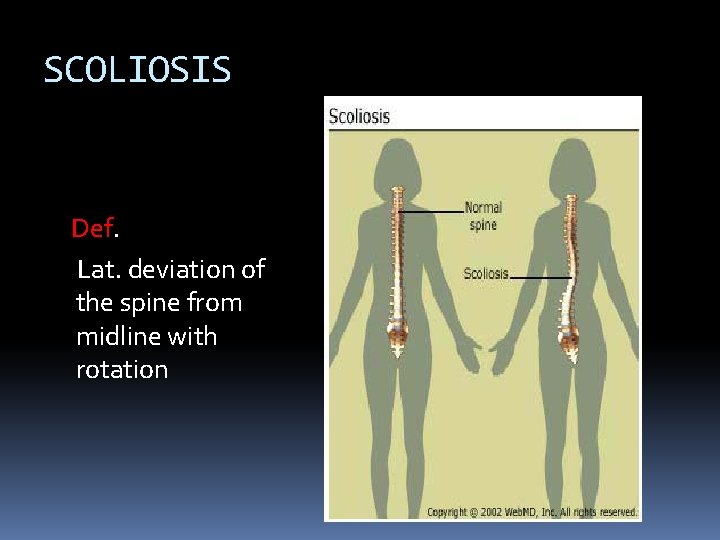
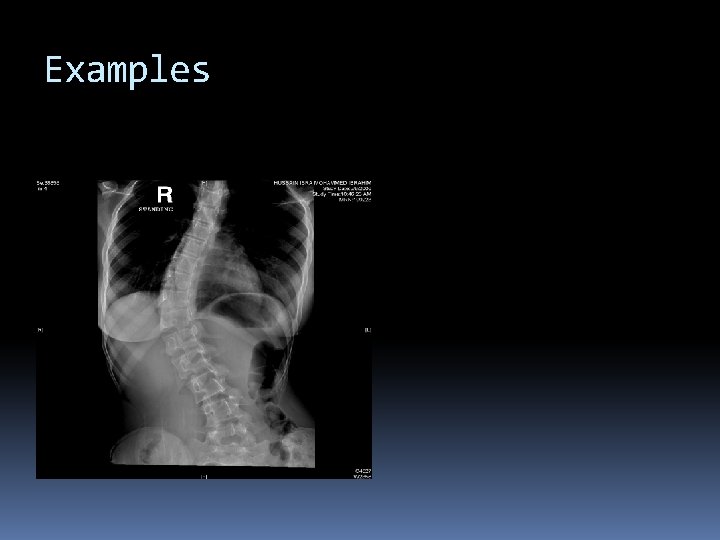
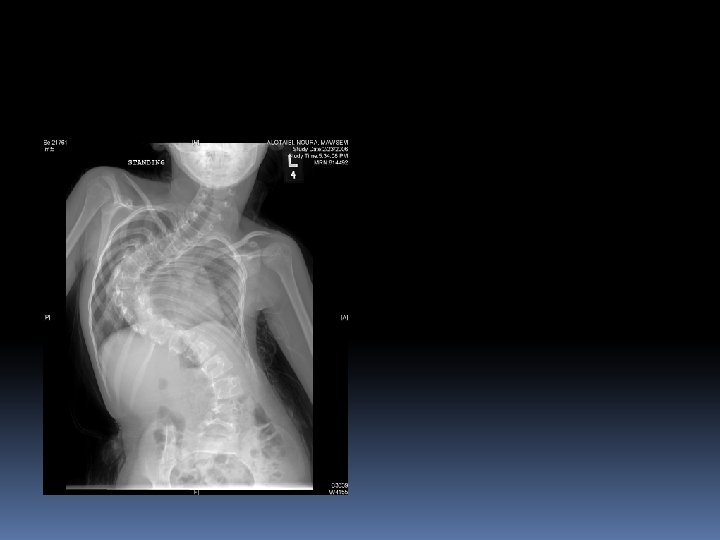
SCOLIOSIS Def. Lat. deviation of the spine from midline with rotation
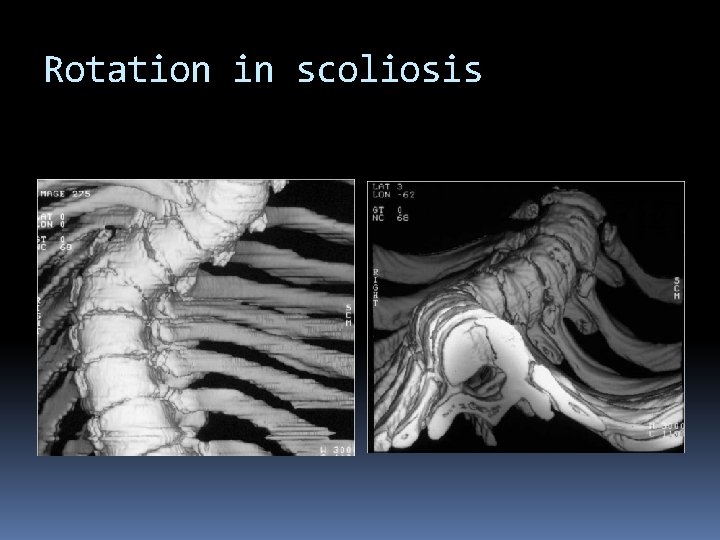
Rotation in scoliosis
SCOLIOSIS Types : Congenital (structural abn. In vertebrae or ribs ) Neuromuscular (eg. Cerebral palsy, spinal muscular atrophy…) Idiopathic (most common ) Others
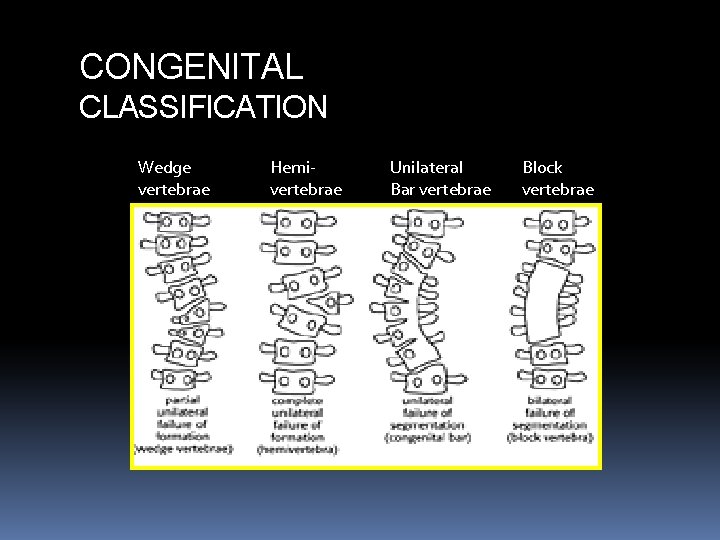
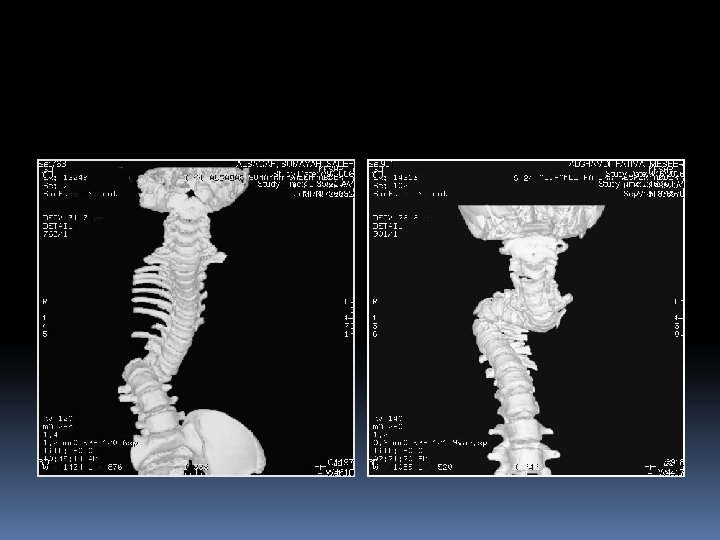
CONGENITAL CLASSIFICATION Wedge vertebrae Hemivertebrae Unilateral Bar vertebrae Block vertebrae
IDIOPATHIC SCOLIOSIS Spinal deformity in a spine which was normal Causes ? Properioception disorders Brain stem Melatonin hormones UNKNOWN
IDIOPATHIC SCOLIOSIS TYPES Infantile (0 -4 yrs ) Juvenile (4 -9 yrs ) Adolescent (> 10 yrs ) [most common]
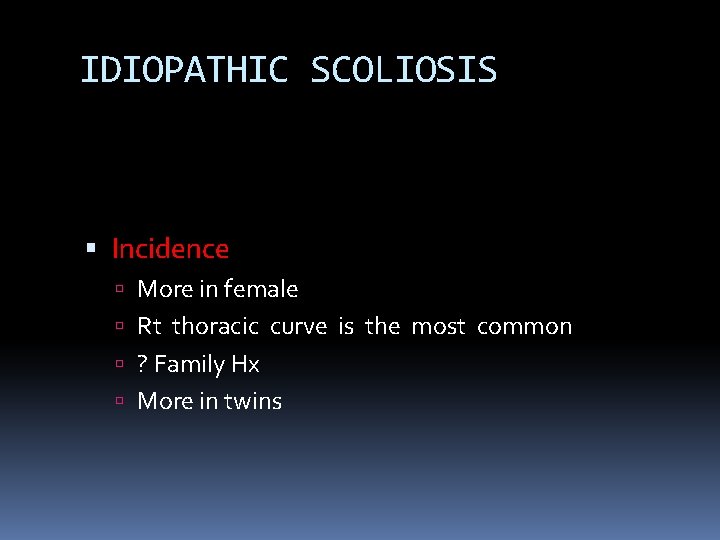
IDIOPATHIC SCOLIOSIS Incidence More in female Rt thoracic curve is the most common ? Family Hx More in twins
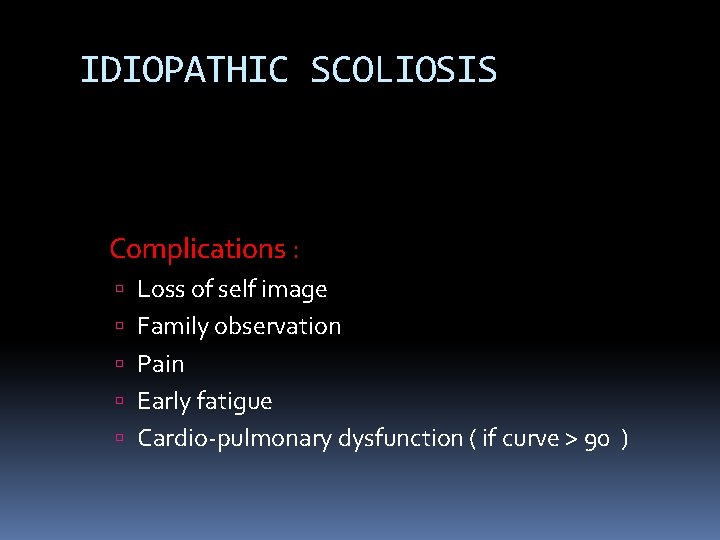
IDIOPATHIC SCOLIOSIS Complications : Loss of self image Family observation Pain Early fatigue Cardio-pulmonary dysfunction ( if curve > 90 )
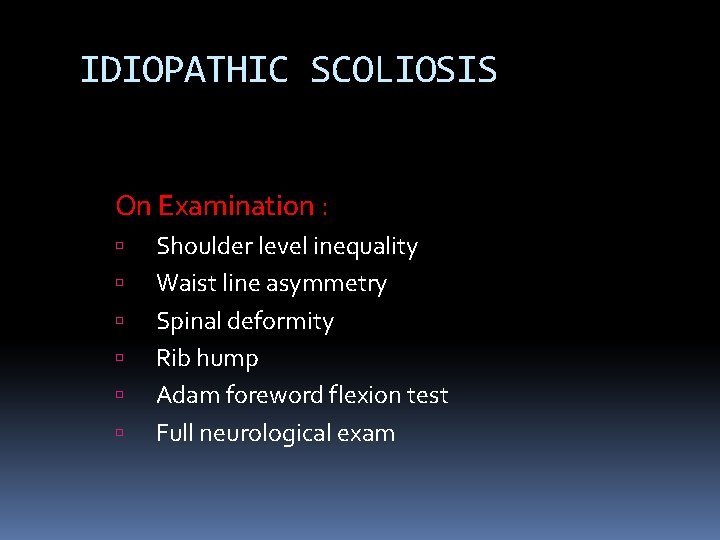
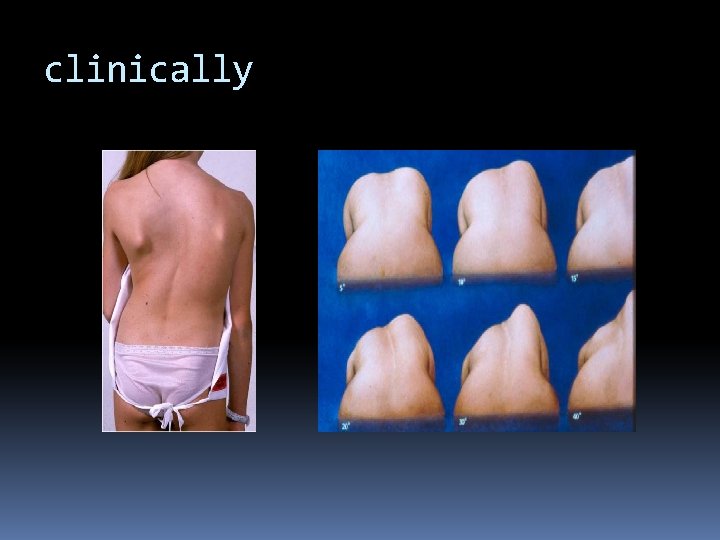
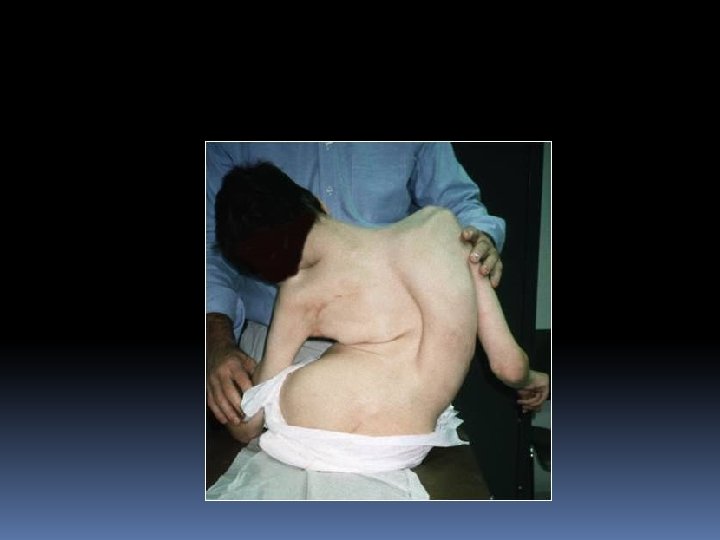
IDIOPATHIC SCOLIOSIS On Examination : Shoulder level inequality Waist line asymmetry Spinal deformity Rib hump Adam foreword flexion test Full neurological exam
clinically
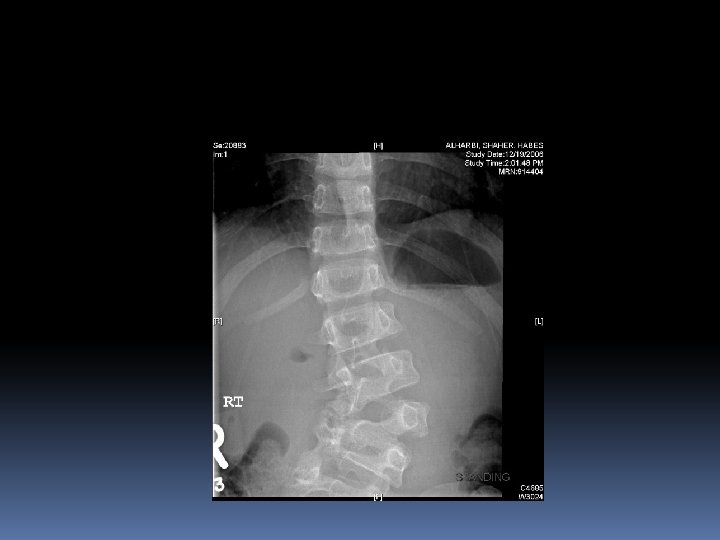
IDIOPATHIC SCOLIOSIS Radiological exam : X-rays : �AP – LAT standing long film �AP supine �AP Pelvis �LAT spine
IDIOPATHIC SCOLIOSIS MRI : If abnormal curve suspected Ct scan : If congenital scoliosis suspected
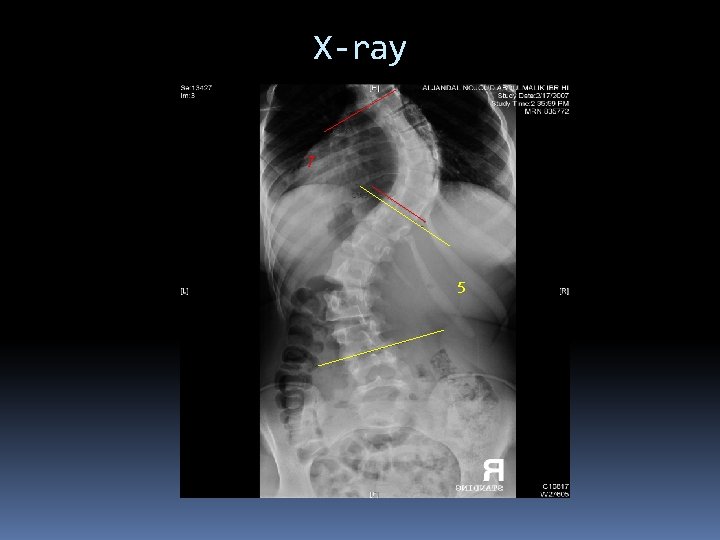
X-ray 7 5
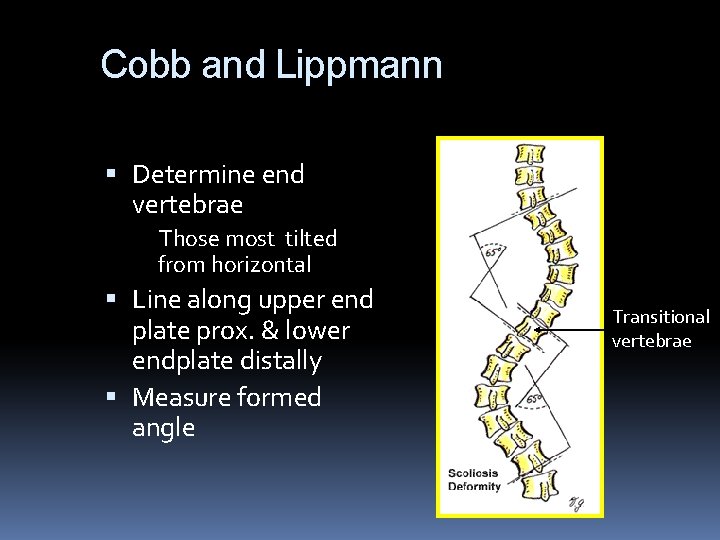
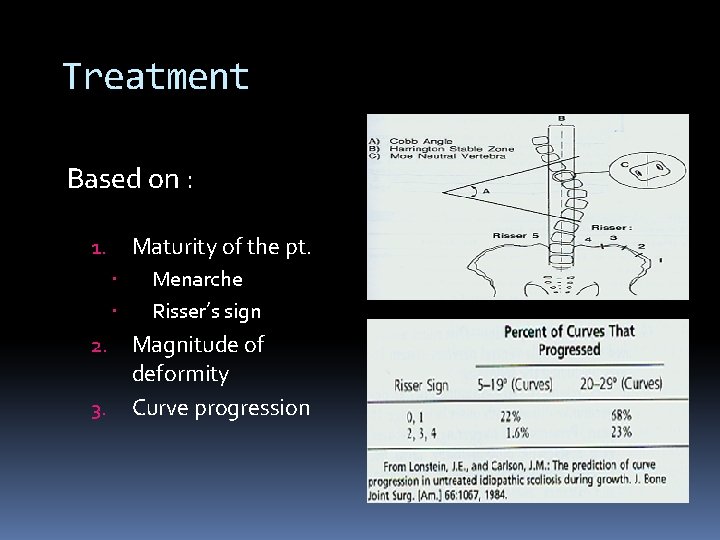
Cobb and Lippmann Determine end vertebrae Those most tilted from horizontal Line along upper end plate prox. & lower endplate distally Measure formed angle Transitional vertebrae
Treatment Based on : Maturity of the pt. 1. 2. 3. Menarche Risser’s sign Magnitude of deformity Curve progression
Risser’s stage eg.
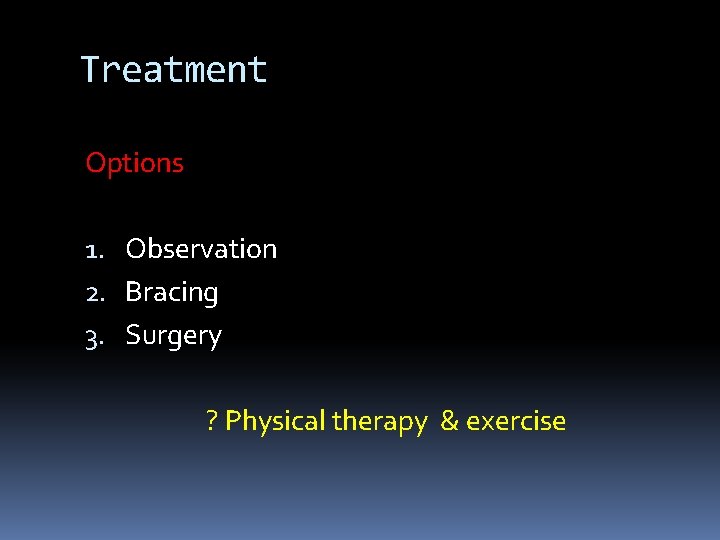
Treatment Options 1. Observation 2. Bracing 3. Surgery ? Physical therapy & exercise
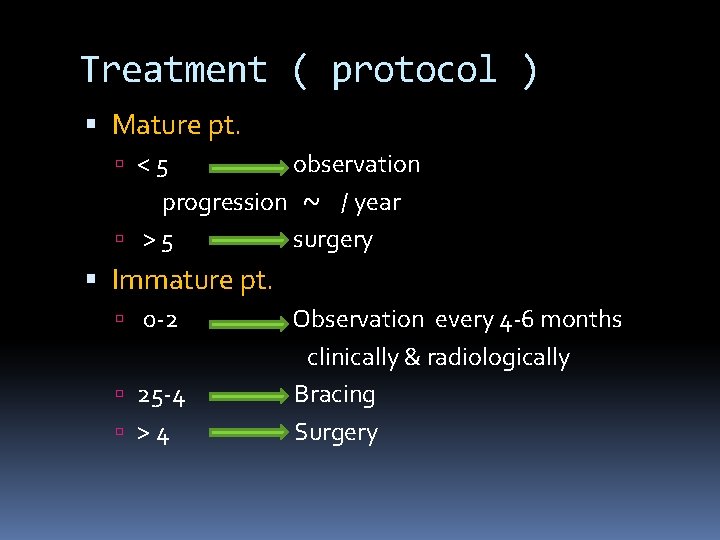
Treatment ( protocol ) Mature pt. <5 observation progression ~ / year >5 surgery Immature pt. 0 -2 25 -4 >4 Observation every 4 -6 months clinically & radiologically Bracing Surgery
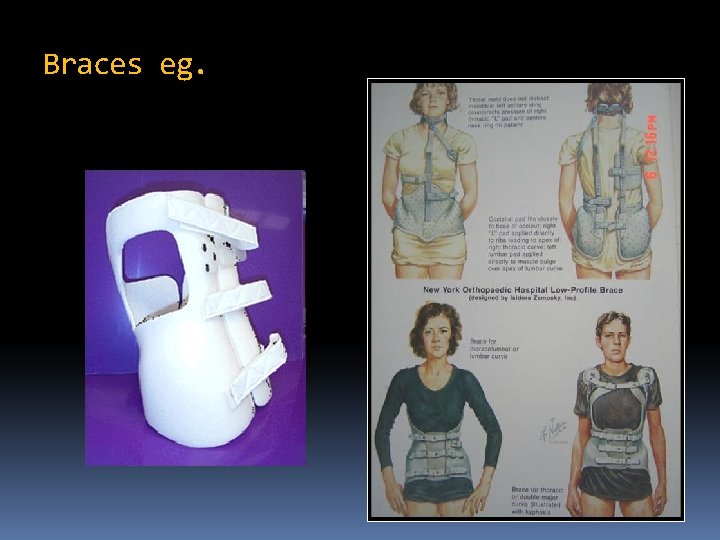
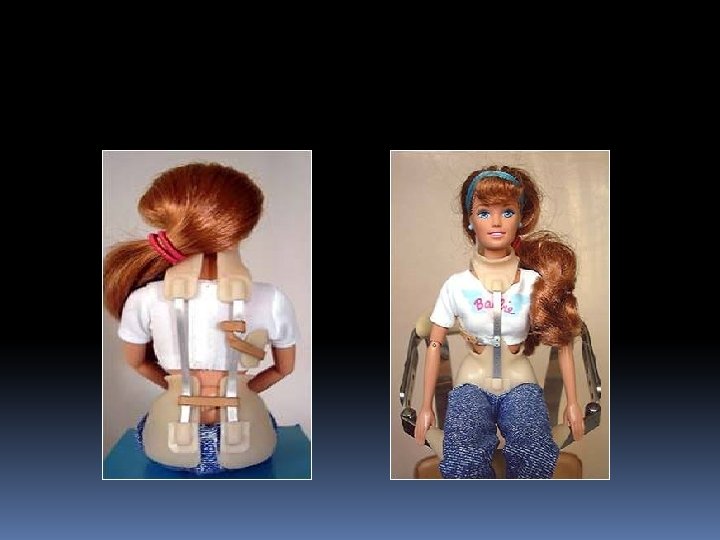
Braces eg.
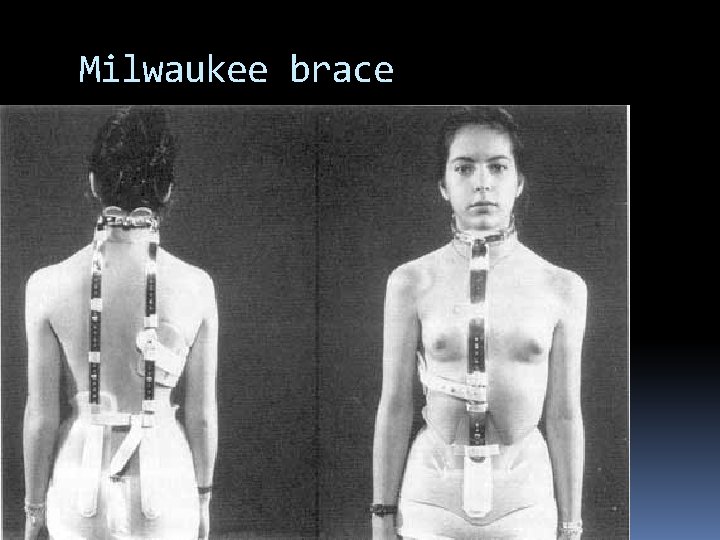
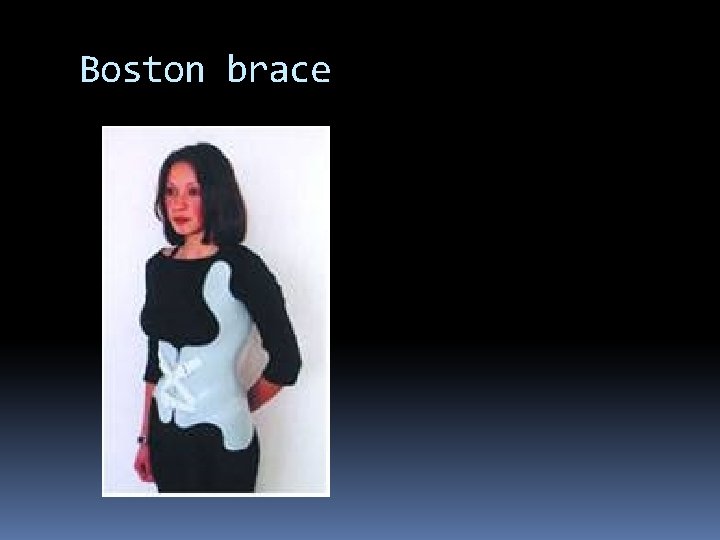
Treatment Braces : Did not correct the deformity Might stop the progression of the curve (or slow it down) Effect is dose related (more worn better effect) Best 23 hours / day If curve apex above T 7 Milwaukee brace If curve apex bellow T 8 Boston brace
Milwaukee brace
Boston brace
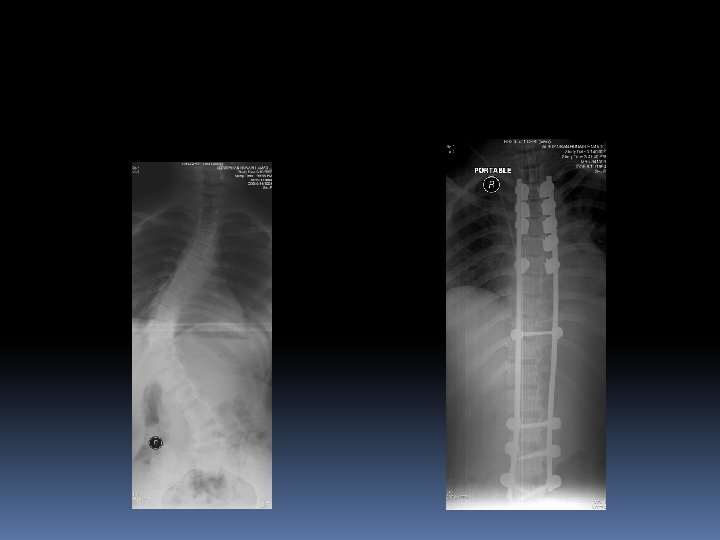
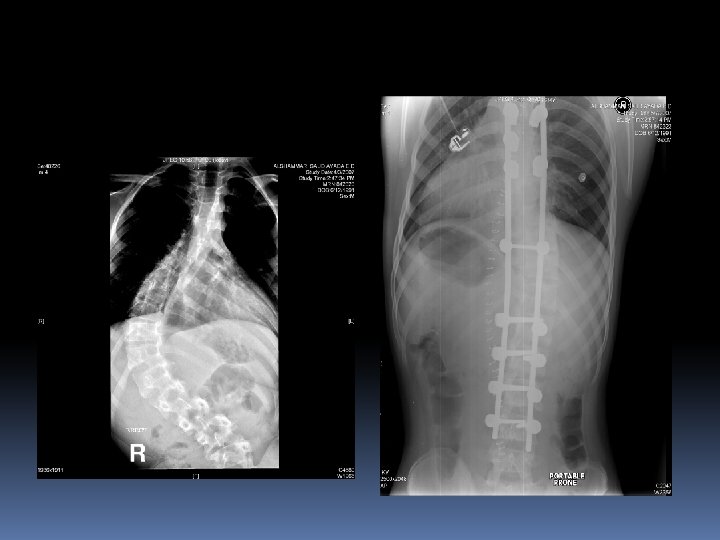
Treatment Surgery : Anterior spinal fusion �severe curve �young pt. < 10 years Post spinal fusion & instrumentation The gold standard treatment for most of cases Both For selected cases
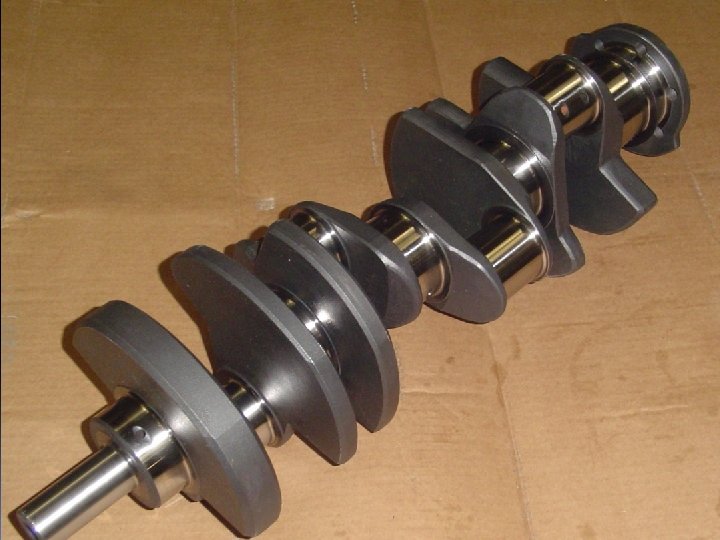
Treatment Complications of surgery Neurological deficit Bleeding Infection Pseudoarthrosis Crank shaft phenomena
Examples