
Spinal cord tracks Fasciculus gracillis T 7 below
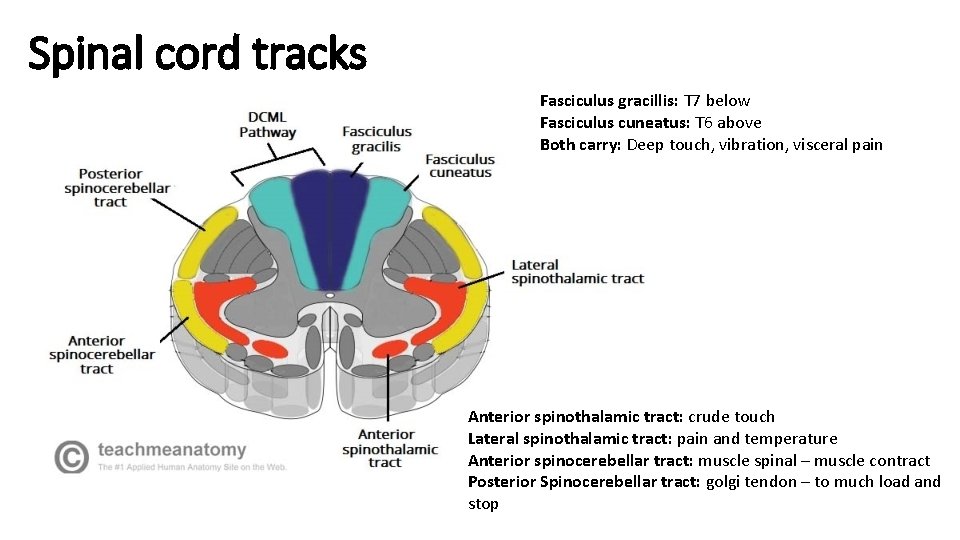
Spinal cord tracks Fasciculus gracillis: T 7 below Fasciculus cuneatus: T 6 above Both carry: Deep touch, vibration, visceral pain Anterior spinothalamic tract: crude touch Lateral spinothalamic tract: pain and temperature Anterior spinocerebellar tract: muscle spinal – muscle contract Posterior Spinocerebellar tract: golgi tendon – to much load and stop
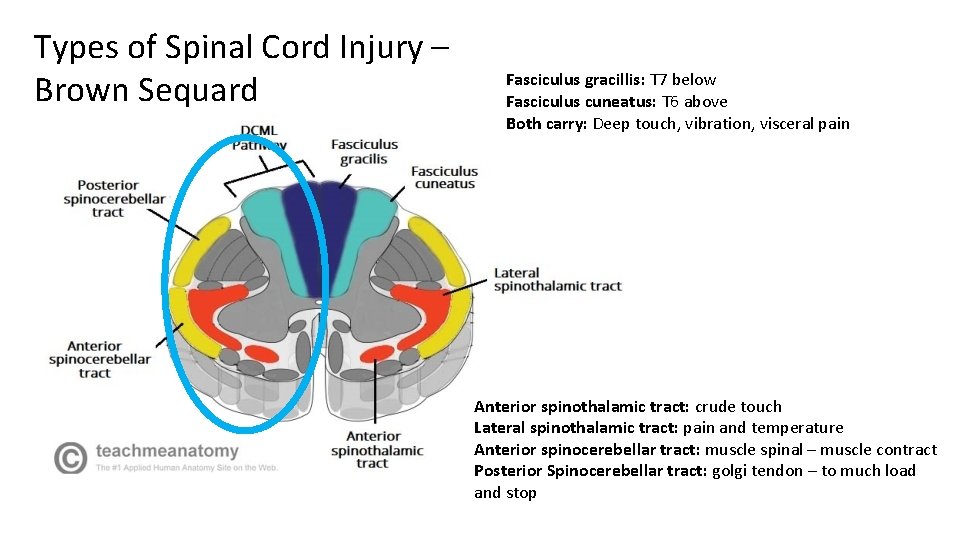
Types of Spinal Cord Injury – Brown Sequard Fasciculus gracillis: T 7 below Fasciculus cuneatus: T 6 above Both carry: Deep touch, vibration, visceral pain Anterior spinothalamic tract: crude touch Lateral spinothalamic tract: pain and temperature Anterior spinocerebellar tract: muscle spinal – muscle contract Posterior Spinocerebellar tract: golgi tendon – to much load and stop
Types of Spinal Cord Injury – Brown Sequard • Ipsilateral upper motor neuron paralysis and loss of proprioception, as well as contralateral loss of pain and temperature sensation.
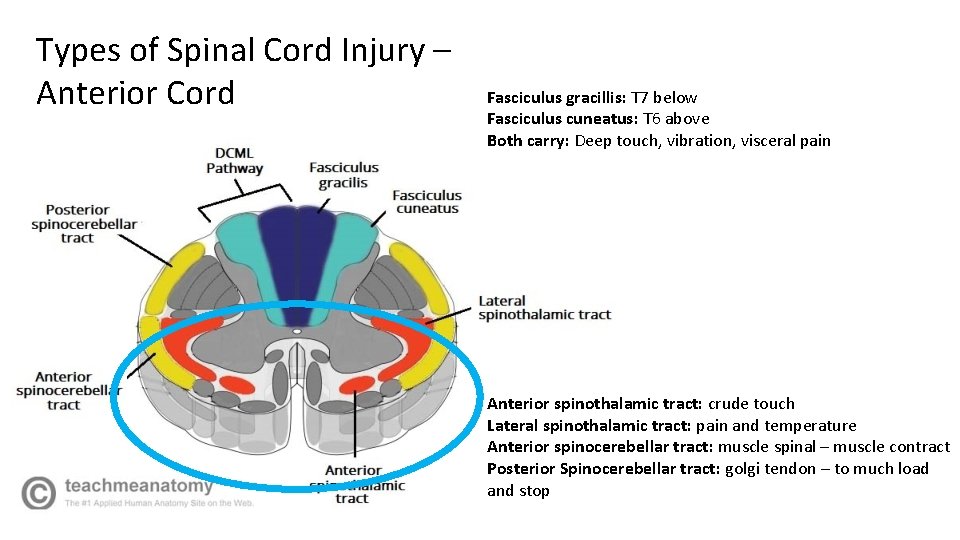
Types of Spinal Cord Injury – Anterior Cord Fasciculus gracillis: T 7 below Fasciculus cuneatus: T 6 above Both carry: Deep touch, vibration, visceral pain Anterior spinothalamic tract: crude touch Lateral spinothalamic tract: pain and temperature Anterior spinocerebellar tract: muscle spinal – muscle contract Posterior Spinocerebellar tract: golgi tendon – to much load and stop
Anterior Cord Syndrome Presentation • Patient present with following features: • complete motor paralysis below the level of the lesion due to involvement of corticospinal tracts • loss of pain and temperature at and below the level of injury due to involvement of lateral spinothalamic tract • intact 2 -point discrimination, proprioception and vibratory senses due to intact posterior column • autonomic dysfunction: orthostatic hypotension • bladder and bowel dysfunction and sexual dysfunction may arise depending on the level of the lesion

Types of Spinal Cord Injury – Posterior Cord Fasciculus gracillis: T 7 below Fasciculus cuneatus: T 6 above Both carry: Deep touch, vibration, visceral pain Anterior spinothalamic tract: crude touch Lateral spinothalamic tract: pain and temperature Anterior spinocerebellar tract: muscle spinal – muscle contract Posterior Spinocerebellar tract: golgi tendon – to much load and stop
Posterior Cord Presentation • Loss of proprioception + loss of vibration sensation + loss of two point discrimination +loss of light touch
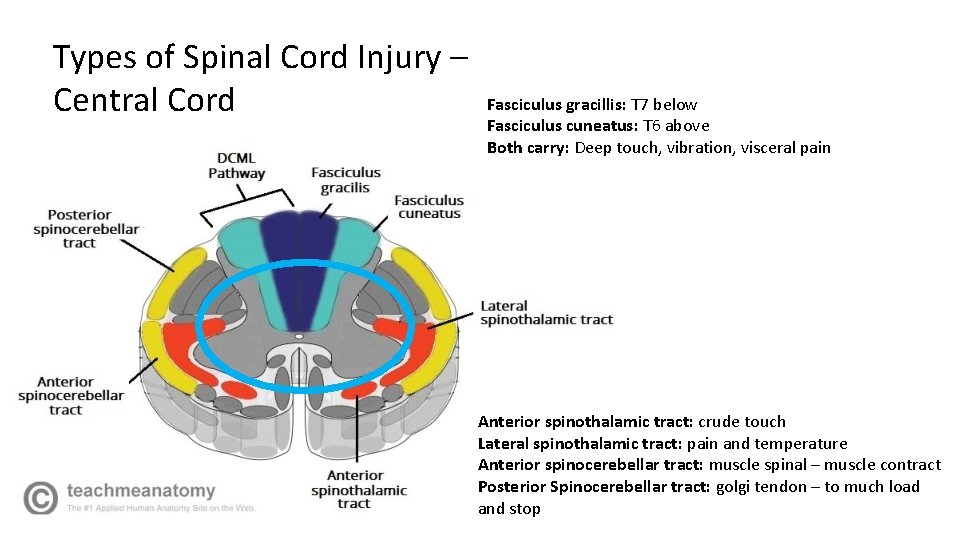
Types of Spinal Cord Injury – Central Cord Fasciculus gracillis: T 7 below Fasciculus cuneatus: T 6 above Both carry: Deep touch, vibration, visceral pain Anterior spinothalamic tract: crude touch Lateral spinothalamic tract: pain and temperature Anterior spinocerebellar tract: muscle spinal – muscle contract Posterior Spinocerebellar tract: golgi tendon – to much load and stop
Central Cord Presentation • Greater impairment of motor function in the upper extremities than in the lower ones, as well as by bladder dysfunction and a variable amount of sensory loss below the level of injury.
- Slides: 9