
Spinal cord reflex voluntary movement Several useful schemes
- Slides: 15
Spinal cord, reflex, voluntary movement Several useful schemes mostly from a textbook Essential Medical Physiology, ed. L. R. Johnson, Elsevier, 2003. Dr. Valoušková
Function of spinal cord • Basic reflexis (monosynaptic, polysynaptic, nociceptive, extensor/flexor, crossed extensor refl. ) • Communication between CNS and periphery (motor tracts – vestibulospinal ( inhib N-ns to neck, back), tectospinal from colliculus sup. – visual and auditory orientation – eye movement these tracts cooperate - orientation response pontine ret/spin tr. – ipsilat – innervation of gamma and alpha moto. N-ons (limbs) - increase muscle tone medullary reticulospinal – balance the excitatory drive from pontine reticulospinal tr. (inhib. moto. N-ons, decrease axial and extensor muscle tone) • Integration control between spinal segments
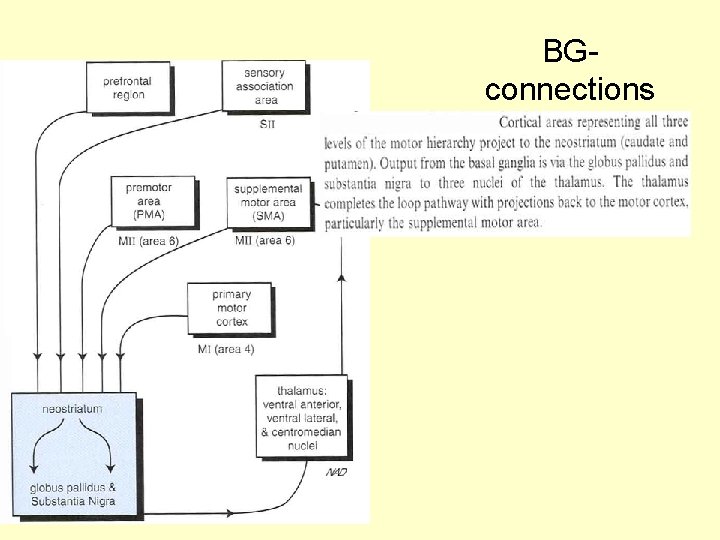
Pyramidal (extrapyramidal) tract • ½ cells within primary motor c-x • Fibers leave the main bundle at all levels of brainstem and SC • conscious control over cranial n-v motor nucl. and motor segments of the SC • Role - to initiate voluntary movement • Cerebellum, basal ganglia (before extrapyramidal tr. ) – now part of the corticospinal and pyramidal tract / directindirect input to spin moto. N-ns, through projections involving motor c-x
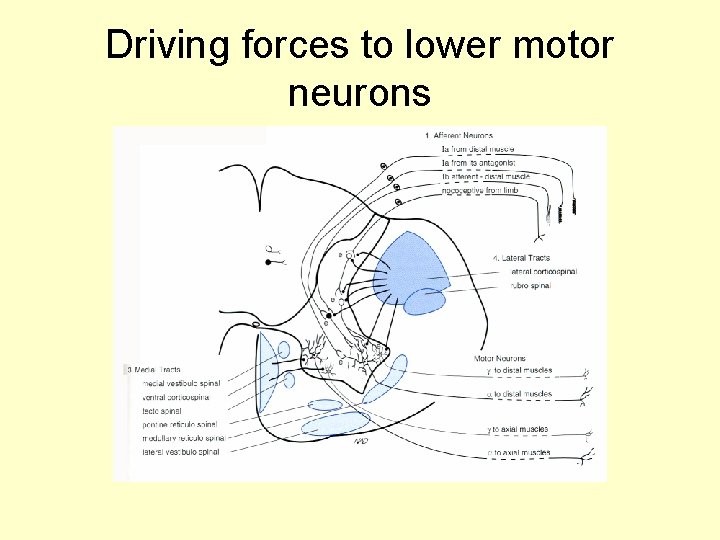
Driving forces to lower motor neurons
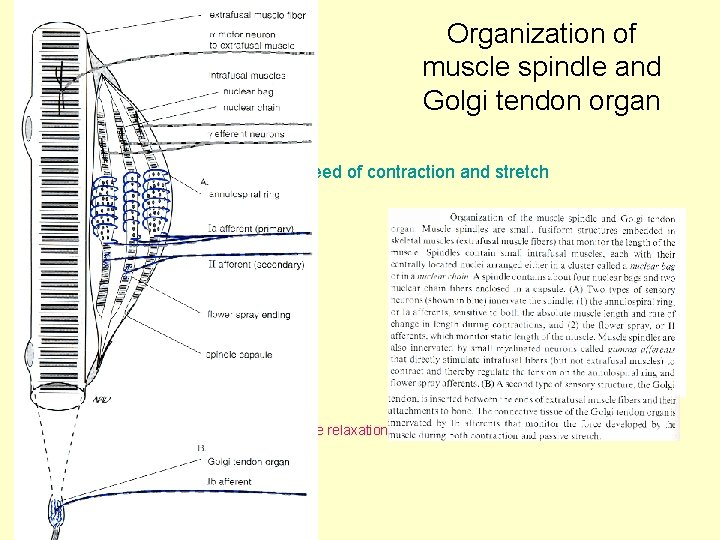
Organization of muscle spindle and Golgi tendon organ speed of contraction and stretch tension of contraction and passive relaxation
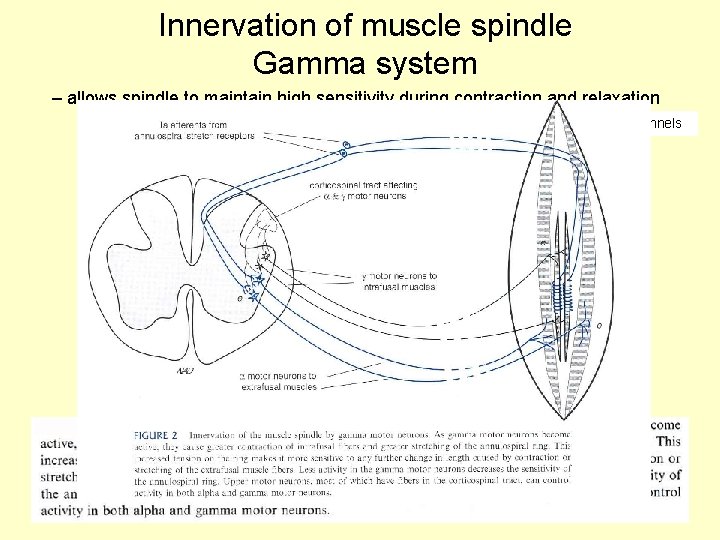
Innervation of muscle spindle Gamma system – allows spindle to maintain high sensitivity during contraction and relaxation tension strech sensitive channels Motor centers Gamma activation -> contraction of intrafusal fibers -> increased tension on the rings => higher sensitivity to changes in length caused by contraction or stretching of extrafusal muscle fibers
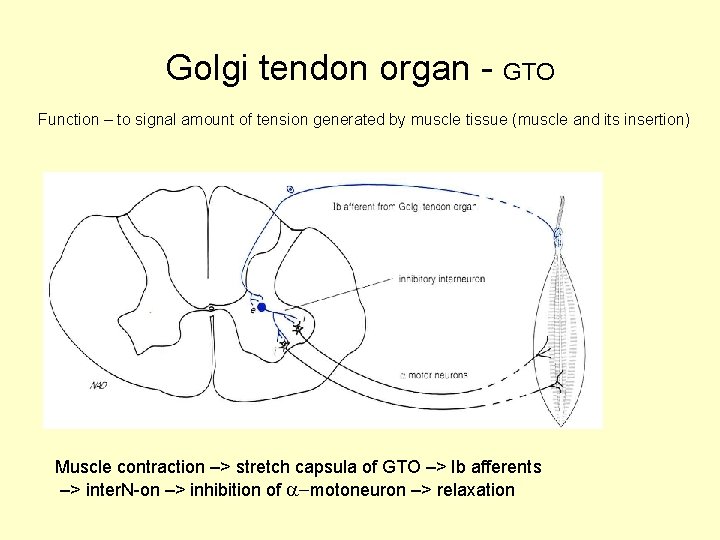
Golgi tendon organ - GTO Function – to signal amount of tension generated by muscle tissue (muscle and its insertion) Muscle contraction –> stretch capsula of GTO –> Ib afferents –> inter. N-on –> inhibition of a-motoneuron –> relaxation
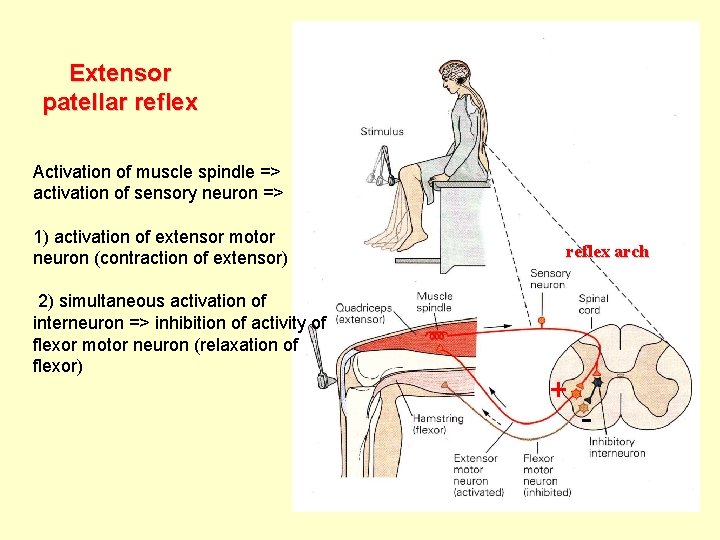
Extensor patellar reflex Activation of muscle spindle => activation of sensory neuron => 1) activation of extensor motor neuron (contraction of extensor) 2) simultaneous activation of interneuron => inhibition of activity of flexor motor neuron (relaxation of flexor) reflex arch + -
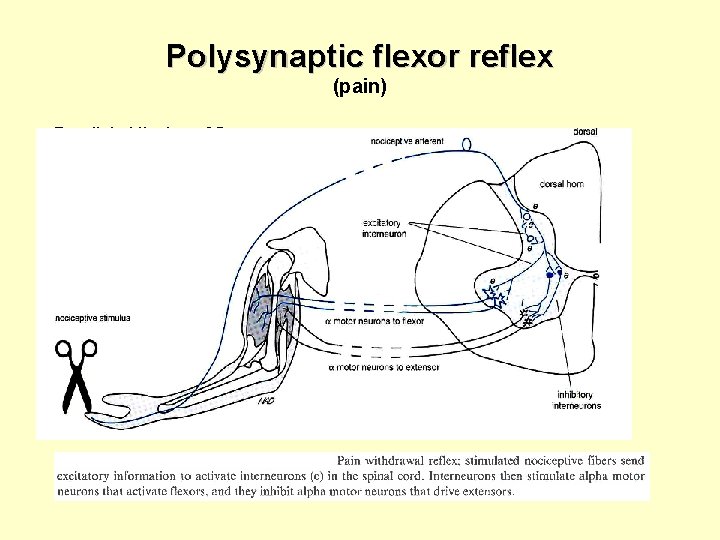
Polysynaptic flexor reflex (pain) Parallel aktivaion of flexor and inhibition of extensor + + - -
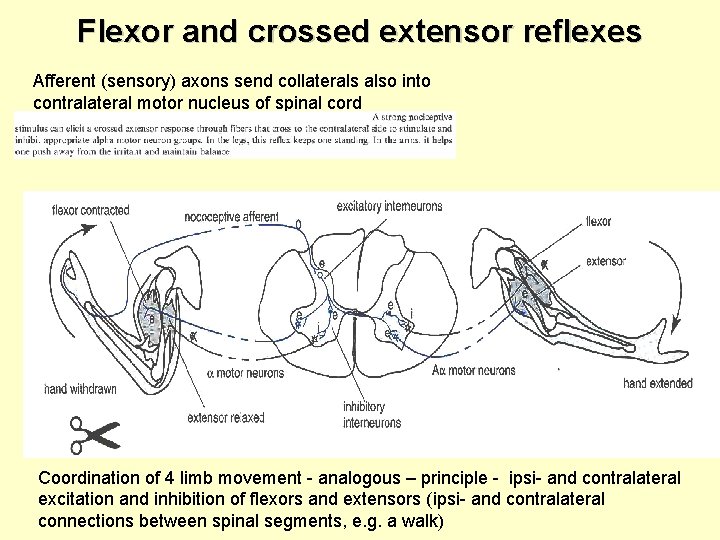
Flexor and crossed extensor reflexes Afferent (sensory) axons send collaterals also into contralateral motor nucleus of spinal cord + - + Coordination of 4 limb movement - analogous – principle - ipsi- and contralateral excitation and inhibition of flexors and extensors (ipsi- and contralateral connections between spinal segments, e. g. a walk)
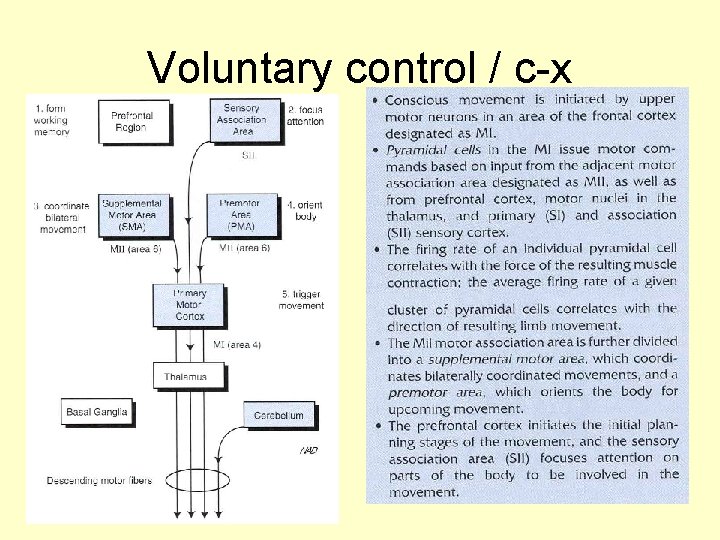
Voluntary control / c-x
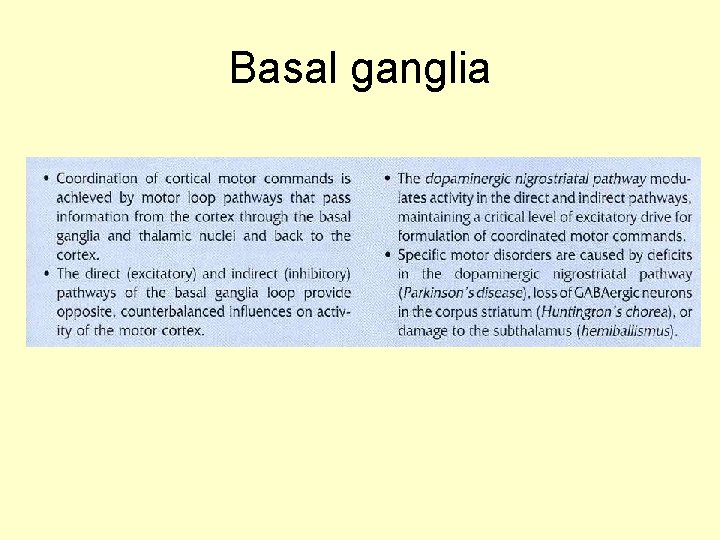
Basal ganglia
BGconnections + + -
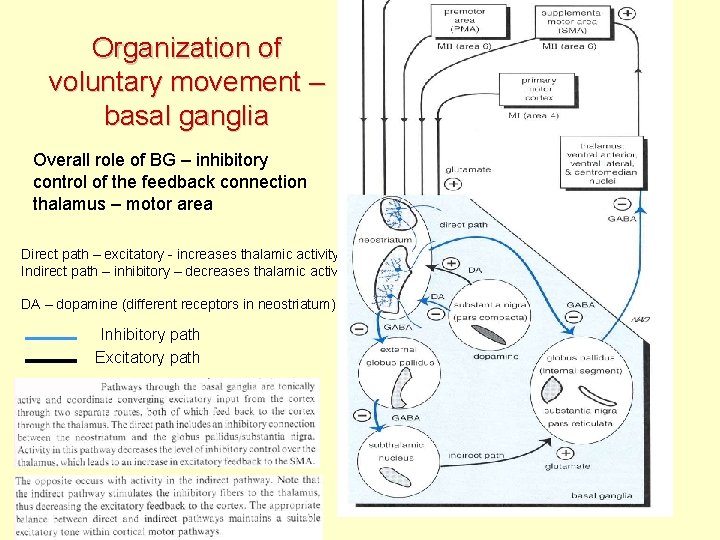
Organization of voluntary movement – basal ganglia Overall role of BG – inhibitory control of the feedback connection thalamus – motor area Direct path – excitatory - increases thalamic activity Indirect path – inhibitory – decreases thalamic activity Direct path DA – dopamine (different receptors in neostriatum) Inhibitory path Excitatory path Indirect path
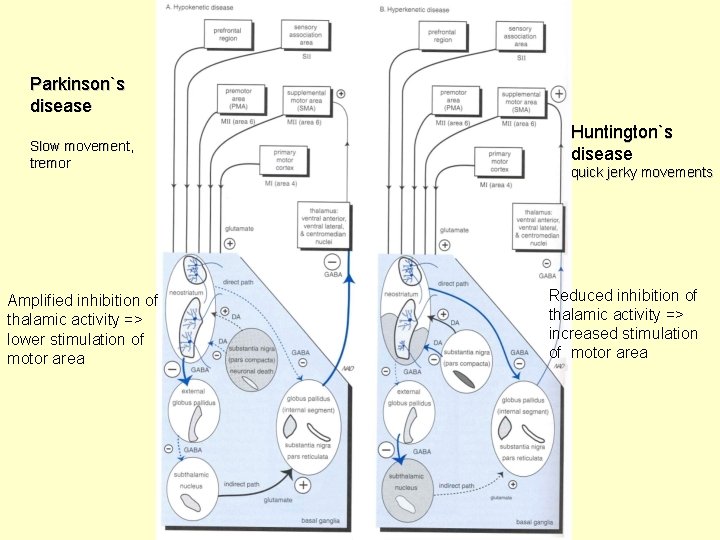
Parkinson`s disease Slow movement, tremor Amplified inhibition of thalamic activity => lower stimulation of motor area Huntington`s disease quick jerky movements Reduced inhibition of thalamic activity => increased stimulation of motor area