
Spinal Cord Organization January 9 2008 Spinal Cord
- Slides: 36
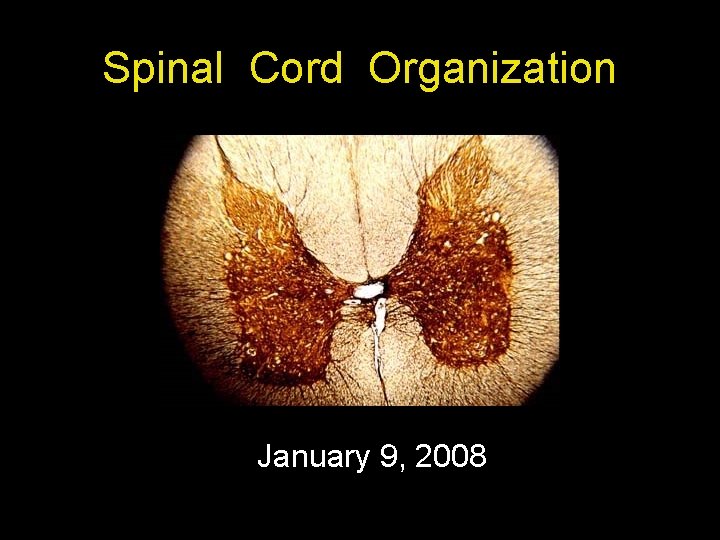
Spinal Cord Organization January 9, 2008
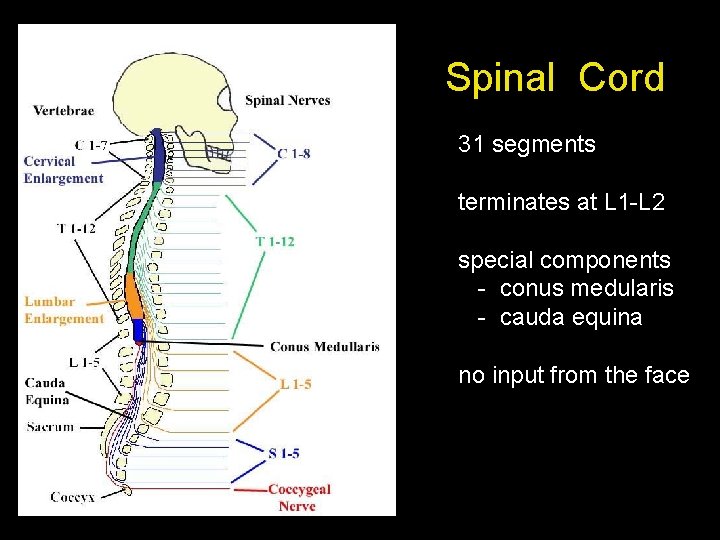
Spinal Cord 31 segments terminates at L 1 -L 2 special components - conus medularis - cauda equina no input from the face
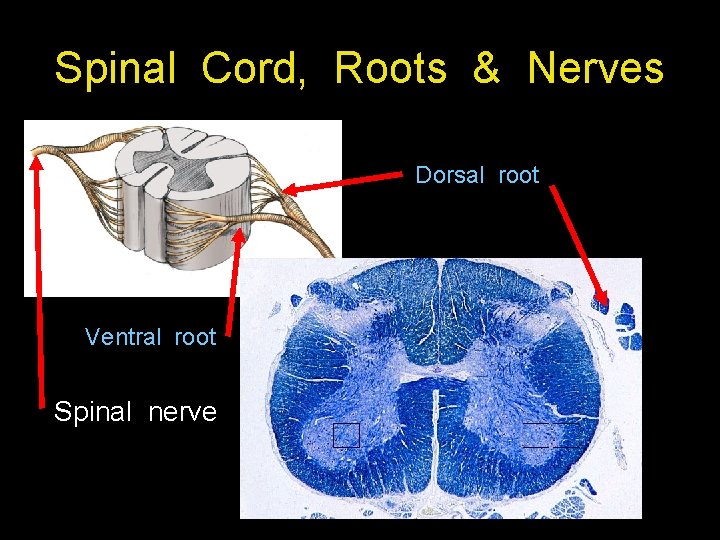
Spinal Cord, Roots & Nerves Dorsal root Ventral root Spinal nerve
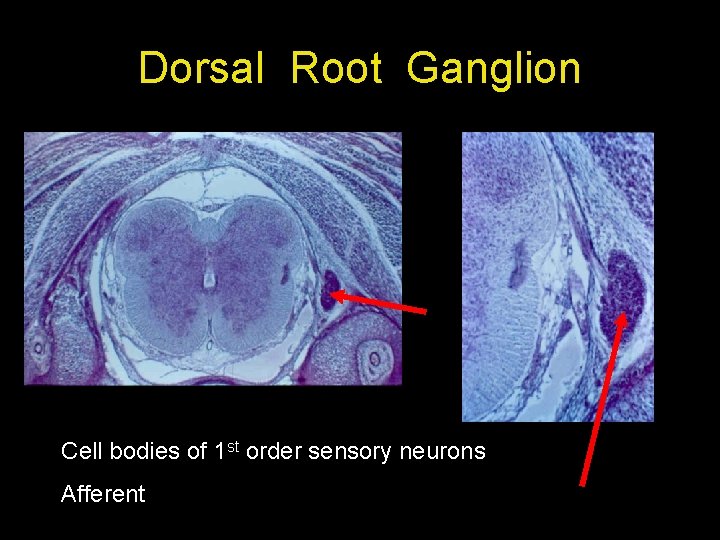
Dorsal Root Ganglion Cell bodies of 1 st order sensory neurons Afferent
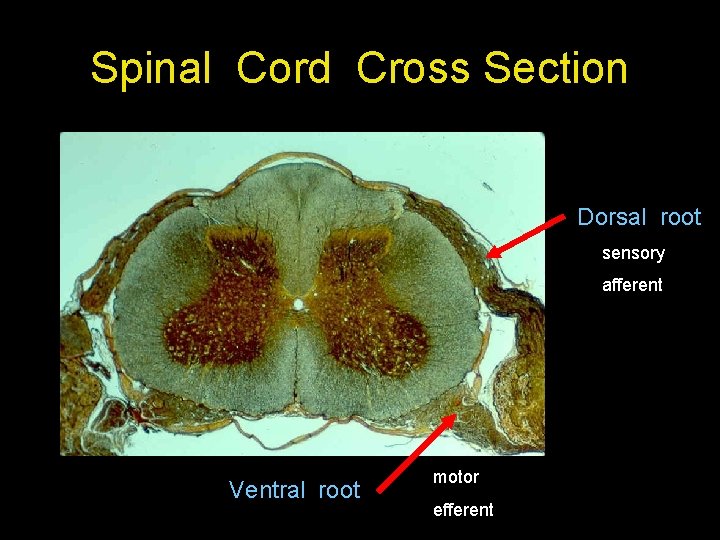
Spinal Cord Cross Section Dorsal root sensory afferent Ventral root motor efferent
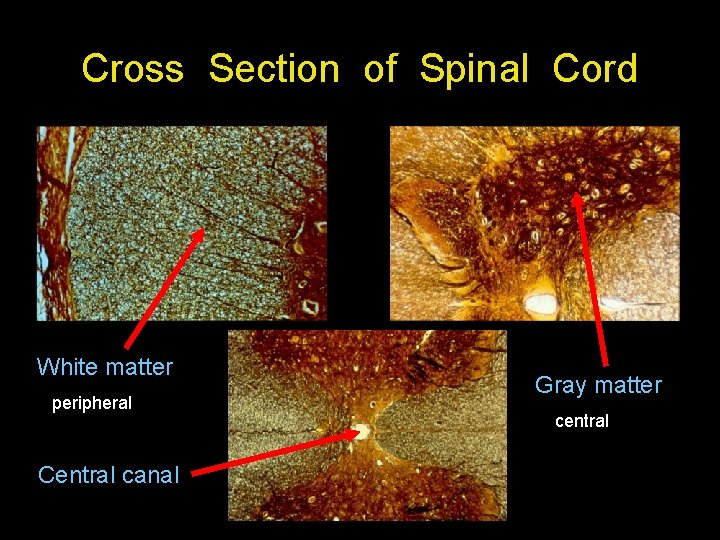
Cross Section of Spinal Cord White matter peripheral Central canal Gray matter central
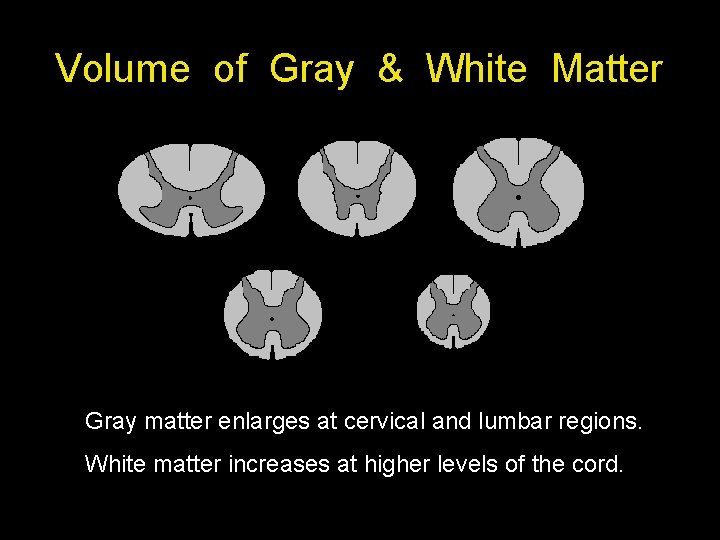
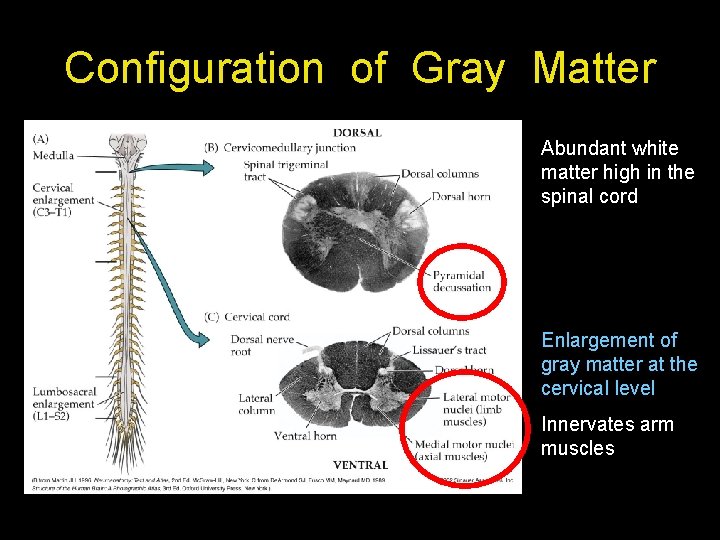
Volume of Gray & White Matter Gray matter enlarges at cervical and lumbar regions. White matter increases at higher levels of the cord.
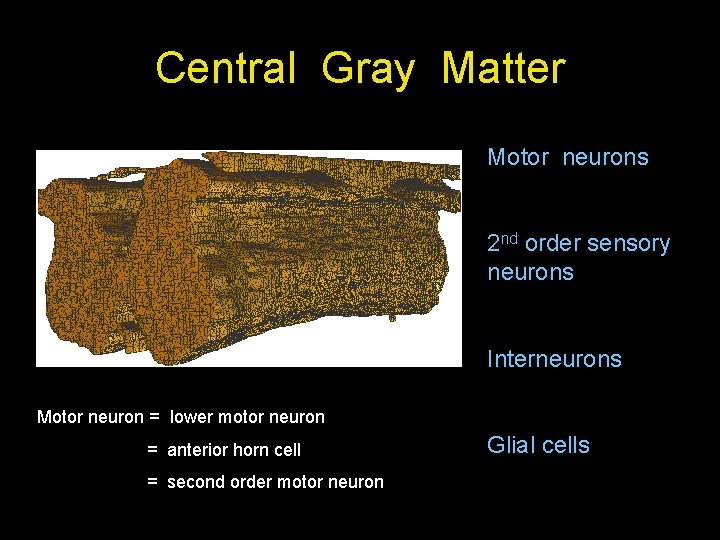
Central Gray Matter Motor neurons 2 nd order sensory neurons Interneurons Motor neuron = lower motor neuron = anterior horn cell = second order motor neuron Glial cells
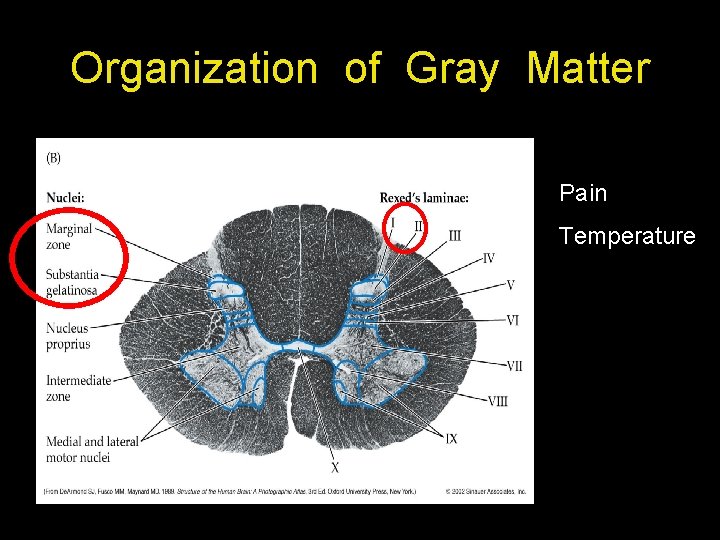
Organization of Gray Matter Pain Temperature
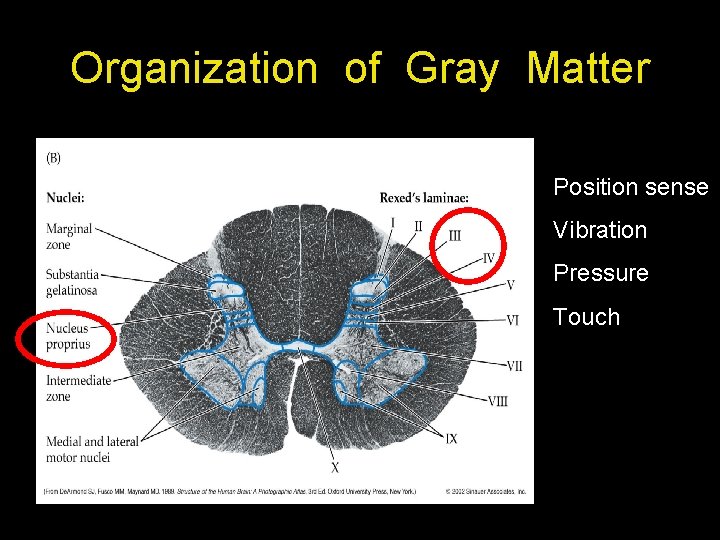
Organization of Gray Matter Position sense Vibration Pressure Touch
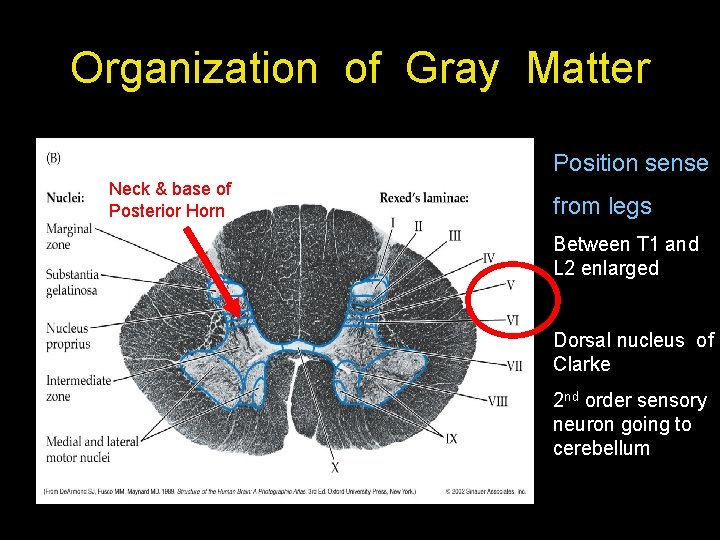
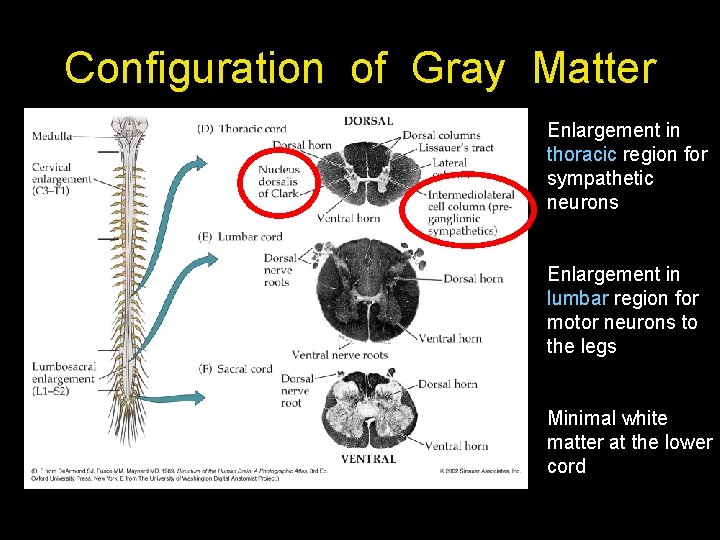
Organization of Gray Matter Position sense Neck & base of Posterior Horn from legs Between T 1 and L 2 enlarged Dorsal nucleus of Clarke 2 nd order sensory neuron going to cerebellum
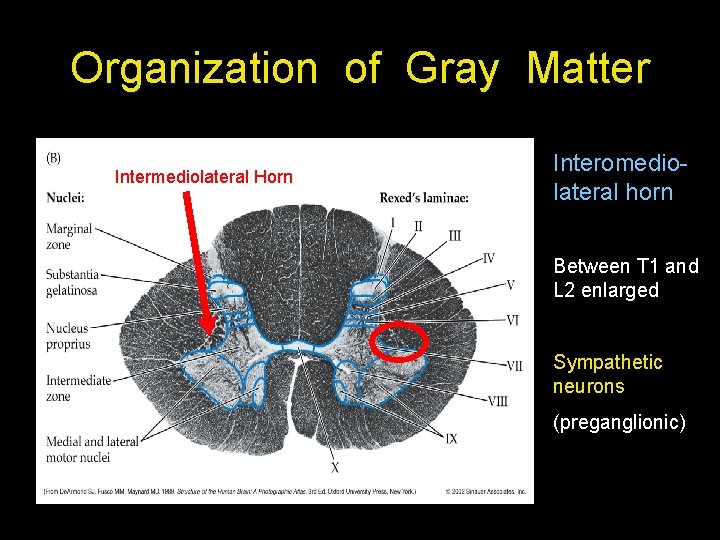
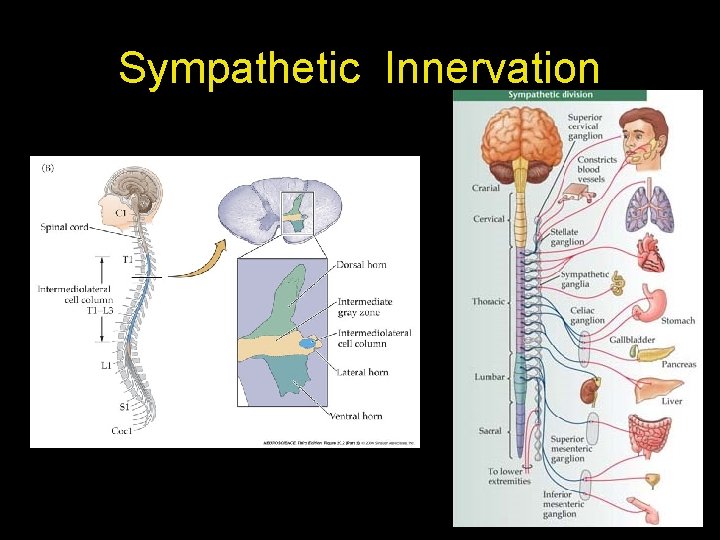
Organization of Gray Matter Intermediolateral Horn Interomediolateral horn Between T 1 and L 2 enlarged Sympathetic neurons (preganglionic)
Sympathetic Innervation
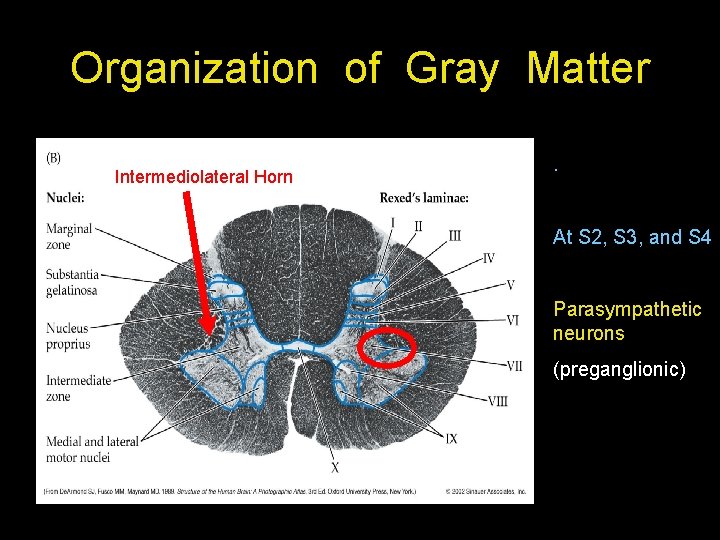
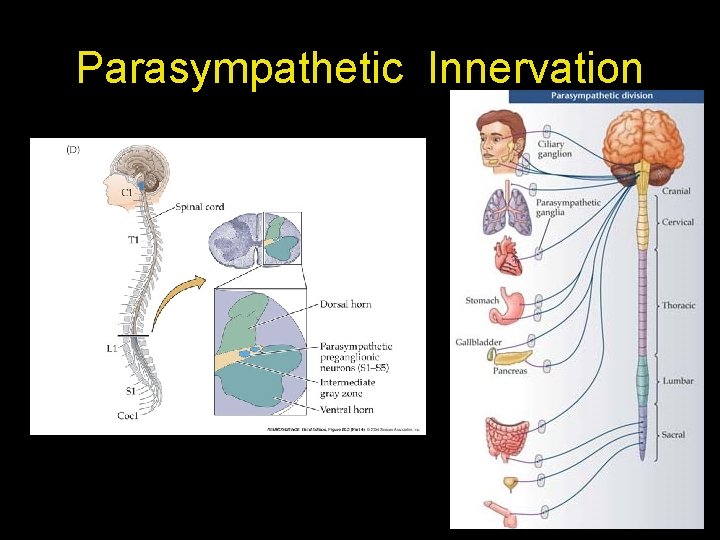
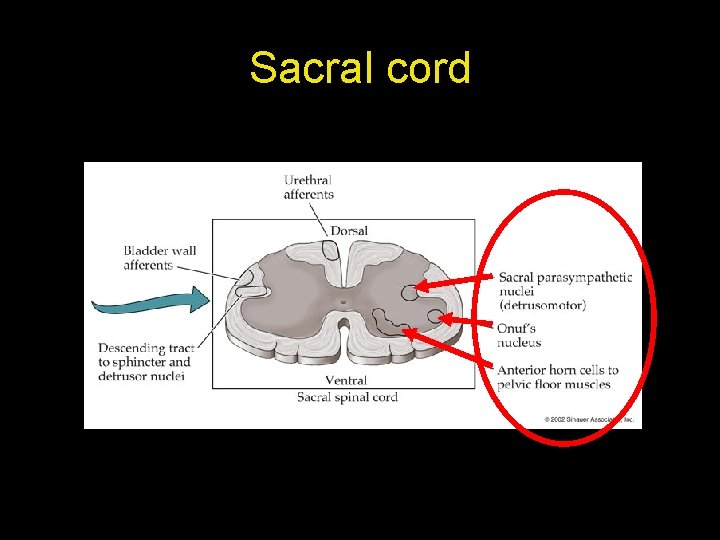
Organization of Gray Matter Intermediolateral Horn . At S 2, S 3, and S 4 Parasympathetic neurons (preganglionic)
Parasympathetic Innervation
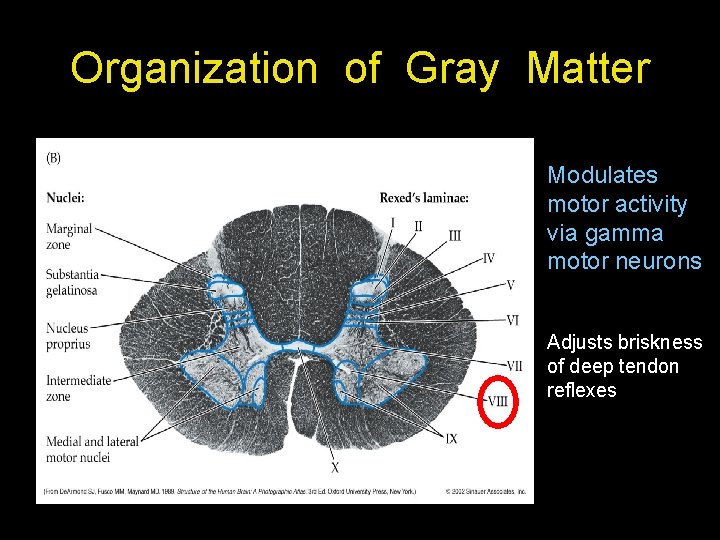
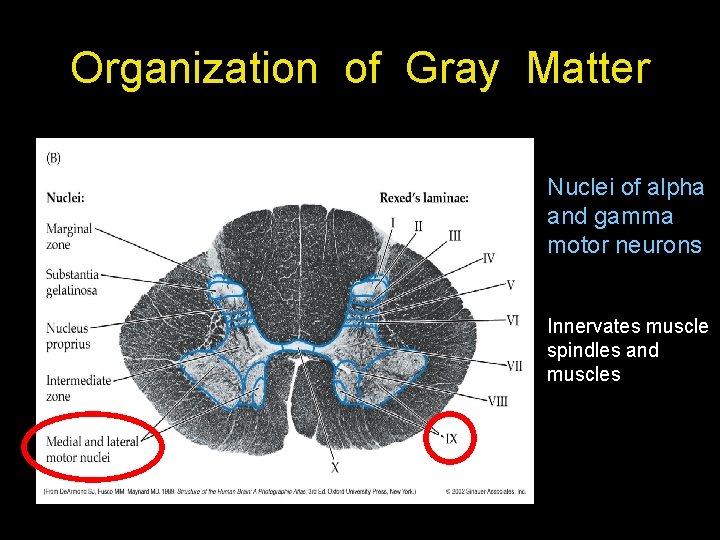
Organization of Gray Matter Modulates motor activity via gamma motor neurons Adjusts briskness of deep tendon reflexes
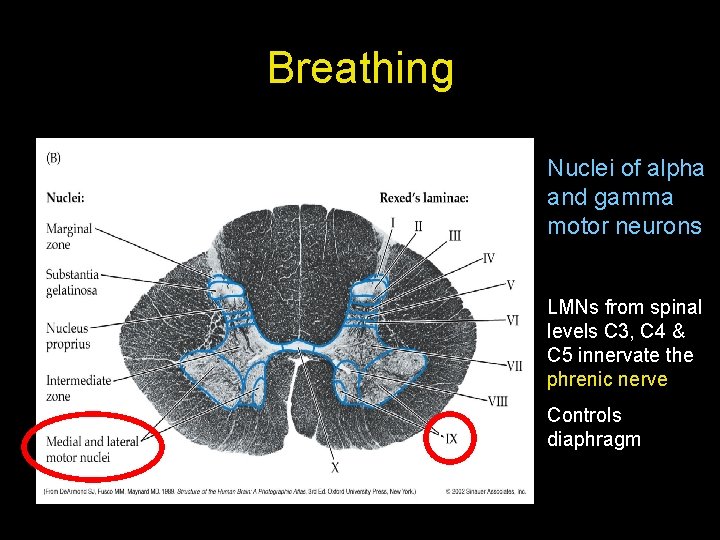
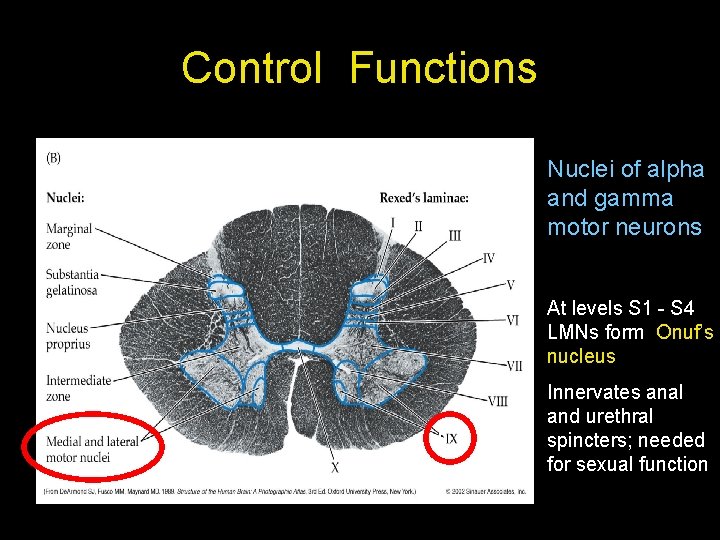
Organization of Gray Matter Nuclei of alpha and gamma motor neurons Innervates muscle spindles and muscles
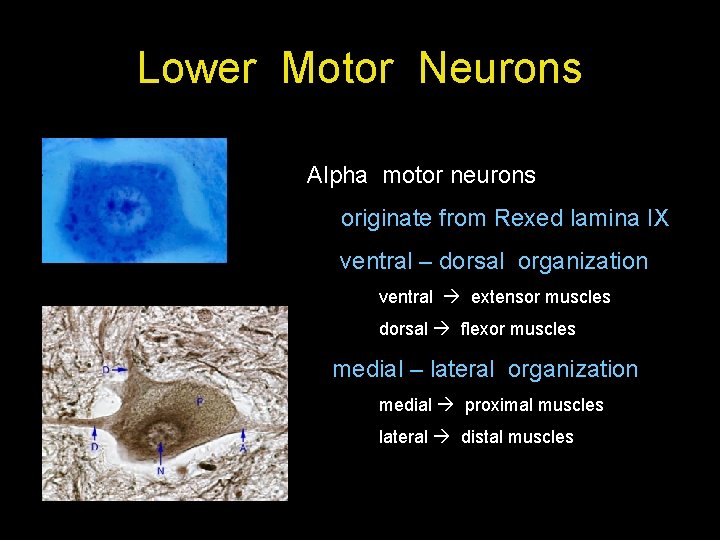
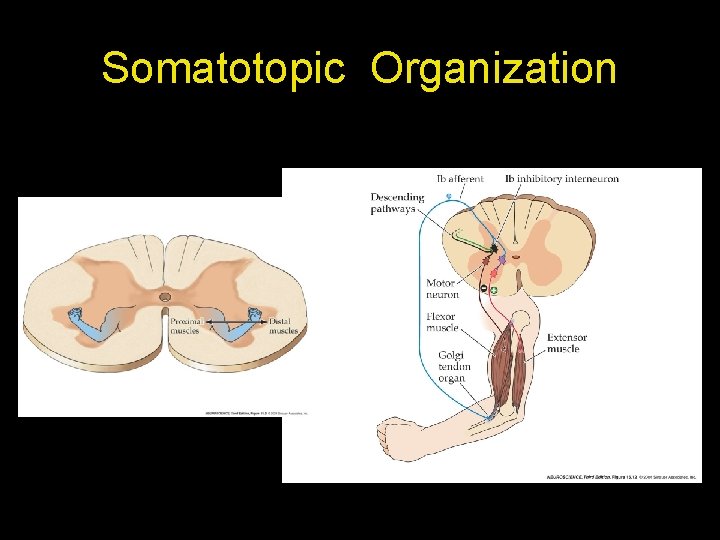
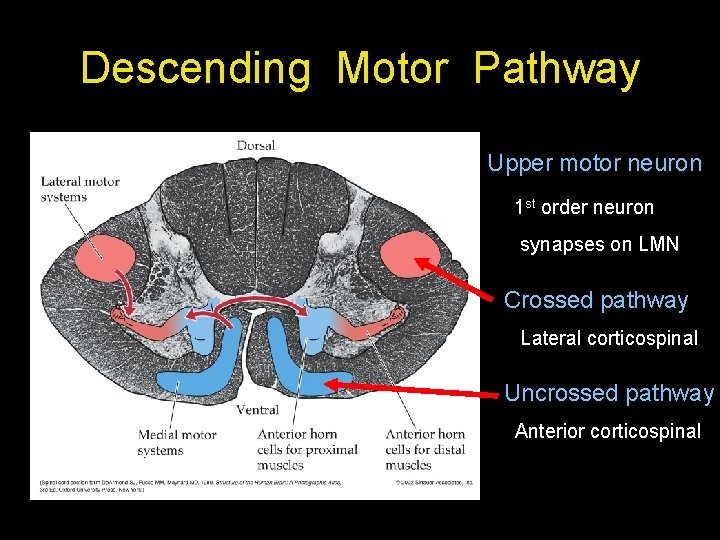
Lower Motor Neurons Alpha motor neurons originate from Rexed lamina IX ventral – dorsal organization ventral extensor muscles dorsal flexor muscles medial – lateral organization medial proximal muscles lateral distal muscles
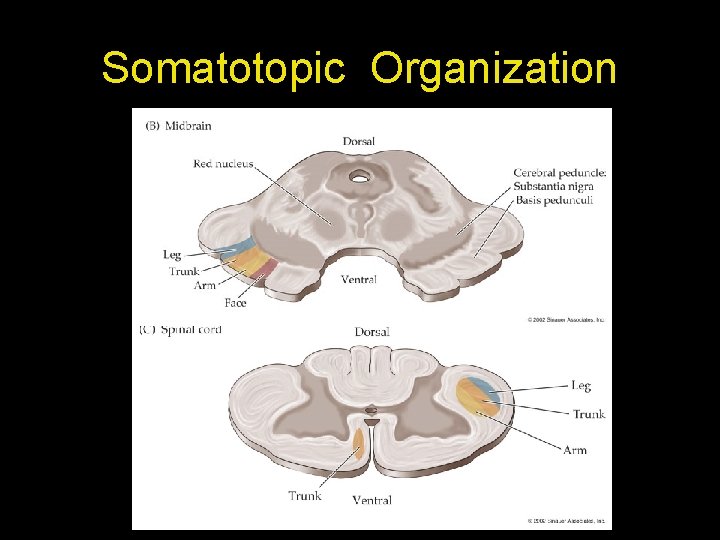
Somatotopic Organization
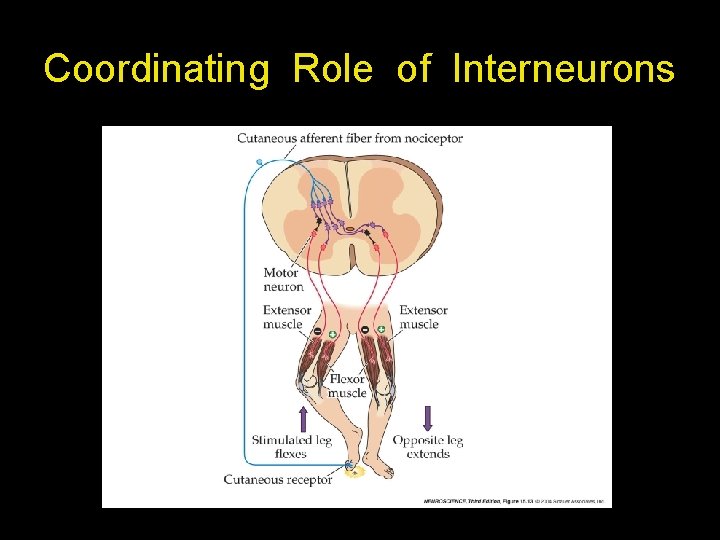
Coordinating Role of Interneurons
Breathing Nuclei of alpha and gamma motor neurons LMNs from spinal levels C 3, C 4 & C 5 innervate the phrenic nerve Controls diaphragm
Control Functions Nuclei of alpha and gamma motor neurons At levels S 1 - S 4 LMNs form Onuf’s nucleus Innervates anal and urethral spincters; needed for sexual function
Sacral cord
Configuration of Gray Matter Abundant white matter high in the spinal cord Enlargement of gray matter at the cervical level Innervates arm muscles
Configuration of Gray Matter Enlargement in thoracic region for sympathetic neurons Enlargement in lumbar region for motor neurons to the legs Minimal white matter at the lower cord
Descending Motor Pathway Upper motor neuron 1 st order neuron synapses on LMN Crossed pathway Lateral corticospinal Uncrossed pathway Anterior corticospinal
Somatotopic Organization
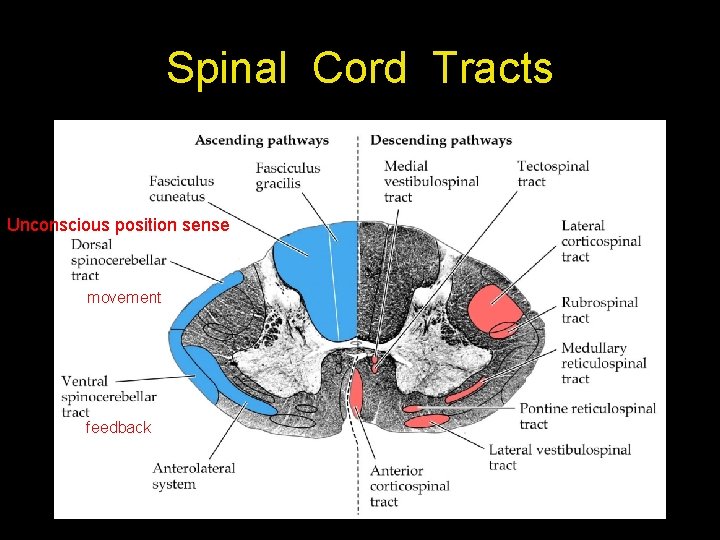
Spinal Cord Tracts Unconscious position sense movement feedback
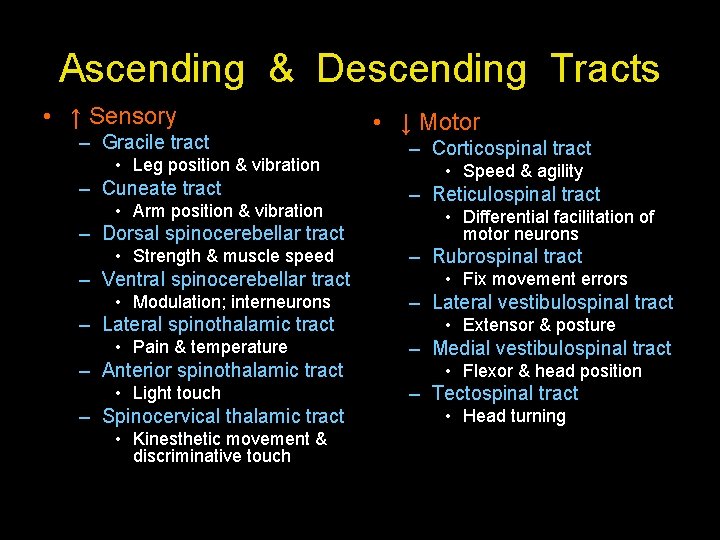
Ascending & Descending Tracts • ↑ Sensory – Gracile tract • Leg position & vibration – Cuneate tract • Arm position & vibration – Dorsal spinocerebellar tract • Strength & muscle speed – Ventral spinocerebellar tract • Modulation; interneurons – Lateral spinothalamic tract • Pain & temperature – Anterior spinothalamic tract • Light touch – Spinocervical thalamic tract • Kinesthetic movement & discriminative touch • ↓ Motor – Corticospinal tract • Speed & agility – Reticulospinal tract • Differential facilitation of motor neurons – Rubrospinal tract • Fix movement errors – Lateral vestibulospinal tract • Extensor & posture – Medial vestibulospinal tract • Flexor & head position – Tectospinal tract • Head turning
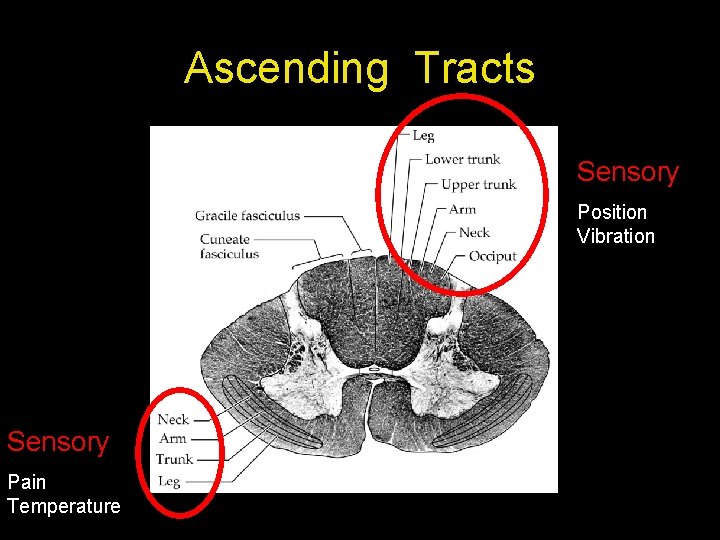
Ascending Tracts Sensory Position Vibration Sensory Pain Temperature
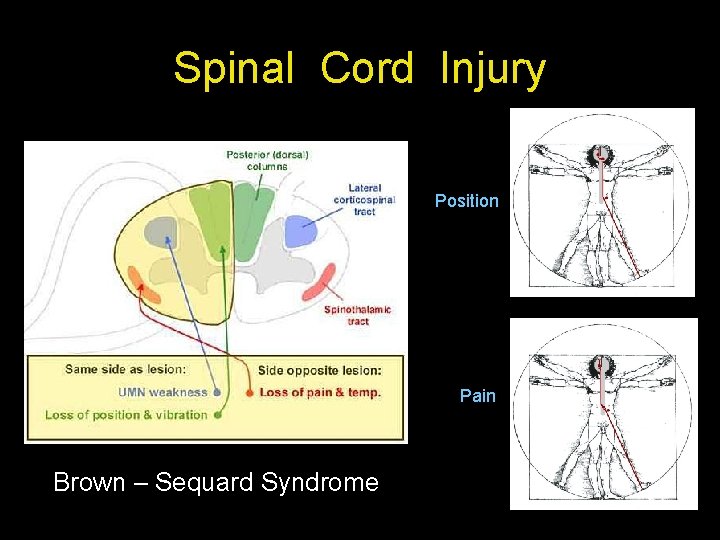
Spinal Cord Injury Position Pain Brown – Sequard Syndrome
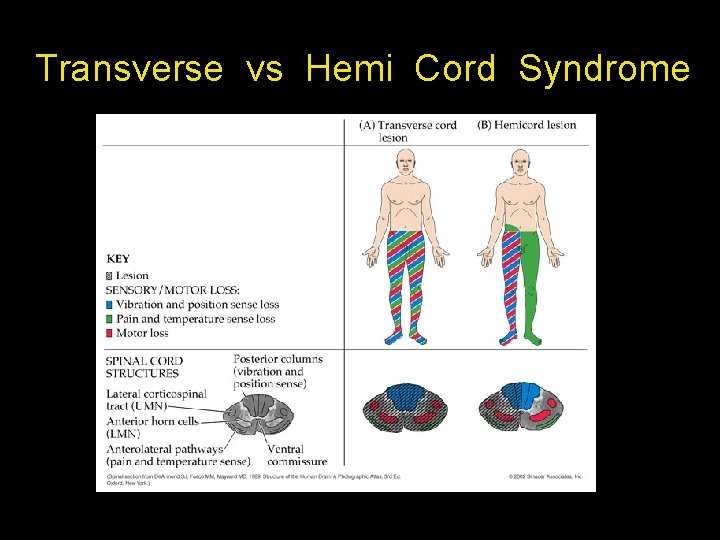
Transverse vs Hemi Cord Syndrome
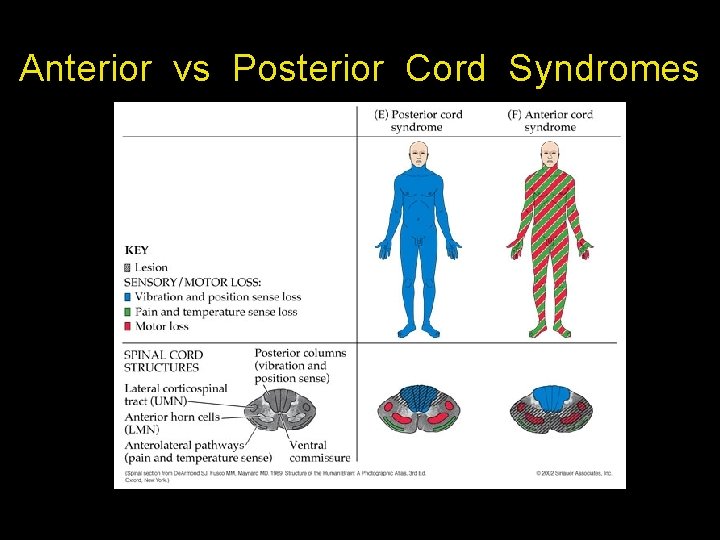
Anterior vs Posterior Cord Syndromes
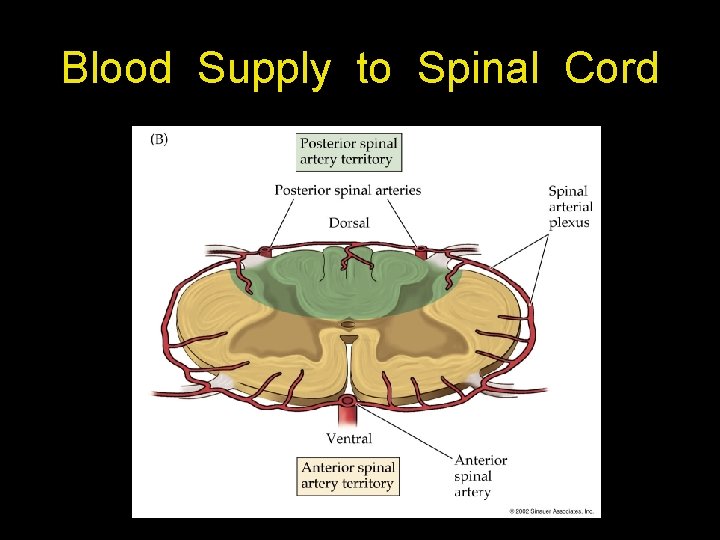
Blood Supply to Spinal Cord
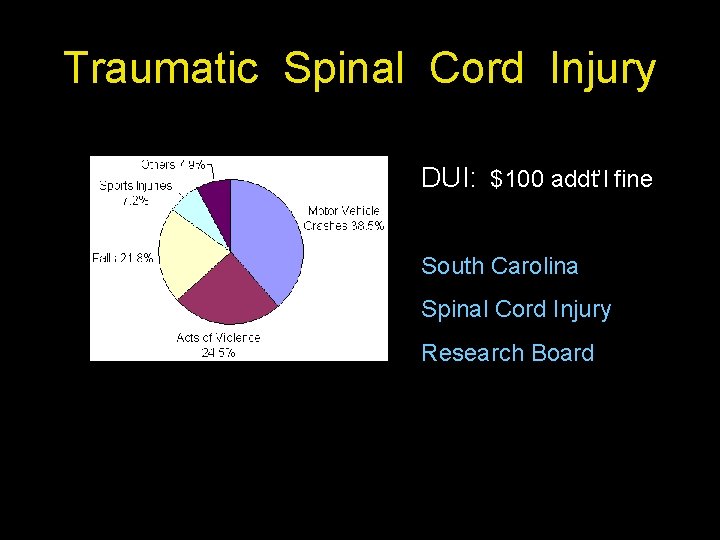
Traumatic Spinal Cord Injury DUI: $100 addt’l fine South Carolina Spinal Cord Injury Research Board
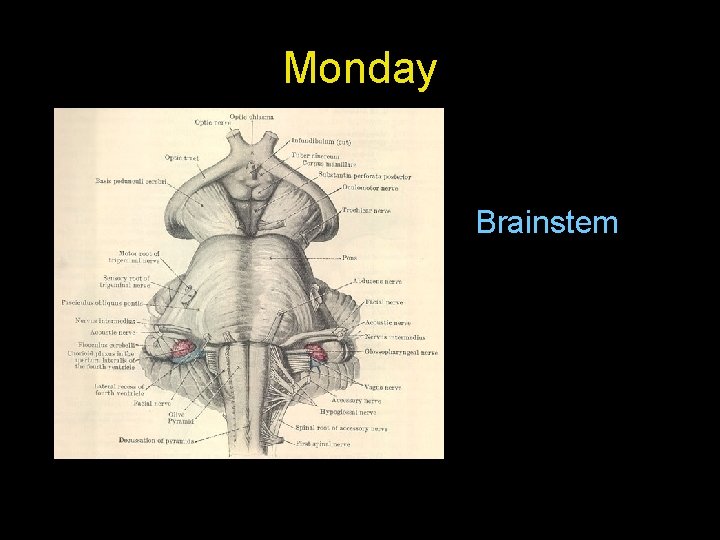
Monday Brainstem