
Spinal Control of Movement Lesson 19 Spinal Mechanisms
- Slides: 23
Spinal Control of Movement Lesson 19
Spinal Mechanisms Of Movement Ventral Spinal Cord l motor neurons l Striate muscle l voluntary movement & reflexes n Feedback l sensory cells in muscle l propioception l safety mechanism l postural maintenance ~ n
Spinal Cord Circuits Output: motor neurons l Ventral Horns l muscle contraction n Input: sensory neurons l Dorsal Horns l feedback n Integration l interneurons ~ n
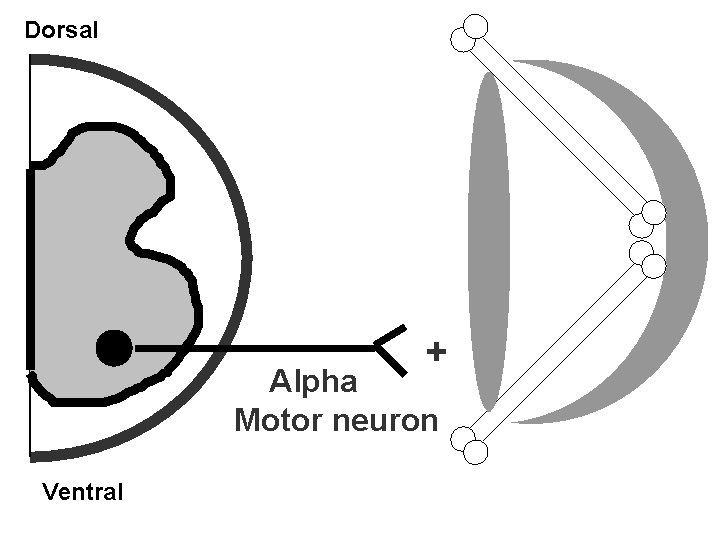
Alpha Motor Neurons Or lower motor neurons l control striate muscles n Uninterrupted to muscle fibers l final common pathway n Only excitatory input to muscles l Inhibition at spinal cord ~ n
Dorsal + Alpha Motor neuron Ventral
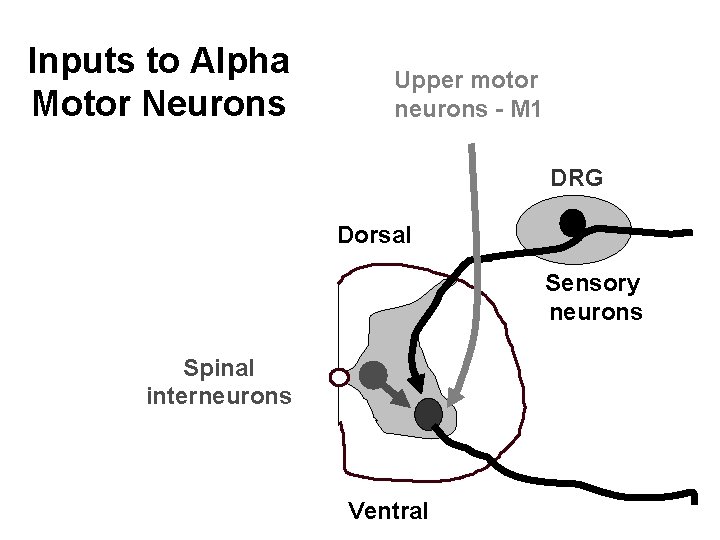
Input to Alpha Motor Neurons 3 sources only 1. DRG neurons l sensory neurons (proprioception) l feedback from muscle spindles 2. Upper motor neurons l primarily from M 1 3. Spinal interneurons l largest input (excitatory & inhibitory) l generation of motor programs ~ n
Inputs to Alpha Motor Neurons Upper motor neurons - M 1 DRG Dorsal Sensory neurons Spinal interneurons Ventral
Striate Muscle Extrafusal Muscle Fibers l muscle cells l input from a motor neurons l contraction l SC inhibition relax n Force for limb movements l flexion - closes joint l extension - opens joint ~ n
Muscle Contraction a motor neuron excitation l AP in muscle fiber l Ca++ released from internal stores n Muscle fiber contracts l continues while Ca++ & ATP available n Relaxation l Ca++ sequestered by active transport ~ n
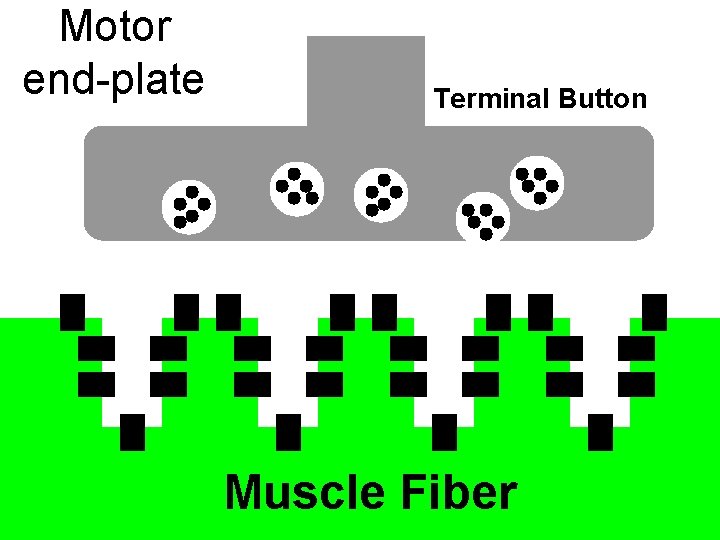
Neuromuscular Junction Synapse between neuron & effector n Cholinergic (ACh) l nicotinic receptors n Motor end-plate l postsynaptic membrane l folds packed with receptor ~ n
Motor end-plate Terminal Button Muscle Fiber
Myasthenia Gravis Autoimmune disorder l body develops antibodies for ACh-R l weakness & rapid fatigue l Most common: women in 30 s l Risk of respiratory paralysis n Treatment l ACh. E inhibitors l Immunosupressants ~ n
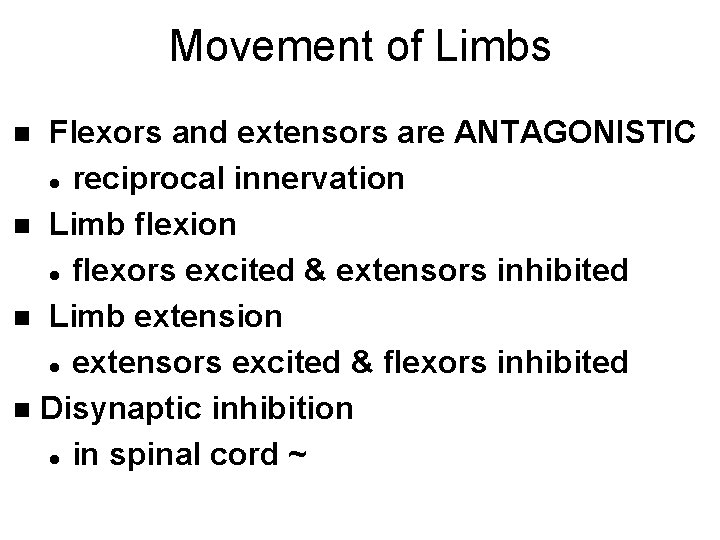
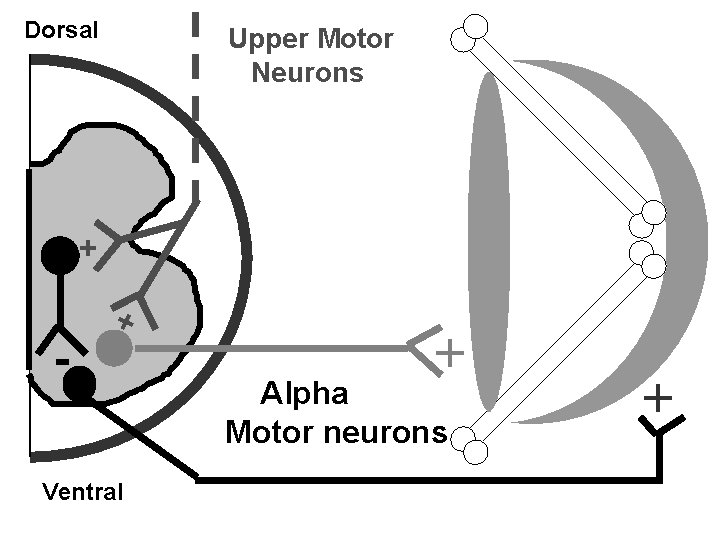
Movement of Limbs Flexors and extensors are ANTAGONISTIC l reciprocal innervation n Limb flexion l flexors excited & extensors inhibited n Limb extension l extensors excited & flexors inhibited n Disynaptic inhibition l in spinal cord ~ n
Dorsal Upper Motor Neurons + - + Ventral + Alpha Motor neurons +
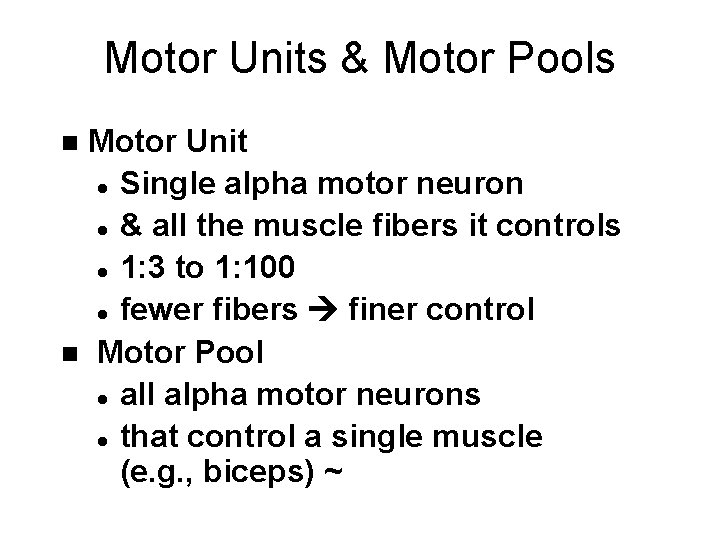
Motor Units & Motor Pools Motor Unit l Single alpha motor neuron l & all the muscle fibers it controls l 1: 3 to 1: 100 l fewer fibers finer control n Motor Pool l alpha motor neurons l that control a single muscle (e. g. , biceps) ~ n
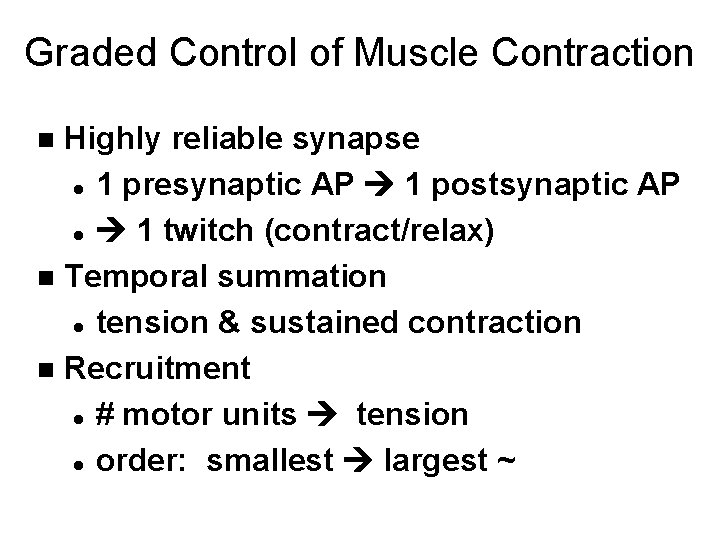
Graded Control of Muscle Contraction Highly reliable synapse l 1 presynaptic AP 1 postsynaptic AP l 1 twitch (contract/relax) n Temporal summation l tension & sustained contraction n Recruitment l # motor units tension l order: smallest largest ~ n
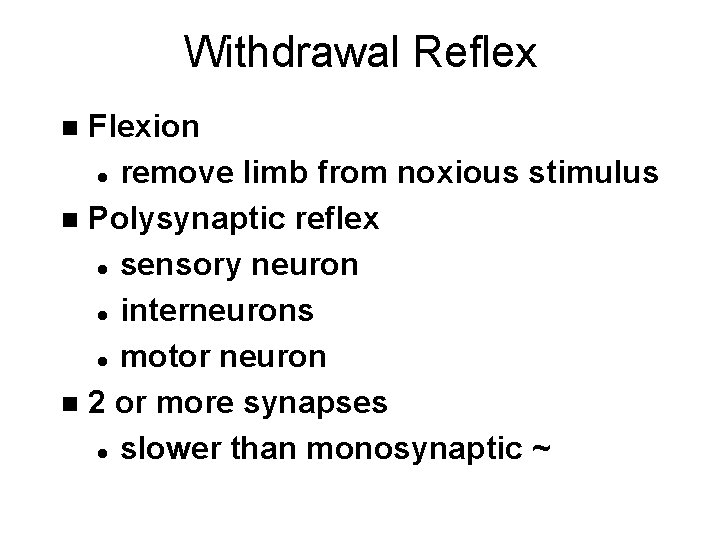
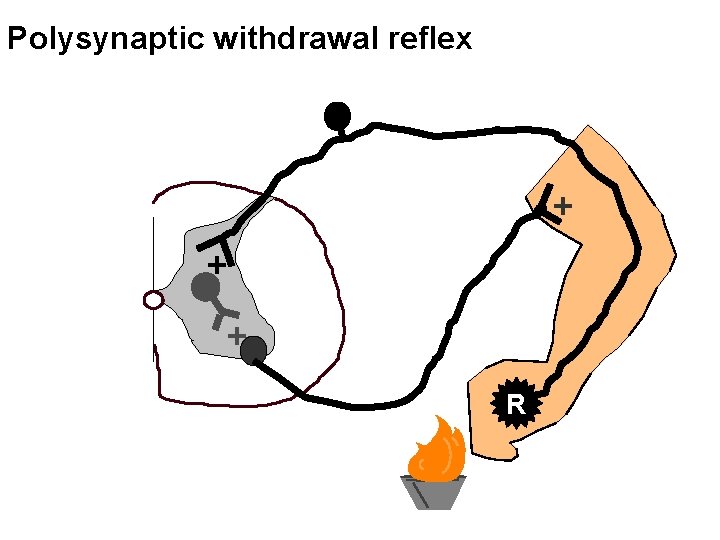
Withdrawal Reflex Flexion l remove limb from noxious stimulus n Polysynaptic reflex l sensory neuron l interneurons l motor neuron n 2 or more synapses l slower than monosynaptic ~ n
Polysynaptic withdrawal reflex + + + R
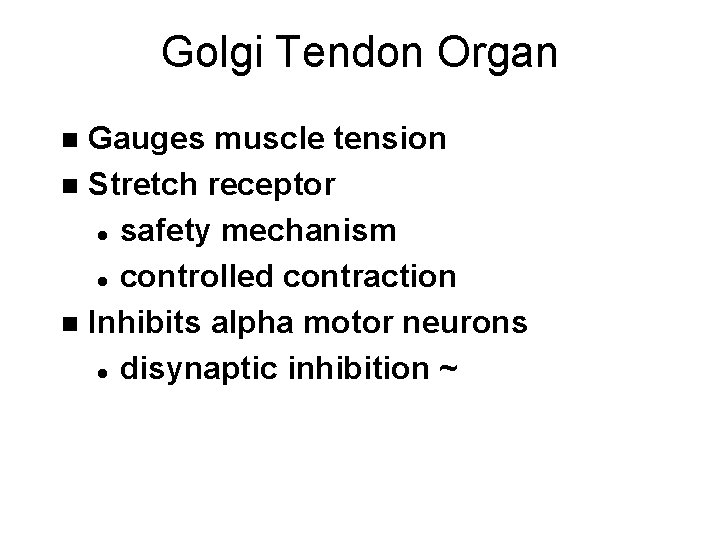
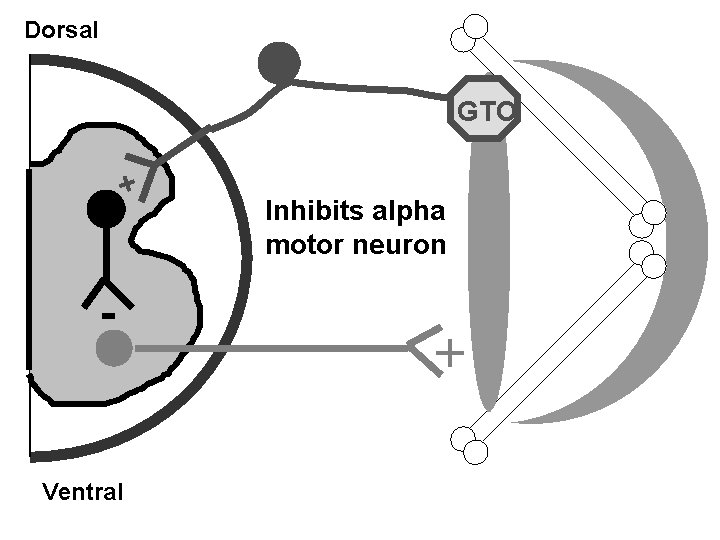
Golgi Tendon Organ Gauges muscle tension n Stretch receptor l safety mechanism l controlled contraction n Inhibits alpha motor neurons l disynaptic inhibition ~ n
Dorsal GTO + - Ventral Inhibits alpha motor neuron +
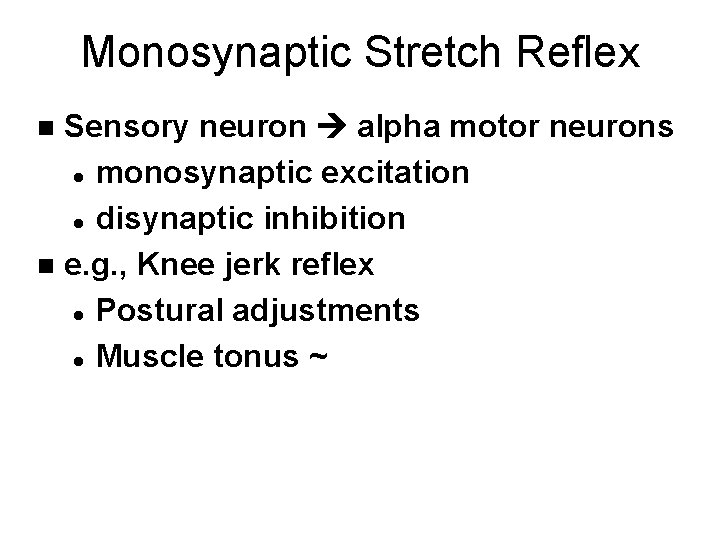
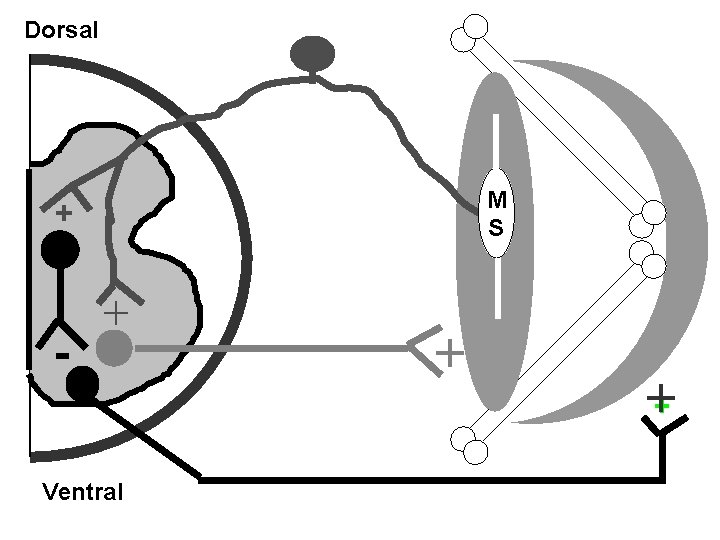
Monosynaptic Stretch Reflex Sensory neuron alpha motor neurons l monosynaptic excitation l disynaptic inhibition n e. g. , Knee jerk reflex l Postural adjustments l Muscle tonus ~ n
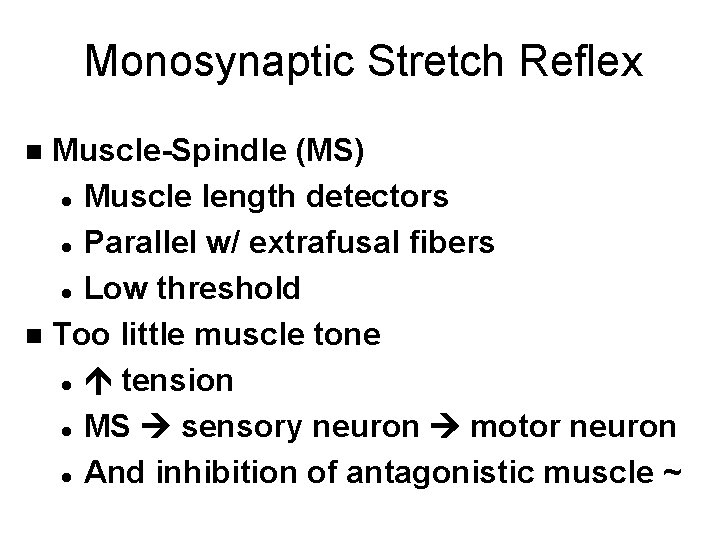
Monosynaptic Stretch Reflex Muscle-Spindle (MS) l Muscle length detectors l Parallel w/ extrafusal fibers l Low threshold n Too little muscle tone l tension l MS sensory neuron motor neuron l And inhibition of antagonistic muscle ~ n
Dorsal + M S - + Ventral + ++