
Spinal and peripheral nerve poisons Prof Dr B
Spinal and peripheral nerve poisons Prof. Dr. B. K. Singh Head of Department Forensic Medicine & Toxicology
Classification n Strychnos nux vomica n Gelsemium n Strychnos toxifera (Curare) n Conium (Hemlock)
Strychnine Ø Ø Alkaloid In the seeds of Strychnos nux vomica
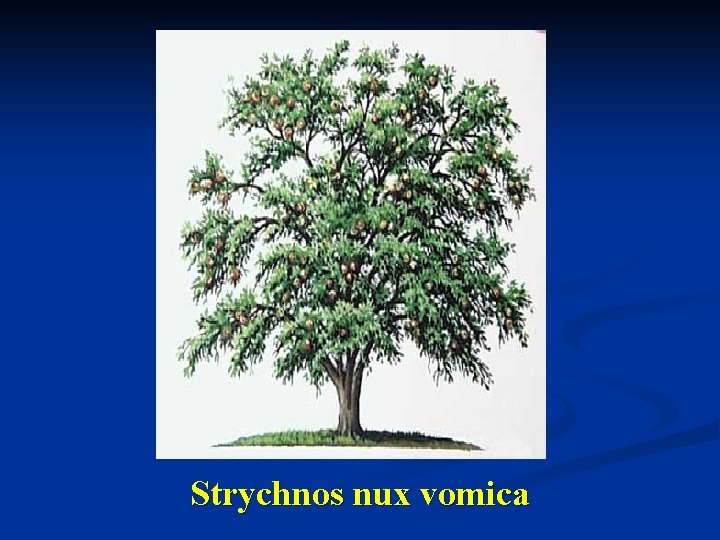
Strychnos nux vomica
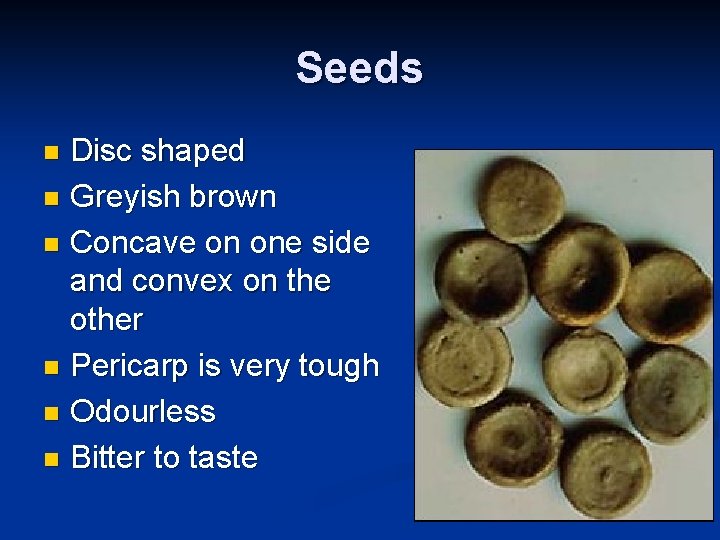
Seeds Disc shaped n Greyish brown n Concave on one side and convex on the other n Pericarp is very tough n Odourless n Bitter to taste n
Active principles Strychnine (Alkaloid) Brucine (Alkaloid) Loganine (Glycoside)
Uses n Rodenticide n For killing stray dogs
Mechanism of action n Strychnine prevents the uptake of glycine at inhibitory synapses, especially in the ventral horns (anterior horn cells) of the spinal cord → It results in the competitive antagonism of the inhibitory neurotransmitter at the post-synaptic spinal cord motor neuron → There is a net excitatory effect, and minimal sensory stimulation can set off powerful muscle contractions.
Clinical features n Bitter taste n Nausea n A feeling of apprehension and anxiety n Muscle twitching, spasms, followed by overwhelming convulsions (each lasting from 30 seconds to 2 minutes)
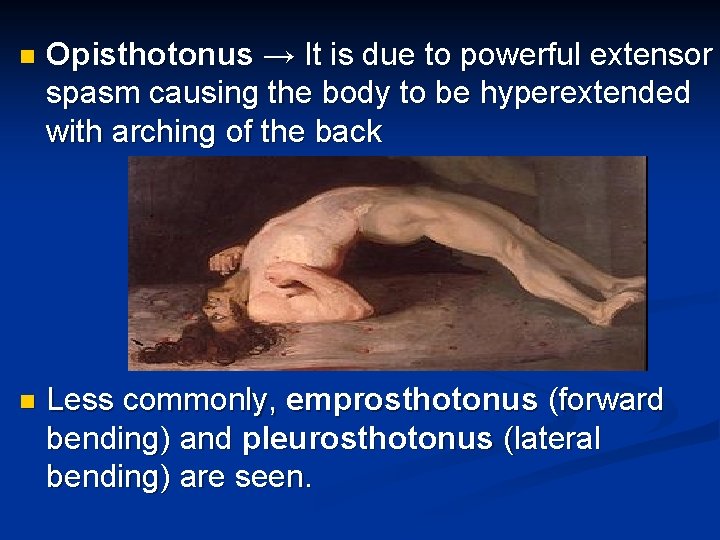
n Opisthotonus → It is due to powerful extensor spasm causing the body to be hyperextended with arching of the back n Less commonly, emprosthotonus (forward bending) and pleurosthotonus (lateral bending) are seen.
n Risus sardonicus (sardonic smile due to grimacing that results from facial muscle spasm) n There may be frothing from the mouth. n Pupils are usually dilated. n Complete muscle relaxation in between spasms and convulsions. n Patient maintains a clear sensorium during and between convulsive episodes.
n Complications → hypoxia, hyperthermia, cardiac arrest, rhabdomyolysis, metabolic acidosis, and acute renal failure. n Cause of death → Respiratory failure consequent to spasm of respiratory muscles.
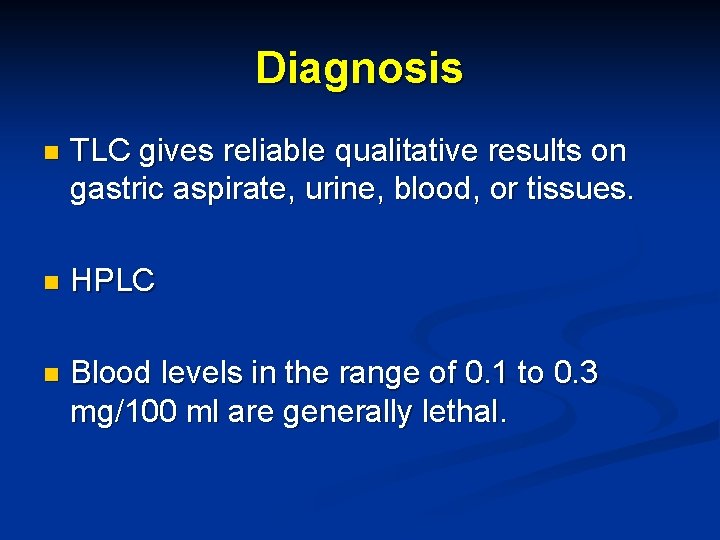
Diagnosis n TLC gives reliable qualitative results on gastric aspirate, urine, blood, or tissues. n HPLC n Blood levels in the range of 0. 1 to 0. 3 mg/100 ml are generally lethal.
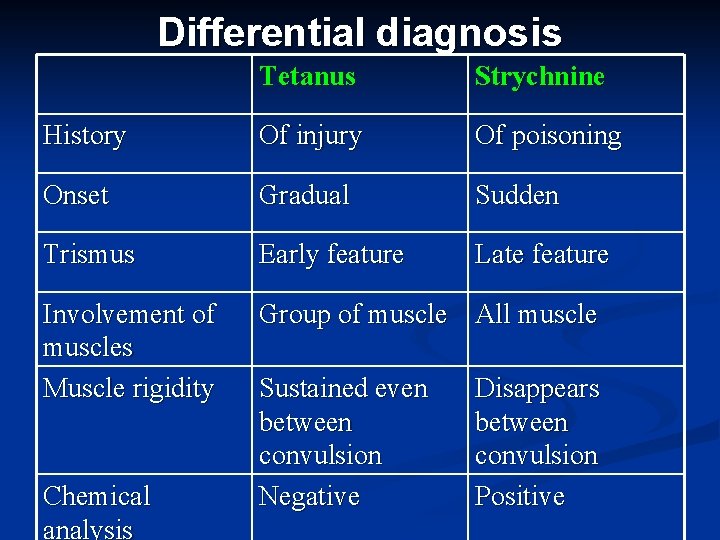
Differential diagnosis Tetanus Strychnine History Of injury Of poisoning Onset Gradual Sudden Trismus Early feature Late feature Involvement of muscles Muscle rigidity Group of muscle All muscle Chemical analysis Sustained even between convulsion Negative Disappears between convulsion Positive
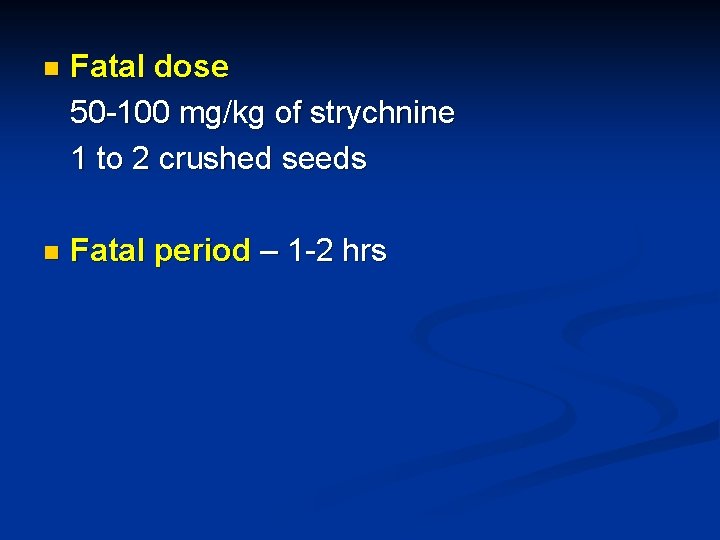
n Fatal dose 50 -100 mg/kg of strychnine 1 to 2 crushed seeds n Fatal period – 1 -2 hrs
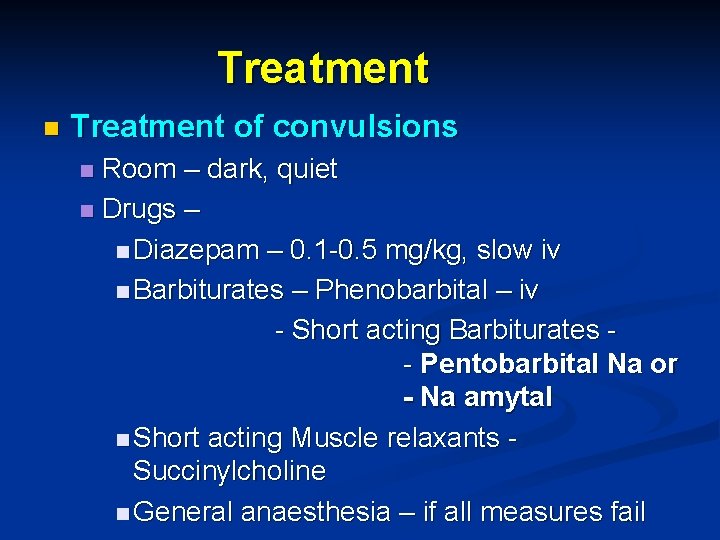
Treatment n Treatment of convulsions Room – dark, quiet n Drugs – n Diazepam – 0. 1 -0. 5 mg/kg, slow iv n Barbiturates – Phenobarbital – iv - Short acting Barbiturates - Pentobarbital Na or - Na amytal n Short acting Muscle relaxants Succinylcholine n General anaesthesia – if all measures fail n
n Decontamination n Gastric lavage n Only after the control of convulsions by medications n With KMn. O 4 n Activated charcoal n Correction of fluid, electrolyte and acid-base abnormalities n Oxygen, assisted ventilation n Acidification of urine
Autopsy features n Asphyxial signs n Rigor mortis - Early onset and prolonged n Postmortem caloricity n GI tract - Congestion n Lungs, liver, kidneys, brain, spinal cord – congested n Resist putrefaction - Strychnine may be found
Forensic significance Accidental ingestion, folk medicine n Homicide n Suicide – rare n n Arrow / Cattle poison n Aphrodisiac n Adulterant in street drugs n Used as a stimulant and performance enhancing drug
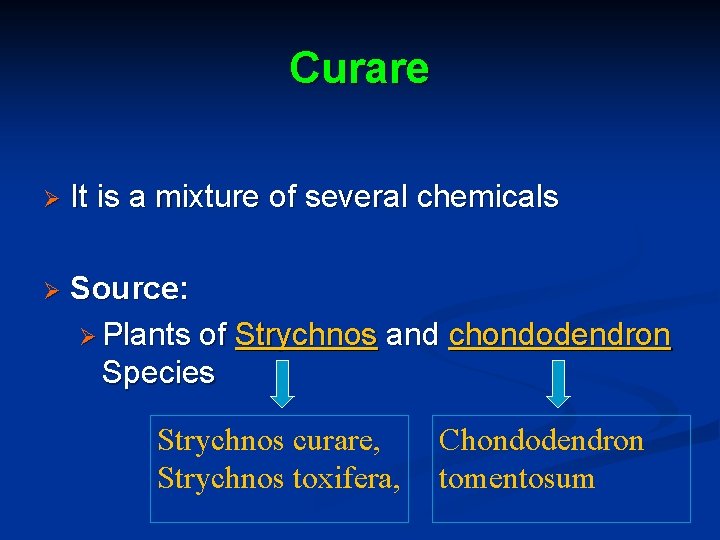
Curare Ø It is a mixture of several chemicals Ø Source: Ø Plants of Strychnos and chondodendron Species Strychnos curare, Strychnos toxifera, Chondodendron tomentosum
Active Principle n Curarine n d-tubocurarine n Curine
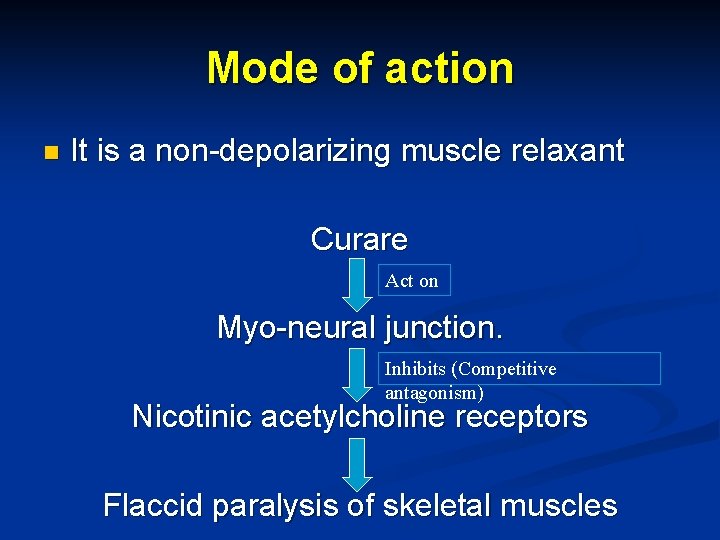
Mode of action n It is a non-depolarizing muscle relaxant Curare Act on Myo-neural junction. Inhibits (Competitive antagonism) Nicotinic acetylcholine receptors Flaccid paralysis of skeletal muscles
Mode of action n It is a non-depolarizing muscle relaxant n Curare inhibits Nicotinic acetylcholine receptors on Myo-neural junction and causes Flaccid Paralysis of skeletal muscles
Toxicokinetics n Not absorbed through oral or GIT mucosa → Harmless when swallowed n Absorbed through i. v. routes and wounds
Clinical Features n Muscular weakness & Paralysis n Muscles of the jaw, neck, head → arms, legs n Eyes – Pupils – dilated - Vision - blurred n Respiration – n Paralysis of Respiratory muscles – Shortness of breath
n CNS Headache, dizziness, vertigo n No LOC n Mental faculties are clear till death n In large doses – Central axn - Excitation (convulsions) → Depression (LOC) n n Hypotension n Cause of death - Respiratory Failure
n F/D: 60 mg n F/P: 1 -2 hrs.
Treatment n Artificial respiration n Antidotes n ACh. E inhibitor n Physostigmine – 3 ml of 1: 200 sol, i. v. n Neostigmine – 5 -10 mg i. v. n Aminopyridine (Blocks K+ ch → Prolongs action potential → ↑NT release
P. M. Changes n Asphyxial changes M. L. I. n Arrow poison Homicide – needs to be administered parenterally n Accidental n
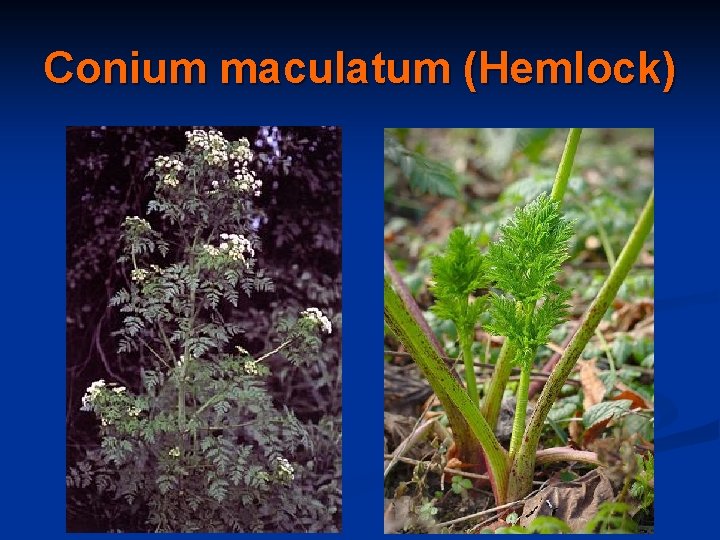
Conium maculatum (Hemlock)
n All parts of the plant are highly toxic n Active principle – Coniine n Mechanism Of Action n Act on motor end plates → Paralysis of motor nerve terminals in the muscles
Clinical Features n Unpleasant mousy smell n Burning in mouth & throat n Nausea, vomiting, diarrhea n Slow RR, PS n CNS - Mental confusion, Tremors, Ataxia, Progressive motor paralysis extending upward from the extremities n Coma n Cause of death – respiratory failure
n F/D: 60 mg n P M Features - Asphyxial changes n M. L. I: Homicidal Accidental Suicidal
- Slides: 33