
Spiking Neural Networks Banafsheh Rekabdar Biological Neuron The
Spiking Neural Networks Banafsheh Rekabdar
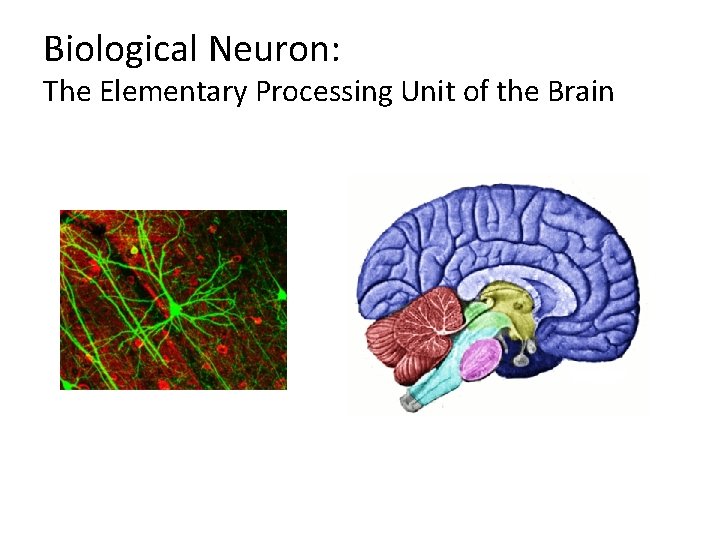
Biological Neuron: The Elementary Processing Unit of the Brain
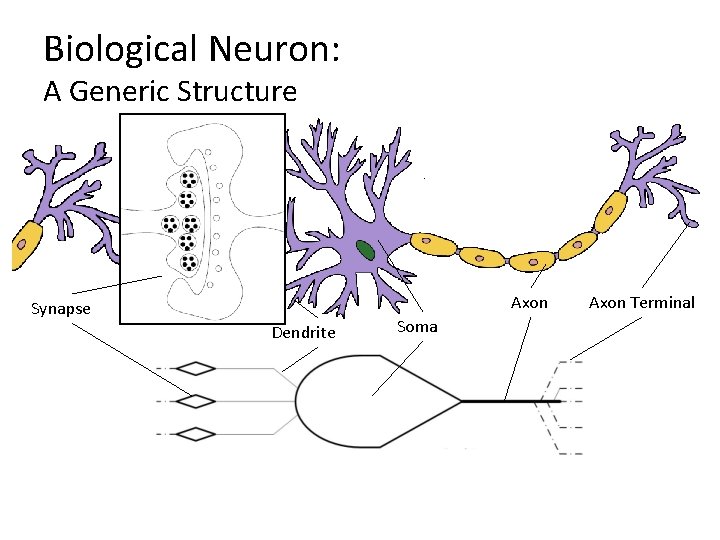
Biological Neuron: A Generic Structure Axon Synapse Dendrite Soma Axon Terminal
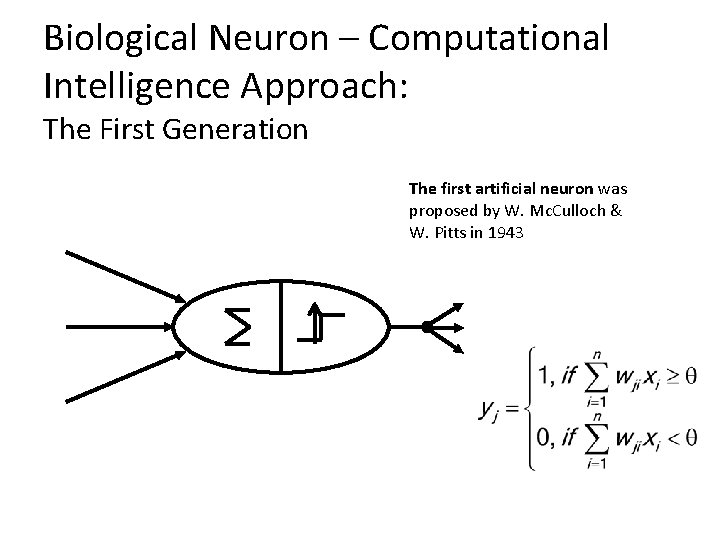
Biological Neuron – Computational Intelligence Approach: The First Generation The first artificial neuron was proposed by W. Mc. Culloch & W. Pitts in 1943
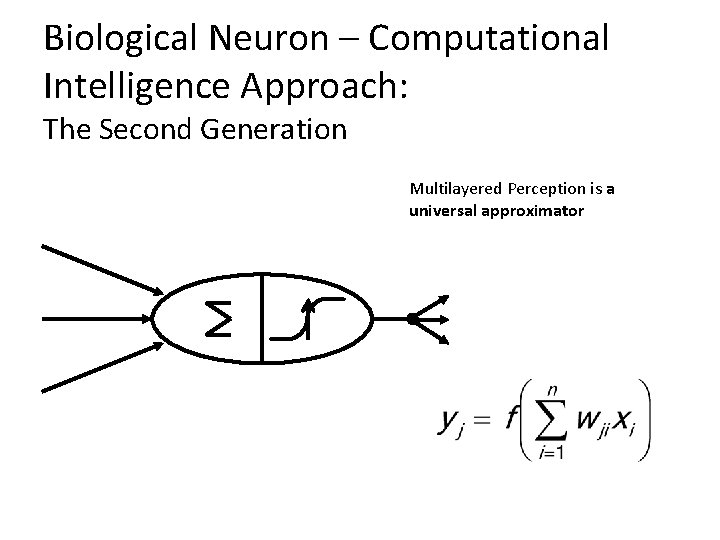
Biological Neuron – Computational Intelligence Approach: The Second Generation Multilayered Perception is a universal approximator
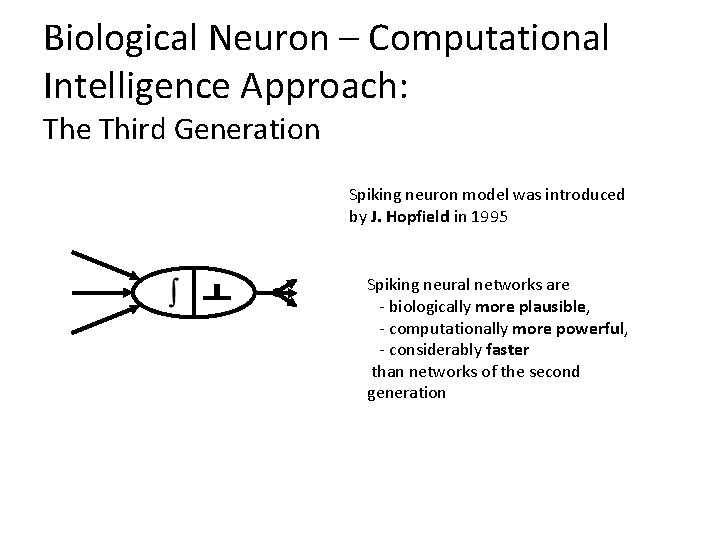
Biological Neuron – Computational Intelligence Approach: The Third Generation Spiking neuron model was introduced by J. Hopfield in 1995 Spiking neural networks are - biologically more plausible, - computationally more powerful, - considerably faster than networks of the second generation
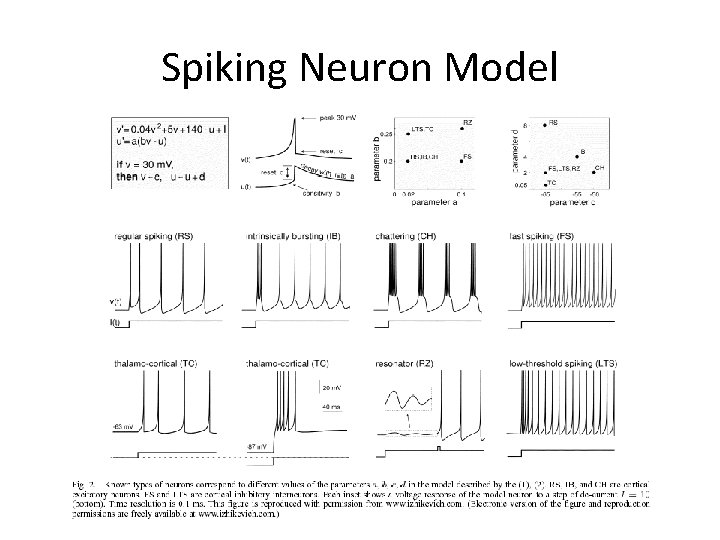
Spiking Neuron Model
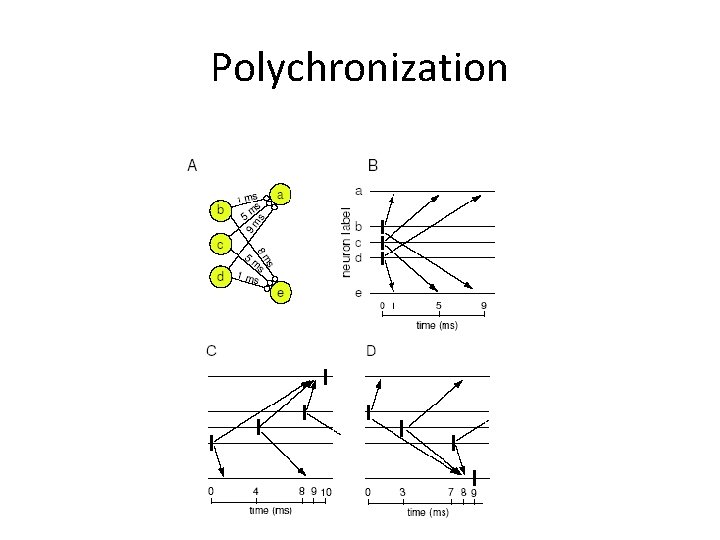
Polychronization
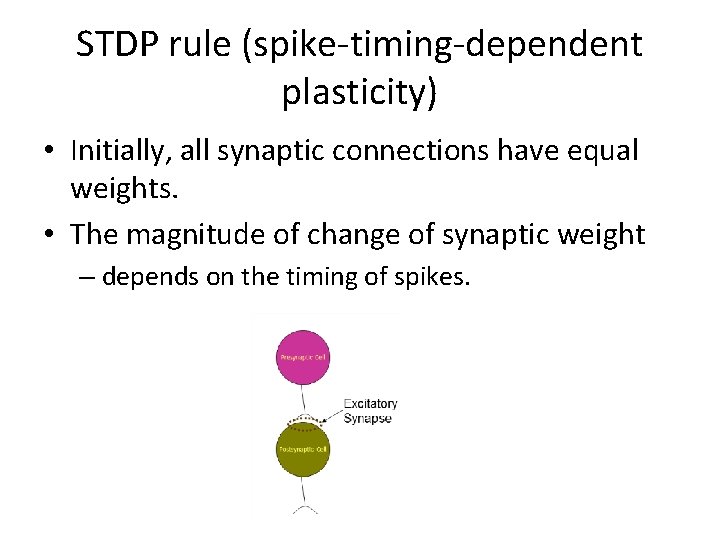
STDP rule (spike-timing-dependent plasticity) • Initially, all synaptic connections have equal weights. • The magnitude of change of synaptic weight – depends on the timing of spikes.
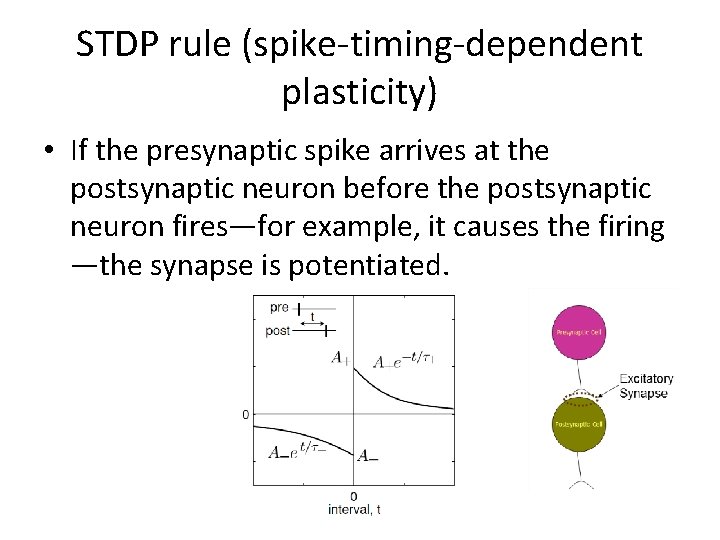
STDP rule (spike-timing-dependent plasticity) • If the presynaptic spike arrives at the postsynaptic neuron before the postsynaptic neuron fires—for example, it causes the firing —the synapse is potentiated.
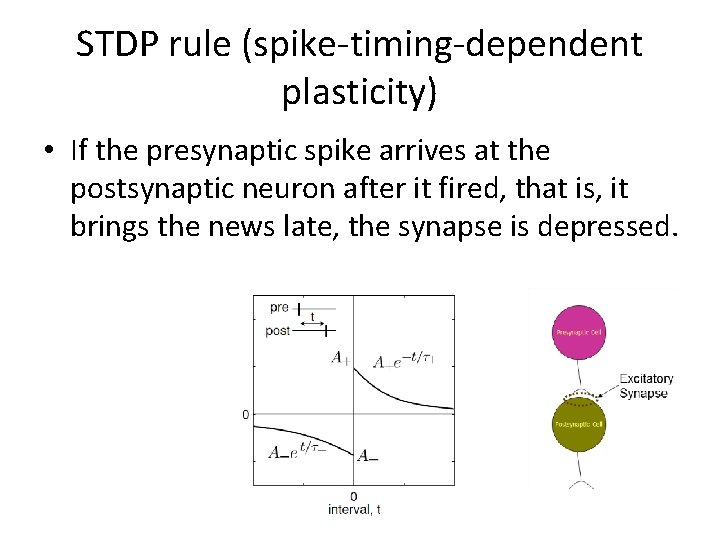
STDP rule (spike-timing-dependent plasticity) • If the presynaptic spike arrives at the postsynaptic neuron after it fired, that is, it brings the news late, the synapse is depressed.
Spiking neural network • The network consists of cortical spiking neurons with axonal conduction delays and spike timing-dependent plasticity (STDP). • The network is sparse with 0. 1 probability of connection between any two neurons. • Neurons are connected to each other randomly
Spiking neural network • Synaptic connections among neurons have fixed conduction delays, which are random integers between 1 ms and 20 ms.
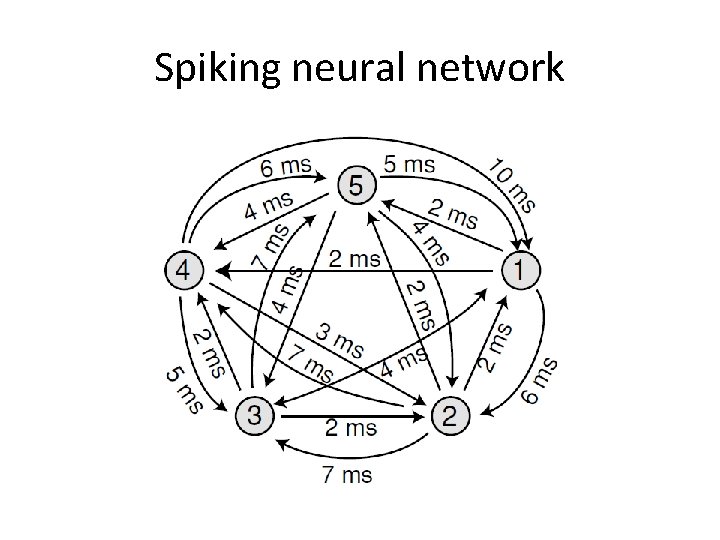
Spiking neural network
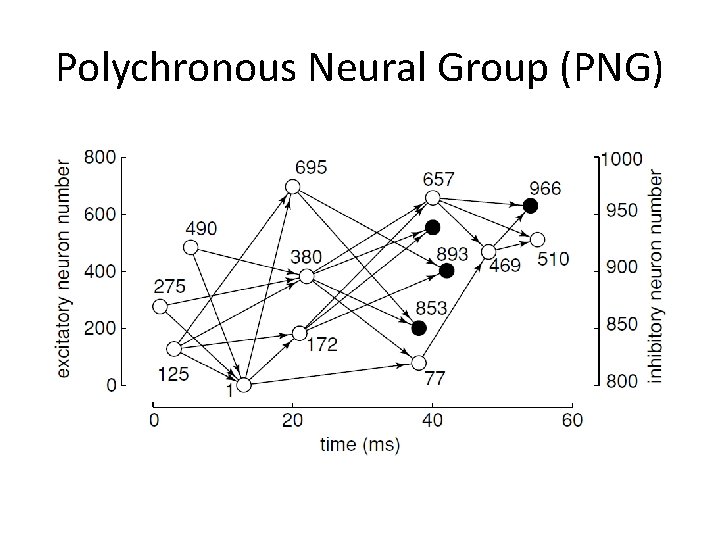
Polychronous Neural Group (PNG)
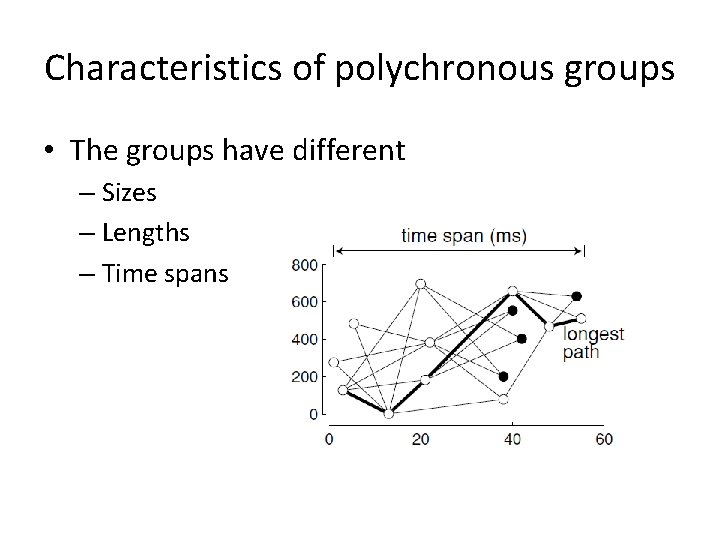
Characteristics of polychronous groups • The groups have different – Sizes – Lengths – Time spans
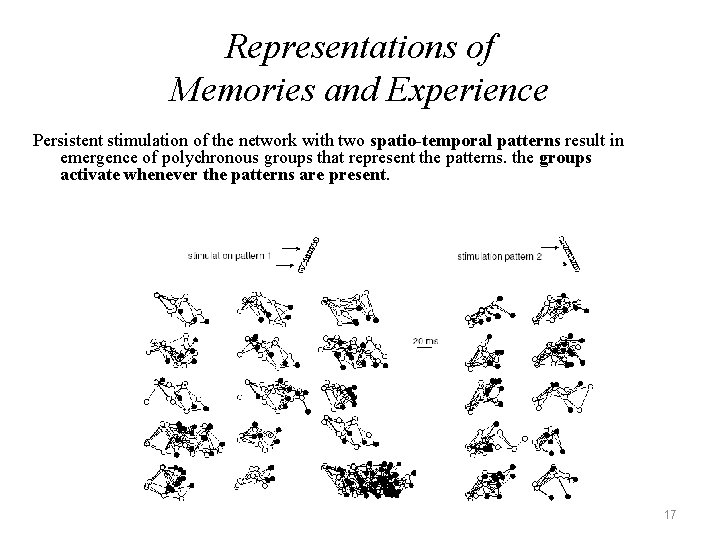
Representations of Memories and Experience Persistent stimulation of the network with two spatio-temporal patterns result in emergence of polychronous groups that represent the patterns. the groups activate whenever the patterns are present. 17
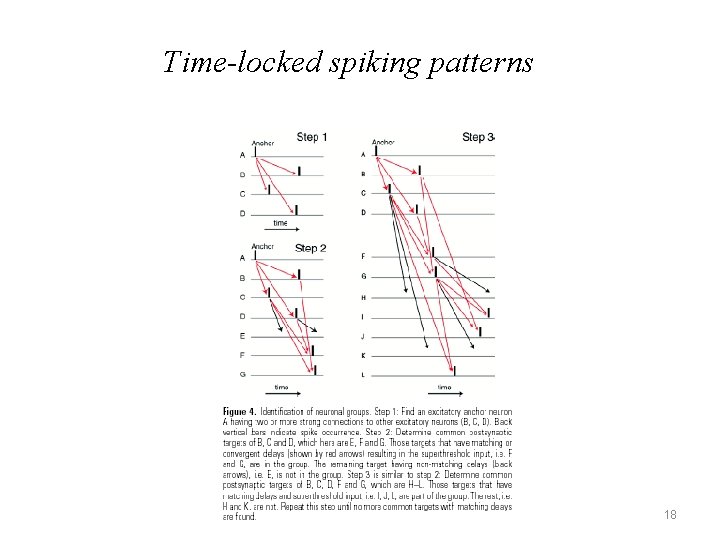
Time-locked spiking patterns 18
What useful for? • Its useful for classifying temporal patterns
Available software • There is diverse range of application software to simulate spiking neural networks. • EDLUT • GENESIS • NEST
- Slides: 20