
Sphingolipids and Myelin Structure By Amr S Moustafa

Sphingolipids and Myelin Structure By Amr S. Moustafa, M. D. ; Ph. D.

Outlines Objectives Background Key principles Take home message
Objectives Sphingolipids: Chemical structure Tissue distribution and functions Biochemical structure of myelin Biosynthesis of sphingolipids Sphingolipidosis
Sphingolipids: Background Ø Essential component of membranes Ø Abundant in nervous tissue Ø Extra-nervous tissue: e. g. , Receptors for Cholera toxins Diphtheria toxins Viruses
Sphingolipids: Background CONT’D Ø Regulation of growth & development Ø Very antigenic: Blood group antigen Embryonic antigen Tumor antigen Ø Cell transformation
Key Principles Ø Chemical Structure of sphingolipids Ø Types: Ø Glycosphingolipids (Glycolipids) Ø Sphingophospholipids e. g. , Sphingomyelin Ø Myelin structure and function Ø Sphingolipidosis
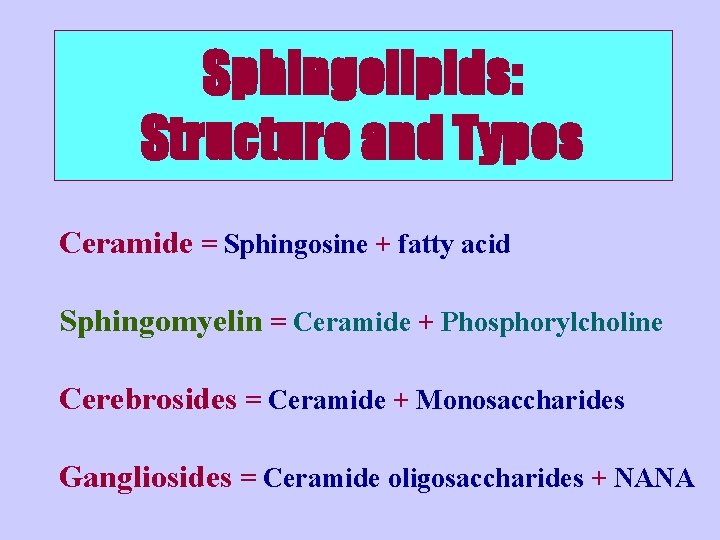
Sphingolipids: Structure and Types Ceramide = Sphingosine + fatty acid Sphingomyelin = Ceramide + Phosphorylcholine Cerebrosides = Ceramide + Monosaccharides Gangliosides = Ceramide oligosaccharides + NANA
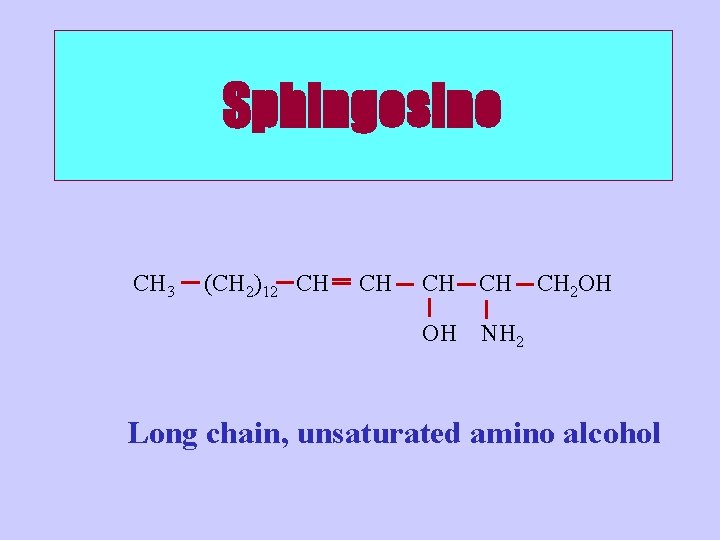
Sphingosine CH 3 (CH 2)12 CH CH OH NH 2 CH 2 OH Long chain, unsaturated amino alcohol
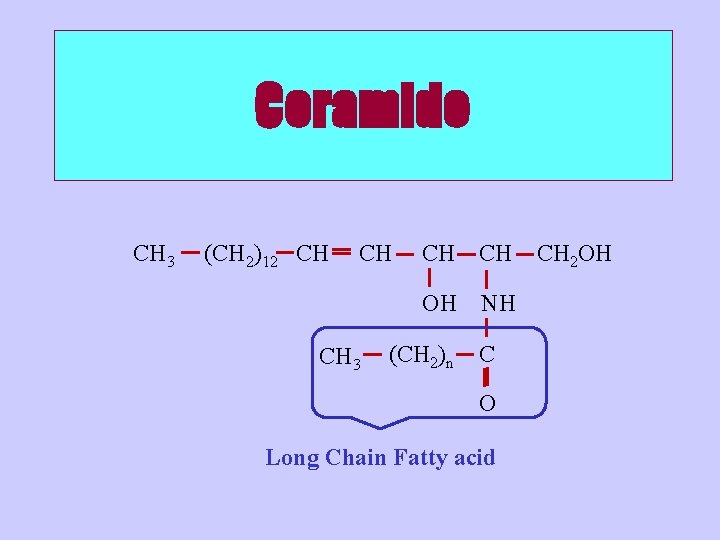
Ceramide CH 3 (CH 2)12 CH CH CH 3 CH CH OH NH (CH 2)n C O Long Chain Fatty acid CH 2 OH

Sphingomyelin CH 3 (CH 2)12 CH CH 3 CH CH CH OH NH (CH 2)n C O Long Chain Fatty acid CH 2 O Phosphorylcholine
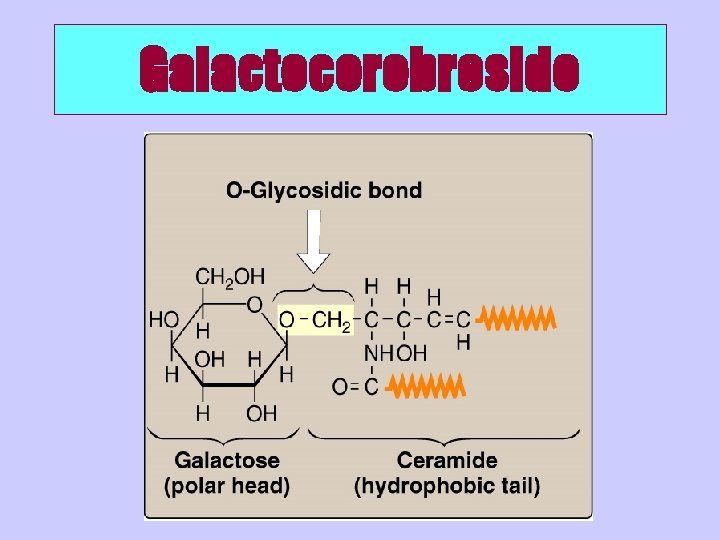
Galactocerebroside
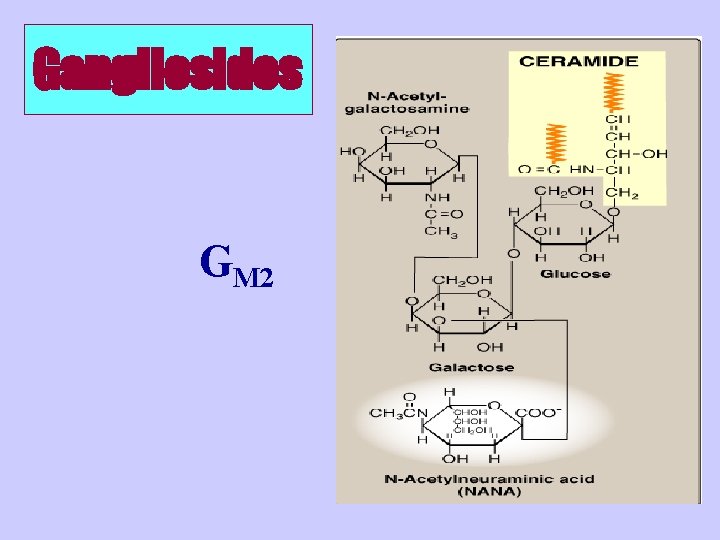
Gangliosides GM 2

Sphingolipids’ Synthesis
Myelin Structure Myelin is a specialized cell membrane that ensheathes an axon to form a myelinated nerve fiber Myelin is produced by: Schwann cells: Oligodendrocytes: Myelin composition: Lipids (80%): Proteins (20%): Peripheral nerves CNS Main component: Cerebrosides Other component: Sphingomyelin e. g. , Myelin basic protein

Myelin Structure Fatty acid of Sphingomyelin: Myelin sheath: Very long chain fatty acids: Lignoceric 24: 0 Nervonic 24: 1 CONT’D
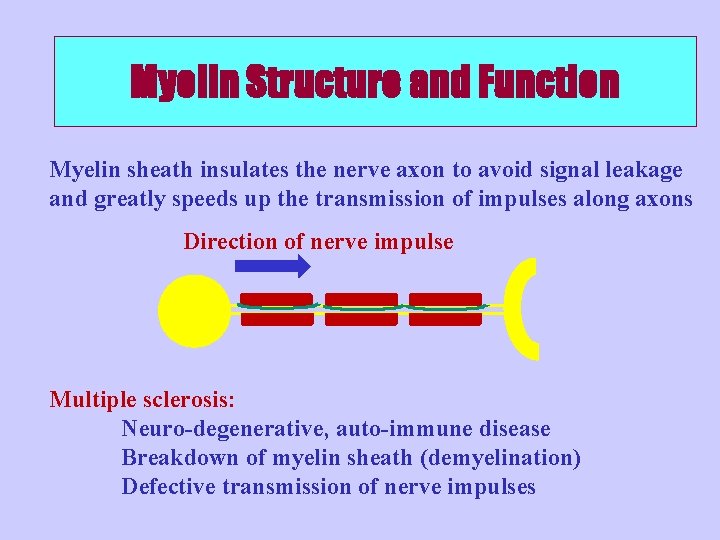
Myelin Structure and Function Myelin sheath insulates the nerve axon to avoid signal leakage and greatly speeds up the transmission of impulses along axons Direction of nerve impulse Multiple sclerosis: Neuro-degenerative, auto-immune disease Breakdown of myelin sheath (demyelination) Defective transmission of nerve impulses
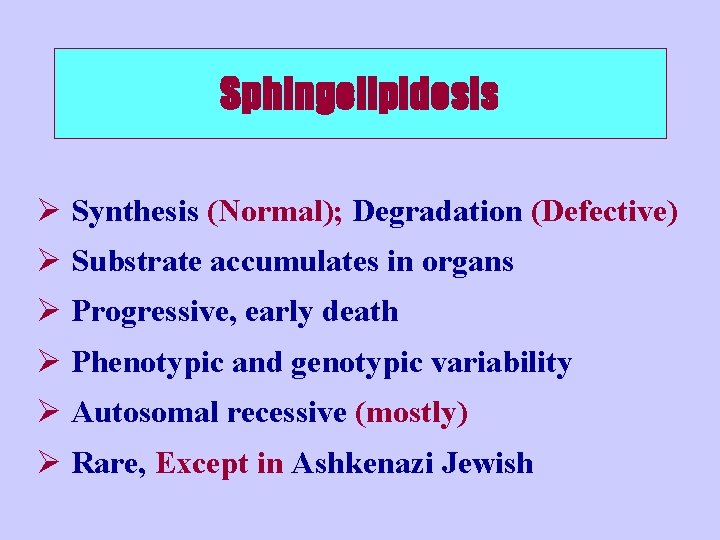
Sphingolipidosis Ø Synthesis (Normal); Degradation (Defective) Ø Substrate accumulates in organs Ø Progressive, early death Ø Phenotypic and genotypic variability Ø Autosomal recessive (mostly) Ø Rare, Except in Ashkenazi Jewish
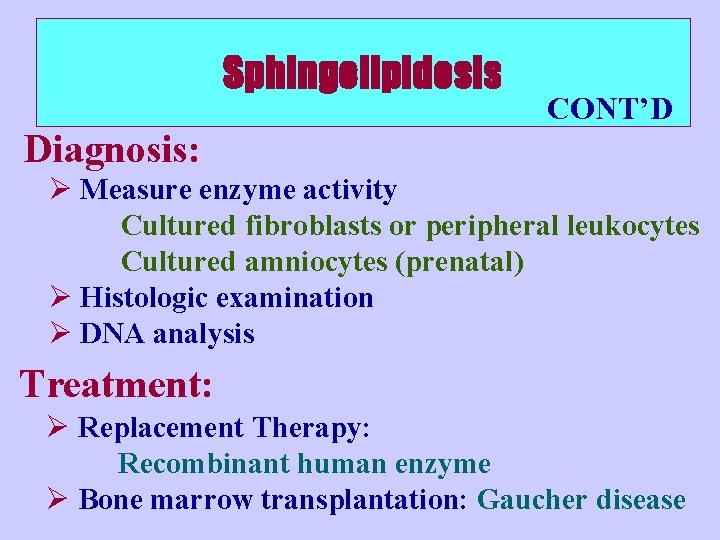
Sphingolipidosis CONT’D Diagnosis: Ø Measure enzyme activity Cultured fibroblasts or peripheral leukocytes Cultured amniocytes (prenatal) Ø Histologic examination Ø DNA analysis Treatment: Ø Replacement Therapy: Recombinant human enzyme Ø Bone marrow transplantation: Gaucher disease
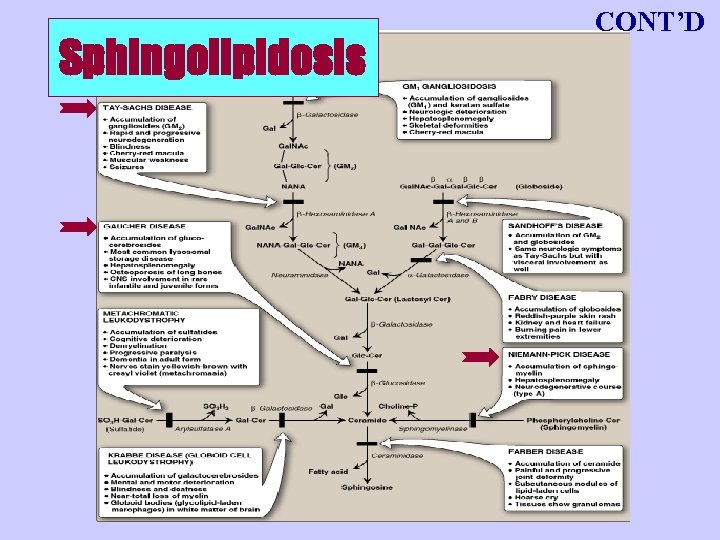
Sphingolipidosis CONT’D
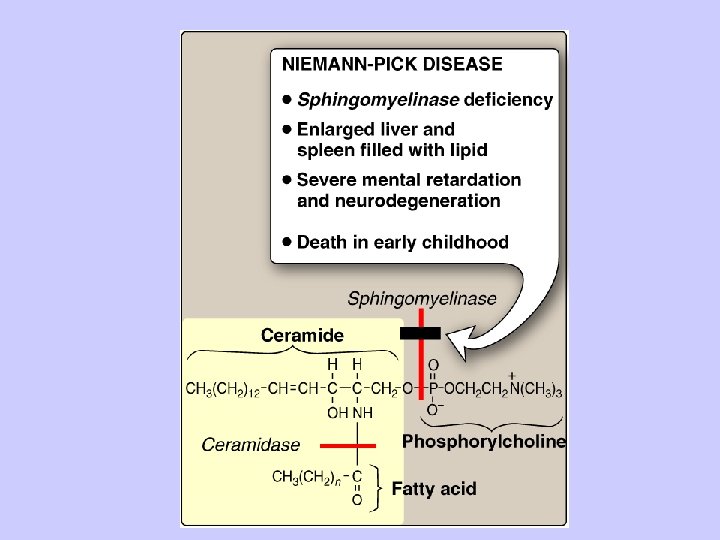
Niemann - Pick Disease
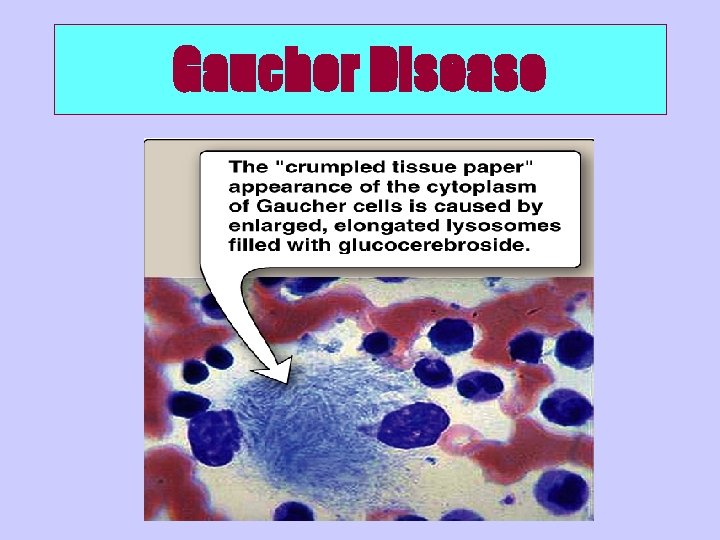
Gaucher Disease
Take Home Message Ø Sphingolipids are complex lipids that includes sphingo-phospholipids and glycolipids Ø Ceramide is the precursor of all sphingolipids Ø Sphingolipids are present mainly in nerve tissue, but they are found also extra-neural. Ø Myelin sheath insulates the nerve axon to avoid signal leakage and speed up impulse transmission Ø Sphingolipidosis are rare, genetic diseases due to defective degradation of sphingolipids

- Slides: 24