
Spermatogenesis Spermatids differentiate into spermatozoa sperm From spermatogonia
- Slides: 11
Spermatogenesis Spermatids differentiate into spermatozoa (sperm) From spermatogonia to spermatozoa takes ~64 days. Sherwood’s Human Physiology 20 -6 5 th Ed. & 20 -7 6 th Ed.
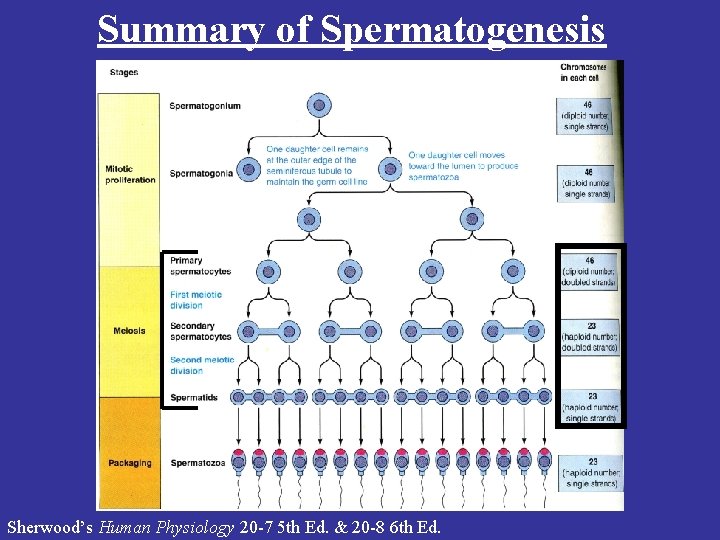
Summary of Spermatogenesis Sherwood’s Human Physiology 20 -7 5 th Ed. & 20 -8 6 th Ed.
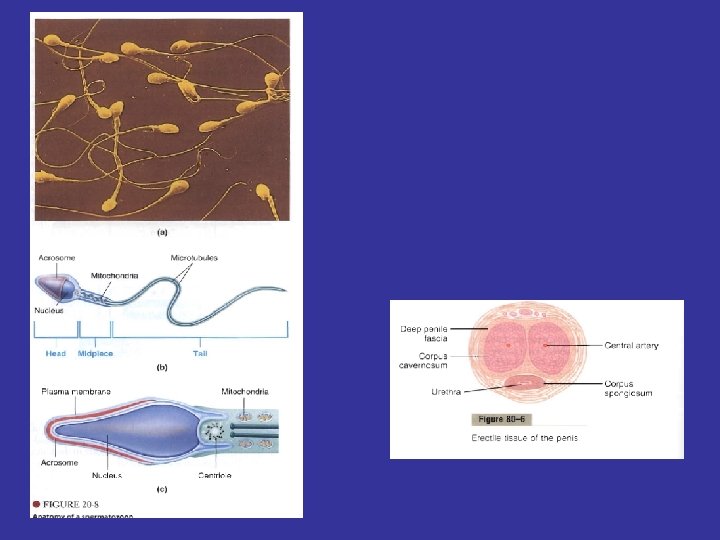
Spermatozoon (singular) Structure. Head (nucleus and acrosome) Tail (flagellum and mitochondria) Sherwood’s Human Physiology 20 -8 5 th Ed. & 20 -9 6 th Ed.
Hormonal factors that Stimulate Spermatogenesis • Luteinizing hormone – Secreted by anterior pituitary gland (Gonadotrophs). – Stimulates Leydig cells to secrete testosterone. • Follicle-stimulating hormone – Secreted by anterior pituitary gland (Gonadotrophs) – Stimulates Sertoli cells. – Necessary for normal spermatogenesis. Guyton’s Textbook of Medical Physiology 80 -6, 80 -7 and 75 -1
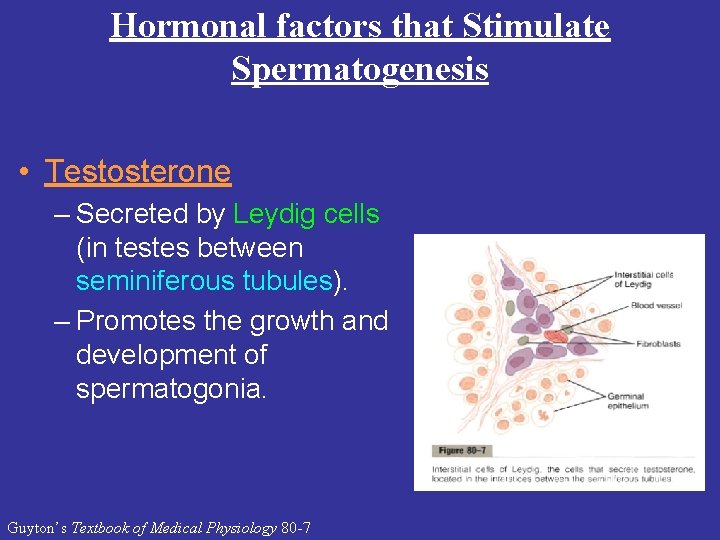
Hormonal factors that Stimulate Spermatogenesis • Testosterone – Secreted by Leydig cells (in testes between seminiferous tubules). – Promotes the growth and development of spermatogonia. Guyton’s Textbook of Medical Physiology 80 -7
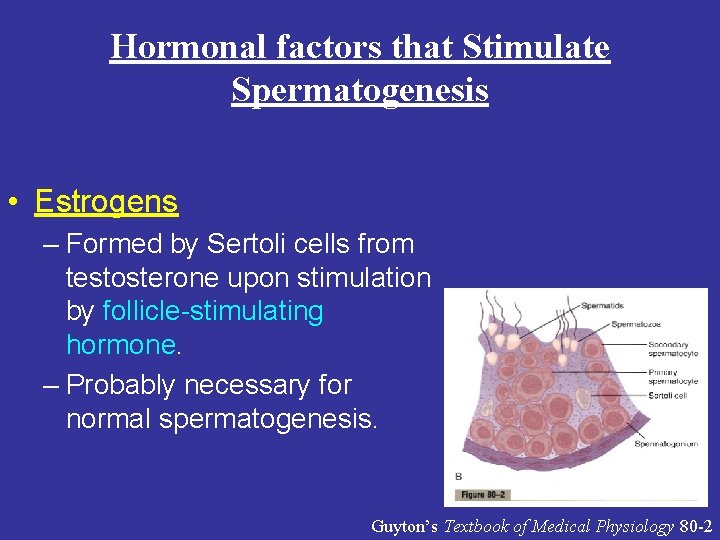
Hormonal factors that Stimulate Spermatogenesis • Estrogens – Formed by Sertoli cells from testosterone upon stimulation by follicle-stimulating hormone. – Probably necessary for normal spermatogenesis. Guyton’s Textbook of Medical Physiology 80 -2
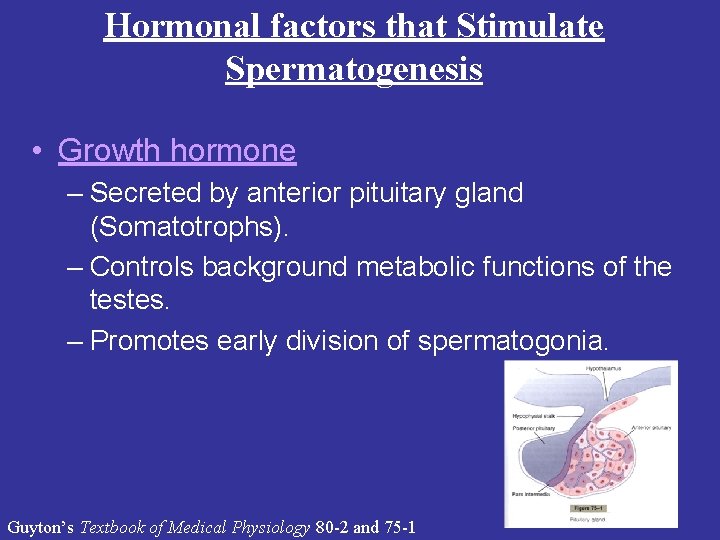
Hormonal factors that Stimulate Spermatogenesis • Growth hormone – Secreted by anterior pituitary gland (Somatotrophs). – Controls background metabolic functions of the testes. – Promotes early division of spermatogonia. Guyton’s Textbook of Medical Physiology 80 -2 and 75 -1
Sperm Maturation After formation of spermatozoa they migrate to the epididymis and undero Maturation. 1. 2 X 10⁸ spermatozoa are formed per day. Guyton’s Textbook of Medical Physiology 80 -1
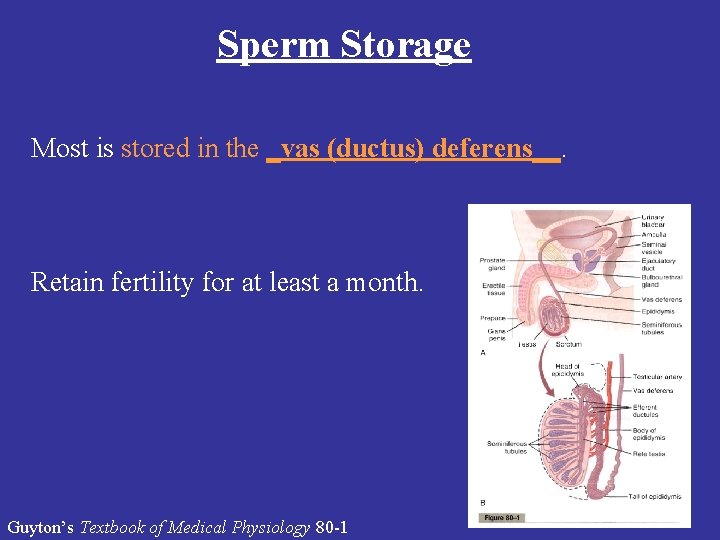
Sperm Storage Most is stored in the _vas (ductus) deferens__. Retain fertility for at least a month. Guyton’s Textbook of Medical Physiology 80 -1
Seminal Fluid Vas (ductus) deferens (contributes about 10% of semen). -Main contents are seminal fluid and spermatozoa. Seminal vesicle (contributes about 60% of semen) -Secretes nutrients for spermatozoa survival including: Fructose, citric acid, prostaglandins, and fibrinogen. Sherwood’s Human Physiology 20 -1