
SPELD October 2016 Maths Anxiety and Working Memory
SPELD October 2016 Maths Anxiety and Working Memory www. judyhornigold. co. uk
Session Overview Maths Anxiety How to overcome maths anxiety Techniques Growth Mindset Number sense Number talks Working Memory How to improve memory function www. judyhornigold. co. uk
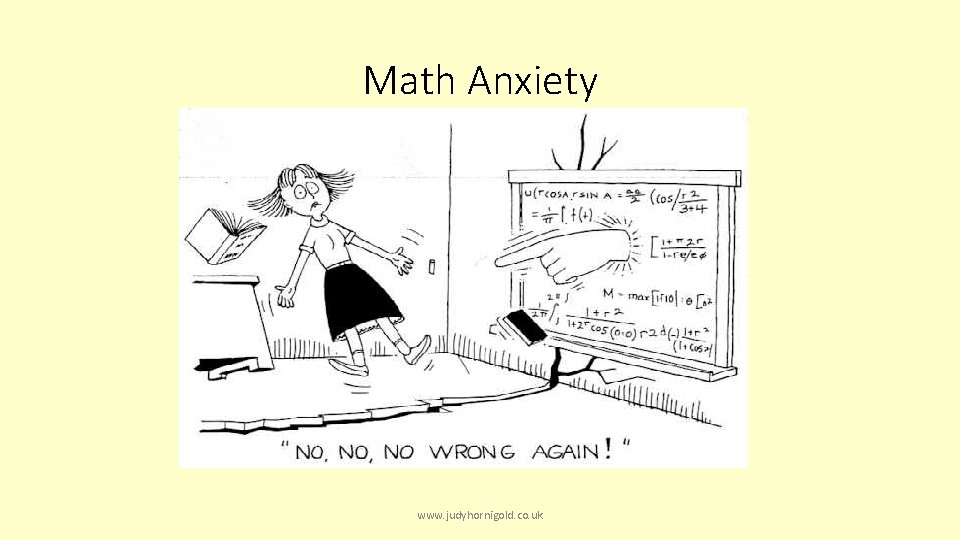
Math Anxiety www. judyhornigold. co. uk
Activity Turn to the person next to you and recall : • -a positive experience of maths at school • -a negative experience of maths www. judyhornigold. co. uk
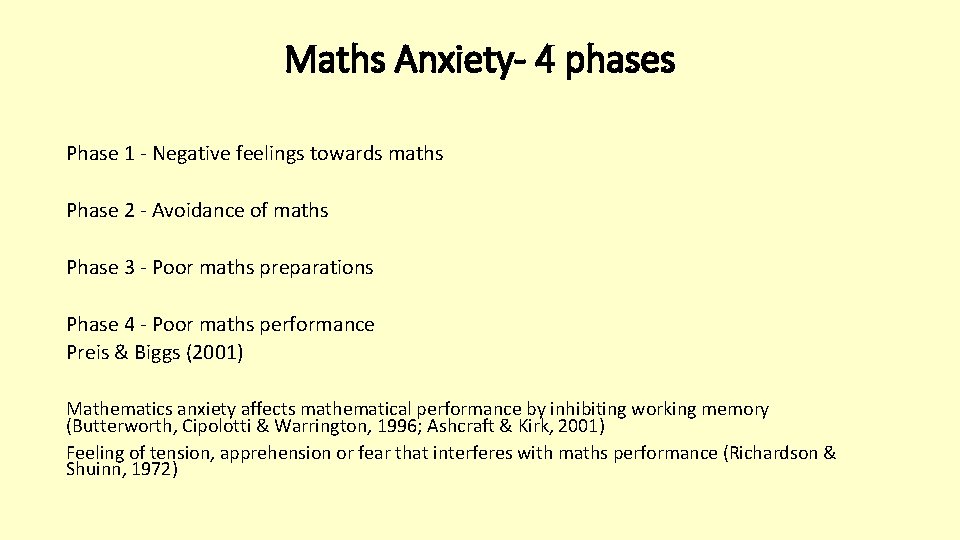
Maths Anxiety- 4 phases Phase 1 - Negative feelings towards maths Phase 2 - Avoidance of maths Phase 3 - Poor maths preparations Phase 4 - Poor maths performance Preis & Biggs (2001) Mathematics anxiety affects mathematical performance by inhibiting working memory (Butterworth, Cipolotti & Warrington, 1996; Ashcraft & Kirk, 2001) Feeling of tension, apprehension or fear that interferes with maths performance (Richardson & Shuinn, 1972)
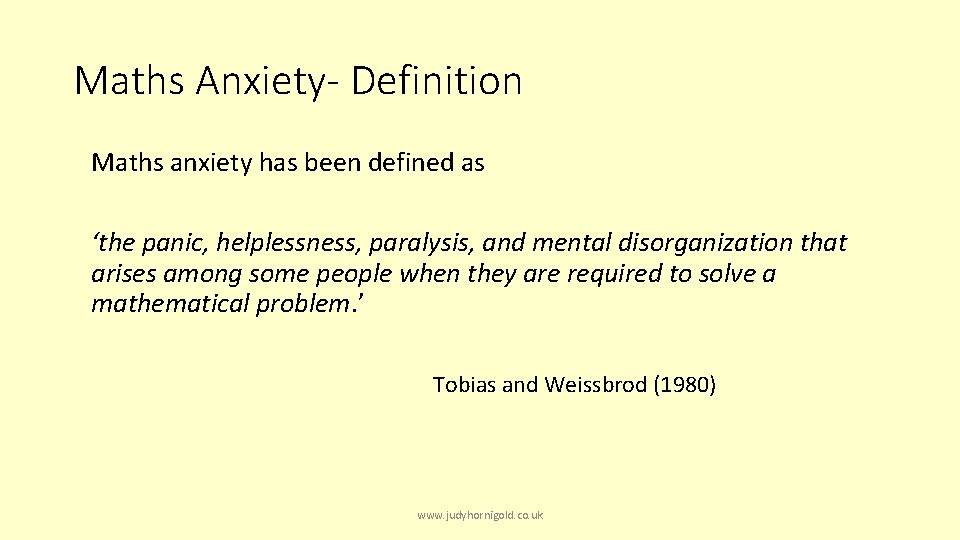
Maths Anxiety- Definition Maths anxiety has been defined as ‘the panic, helplessness, paralysis, and mental disorganization that arises among some people when they are required to solve a mathematical problem. ’ Tobias and Weissbrod (1980) www. judyhornigold. co. uk
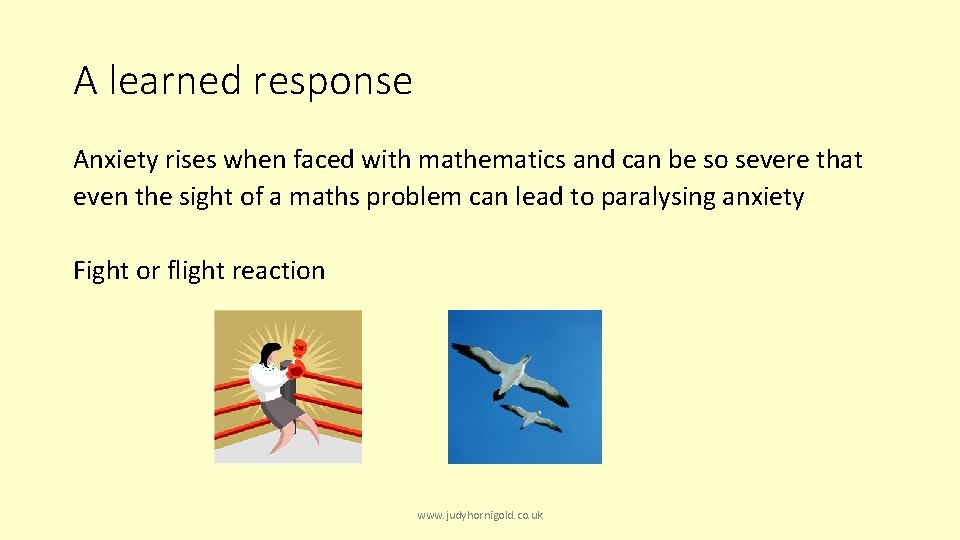
A learned response Anxiety rises when faced with mathematics and can be so severe that even the sight of a maths problem can lead to paralysing anxiety Fight or flight reaction www. judyhornigold. co. uk
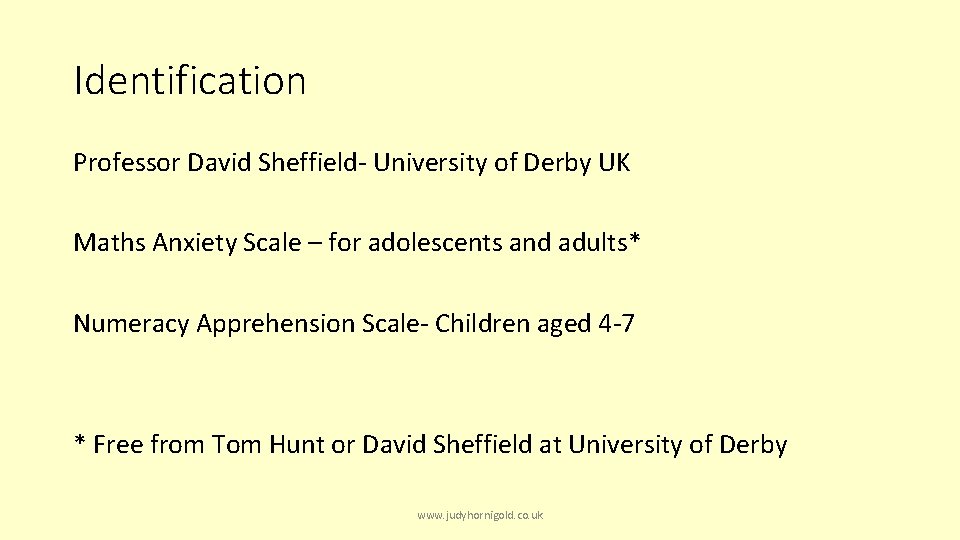
Identification Professor David Sheffield- University of Derby UK Maths Anxiety Scale – for adolescents and adults* Numeracy Apprehension Scale- Children aged 4 -7 * Free from Tom Hunt or David Sheffield at University of Derby www. judyhornigold. co. uk
3 areas of focus • The fear of being evaluated whilst you do some maths- fear of being watched doing maths • Doing everyday maths- splitting a bill in a restaurant • Watching someone else do maths. www. judyhornigold. co. uk
Physical Symptoms of Maths Anxiety • • • queasy stomach, butterflies clammy hands and feet increased or irregular heartbeat muscle tension, clenched fists feeling faint, shortness of breath headache shakiness dry mouth cold sweat, excessive perspiration www. judyhornigold. co. uk
Psychological Symptoms of Maths Anxiety • • • negative self-talk panic or fear worry and apprehension desire to flee the situation a feeling of helplessness or inability to cope www. judyhornigold. co. uk or avoid it altogether
Maths Anxiety can be related to Life Experiences • attitudes of parents, teachers or other people in the learning environment • some specific incident in a student’s maths history which was frightening or embarrassing • poor self-concept caused by past history of failure www. judyhornigold. co. uk
Maths Anxiety can be related to Teaching Techniques Anxiety can be caused by teaching techniques which emphasize: • timed activities • the right answer • speed in getting the answer • competition among students • working in isolation • memorization rather than understanding www. judyhornigold. co. uk
Maths lessons • “Evidence suggests that math anxiety results more from the way the subject is presented than from the subject itself. ” J. Greenwood (1984) www. judyhornigold. co. uk
Activity • Do you have maths anxiety? • What situations make you anxious? • Does your teaching minimise anxiety for your learners? www. judyhornigold. co. uk
How to over come maths anxiety • Techniques • Foster the idea that mistakes are good • Don’t emphasise speed in Maths • Spend time developing number sense at an early age • Encourage a relaxed participatory atmosphere ( Number Talks) • Use concrete manipulatives in a way that develops understanding ( Singapore Maths) www. judyhornigold. co. uk
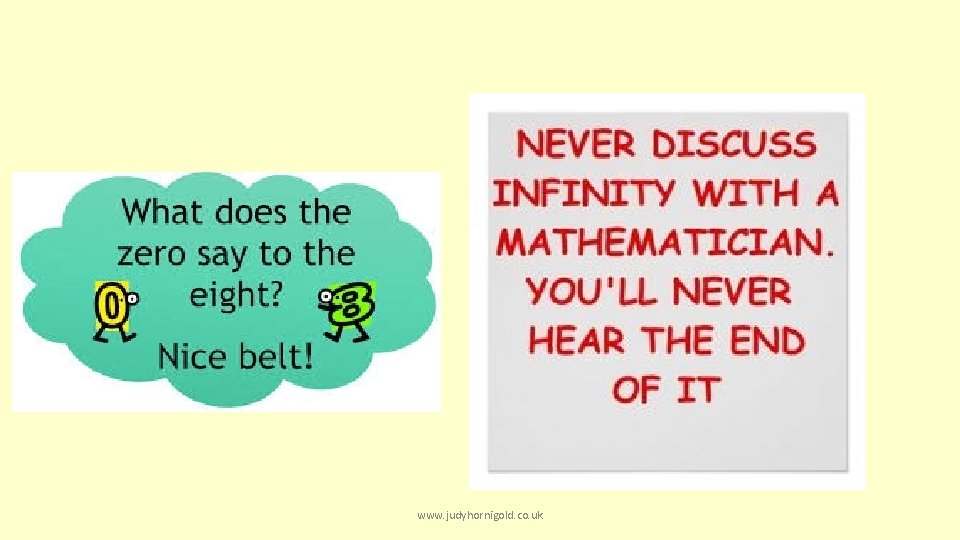
Techniques to overcome Maths anxiety David Sheffield , University of Derby • Short targeted intervention- 20 minutes for 5 days • Writing down your worries- based on Emotion Regulation Theory (Klein and Boals 2001) • Reappraisal of anxiety- Beltzer, Nock, Peter and Jamieson (2014) Deep breathing/Slow breathing Imagining Safe place Humour www. judyhornigold. co. uk
www. judyhornigold. co. uk
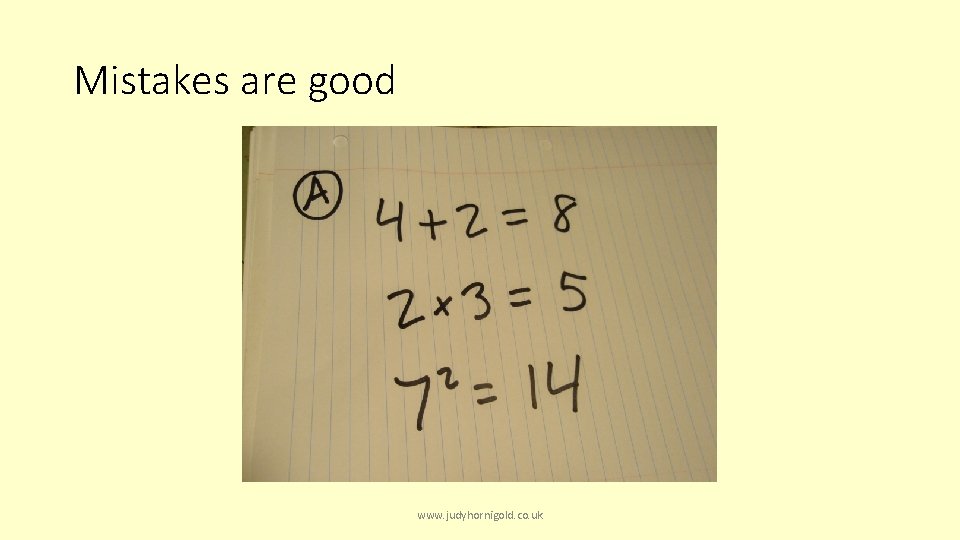
Mistakes are good www. judyhornigold. co. uk
www. judyhornigold. co. uk 20
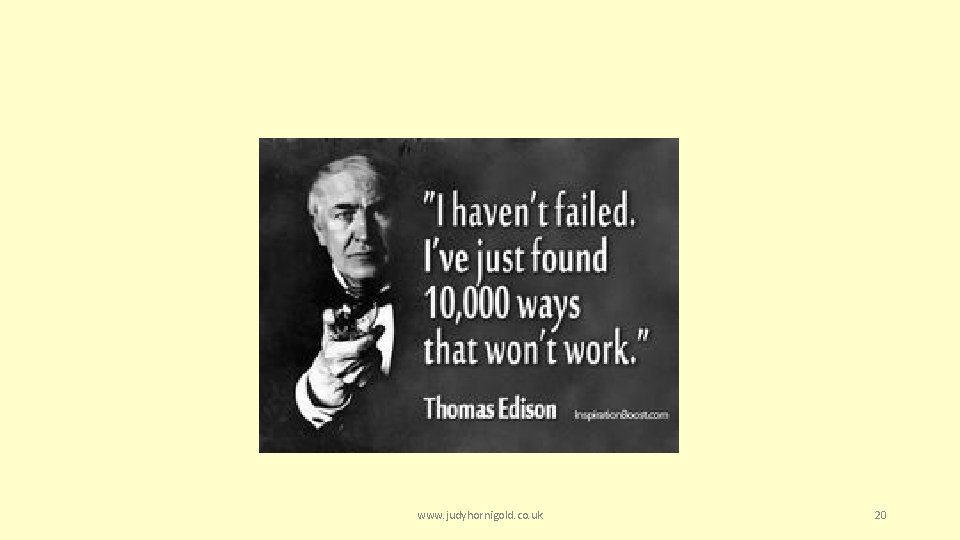
Mistakes • ‘Every time a student makes a mistake in maths they grow a new synapse’ Carol Dweck www. judyhornigold. co. uk
Mistakes matter • Mistakes are vital in maths • New data has shown that the brain grows when a mistake is made • No growth when the answer is correct www. judyhornigold. co. uk
Mistakes are good • Move from a performance culture to one where tasks are open and promote growth • Give challenging work • Value persistence www. judyhornigold. co. uk

Activity www. judyhornigold. co. uk
Does it matter how quickly we can answer? • Research evidence shows that maths should never be associated with speed • Timed tests cause the early onset of maths anxiety for about 1/3 of the children in the class • Being fast at maths is not the same as being good at maths • Most mathematicians think slowly and deeply www. judyhornigold. co. uk
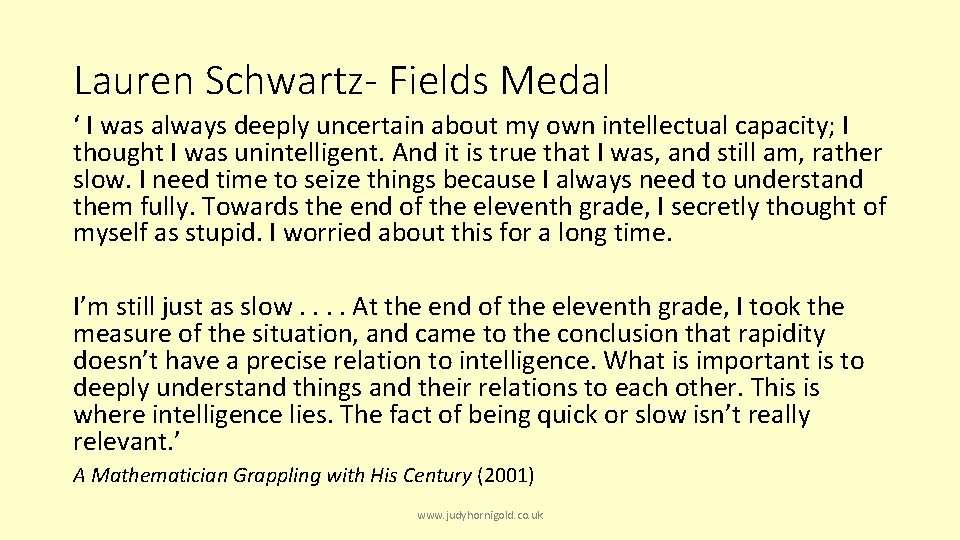
Lauren Schwartz- Fields Medal ‘ I was always deeply uncertain about my own intellectual capacity; I thought I was unintelligent. And it is true that I was, and still am, rather slow. I need time to seize things because I always need to understand them fully. Towards the end of the eleventh grade, I secretly thought of myself as stupid. I worried about this for a long time. I’m still just as slow. . At the end of the eleventh grade, I took the measure of the situation, and came to the conclusion that rapidity doesn’t have a precise relation to intelligence. What is important is to deeply understand things and their relations to each other. This is where intelligence lies. The fact of being quick or slow isn’t really relevant. ’ A Mathematician Grappling with His Century (2001) www. judyhornigold. co. uk
Mindset How important are the ideas that students hold about their own ability? www. judyhornigold. co. uk
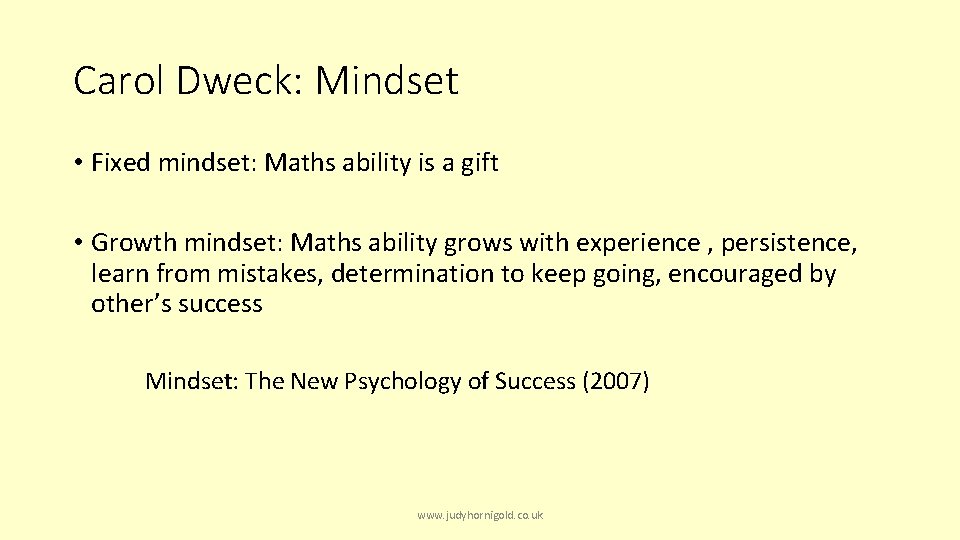
Carol Dweck: Mindset • Fixed mindset: Maths ability is a gift • Growth mindset: Maths ability grows with experience , persistence, learn from mistakes, determination to keep going, encouraged by other’s success Mindset: The New Psychology of Success (2007) www. judyhornigold. co. uk

Carol Dweck We can all be ‘fly highers’ We are not all ‘high fliers’ The higher you want to build the deeper the foundations need to be www. judyhornigold. co. uk
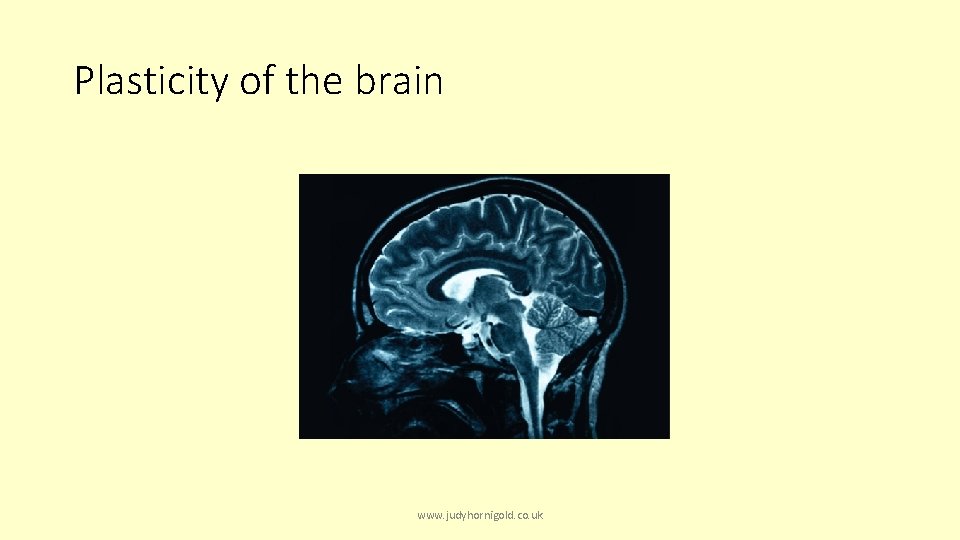
Plasticity of the brain www. judyhornigold. co. uk
Examples • London taxi drivers • 6 year old epileptic • 3 week training programme- 10 minutes a day www. judyhornigold. co. uk
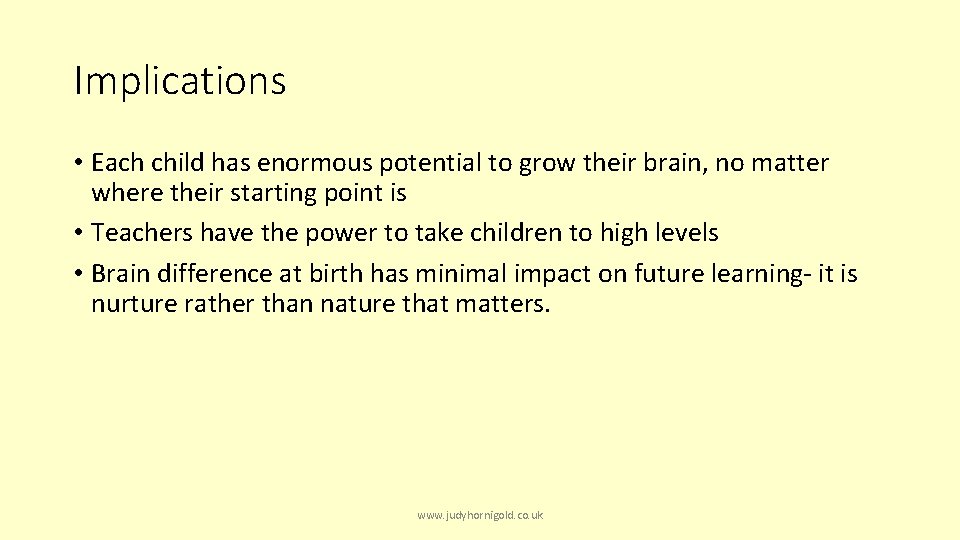
Implications • Each child has enormous potential to grow their brain, no matter where their starting point is • Teachers have the power to take children to high levels • Brain difference at birth has minimal impact on future learning- it is nurture rather than nature that matters. www. judyhornigold. co. uk
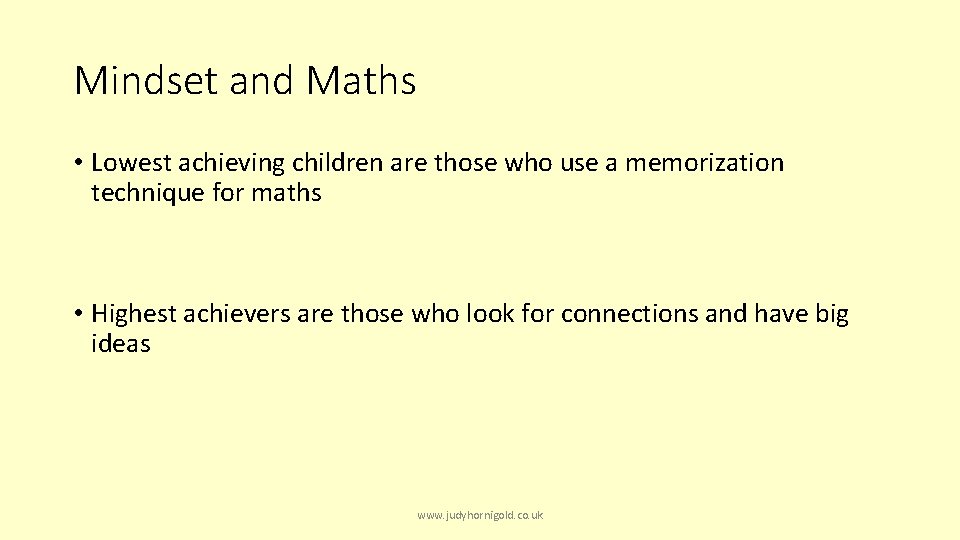
Mindset and Maths • Lowest achieving children are those who use a memorization technique for maths • Highest achievers are those who look for connections and have big ideas www. judyhornigold. co. uk
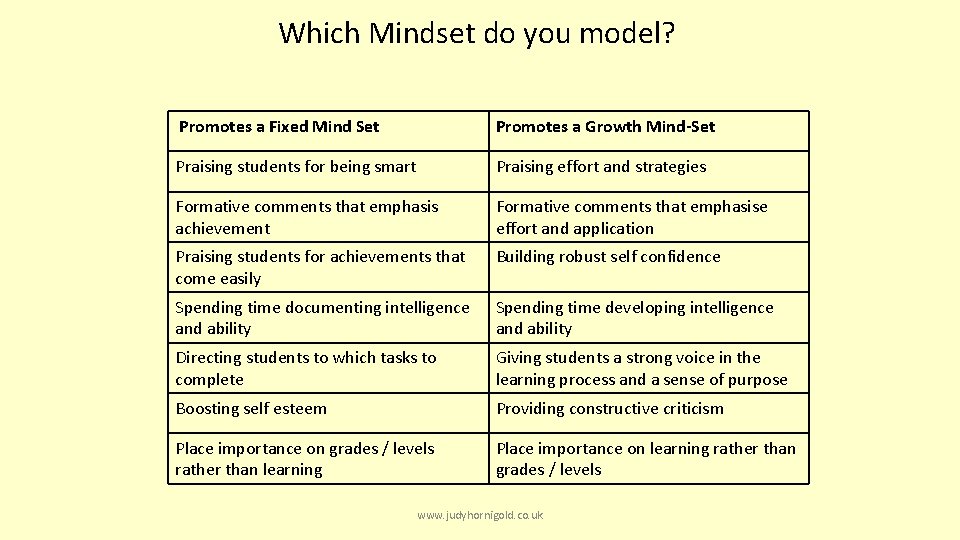
Which Mindset do you model? Promotes a Fixed Mind Set Promotes a Growth Mind-Set Praising students for being smart Praising effort and strategies Formative comments that emphasis achievement Formative comments that emphasise effort and application Praising students for achievements that come easily Building robust self confidence Spending time documenting intelligence and ability Spending time developing intelligence and ability Directing students to which tasks to complete Giving students a strong voice in the learning process and a sense of purpose Boosting self esteem Providing constructive criticism Place importance on grades / levels rather than learning Place importance on learning rather than grades / levels www. judyhornigold. co. uk
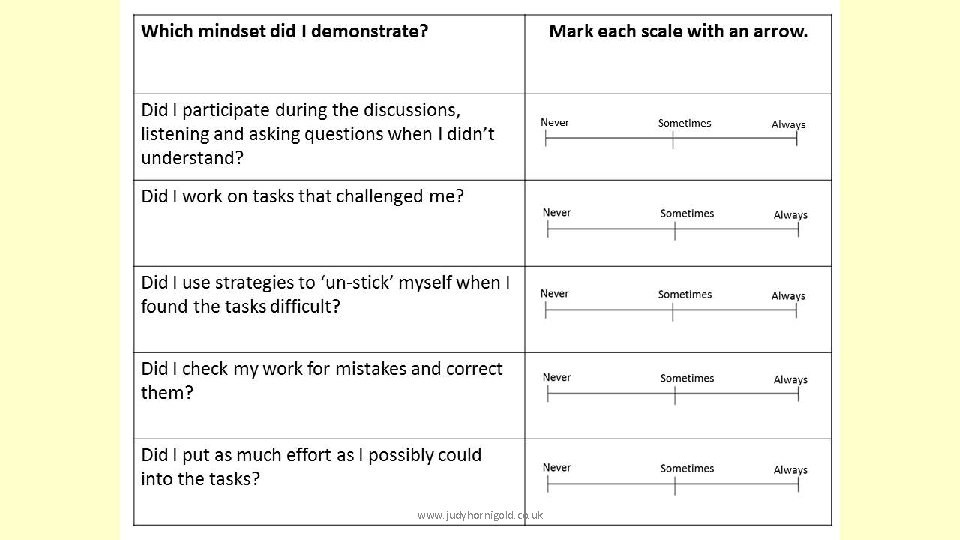
www. judyhornigold. co. uk
Number Sense? Judy Hornigold
What is Number Sense? • “Number sense is an emerging construct that refers to a child’s fluidity and flexibility with numbers, the sense of what numbers mean and an ability to perform mental mathematics and to look at the world and make comparisons. ” Russell Gersten, David Chard Judy Hornigold
What is Number Sense? Example: • 6 is half of 12 • It’s also 3 doubled • 1/3 of 18 • 2 sets of 3 • 3 sets of 2 • 1 more than 5 • 1 less than 7 Judy Hornigold
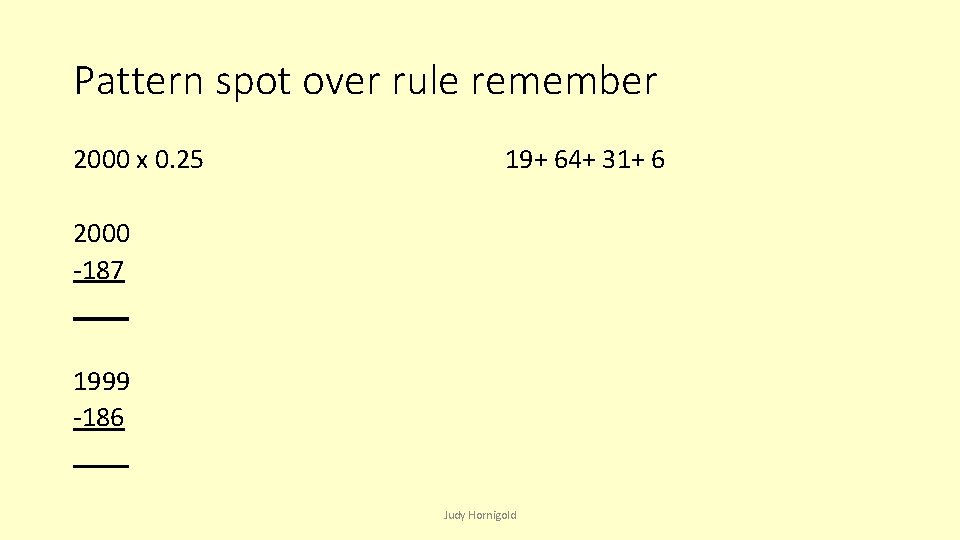
Pattern spot over rule remember 2000 x 0. 25 19+ 64+ 31+ 6 2000 -187 ____ 1999 -186 ____ Judy Hornigold
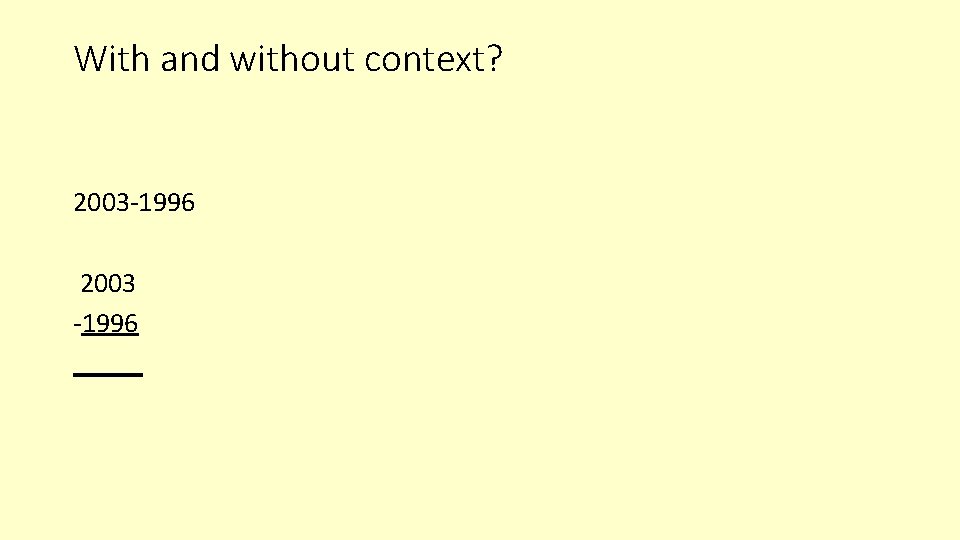
With and without context? 2003 -1996 2003 -1996 _____
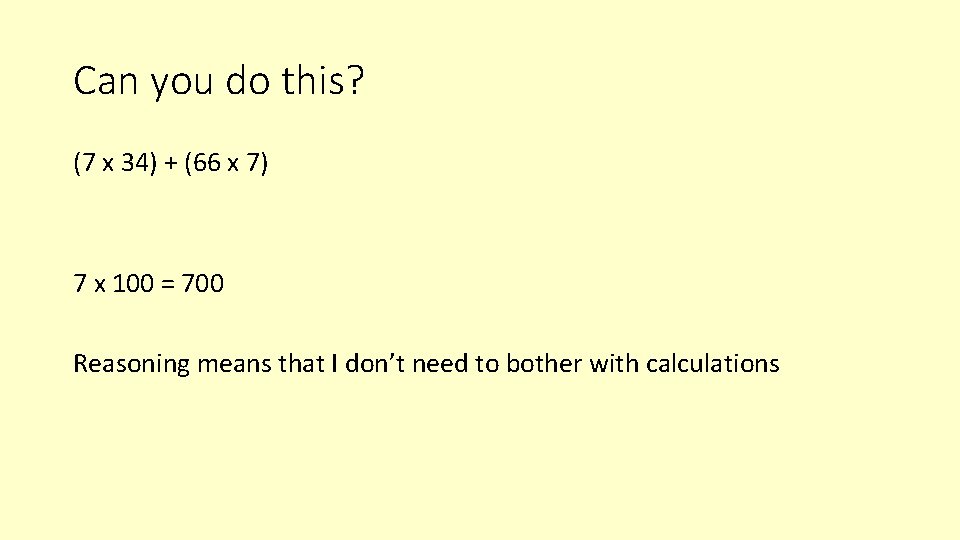
Can you do this? (7 x 34) + (66 x 7) 7 x 100 = 700 Reasoning means that I don’t need to bother with calculations
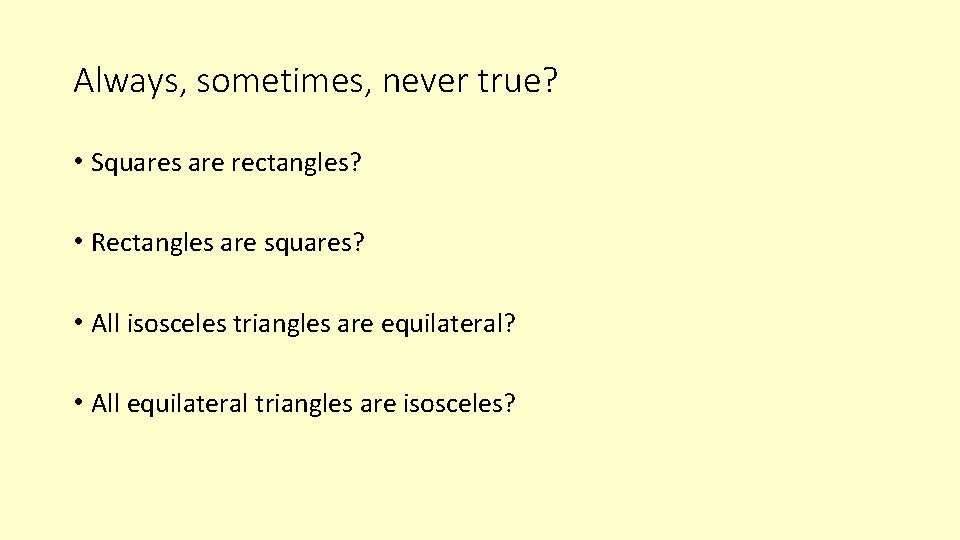
Always, sometimes, never true? • Squares are rectangles? • Rectangles are squares? • All isosceles triangles are equilateral? • All equilateral triangles are isosceles?
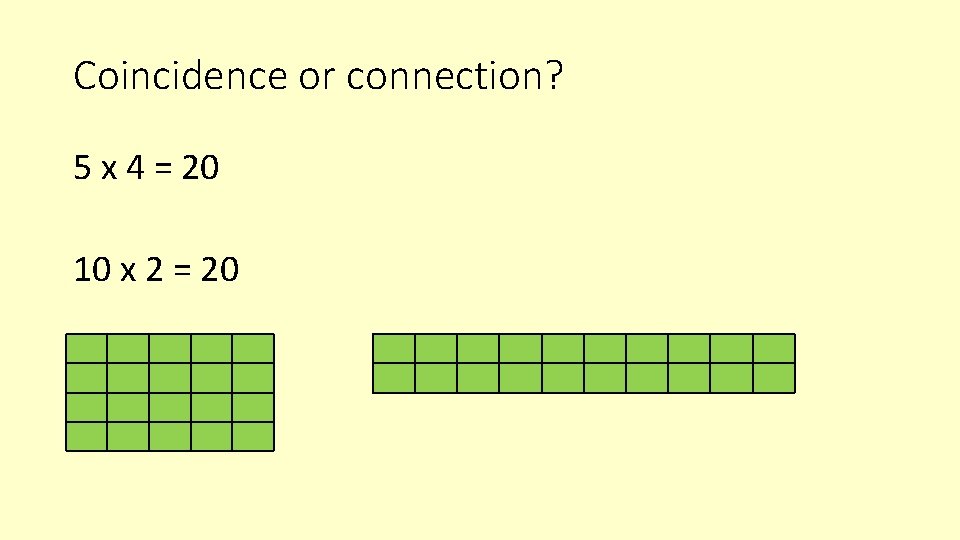
Coincidence or connection? 5 x 4 = 20 10 x 2 = 20
A Checklist of a Numerically Powerful Child 1. Develops meaning for numbers and operations 2. Looks for relationships among numbers and operations. 3. Understands computation strategies and uses them appropriately and efficiently. 4. Makes sense of numerical and quantitative situations. Judy Hornigold
Number talks http: //www. youtube. com/watch? v=la 3_trs. An Ms www. judyhornigold. co. uk
What are Number Talks? Number Talks are a valuable classroom routine for: • making sense of mathematics • developing efficient computation strategies • communicating reasoning and proving solutions www. judyhornigold. co. uk
What are Number Talks? • 5 -15 minute classroom discussions • Ongoing • Most effective if done every day www. judyhornigold. co. uk
Number Talk format • Teacher presents a problem • Students figure out possible solutions • Students share their thinking • The class agrees on the answer for the problem www. judyhornigold. co. uk
Example 76+ 25 A problem in which students can decompose numbers to solve 1 ÷ 2/3 A much harder problem! www. judyhornigold. co. uk
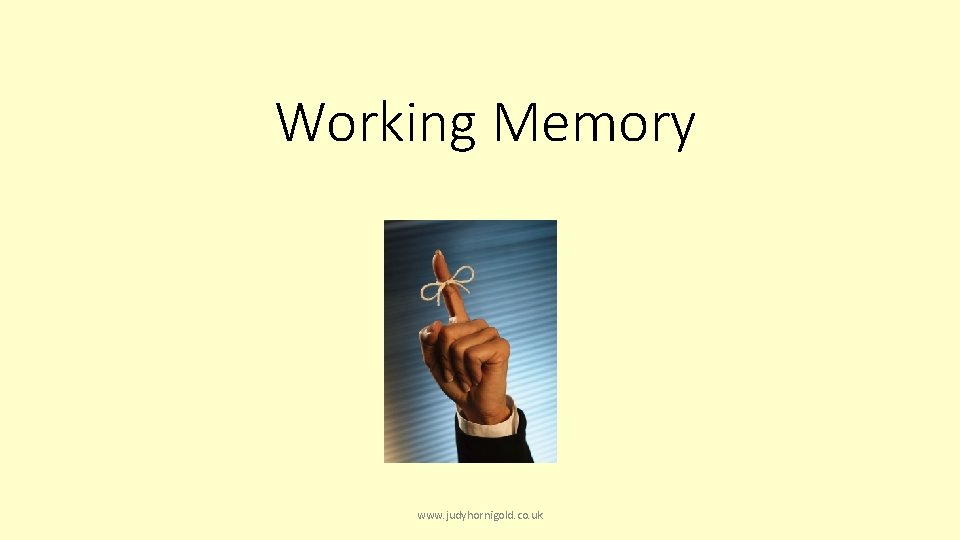
Working Memory www. judyhornigold. co. uk
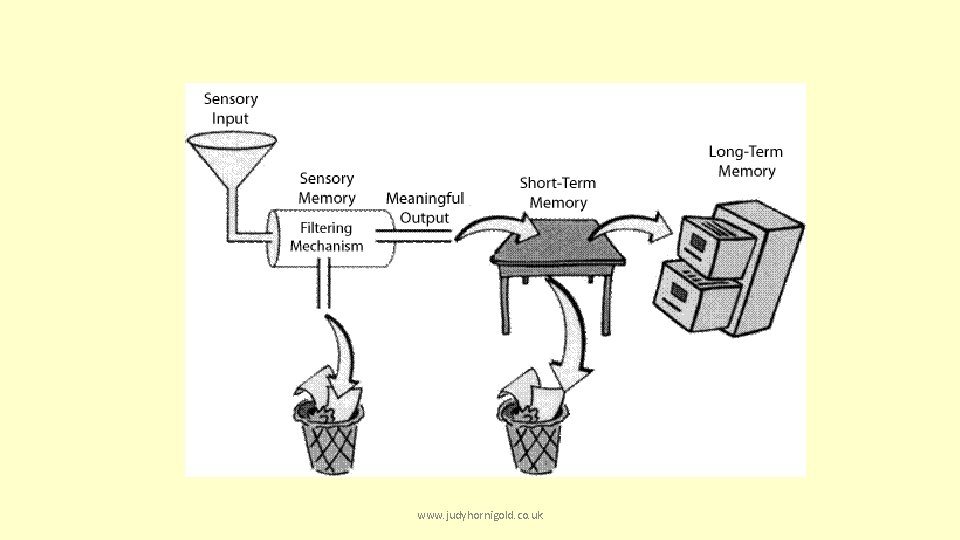
www. judyhornigold. co. uk
Short-term Memory is part of the Working Memory system. It comprises: • Visuo-spatial memory • Verbal memory Used for storing material without manipulating it mentally, or doing something else at the same time, § e. g. remembering a telephone number uses verbal short-term memory. § e. g. picking out a top to match the skirt you just bought uses visuo-spatial memory www. judyhornigold. co. uk
Long Term Memory Permanent Storehouse • A system for permanently storing, managing, and retrieving information for later and ongoing use. Items of information stored as long-term memory may be available for a lifetime. • Information which has been registered, encoded, rehearsed, and stored for future retrieval; Material and information retained in LTM underlies cognitive abilities. www. judyhornigold. co. uk
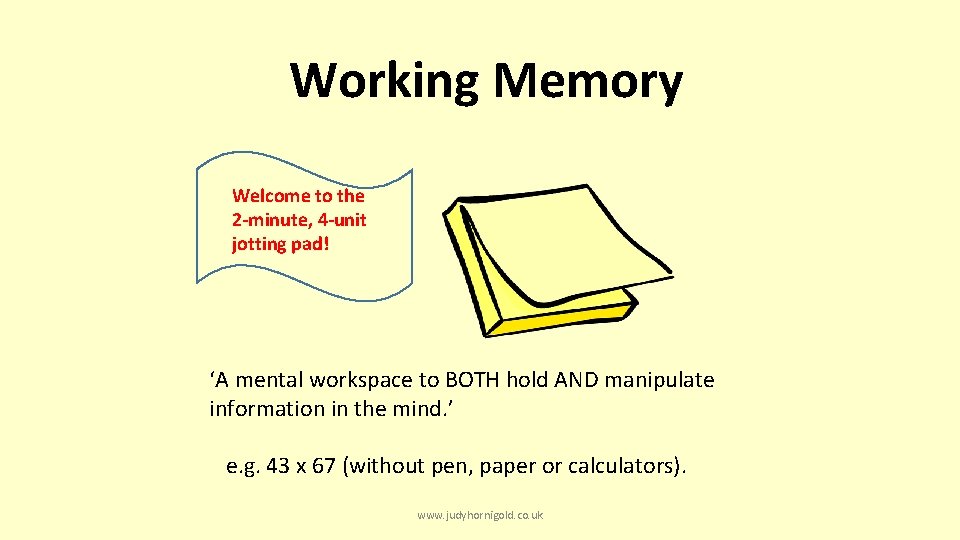
Working Memory Welcome to the 2 -minute, 4 -unit jotting pad! ‘A mental workspace to BOTH hold AND manipulate information in the mind. ’ e. g. 43 x 67 (without pen, paper or calculators). www. judyhornigold. co. uk
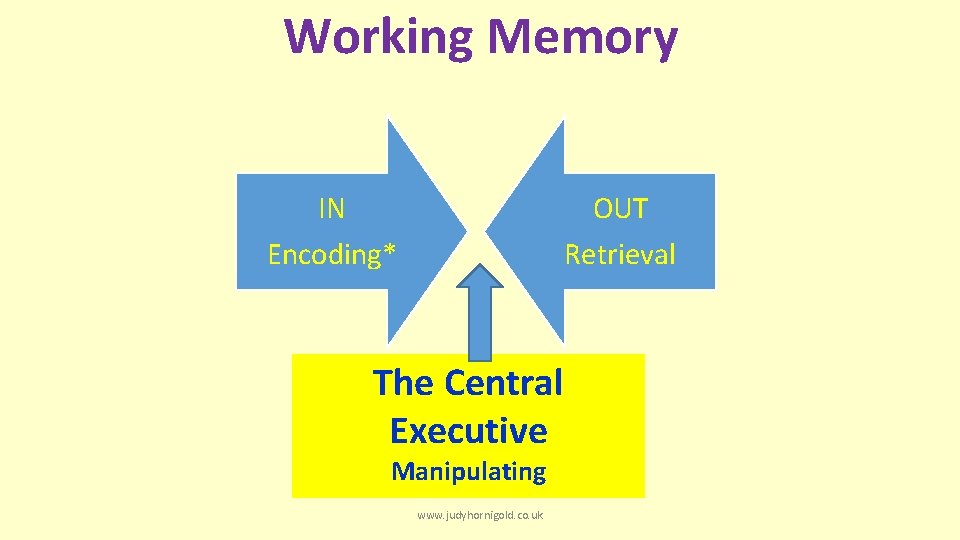
Working Memory IN Encoding* OUT Retrieval The Central Executive Manipulating www. judyhornigold. co. uk
Why is Working Memory Important? Students who struggle to learn academically will almost certainly have working memory difficulties Problems are best defined in terms of: Capacity Time www. judyhornigold. co. uk
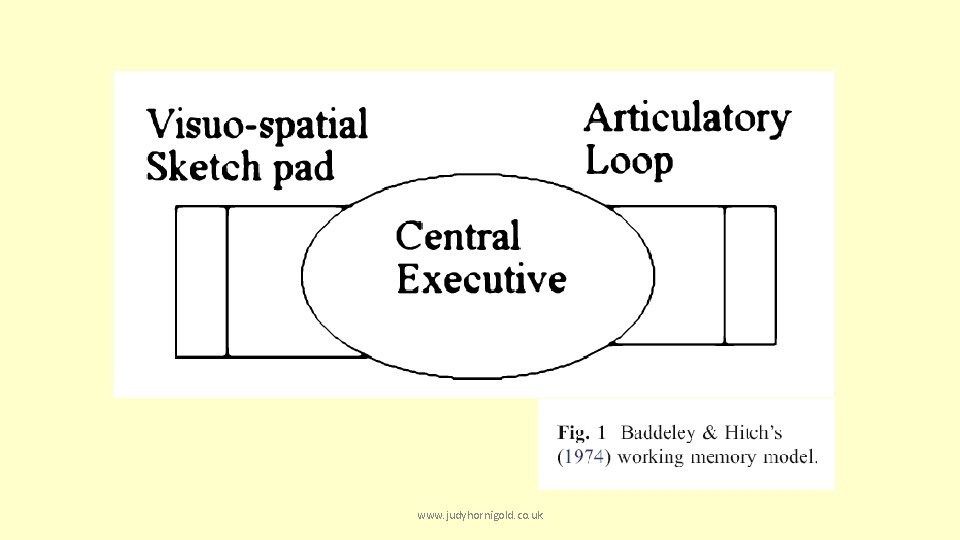
Sub Systems of WM 1. Phonological Loop 2. Visual-Spatial Sketchpad 3. Central Executive www. judyhornigold. co. uk
www. judyhornigold. co. uk
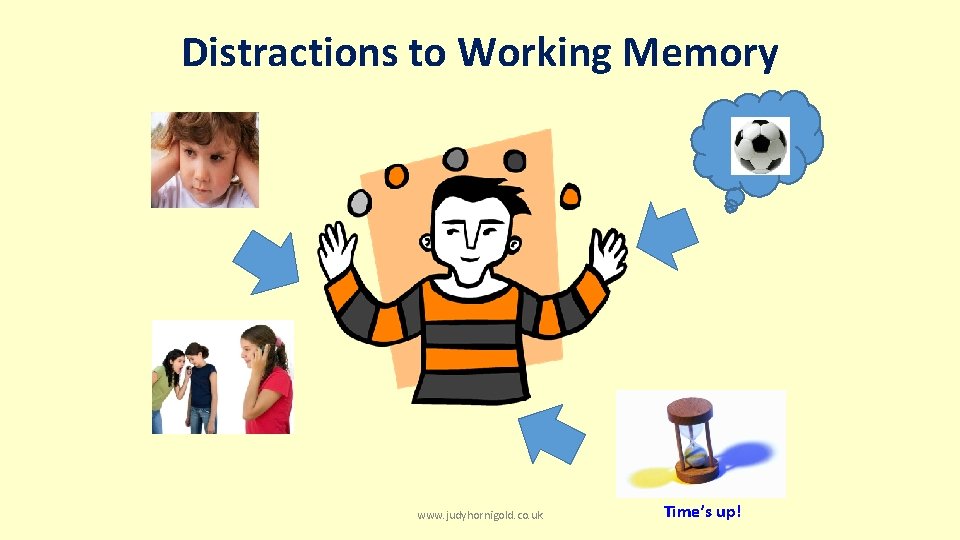
Distractions to Working Memory www. judyhornigold. co. uk Time’s up!
How to improve memory function 3 Ms • How can I make it manageable? • How can I make it multisensory? • What memory aids can be used? www. judyhornigold. co. uk
Manageable • Make it manageable- reduce the load on working memory • Avoid dual processing • Look for patterns in and/or chunk series • Work for short periods • Read what you need to read • Plan written work • Use technology www. judyhornigold. co. uk
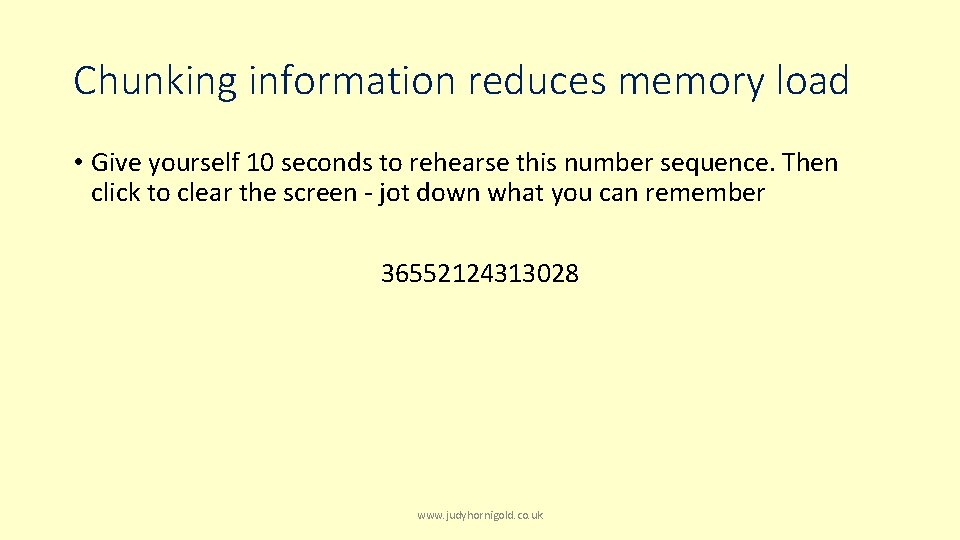
Chunking information reduces memory load • Give yourself 10 seconds to rehearse this number sequence. Then click to clear the screen - jot down what you can remember 36552124313028 www. judyhornigold. co. uk
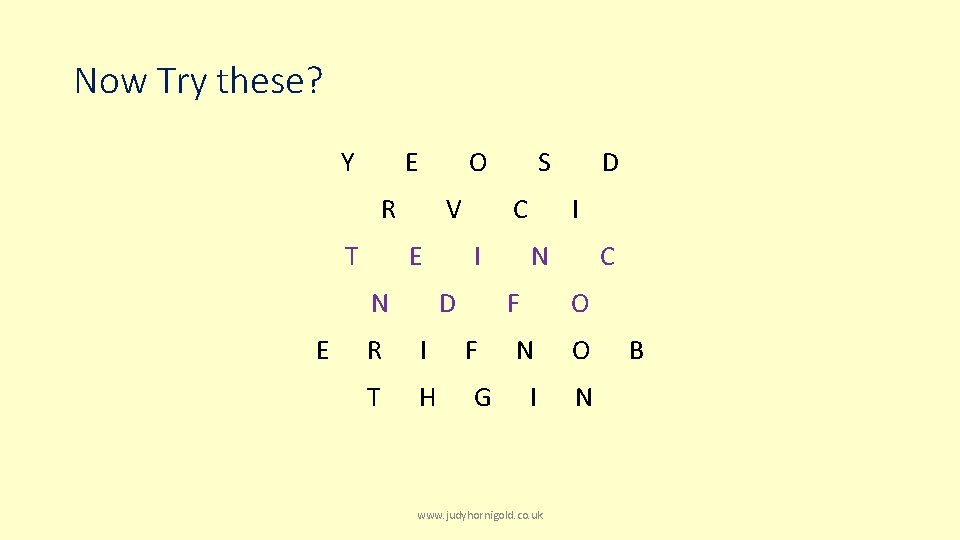
Now Try these? Y E O R T V E N E C I D R I T H S I N F F G D C O N O I N www. judyhornigold. co. uk B
Multi-sensory • Make it multi-sensory- increase the power of encoding by using a variety of stimuli • Use videos and CD Roms • Lists, wall charts • Talk and discuss • Role play • Colour code • Be active www. judyhornigold. co. uk
Memory • Make use of memory aids- to facilitate recall • Notes – sound note app • Record • Review/summing up • Visual imagery • Transfer from left to right side www. judyhornigold. co. uk
How to make things more memorable • For information to stay in the memory it must be clearly and firmly registered • Registration needs to be: • Clear and unambiguous • Rehearsed and reinforced • Understood and connected to existing information • Actively attended to www. judyhornigold. co. uk
What do we remember most in any period of learning • Information at the beginning and at the end • Information associated with other information • Extraordinary things • Repeated information • Information that links to us personally www. judyhornigold. co. uk
What we remember least • Information presented in the middle • Anything that is not outstanding in any way • Anything that is not associated or linked www. judyhornigold. co. uk
Implications • Learning periods should be short- 10 to 20 minutes • Breaks- used to put new learning in the context of old learning- links made • Extraordinary- unusual- engaging and motivating www. judyhornigold. co. uk
Other ways to help • Make learning experiences simultaneously multisensory • Make learning meaningful by: • using discovery as a strategy • teaching a structured programme that links new learning to past learning www. judyhornigold. co. uk
Explicitly address memory difficulties: • teach how to discard irrelevant information • foster the ability to categorise • foster the ability to make connections to aid memory • practise tracking tasks that encourage target words and symbols to be held in memory during the search www. judyhornigold. co. uk
References • Tobias, S. , & Weissbrod, C. (1980). Anxiety and mathematics: an update. Harvard Educational Review, 50(1), 63 -70. • Greenwood, J. (1984). Soundoff: my anxieties about math anxiety. The Mathematics Teacher, 77, 662 -63. • Baddeley, A. D. , & Hitch, G. (1974). Working memory. In G. H. Bower (Ed. ), The psychology of learning and motivation: Advances in research and theory (Vol. 8, pp. 47– 89). New York: Academic Press. • Dweck, C. Mindset: The New Psychology of Success (2007), Ballantine Books • Boaler, J. www. youtubed. com • Hunt, T. E. , Clark-Carter, D. & Sheffield, D, 2011 www. judyhornigold. co. uk

Any Questions? www. judyhornigold. co. uk
- Slides: 73