
SPEED VELOCITY DISTANCE VS TIME GRAPHS Physical Science
- Slides: 19
SPEED, VELOCITY, & DISTANCE VS. TIME GRAPHS Physical Science
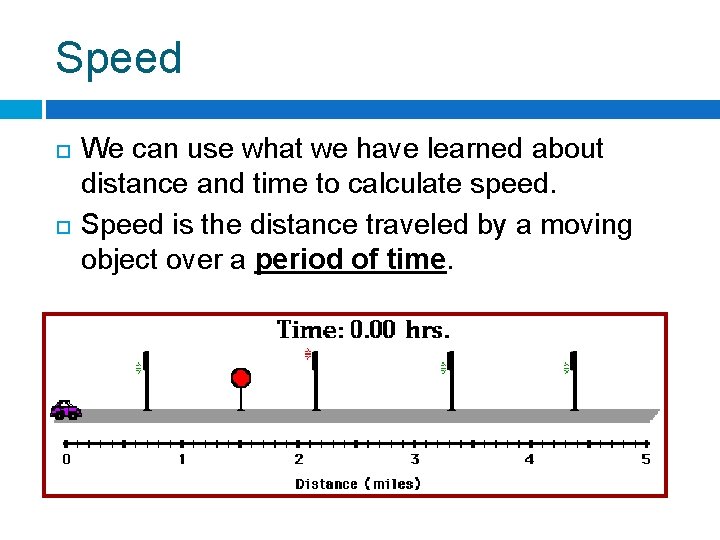
Speed We can use what we have learned about distance and time to calculate speed. Speed is the distance traveled by a moving object over a period of time.
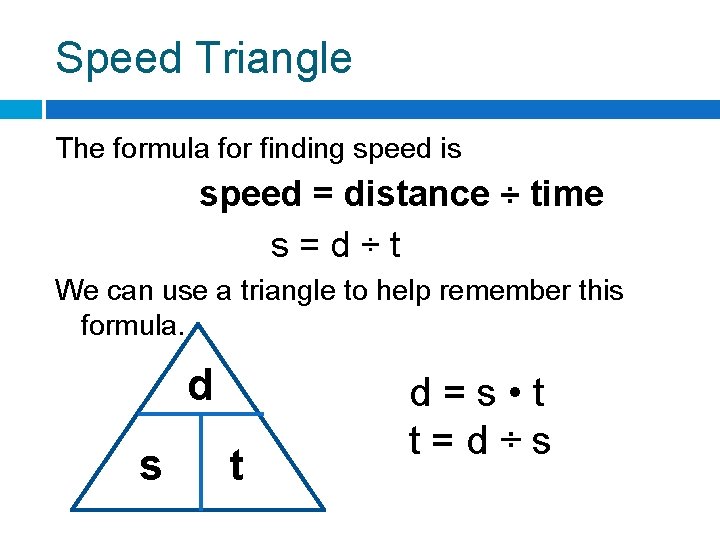
Speed Triangle The formula for finding speed is speed = distance ÷ time s=d÷t We can use a triangle to help remember this formula. d s t d=s • t t=d÷s
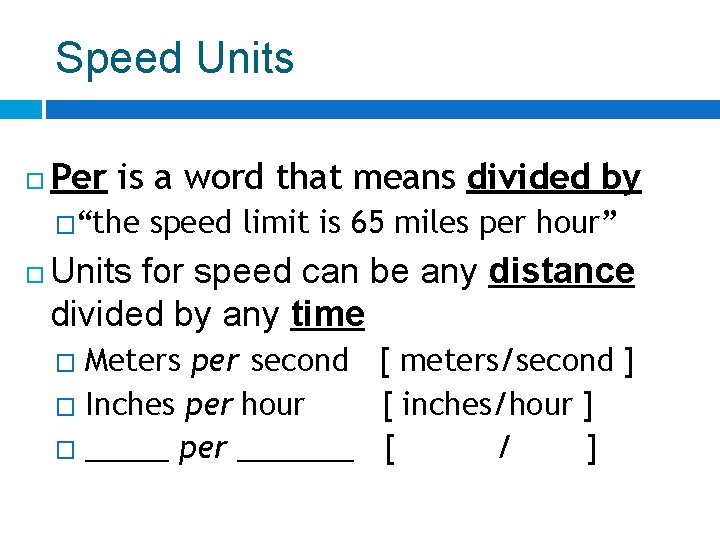
Speed Units Per is a word that means divided by �“the speed limit is 65 miles per hour” Units for speed can be any distance divided by any time Meters per second [ meters/second ] � Inches per hour [ inches/hour ] � _____ per _______ [ / ] �
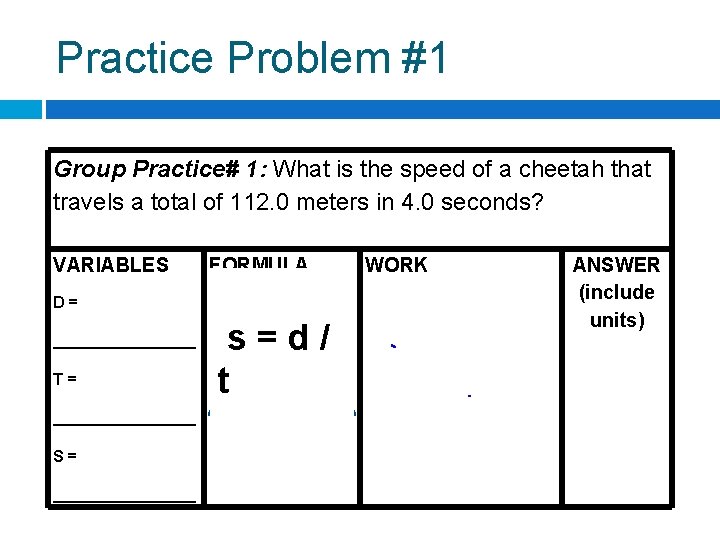
Practice Problem #1 Group Practice# 1: What is the speed of a cheetah that travels a total of 112. 0 meters in 4. 0 seconds? VARIABLES FORMULA D= ________ T= ________ S= ________ s =Dd / t S T WORK ANSWER (include units)
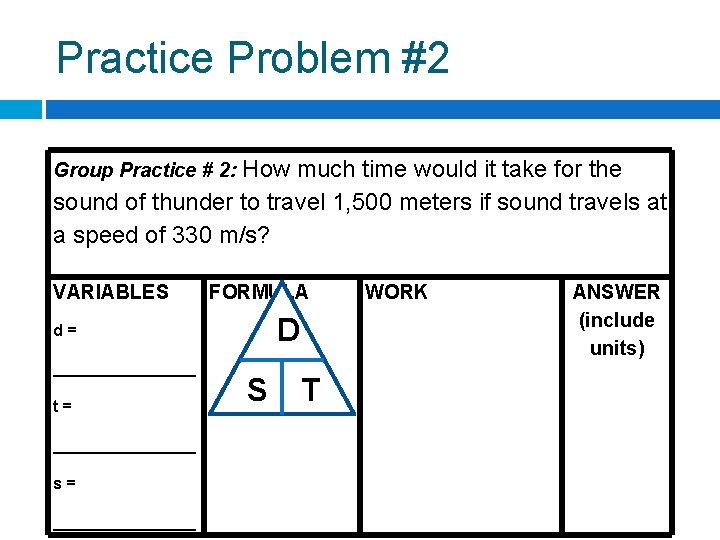
Practice Problem #2 Group Practice # 2: How much time would it take for the sound of thunder to travel 1, 500 meters if sound travels at a speed of 330 m/s? VARIABLES FORMULA D d= ________ t= ________ s= ________ S T WORK ANSWER (include units)
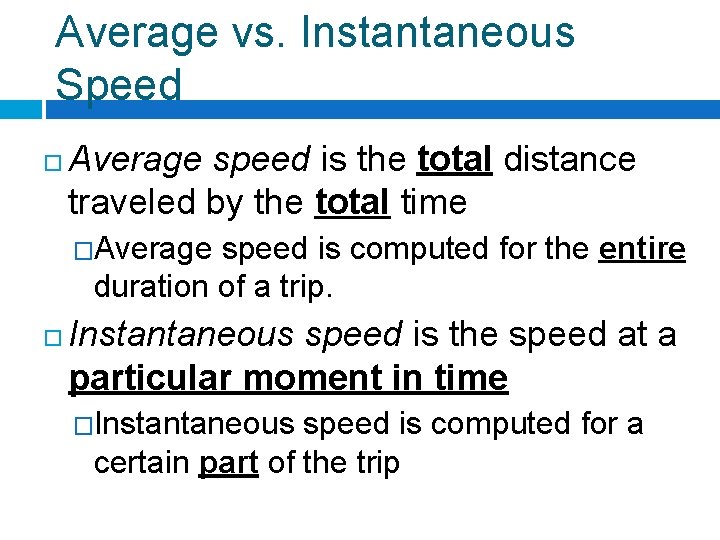
Average vs. Instantaneous Speed Average speed is the total distance traveled by the total time �Average speed is computed for the entire duration of a trip. Instantaneous speed is the speed at a particular moment in time �Instantaneous speed is computed for a certain part of the trip
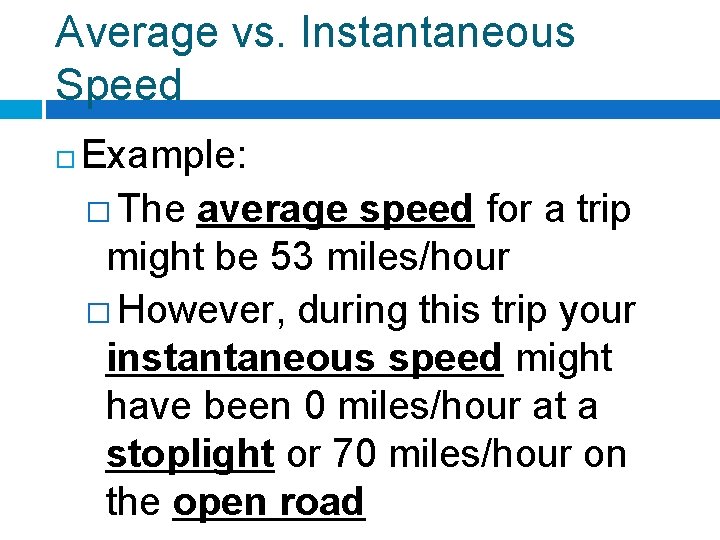
Average vs. Instantaneous Speed Example: � The average speed for a trip might be 53 miles/hour � However, during this trip your instantaneous speed might have been 0 miles/hour at a stoplight or 70 miles/hour on the open road
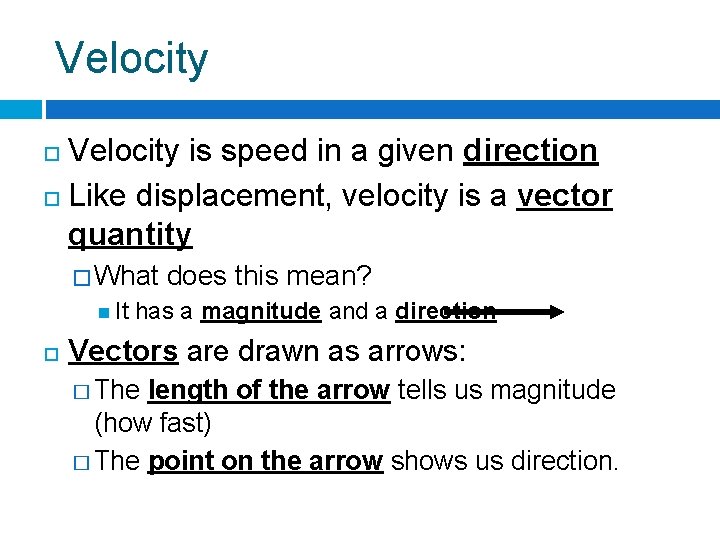
Velocity is speed in a given direction Like displacement, velocity is a vector quantity � What It does this mean? has a magnitude and a direction Vectors are drawn as arrows: � The length of the arrow tells us magnitude (how fast) � The point on the arrow shows us direction.
Velocity cont… We can use the same formula as speed, only now we have to have a direction included � Example: A plane traveled at 3, 000 mph due east Velocity changes when either the magnitude OR direction changes
Remember: Motion is a change in position measured by distance and time. Speed tells us the rate at which an object moves. Velocity tells the speed and direction of a moving object.
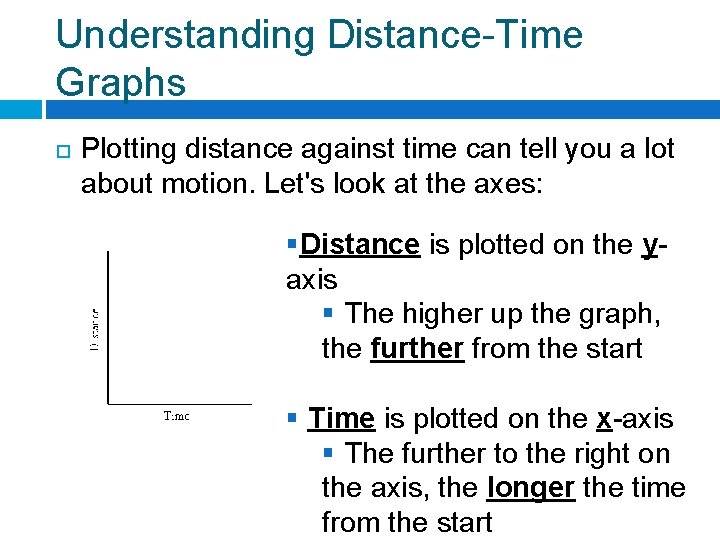
Understanding Distance-Time Graphs Plotting distance against time can tell you a lot about motion. Let's look at the axes: §Distance is plotted on the yaxis § The higher up the graph, the further from the start § Time is plotted on the x-axis § The further to the right on the axis, the longer the time from the start
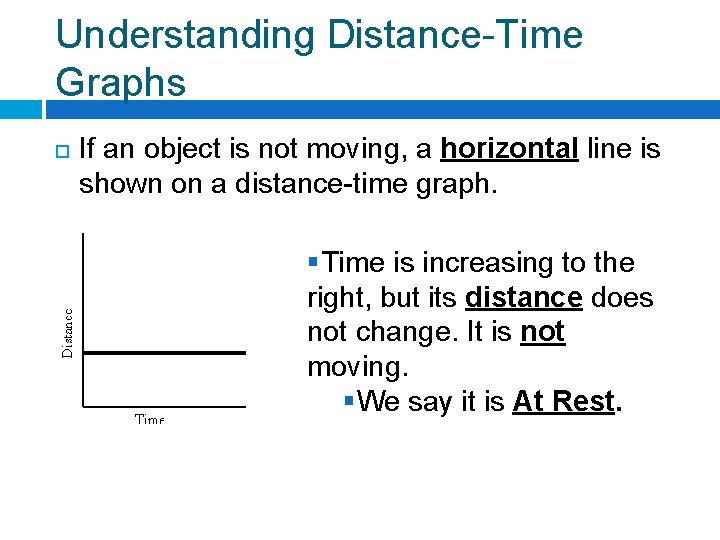
Understanding Distance-Time Graphs If an object is not moving, a horizontal line is shown on a distance-time graph. §Time is increasing to the right, but its distance does not change. It is not moving. §We say it is At Rest.
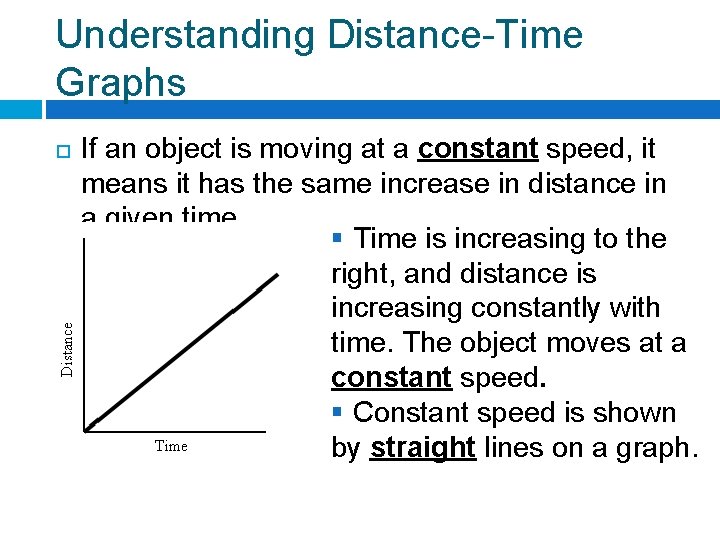
Understanding Distance-Time Graphs If an object is moving at a constant speed, it means it has the same increase in distance in a given time. § Time is increasing to the right, and distance is increasing constantly with time. The object moves at a constant speed. § Constant speed is shown by straight lines on a graph.
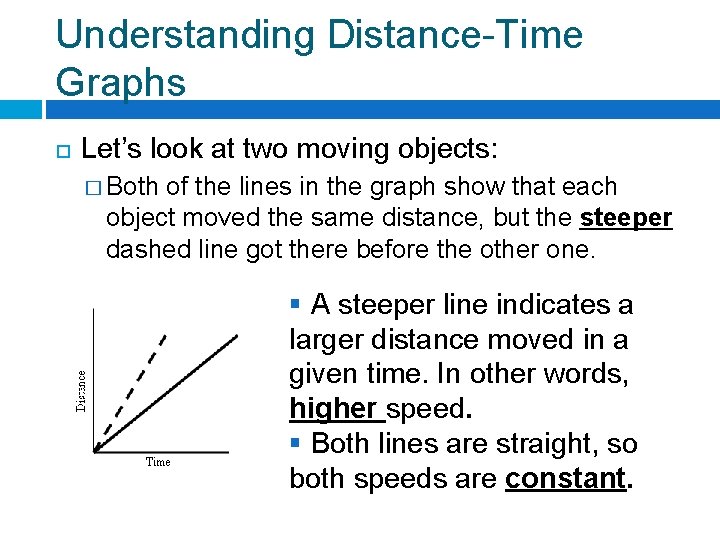
Understanding Distance-Time Graphs Let’s look at two moving objects: � Both of the lines in the graph show that each object moved the same distance, but the steeper dashed line got there before the other one. § A steeper line indicates a larger distance moved in a given time. In other words, higher speed. § Both lines are straight, so both speeds are constant.
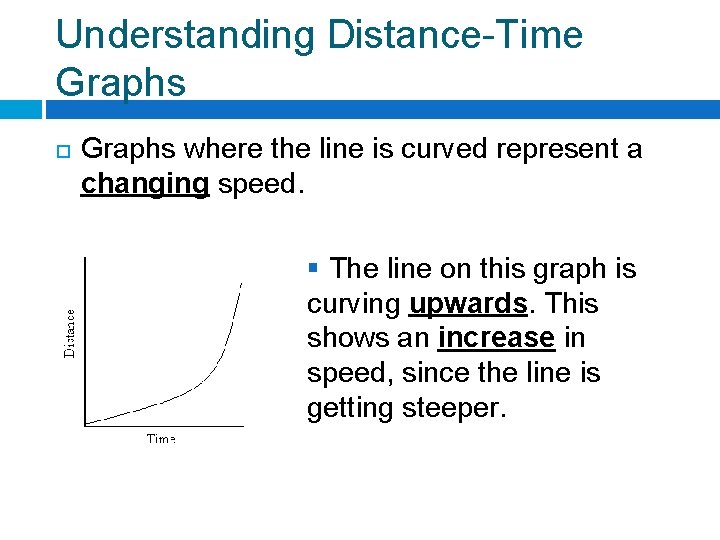
Understanding Distance-Time Graphs where the line is curved represent a changing speed. § The line on this graph is curving upwards. This shows an increase in speed, since the line is getting steeper.
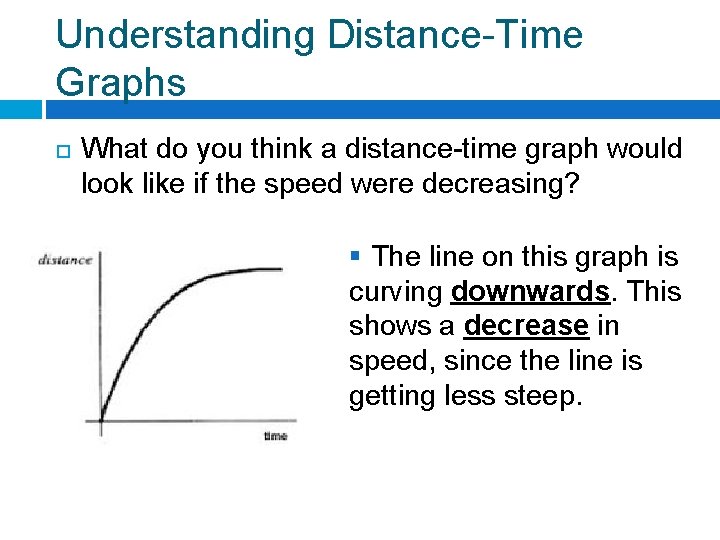
Understanding Distance-Time Graphs What do you think a distance-time graph would look like if the speed were decreasing? § The line on this graph is curving downwards. This shows a decrease in speed, since the line is getting less steep.
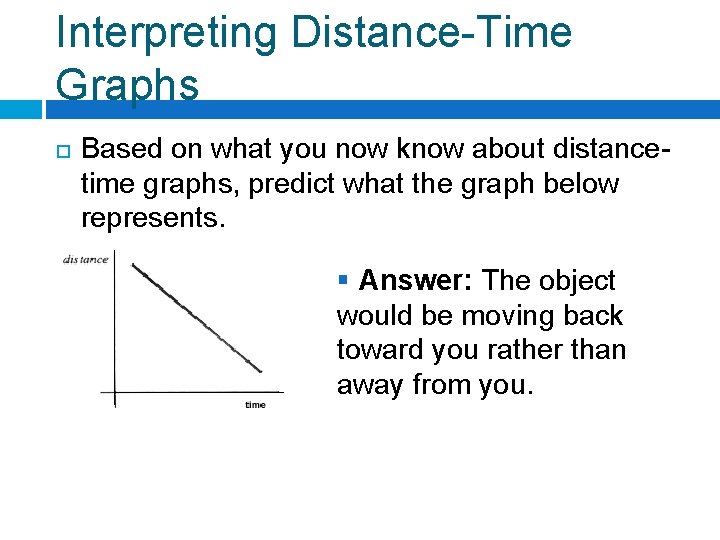
Interpreting Distance-Time Graphs Based on what you now know about distancetime graphs, predict what the graph below represents. § Answer: The object would be moving back toward you rather than away from you.
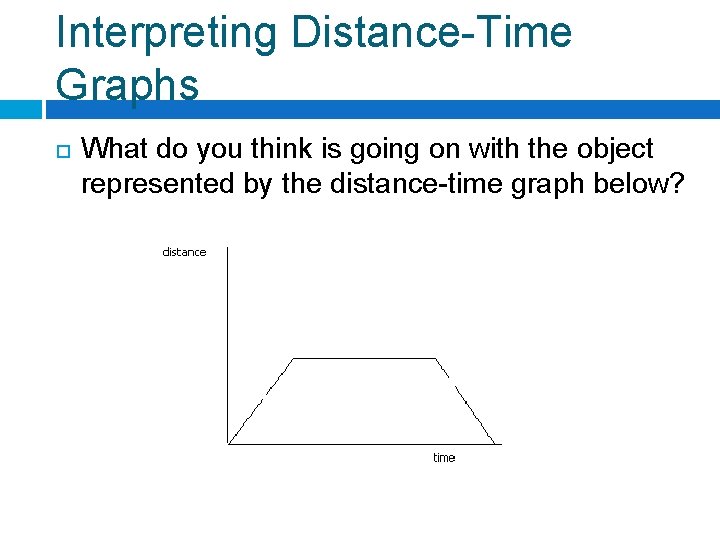
Interpreting Distance-Time Graphs What do you think is going on with the object represented by the distance-time graph below?