
Speed of light The speed of light is

- Slides: 54
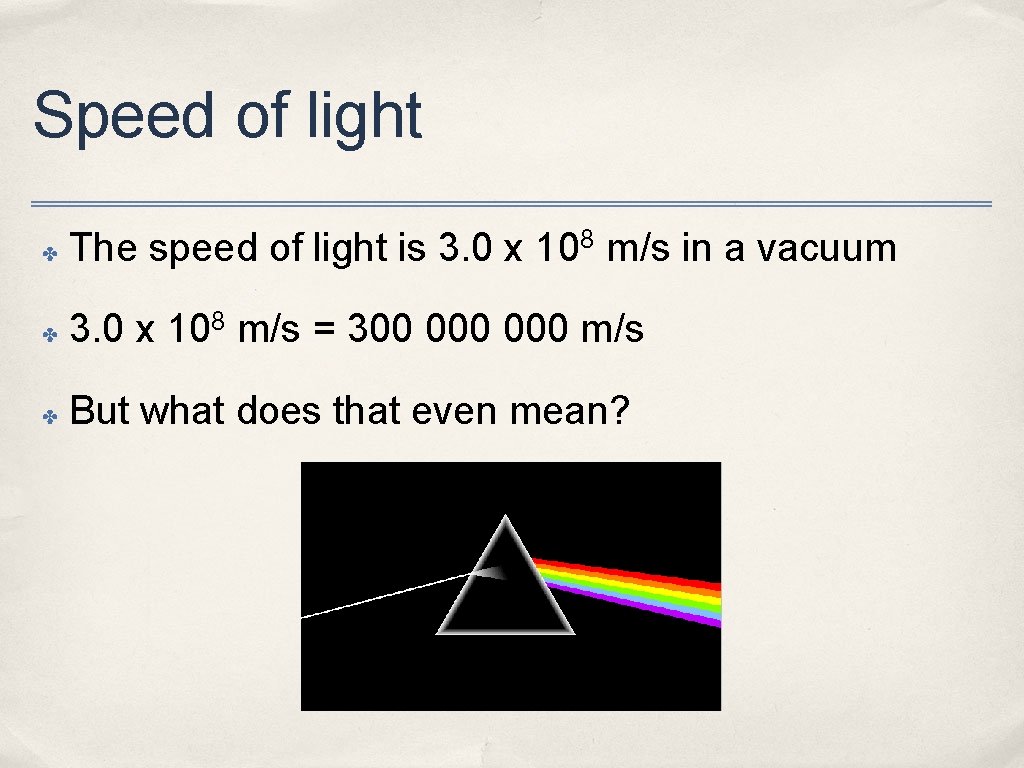
Speed of light ✤ The speed of light is 3. 0 x 108 m/s in a vacuum ✤ 3. 0 x 108 m/s = 300 000 m/s ✤ But what does that even mean?
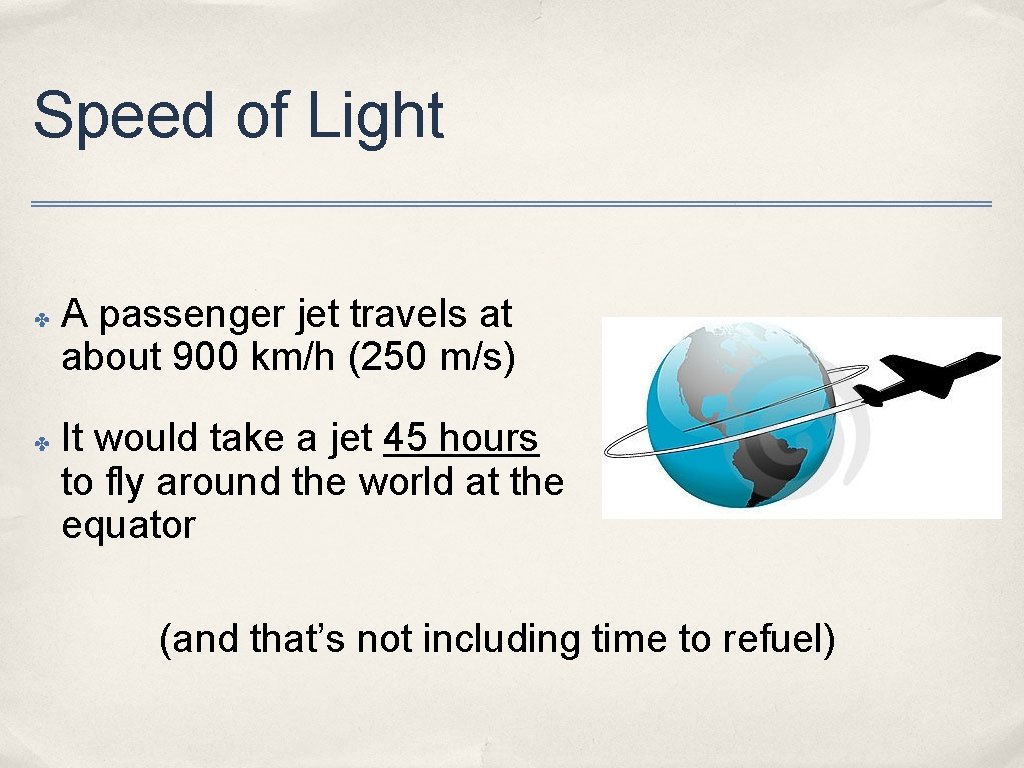
Speed of Light ✤ ✤ A passenger jet travels at about 900 km/h (250 m/s) It would take a jet 45 hours to fly around the world at the equator (and that’s not including time to refuel)
Speed of Light ✤ If we could move at the speed of light, we could circle the earth 7. 5 times in one second
Speed of light ✤ ✤ Okay, but I say the speed of light is 3. 0 x in a vacuum Why did I say “in a vacuum”? 8 10 m/s ?
Imagine This. . . Think, Pair, Share
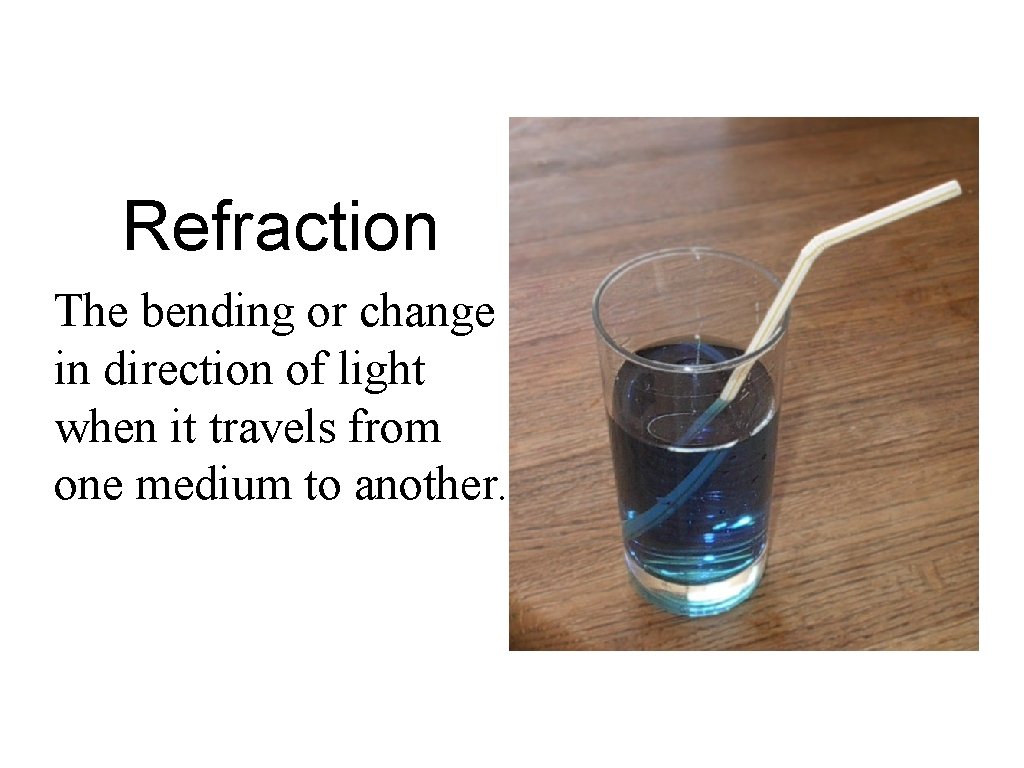
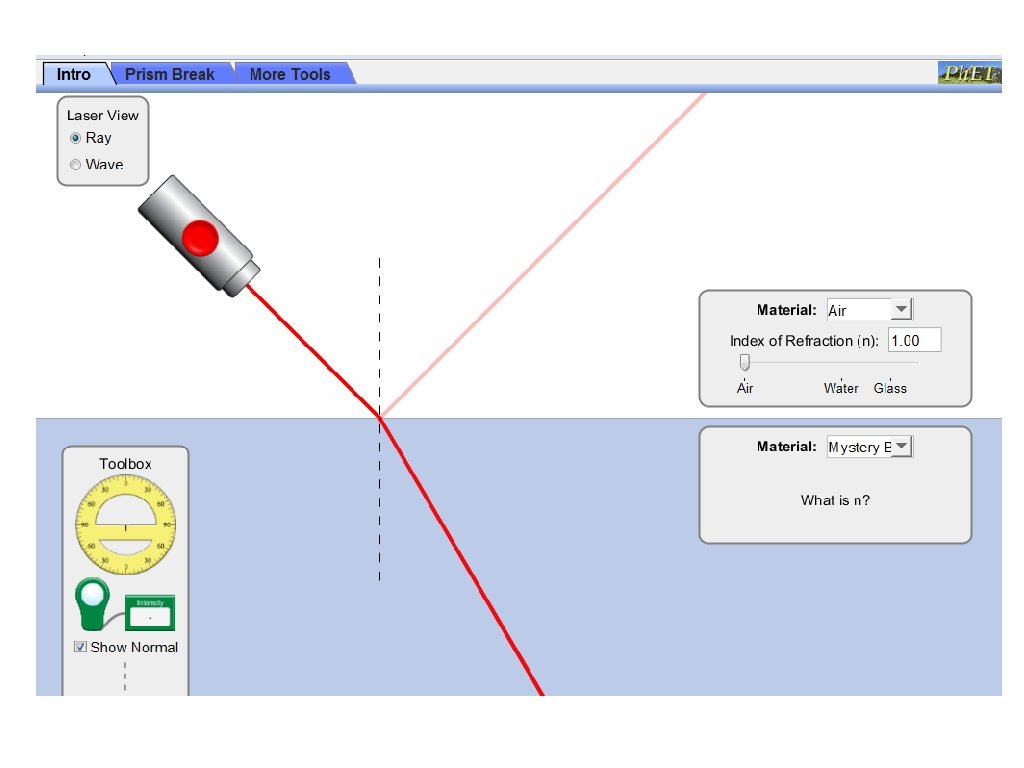
Refraction The bending or change in direction of light when it travels from one medium to another.
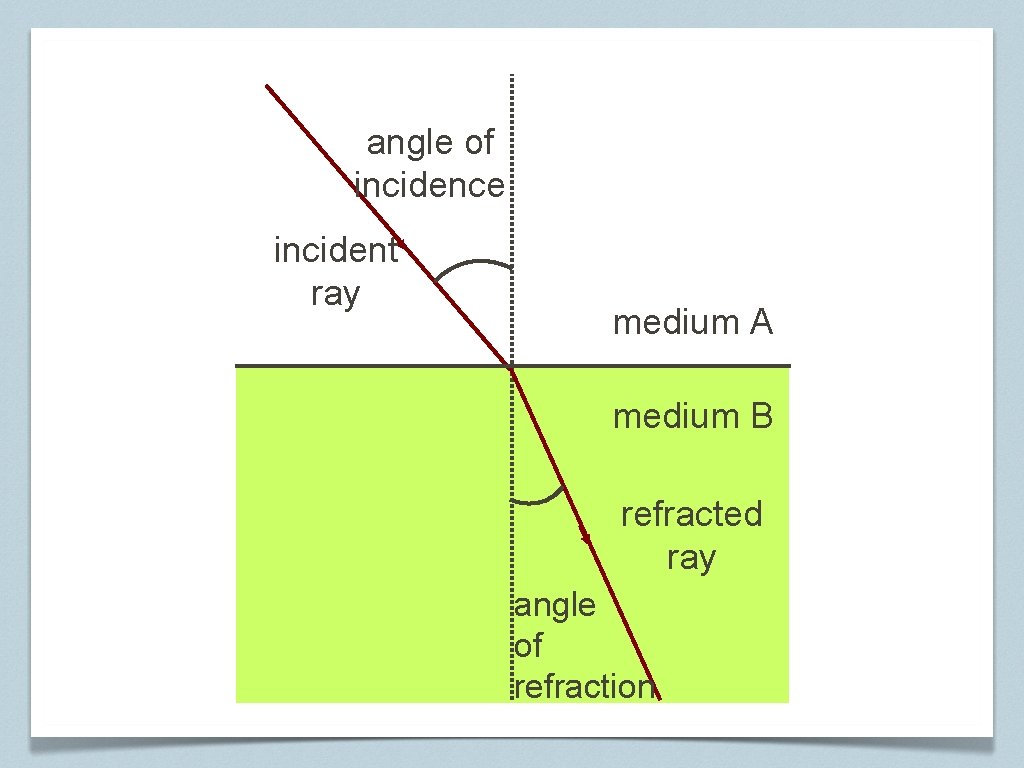
angle of incidence incident ray medium A medium B refracted ray angle of refraction
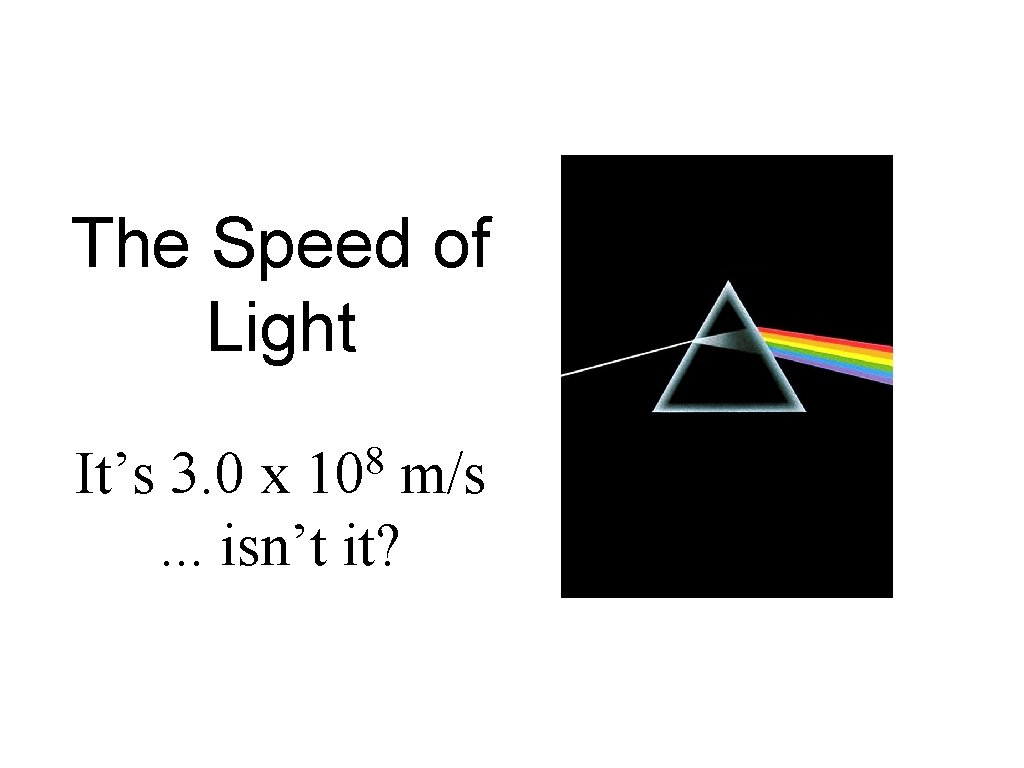
The Speed of Light 8 10 It’s 3. 0 x m/s. . . isn’t it?
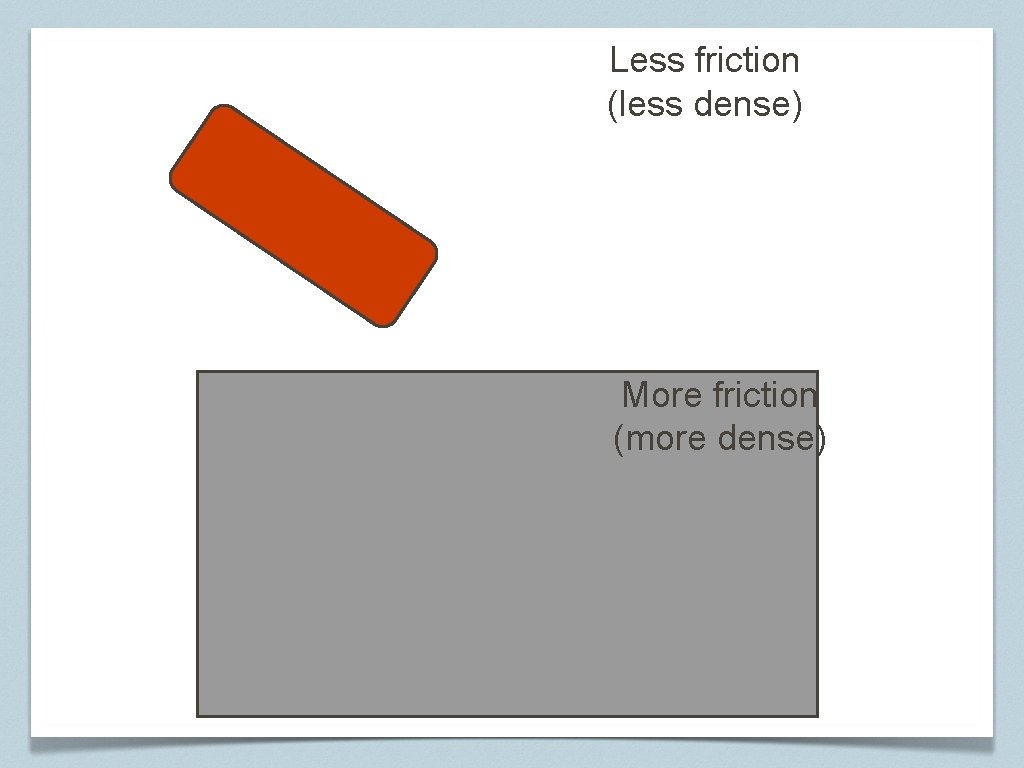
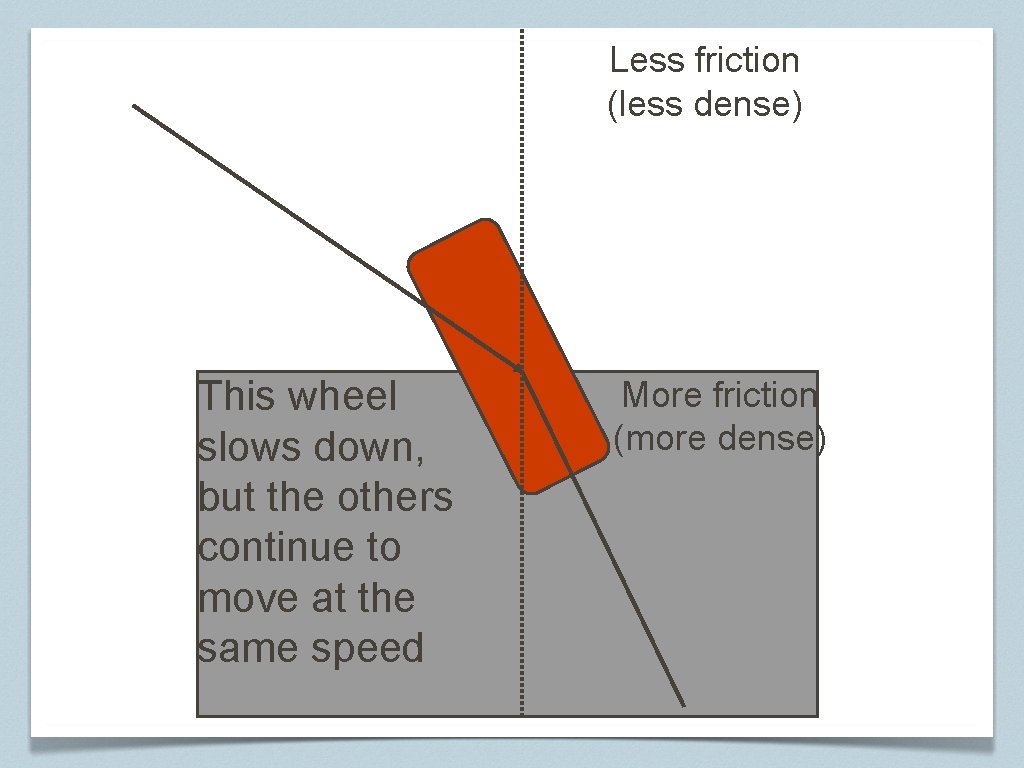
Less friction (less dense) More friction (more dense)
Less friction (less dense) This wheel slows down, but the others continue to move at the same speed More friction (more dense)
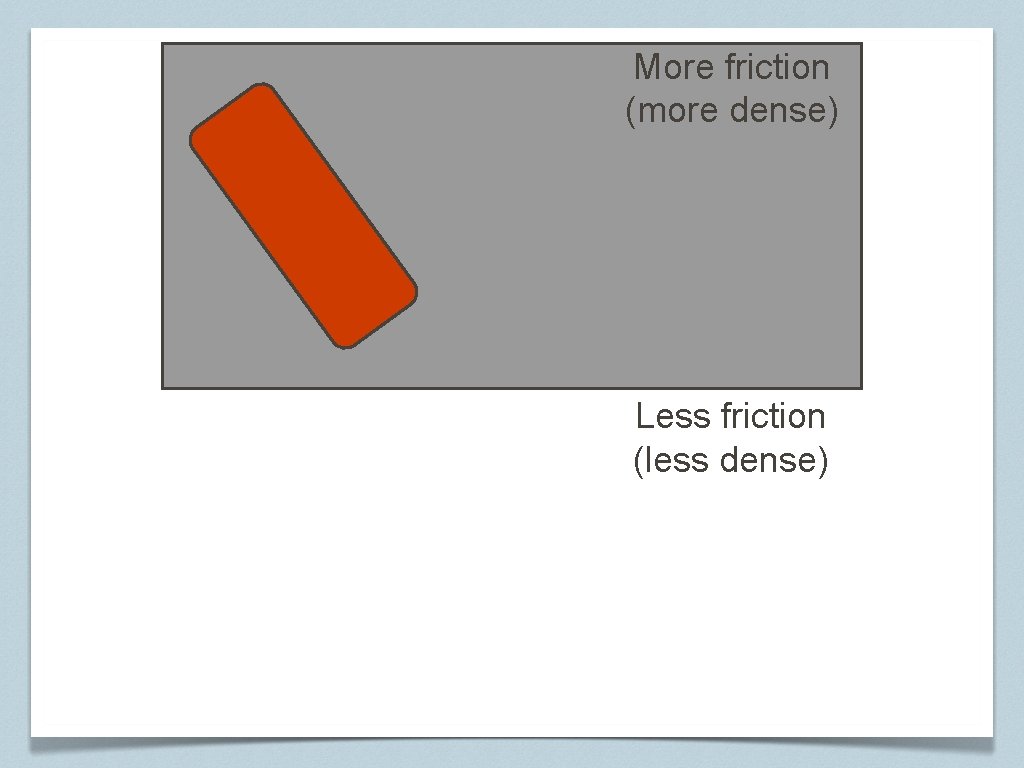
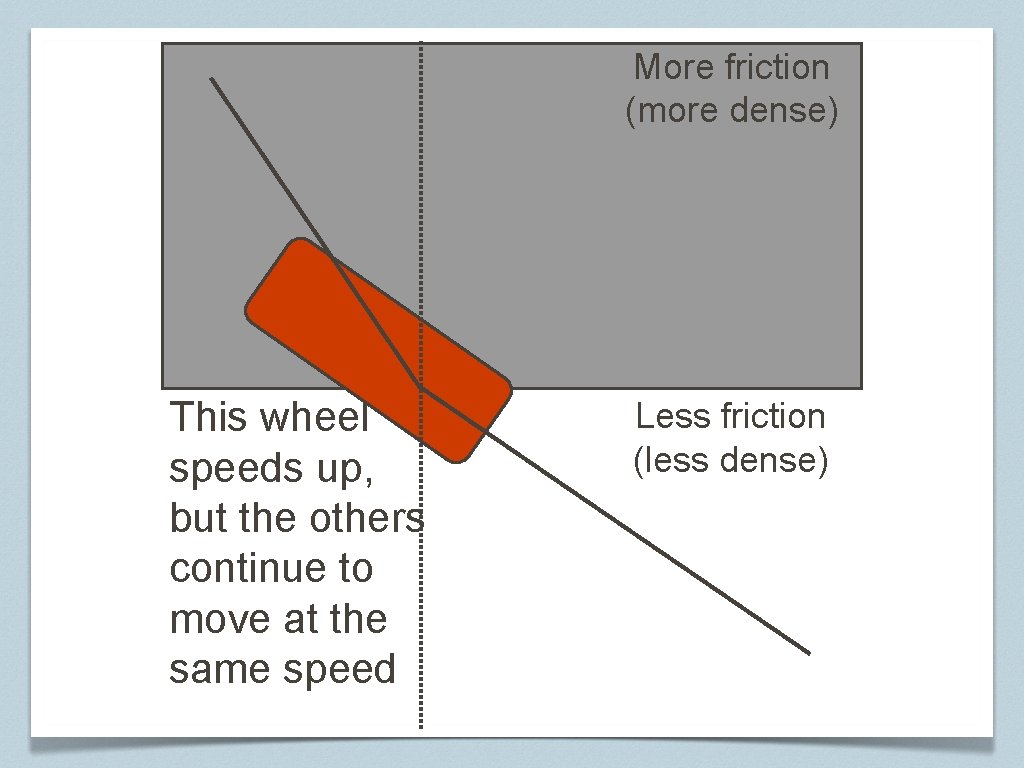
More friction (more dense) Less friction (less dense)
More friction (more dense) This wheel speeds up, but the others continue to move at the same speed Less friction (less dense)
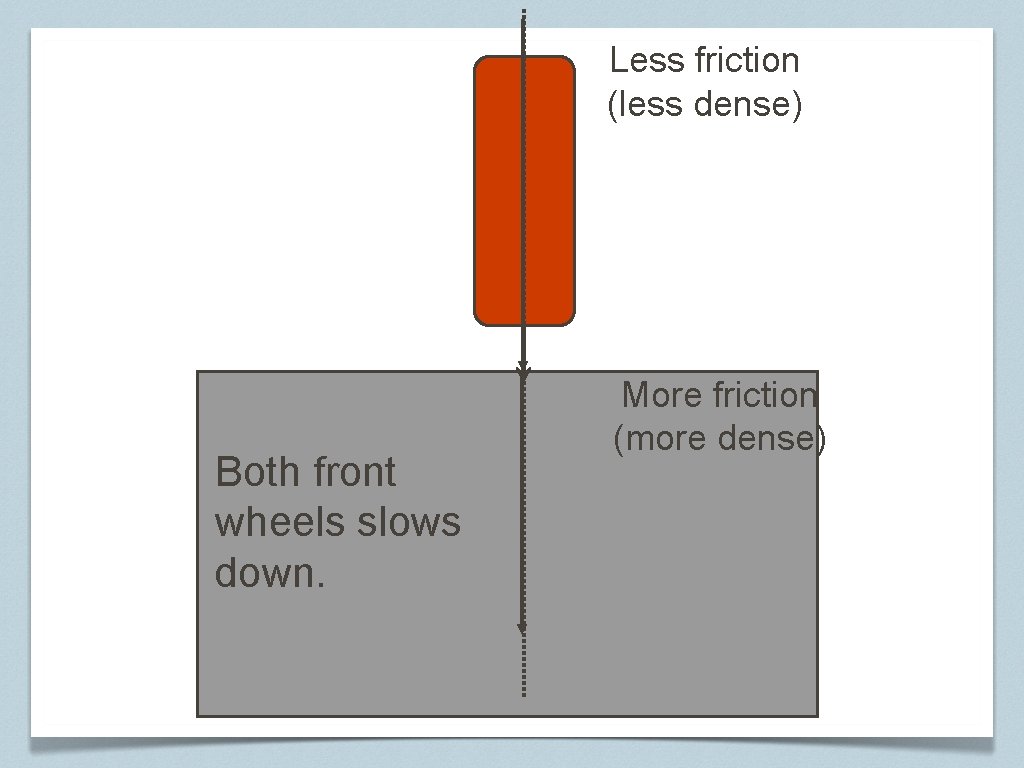
Less friction (less dense) Both front wheels slows down. More friction (more dense)
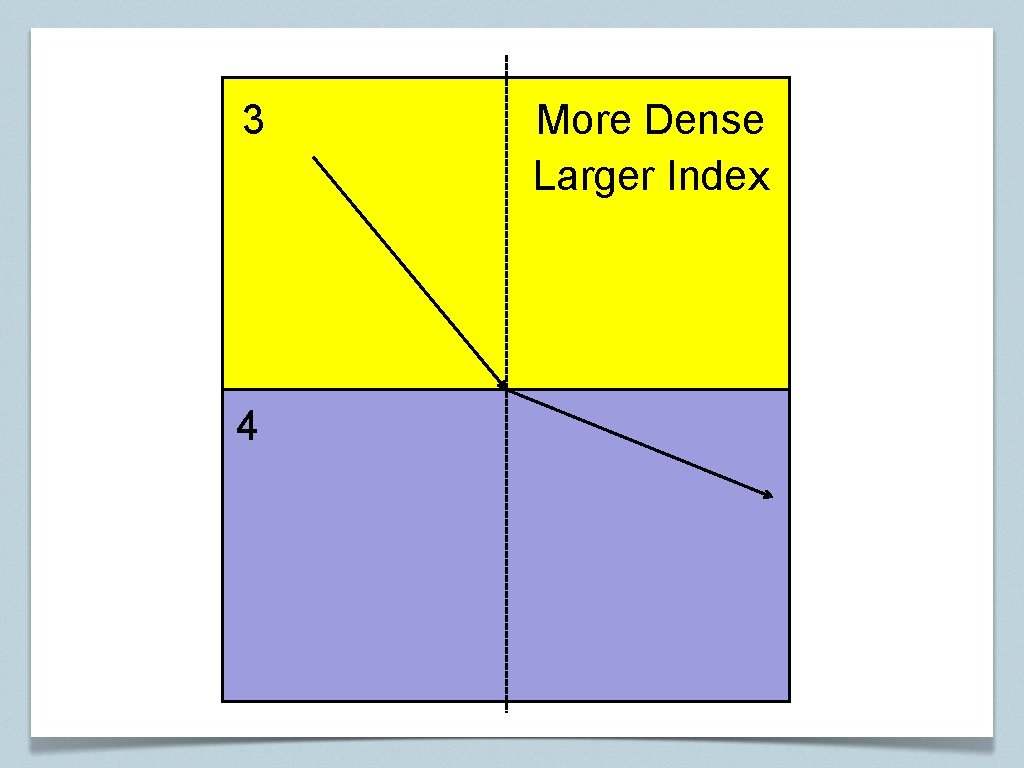
Rules of Refraction 1. The incident ray, refracted ray, and the normal are all on the same plane. The incident ray and the refracted ray are on opposite sides of the line that separates the media. 2. The light bends towards the normal when the speed of the light in the second medium is less than the speed of light in the first medium.
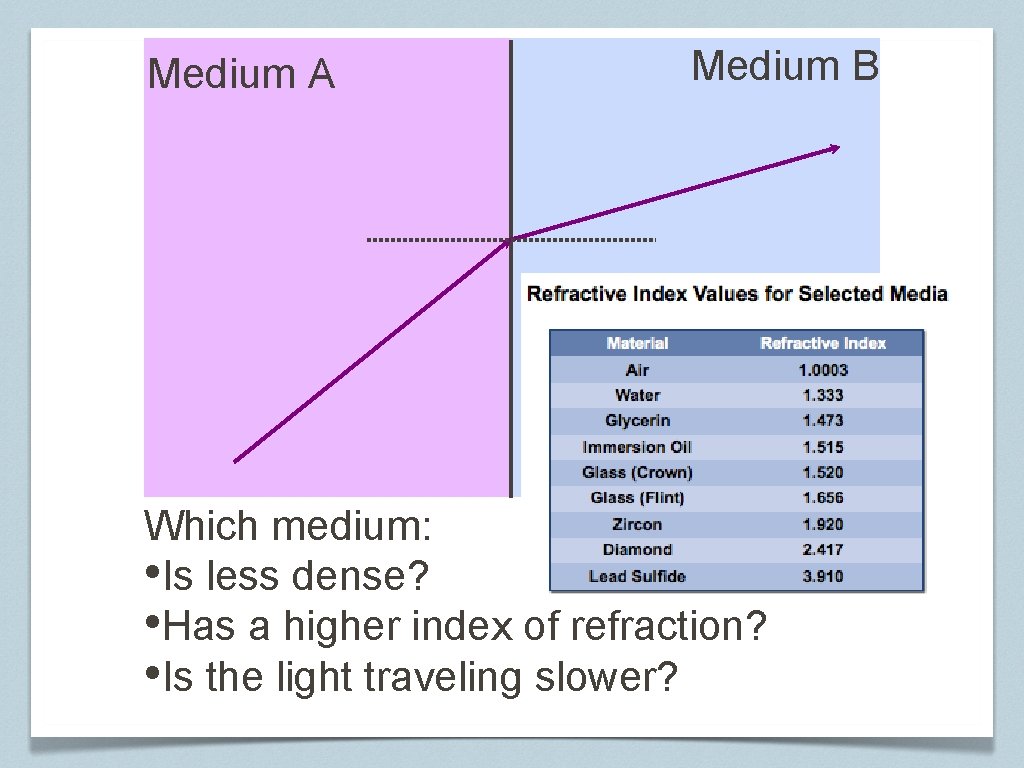
Medium A Medium B Which medium: • Is less dense? • Has a higher index of refraction? • Is the light traveling slower?
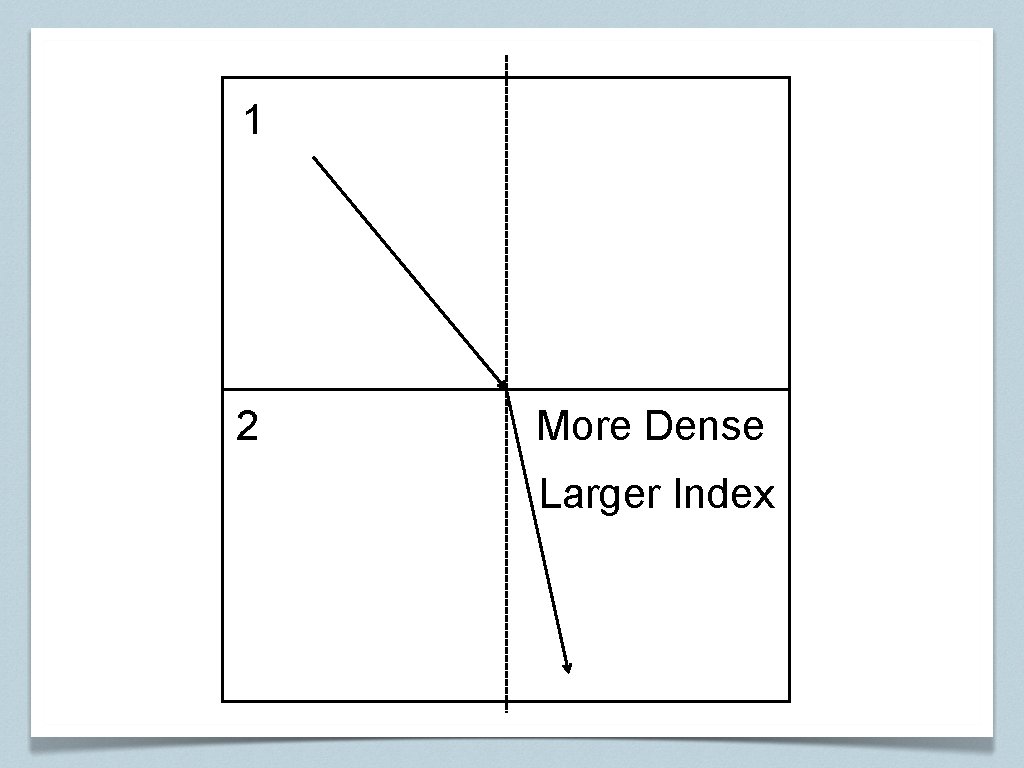
1 2 More Dense Larger Index
3 4 More Dense Larger Index
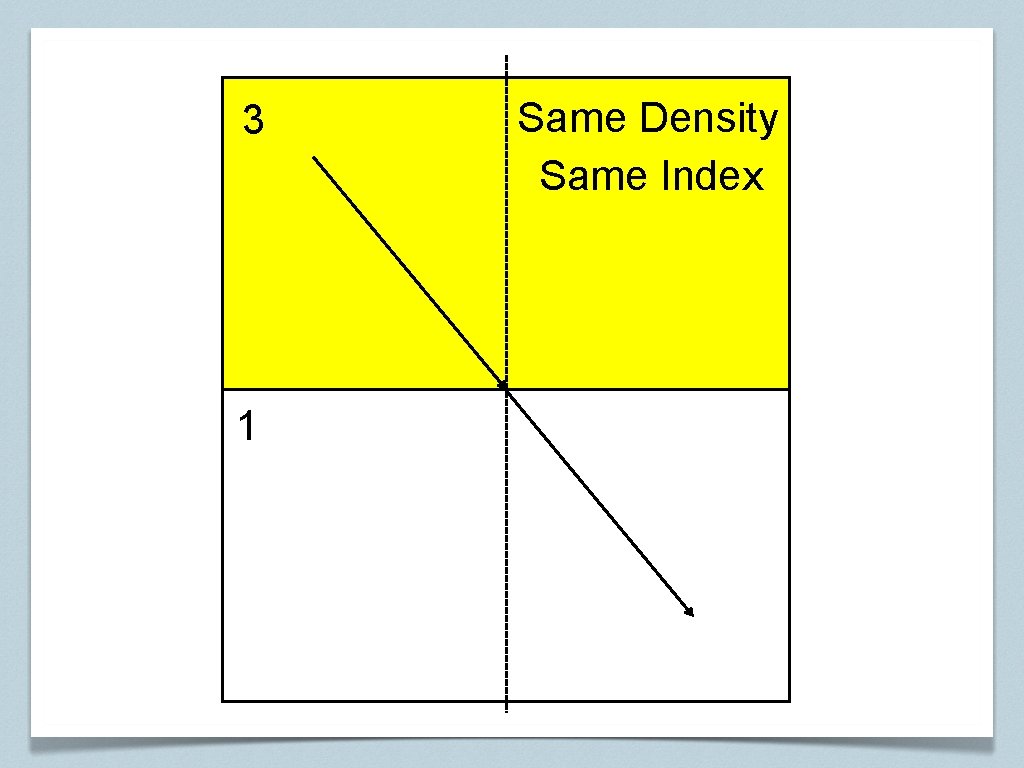
3 1 Same Density Same Index
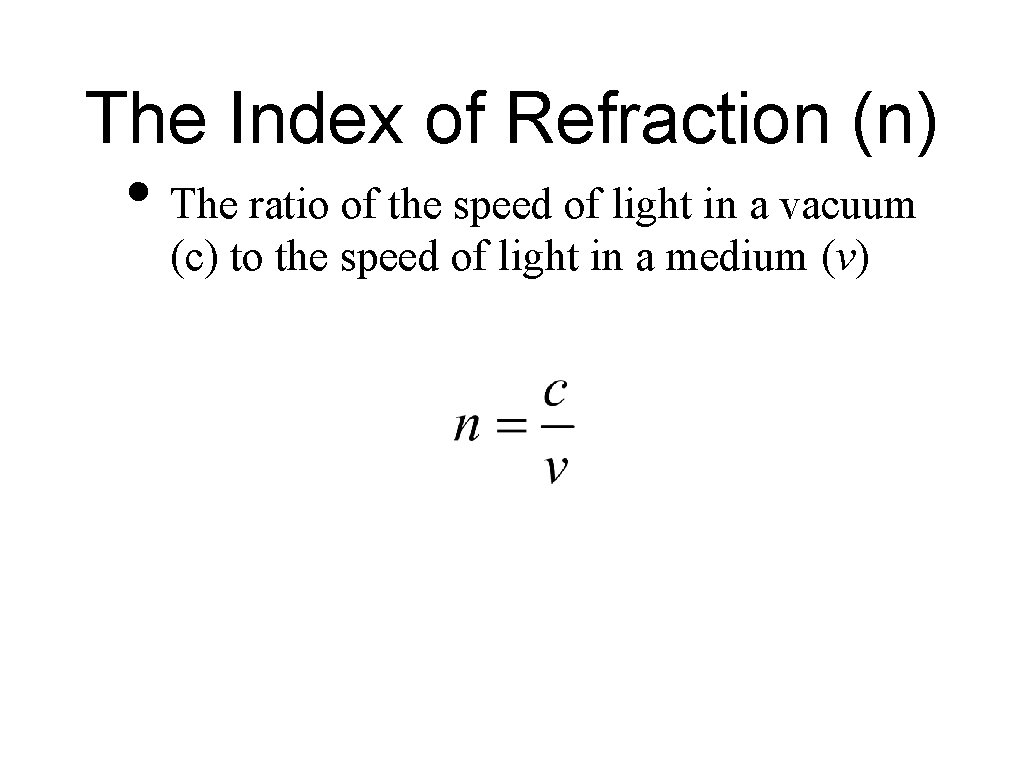
The Index of Refraction (n) • The ratio of the speed of light in a vacuum (c) to the speed of light in a medium (v)
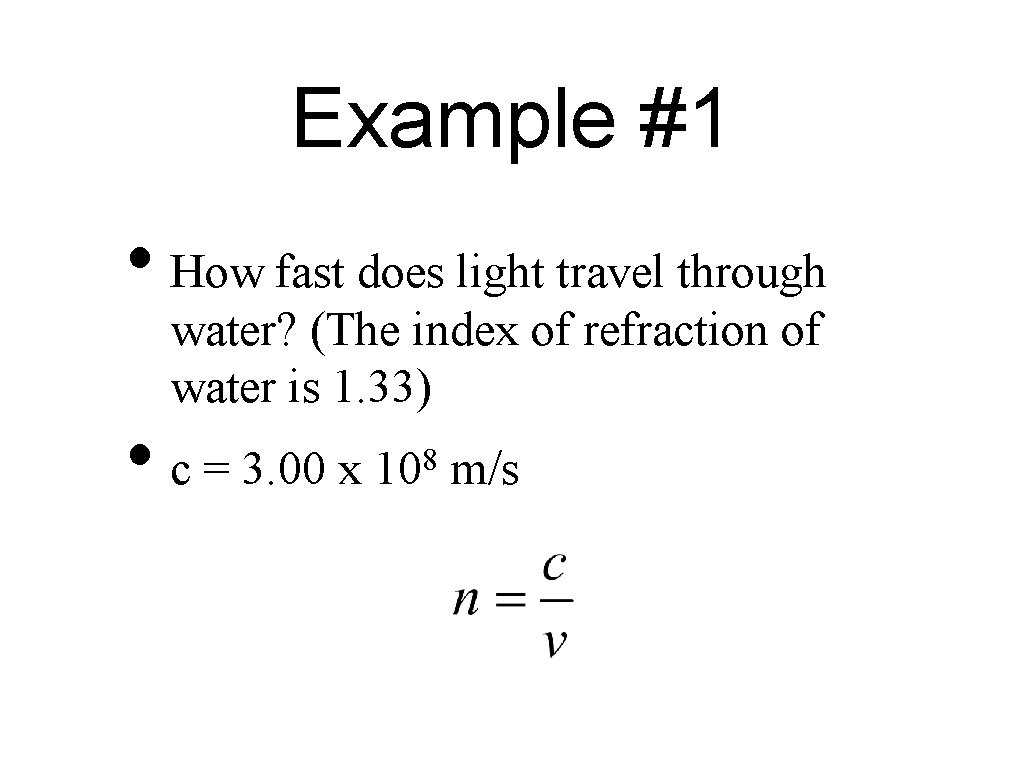
Example #1 • How fast does light travel through water? (The index of refraction of water is 1. 33) • c = 3. 00 x 10 8 m/s
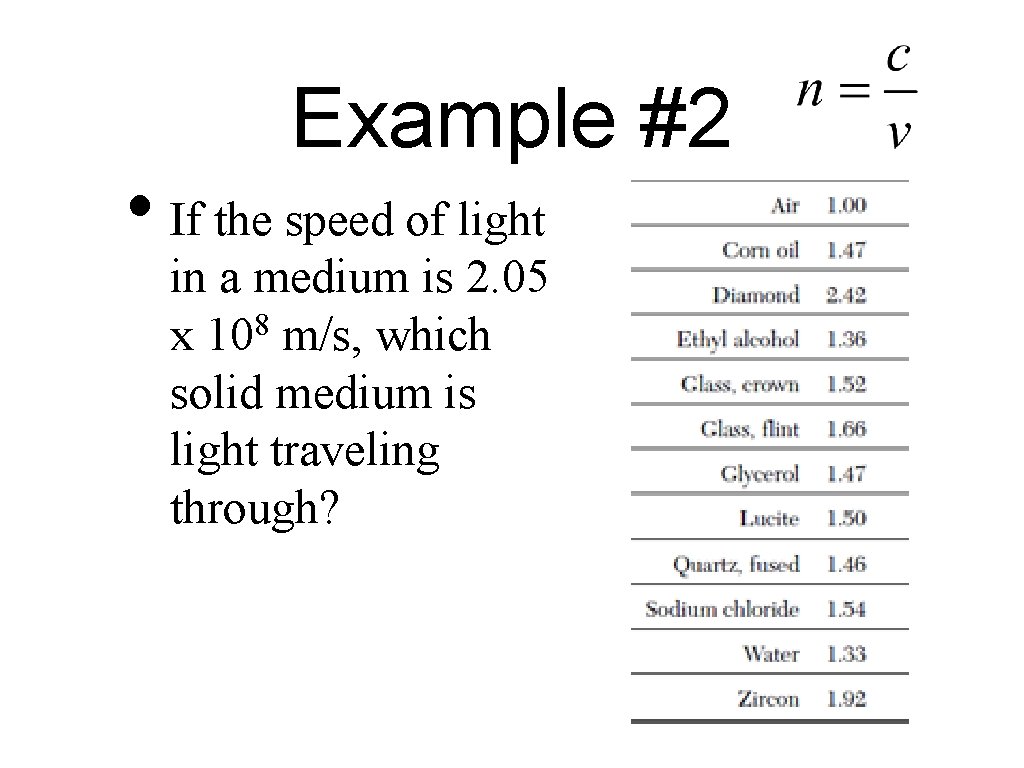
Example #2 • If the speed of light in a medium is 2. 05 8 x 10 m/s, which solid medium is light traveling through?
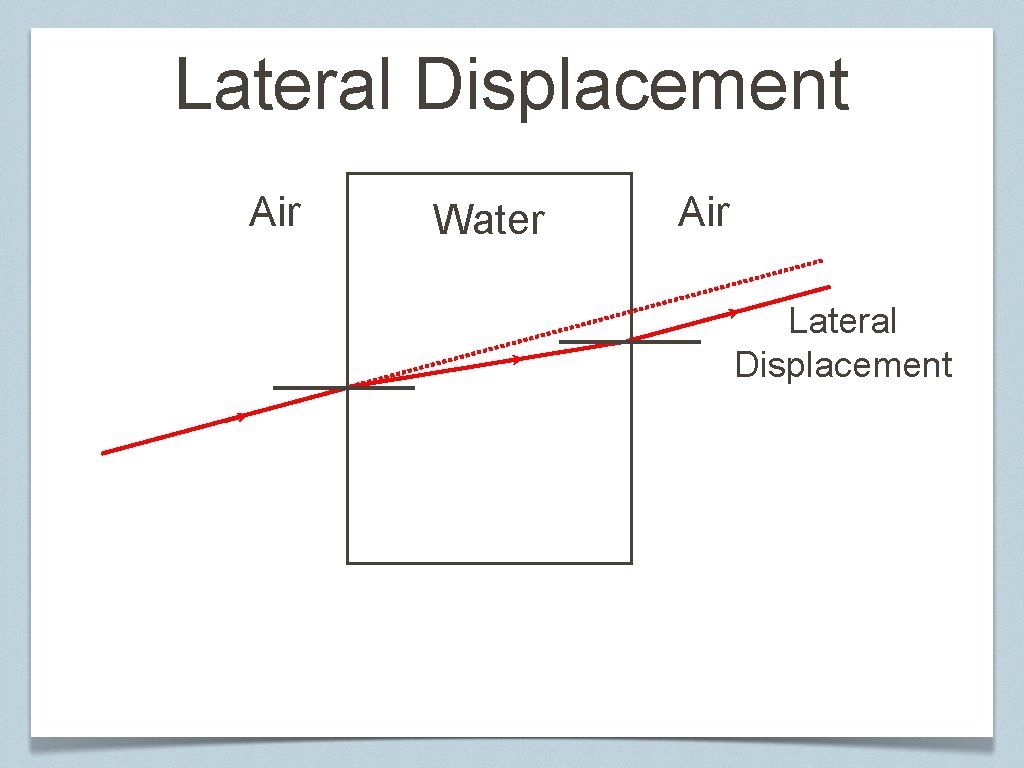
Lateral Displacement Air Water Air Lateral Displacement
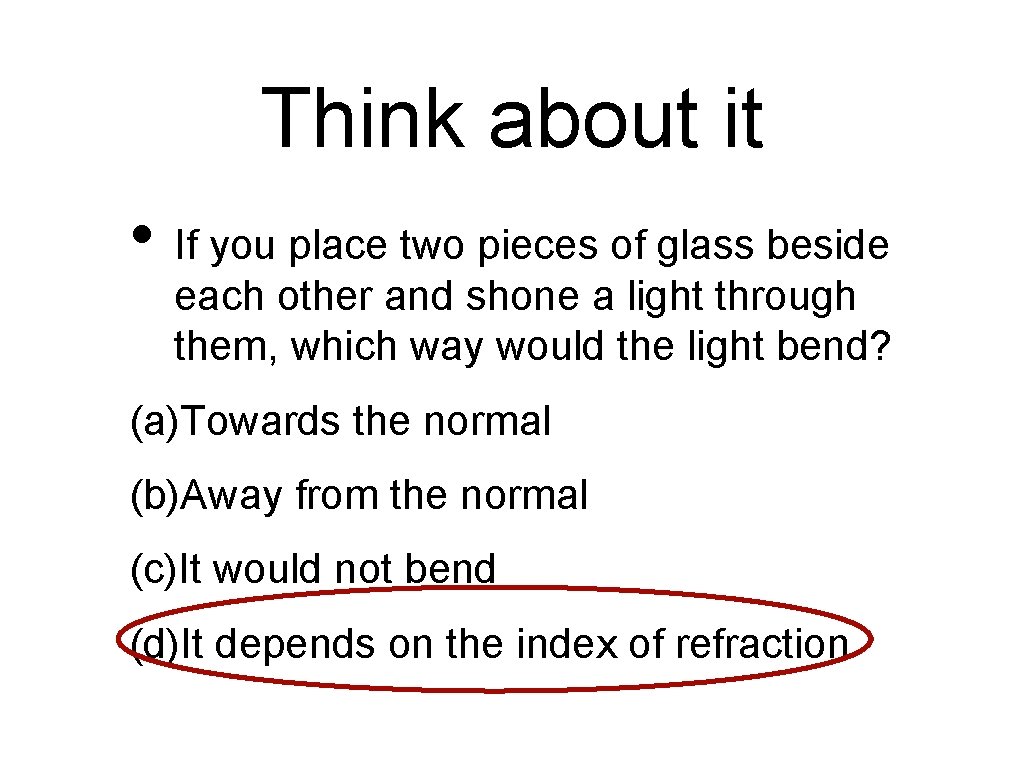
Think about it • If you place two pieces of glass beside each other and shone a light through them, which way would the light bend? (a)Towards the normal (b)Away from the normal (c)It would not bend (d)It depends on the index of refraction
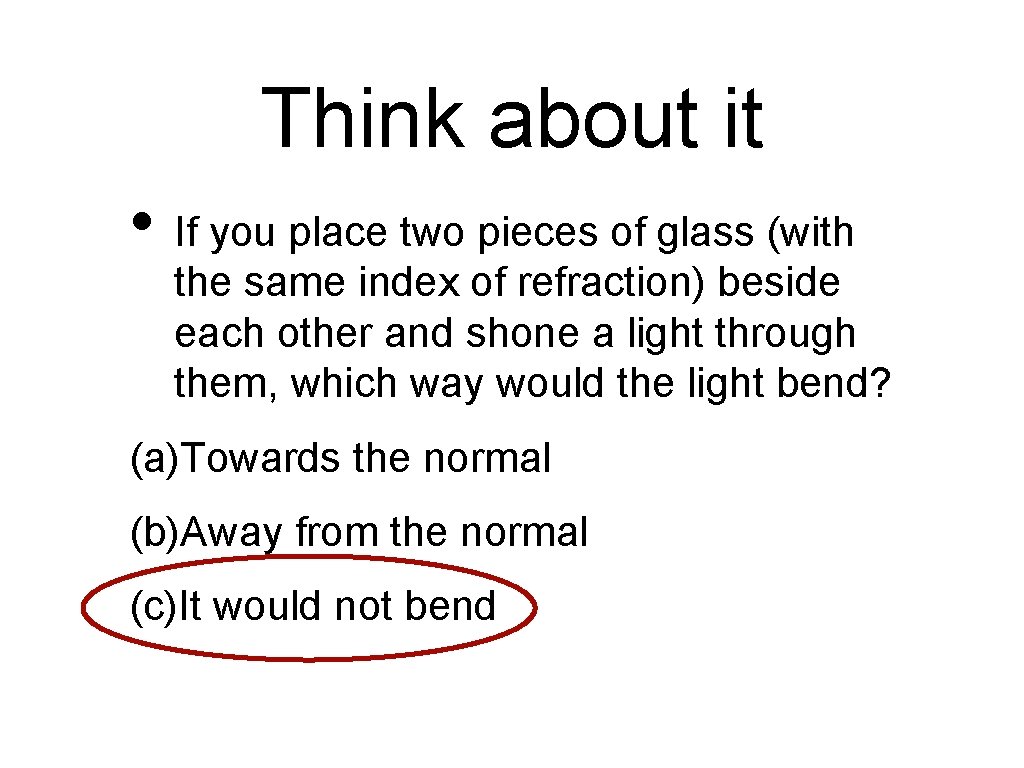
Think about it • If you place two pieces of glass (with the same index of refraction) beside each other and shone a light through them, which way would the light bend? (a)Towards the normal (b)Away from the normal (c)It would not bend
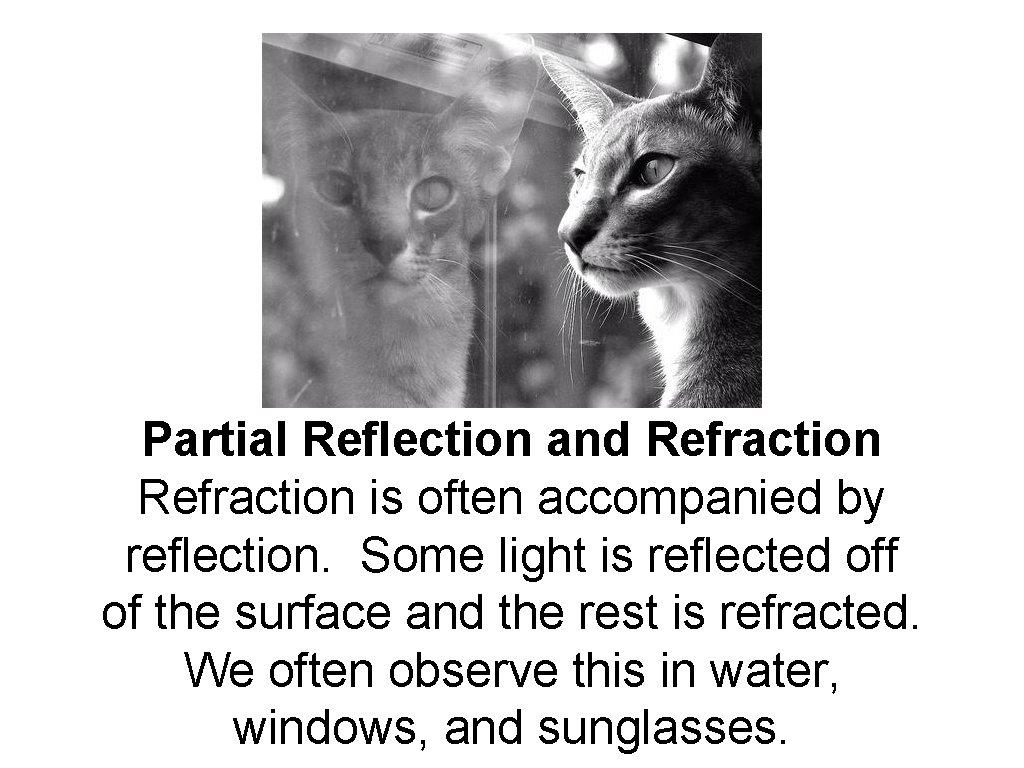
Partial Reflection and Refraction is often accompanied by reflection. Some light is reflected off of the surface and the rest is refracted. We often observe this in water, windows, and sunglasses.
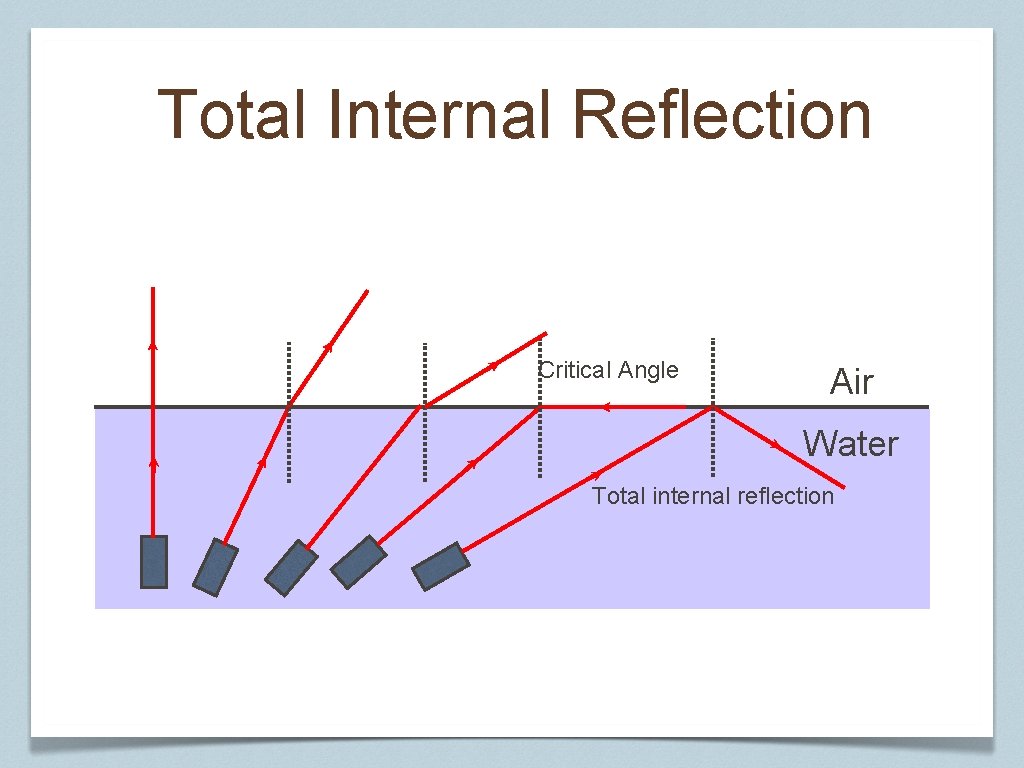
Total Internal Reflection Critical Angle Air Water Total internal reflection
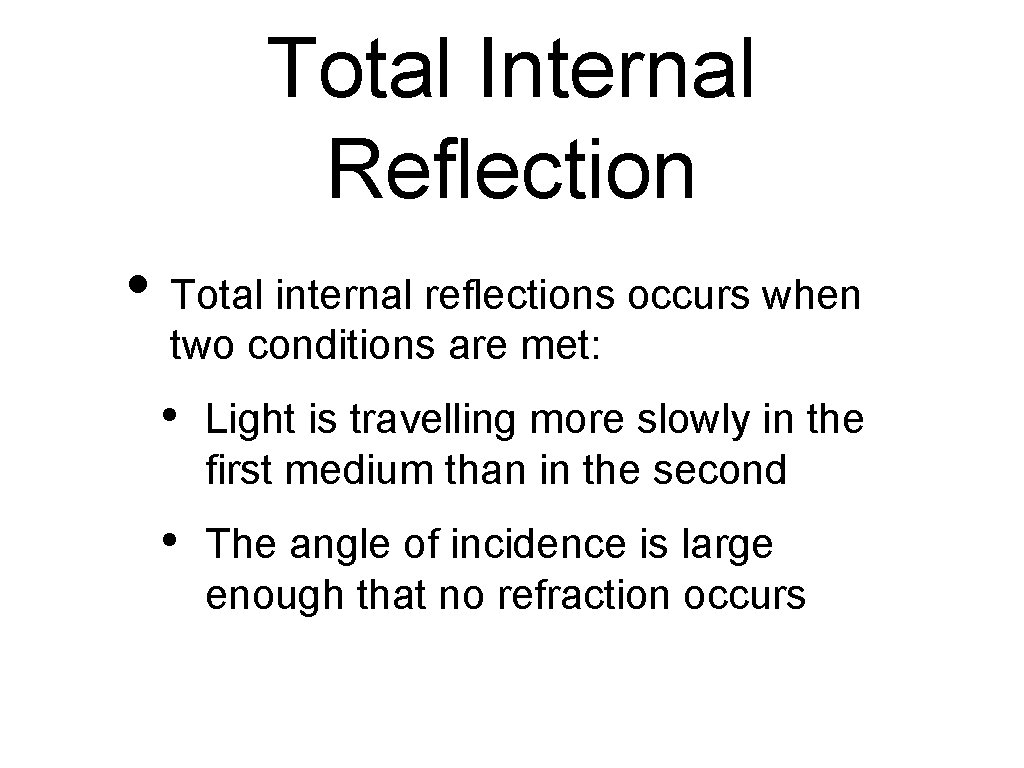
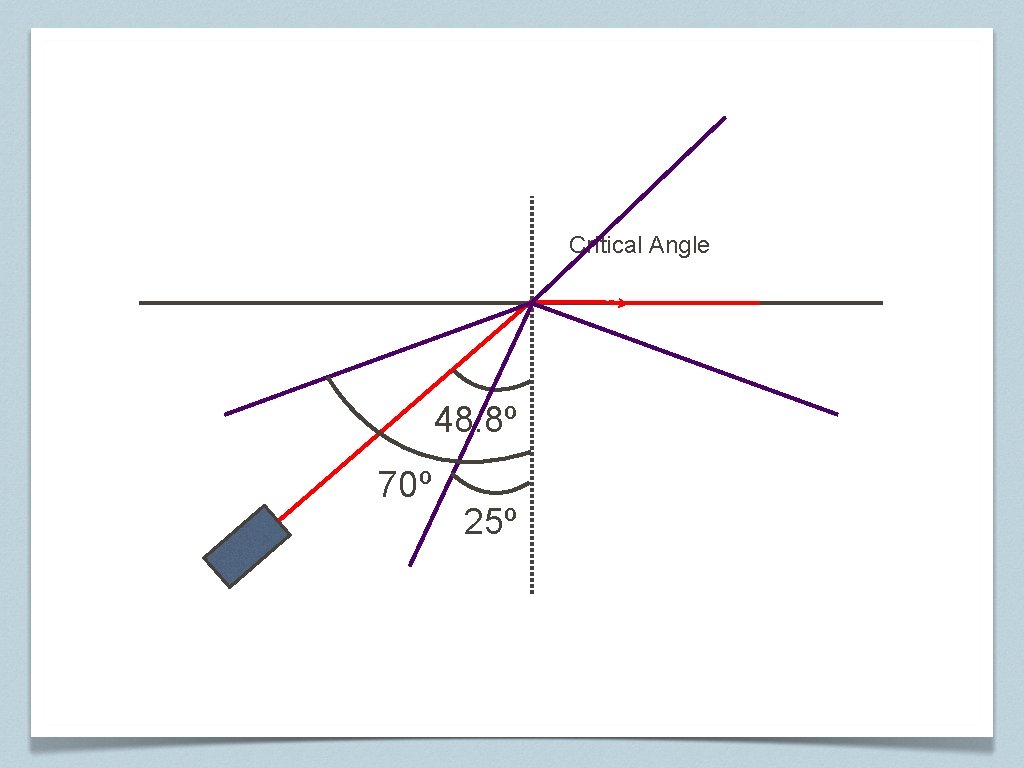
Total Internal Reflection • Critical angle: The angle of incidence that results in an angle of refraction of 90º. • Total Internal Reflection: occurs when the angle of incidence is equal or greater than the critical angle.
Total Internal Reflection • Total internal reflections occurs when two conditions are met: • Light is travelling more slowly in the first medium than in the second • The angle of incidence is large enough that no refraction occurs
Critical Angle 48. 8º 70º 25º
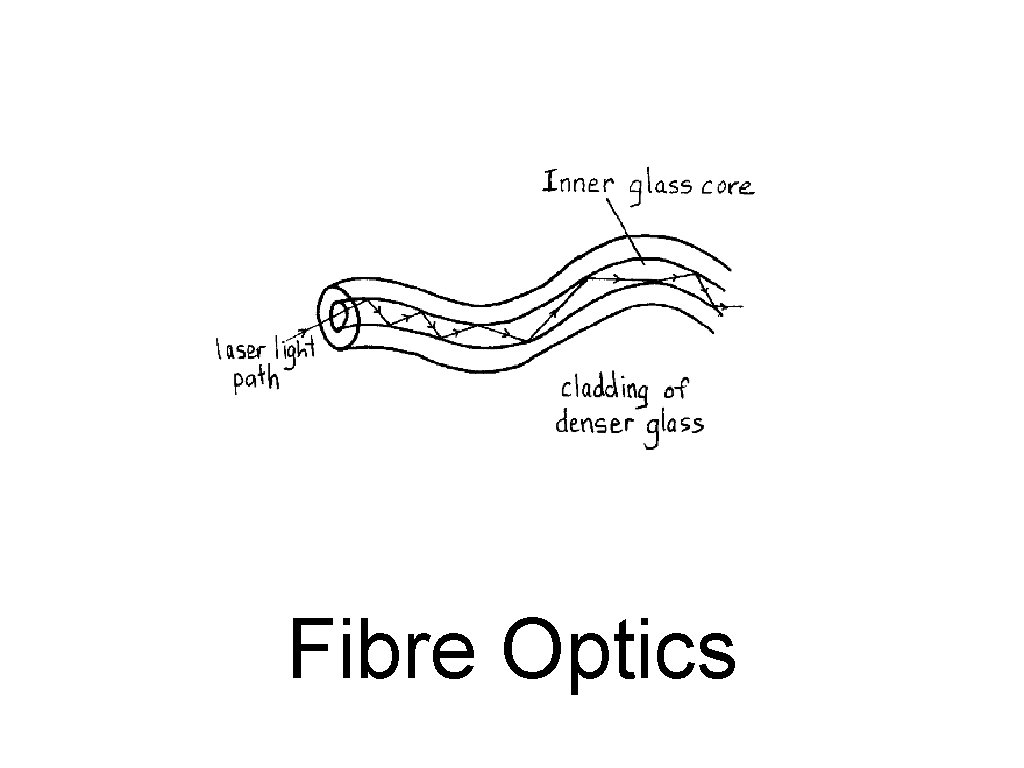
Fibre Optics
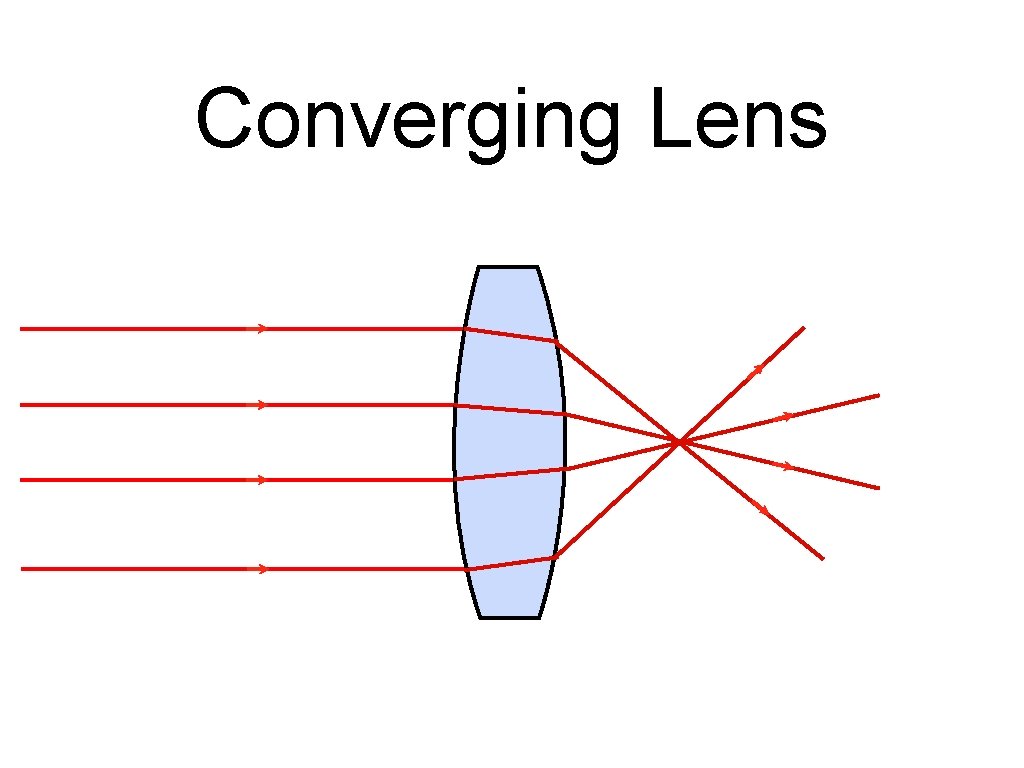
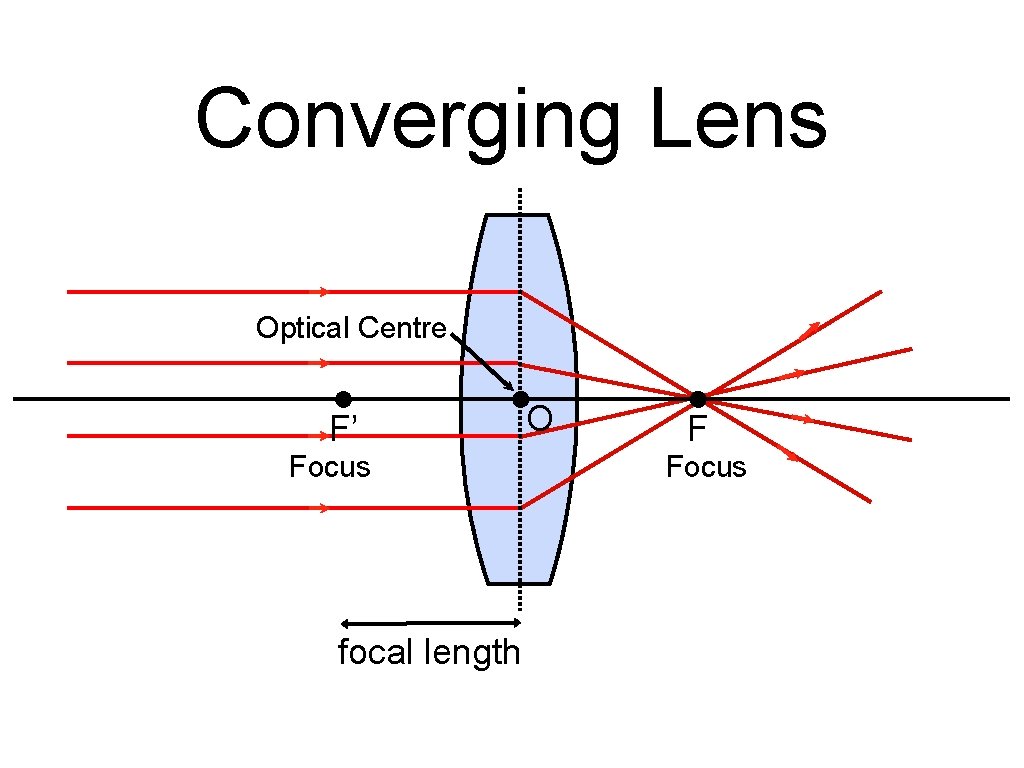
Converging Lens
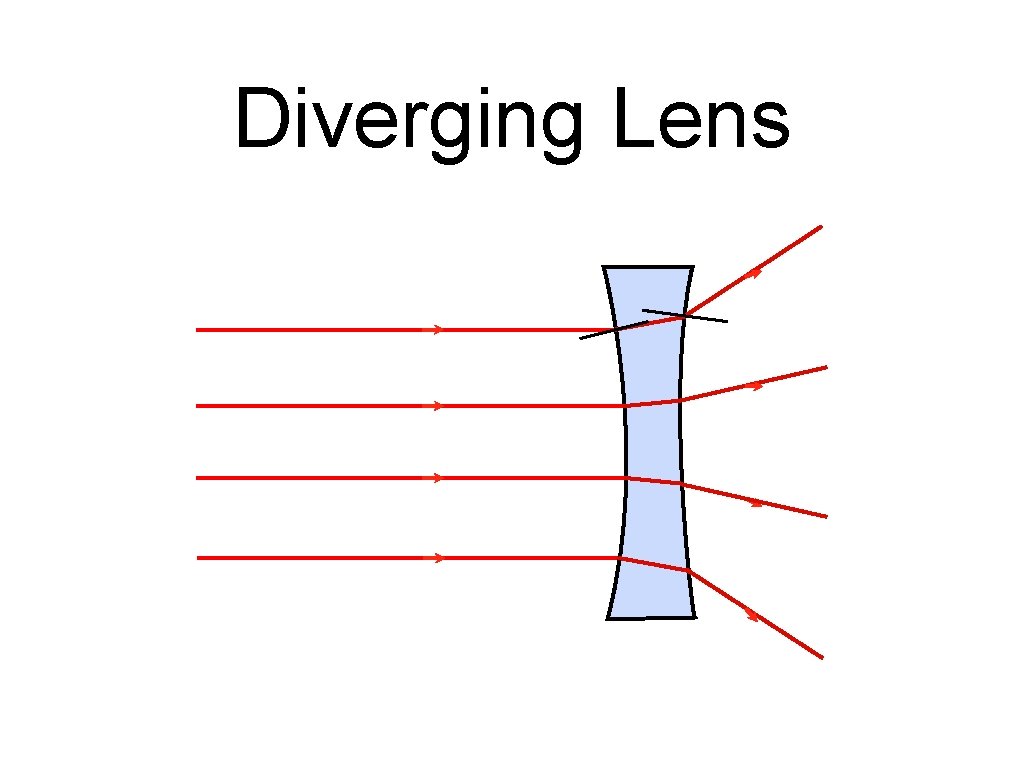
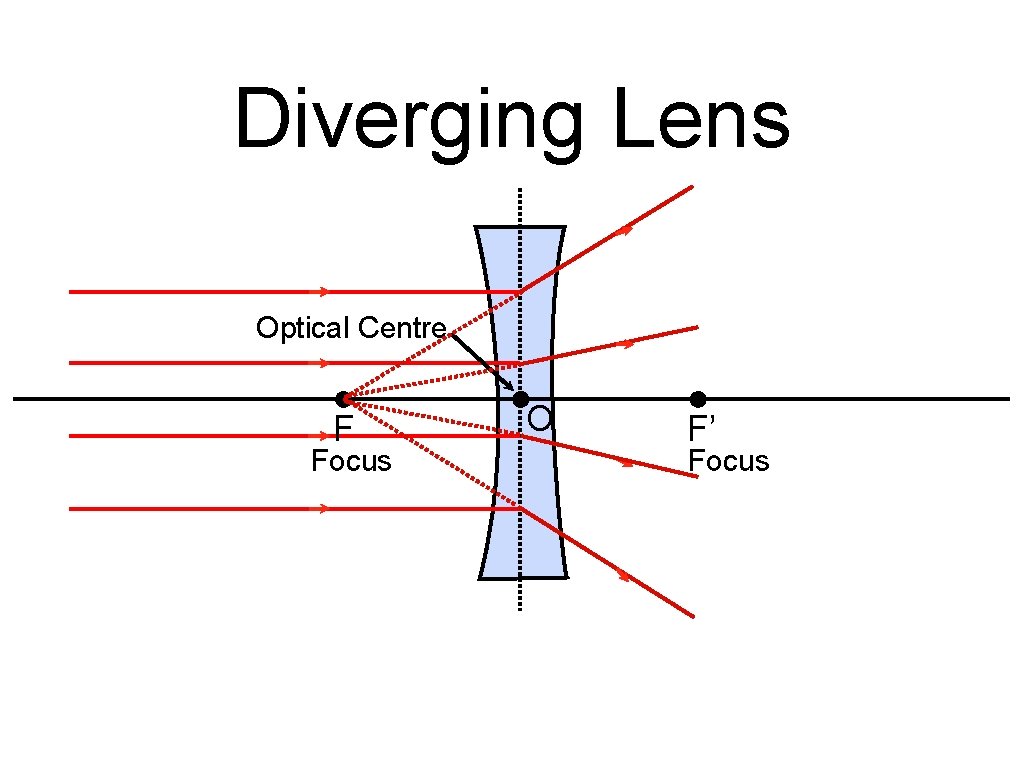
Diverging Lens
Converging Lens Optical Centre F’ Focus focal length O F Focus
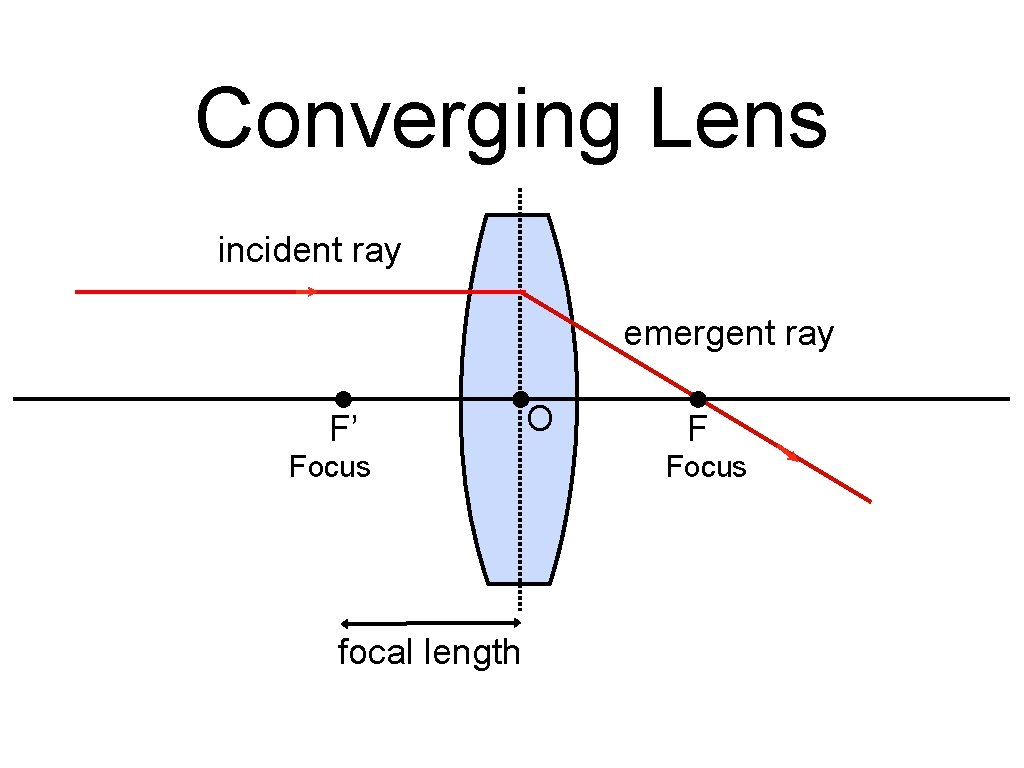
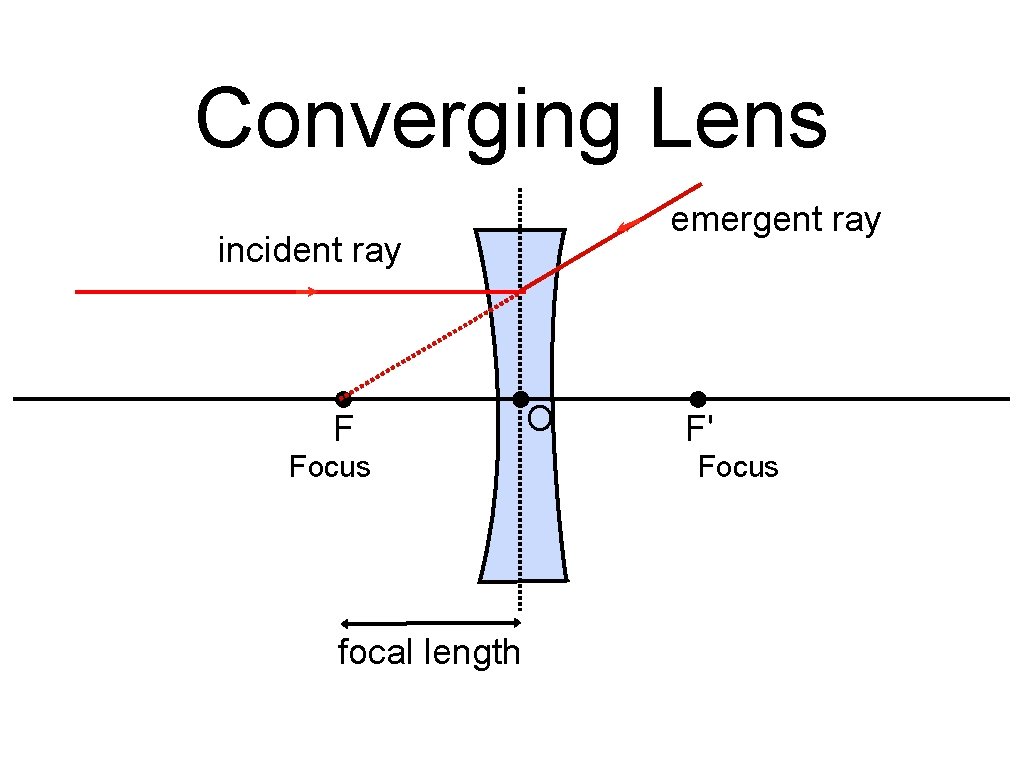
Converging Lens incident ray emergent ray F’ Focus focal length O F Focus
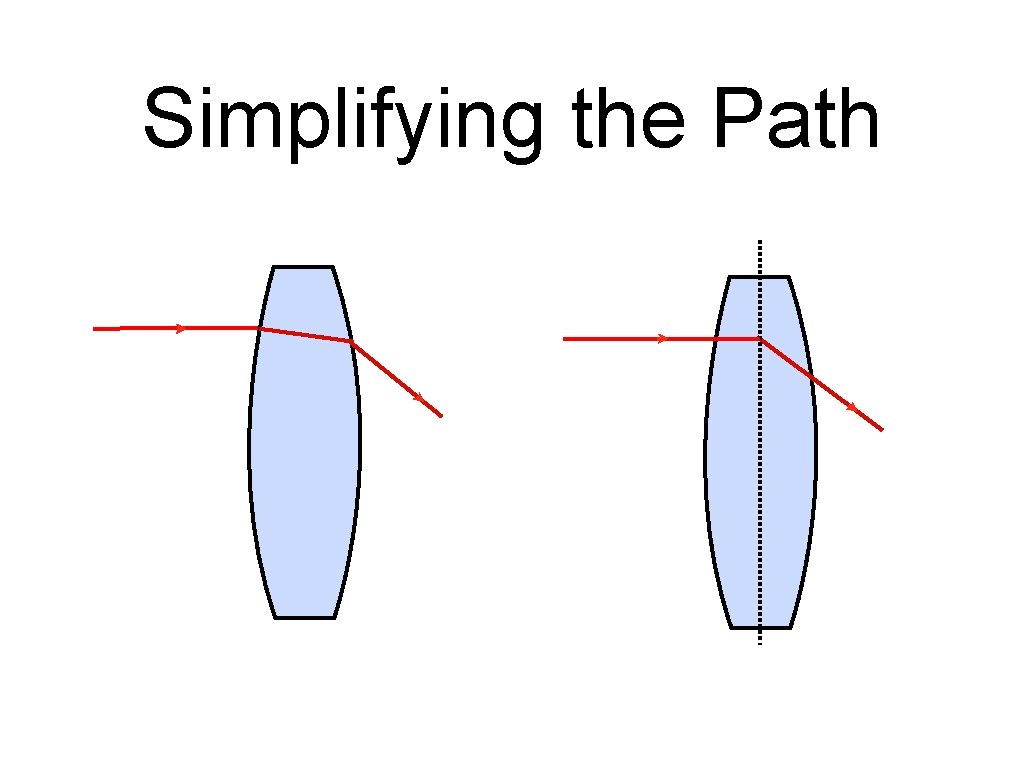
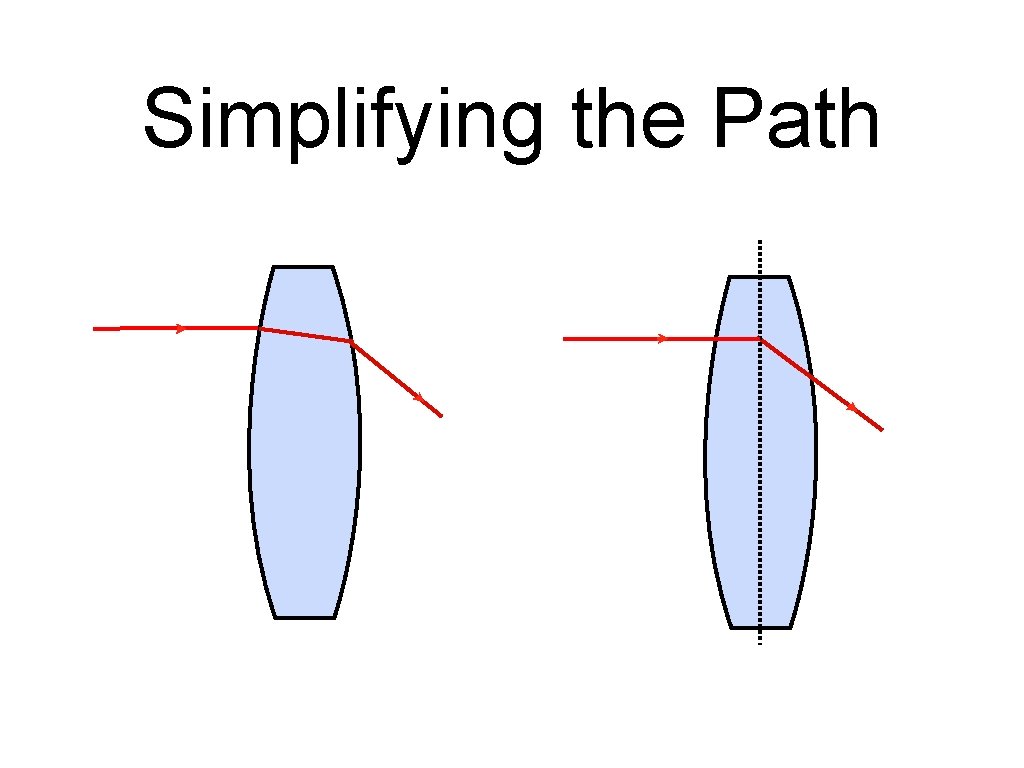
Simplifying the Path
Diverging Lens Optical Centre F Focus O F’ Focus
Converging Lens emergent ray incident ray F Focus focal length O F' Focus
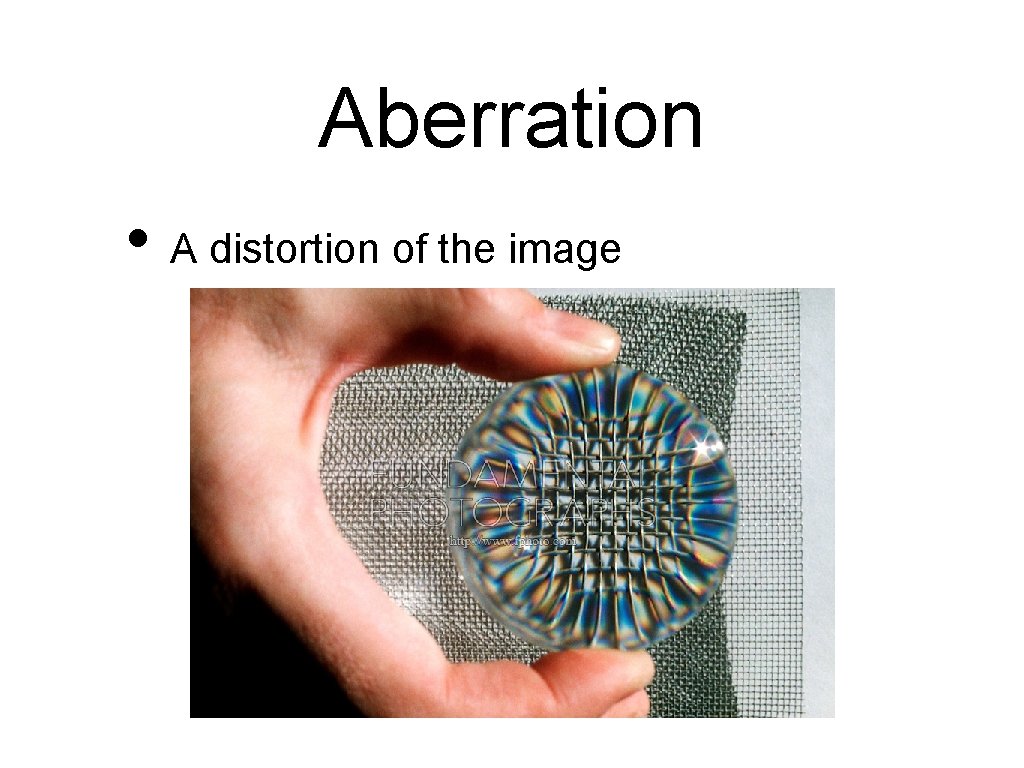
Aberration • A distortion of the image
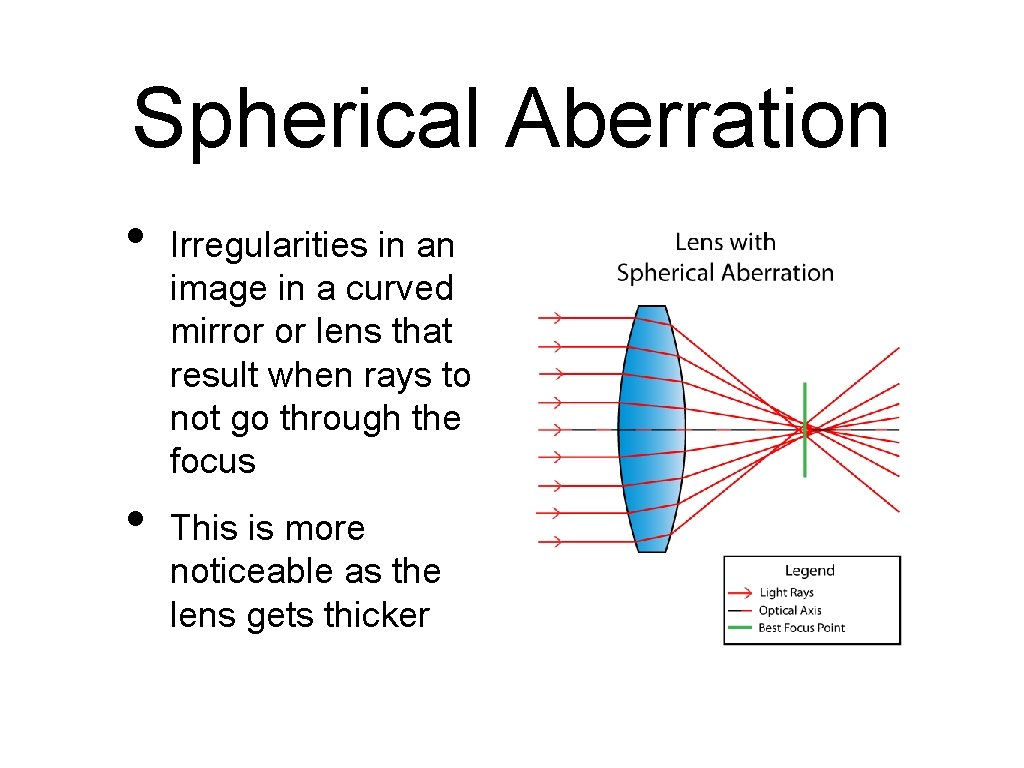
Spherical Aberration • • Irregularities in an image in a curved mirror or lens that result when rays to not go through the focus This is more noticeable as the lens gets thicker
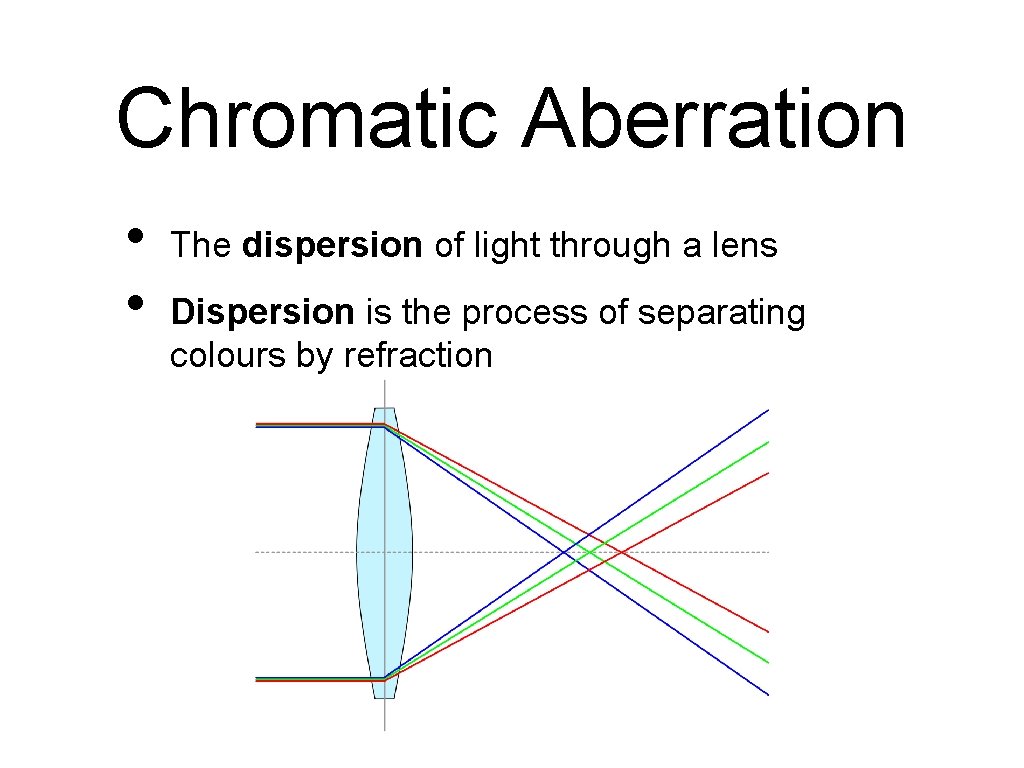
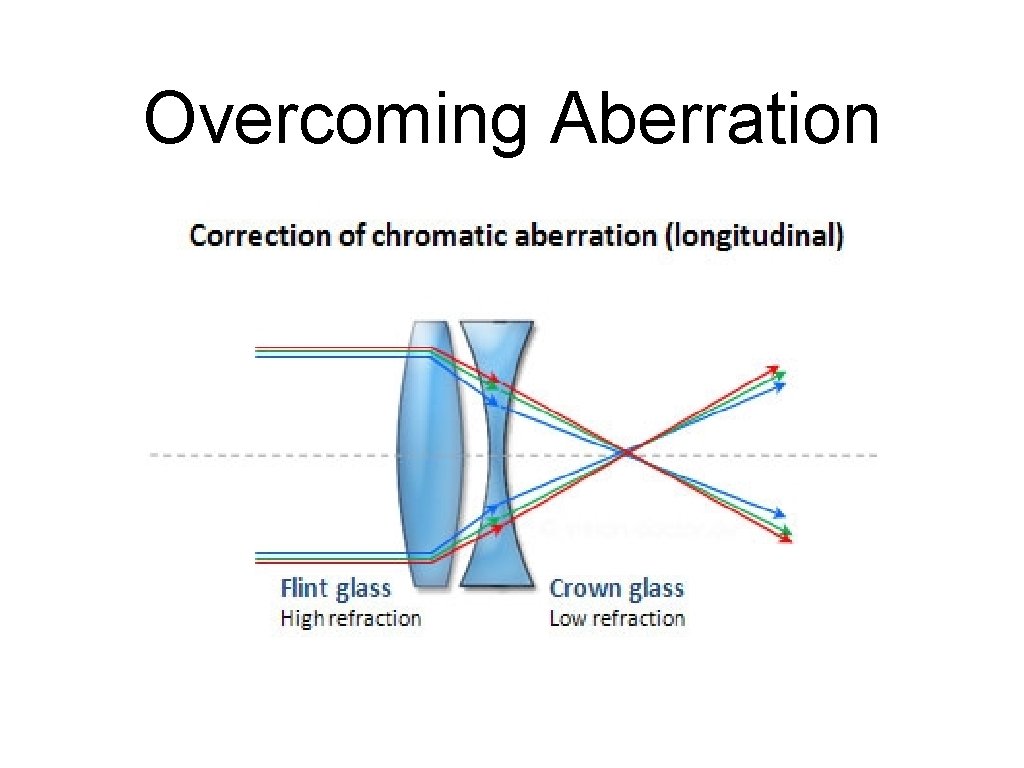
Chromatic Aberration • • The dispersion of light through a lens Dispersion is the process of separating colours by refraction
Overcoming Aberration
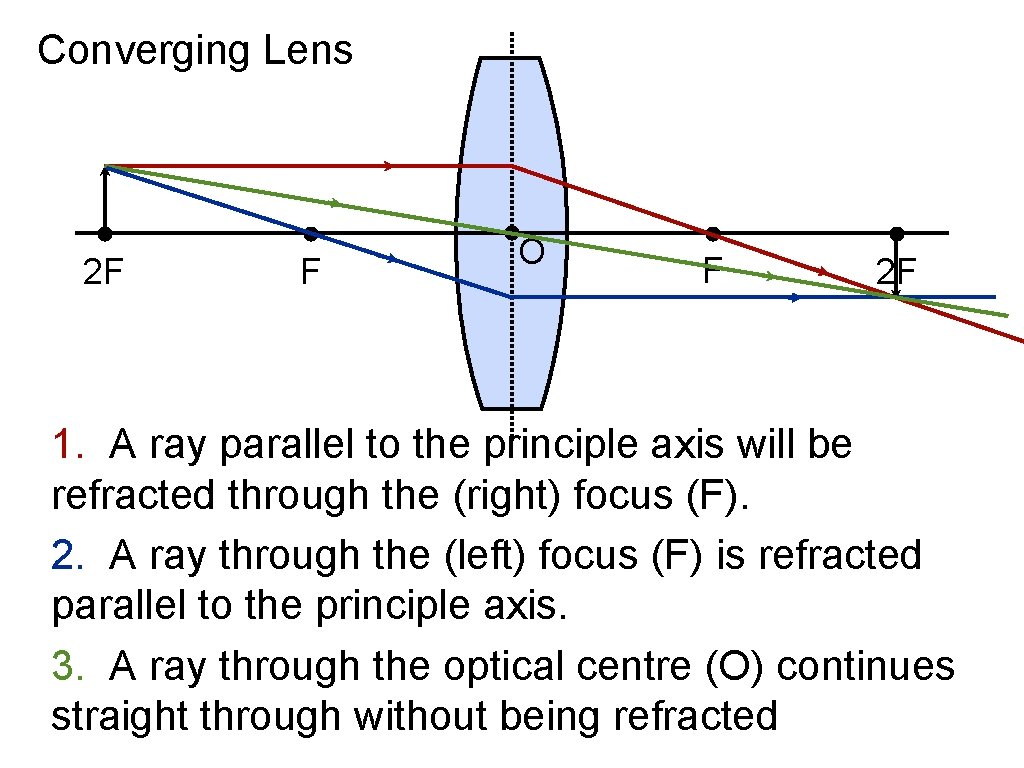
Converging Lens 2 F F O F 2 F 1. A ray parallel to the principle axis will be refracted through the (right) focus (F). 2. A ray through the (left) focus (F) is refracted parallel to the principle axis. 3. A ray through the optical centre (O) continues straight through without being refracted
Simplifying the Path
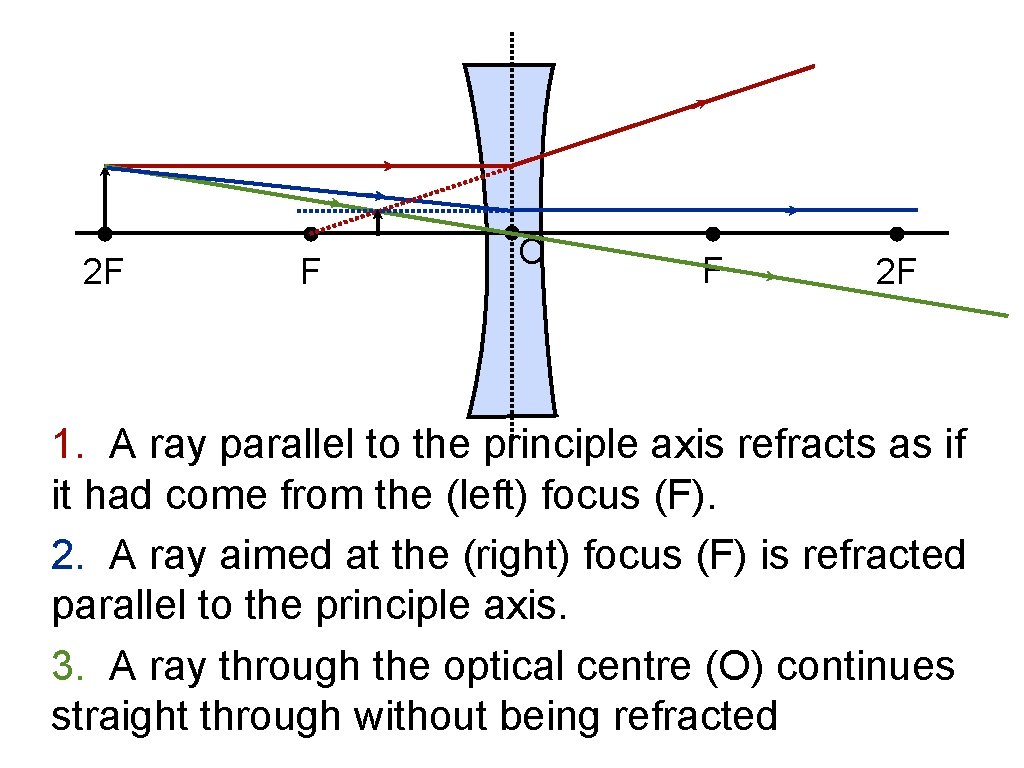
2 F F O F 2 F 1. A ray parallel to the principle axis refracts as if it had come from the (left) focus (F). 2. A ray aimed at the (right) focus (F) is refracted parallel to the principle axis. 3. A ray through the optical centre (O) continues straight through without being refracted
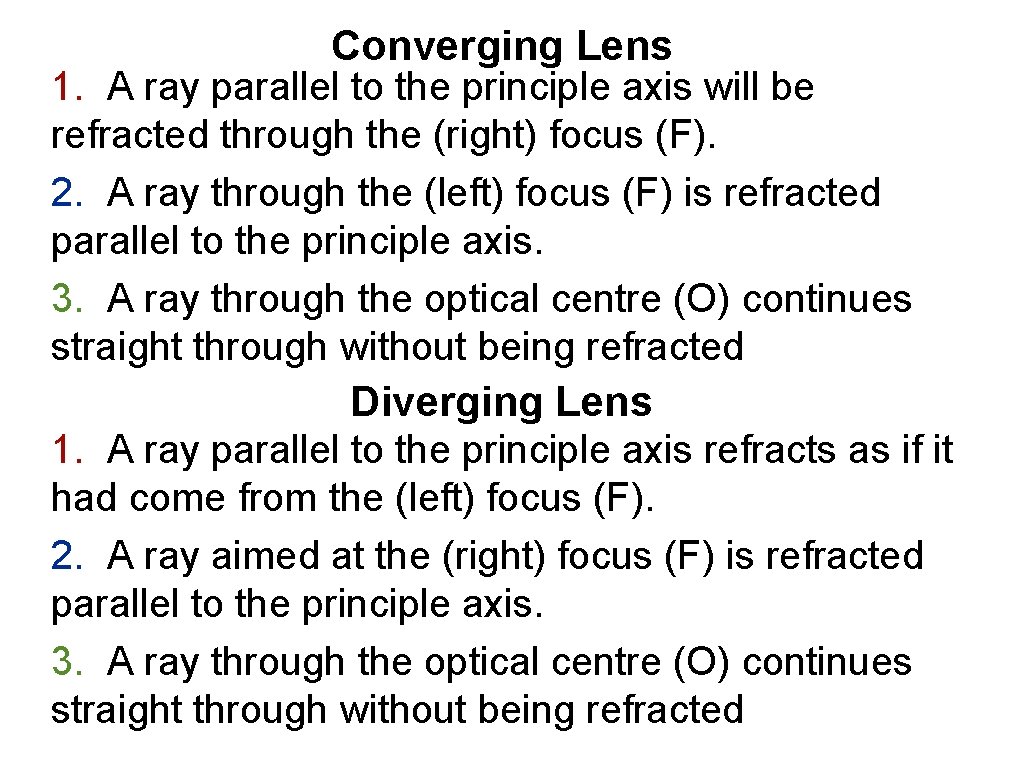
Converging Lens 1. A ray parallel to the principle axis will be refracted through the (right) focus (F). 2. A ray through the (left) focus (F) is refracted parallel to the principle axis. 3. A ray through the optical centre (O) continues straight through without being refracted Diverging Lens 1. A ray parallel to the principle axis refracts as if it had come from the (left) focus (F). 2. A ray aimed at the (right) focus (F) is refracted parallel to the principle axis. 3. A ray through the optical centre (O) continues straight through without being refracted
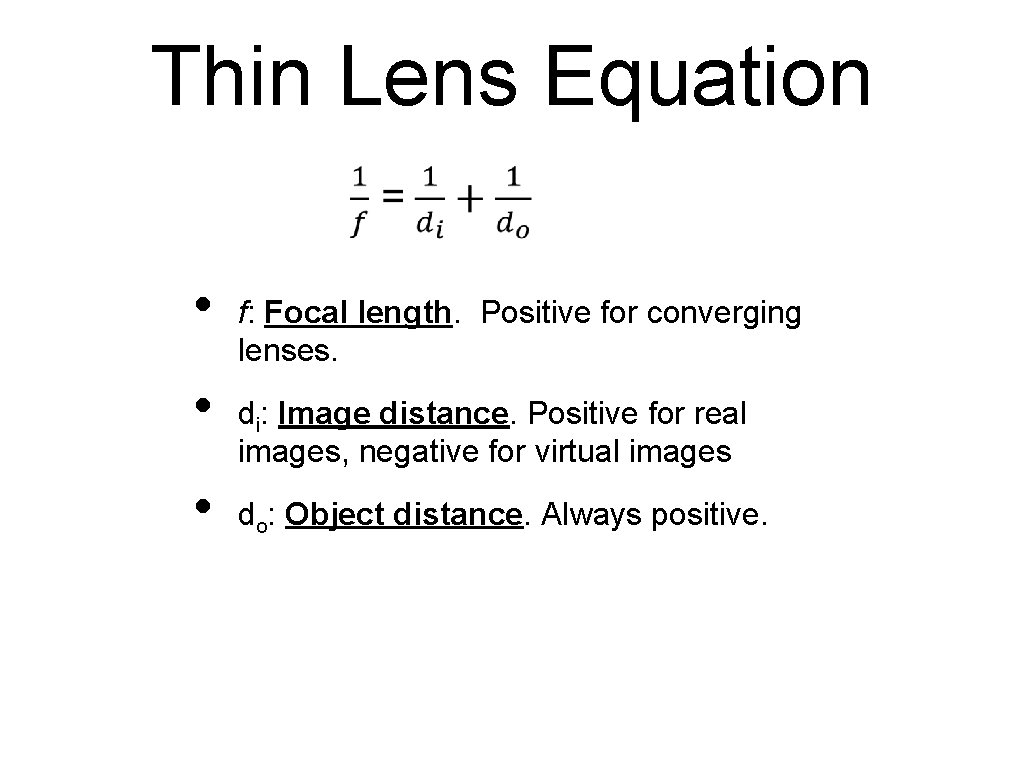
Thin Lens Equation • • • f: Focal length. Positive for converging lenses. di: Image distance. Positive for real images, negative for virtual images do: Object distance. Always positive.
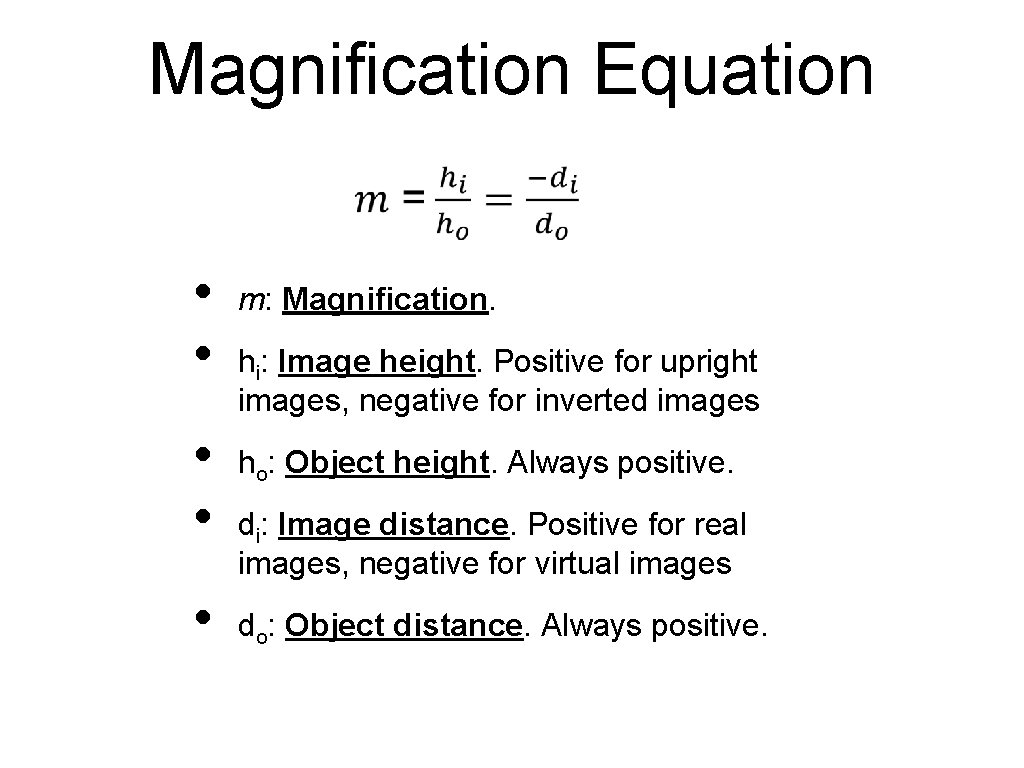
Magnification Equation • • • m: Magnification. hi: Image height. Positive for upright images, negative for inverted images ho: Object height. Always positive. di: Image distance. Positive for real images, negative for virtual images do: Object distance. Always positive.
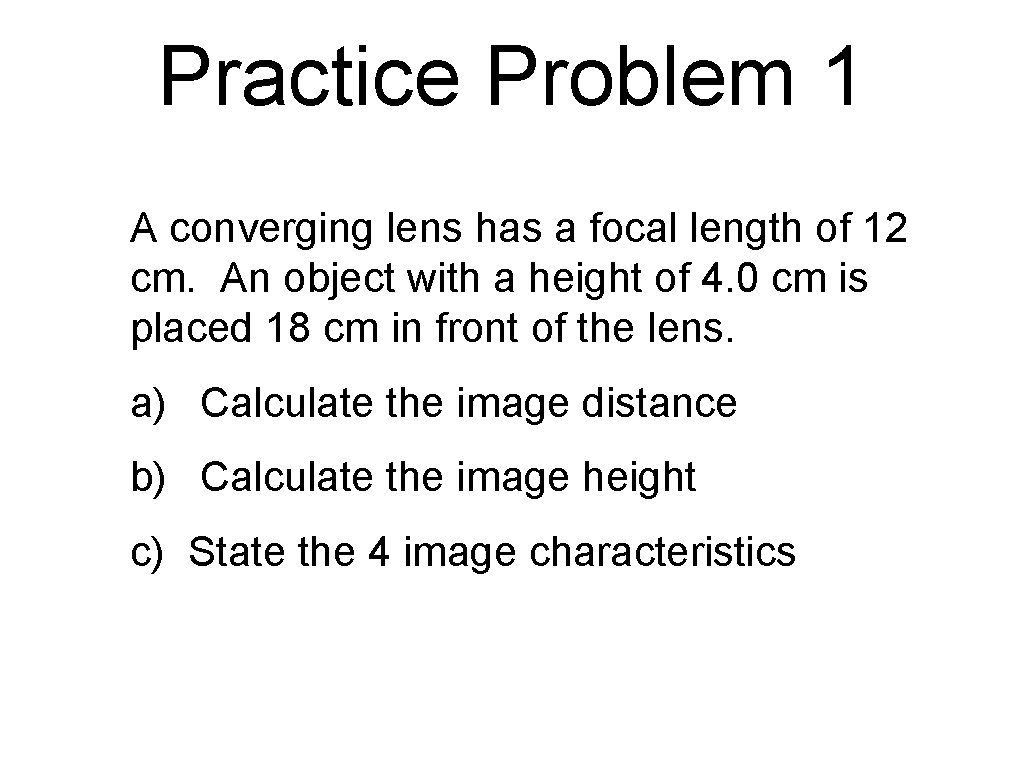
Practice Problem 1 A converging lens has a focal length of 12 cm. An object with a height of 4. 0 cm is placed 18 cm in front of the lens. a) Calculate the image distance b) Calculate the image height c) State the 4 image characteristics
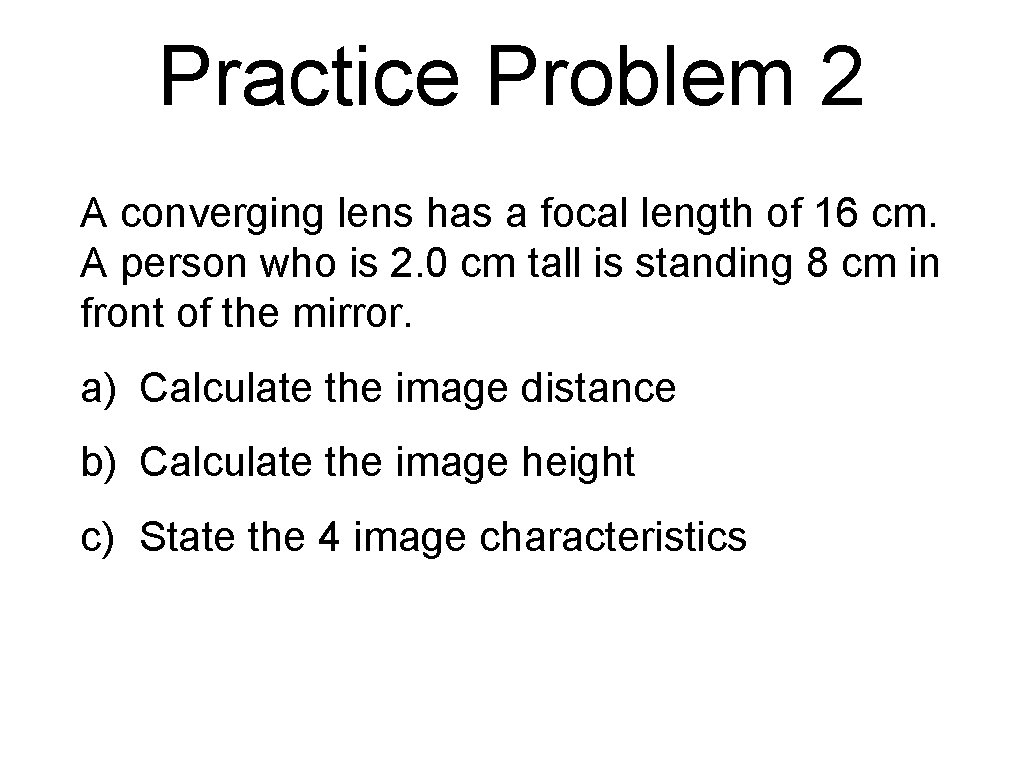
Practice Problem 2 A converging lens has a focal length of 16 cm. A person who is 2. 0 cm tall is standing 8 cm in front of the mirror. a) Calculate the image distance b) Calculate the image height c) State the 4 image characteristics
Mirror Equation Practice • pg 500 #1 - 4
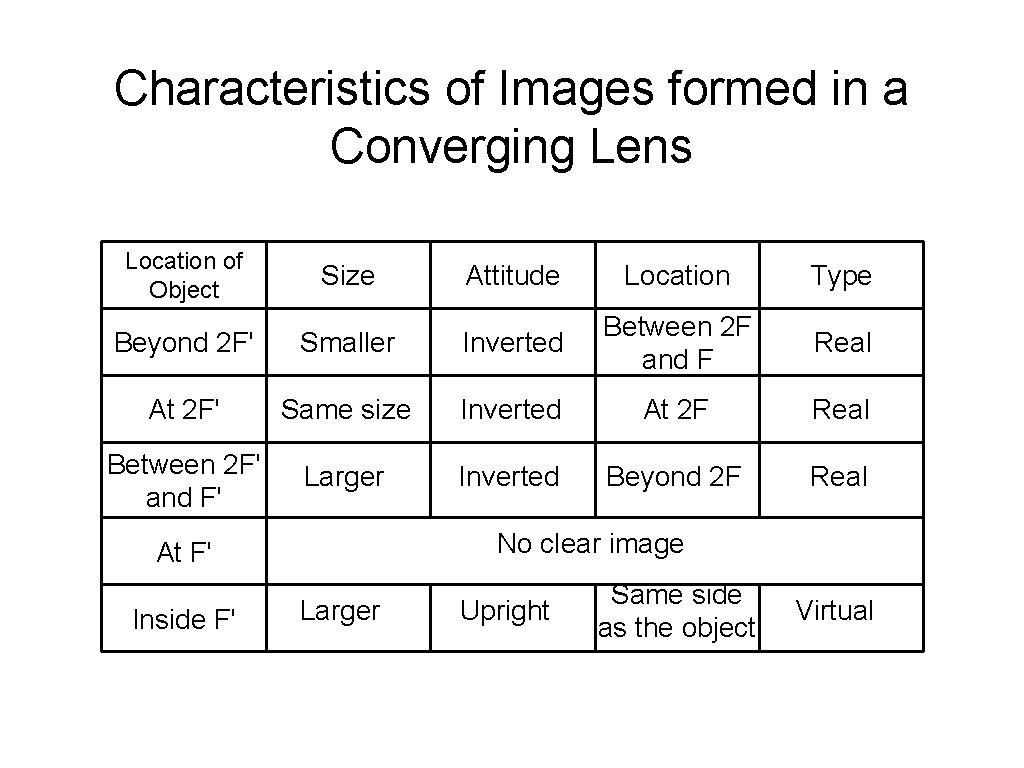
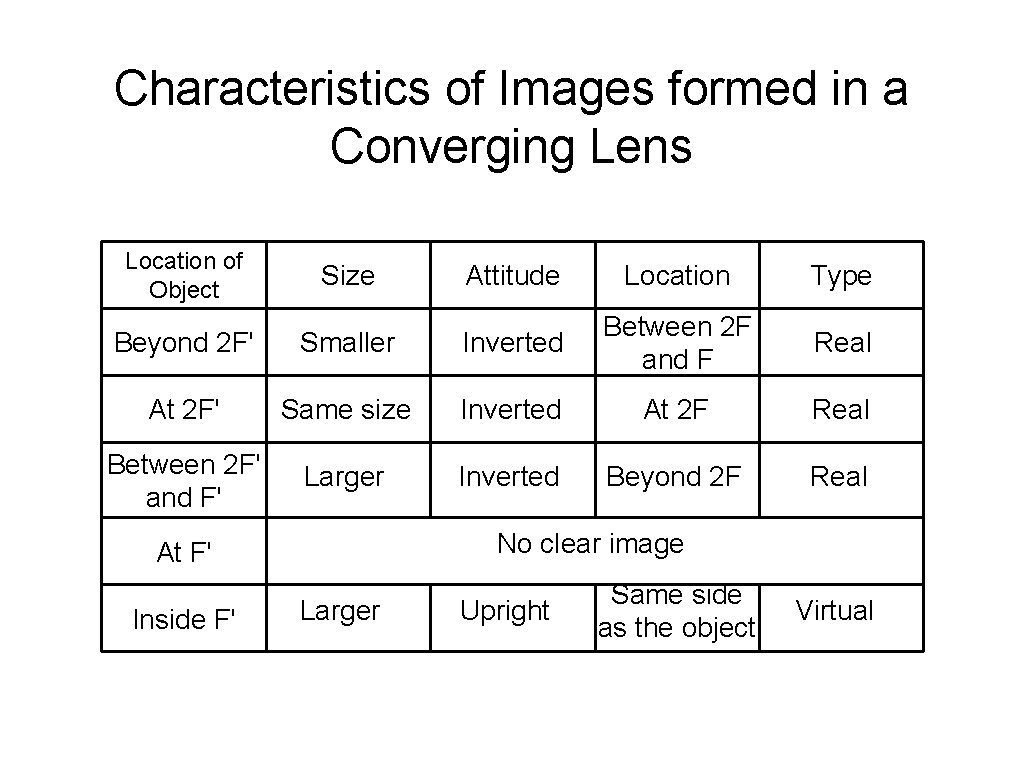
Characteristics of Images formed in a Converging Lens Location of Object Size Attitude Location Type Real Beyond 2 F' Smaller Inverted Between 2 F and F At 2 F' Same size Inverted At 2 F Real Between 2 F' and F' Larger Inverted Beyond 2 F Real No clear image At F' Inside F' Larger Upright Same side as the object Virtual
Characteristics of Images formed in a Converging Lens Location of Object Size Attitude Location Type Real Beyond 2 F' Smaller Inverted Between 2 F and F At 2 F' Same size Inverted At 2 F Real Between 2 F' and F' Larger Inverted Beyond 2 F Real No clear image At F' Inside F' Larger Upright Same side as the object Virtual